作者: admin

  • Elections : Electoral decree drastically modified, new crisis looming

    Elections : Electoral decree drastically modified, new crisis looming

    A fresh political standoff is unfolding in Haiti just months after ongoing institutional instability, as sweeping unilateral changes to an electoral decree have thrown the country’s planned electoral process into deep uncertainty and raised alarms over constitutional breaches. The conflict erupted on June 2, 2026, when Prime Minister Alix Didier Fils-Aimé convened an emergency information meeting with members of Haiti’s Provisional Electoral Council (CEP), the constitutionally mandated independent body tasked with organizing the nation’s elections. During the gathering, Prime Minister Fils-Aimé formally notified CEP leadership that his office had finalized and would move forward with publishing a revised electoral decree — a policy document that sets the legal framework for upcoming electoral contests. What made this announcement contentious, however, was the stark gap between the version of the decree tabled at the meeting and the original draft that the CEP had submitted to the executive branch for review back on April 24, 2026. According to official statements from the CEP, the modifications introduced by the Prime Minister’s office are not minor technical adjustments, but drastic alterations that fundamentally reshape the original text. Legal and constitutional observers note that this unilateral action directly violates Haiti’s constitutional order, which reserves the exclusive authority to draft the electoral decree for the independent CEP. By overriding the CEP’s draft and imposing a modified version without the council’s formal consent, the Prime Minister’s decision directly infringes on the core principle of electoral body independence, a foundational guardrail for democratic processes. In an official statement released the same day of the meeting, the CEP formally registered its firm disagreement with the Prime Minister’s approach, emphasizing that the altered decree fails to meet constitutional requirements and cannot be legitimately implemented as written. The controversy has drawn swift reaction from international democratic watchdogs, with the International Observatory for Democracy and Governance (OIDG) publicly acknowledging the CEP’s grievances and sounding the alarm over the potential fallout of the conflict. The institutional deadlock has already stirred deep concerns among both domestic stakeholders and international observers over the integrity of the upcoming electoral cycle. Polling and past political crises in Haiti have shown that public trust in elections depends heavily on the perceived independence of the electoral management body; unilateral changes to the foundational electoral framework without the CEP’s approval threaten to erode what little public confidence remains in the process, according to analysts. The growing dispute has already injected significant uncertainty into the timeline and legitimacy of Haiti’s planned elections, which were already delayed by years of political upheaval and institutional collapse. The OIDG has issued an urgent call for de-escalation, urging Prime Minister Fils-Aimé and his administration to uphold principles of political responsibility, take the CEP’s formal objections into full account, and resume good-faith negotiations with the council’s electoral advisors. The watchdog warns that failure to resolve the standoff could push Haiti into a new full-blown political crisis that would derail the electoral process entirely, deepening the nation’s long-running political and humanitarian instability. As of June 3, 2026, no new talks have been scheduled between the two sides, leaving the crisis unresolved and the future of Haiti’s electoral transition hanging in the balance.

  • Ministry of Energy puts 19 offshore blocks out to tender

    Ministry of Energy puts 19 offshore blocks out to tender

    Barbados’ Mottley administration has launched a landmark new offshore energy licensing initiative, putting 19 prospective ultra-deepwater exploration blocks up for grabs for international energy companies while requiring all bidders to adhere to rigorous new climate and environmental protection benchmarks.

    The 2026 Offshore Petroleum Direct Negotiations program opened a three-month pre-qualification window that started Monday, with applications set to close September 1, Acting Prime Minister and Energy, Business Development and Commerce Minister Kerrie Symmonds confirmed during a Tuesday press conference at his ministry’s headquarters. The goal of the round, Symmonds explained, is to attract experienced, responsible international partners to advance hydrocarbon exploration in the Caribbean nation’s offshore territory, while ensuring all activity aligns with Barbados’ national climate goals and renewable energy transition commitments.

    “We are seeking partners that can demonstrate a proven track record in oil and gas exploration, but also show they are effective methane managers, committed environmental stewards, and aligned with global climate action,” Symmonds told reporters. “We need operators that can match our holistic national objectives.”

    Addressing widespread public and scientific concern over methane emissions – a particularly potent contributor to anthropogenic climate change – Symmonds noted that emissions mitigation technology has advanced significantly since the country’s last bid round in 2022. He emphasized that the government now recognizes methane’s outsized environmental impact: the gas traps roughly 80 times more heat than carbon dioxide over a 20-year period, making it a leading driver of near-term global warming and a critical priority for regulation.

    In a policy shift from the 2022 bid round, the government has reduced the number of blocks on offer from 22 to 19, reserving the three remaining blocks for future development by Barbados’ national energy entities to protect domestic national interests. “We have made a deliberate policy choice to hold back additional blocks to advance the interests of our country’s own national energy company and domestic stakeholders,” Symmonds said.

    The licensing round forms a core component of a broader whole-of-government multi-energy strategy, designed to balance three critical national priorities: accelerating the expansion of renewable energy capacity, strengthening Barbados’ energy security, and boosting long-term economic resilience. Preliminary geological assessments suggest the country’s offshore waters hold substantial untapped hydrocarbon resources, officials confirmed.

    Jamar White, Director of Barbados’ Natural Resources Division, told the press conference that years of comprehensive seismic surveys and technical analysis have confirmed the potential for significant offshore reserves. “Current data indicates we could have more than 13 billion barrels of oil in place, alongside an estimated 40-plus trillion cubic feet of natural gas,” White said.

    To ensure only qualified, responsible operators advance to negotiations, the government has expanded pre-qualification criteria to five core assessment areas, with an added focus on climate performance that was not required in previous rounds. The criteria evaluate applicants’ legal standing, technical expertise, financial stability, health, safety and environmental (HSE) track records – including climate action and methane management – and commitment to local content development.

    “These expanded criteria are designed to ensure only the best-qualified operators with top-tier environmental records move into the negotiation stage,” White explained. Following the close of pre-qualification in September, qualified firms will receive formal approval notices from the Barbadian government, clearing them to enter direct negotiations for blocks of interest.

    Officials project negotiations will be finalized by January 15, 2027 at the latest, after which successful bidders will receive cabinet approval for their selected blocks. Before any exploration activity can begin, operators will be required to complete rigorous mandatory environmental impact assessments (EIAs) and collect comprehensive baseline environmental data for their blocks. As part of the EIA process, companies must outline their operational plans, detail emissions mitigation strategies, and propose measures to protect local marine wildlife and ecosystems – only after government officials review and approve these plans will exploration be permitted to start.

  • Concerns raised over crime, economy at Friends of Democracy conference

    Concerns raised over crime, economy at Friends of Democracy conference

    At the second annual conference of Barbados’ opposition-aligned Friends of Democracy (FOD) party, party president and sitting Senator Karina Goodridge used her keynote address to place two pressing national issues — violent crime and skyrocketing cost of living — at the top of the island’s policy agenda, warning that failure to address these threats will put Barbados’ long-term national security and economic stability at severe risk. The conference also served as an occasion for internal party leadership elections, where Goodridge successfully retained her position as head of the organization, with a new executive committee formally confirmed during the event.

    In her address, Goodridge pulled no punches on the growing crime crisis gripping Barbadian communities, pointing to sharp rises in gang activity, gun-related violence and widespread public anxiety over personal and family safety. She argued that no parent in a functional society should live in constant fear that their child could become the next victim of violence, and no neighborhood should be forced to endure dozens of preventable deaths before the national government steps in with meaningful intervention. Goodridge stressed that building safer communities requires far more than just increased law enforcement presence; meaningful, long-term change demands targeted investments in youth opportunity, support for stronger family structures, expanded educational access and pro-growth economic policies that give young Barbadians a reason to hope for the future instead of turning to criminal activity.

    Turning to widespread economic strain across the island, Goodridge highlighted the everyday struggles ordinary households face as the cost of basic goods and services continues to climb. She added that small businesses, long the backbone of Barbados’ economy, are currently operating in an increasingly hostile environment that makes both survival and expansion out of reach for many. Beyond household budgets and small business challenges, she drew attention to the growing crisis of youth underemployment, noting that too many young Barbadians are unable to find work that matches their training, skills and career aspirations. She also echoed widespread public concern over access to affordable healthcare, stable housing and the shrinking economic prospects for younger and future generations of Barbadians.

    Goodridge also weighed in on the country’s expanding regional integration agenda, responding to the recent government announcement that eligible Barbadian citizens will be able to use their national identification cards for travel between Barbados and Guyana starting next month. While welcoming the move toward easier regional travel, Goodridge emphasized that the government must prioritize policies that ensure ordinary Barbadians can actually take advantage of these new opportunities. Specifically, she called on negotiators working on expanded regional travel frameworks to prioritize measures including discounted travel rates and lower airfares that make cross-border movement accessible to more than just wealthy citizens.

    “As new opportunities open up across the Caribbean through deeper regional integration and shared economic growth, we have a responsibility to make sure every Barbadian is prepared, empowered and positioned to claim those benefits for themselves,” Goodridge said. She added that Barbados must be ready to take a leadership role and compete effectively within the CARICOM regional bloc, stressing that the country’s people should never be reduced to passive spectators in integration arrangements that are meant to serve them.

    To address the full range of challenges facing Barbados, Goodridge confirmed that FOD will pursue innovative, unconventional policy solutions that move beyond tired, ineffective approaches that have failed to move the needle on the country’s most pressing issues. Alongside Goodridge’s retention of the party presidency, the conference confirmed the full new FOD executive committee: Ricardo Harrison, Pastor Matthew Thorne and Ricardo Andwele Williams will serve as vice-presidents, Steven Blackett takes on the role of general secretary, T Felicia Corbin is the new general treasurer, Anya Lorde will serve as assistant secretary, and Sandra Estwick will take on the role of assistant treasurer.

  • Almost 400,000 Guyanese received cash grant – finance minister

    Almost 400,000 Guyanese received cash grant – finance minister

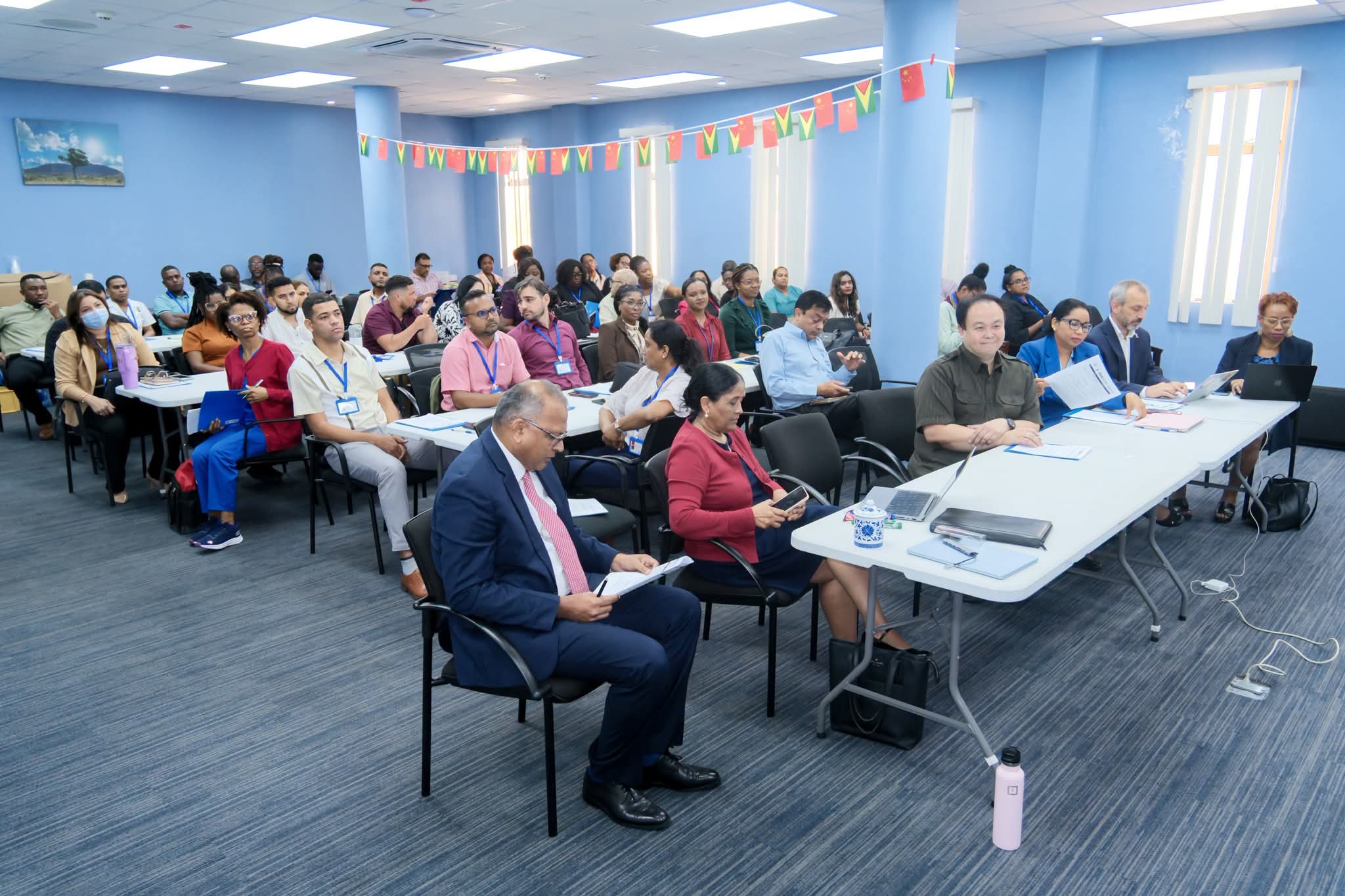
    On Tuesday, June 2, 2026, Guyana’s Minister of Finance Ashni Singh provided an updated progress report on the country’s landmark universal cash grant initiative, announcing that close to 400,000 Guyanese have already received their one-time GY$100,000 payment, most through direct deposits to registered bank accounts. The government has also put in place tailored alternative distribution mechanisms to ensure no eligible resident is left behind, including those without formal bank accounts, disabled people, homebound shut-ins, and communities in remote hinterland regions.

    Speaking to reporters on the sidelines of the national Local Content Summit, Singh emphasized that the program’s rollout has exceeded early expectations given the ambitious timeline and scale of the initiative. “I think we’ve done extremely well because we’ve been able to register and pay now close to 400,000 persons, which is quite a large number if you consider the speed with which this has been done,” Singh noted.

    Funded by a GY$60 billion allocation earmarked in the 2026 national budget, this universal cash grant program marks the first time the Guyanese government has distributed public benefit payments through direct bank deposits to recipients who registered via a national online portal. According to Singh, direct bank transfers have emerged as the most efficient delivery channel, with the overwhelming majority of processed payments going through this method.

    To address gaps in access, the government has launched targeted outreach campaigns for populations that cannot use direct bank deposits. Singh confirmed that inter-ministerial teams from the Ministry of Finance and Ministry of Human Services have already been deployed to hard-to-reach regions including Region 7 (Cuyuni-Mazaruni) and Region 9 (Upper Takatu-Upper Essequibo), where workers are conducting in-person registration and using alternative delivery methods to get grants to local residents. The two ministries are also collaborating closely to coordinate home delivery of payments for disabled people and people with severe illness who are unable to leave their homes.

    Singni stressed that lack of a bank account, or even unwillingness to use a bank account, will not disqualify any eligible resident from receiving the grant. “We continue to try to explain to people that this [direct deposit] is the easiest way to get your cash grant, but we also assure you that if you don’t have a bank account and you don’t want a bank account, you’re not going to be denied your cash grant,” he said, noting that the government prioritized processing bank account holders first to streamline the early rollout.

    The program did encounter some early technical challenges with the online registration portal, which Singh attributed to the unexpectedly high volume of users attempting to sign up in the first days of the registration window. However, he was quick to praise the work of local technology specialists at the National Data Management Authority, who built the registration portal endogenously and quickly resolved the early issues. After rolling out real-time adjustments to improve the system’s capacity to handle high traffic, Singh noted the portal has functioned smoothly, facilitating direct bank payments for more than 300,000 recipients to date.

  • Three San Marcos Men Charged After Machete Attack

    Three San Marcos Men Charged After Machete Attack

    A violent machete attack on a Belizean household has sparked public outrage and community division after three local men were finally taken into custody more than two weeks following the incident, with conflicting narratives emerging over what triggered the violence and whether local political influence delayed law enforcement action.

    The incident, which unfolded on May 14 in San Marcos Village, Toledo District, saw a group of armed men force entry into the home of Orlando and Marcia Makin. One member of the Makin family was struck in the neck with a machete during the attack, while his mother was threatened by the intruders. First responders from the Belize Police Department transported the wounded victim to a local medical facility for treatment immediately after being called to the scene, but no suspects were taken into custody in the immediate aftermath of the violence.

    It was not until May 29, nearly two full weeks after the attack was formally reported to law enforcement on May 17, that authorities arrested three San Marcos residents: Pablo Muku, Edward Muku, and Verhenio Pop. The delay in arrests came only after the Makin family went public with their complaints, accusing police of failing to act on their formal report despite identifying the suspects. Two weeks after the attack, Mario Makin, son of the property owners, told local outlet News 5 that the people his family accused of involvement were still living freely in the community, and that his mother had been left too afraid to stay in her own home following the threat against her life.

    All three men face joint charges of aggravated burglary connected to the attack. In early court proceedings, Edward Muku entered a guilty plea to the charges against him. The court handed down a fine of $800 plus an additional $5 in court costs for each count, with all penalties required to be paid by July 31. If Muku fails to meet the payment deadline, he will serve an eight-month prison sentence. The other two defendants, Pablo Muku and Verhenio Pop, have both maintained their not guilty pleas. They were granted bail ahead of their next hearing, which has been adjourned to July 14 to allow time for full prosecution disclosure of evidence.

    The case has quickly become controversial in the small rural village, as sharply conflicting accounts have emerged from the Makin family and local village leadership over the context of the attack and responsibility. Juan Caal, secretary to the village Alcalde, told News 5 that the relative of the village chairman who was involved in the confrontation acted in self-defense, and that village authorities themselves had referred the case to national police for formal processing.

    That narrative has been firmly rejected by the Makin family, who have raised serious allegations that influence from local village leaders slowed the official police response to the violent home invasion. Adding another layer of uncertainty to the case, a separate house fire broke out in San Marcos Village the night before the three suspects were arrested. That blaze remains under active investigation by police, who have not yet announced any connection between the fire and the machete attack case.

    As the legal process moves forward, the community remains divided over the incident, with the Makin family continuing to push for full accountability and local leadership defending the actions of those involved.

  • Hope eyeing strong performance against Sri Lanka in ODI Series

    Hope eyeing strong performance against Sri Lanka in ODI Series

    A make-or-break three-match One Day International (ODI) series is set to get underway this Wednesday at Kingston’s iconic Sabina Park, with both West Indies and Sri Lanka chasing critical ranking points to lock in their spots at the 2025 ICC Men’s Cricket World Cup, to be hosted in South Africa and Zimbabwe. While a series triumph is the immediate goal for both sides, automatic qualification for the 2027 World Cup looms as the far larger prize at stake. The ICC’s qualification rules state that the top nine teams in the official ODI rankings as of 31 March 2027 will earn automatic berths to the tournament, and current standings have put West Indies in a precarious position: currently sitting in 10th place, just one spot outside the automatic qualification cut-off. Sri Lanka, by contrast, enters the series comfortably in 6th place, with far more breathing room in the rankings race. The build-up to the series has brought mixed form for both competing sides. West Indies has not played an ODI in six months, and has walked away with just one win in its last five outings in the format, a slump that has put extra pressure on the side to deliver at home. Sri Lanka’s recent form is hardly more reassuring, with only one victory across its past five ODI matches. Still, the visitors hold a key historical advantage heading into the first match: they have won three of the last five ODI encounters between the two sides, and welcome back experienced batter Kusal Mendis as full-time skipper, just over a year after he was stripped of the captaincy in 2024. For West Indies captain Shai Hope, the magnitude of the series is not lost on his side. Speaking ahead of the opening match at Sabina Park, Hope emphasized that his side’s priority is to play to their full potential and collect as many wins as possible to climb the rankings. “There’s always expectations whenever you want to play a series against a strong side; you want to be victorious, so the key is playing the best cricket we can and try to get as many wins as you possibly can. We understand the importance of that March deadline in 2027. So play good cricket and hopefully the results take care of itself in the back end,” Hope said. Hope gave full credit to the team’s pre-series training camp held in Antigua, describing the week-long preparation as extremely productive that left the entire squad aligned on their objectives for the three matches. “So it’s just about executing now. The key is just to win, we’re here on home soil, where we have been playing really good ODI cricket. Just to continue in that vein, the preparation is going pretty nicely so execution is the main thing for the day and hopefully you can get a good start tomorrow and get the ball rolling,” he added. The captain also highlighted the consistent improvement of his side’s top-order batting line-up over the past two years, a unit that has become a reliable backbone for the team’s ODI innings. “The way how we’ve been batting for the last year or two, with the top six barring the opening pair every now and again, we’ve been pretty solid and consistent,” Hope noted. He singled out Keacy Carty, who has thrived in the number three batting position, and Sherfane Rutherford for their consistent run-scoring, adding that the squad has made marked improvements in one of their historic weak points: handling spin bowling during the middle overs of an innings. “We’ve had a pretty strong top six in the last couple of years and the data has shown that we’ve improved in many areas, especially in the middle overs when we usually face a lot of spin. We’ve been finding ways to combat that, so I must commend the guys on that front,” he said. Hope also extended praise to his bowling attack, which he described as “exceptional” across recent home series, pointing to young fast bowler Jayden Seales’ devastating performance against Pakistan in the Caribbean during their last series, where he tore through the opposition’s top order. The captain emphasized that his main goal is to find the right balance between consistent batting and bowling performance, to ensure the side plays its best cricket from the first ball of the series. Turning to his own personal form, which boasts an impressive ODI average of 50.52 with 19 centuries to his name, Hope said he is committed to leading from the front and contributing to the team in any capacity, while maintaining his own consistent run at the crease. “So it’s about crossing that line and executing the best way I can and as we can as a unit. Just trying to lead from the front in all departments; wherever I’m called upon I’m gonna try to do so, and help the guys on the field,” he added.

  • Derde helft WK 2026: Duitsland met jong talent en ervaren kracht klaar voor rentree op wereldtoneel

    Derde helft WK 2026: Duitsland met jong talent en ervaren kracht klaar voor rentree op wereldtoneel

    Four titles, 20 historic appearances, and two straight early group-stage exits: as the 2026 FIFA World Cup approaches, four-time champion Germany enters the tournament seeking to reverse a painful recent trend and rebuild its reputation as one of the global game’s elite forces.

    Germany’s World Cup legacy is unmatched by most nations. Since their first tournament appearance in 1934, the four-time world champions (1954, 1974, 1990, 2014) hold all-time records including Miroslav Klose’s 16 career World Cup goals and Lothar Matthäus’s 25 tournament appearances. But their recent run has been a shock to the football world: the 2014 champions crashed out in the group stage in both 2018 and 2022, a result unthinkable for a country with such deep footballing tradition. Currently ranked 16th in the FIFA World Rankings, Germany enters 2026 with a renewed sense of purpose under head coach Julian Nagelsmann, who took over the national side in September 2023.

    Under Nagelsmann, the Mannschaft has already regained a sense of pride and confidence that was missing in recent tournaments. cruising to qualification with five wins from six qualifying matches. Nagelsmann’s squad strikes a deliberate balance between emerging generational talent and seasoned veteran leadership. Young stars like Bayern Munich’s Jamal Musiala and Liverpool’s Florian Wirtz lead the team’s attacking core, supported by experienced campaigners including Joshua Kimmich, Antonio Rüdiger, and iconic goalkeeper Manuel Neuer.

    The biggest surprise heading into the tournament is Neuer’s return. The 38-year-old shot-stopper announced his international retirement following UEFA Euro 2024, but reversed his decision to earn a spot in the 2026 squad, with Nagelsmann confirming Neuer remains his starting number one and a critical locker room leader. Musiala, one of the standouts of Euro 2024 who is expected to be Germany’s breakout star in 2026, has recently dealt with a serious leg injury that adds a small question mark to his fitness. Wirtz, meanwhile, overcame a rocky start to his Liverpool career to return to form, bringing creative versatility to Germany’s attack. 18-year-old Bayern prospect Lennart Karl, another exciting young talent, has already drawn comparisons to Lionel Messi for his low center of gravity and dynamic dribbling ability.

    Despite the overall strength of the squad, lingering question marks remain. Germany still lacks a world-class starting center forward: Niclas Füllkrug missed out on selection after a underwhelming club season, leaving Kai Havertz (likely to play as a false nine), Nick Woltemade and Deniz Undav as the only available options up top. Analysts also remain uncertain whether the young-heavy squad can handle the pressure of a major tournament and genuinely compete with the tournament’s top favorites. Still, Nagelsmann has made his ambitions clear: his goal for the squad is to lift the World Cup trophy.

    Germany has been drawn into Group E, a relatively favorable grouping that sets the team up well to reach the knockout stage for the first time since their 2014 title win. They kick off their campaign on June 14 in Houston, Texas against Curaçao, the smallest nation ever to qualify for a World Cup. Next, they face Ivory Coast (back at the World Cup after a 12-year absence) in Toronto on June 20, before closing out group play against South American qualifier Ecuador in East Rutherford, New Jersey on June 25.

    The full 2026 German World Cup squad is as follows:
    Goalkeepers: Manuel Neuer (Bayern Munich), Oliver Baumann (1899 Hoffenheim), Alexander Nübel (Stuttgart)
    Defenders: Joshua Kimmich (captain, Bayern Munich), Nico Schlotterbeck (Borussia Dortmund), David Raum (RB Leipzig), Jonathan Tah (Bayern Munich), Waldemar Anton (Borussia Dortmund), Antonio Rüdiger (Real Madrid), Nathaniel Brown (Eintracht Frankfurt), Malick Thiaw (Newcastle United)
    Midfielders: Jamal Musiala (Bayern Munich), Florian Wirtz (Liverpool), Lennart Karl (Bayern Munich), Angelo Stiller (Stuttgart), Aleksandar Pavlović (Bayern Munich), Leon Goretzka (Bayern Munich), Leroy Sané (Galatasaray), Felix Nmecha (Borussia Dortmund), Nadiem Amiri (Mainz 05), Pascal Groß (Brighton & Hove Albion)
    Forwards: Kai Havertz (Arsenal), Deniz Undav (Stuttgart), Jamie Leweling (Stuttgart), Nick Woltemade (Newcastle United), Maximilian Beier (Borussia Dortmund)

  • Boutique urges businesses give back after school water cooler gift

    Boutique urges businesses give back after school water cooler gift

    A Barbadian retail brand is pushing forward a long-held culture of corporate giving, hoping its latest contribution to a local educational institution will spark a wave of similar initiatives across the island nation. On Tuesday, Fusionz Boutique formally handed over a new water cooler to Cuthbert Moore Primary School, which is located in St Helen’s, St George, marking the latest entry in the company’s years-long record of community investment.

    Representatives from the boutique presented the donation to school leadership, emphasizing that this act of support is far from a one-off publicity stunt. For Fusionz Boutique, giving back to local communities is woven into the core identity of the business, according to floor manager Roger Agard. In an interview with Barbados TODAY, Agard explained that as the retail chain continues to expand its footprint across Barbados, it will only ramp up its commitments to local institutions, particularly schools.

    “This is not the first time that we’ve donated to a school. We’ve donated to schools before and this is something we’ve done before. We intend to be a part of the community,” Agard said. He added that the company’s outreach does not limit itself to educational facilities near Fusionz Boutique’s store locations, with past donations reaching campuses across multiple parishes including St Michael, as well as other institutions in St George and St Alban’s. The handover of the new water cooler was met with enthusiastic gratitude from Cuthbert Moore Primary principal Andrew Haynes and senior teacher Rhonda Mayers, Agard noted.

    Fusionz Boutique’s long-term vision extends beyond its own giving: the company hopes its example will encourage a broader culture of corporate social responsibility across Barbados. “Our endeavour is to keep the community at hand so that other businesses will follow through and become a part of our legacy where we tend to keep doing and improving on our community,” Agard said.

    That message was echoed by the boutique’s owner, Yusuf Hafejee, who explained that the decision to publicize the latest donation was not to celebrate the company’s own work, but to show other local businesses how even targeted contributions can deliver meaningful impact to surrounding communities. Hafejee, who oversaw the opening of Fusionz Boutique’s newest branch at Lower Estate on May 20, said he hopes the chain’s track record of giving will motivate more corporate citizens across the country to take an active role in driving national development.

    “It’s just highlighting what we’ve done so far as a business… and we encourage other businesses to do their part as well,” Hafejee said.

  • 2026 World Cup Preparation : In a friendly match, Haiti crushes New Zealand [4-0]

    2026 World Cup Preparation : In a friendly match, Haiti crushes New Zealand [4-0]

    With less than two weeks remaining until the 2026 FIFA World Cup kicks off, Haiti’s national men’s football team, the Grenadiers, delivered a dominant performance to secure a lopsided 4-0 victory over New Zealand’s All Whites (commonly nicknamed the Kiwis) in a pre-tournament friendly hosted at Lockhart Stadium in Fort Lauderdale, Florida on June 2, 2026.

    Heading into the contest, the two sides entered with closely matched FIFA rankings: Haiti sat at 83rd globally, while New Zealand trailed just two spots behind at 85th, setting expectations for a tightly contested matchup. What unfolded instead was a masterclass in tactical substitution and attacking finishing from head coach Sébastien Migné’s side, which sent a clear signal of the Grenadiers’ form ahead of their first World Cup match.

    Haiti got off to a flying start in the opening half. In the 12th minute, a well-placed pass from starting striker Wilson Isidor found winger Ruben Providence, who fired a precise shot past New Zealand’s goalkeeper to put the Grenadiers up 1-0. Haiti held onto their narrow lead through the end of the first half, with no additional goals scored before the halftime whistle.

    Migné, who had planned to use the friendly to test the depth of his 2026 World Cup squad, made an unprecedented 11 total substitutions throughout the match, a strategic choice that paid off dramatically. The first change came at the break, when backup goalkeeper Alexandre Pierre replaced starter Johny Placide between the posts. Immediately following halftime restart, Migné made two key attacking changes: Lenny Joseph came on for Isidor, while Frantzdy Pierrot replaced starting forward Duckens Nazon.

    The substitutes made an instant impact. Just four minutes after entering the pitch, Joseph netted his first goal of the night, extending Haiti’s lead to 2-0 in the 51st minute. Ten minutes later, in the 62nd minute, full-back Carlens Arcus delivered a perfect setup for Pierrot, who slotted the ball home to make the score 3-0.

    Migné continued to rotate his squad through the second half, making seven more substitutions between the 57th and 72nd minute to give every member of his matchday squad game time. Among those late substitutions was winger Duke Lacroix, who replaced midfielder Martin Expérience in the 68th minute. With just three minutes left in regular play, Lacroix capped off the rout with a fourth goal for Haiti, solidifying the 4-0 final scoreline.

    The lopsided result comes as a major confidence boost for Haiti ahead of their 2026 World Cup campaign, which runs from June 11 to July 19. The Grenadiers are not done with their pre-tournament preparation, however: they are scheduled to face 53rd-ranked Peru in their final friendly on June 5, 2026 at DRV PNK Stadium in Miami, Florida. Fans can find the full official squad list for Haiti’s 2026 World Cup roster via the HaitiLibre news portal.

  • Man Thrown Out of Bar, Ends Up Stabbed

    Man Thrown Out of Bar, Ends Up Stabbed

    A violent incident in rural Belize has left a young construction worker recovering from a stab wound, following an altercation that began inside a local drinking establishment in Valley of Peace Village, Cayo District. Twenty-year-old Frank Batres is currently receiving care at Western Regional Hospital after the attack, which took place shortly after midnight on Saturday, May 30, 2026.

    Local law enforcement details show that the trouble started when Batres was socializing with a group of friends at the village bar. Witness accounts indicate Batres engaged in inappropriate behavior directed at a female patron, prompting the bar owner to forcibly remove him from the property. What happened next escalated a routine ejection into a life-threatening assault.

    As Batres made his way off the bar premises, a male suspect already known to Batres approached him unprovoked. The attacker first struck the 20-year-old, knocking him to the ground, before delivering a single stab wound to Batres’ back. The suspect fled the scene immediately after the attack.

    Notably, authorities were not notified of the incident until Monday morning, June 1. Batres independently made his way to Western Regional Hospital to seek formal medical care for his injury, and hospital staff alerted police to the crime once he arrived. As of the latest update, no information has been released regarding potential arrests, motives for the attack beyond the initial bar altercation, or Batres’ current prognosis beyond confirmation that he is recovering.

    The incident has drawn attention to unreported violence in small rural communities across Cayo District, where residents often avoid contacting police immediately after conflicts, leading to delays in investigations.