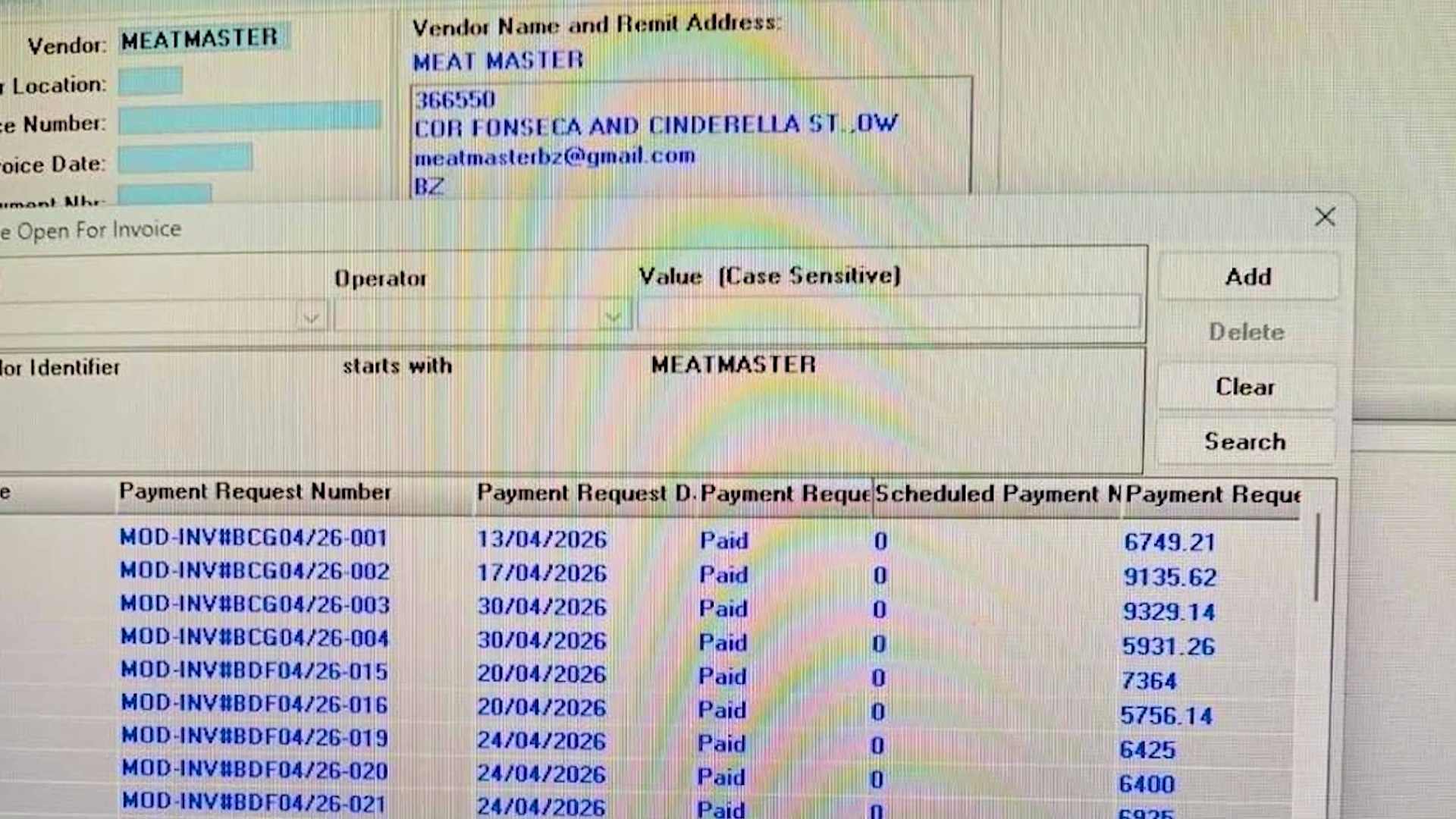
A fierce public debate over government financial transparency and data protection has erupted in the wake of a recent administrative move that limits access to the SmartStream financial management system for public service financial officers across all government ministries. The controversy comes amid an active investigation by auditors into allegations of misconduct and conflict of interest within the Ministry of Defense, a probe that was triggered after an anonymous source leaked a screenshot pulled directly from the SmartStream platform.
The Public Service Union has emerged as a leading critic of the new access policy, arguing that the restrictions erode critical oversight mechanisms and create an unnecessary new barrier to government transparency. Union representatives say the timing of the change, coinciding with the ongoing defense ministry audit, raises serious questions about the government’s commitment to accountability.
However, Health and Wellness Minister Kevin Bernard, a former auditor with private sector finance experience, has publicly defended the policy, framing the tightened access rules as a reasonable and necessary step to strengthen government financial governance. Drawing on his professional background in both audit and private enterprise, Bernard noted that broad, unrestricted access to sensitive financial data is not standard practice in the private sector, where role-based access controls are universally implemented to protect confidential information.
Bernard explained that under the revised policy, each ministry’s designated financial officer retains full access to financial data related to their own ministry’s operations, while the central Ministry of Finance and the national Treasury maintain their full, system-wide oversight access to all departments’ records. The core change, he emphasized, is simply eliminating the longstanding practice of allowing financial officers from one ministry to view the financial records of completely unrelated government departments.
“Why would the Ministry of Agriculture need access to internal financial records from the Ministry of Defense?” Bernard asked during his public remarks. “Every public ministry has a clear mandate focused on its own area of responsibility, and there is no practical justifications for cross-departmental access to sensitive financial data.”
The minister pushed back against claims that the new rules are intended to obstruct the ongoing audit into defense ministry wrongdoing, stressing that the policy change is about streamlining operational processes and strengthening data security controls at all levels of government. He argued that unrestricted universal access to the entire SmartStream system has been an unaddressed security weakness for years, noting that open access to sensitive financial information undermines the government’s fiduciary duty to protect taxpayer data.
“This is not about blocking oversight or turning a blind eye to ongoing investigations,” Bernard clarified. “It is about putting appropriate guardrails in place to protect sensitive information, while leaving full access intact for the central bodies that are responsible for cross-government financial oversight and approval. Restricting unnecessary cross-ministry access is the right decision, even if it is not the most popular one right now.”