On June 3, 2026, Cuban President and First Secretary of the Central Committee of the Communist Party of Cuba Miguel Díaz-Canel Bermúdez published a warm, heartfelt birthday tribute on his official Twitter account to mark the 95th birthday of Army General Raúl Castro Ruz, a foundational leader of the Cuban Revolution. In his public message, Díaz-Canel lavished praise on Castro, highlighting the many roles he has filled across his decades of public and private life: a loving son, loyal sibling, devoted husband, caring father and grandfather, trusted friend, and a leader who combines high expectations for public service with sincere, deep affection for the Cuban people. He described Castro as a bold, intrepid revolutionary fighter, a foundational leader of the nation’s progressive movement, and the unwavering guardian of the Cuban Revolution’s core values and principles. “He is a true Cuban, in every sense of the word,” Díaz-Canel emphasized in his post. The Cuban leader went on to note that Raúl Castro’s 95 years of life, spent in constant service to the Cuban homeland and dedicated to advancing global peace, multilateral cooperation, and the pursuit of universal social justice, are not just a personal milestone — they are a gift to the entire Cuban nation. “To reach 95 years of age still actively committed to public service, with an unmatched legacy of sacrifice and service to the Homeland, to regional and world peace, to multilateralism, and to the dreams of social justice for millions of human beings, is not his good fortune — it is ours,” Díaz-Canel wrote. He closed the tribute by emphasizing the deep mutual affection between Castro and the Cuban people, noting that the enduring love the revolutionary leader has extended to his compatriots has been returned a thousandfold in the warm wishes that greet him on his birthday. No animosity from external or internal critics, he asserted, can ever pierce the thick, protective shield of widespread public affection that surrounds Castro. The tribute, originally reported by Cuban state-owned newspaper Granma, was accompanied by an official photo produced by Estudios Revolución, and has been circulated widely across social media platforms among Cuban political circles and supporters of the revolution.
作者: admin
-

VN waarschuwt voor extreme weersomstandigheden door naderende El Niño
The United Nations has issued a urgent global alert, calling on all countries to step up preparations for a projected surge in extreme weather events driven by the developing El Niño climate phenomenon in the coming months. According to the UN’s World Meteorological Organization (WMO), there is an 80% probability that El Niño will develop between June and August 2025, with that probability rising to nearly 90% by the end of November this year.
El Niño is a naturally occurring climate pattern defined by abnormally elevated sea surface temperatures across the central and eastern equatorial Pacific Ocean. It typically emerges every two to seven years and persists for 9 to 12 months once formed, triggering large-scale shifts in global wind patterns, atmospheric pressure systems and rainfall distribution that reshape weather across every continent.
The impacts of El Niño vary dramatically by region: it brings above-average rainfall to parts of South America, the southern United States, sections of the Horn of Africa and Central Asia, while driving severe prolonged drought in Australia, Central America, Indonesia, and parts of South Asia. It also fuels more frequent and intense hurricanes across the central and eastern Pacific basin.
For the Caribbean and Latin America specifically, El Niño brings a complex mix of overlapping climate hazards. Northern and western parts of South America, including the coastal regions of Peru and Ecuador, face a high risk of extreme heavy rainfall that can trigger catastrophic flash floods, destructive mudslides, and widespread damage to public infrastructure and agricultural lands. At the same time, other areas including northern Brazil and large swathes of the Caribbean are projected to face severe drought, leading to acute water scarcity and widespread crop failure. Shifts in ocean and atmospheric currents also disrupt regional fisheries and increase overall vulnerability to natural disasters. While El Niño often suppresses Atlantic hurricane activity, it can still amplify the intensity of storms and hurricanes that do form in the Caribbean. These erratic weather shifts carry severe social and economic consequences, particularly for low-income and vulnerable communities that depend heavily on climate-sensitive sectors like small-scale agriculture and fishing.
UN Secretary-General António Guterres stressed that the 2025 El Niño event is expected to deliver at least moderate, and potentially severe, global impacts, framing the phenomenon as an urgent wake-up call for global climate action. “The impacts will strike harder, spread faster, and cross borders with devastating speed,” Guterres stated in a video address.
Researchers from Imperial College London and the World Weather Attribution network have also warned that this year’s El Niño could amplify the risk of extreme, uncontrollable wildfires across vulnerable regions. In response, the European Union has pre-positioned a record number of firefighters and firefighting aircraft across high-risk Mediterranean nations including Cyprus, Greece, Italy, France, Spain and Portugal to prepare for the upcoming wildfire season.
The previous strong El Niño event, which ran from 2023 to 2024, was a key contributor to 2024 being confirmed as the warmest year ever recorded globally. WMO Secretary-General Celeste Saulo added that the extreme heat tied to El Niño also increases the risk of vector-borne diseases spread by insects, while further straining global food and water supplies. “Already vulnerable communities are being pushed even further to the brink by these impacts,” Saulo noted.
Global consumers also face the prospect of additional food price increases, with costs already pressured by inflation driven by geopolitical conflict in the Middle East. Hein Schumacher, CEO of Barry Callebaut, one of the world’s largest cocoa processors, warned that cocoa yields in major producing regions including Ecuador and West Africa – which together account for 60% of global cocoa output – are likely to decline this year due to El Niño’s impacts. “We are monitoring the developing situation with extreme caution,” Schumacher said.
-

To say Raúl is more than enough
On June 3, 2026, Cubans across the island marked a milestone that is more than a birthday: the 95th birthday of Raúl Castro, a revolutionary leader whose legacy has been woven into the very identity of the Cuban nation. For Cubans, his name carries a uniquely intimate weight, comparable to that of a beloved father or brother, earned through a lifetime of service and sacrifice rather than title alone.
Raúl’s journey into the pages of Cuban history began as a young man, when he accompanied his older brother Fidel to Havana. What started as a move to continue his studies evolved into a shared dream: dismantling the systemic injustice that defined Cuban society at the time. That revolution was never an easy, quick victory. It demanded the ultimate sacrifice from thousands of Cubans in their youth, who set aside personal ambitions to fight for collective freedom that would open the door to opportunity for all generations that followed.
Raúl stood among the core leaders who delivered that new dawn for Cuba. Even as foreign imperial narratives have sought to undermine his contributions, his life’s work remains unblemished in the eyes of the Cuban people. His legacy is rooted in quiet simplicity, a trait of genuine modesty that has come to define his iconic status, rather than the grandeur often claimed by leaders of global revolutions.
His courage was proven in some of the revolution’s earliest, most dangerous moments: during the 1953 Moncada Barracks attack, he charged the leading officer of the regime’s forces in the Palace of Justice, wrested away his weapon, and saved the lives of his captured comrades. When the revolution’s core leadership was forced into exile in Mexico, it was Raúl who took on the logistical work to prepare the Granma yacht expedition, the 82 revolutionaries that sailed back to Cuba to launch the guerrilla war that would overthrow the Batista tyranny.
After landing, Raúl led one of the fractured groups that broke through government sieges to reunite with Fidel in Cinco Palmas. He fought in the decisive battles to seize the La Plata and Uvero barracks, founded the iconic Second Eastern Front named for fallen revolutionary leader Frank País, and took on the role of Chief of Oriente Province immediately after the revolutionary triumph of 1959.
Even amid the brutal uncertainty of guerrilla war, when death could come at any moment, Raúl kept a detailed diary of key events, never lost his characteristic sense of humor, and never wavered in his unshakable faith in Cuba’s future. Beyond the battlefield, he has been defined by personal loyalty: he kept a promise to fallen comrade José Luis Tasende, raising Tasende’s young daughter as his own after Tasende died in combat. He was the devoted husband of Vilma Espín, a legendary revolutionary figure who remains etched into national memory, a loving father to his children, served as Cuba’s Minister of the Revolutionary Armed Forces for nearly 50 years, and holds the highest honor of Hero of the Republic of Cuba as General of the Army of the Cuban Revolution.
When Fidel Castro stepped back from national leadership due to illness in 2006, Raúl stepped forward to guide the nation. In 2008, the National Assembly of People’s Power appointed him President of the Councils of State and Ministers, and he was later elected First Secretary of the Communist Party of Cuba. On the global stage, he emerged as a leading voice for unity and peace across Latin America and the Caribbean, and led the historic process of normalizing diplomatic relations between Cuba and the United States after decades of tension. Domestically, he has long been a dedicated advocate for the well-being of Cuban children, particularly those living with disabilities, and has frequently joined them at events at the Solidarity with Panama School. After Fidel’s death in 2016, it was Raúl who carried forward his brother’s revolutionary vision, ideas, and unfinished work.
When he stepped down from his role as head of the Communist Party of Cuba in 2021, he left the world a lasting phrase that still defines him today: he remains at 95, rifle in hand, “with his foot in the stirrup”, ready to answer the call to serve his nation whenever it is needed.
Across Cuba today, the simple phrase “Raúl is Raúl” circulates widely as birthday tributes pour in. For a people who know their Army General well, this simple repetition is no redundancy. It is a recognition that his name itself is enough to sum up a lifetime of revolutionary service, sacrifice, and unwavering commitment to the Cuban people.
-

Simons wil samenwerking met Dominicaanse Republiek verder uitbouwen
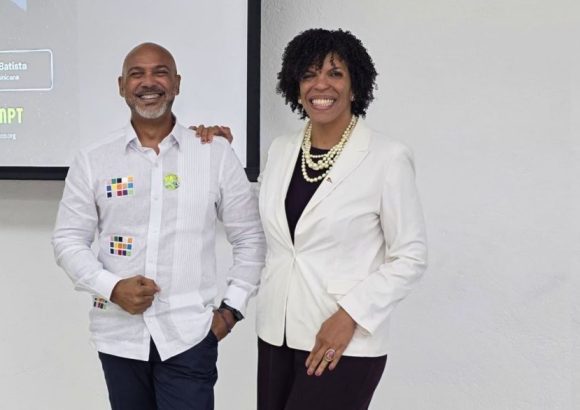
On June 3, during an extraordinary session of the Dominican Republic’s National Congress, Suriname’s President Jennifer Simons delivered a landmark address pushing for expanded strategic partnerships between the two Caribbean nations, outlining a multi-sector roadmap for collaboration that spans trade, governance, climate action, and sustainable development.
Simons’ address to the Dominican legislative body came as part of an official working visit to the country, marking a key moment in diplomatic engagement between the two small developing states. In her remarks, the Surinamese head of state emphasized that the bilateral relationship goes far beyond formal diplomatic ties: both Suriname and the Dominican Republic are democratic nations bound by shared core values, with a collective responsibility to advance inclusive growth across the entire Caribbean region.
A central pillar of Simons’ speech was a targeted call to strengthen inter-parliamentary cooperation between the two countries. She argued that regular exchanges between elected lawmakers and specialized parliamentary committees would create tangible benefits, including improved domestic governance, greater institutional transparency, and more robust democratic foundations in both nations.
Beyond parliamentary collaboration, Simons underlined the urgent need for closer alignment between both public sector institutions and private business communities. She noted that the recently signed bilateral cooperation agreements between the two countries are set to unlock new flows of trade and cross-border investment, while also creating opportunities for joint work in high-priority sectors including education, tourism, agriculture, energy, and climate resilience.
Acknowledging that both nations face shared structural challenges as small developing states, Simons drew specific attention to the disproportionate impacts of climate change that threaten Caribbean communities. To address this and other pressing transnational issues including public safety and sustainable development, she advocated for coordinated regional and international collective action, highlighting that shared challenges require unified response strategies.
In closing, Simons stressed that deepened bilateral cooperation carries enormous mutual upside: stronger ties will allow both countries to fully leverage their untapped economic potential, driving growth and opportunity across key sectors ranging from tourism and professional services to small and medium enterprise development.
-

UN raises concerns as shelling continues in Lebanon
Escalating cross-border hostilities between Israel and Hezbollah in southern Lebanon have triggered fresh urgent warnings from the United Nations, with global officials emphasizing that unrelenting exchanges of fire are putting civilian lives at grave risk and unraveling fragile regional de-escalation efforts. The unfolding violence is closely tied to the broader Israel-Iran conflict that has pulled neighboring states and armed factions into an expanding crisis, leaving Lebanese civilian populations to bear the worst consequences of intensifying clashes.
In defiance of widespread international calls for an immediate end to hostilities, military activity along the Israel-Lebanon border spiked dramatically earlier this week. New data from the United Nations Interim Force in Lebanon (UNIFIL) reveals that over a 16-hour window on Tuesday, nearly 500 projectiles crossed the UN-demarcated Blue Line separating the two countries.
During a Wednesday press briefing, Stéphane Dujarric, spokesperson for UN Secretary-General, confirmed that UNIFIL peacekeepers continue to document heavy aerial activity and near-constant fire exchanges across southern Lebanon, all within the mission’s official area of operations. “As we stressed during the emergency Security Council session yesterday, we call on all parties to exercise maximum restraint and fully adhere to the cessation of hostilities that was agreed to,” Dujarric stated.
Breaking down the latest toll of military activity, Dujarric shared that between midnight and 4 p.m. local time Tuesday, UNIFIL tracked 478 separate projectile trajectories. Of those, 468 were traced to the Israel Defense Forces (IDF), while 10 were linked to Hezbollah. The mission also confirmed nine Israeli airstrikes and 46 separate violations of Lebanese sovereign airspace during the same period.
Tuesday’s surge in violence came on the heels of an even more intense day of clashes Monday, when UNIFIL recorded 702 projectile launches from IDF positions and an additional 47 firings from Hezbollah. Peacekeepers reported large-scale air operations and strikes that damaged critical road infrastructure across both sectors of UNIFIL’s area of responsibility.
The sustained escalation, which includes heavy artillery shelling, mortar attacks and rocket fire, has raised urgent security concerns for both local civilians and UN peacekeeping personnel deployed to the region. In two separate recent incidents, UNIFIL forces themselves came under threat. On May 31, two machine gun rounds hit a prefabricated accommodation block in the mission’s Sector East, penetrating three rooms. No peacekeepers were injured, as personnel assigned to the building had already moved to shelter. A second incident on Monday saw an intercepted IDF drone detonate over a UNIFIL position southwest of Naqoura, with no reported injuries or infrastructure damage. Both incidents remain under active UN investigation.
Even amid mounting security risks, UN peacekeeping personnel have continued their critical humanitarian work to support conflict-affected communities. On Tuesday, UNIFIL coordinated two aid delivery missions to the hard-hit Lebanese city of Tyre in partnership with the UN Office for the Coordination of Humanitarian Affairs (OCHA). On Wednesday, Italian peacekeepers formally donated an ambulance and a stockpile of essential medical supplies to the Lebanese Armed Forces Military Hospital in Badaro, Beirut, at a ceremony attended by UNIFIL Force Commander Major General Diodato Abagnara.
Looking ahead, a revised UN Flash Appeal for Lebanon will be launched Friday in Beirut by Imran Riza, UN Humanitarian and Resident Coordinator, and Lebanese Prime Minister Nawaf Salam. The updated appeal will seek additional funding to scale up life-saving aid for vulnerable Lebanese communities impacted by the ongoing conflict. Dujarric also provided a funding update for the original Flash Appeal, launched in March with a target of $308.3 million. As of early June, donor contributions have reached $185.9 million, covering approximately 60 percent of the total requested funding.
-

Leisure : Did you know ? #29
Nestled along Haiti’s 1,700-kilometer Caribbean coastline lies a little-known geographic secret that many geography and travel enthusiasts have never encountered. While most general knowledge resources only reference the country’s four or five largest islands, the nation actually boasts more than 100 small islands, islets, and cays scattered across its surrounding territorial waters, creating a diverse coastal mosaic that adds unique complexity to Haiti’s national landscape.
This sprawling archipelago includes a number of notable landmasses, from the twin Cayemite Islands (Grande Cayemite and Petite Cayemite) to Île à Cabrit, which sits in the sheltered bay of Port-au-Prince, the Sept Frères island chain off Haiti’s northern coast, and the remote Ilet-à-Brouée. The vast majority of these small landforms remain uninhabited by permanent human settlements, and most only see occasional use as temporary shelter for local fishermen working in nearby coastal waters.
Beyond their geographic intrigue, these scattered island territories support remarkable ecological diversity, ranging from lush, protective mangrove forests that serve as critical nurseries for marine life to bright, pristine coral sandbanks that host unique coastal ecosystems. Managing this extensive maritime domain has emerged as a key priority for Haiti, both to preserve these fragile natural environments and to unlock opportunities for the development of sustainable, low-impact coastal tourism that can benefit local communities. What makes this geographic tapestry even more distinctive is that every tiny cay carries its own traditional local name and unique ecological or geographic characteristics, weaving together a richer, more diverse portrait of Haiti’s national territory than most popular sources share.
This little-known geographic fact was shared as part of the answer key for the popular HaitiLibre Quiz platform, a free general knowledge resource that invites users to test their knowledge across a huge range of topics, from Haitian history, geography, and culture to global current events and specialized subject areas. Launched as an interactive public resource, the quiz platform does not require user registration, making it accessible to people of all age groups and backgrounds. It offers content across three distinct difficulty tiers—easy, intermediate, and hard—and all quizzes are available in both French and English to serve a broad international audience.
As of a major monthly platform update rolled out on June 1, 2026, the site added 31 brand-new quizzes, bringing the total number of interactive games available to 150, with new content added on a monthly basis to keep the resource fresh for returning users. For those seeking more challenging content, the platform’s dedicated expert menu offers a curated selection of advanced quizzes on specialized topics. Users can explore the full collection of quizzes, share the platform with friends and family, and submit feedback to the HaitiLibre team directly through the official quiz website.
-

DNA eist opheldering over verdwenen 537 kilo kwik bij politiepost
A high-stakes political controversy has erupted in Suriname after 537 kilograms of seized mercury was stolen from a secured storage container located on the grounds of the Geyersvlijt police district, prompting harsh questioning of the country’s Minister of Justice and Police, Harish Monorath, before the National Assembly.
The stolen mercury was originally seized by authorities on March 14, and stored in a locked container at the local police headquarters pending disposal. Monorath confirmed to lawmakers that all 11 containers holding the contraband, totaling 537kg of the toxic material, had vanished. According to the minister, Suriname currently lacks the specialized infrastructure and regulatory processes required to safely destroy seized mercury, forcing authorities to hold the material in secure police storage long-term.
Monorath told the assembly he was first notified of the break-in on a Friday afternoon. Investigators have confirmed that while other items were held in the same storage facility, only the mercury was taken by thieves. The case has sparked particular outrage because the Geyersvlijt police compound also hosts the Regional Assistance Team Paramaribo, a specialized law enforcement unit, making a large-scale theft from the site deeply embarrassing for the national police force. Monorath publicly described the incident as “serious, disappointing, reprehensible and condemnable”, adding that the theft on secured police territory is unfathomable to him.
Lawmakers across party lines have pushed for accountability and a full transparent investigation. Mahinder Jogi, a member of the Assembly from the ruling VHP party, delivered sharp questioning to the minister, demanding to know how such a large theft could occur, who bore responsibility for the site’s security, and whether the minister would accept political consequences for the failure under his portfolio. He closed his questioning with the blunt, widely shared public question: “Where did the mercury go?”
Rabin Parmessar, leader of the opposition NDP bloc, rejected Monorath’s initial explanation as insufficient, calling for a deep, independent probe that covers all aspects of the incident: the circumstances of the theft, the inadequate security protocols at the site, the functionality of on-site CCTV surveillance, and the performance of local police leadership. Parmessar stressed that the incident is a major stain on the national police institution, which relies on public trust to carry out its core duties.
Stanley Betterson, an Assembly member from the ABOP party, emphasized the urgent need to address gaps in integrity within the national police corps. While he stopped short of calling for the minister’s immediate resignation as an automatic fix, he said Monorath must implement strict, active oversight to root out corruption and misconduct, and that clear, decisive action must be taken against “bad apples” within the police force responsible for the security failure.
In response to widespread criticism, Monorath confirmed that a full criminal investigation was launched immediately after the theft was discovered. He noted that he is withholding many details of the ongoing probe to protect investigative integrity, but pledged that every possible resource is being deployed to uncover how the theft was able to happen on police-owned territory, and to recover the stolen mercury.
-

Belmopan Unites to Honor Dr. Nuan Bonilla and Demands Change
Four days after a beloved local physician was gunned down in broad daylight while dropping his 5-year-old daughter at school, thousands of Belmopan residents have turned collective grief into a determined public call for justice and sweeping action against rising violent crime in Belize.
On Monday, family members, former patients, colleagues, and friends filled the city’s streets, clad in custom commemorative T-shirts and holding high signs printed with Dr. Nuan Bonilla’s portrait. What began as a vigil to honor his life quickly transformed into a unified demand for change, with chants of “Justice for Bonilla” echoing across the city center.
For Maria Bonilla, the doctor’s widow, the loss is still unimaginable. Nuan dedicated 14 years of his life to training as a medical professional, and had only just begun to build the career he worked so hard for, practicing medicine for just seven years before his death. “I have met so many people who have told me, ‘I am alive because of Dr. Bonilla,’” Maria shared in an emotional interview. “I cannot believe someone took his life this way.”
To those who knew him personally, Nuan was far more than a skilled physician—he was a quiet, caring presence who prioritized the people around him. “We are adamant about this rally because we know Dr. Bonilla would have done the exact same for any of us if our roles were reversed,” said Gianni Alamilla, a close friend of the deceased. “He didn’t speak much in crowds, but he paid attention. He noticed when you were off, he’d follow up with you one-on-one later. That’s just who he was.”
Alamilla also shared that Nuan’s whole world revolved around his young daughter. His daily lunch break from 12 p.m. to 1 p.m. was non-negotiable—he spent every minute of that time with her, and the 8 a.m. to 9 a.m. school drop-off window was equally sacred. “His biggest fear was that his daughter would have to grow up without him,” Alamilla said. “That nightmare came true, and none of us can accept it.”
The entire Belizean medical community has rallied around Nuan’s family, mourning the loss of a physician whose dedication to patient care set an example for the entire field. Dr. Jorge Hildago, an internist and critical care specialist, noted that Monday’s gathering was as much an act of solidarity as it was a call for reform. “We all came together to stand with the family, but we also want a safe Belize,” Hildago said. “We want to be able to go about our lives without fear, and it’s shocking to lose such a brilliant, young life to senseless violence.”
Staff from the Belmopan Medical Imaging Center, where Nuan worked for nearly eight years, also joined the rally. Dr. Virginia Smith, the center’s director, said Nuan’s death has forced the entire community to confront a crisis that has claimed too many lives across Belize. “We are not the only family that has lost someone we love to violent crime,” Smith emphasized. “This cannot keep happening. We need a new approach to keep our people safe.”
Smith added that while a government minister promised a resolution to attendees, the community is not waiting for top-down change. “Belize has so many brilliant, caring people who can come together to build solutions,” she said. “We need to act now, not let this conversation fade away.”
The killing itself unfolded in front of Nuan’s young daughter, who was seated in the back of the family vehicle when the shooting occurred. The family is still processing the traumatic event, even as they push forward in their fight for accountability.
Law enforcement officials have confirmed that investigators are closing in on a key lead in the case, and have not released further details as the investigation remains active. Despite the ongoing uncertainty, Nuan’s family says they are heartened by the overwhelming outpouring of support from Belizeans across the country, and they will not back down from their demand for justice and long-overdue change to address violent crime.
Reporting by Britney Gordon for News Five.
-

Peyrefitte on Cybercrime Charge: “This Never Belonged in Criminal Court”
A 2026 case centered on a satirical social media post in Belize has sparked intense public and legal debate over the boundaries of free expression, consistent application of the law, and potential political interference in criminal justice.
The controversy began when former United Democratic Party (UDP) Chairman Alberto August posted an ironic commentary on Facebook mocking government minister Oscar Mira, referencing past comments Mira made regarding a widely discussed incident in Belmopan. August did not present the satirical content as a direct, quoted statement from the minister, but authorities nonetheless moved to criminally charge August under Belize’s Cybercrime Act following the post. In an unusually aggressive law enforcement action, six officers detained August at his home, holding him in custody for more than 24 hours before formal charges were filed.
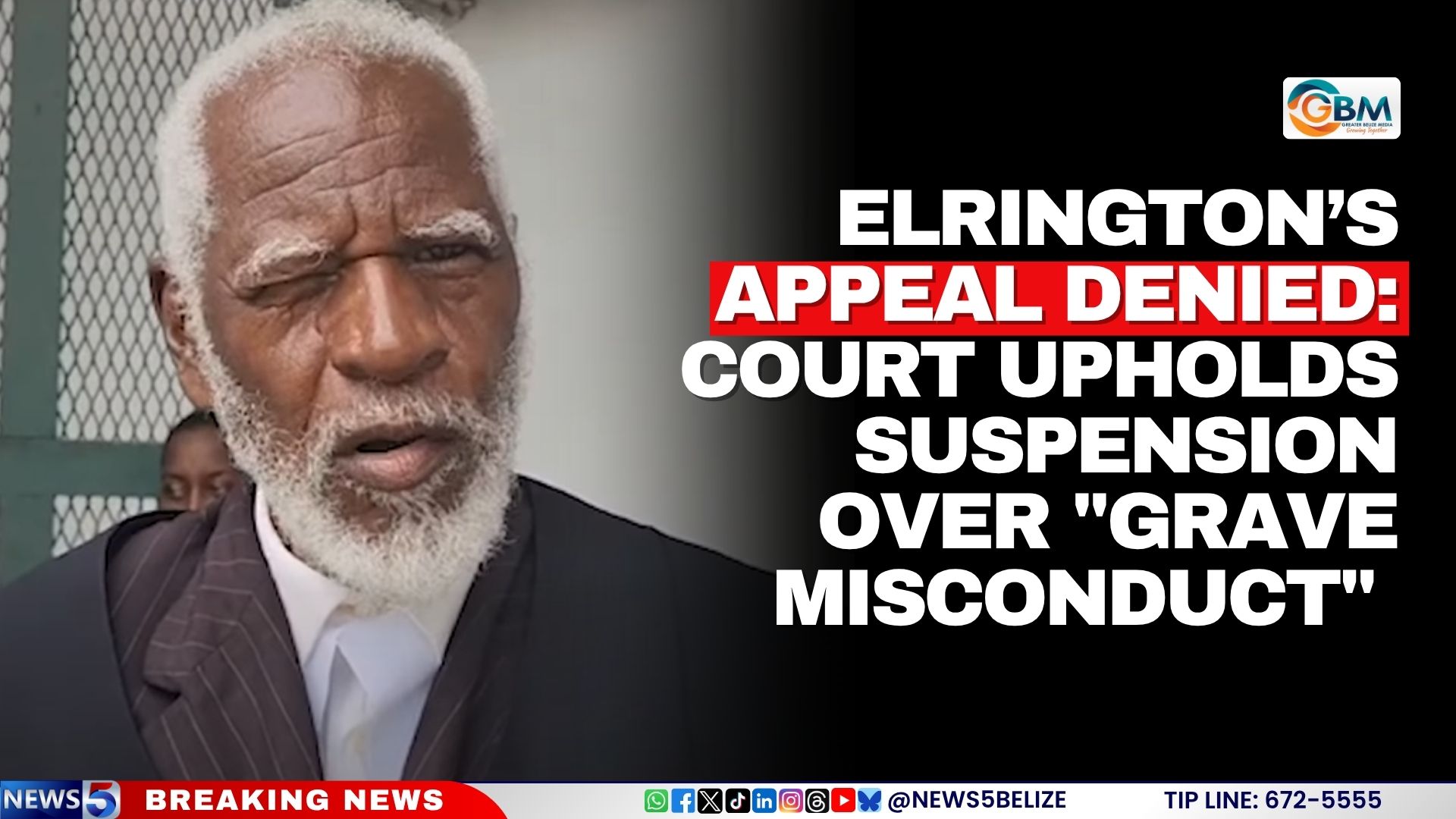
Prominent Belizean attorney Michael Peyrefitte, who has emerged as a leading critic of the government’s handling of the case, argues that the prosecution represents a clear overreach of state power. Peyrefitte emphasizes that even if the minister or his allies found the post offensive, the dispute should have been handled exclusively through civil litigation—most likely a defamation lawsuit—rather than being escalated to a criminal matter. “This never belonged in criminal court,” Peyrefitte stated in comments to local media, pushing back against the decision to pursue criminal charges rather than a civil remedy. He went on to detail the heavy-handed nature of the arrest, noting that law enforcement carried out the detention with what he described as “military precision,” intimidating August’s family in the process.
Beyond the question of whether a satirical post merits criminal charges, Peyrefitte has drawn attention to a stark double standard in how Belizean authorities have approached similar online content, raising serious accusations of selective enforcement. He points to a separate social media post from Brian Mira, Minister Oscar Mira’s brother, that contained a thinly veiled threat of violence against August. In the post, Brian Mira wrote that he would “catch a charge” if he encountered August, a statement widely interpreted as a warning that he would commit a criminal act against the former UDP chairman. While the post was deleted hours after it was published, it remains public record—yet no law enforcement action has been taken against Brian Mira, and he has never been detained, questioned, or charged in connection with the threat.
August has confirmed that he takes the threat seriously and has implemented additional safety measures to protect himself and his family from potential harm. Peyrefitte argues that the contrasting outcomes of the two incidents expose a deeply troubling imbalance in Belize’s justice system: a satirical political post leads to immediate arrest and criminal prosecution, while an explicit threat of violence against an opposition figure draws no response from authorities at all. “If we locked up every person who says something provocative or offensive on social media, every jail in the country would be overflowing,” Peyrefitte noted, pointing out that many Belizeans have posted far more extreme content online without facing any legal consequences.
The case has reignited long-simmering concerns about the use of Belize’s Cybercrime Act to target political opposition, with critics arguing that the law is being weaponized to silence dissenting voices rather than address actual cybercrime. Questions about judicial independence and equal application of the law continue to circulate as the criminal case against August moves forward, with observers across Belize watching closely to see how the controversy will impact future discussions of free speech and political fairness in the country.
-

Urgent Plea for Blood After Deadly Gardenia Shooting
A quiet family gathering in Gardenia Village descended into chaos on a Sunday night in early June 2026, when an unidentified lone gunman opened fire without warning, killing 15-year-old Rackeem Armstrong and leaving his 18-year-old cousin clinging to life. The shooting unfolded shortly after 8 p.m. as the extended family gathered for a community barbecue, sending panicked relatives scrambling for cover as bullets flew, according to initial witness accounts.