作者: admin

  • Simons wil samenwerking met Dominicaanse Republiek verder uitbouwen

    Simons wil samenwerking met Dominicaanse Republiek verder uitbouwen

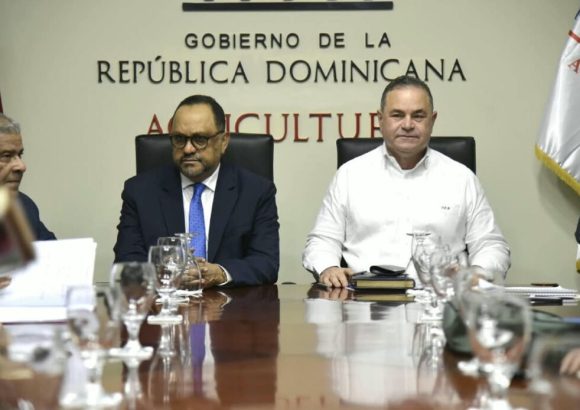
    On June 3, during an extraordinary session of the Dominican Republic’s National Congress, Suriname’s President Jennifer Simons delivered a landmark address pushing for expanded strategic partnerships between the two Caribbean nations, outlining a multi-sector roadmap for collaboration that spans trade, governance, climate action, and sustainable development.

    Simons’ address to the Dominican legislative body came as part of an official working visit to the country, marking a key moment in diplomatic engagement between the two small developing states. In her remarks, the Surinamese head of state emphasized that the bilateral relationship goes far beyond formal diplomatic ties: both Suriname and the Dominican Republic are democratic nations bound by shared core values, with a collective responsibility to advance inclusive growth across the entire Caribbean region.

    A central pillar of Simons’ speech was a targeted call to strengthen inter-parliamentary cooperation between the two countries. She argued that regular exchanges between elected lawmakers and specialized parliamentary committees would create tangible benefits, including improved domestic governance, greater institutional transparency, and more robust democratic foundations in both nations.

    Beyond parliamentary collaboration, Simons underlined the urgent need for closer alignment between both public sector institutions and private business communities. She noted that the recently signed bilateral cooperation agreements between the two countries are set to unlock new flows of trade and cross-border investment, while also creating opportunities for joint work in high-priority sectors including education, tourism, agriculture, energy, and climate resilience.

    Acknowledging that both nations face shared structural challenges as small developing states, Simons drew specific attention to the disproportionate impacts of climate change that threaten Caribbean communities. To address this and other pressing transnational issues including public safety and sustainable development, she advocated for coordinated regional and international collective action, highlighting that shared challenges require unified response strategies.

    In closing, Simons stressed that deepened bilateral cooperation carries enormous mutual upside: stronger ties will allow both countries to fully leverage their untapped economic potential, driving growth and opportunity across key sectors ranging from tourism and professional services to small and medium enterprise development.

  • UN raises concerns as shelling continues in Lebanon

    UN raises concerns as shelling continues in Lebanon

    Escalating cross-border hostilities between Israel and Hezbollah in southern Lebanon have triggered fresh urgent warnings from the United Nations, with global officials emphasizing that unrelenting exchanges of fire are putting civilian lives at grave risk and unraveling fragile regional de-escalation efforts. The unfolding violence is closely tied to the broader Israel-Iran conflict that has pulled neighboring states and armed factions into an expanding crisis, leaving Lebanese civilian populations to bear the worst consequences of intensifying clashes.

    In defiance of widespread international calls for an immediate end to hostilities, military activity along the Israel-Lebanon border spiked dramatically earlier this week. New data from the United Nations Interim Force in Lebanon (UNIFIL) reveals that over a 16-hour window on Tuesday, nearly 500 projectiles crossed the UN-demarcated Blue Line separating the two countries.

    During a Wednesday press briefing, Stéphane Dujarric, spokesperson for UN Secretary-General, confirmed that UNIFIL peacekeepers continue to document heavy aerial activity and near-constant fire exchanges across southern Lebanon, all within the mission’s official area of operations. “As we stressed during the emergency Security Council session yesterday, we call on all parties to exercise maximum restraint and fully adhere to the cessation of hostilities that was agreed to,” Dujarric stated.

    Breaking down the latest toll of military activity, Dujarric shared that between midnight and 4 p.m. local time Tuesday, UNIFIL tracked 478 separate projectile trajectories. Of those, 468 were traced to the Israel Defense Forces (IDF), while 10 were linked to Hezbollah. The mission also confirmed nine Israeli airstrikes and 46 separate violations of Lebanese sovereign airspace during the same period.

    Tuesday’s surge in violence came on the heels of an even more intense day of clashes Monday, when UNIFIL recorded 702 projectile launches from IDF positions and an additional 47 firings from Hezbollah. Peacekeepers reported large-scale air operations and strikes that damaged critical road infrastructure across both sectors of UNIFIL’s area of responsibility.

    The sustained escalation, which includes heavy artillery shelling, mortar attacks and rocket fire, has raised urgent security concerns for both local civilians and UN peacekeeping personnel deployed to the region. In two separate recent incidents, UNIFIL forces themselves came under threat. On May 31, two machine gun rounds hit a prefabricated accommodation block in the mission’s Sector East, penetrating three rooms. No peacekeepers were injured, as personnel assigned to the building had already moved to shelter. A second incident on Monday saw an intercepted IDF drone detonate over a UNIFIL position southwest of Naqoura, with no reported injuries or infrastructure damage. Both incidents remain under active UN investigation.

    Even amid mounting security risks, UN peacekeeping personnel have continued their critical humanitarian work to support conflict-affected communities. On Tuesday, UNIFIL coordinated two aid delivery missions to the hard-hit Lebanese city of Tyre in partnership with the UN Office for the Coordination of Humanitarian Affairs (OCHA). On Wednesday, Italian peacekeepers formally donated an ambulance and a stockpile of essential medical supplies to the Lebanese Armed Forces Military Hospital in Badaro, Beirut, at a ceremony attended by UNIFIL Force Commander Major General Diodato Abagnara.

    Looking ahead, a revised UN Flash Appeal for Lebanon will be launched Friday in Beirut by Imran Riza, UN Humanitarian and Resident Coordinator, and Lebanese Prime Minister Nawaf Salam. The updated appeal will seek additional funding to scale up life-saving aid for vulnerable Lebanese communities impacted by the ongoing conflict. Dujarric also provided a funding update for the original Flash Appeal, launched in March with a target of $308.3 million. As of early June, donor contributions have reached $185.9 million, covering approximately 60 percent of the total requested funding.

  • Leisure : Did you know ? #29

    Leisure : Did you know ? #29

    Nestled along Haiti’s 1,700-kilometer Caribbean coastline lies a little-known geographic secret that many geography and travel enthusiasts have never encountered. While most general knowledge resources only reference the country’s four or five largest islands, the nation actually boasts more than 100 small islands, islets, and cays scattered across its surrounding territorial waters, creating a diverse coastal mosaic that adds unique complexity to Haiti’s national landscape.

    This sprawling archipelago includes a number of notable landmasses, from the twin Cayemite Islands (Grande Cayemite and Petite Cayemite) to Île à Cabrit, which sits in the sheltered bay of Port-au-Prince, the Sept Frères island chain off Haiti’s northern coast, and the remote Ilet-à-Brouée. The vast majority of these small landforms remain uninhabited by permanent human settlements, and most only see occasional use as temporary shelter for local fishermen working in nearby coastal waters.

    Beyond their geographic intrigue, these scattered island territories support remarkable ecological diversity, ranging from lush, protective mangrove forests that serve as critical nurseries for marine life to bright, pristine coral sandbanks that host unique coastal ecosystems. Managing this extensive maritime domain has emerged as a key priority for Haiti, both to preserve these fragile natural environments and to unlock opportunities for the development of sustainable, low-impact coastal tourism that can benefit local communities. What makes this geographic tapestry even more distinctive is that every tiny cay carries its own traditional local name and unique ecological or geographic characteristics, weaving together a richer, more diverse portrait of Haiti’s national territory than most popular sources share.

    This little-known geographic fact was shared as part of the answer key for the popular HaitiLibre Quiz platform, a free general knowledge resource that invites users to test their knowledge across a huge range of topics, from Haitian history, geography, and culture to global current events and specialized subject areas. Launched as an interactive public resource, the quiz platform does not require user registration, making it accessible to people of all age groups and backgrounds. It offers content across three distinct difficulty tiers—easy, intermediate, and hard—and all quizzes are available in both French and English to serve a broad international audience.

    As of a major monthly platform update rolled out on June 1, 2026, the site added 31 brand-new quizzes, bringing the total number of interactive games available to 150, with new content added on a monthly basis to keep the resource fresh for returning users. For those seeking more challenging content, the platform’s dedicated expert menu offers a curated selection of advanced quizzes on specialized topics. Users can explore the full collection of quizzes, share the platform with friends and family, and submit feedback to the HaitiLibre team directly through the official quiz website.

  • DNA eist opheldering over verdwenen 537 kilo kwik bij politiepost

    DNA eist opheldering over verdwenen 537 kilo kwik bij politiepost

    A high-stakes political controversy has erupted in Suriname after 537 kilograms of seized mercury was stolen from a secured storage container located on the grounds of the Geyersvlijt police district, prompting harsh questioning of the country’s Minister of Justice and Police, Harish Monorath, before the National Assembly.

    The stolen mercury was originally seized by authorities on March 14, and stored in a locked container at the local police headquarters pending disposal. Monorath confirmed to lawmakers that all 11 containers holding the contraband, totaling 537kg of the toxic material, had vanished. According to the minister, Suriname currently lacks the specialized infrastructure and regulatory processes required to safely destroy seized mercury, forcing authorities to hold the material in secure police storage long-term.

    Monorath told the assembly he was first notified of the break-in on a Friday afternoon. Investigators have confirmed that while other items were held in the same storage facility, only the mercury was taken by thieves. The case has sparked particular outrage because the Geyersvlijt police compound also hosts the Regional Assistance Team Paramaribo, a specialized law enforcement unit, making a large-scale theft from the site deeply embarrassing for the national police force. Monorath publicly described the incident as “serious, disappointing, reprehensible and condemnable”, adding that the theft on secured police territory is unfathomable to him.

    Lawmakers across party lines have pushed for accountability and a full transparent investigation. Mahinder Jogi, a member of the Assembly from the ruling VHP party, delivered sharp questioning to the minister, demanding to know how such a large theft could occur, who bore responsibility for the site’s security, and whether the minister would accept political consequences for the failure under his portfolio. He closed his questioning with the blunt, widely shared public question: “Where did the mercury go?”

    Rabin Parmessar, leader of the opposition NDP bloc, rejected Monorath’s initial explanation as insufficient, calling for a deep, independent probe that covers all aspects of the incident: the circumstances of the theft, the inadequate security protocols at the site, the functionality of on-site CCTV surveillance, and the performance of local police leadership. Parmessar stressed that the incident is a major stain on the national police institution, which relies on public trust to carry out its core duties.

    Stanley Betterson, an Assembly member from the ABOP party, emphasized the urgent need to address gaps in integrity within the national police corps. While he stopped short of calling for the minister’s immediate resignation as an automatic fix, he said Monorath must implement strict, active oversight to root out corruption and misconduct, and that clear, decisive action must be taken against “bad apples” within the police force responsible for the security failure.

    In response to widespread criticism, Monorath confirmed that a full criminal investigation was launched immediately after the theft was discovered. He noted that he is withholding many details of the ongoing probe to protect investigative integrity, but pledged that every possible resource is being deployed to uncover how the theft was able to happen on police-owned territory, and to recover the stolen mercury.

  • Belmopan Unites to Honor Dr. Nuan Bonilla and Demands Change

    Belmopan Unites to Honor Dr. Nuan Bonilla and Demands Change

    Four days after a beloved local physician was gunned down in broad daylight while dropping his 5-year-old daughter at school, thousands of Belmopan residents have turned collective grief into a determined public call for justice and sweeping action against rising violent crime in Belize.

    On Monday, family members, former patients, colleagues, and friends filled the city’s streets, clad in custom commemorative T-shirts and holding high signs printed with Dr. Nuan Bonilla’s portrait. What began as a vigil to honor his life quickly transformed into a unified demand for change, with chants of “Justice for Bonilla” echoing across the city center.

    For Maria Bonilla, the doctor’s widow, the loss is still unimaginable. Nuan dedicated 14 years of his life to training as a medical professional, and had only just begun to build the career he worked so hard for, practicing medicine for just seven years before his death. “I have met so many people who have told me, ‘I am alive because of Dr. Bonilla,’” Maria shared in an emotional interview. “I cannot believe someone took his life this way.”

    To those who knew him personally, Nuan was far more than a skilled physician—he was a quiet, caring presence who prioritized the people around him. “We are adamant about this rally because we know Dr. Bonilla would have done the exact same for any of us if our roles were reversed,” said Gianni Alamilla, a close friend of the deceased. “He didn’t speak much in crowds, but he paid attention. He noticed when you were off, he’d follow up with you one-on-one later. That’s just who he was.”

    Alamilla also shared that Nuan’s whole world revolved around his young daughter. His daily lunch break from 12 p.m. to 1 p.m. was non-negotiable—he spent every minute of that time with her, and the 8 a.m. to 9 a.m. school drop-off window was equally sacred. “His biggest fear was that his daughter would have to grow up without him,” Alamilla said. “That nightmare came true, and none of us can accept it.”

    The entire Belizean medical community has rallied around Nuan’s family, mourning the loss of a physician whose dedication to patient care set an example for the entire field. Dr. Jorge Hildago, an internist and critical care specialist, noted that Monday’s gathering was as much an act of solidarity as it was a call for reform. “We all came together to stand with the family, but we also want a safe Belize,” Hildago said. “We want to be able to go about our lives without fear, and it’s shocking to lose such a brilliant, young life to senseless violence.”

    Staff from the Belmopan Medical Imaging Center, where Nuan worked for nearly eight years, also joined the rally. Dr. Virginia Smith, the center’s director, said Nuan’s death has forced the entire community to confront a crisis that has claimed too many lives across Belize. “We are not the only family that has lost someone we love to violent crime,” Smith emphasized. “This cannot keep happening. We need a new approach to keep our people safe.”

    Smith added that while a government minister promised a resolution to attendees, the community is not waiting for top-down change. “Belize has so many brilliant, caring people who can come together to build solutions,” she said. “We need to act now, not let this conversation fade away.”

    The killing itself unfolded in front of Nuan’s young daughter, who was seated in the back of the family vehicle when the shooting occurred. The family is still processing the traumatic event, even as they push forward in their fight for accountability.

    Law enforcement officials have confirmed that investigators are closing in on a key lead in the case, and have not released further details as the investigation remains active. Despite the ongoing uncertainty, Nuan’s family says they are heartened by the overwhelming outpouring of support from Belizeans across the country, and they will not back down from their demand for justice and long-overdue change to address violent crime.

    Reporting by Britney Gordon for News Five.

  • Peyrefitte on Cybercrime Charge: “This Never Belonged in Criminal Court”

    Peyrefitte on Cybercrime Charge: “This Never Belonged in Criminal Court”

    A 2026 case centered on a satirical social media post in Belize has sparked intense public and legal debate over the boundaries of free expression, consistent application of the law, and potential political interference in criminal justice.

    The controversy began when former United Democratic Party (UDP) Chairman Alberto August posted an ironic commentary on Facebook mocking government minister Oscar Mira, referencing past comments Mira made regarding a widely discussed incident in Belmopan. August did not present the satirical content as a direct, quoted statement from the minister, but authorities nonetheless moved to criminally charge August under Belize’s Cybercrime Act following the post. In an unusually aggressive law enforcement action, six officers detained August at his home, holding him in custody for more than 24 hours before formal charges were filed.

    Prominent Belizean attorney Michael Peyrefitte, who has emerged as a leading critic of the government’s handling of the case, argues that the prosecution represents a clear overreach of state power. Peyrefitte emphasizes that even if the minister or his allies found the post offensive, the dispute should have been handled exclusively through civil litigation—most likely a defamation lawsuit—rather than being escalated to a criminal matter. “This never belonged in criminal court,” Peyrefitte stated in comments to local media, pushing back against the decision to pursue criminal charges rather than a civil remedy. He went on to detail the heavy-handed nature of the arrest, noting that law enforcement carried out the detention with what he described as “military precision,” intimidating August’s family in the process.

    Beyond the question of whether a satirical post merits criminal charges, Peyrefitte has drawn attention to a stark double standard in how Belizean authorities have approached similar online content, raising serious accusations of selective enforcement. He points to a separate social media post from Brian Mira, Minister Oscar Mira’s brother, that contained a thinly veiled threat of violence against August. In the post, Brian Mira wrote that he would “catch a charge” if he encountered August, a statement widely interpreted as a warning that he would commit a criminal act against the former UDP chairman. While the post was deleted hours after it was published, it remains public record—yet no law enforcement action has been taken against Brian Mira, and he has never been detained, questioned, or charged in connection with the threat.

    August has confirmed that he takes the threat seriously and has implemented additional safety measures to protect himself and his family from potential harm. Peyrefitte argues that the contrasting outcomes of the two incidents expose a deeply troubling imbalance in Belize’s justice system: a satirical political post leads to immediate arrest and criminal prosecution, while an explicit threat of violence against an opposition figure draws no response from authorities at all. “If we locked up every person who says something provocative or offensive on social media, every jail in the country would be overflowing,” Peyrefitte noted, pointing out that many Belizeans have posted far more extreme content online without facing any legal consequences.

    The case has reignited long-simmering concerns about the use of Belize’s Cybercrime Act to target political opposition, with critics arguing that the law is being weaponized to silence dissenting voices rather than address actual cybercrime. Questions about judicial independence and equal application of the law continue to circulate as the criminal case against August moves forward, with observers across Belize watching closely to see how the controversy will impact future discussions of free speech and political fairness in the country.

  • Urgent Plea for Blood After Deadly Gardenia Shooting

    Urgent Plea for Blood After Deadly Gardenia Shooting

    A quiet family gathering in Gardenia Village descended into chaos on a Sunday night in early June 2026, when an unidentified lone gunman opened fire without warning, killing 15-year-old Rackeem Armstrong and leaving his 18-year-old cousin clinging to life. The shooting unfolded shortly after 8 p.m. as the extended family gathered for a community barbecue, sending panicked relatives scrambling for cover as bullets flew, according to initial witness accounts.

  • One Claims Victim, One Charged with Attempted Murder

    One Claims Victim, One Charged with Attempted Murder

    A routine disagreement over vehicle audio repair payments has erupted into a brutal street confrontation in central Belize City, leaving one man hospitalized with life-altering injuries and a local electronics technician behind bars facing attempted murder charges, authorities confirmed this week. The violent clash unfolded at a commercial corner located at the intersection of Baymen Avenue and Saint Joseph Street, where the two men crossed paths by chance after nearly a year of simmering tension over the unfinished repair work.

    According to official police statements, the conflict traces back to a 2025 repair job for a car amplifier and sound deck. Thirty-five-year-old Nelson Nolberto told investigators he had already fulfilled his payment obligation for the work, but disputes over the quality and completion of the job lingered between the two men. When they encountered one another at the downtown Belize City location on the day of the incident, verbal disagreements quickly escalated into physical violence.

    Nolberto’s account alleges that 45-year-old Phillip Goff, the technician who completed the original repair work, retrieved a machete from his personal vehicle and launched an unprovoked attack. The assault left Nolberto with severe chop wounds across his body, including a critical injury to his neck that has placed him in serious medical condition as he receives treatment.

    Following the confrontation, Goff was taken into police custody and arraigned at a local court on June 2, 2026 on three separate charges: attempted murder, use of deadly means of harm, and dangerous harm. During the initial court hearing, Goff did not enter a formal plea. Magistrates denied his application for pre-trial bail, and he has been remanded to the Belize Central Prison, where he will remain in custody until his next scheduled court appearance on July 28, 2026.

    Notably, Goff presented a conflicting narrative of the event during his court appearance. The technician told the court he was actually the initial target of the attack, and that he only wielded the machete in self-defense to protect himself from imminent harm. Law enforcement officials have confirmed that the investigation into the full sequence of events remains ongoing, as investigators work to reconcile the two conflicting accounts and collect physical and witness evidence to clarify what transpired during the confrontation.

  • Garifuna Communities Fighting to Preserve Ownership of Traditional Lands

    Garifuna Communities Fighting to Preserve Ownership of Traditional Lands

    On Belize’s rapidly developing southern coast, a routine government project to map village boundaries has escalated into a high-stakes standoff over Indigenous sovereignty, cultural heritage, and land ownership, as Garifuna leaders warn that the formal demarcation process risks enabling the further loss of traditional territories to foreign investment and large-scale development.

    The Belizean government launched the boundary initiative last October, tasking an independent multi-stakeholder commission with resolving long-running border disputes between neighboring communities along the Placencia Peninsula, including Sittee River and Hopkins, as well as Placencia and Seine Bight. Made up of representatives from government departments including the Elections and Boundaries Commission, the Ministry of Natural Resources, the Attorney General’s Ministry, plus representatives from the judiciary, the National Association of Village Councils, and the private sector, the commission is on track to wrap up its work and submit final recommendations to the government by August or September 2026, per Clifford King, Director of Local Government at Belize’s Ministry of Rural Transformation. King emphasized that while the issues of village boundaries and communal Indigenous land rights are connected, they require separate policy consideration.

    “The matter of village boundaries is in regards to the jurisdiction for a village council,” King explained in an interview. “The matter of communal land is an issue that is now being taken up by the indigenous people of Belize which is a related matter, as I’m saying, but it is a different matter. But again, these are kinds of things that I think the commission will certainly want to understand how they intersect, where they intersect, if they intersect.”

    For the National Garifuna Council, however, the boundary project cannot be decoupled from the broader crisis of land dispossession facing Garifuna communities across Central America. Garifuna people, a group of mixed Indigenous and African descent that has inhabited Belize’s coastlines since well before 1800, have a centuries-long tradition of stewarding land and marine resources in a sustainable, non-exploitative way, according to Ifasina Efunyemi, Assistant Treasurer of the National Garifuna Council. Efunyemi noted that this pattern of dispossession is not unique to Belize, pointing to ongoing displacement of Garifuna communities in neighboring Honduras and Guatemala.

    “After we have been stewards of these lands, and we have been stewards of these lands since before 1800,” Efunyemi said, “here come people now claiming” ownership of territories that have been managed by Garifuna for generations.

    National Garifuna Council President Alex Nolberto echoed this framing, arguing that attempts to separate the boundary mapping process from broader territorial rights are untenable. The organization is now ramping up its advocacy to demand holistic, permanent protection for all traditional Garifuna territories.

    “What I see happening is that they are trying to separate the issues of the territorial, traditional Garifuna territory and this village boundary conversation, and I don’t see how you can separate the two, right? They are one and the same in my view, and hence the reason why now this fight has to be elevated to address Garifuna territory, to look at traditional Garifuna spaces and to protect them,” Nolberto said. “So this has gone beyond a village boundary, in my view, and now it’s time to take the gloves off and deal with this situation with the greatest of surgical precision and holistically once and for all.”

    As the commission works to meet its end-of-year deadline, the stakes of the process extend far beyond lines on a map. For Garifuna communities already grappling with increasing amounts of their traditional coastal land falling into foreign ownership, the commission’s final recommendations will have long-lasting implications for their ability to preserve their cultural identity and retain control of the territories that have sustained their community for more than two centuries.

  • A Legal Defense Fund for Garifuna Land Rights Fight

    A Legal Defense Fund for Garifuna Land Rights Fight

    Decades-long tensions over Garifuna ancestral land rights along Belize’s southern coast are on the verge of a major legal confrontation, prompting the National Garifuna Council (NGC) to take formal action: the launch of a dedicated Legal Defense Fund to resource their upcoming court battle.

    The conflict centers on traditional Garifuna territories in three coastal communities: Hopkins, Sittee River, and Seine Bight. For generations, the Garifuna people have faced gradual displacement and loss of their ancestral lands, a cumulative crisis that has built up over many years rather than emerging suddenly. Now, as the dispute moves toward the judicial system, the NGC has made the strategic decision to crowd-source financial support from both domestic community members and Garifuna diaspora communities spread across the globe.

    Ifasina Efunyemi, Assistant Treasurer of the NGC, framed the initiative as a proven model for Indigenous advocacy, drawing parallels to the successful land rights campaigns waged by Belize’s Maya community. “These issues have not risen overnight, and they will not be solved overnight either,” Efunyemi explained in remarks to local media. “Over time, we have faced tremendous loss and displacement of our traditional lands. This fund gives our people and our allies the chance to stand with us, as we work to protect what land we still hold and restore what rightfully belongs to our traditional communities.” She emphasized that effective legal defense is impossible without sufficient financial backing, making the fund a critical step toward leveling the playing field for the Garifuna claim.

    Alex Nolberto, NGC President, expressed confidence in the campaign’s success, pointing to the large global Garifuna community that can back the effort. “There are more than 300,000 Garinagu both in Belize and across the diaspora, and we are calling on every one of them to contribute and stand with us in this fight,” Nolberto said. “This is not a struggle for only Belize-based Garifuna; it is a fight for the future of our entire people.” Nolberto added that the NGC, as the legally recognized representative body for all Garifuna matters, is mandated to develop a robust formal legal response to competing land claims, a process that requires covering significant costs including legal representation fees. Beyond courtroom proceedings, the fund will also support public education initiatives to spread awareness of the Garifuna land claim, a dispute that traces its origins all the way back to the 1800s.

    Garifuna leaders stress that the battle is about far more than physical territory: it is a fight to safeguard centuries-old Garifuna cultural heritage and secure a sustainable future for coming generations of the Indigenous community. As the legal process moves forward, the NGC intends to continue coordinating closely with its legal team to map out a clear strategy for advancing their claim in the courts.