作者: admin

  • Emancipation in Grenada: Did you know?

    Emancipation in Grenada: Did you know?

    The journey toward ending chattel slavery across the British Empire began with a landmark piece of legislation 190 years ago: the Imperial Act of Emancipation, signed into law on August 28, 1833, which outlined a phased process to abolish the institution of slavery across all British colonial holdings. Grenada’s local legislative assembly followed suit, approving its own emancipation framework in March 1834, setting in motion a process that would reshape the Caribbean nation forever.

    On the eve of formal emancipation in 1834, official records show that 23,600 enslaved people were held in captivity across Grenada, its smaller sister islands Carriacou and Petite Martinique, forced to labor on 430 separate slave plantations spread across the territory. Of these holdings, Dumfries estate on Carriacou held the largest number of enslaved people at 437, while Grenada’s largest plantation by land size—Grand Anse, spanning 1,237 acres—only held 134 enslaved workers.

    To compensate enslavers for the loss of their forced labor force, the British government disbursed roughly £616,255 to Grenadian slave owners, a sum that equals more than £67 million in 2024 currency. A little-noticed 2018 fact released by HM Treasury revealed a little-known long-term consequence of this compensation: British taxpayers continued paying down the £20 million national loan the government took out to fund these slave owner payouts well into the 21st century.

    Contrary to popular narratives of immediate full freedom, the 1833 act mandated a transitional apprenticeship period for most newly freed people. Field hands were required to continue working for their former enslavers for six additional years, while all other enslaved workers faced a four-year apprenticeship term. Only 3,747 children under the age of six were granted immediate, unconditional freedom on Emancipation Day with no required apprenticeship. The transitional system, framed by policymakers as a preparation for full self-determination, was cut short when all apprenticeships were formally ended on August 1, 1838, marking the date that all enslaved people in Grenada finally gained complete freedom from forced servitude.

    This emancipation process came after more than a century of systematic forced migration of African people to Grenada as part of the transatlantic slave trade. Between 1709 and 1808, an estimated 129,000 captive African people were brought to Grenada’s Carenage harbor, with 19,000 dying from neglect, disease, and abuse during the brutal Middle Passage crossing from West Africa. The last group of African people to arrive in Grenada came much later, in 1863, when 120 recaptive and already liberated Africans were brought to the island as indentured laborers aboard the ship *Barbara Campbell*, departing from St. Helena.

    Roughly 13 percent of all captive Africans brought to Grenada originated from the Windward Coast of West Africa, according to historical trade data. Many cultural traces of these African origins endure in Grenadian society to this day, shaped by centuries of ancestral preservation. One of the most distinct cultural continuities is visible in Grenadian surnames: unlike many former slaveholding societies where formerly enslaved people adopted the family names of their enslavers, most surnames in modern Grenada derive from the first names of male enslaved ancestors, a detail explored in the local historical work *Marking an ‘X’: Exploring the History of Grenada’s Surnames*.

    The ancestral celebration of Saraka, practiced in rural villages including La Poterie in St. Andrew Parish and River Sallee in St. Patrick Parish, was introduced by the last group of Africans who arrived as indentured laborers after formal abolition. On Carriacou, the traditional Big Drum dance—also called the African Nation Dance—honors the ancestral roots of nine distinct West African ethnic groups, including the Akan (Kromanti), Kongo, Igbo, Mandinka, Moko, Temne, and Arada peoples. The iconic Caribbean stilt-walking masquerade tradition of Moko Jumbie, a staple of Grenadian cultural celebrations today, also traces its origins to captive West Africans who brought the performance practice with them to the Caribbean.

    Memorialization of slavery and abolition has been a core part of Grenadian public life for nearly a century. In 1933, two stone pillars were erected at the lower end of St. George’s Cemetery to honor William Wilberforce, one of the most prominent British leaders of the 19th century abolitionist movement. Following the dedication, the cemetery was officially renamed Wilberforce Cemetery in his honor, and it remains a key historical site today. In 2017, a new commemorative plaque marking emancipation was installed in St. George’s Market Square, expanding the nation’s public memorialization of this pivotal history.

    A key note from the article’s contributors frames modern language around this history: contemporary scholars and activists prefer the term “enslaved people” over “slaves” to center the humanity of those held in captivity, emphasizing that enslavement was a violent, forced condition imposed by European enslavers, not an inherent identity of the people subjected to it.

  • PM Browne Warns of ‘Economic Recolonization’ in Emancipation Day Address

    PM Browne Warns of ‘Economic Recolonization’ in Emancipation Day Address

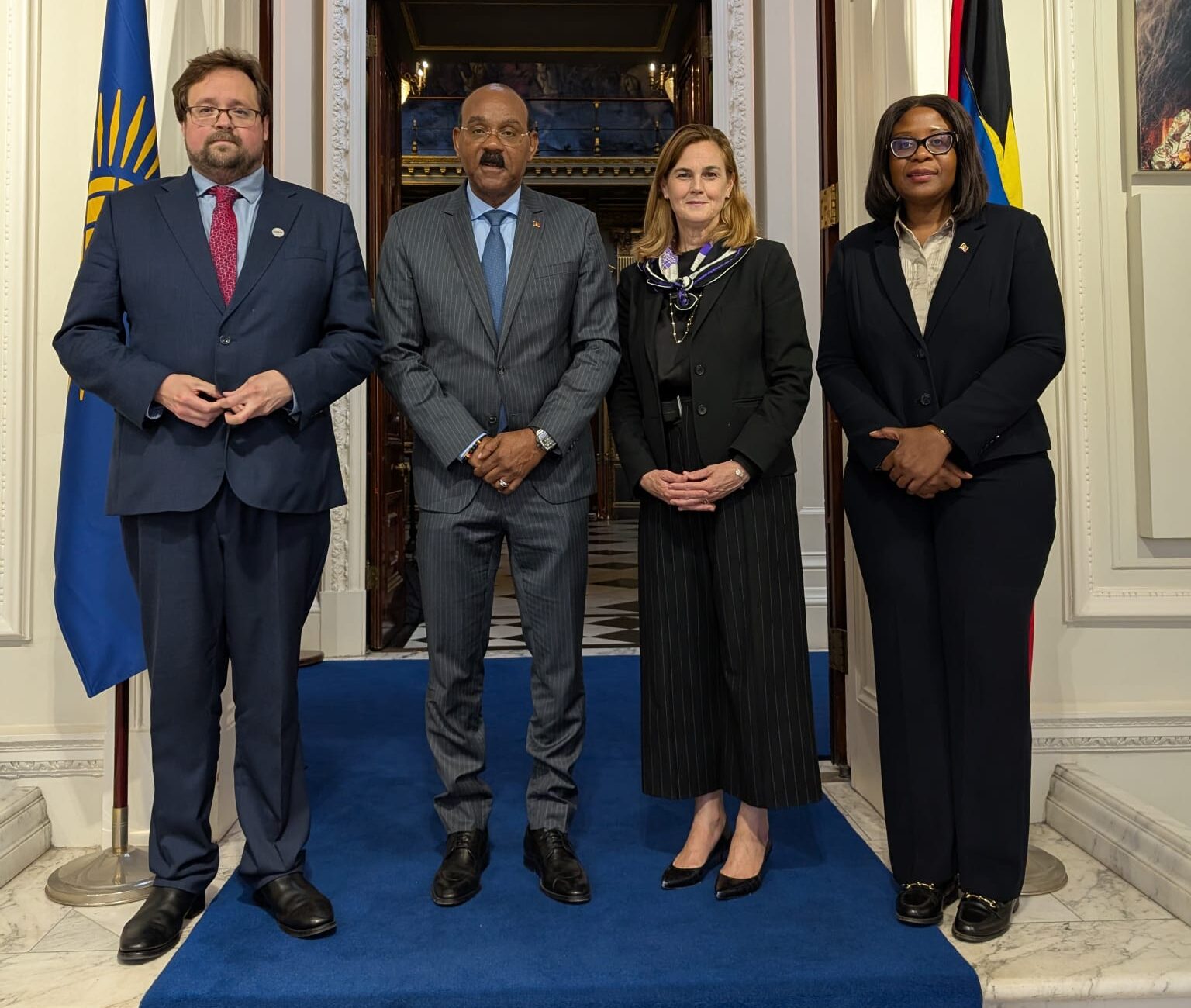
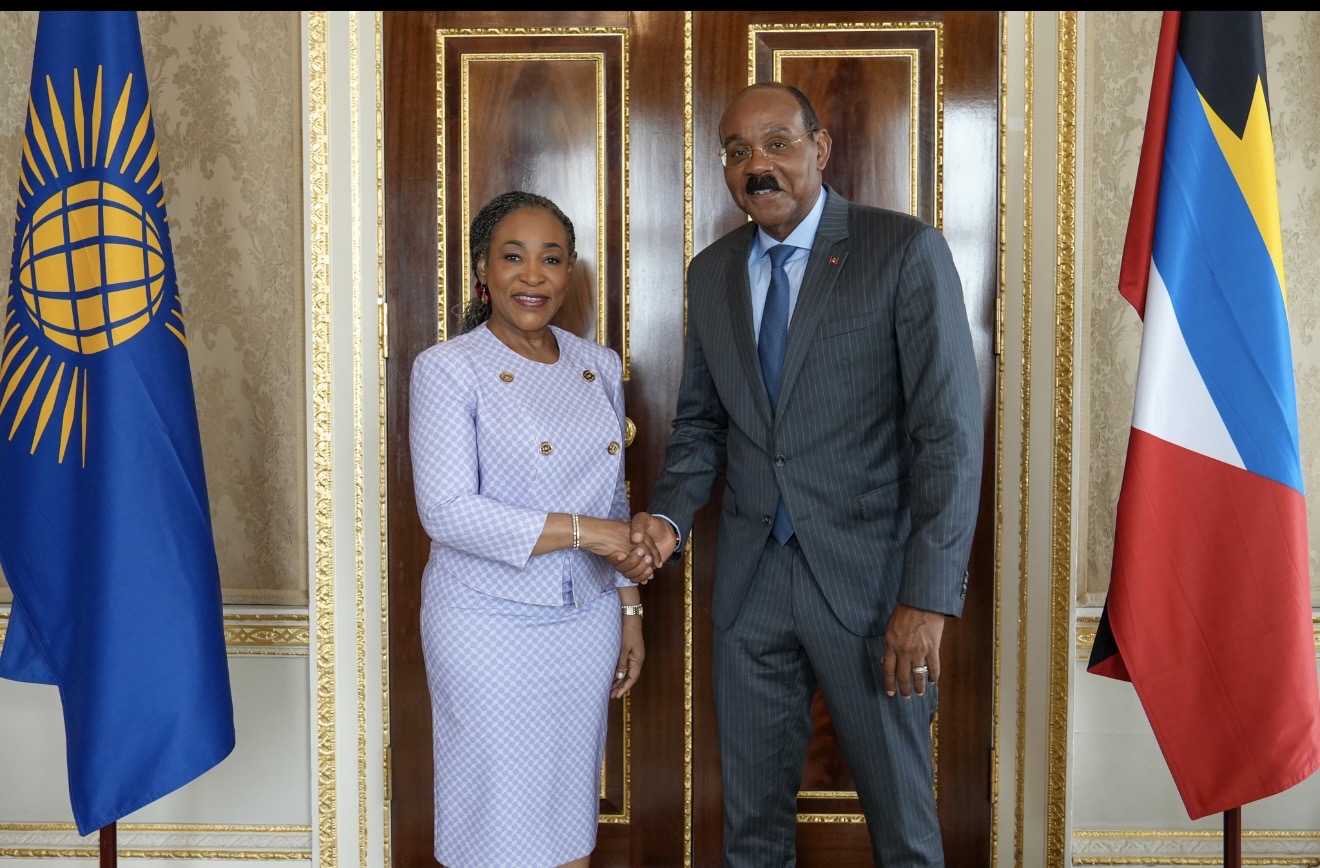
    On Emancipation Day, Antigua and Barbuda Prime Minister Gaston Browne delivered a bold rebuke of global power dynamics, warning that powerful global economies are leveraging asymmetric political and economic leverage to box in the policy autonomy of small, developing nations — a practice he frames as a modern form of “economic recolonization.”

    Browne centered his address on the persistent, systemic inequities that continue to marginalize Black-led developing states within the existing international economic order. Decades after formal decolonization, he argued, lopsided power balances are still routinely used to block sovereign policy decisions, stifle developmental innovation, and narrow the sustainable growth pathways available to small island nations.

    The prime minister traced the roots of today’s yawning global economic gaps back to centuries of chattel slavery and colonial exploitation. Nations that amassed enormous wealth from the forced labor of enslaved African people entered the modern global economy with massive accumulated capital, Browne explained, while former colonial territories were left with deep structural disadvantages that have persisted long after they gained formal political independence.

    Against this historical context, Browne reiterated the longstanding call from Caribbean nations for reparatory justice. He pushed back against common misframings of reparations, emphasizing that the movement does not seek charity, nor does it aim to assign blame to current generations for crimes of the past. Instead, Browne argued, reparations are a targeted effort to redress the intergenerational harm of slavery and colonialism.

    He outlined that reparatory investments should flow into priority sectors that address ongoing structural gaps: public education, universal healthcare, technological development, climate resilience, and domestic institutional capacity building. Beyond direct reparations, Browne also called for urgent global debt reform, as well as more equitable access to international financing mechanisms and global trade markets for small developing states. “Repair is not about revisiting the past,” he said. “It’s about creating a more just and equitable future.”

    Browne walked through Antigua and Barbuda’s centuries-long journey from chattel slavery to full sovereignty, marking key milestones: formal emancipation from slavery in 1834, the rise of the national trade union movement that fought for worker rights, the achievement of universal suffrage, associated statehood in 1967, and full political independence in 1981. Even after 1834 abolished the legal institution of slavery, he noted, exploitative systems persisted: discriminatory labor laws and restrictive electoral rules kept economic and political power concentrated in the hands of a small privileged elite, extending exploitation for generations.

    That legacy means the work of emancipation remains unfinished, Browne argued. True independence, he said, requires that formal political freedom be paired with widespread economic opportunity, equitable social justice, and universal respect for human dignity for all citizens.

    Closing his address, Browne reaffirmed Antigua and Barbuda’s commitment to defending its national sovereignty, strengthening domestic democratic institutions, and advocating for a reformed global order where all countries — regardless of geographic size or economic power — receive equal treatment and respect. He urged Antigua and Barbudan citizens to stand firm against coercive, discriminatory practices perpetuated by powerful nations, and to maintain optimism amid the significant economic and geopolitical challenges the country faces.

  • Govt growing school agriculture push

    Govt growing school agriculture push

    In a strategic push to weave agricultural education deeper into the national K-12 system, Barbados’ Ministry of Agriculture and Ministry of Education have announced a joint expansion of the country’s school greenhouse program, with 13 new facilities set to launch at the start of the upcoming academic year. Unlike past iterations of the initiative that relied on external experts to complete construction before bringing students in, the new model centers student participation from the earliest planning and building phases, Agriculture Minister Dr. Shantal Munro-Knight confirmed during a Friday press briefing marking the close of a month-long national agricultural summer camp that hosted more than 20 student participants.

    Dr. Munro-Knight explained that the hands-on reworking of the program is designed to give students a far more comprehensive understanding of modern agriculture than traditional planting-focused lessons. “Previously, our specialists would handle all construction from start to finish. But Minister [of Education] Blackman and I agreed that this approach misses critical learning opportunities,” she told outlet Barbados TODAY. “Agriculture isn’t just about sowing seeds and harvesting crops. It involves architectural design, climate science, and technological innovation too, and we want students to experience all of that.”

    Beyond basic cultivation skills, students will gain practical knowledge in greenhouse structural design, the effects of weather and heat exposure on crop growth and infrastructure, modern agricultural technology, and sustainable growing practices. For example, students will learn firsthand how to adjust growing bed heights to manage heat and moisture levels, rather than just memorizing the concept in a textbook.

    To complement the practical learning, the government also plans to introduce a cooperative business framework for school agricultural programs, giving students firsthand experience in agribusiness and food systems economics. Under the proposed model, the Ministry of Agriculture will sign a formal off-take agreement to purchase quality produce grown by students, with all revenue generated returning to the participating schools to fund further agricultural programming or other school initiatives. “This structure lets students see the full commercial side of agriculture,” Dr. Munro-Knight said. “They learn that sustainable agriculture isn’t just growing food—it’s building a viable business too.”

    The long-term vision of the partnership extends far beyond adding new greenhouses. To embed agriculture permanently into the national education system, the two ministries are currently developing a complete formal agricultural curriculum for all school levels, a project that will be rolled out incrementally. Additional specialized training for participating teachers is also a core part of the initiative, as the government works to address existing capacity gaps. “We’ve tasked teams from both ministries to map out the full curriculum framework,” Dr. Munro-Knight said. “This is a long-term goal. We’re starting with the greenhouses and initial teacher training, and we’ll build steadily toward a full integrated curriculum over time.”

    The agriculture minister noted that demand for school greenhouse projects has grown steadily in recent years, with a number of local schools such as Springer Memorial already running consistent, successful agricultural programs on their own. Teacher training remains one of the most significant barriers to faster nationwide expansion, so the program will prioritize schools that already have established farming initiatives, enthusiastic leadership, and the capacity to scale up their work in the first phase. “We’re starting with the schools that are ready, that have teachers willing to lean in, and that already have momentum around agricultural learning,” Dr. Munro-Knight said. “Once we refine the model there, we’ll expand to the next stage.”

  • DEM interns lead disaster preparedness exercise for youth

    DEM interns lead disaster preparedness exercise for youth

    A four-week youth disaster preparedness training programme in Barbados wrapped up Friday with a hands-on, student-organized simulation exercise that put young participants’ emergency response skills to the test. Dubbed Operation Savannah Shield, the capstone activity was fully planned and led by interns with the country’s Department of Emergency Management (DEM) for participants of the Safe Coast BIM Youth Disaster and Emergency Preparedness summer camp, designed to equip teens with life-saving disaster response skills. The exercise was structured around five rotating skill stations, each targeting a core competency campers learned over the month-long programme. Participants demonstrated proficiency in clear radio communication, basic fire safety protocols, hazard identification in high-risk environments, cardiopulmonary resuscitation (CPR), general first aid, and the assembly of a well-stocked emergency go-bag. Speaking on behalf of the intern organizing team, co-lead Shakenya Jones explained the simulation was built specifically to reinforce the theoretical and practical lessons campers absorbed over the course of the programme. “We were tasked with developing a concluding exercise that tied all our learning together, so we built five stations that each focused on the key skills covered throughout the camp,” Jones said. She added that participants engaged enthusiastically with all activities, with the radio communication station emerging as a clear participant favorite. Fellow co-lead and DEM intern Edwin Workman noted the simulation was intentionally designed to mirror real-world emergency scenarios, with a core focus on building collaborative problem-solving and independent critical thinking. “We split participants into small teams, assigned every member a unique radio call sign, and tested their understanding of proper radio etiquette, observational skills, hazard assessment, and casualty response protocols,” Workman explained. “We intentionally only provided the base context and let participants lead their own responses because we wanted them to build confidence in their own skills—one day, they may need to act when more experienced responders aren’t immediately available.” Workman praised the performance of all 12 to 16-year-old campers, noting that while some teams required minor guidance to work through challenges, the overall level of engagement and teamwork exceeded expectations. “Some teams went far beyond the baseline requirements we set, and even groups that needed a little extra direction showed huge improvement over the exercise,” he said. “Overall, campers collaborated effectively, and the student team leaders stepped into their roles admirably.” Ashley Lashley, executive director of the Ashley Lashley Foundation, which partners on the Safe Coast BIM programme, emphasized that the simulation served as the critical practical capstone to a programme focused on closing a gap in youth disaster education in Barbados. The island nation is highly vulnerable to a range of climate-driven disasters, including seasonal hurricanes, widespread flooding, and chronic coastal erosion, making widespread public disaster preparedness a national priority. “Today’s exercise let students put into practice everything they learned over the past four weeks, replicating the exact work that national emergency agencies carry out when disasters threaten our country,” Lashley explained. She noted that while many young Barbadians understand the broader concepts of climate change and its local impacts, most lack concrete, hands-on knowledge of how to respond before, during, and after an emergency. “Young people are aware that climate change is affecting us, but many have never learned the practical steps they can take to keep themselves and their communities safe,” Lashley said. “That’s what makes programmes like Safe Coast so critical. They don’t just teach theory—they give young people the skills to act, and help them understand how disasters shape livelihoods and community well-being across the island.”

  • Cheni Greene Wins Best Learning Experience Award at Caribbean Baking Awards

    Cheni Greene Wins Best Learning Experience Award at Caribbean Baking Awards

    The annual Caribbean Baking Awards, a prestigious event that celebrates excellence across the regional baking industry and highlights emerging talent in culinary arts, has named Cheni Greene as the 2024 recipient of its Best Learning Experience Award. The award recognizes Greene’s transformative journey through the Caribbean baking sector, where she turned a lifelong passion for traditional Caribbean baked goods into a structured, community-centered learning experience that has resonated with aspiring bakers across the region.

    Unlike technical awards that focus on final product quality, the Best Learning Experience Award honors individuals who have turned their personal baking journey into an educational resource for others. Greene, who launched her popular online and in-person workshop series three years ago, has centered her curriculum on preserving centuries-old Caribbean baking techniques, from making traditional jerk-spiced sourdough to classic coconut bread and festive black cake. What set her submission apart was her focus on inclusive learning: she offers sliding-scale tuition for low-income aspiring bakers and provides free digital recipe kits and tutorial videos to community centers across 12 Caribbean island nations.

    At the awards ceremony held in Kingston, Jamaica, judges praised Greene for creating a learning environment that prioritizes cultural preservation alongside skill development. “Cheni hasn’t just learned to bake incredible Caribbean food—she’s created a pathway for hundreds of young people to connect with their culinary heritage while building marketable skills,” said lead judge Maria Hernandez in her presentation of the award. Greene, in her acceptance speech, shared that she plans to use the award’s cash prize to expand her workshop program to include apprenticeships for youth in rural communities, where access to culinary training has long been limited.

    Industry analysts note that the award highlights a growing trend in the Caribbean food sector: increasing investment in educational initiatives that preserve culinary tradition while creating economic opportunities for small-scale producers. Greene’s win draws attention to the critical role that accessible, community-focused learning plays in sustaining the region’s unique baking heritage for future generations.

  • Emancipation: Freedom with responsibility

    Emancipation: Freedom with responsibility

    A leading Grenadian political scientist has sounded a urgent global alarm, warning that a quiet but dangerous breakdown of civil political discourse is putting democracy at grave risk around the world — a crisis that has already reached the shores of this small Caribbean island nation.

    Dr. Wendy C. Grenade identifies the widespread erosion of respectful disagreement as a core driver of this crisis, exacerbated by the rampant misuse of mainstream social platforms. Where political debate was once intended to test competing ideas and strengthen public policy, it has devolved into a dehumanizing digital conflict, where the sole goal is to destroy opponents rather than challenge their perspectives.

    Grenada, Dr. Grenade argues, has not escaped this global trend. Even as digital innovation has opened new pathways for connection between citizens, major platforms including Facebook, TikTok and WhatsApp have been repeatedly turned into weapons for coordinated political venom. Coordinated character assassination has replaced constructive civic dialogue, a shift that is far more damaging than casual observers acknowledge: it poses a direct threat to the fabric of Grenadian society itself.

    In a close-knit small island nation, political divisions are already capable of turning neighbors into adversaries, fracturing the social foundation that communities rely on to navigate shared challenges long after election events end. When digital spaces are poisoned by toxic political rhetoric, the ripple effect extends far beyond campaign season. Qualified, community-focused Grenadians are increasingly opting out of political participation entirely, unwilling to put their families at risk of becoming collateral damage in orchestrated digital smear campaigns. That retreat starves democracy of the talent and perspective it needs to thrive, Dr. Grenade emphasizes. History also offers a grim warning: when a society normalizes the destruction of personal dignity online, physical violence in public spaces rarely lags far behind.

    This year, as Grenada prepares to commemorate Emancipation, Dr. Grenade uses the occasion to frame the fight for respectful discourse as a continuation of the freedom struggle that the holiday honors. True freedom, she argues, is never just about ending physical enslavement or achieving economic independence — it is measured by how a community treats every one of its members. The ancestors who endured the Middle Passage and the brutality of plantation slavery did not break their physical chains only for their descendants to build new digital chains of slander, cyberbullying and intercommunal cruelty.

    “A truly liberated people must protect the dignity of others as fiercely as they guard their own rights,” Dr. Grenade writes. There is room for passionate critique of policy, fierce challenges to institutional failure, and robust debate over the direction of the country — but that debate must never cross the line into crushing another person’s spirit. True liberty can not exist when it threatens the safety and well-being of a neighbor, she stresses. Freedom was won to lift the entire community up, not to be turned into a weapon to destroy fellow Grenadians.

    With a general election approaching on the island, Dr. Grenade is urging all voters to stand firm in their support for their chosen political party — while equally fiercely defending their neighbor’s right to hold a different view. She calls on voters to prioritize debate over critical policy issues rather than expending energy on personal character attacks. When communities waste their collective collective energy trading insults online, they miss the chance to have the urgent conversations that shape Grenada’s future: how to transform the national economy, improve access to quality healthcare, expand educational opportunities for young people, protect the island’s fragile natural environment, and guarantee safety for all residents and visitors.

    To help balance the right to free expression with the responsibility to protect fellow community members, Dr. Grenade offers two simple, actionable steps all social media users can take ahead of the election:
    First, think twice before sharing any political content: verify the facts before hitting send, and refuse to spread sensational unsubstantiated rumors or voice notes. If a claim cannot be proven true, delete it instead of passing it along. Second, hold members of your own political camp accountable: if a supporter of your preferred party engages in malicious digital behavior, call them out and demand they stop. Wrong is wrong, no matter which side commits it.

    Dr. Grenade closes by tying this call for change back to the meaning of Emancipation. The true mark of emancipation is not just freedom from outside oppression — it is freedom to live with honor, to prioritize truth, and to extend grace to even those with whom we disagree most deeply. She expresses hope that this year’s Emancipation commemoration will be more than a remembrance of past progress: it will be a renewed national commitment to building a truly free people, where every person is able to retain their freedom and dignity, even in the heat of political competition. “Freedom must be exercised with responsibility,” she reminds readers.

    This commentary was contributed by Dr. Wendy C Grenade, and NOW Grenada notes that it is not responsible for the opinions and content shared by contributors. Readers are invited to click through to report any abusive content shared on its platform.

  • Agriculture camp aims to grow young farmers

    Agriculture camp aims to grow young farmers

    Barbados has marked the successful completion of its first-ever Hearts and Minds agricultural summer camp, a Ministry of Agriculture initiative that brought hands-on farming education to more than 20 primary and secondary school students, with organizers already planning to expand the program in 2025 to cultivate a new generation of agricultural leaders.

    Running for four weeks through July, the immersive camp introduced participating students to core pillars of modern agriculture: sustainable soil management, ethical animal husbandry, end-to-end food production, agribusiness fundamentals, and agriculture as a viable, rewarding long-term career. At the closing ceremony, Barbados Minister of Agriculture Dr. Shantal Munro-Knight emphasized that boosting domestic food output cannot deliver national food security on its own unless the population rebuilds a meaningful, personal connection to farming and food production.

    The program was designed from the ground up to help young people recognize the central role domestic agriculture plays in supporting their families and local communities, Dr. Munro-Knight explained. “Agriculture is for us. It is not grown exclusively to feed tourists or export markets – it is first to feed our own families, our own communities, the Barbadian people who rely on it every day,” she said.

    Dr. Munro-Knight urged Barbadians to preserve the longstanding tradition of backyard gardening, a practice she framed as critical to advancing the country’s food security goals. “There are foundational cultural practices that support our national development that we must hold onto, and the ability to feed ourselves is at the top of that list,” she noted. “Being able to step out into your backyard and harvest fresh spinach, pick peas from a vine, or pluck fruit from an overhanging tree – those small, everyday acts are far more important than many people realize.”

    These local food production skills become even more critical during global crises that disrupt international supply chains, she added, pointing to ongoing geopolitical conflicts that have strained global food distribution in recent years. “When war disrupts global trade and we can’t rely on imported food, these are the skills that will keep our people from going hungry,” Dr. Munro-Knight said. “They also protect the livelihoods of our existing farming community, because when we prioritize buying and growing local, we sustain the work they have invested in for generations.”

    Camp director David Davis said that after four weeks working alongside the participating students, he left the program with full confidence in Barbados’ agricultural future. “I spent the last month with these young people, and I saw brilliant, curious minds hard at work every single day,” Davis shared. “I was nervous about how the inaugural program would go before we started, but meeting these students put all my worries to rest. I know the future of agriculture in Barbados is in good hands.”

    Davis stressed that the country must prioritize youth engagement in agriculture to secure long-term food sovereignty, comparing the young participants to seeds that require intentional nurturing to grow. “We must put agriculture at the top of our national priority list, and all of us have a role to play in supporting these bright young people,” he said. “We planted the seed of interest in agriculture through this camp, and now we have to keep pushing, keep nurturing that interest so they can grow into the innovative agricultural leaders our country needs.”

    Assistant camp director Keisha Weekes echoed Davis’ optimism, praising participants for their relentless curiosity and wholehearted engagement with every program activity. “Over the past four weeks, we watched these young minds jump at every opportunity to learn,” Weekes said. “Their enthusiasm, curiosity, and eagerness to explore the four core pillars of our program have been truly inspiring. They asked thoughtful, incisive questions, threw themselves into every hands-on activity, and reminded all of us that when young people get the chance to explore agriculture, the future of the sector is bright.”

    Weekes added that the camp not only taught students tangible new skills but also helped them build a lasting appreciation for agriculture’s role in everyday Barbadian life. “It has been wonderful to watch confidence grow, friendships form, and knowledge expand over the course of this program,” she said. “I hope every student leaves here today not just with new practical skills, but with a deeper understanding of how vital agriculture is to every part of our nation.”

    Camp counsellor Tawana Russell outlined the program’s core curriculum, which was structured around four key pillars: soil health, livestock care, the seed-to-table supply chain, and agribusiness. “Together we walked through each of these four areas, and along the way we watched our campers grow more confident, collaborate effectively, and develop a genuine respect for the work of farming,” Russell said.

    By the end of the program, students left with a far more nuanced understanding of farming than they had when they arrived, Russell noted. “They learned that healthy soil is far more than just dirt, that raising livestock requires patience and consistent responsibility, and that food doesn’t just magically appear on supermarket shelves – it’s the product of hard work along the entire supply chain,” she explained. “Most importantly, they learned that agriculture is not just a traditional way of life – it is also a dynamic career, a viable business, and an essential foundation for our nation’s future.”

    For 16-year-old camper Jamira Waithe, the hands-on learning opportunities were the highlight of the entire program. “We got to see first-hand how chickens are raised and processed before they ever reach supermarket shelves,” Waithe shared. “We went on farm tours, we had so much fun learning together, and the best part was building our own grow boxes as a group. We got to prepare the soil and plant our own seedlings – that experience stuck with me. This is honestly the best camp I’ve ever attended.”

    Fellow camper Zion Griffith said the program completely reshaped his understanding of what agriculture entails. “Before I came to this camp, I thought agriculture was just planting crops and taking care of animals – that was it,” Griffith said. “I quickly learned it’s so much more than that. Agriculture is a vital part of all our lives because it gives us the food we eat every day, and it supports the livelihoods of so many people across our country.”

    Griffith added that he also gained valuable insight into sustainable farming and its role in protecting the environment. “I learned so many useful skills: we got to plant crops, care for growing plants, study different farming methods, and I really understood how important sustainable practices are to protecting our natural resources while growing food,” he said.

    With the success of the first cohort, organizers are already preparing to expand the program next year, hoping to reach more young people and build a pipeline of new talent to support Barbados’ goal of greater food sovereignty.

  • CARICOM Chair Says Economic Freedom Key to Completing Emancipation’s Unfinished Work

    CARICOM Chair Says Economic Freedom Key to Completing Emancipation’s Unfinished Work

    On July 31, 2026, ahead of Emancipation Day commemorations across the Caribbean region, the Chairman of the Caribbean Community (CARICOM) and Prime Minister of Saint Lucia, the Honourable Philip J Pierre, delivered an official message reflecting on the legacy of enslavement, celebrating Caribbean resilience, and outlining a collective path forward for the regional bloc.

    In his address to people across Saint Lucia and the entire CARICOM community, Pierre opened by paying tribute to the generations of enslaved women, men, and children who endured unthinkable cruelty yet never surrendered their inherent dignity, humanity, or hope for freedom. “Because they endured, because they resisted, because they believed, we stand here today as a free people,” Pierre emphasized, noting that Emancipation Day is far more than a ceremonial holiday—it is a sacred reminder of the region’s traumatic origins, the hard-won progress achieved to date, and the unfinished work that remains for current and future generations. Freedom was not granted to Caribbean ancestors, he reminded listeners; it was demanded, fought for, and paid for with immeasurable sacrifice, unwavering courage, and unbreakable faith.

    Pierre stressed that the formal abolition of chattel slavery did not bring an end to systemic injustice. Enslaved people entered into freedom stripped of land, wealth, compensation, and access to opportunity, while the nations and groups that profited from their forced labor retained the benefits of that exploitation. While history cannot be rewritten, Pierre argued that it must be fully understood, because confronting the past is the only foundation for fulfilling the intergenerational responsibility to build a more equitable future.

    The CARICOM chair went on to frame the Caribbean story as a unique narrative of extraordinary resilience forged from overlapping layers of trauma: the dispossession of Indigenous peoples, the centuries-long atrocity of African enslavement, the exploitation of indentured labor, and generations of colonial rule. Out of that pain, Caribbean people created enduring beauty, collective strength, and enduring hope, building sovereign nations, inclusive communities, and functional democracies, while contributing music, literature, and culture that have transformed and enriched the entire world. “We are Caribbean people. We are a proud people. We are a resilient people. And have every reason to believe in our future,” Pierre said.

    The work of true emancipation is far from complete, Pierre argued. Political independence alone is insufficient; the people of the Caribbean deserve economic freedom, equal access to opportunity, broad-based ownership of regional resources, and shared prosperity. He called for building regional economies that allow Caribbean people to create, not just consume, wealth, that offer meaningful opportunity for young people at home, that support local entrepreneurs, farmers, fishers, and manufacturers, and that reward hard work with dignity.

    Centering young people as the core of all regional efforts, Pierre emphasized that every Caribbean child deserves the chance to dream and every young person the chance to achieve their potential. He called for educational systems that prepare youth to innovate, lead, build businesses, master emerging technologies, and drive societal transformation, equipping them to strengthen national and regional communities while pursuing purpose-driven lives.

    Pierre also highlighted two critical pillars of genuine regional independence: food and energy security. “No nation is truly secure if it cannot feed itself,” he noted, explaining that supporting local cultivation, empowering small-scale farmers and fishers, and prioritizing Caribbean-made goods on local supermarket shelves moves the region closer to full sovereignty. For energy, he stressed that expanding access to affordable, reliable, clean energy is not just an environmental priority—it strengthens regional economies, creates new jobs, and reduces the cost of living for all Caribbean people, advancing the unfinished work of emancipation.

    Addressing the ongoing pursuit of reparations for slavery, Pierre clarified that the movement is not about assigning blame or seeking revenge, but about securing truth and justice for the widespread human suffering caused by the transatlantic slave trade and chattel slavery.

    “Every generation inherits more than freedom; it inherits a responsibility,” Pierre concluded. “Our responsibility is to honour the sacrifices of those who came before us by building a society that is more just, more united and more prosperous than the one they entrusted to us. The true measure of our freedom lies not only in what we remember, but in what we choose to build together.”

    Pierre closed by calling on all CARICOM citizens to continue the work begun by their ancestors, strengthen the regional bloc, and build a future worthy of the sacrifices made by prior generations. He reaffirmed his confidence in the people of the Caribbean to meet this intergenerational challenge.

    Founded in 1973 with the signing of the Treaty of Chaguaramas (revised in 2001 to establish a single market and economy), CARICOM includes 15 full Member States and 8 Associate Members, home to roughly 16 million people, 60% of whom are under the age of 30. The bloc’s work is organized around four core pillars: economic integration, coordinated foreign policy, human and social development, and security cooperation, with a stated mission to build an integrated, inclusive, and resilient regional community that delivers shared prosperity, guaranteed human rights, and social justice for all citizens. Widely recognized as one of the most successful integration projects in the developing world, CARICOM positions the region as a unified, competitive actor on the global stage.

  • Soca monarch swaps stage for summer camp to inspire youngsters

    Soca monarch swaps stage for summer camp to inspire youngsters

    Fresh off claiming two of soca music’s most prestigious titles, decorated artist Mikey Mercer traded the bright lights of competition stages for a community summer camp classroom on Friday, leveraging his newfound fame to motivate young people to hold fast to their ambitions. Mercer, who just won both the 2026 Power Soca Monarch and Party Monarch crowns in the annual Crop Over festival, made a surprise appearance at the South Stars Community Summer Camp, hosted at Maxwell House on Maxwell Main Road in Christ Church. During his visit, he spoke to dozens of campers about the importance of self-belief, persistence through hardship, and unapologetically pursuing one’s goals.

    Mercer opened up about his own experiences facing criticism, noting that too many young people abandon their dreams after facing harsh pushback from others. “Sometimes children can be a little harsh…some people have told me that because of how their dreams were attacked by other people, they shied away from them,” he said. “I am fortunate to do what I love as a job, I think we have to plant that seed of going after your goals and dreams [in children].”

    Camp director Tiffany Beckles shared details about the six-week community program, which has drawn roughly 50 children across three age cohorts: 4 to 6 years old, 7 to 9 years old, and 10 to 15 years old. All activities are tailored to fit the developmental needs and personal interests of each group, blending educational workshops and recreational outings to keep young participants engaged throughout the summer break.

    So far, the camp’s schedule has included off-site trips to local landmarks and institutions, including the airport fire station, George Washington House, and 13 Acres. Campers have also gotten hands-on experience with STEM-focused activities, attending dedicated robotics and coding sessions. Friday’s packed lineup featured a music video filming project, a robotics demonstration, and Mercer’s talk, plus an additional visit from former Junior Monarch King K. Looking ahead, Beckles said participants are eagerly anticipating an upcoming field trip to the Graeme Hall Nature Sanctuary.

    Beckles added that Mercer’s visit was a standout highlight for campers, noting that so far, the on-site music video project and the fire station trip have emerged as the children’s favorite activities. With the camp scheduled to wrap up its 2026 session on August 21, organizers are putting the final touches on closing events to end the program on a celebratory note. “Our last lap, right now we have a sports day and a fun day for the last lap,” Beckles confirmed. (Photo credits for both Mercer and Beckles: Shamar Blunt)

  • New Owners Take Control of Antigua and Barbuda Falcons Ahead of CPL Season

    New Owners Take Control of Antigua and Barbuda Falcons Ahead of CPL Season

    A major ownership shift has hit the Caribbean Premier League (CPL) circuit, as the Antigua and Barbuda Falcons franchise has been purchased by a group of Pakistani investors headquartered in the United States. According to Sabina Webster, the Falcons’ head of operations, the acquisition covers Worldwide Sports Operations, the parent company that holds full ownership rights to the CPL franchise.

    Despite the change in leadership, Webster emphasized that day-to-day franchise operations will not face any disruptions as the team gears up for the 2026 CPL season. Instead of upheaval, she framed the transition as an opportunity for growth, noting that fans and stakeholders can expect only meaningful, positive change going forward. The new ownership group has made clear its deep commitment to advancing sports development, with a specific focus on growing cricket across the region.

    Webster added that the new owners have laid out two core early priorities: expanding the franchise’s existing community outreach programs and investing in the development of young domestic cricketers, with the goal of nurturing emerging talent that can climb the ranks to professional international cricket. Contrary to speculation about a potential rebrand, the Falcons will retain their current name, logo, and full organizational identity, with no changes planned to the franchise’s public image.

    Preparations for the upcoming season are already well underway. The franchise launched its official pre-season training camp on the island of Antigua on July 31, with all members of the squad housed at The Verandah Resort throughout the camp period. Webster explained that the in-person camp is designed to help players build on-field chemistry, work through tactical preparations, and get into peak physical condition ahead of the tournament’s opening matches.

    Off the field, work is progressing to upgrade and prepare the iconic Sir Vivian Richards Stadium, the Falcons’ home ground, for upcoming matches during the season. Local industry leader Leon “Kuma” Rodney has been tapped to lead all venue preparation efforts to ensure the facility meets CPL tournament standards.

    The Falcons are scheduled to kick off their 2026 CPL campaign on August 7 at Arnos Vale Stadium in St. Vincent, where they will face off against the CPL’s newest expansion side, the Jamaica Kingsmen. Two days after their opening match, on August 9, the team will return to the same venue to compete against the St. Lucia Kings.

    In a move that has drawn attention from regional cricket fans, the franchise announced back in May that it had secured the signature of star fast bowler Alzarri Joseph, an Antigua native and key member of the West Indies men’s national cricket team. Joseph, who previously represented the St. Lucia Kings during his CPL career, will bring veteran bowling experience to the Falcons’ 2026 squad.