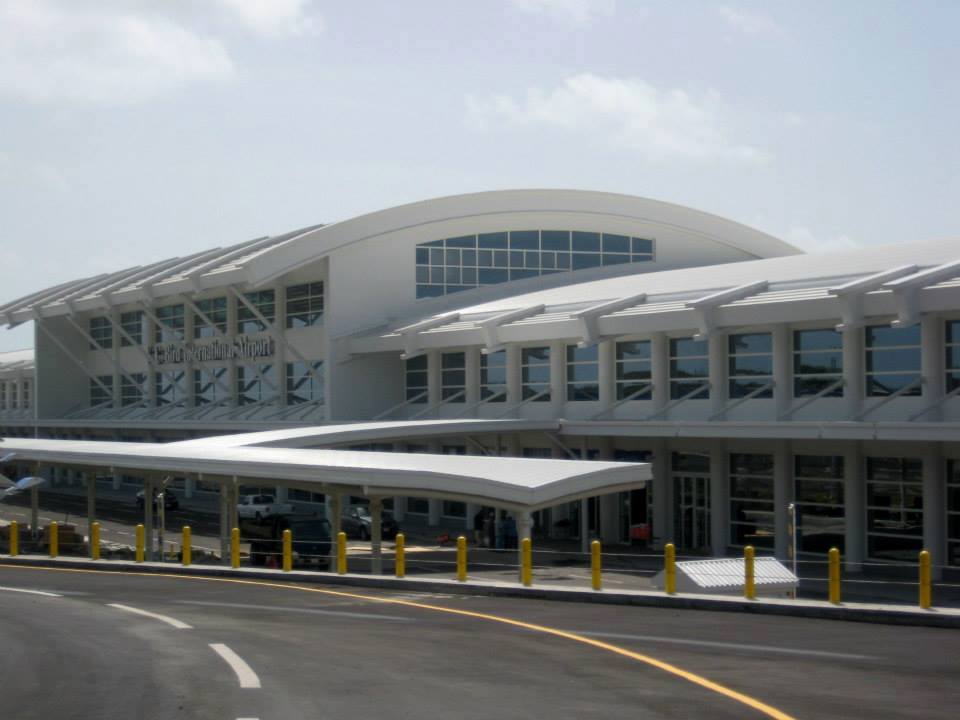
Nine years after first launching their fight against a controversial third airstrip and airport project on the Caribbean island of Barbuda, local activists John Mussington and Jackie Frank will finally get a full domestic court hearing on Monday, June 1, at the High Court of Antigua and Barbuda’s Courtroom 3. The hearing is scheduled to kick off at 9 a.m. local time, or 2 p.m. British Summer Time, with press access available via formal application to the court.
作者: admin
-

Neverson feeling the ‘Sandals Effect’
For over 15 years, Kendal Neverson has built his career as a taxi driver, greeting countless tourists as their first point of contact when they arrive in St. Vincent and the Grenadines. What began as consistent but modest work shifted dramatically in 2024, when a major new hospitality development opened on the island chain, opening unexpected new doors for local workers like Neverson.
A trusted member of the local Taxi Association, Neverson has long anchored his work in three core values: professional service, warm hospitality, and a deep sense of national pride that he brings to every trip he guides. When news first broke that international resort brand Sandals planned to open a new luxury property at Buccament Bay, Neverson admitted he felt uncertain about what the development would mean for independent local drivers. It did not take long, however, for that uncertainty to give way to tangible new opportunity.
To manage airport transfers and on-demand guest transportation, Sandals launched a rigorous competitive selection process to partner with qualified local drivers. In an official press release announcing the initiative, the resort confirmed Neverson was among the local transportation professionals selected to join the resort’s service network.
For Neverson, the impact of the resort’s launch on St. Vincent and the Grenadines’ tourism ecosystem has been nothing short of transformative. “From the moment Sandals began operations here, St. Vincent and the Grenadines’ tourism sector has moved forward incredibly quickly,” he explained in the release. “Our industry has grown drastically, and it has been a huge step up for taxi drivers, especially those of us working on transfers between the airport and the resort.”
Unlike the inconsistent demand many local drivers faced prior to the resort’s opening, the steady stream of international guests visiting the new property has translated into reliable, consistent work for Neverson, while also giving him the chance to welcome travelers from every corner of the globe. As one of the first local residents visitors interact with when they step off the plane, Neverson takes this responsibility deeply seriously, and says the resort’s commitment to high service standards has shaped his own approach to work.
“When it comes to Sandals, everything centers on upholding strict standards,” he said. “That’s a lesson I’ve absorbed and continue to put into practice every single day on the job.”
Beyond the direct benefits for transportation workers like himself, Neverson emphasized that the resort’s presence has rippled through nearly every corner of the local economy. From agriculture and fishing to small retail and other local businesses that support the tourism sector, multiple industries have seen growing demand as visitor numbers climb.
“It has truly been a pleasure having Sandals here on our island,” he said. “It has brought new opportunities across so many different sectors, and helped lift up our entire tourism industry. For me, Sandals represents progress and higher standards across the board. If we want to keep benefiting from the growth of tourism, we have to keep improving our own service and professionalism. When visitors come here, they experience our whole country through the people they meet, like me.”
In highlighting Neverson’s story, Sandals noted that his experience is far from unique. It serves as a powerful reminder that the economic and social impact of tourism development stretches far beyond the walls of the resort itself, creating tangible, long-term benefits for entire local communities.
-

The new PSC must strength impartiality
In a national address delivered on Wednesday, May 27, 2026, St. Vincent and the Grenadines Prime Minister Dr. Godwin Friday laid out a clear policy direction for public sector governance: the country will formalize a merit-based management system for public service appointments, prioritizing recruitment of the most qualified candidates over well-connected political and personal associates.
This opinion piece, written by a self-identified concerned but hopeful civil servant and published by iWitness News, expands on the Prime Minister’s remarks to examine ongoing challenges in the island nation’s public service appointment process. At the center of the current reform effort is the newly convened Public Service Commission (PSC), which inherited a deeply flawed and widely discredited system from its ineffective predecessor.
As the author notes, the overall effectiveness of any public civil service hinges entirely on two core functions carried out by a competent PSC: fair, evidence-based hiring decisions and consistent, lawful disciplinary oversight. For a PSC to function as intended, it must embed four core values into every part of its work: consistency, impartiality, thorough working knowledge of governing regulations and orders, and radical transparency.
Since taking office, members of the new commission have made consistent efforts to rebuild public trust by positioning themselves as a competent, impartial and hardworking governing body. Across multiple stakeholder observations and open dialogues, the new PSC has already demonstrated tangible improvement over previous commissions. That said, significant gaps remain, particularly in the processes for candidate nomination and final appointment to public service roles.
The most persistent issue identified by the author centers on department heads, who often prioritize candidates with close personal or professional connections over applicants with stronger qualifications and more relevant on-the-job experience. When nepotistic appointments go through, the ripple effects are far-reaching: overall workforce morale plummets, workplace culture erodes, and the quality of public service delivered to citizens declines sharply.
When appointments appear arbitrary or driven by favoritism, public confidence in department heads, the chief personnel officer (CPO), and the PSC itself quickly erodes. In a well-functioning system, a capable CPO working under the guidance of a skilled PSC would move quickly to correct these irregularities. Today, the new PSC stands as the strongest remaining check and balance in the public service appointment process.
Even with this improved institutional safeguard, concerns about cronyism persist. Reports continue to emerge of appointments where well-connected candidates are prioritized over colleagues with longer institutional tenure and proven job performance. In some documented cases, appointments have moved forward without adequate review of core criteria: formal qualifications, accumulated seniority, technical expertise, or operational continuity within the affected department.
The author closes with a call to action and a measured note of optimism, urging the PSC to continue strengthening impartiality, transparency, and public trust in the appointment process. The PSC, the author emphasizes, must remain the final, independent authority governing all public service appointments. There is genuine potential for this new commission to act as a catalyst for meaningful positive change and long-overdue institutional reform. Ultimately, only time will tell if this moment marks a true renewal of public service in St. Vincent and the Grenadines, or simply a continuation of the broken practices of the past.
Disclaimer: The opinions expressed in this piece are solely those of the author and do not represent the official editorial position of iWitness News. Opinion contributions can be submitted to [email protected]. Readers can subscribe to the iWitness News WhatsApp Channel for ongoing coverage.
-

Houtproductie daalt licht in 2025; Sipaliwini blijft grootste productiegebied
Fresh data released by Suriname’s Foundation for Forest Management and Forest Control (SBB) shows that the country’s total roundwood output edged slightly lower in 2025, marking a modest shift in the nation’s key forestry sector performance. Per the latest official forestry statistics, total production reached 432,337 cubic meters of roundwood equivalent this past year, down from 435,942 cubic meters recorded in 2024.
Geographically, production remains heavily concentrated across the country’s districts, with Sipaliwini standing out as the undisputed core production region. The district alone contributed 291,733 cubic meters of roundwood in 2025, accounting for more than two-thirds of Suriname’s total national output. Following Sipaliwini are Para with 64,279 cubic meters and Brokopondo with 64,247 cubic meters, making these two districts the secondary production hubs. By contrast, Wanica registered just 147 cubic meters of production for the year, while multiple other districts recorded barely any or no commercial roundwood output at all.
When broken down by product type, industrial roundwood — particularly sawlogs and peeling logs — makes up the overwhelming majority of total production. This segment accounted for 430,331 cubic meters of the 2025 total, with smaller volumes of other wood products including utility poles, shingles and sawn timber making up the remaining output.
Production is also heavily centered on concession areas, which generated more than 362,905 cubic meters of roundwood in 2025. Community forests contributed an additional 42,614 cubic meters, with smaller volumes coming from areas covered by general logging permits, LBB reserves and incidental logging permits.
A monthly breakdown of production reveals clear seasonal variations across the year. The highest monthly output was recorded in October, at 52,270 cubic meters, followed closely by November with 51,912 cubic meters. July saw the lowest production level of any month in 2025, with just 20,093 cubic meters harvested.
Among commercial wood species, basralokus retained its position as the most harvested commodity in 2025, with total output reaching 123,962 cubic meters. Other leading commercial species include gronfolo at 69,535 cubic meters, kopi at 32,659 cubic meters, bruinhart at 27,915 cubic meters and wana at 26,294 cubic meters.
On the export side, Asia continues to dominate as the primary destination for Surinamese timber. Approximately 92 percent of total Surinamese wood exports are shipped to Asian markets, with China, India, Singapore and Vietnam ranking as the largest buyers.
SBB officials note that the updated statistics provide a critical, transparent overview of ongoing trends in Suriname’s forestry sector, highlighting the steady economic contribution the industry makes to the country’s national economy.
-

Officer ‘inadvertently’ fired gun
A routine traffic stop in the Trinidad and Tobago town of Arima spiraled into a chaotic confrontation last Friday that left one police officer injured and sparked multiple official probes into an accidental gun discharge, law enforcement authorities have confirmed. The incident, which unfolded steps from the Arima Magistrates’ Court along Sorzano Street, involved a couple from Diego Martin who now face criminal charges following the clash.
According to official statements from the Trinidad and Tobago Police Service (TTPS), the encounter began when patrol officers from the Arima Traffic Department spotted a heavily tinted Toyota Hilux parked illegally in a designated No Parking Zone. Katrianna Rezende, 38, who was behind the wheel at the time, was first issued a fixed-penalty notice for violating the country’s motor vehicle window tint regulations, which mandate minimum levels of visible light transmittance for windshields and vehicle windows.
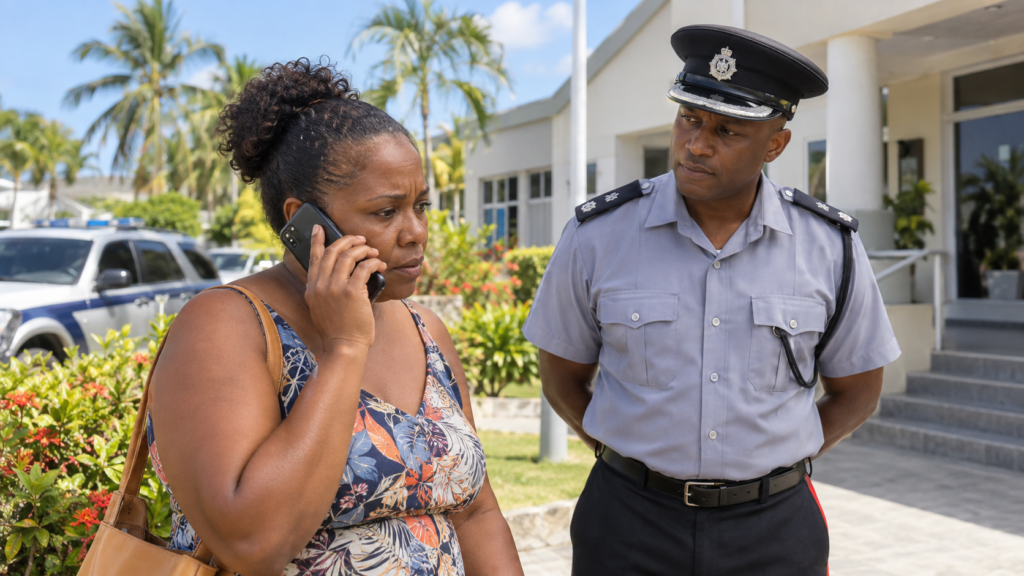
After issuing the ticket, officers ordered Rezende to move the vehicle out of the restricted parking area, an instruction she openly refused. When law enforcement then requested to see her driving documentation, she again declined to comply. As tensions rose, Rezende started the vehicle and attempted to drive away, allegedly striking one of the responding officers in the process. The officer, who reported a painful burning sensation to her right foot, believed her life was in immediate danger from the moving vehicle and drew her service weapon, holding it pointed toward the ground.
As Rezende reversed the vehicle, the officer attempted to return the gun to its holster. In that movement, her finger accidentally made contact with the trigger, firing a single round off from the weapon, the TTPS confirmed. The entire incident was captured on body-worn camera footage belonging to an estate constable with the Trinidad and Tobago Electricity Commission, adding a key piece of evidence for ongoing probes.
In remarks to reporters during a Wednesday news conference at the Port of Spain Police Administration Building, Deputy Police Commissioner Curt Simon confirmed that TTPS leadership has launched a full internal investigation into the encounter. “The executive is aware. Yesterday (Wednesday) I spoke with Snr Supt Maynard Wilson, who is in charge of that division, and an investigation has commenced to look into that matter,” Simon said.
Independent oversight is also underway: David West, head of the Police Complaints Authority, confirmed to local media outlet *Express* that the authority has launched its own parallel probe and assigned a dedicated investigator to the case.
Following the confrontation, both Katrianna Rezende and her 39-year-old husband Manuel Rezende were taken into custody and charged with multiple criminal offenses. Katrianna faces counts of disorderly behaviour, resisting arrest, dangerous driving, careless driving, and assaulting a police officer, while Manuel was charged with disorderly behaviour and use of obscene language. All charges were filed by officers assigned to the Arima Traffic Unit.
The pair made their initial court appearances this week. Katrianna Rezende appeared before Master Lisa Singh-Phillip in the Arima High Court on Wednesday, where she entered not guilty pleas to all charges brought against her. She was granted bail with a total value of TT$140,000: $80,000 with a surety for the assault on a police officer charge, and an additional $60,000 for the remaining offenses. As a condition of her bail, she is required to sign in at the Four Roads Police Station once per month between the hours of 6 a.m. and 8 p.m. Her case has been adjourned for further proceedings on June 24.
Manuel Rezende appeared separately before Magistrate Ali in the Arima Magistrates’ Court, where he was granted TT$30,000 bail. His next court date is scheduled for November 30.
Speaking to *Express* about the incident, Acting Superintendent Ishmael Pitt, president of the Police Social and Welfare Association, noted that while the TTPS puts all its officers through rigorous weapons handling training, accidental discharge events can still occur even for well-trained personnel. Pitt explained that standard protocol following such an incident requires a full investigation before any remedial action is taken, and common outcomes include recommending the involved officer complete a refresher course on safe weapons handling.
“Where an accident has occurred, re-training and other forms of remedial action would be the usual protocol,” Pitt said.
-

CoP restricts protests near State institutions
On May 27, 2026, Trinidad and Tobago’s Police Commissioner Allister Guevarro signed a new Emergency Powers Order that has reshaped the parameters of public protest across the twin-island nation. The order creates 500-meter no-protest buffer zones surrounding 15 critical state and security institutions, a policy that has ignited fierce debate over civil liberties and state security amid an ongoing national state of emergency.
The protected sites listed under the new regulations include key government hubs such as the Parliament building, Office of the President, Office of the Prime Minister, and the Ministry of Finance; core security infrastructure including all police stations, national prisons, army bases, the TTPS Police Headquarters, and the Office of the Director of Public Prosecutions (DPP); and key transportation assets including Piarco International Airport, ANR Robinson International Airport, and the Port Authority of Trinidad and Tobago. This marked a notable shift from earlier state of emergency (SoE) rules, which focused broadly on curfews, expanded police detention powers, and general public order, without the targeted, detailed list of restricted locations for protest activity that the new order establishes.
Guevarro’s order was signed on the same day that supporters of Kaia Sealy held an unauthorised demonstration outside the DPP’s office in Port of Spain. The protest was part of the group’s ongoing “19 Bullets, 19 Protests” campaign, launched after a January 20 police-involved shooting in St Augustine. The incident, which unfolded following a police chase, left Sealy’s common-law husband Joshua Samaroo dead and Sealy wounded. Authorities dispersed the Wednesday demonstration, and three people including protest organiser Allysa Phillip were taken into custody. Prior to the protest, the Trinidad and Tobago Police Service (TTPS) had publicly stated that no official permission had been granted for the gathering, warning that any unauthorised assembly during the SoE would be treated as a violation of emergency regulations.
Prime Minister Kamla Persad-Bissessar publicly criticised the demonstrators on the day the order was signed, accusing participants of intentionally provoking police and seeking undue media attention. The current SoE first entered into force on March 3, 2026, and was extended for an additional three months by Parliament 10 days later. It is currently scheduled to expire in June 2026, though the Prime Minister has already indicated she supports a further three-month extension if the National Security Council recommends the move. The SoE was originally declared to address widespread gang violence across the nation.
The new no-protest zone policy has drawn divided reactions from legal and political figures. Attorney and temporary People’s National Movement Senator Larry Lalla, SC, condemned the order as an overreach of executive power. In a social media statement, Lalla argued that the blanket ban on all protest activity within the buffer zones—including protests outside Parliament—was not a proportional use of the Police Commissioner’s emergency powers, given the SoE’s stated narrow goal of curbing gang violence. He stressed that the policy violates core constitutional rights guaranteed to Trinidad and Tobago citizens, including freedom of thought, freedom of expression, and the right to share political dissent, noting that even small, single-person peaceful protests are prohibited under the new order.
However, Israel Khan, SC, president of the Criminal Bar Association, defended the policy as a reasonable and justified measure during the temporary state of emergency. Speaking to local outlet *Express*, Khan called the Commissioner’s decision “sagacious,” arguing that the restrictions are necessary to maintain public order at critical state sites and prevent disruptive action that could sow confusion across government operations. Khan clarified that he fully supports the right to peaceful protest, freedom of expression, and freedom of the press, but added that no small group has the right to disrupt the day-to-day peaceful function of the country for their own publicity. He added that any parties who believe the order oversteps state authority have access to judicial review, noting that democratic processes remain in place to resolve the dispute. Khan also noted that while Sealy faces pending criminal charges, that does not equal a finding of guilt — a determination that will be made exclusively by the courts, as is required under the rule of law.
-

Beckles: On the brink of a ‘policing state’
Trinidad and Tobago’s political landscape has erupted in fresh tension this week, as opposition leaders ramp up scathing criticism of the ruling government over the ongoing state of emergency (SoE), heavy-handed police action against protesters, and claims the administration is steering the nation toward authoritarian rule.
Opposition Leader Pennelope Beckles made the most high-profile condemnation in an official statement released Thursday, calling directly on Prime Minister Kamla Persad-Bissessar to immediately lift the emergency order that has granted expanded powers to state security forces. Beckles’ criticism was triggered by this week’s arrest of two people — social media commentator Jason De Silva and Alyssa Phillip — who participated in a Wednesday demonstration outside the Office of the Director of Public Prosecutions in Port of Spain.
That protest was organized by loved ones of Kaia Sealy, a woman who faces charges connected to the January police-involved shooting death of her common-law husband Joshua Samaroo in St Augustine. Protesters gathered to demand transparency and answers about the circumstances of the case, a demonstration that ended with the two arrests.
Beckles warned that the island nation is now drifting dangerously close to becoming a policing state, a shift that runs counter to its foundational democratic values. “Freedom trembles in these times. Trinidad and Tobago should never, ever find itself on the brink of becoming a policing state,” she said. The arrests, she argued, have alarmed right-minded citizens across the country, with a police response that appears wildly disproportionate to the actions of peaceful demonstrators. She also took aim at the prime minister, condemning what she called “callous gun talk” from a leader she labeled as absent on key governance issues.
Beyond calling for an end to the SoE, Beckles urged Persad-Bissessar to restore full democratic protections as outlined in the country’s Constitution. She further accused the government of applying a double standard to protests across the country, noting that a separate demonstration held the same day in Siparia by members of the ruling United National Congress (UNC) drew no pushback from police or political leadership. That protest was organized by UNC members of the Siparia Borough Corporation, who demanded the resignation of alderman Victor Roberts after he crossed the floor to join the opposition People’s National Movement (PNM).
Beckles claimed the prime minister deliberately turned a blind eye to the UNC-aligned protest, while harshly condemning demonstrations critical of the government. She also warned that Persad-Bissessar’s public comments on the Sealy case threaten to prejudice ongoing legal proceedings. The prime minister, a Senior Counsel, dismissed Wednesday’s protesters as engaging in “victim gimmickry”, but Beckles argued that as a legal professional, Persad-Bissessar understands full well that her public statements create damaging pre-trial publicity that can undermine a fair trial.
To back up her argument that the arrests were unjustified, Beckles pointed to a May 24 media release from the Trinidad and Tobago Police Service (TTPS), which explicitly confirmed that protests are not prohibited under existing SoE regulations. “No country can survive when peaceful citizens are treated like enemies of the State,” she added.
The criticism extended to other opposition figures, who also pushed back against the prime minister’s recent comment that she would have no issue extending the SoE if recommended by the National Security Council — a body she chairs. Opposition Chief Whip Marvin Gonzales dismissed the claim as self-serving, arguing that any extension of the emergency order would amount to a clear admission of failure by the administration. It would also, he said, prove that the prime minister lied to the public when she campaigned on a promise of a credible plan to reduce violent crime.
Mickela Panday, political leader of the smaller Patriotic Front party, added her own rebuke in a public Facebook post Thursday, calling out Persad-Bissessar for labeling the Sealy protesters “grifters”. Panday argued that the prime minister’s words reflect not strength, but deep contempt for citizens exercising their democratic rights.
“If anyone breaks the law, let the law take its course. But citizens must not be broadly smeared because they speak, gather, question, or express concern about the use of State power,” she said. Panday stressed that when citizens are mocked for raising legitimate concerns, democratic institutions become weaker across the board. She echoed the opposition’s core argument that emergency powers have become a lazy replacement for actual policy, saying: “When emergency powers become the substitute for an anti-crime strategy, everyone should be concerned. Trinidad and Tobago does not need badjohn talk. It needs a crime plan.”