作者: admin

  • VIDEO: Farmer charged with murder over shooting death

    VIDEO: Farmer charged with murder over shooting death

    A fatal shooting in a small local community has resulted in a licensed cannabis cultivator being placed behind bars ahead of a preliminary investigation into the death of a fellow resident. Law enforcement authorities have taken 33-year-old Rhyse Henry, a farmer based in Dickson Village, into custody and formally charged him with the murder of 35-year-old Clydon Cato, a local laborer who also resided in the same community. The shooting incident that claimed Cato’s life occurred on Saturday inside the village.

    Following the shooting, investigators conducted several days of inquiries before formally levelling the murder charge against Henry on Wednesday. The accused made his first court appearance on Thursday at the Serious Offences Court, where a judge denied his bail application. As a result of the ruling, Henry has been ordered to stay in prison custody until his preliminary inquiry gets underway, which will lay the groundwork for any upcoming trial proceedings in the case.

  • $500 Reward Offered After 12-Year-Old Girl Reportedly Robbed in Golden Grove Extension

    $500 Reward Offered After 12-Year-Old Girl Reportedly Robbed in Golden Grove Extension

    A violent street robbery targeting a pre-teen has prompted a desperate public appeal for information from the victim’s mother, who is putting up a $500 cash bounty for tips that unmask the perpetrator. The incident, which unfolded in the residential neighborhood of Golden Grove Extension, left 12-year-old Yalissa Love physically hurt and emotionally shaken, according to her mother, who has been identified publicly only as Love.

    Love detailed the assault to media, stating the unidentified attacker forced her young daughter up against a neighborhood fence before stealing her most cherished piece of jewelry: an 18-karat gold double-plated necklace engraved with Yalissa’s name on a custom nameplate. The physical confrontation left visible injuries to the 12-year-old’s neck, and the sudden, frightening encounter has caused lasting psychological trauma for the child, Love added.

    Local law enforcement has already been notified of the robbery and assault, investigators are currently moving forward with the next steps of the case, which includes reviewing hours of surveillance footage collected from nearby residential properties. This footage is seen as a key lead in helping detectives track down and identify the accused attacker.

    Beyond offering the cash reward, Love is issuing a urgent warning to the local community: she is asking any person who may be offered the engraved necklace for sale to refuse to purchase it, and instead reach out to authorities with information about who is trying to sell it. She is also calling on all local residents with any knowledge of the June incident, no matter how small it may seem, to come forward to help hold the attacker accountable and bring peace of mind to her family.

  • Silence on BTL Deal is “Disrespectful to all Belizeans”

    Silence on BTL Deal is “Disrespectful to all Belizeans”

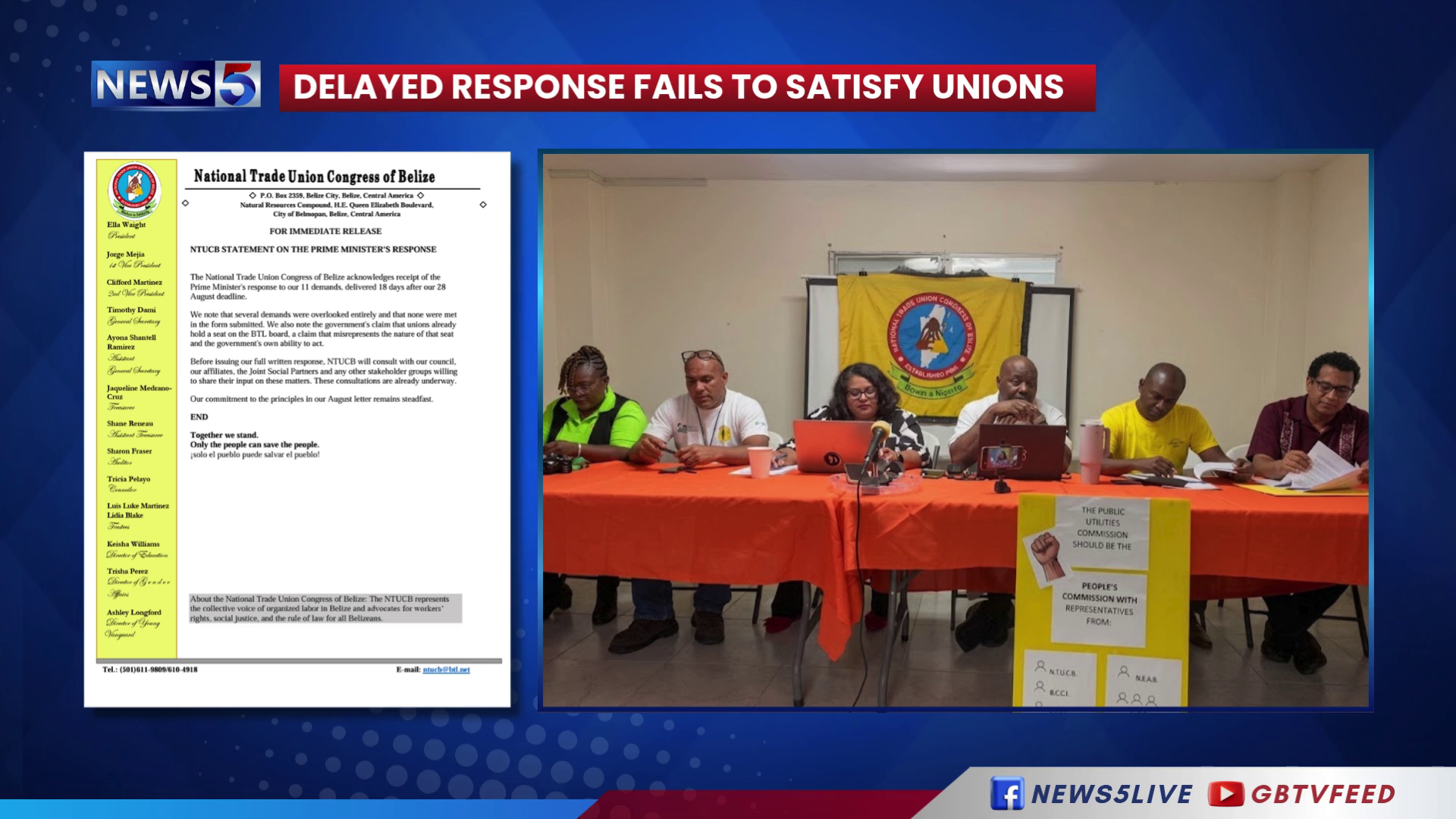
    On August 6, 2026, four of Belize’s most influential civil society and industry organizations – the Belize Chamber of Commerce and Industry, Belize Network of NGOs, National Evangelical Association of Belize, and National Trade Union Congress of Belize – have ramped up their public opposition to the proposed BTL-Speednet acquisition, putting forward five concrete, non-negotiable demands and calling out the government and relevant entities for what they describe as unacceptable disrespect to the entire Belizean public.

    The coalition of groups, collectively referred to as the country’s Social Partners, argues that after multiple rounds of public calls for openness and formal regulatory review, critical questions about the multi-million dollar telecommunications deal remain completely unanswered. These open questions span core areas including the acquisition’s compliance with existing national law, its potential impact on open market competition, internal corporate governance arrangements, the official valuation of Speednet as the target company, undisclosed conflicts of interest among decision-makers, and most critically, how the deal will protect the broader public interest.

    In their joint public statement, the coalition emphasized that this sustained silence from responsible authorities and corporate stakeholders is nothing short of a deliberate slight to every citizen of Belize, who have a right to know how major national industry transactions will shape the country’s digital future and everyday consumer costs.

    At the core of the coalition’s demands is an immediate suspension of all further steps to advance the acquisition until all four required actions are completed to the public’s satisfaction. First, the group calls on Belize’s Attorney General to publish a formal, public legal opinion clarifying how the acquisition aligns (or fails to align) with the provisions of the country’s existing Telecommunications Act. Second, Belize Telemedia Limited (BTL) must release full public details of the commercial rationale behind the purchase, including Speednet’s fully audited annual financial statements and a transparent breakdown of how the deal will affect consumer pricing and telecommunications industry workers. Third, the Office of the Prime Minister and the national Cabinet must publicly articulate the government’s official stance on the acquisition, and lay out clear protocols for managing any existing conflicts of interest among public officials involved in the approval process. Fourth and finally, the Public Utilities Commission is required to publish its full independent assessment of the acquisition’s impact on market competition before casting any final vote, and open the assessment up to formal public comment from Belizean citizens and stakeholders.

    The coalition made clear that it is prepared to exhaust every legal and peaceful avenue to force compliance with these demands. This includes pursuing regulatory appeals, parliamentary intervention, administrative challenges, and formal legal action up to and including seeking court-ordered injunctive relief to block the deal, as permitted under the Telecommunications Act and other national legislation. The group also confirmed that peaceful public demonstrations are on the table as a tactic to raise public awareness and pressure decision-makers, with the sole goal of ensuring that public interest, rather than private gain, guides the final decision on the acquisition.

  • Urgent Blood Donation Appeal Issued for Two Patients

    Urgent Blood Donation Appeal Issued for Two Patients

    A pressing, time-sensitive call to action has been put out to the general public, asking eligible individuals to step forward and donate blood to support two patients, Jahlanie Barzey and Josh Thomas. Organizers behind the appeal note that every blood type is currently in high demand to meet the critical care needs of the two recipients, removing common eligibility restrictions around specific type matches to broaden the pool of potential donors.

    Community members who are able to give are encouraged to travel to the closest blood donation center or hospital to make their contribution. Upon arrival, donors simply need to inform frontline medical and administrative staff that their donation is specifically designated for Barzey and Thomas to ensure the blood is routed correctly to the pair.

    Those leading the appeal have reiterated that even small donations make a meaningful difference, leaning on the message that “every drop counts” when meeting ongoing transfusion needs. With the medical situation of the two patients described as urgent, organizers have stressed that timing is of the essence, pushing for qualifying donors to schedule and complete their donations at the earliest possible opportunity to help save lives.

  • Halo Foundation Donates To Youth Leadership Camp

    Halo Foundation Donates To Youth Leadership Camp

    Investing in the next generation of community leaders has taken a tangible step forward, as the Halo Foundation has once again reinforced its long-standing dedication to youth advancement through new philanthropic support. The non-profit organization has committed financial assistance to back a three-day Youth Leadership Camp, an initiative delivered in formal partnership with The Salvation Army.

    Beyond covering sponsorship for the gathering, the Halo Foundation’s donation specifically covered meal costs for the 30 young attendees who took part in the recently concluded event. Organizers centered the camp around the motivating and empowering theme: “Lead Yourself. Lead Others.” a framing that reflects the core purpose of the entire program.

    Unlike casual youth gatherings, this leadership camp was intentionally crafted to build up young people with the practical knowledge, interpersonal skills, and personal confidence required to grow into impactful, effective leaders within their local neighborhoods and community groups. Over the course of the three-day structured agenda, participants dove into a curated range of critical topics that cover both personal growth and team-focused leadership. These key learning areas included core leadership development frameworks, emotional intelligence for navigating interpersonal dynamics, constructive conflict management strategies, building healthy self-esteem, cultivating personal resilience in the face of challenges, and clarifying long-term personal purpose.

    In remarks following the camp, Cuthbert Forbes, Public Relations Officer for the Halo Foundation, underlined why consistent investment in a nation’s young population remains a top organizational priority. He noted that equipping young people with both strong foundational values and hands-on leadership abilities is not just beneficial for individual growth—it is a non-negotiable requirement for building more connected, resilient communities and laying the groundwork for a brighter collective future.

  • QEH breastfeeding advocate calls for workplace support as mums return to work

    QEH breastfeeding advocate calls for workplace support as mums return to work

    As Breastfeeding Awareness Month draws public attention to maternal and child health challenges in Barbados, healthcare professionals are amplifying a urgent call for employers across the island to implement dedicated, private lactation spaces for working breastfeeding mothers. The renewed advocacy comes on the heels of local research that identifies returning to work as the single leading cause of early breastfeeding discontinuation nationwide.

    Registered nurse and midwife Shermena Kirton emphasized that sustained improvement in national breastfeeding rates depends entirely on meaningful workplace support for new mothers. Citing recent research on exclusive breastfeeding led by Dr. Ashley Paris, Kirton confirmed that the transition back to professional work is the most consistent barrier to continued breastfeeding, far outpacing other common challenges.

    While Barbados offers eligible new mothers three months of maternity leave plus an additional two weeks of home leave, this coverage does not extend to all women, and widespread financial pressure forces many to rejoin the workforce as early as six weeks after giving birth. “Some women simply do not have the luxury of extended time off. They need their paychecks to support their families, so they have to go back long before they are ready to stop breastfeeding,” Kirton explained.

    Without access to a private, appropriate space to express and store breast milk, many of these women have no choice but to switch their infants to formula feeding. Kirton also noted that the challenge extends beyond the workplace, noting that a lack of supportive home environments compounds the barriers created by unsupportive work policies.

    During a recent pop-up public event held for Breastfeeding Awareness Month, reporters from Barbados TODAY were invited to tour two model lactation rooms already in operation at a local hospital — a demonstration that Kirton says proves high-quality lactation spaces do not require costly, elaborate infrastructure. The rooms feature just a few core amenities: a comfortable seating for mothers, a handwashing sink, a refrigerator for milk storage, and a lockable door for privacy. Kirton pointed out that these simple requirements are well within the reach of nearly all employers, regardless of size or budget.

    Beyond maternal and child health benefits, Kirton argued that employers themselves gain tangible advantages from accommodating breastfeeding mothers. She explained that breastfeeding leads to healthier infants, which translates to fewer unplanned absences when parents have to stay home to care for a sick child. “Critics may argue that time spent pumping is time away from work, but in the long term, a mother who can pump three times a day will be far more reliable and productive than one who loses three full workdays to caring for a sick child,” she said.

    Fellow registered nurse and midwife Simone Richardson-Small, who works on the island’s labour ward, echoed Kirton’s call, stressing that designated lactation spaces should become a universal workplace standard. These facilities are critical not just for infant development, but for protecting maternal health as well, she explained. Without a dedicated space to express milk, breastfeeding mothers face a higher risk of breast engorgement, a painful condition that can progress to mastitis, a serious infection that requires medical intervention.

    For infants, consistent access to expressed breast milk delivers lifelong benefits: it supports steady healthy weight gain, lowers the risk of childhood infections, and boosts long-term brain development. “When we support breastfeeding mothers, we are investing in the overall health and future of our entire country,” Richardson-Small added.

    The push for change is not limited to frontline healthcare workers. The Breastfeeding and Child Nutrition Foundation (BCNF), a local advocacy group, is pushing for binding legislative action to codify this requirement. Retired veteran midwife and BCNF representative Betty Reid said the organization has long advocated for dedicated lactation spaces in all workplaces, and is now calling on the Barbadian government to introduce a national policy mandating these facilities for all employers. “Every working mother deserves the space to either express milk or breastfeed her child during working hours, and it should be a guaranteed right, not a discretionary perk,” Reid said.

  • Hoe Gambiaanse vrouwen de mangroves herstellen die Banjul beschermen

    Hoe Gambiaanse vrouwen de mangroves herstellen die Banjul beschermen

    Before the midday sun scorches Gambia’s Atlantic coast, 34-year-old Fatou Jarjue waits for the tide to pull back from the Tanbi Wetlands. Pulling on thick gloves and sturdy socks, she pushes her hand-carved wooden canoe through narrow channels tangled with the sprawling, exposed roots of mangrove trees. Today, the empty pans stowed in her vessel are not meant for oysters—they will hold crabs that burrow in the wet mud beneath the water’s surface, as oyster harvesting is closed for the annual rainy season.

    For Jarjue, a mother of one, life is inextricably tied to this vast coastal wetland. Salt-tolerant mangroves, which naturally anchor shorelines and buffer communities from erosion and storm surge, have provided for her family for generations: the trees host oysters, crabs, and fish that feed her household and generate her income, while their dense root systems act as a natural sea wall for her coastal community. On most days, her brother Musa follows in a smaller canoe to keep watch as she paddles deeper into the mangrove forest; on other days, she navigates the muddy waterways alone.

    For generations, women in communities surrounding Tanbi Wetland have drawn their livelihood from these waters, and Jarjue continues that tradition. But unlike her predecessors, she has dedicated a large portion of her time to restoring the ecosystem that sustains her people. Just over one year since she began her restoration work, Jarjue says she has planted and restored more than 5,000 mangrove trees, reviving critical habitat that protects both the coast and the local fishing economy.

    Raised in Ndangan, a small settlement of 300 people just two kilometers from Banjul, Gambia’s capital, Jarjue learned the rhythm of the wetlands from childhood. At 12 years old, she followed her mother into the mangroves, mastering the skills of oyster foraging, crab trapping, and fishing. For her, the forest was both a classroom and a lifeline. But over the years, she watched the ecosystem change: rising sea levels, accelerating coastal erosion, and shifting weather patterns have steadily eroded the mangrove cover that the entire community depends on. Rather than only harvest from the wetland, she chose to give back, launching her personal restoration effort.

    Today, every trip into the mangroves combines harvesting with conservation work: she inspects young saplings, replaces damaged seedlings, and maps areas that need additional restoration. “Mangroves are part of our lives,” she explains. For Jarjue, environmental conservation and community survival are one and the same: the healthier the mangroves grow, the more secure the future for her family and neighbors.

    As she paddles through the channels, Jarjue passes fully grown oysters clinging to mangrove roots, waiting for the next harvesting season to open. She leaves them undisturbed, proud to protect the stock that will support her community later in the year. While crabbing provides steady income during the rains, oysters remain the most profitable catch for local women: a standard milk can of oysters sells for roughly 100 Gambian dalasi (about $1.34), and demand at local markets consistently outpaces supply. “Oysters are hard work to harvest,” Jarjue says. “But that’s where the income is.”

    Many people mistakenly believe the annual rainy season closure of oyster harvesting is rooted in fears that oysters become toxic during this period. But marine scientist Dawda Saine explains the policy is a deliberate conservation measure tied to ecology and food safety. The closure is part of Gambia’s national Oyster and Cockle Co-management Plan, designed to give oyster populations time to reproduce, grow, and replenish their numbers while reducing pressure on the wetland ecosystem.

    “We don’t close the season because oysters are toxic,” Saine told Al Jazeera. “We close it to protect the resource. During the rains, increased runoff flushes more sediment and contaminants into the water, and oysters filter everything in the water they inhabit—this can impact their quality, taste, and safety.” By leaving oysters undisturbed during this period, both the ecosystem and consumers are protected, and the policy has become a widely accepted investment in future harvests for women like Jarjue.

    Jarjue is one of dozens of women in Ndangan who have turned from traditional foragers to ecosystem stewards, all working to restore the mangrove habitat their lives depend on. For 48-year-old Sussan Colley, who has foraged oysters and fished the wetlands since her teens, the change brought by restoration is impossible to miss. She remembers when mangrove cover shrank, catches declined, and households that relied on the wetland faced growing food insecurity. As restoration projects took root, Colley saw a steady reversal: oysters returned, grew larger and faster, and the wetland became productive again.

    “Mangroves have changed our lives for the better,” Colley said. For her, restoration is also about passing on a new legacy to the next generation. She teaches her children the traditional harvesting skills she inherited from her parents, but adds a new lesson: people must protect the natural systems that sustain them. “I want them to be able to make a living from this land,” she says, “but I also want them to understand how important mangroves are, and what role they play in all our lives.”

    Jarjue and other local women received formal mangrove restoration training through a local conservation initiative that supports Gambian coastal communities building climate resilience. The program equipped them with skills to restore degraded mangrove habitats, protect fishing ecosystems, and strengthen their communities’ ability to withstand the impacts of climate change. For the women of Ndangan, the training transformed their relationship with the wetland: it is no longer only a place to harvest resources, but a shared responsibility to nurture and protect.

    The work being done in Ndangan carries stakes that extend far beyond the small settlement, to the heart of Gambia’s capital. Banjul is a low-lying island city, increasingly threatened by rising sea levels, coastal erosion, and catastrophic flooding. Experts warn that a one-meter rise in global sea levels would submerge large parts of the capital, making the protection of remaining natural coastal barriers a matter of urgent national importance. This threat is not hypothetical: in 2022, severe flooding displaced thousands of Gambians, laying bare the extreme vulnerability of the country’s coastal communities.

    For the communities surrounding Tanbi Wetland, mangroves are far more than an environmental resource—they are a natural coastal defense system that shields inland settlements from storm damage and sea level rise. Rohey Malick Lowe, mayor of Banjul, says the capital’s future is inextricably linked to the survival of the Tanbi mangroves. “Banjul is an island,” she told Al Jazeera. “If the mangroves disappear, the city disappears with it.” The mayor added that city officials are working to protect the capital from growing climate threats, but acknowledged significant remaining challenges, including ongoing degradation of parts of the wetland from unregulated human activity.

  • Govt not backing down from entering bottled water market, despite private sector, opposition concerns

    Govt not backing down from entering bottled water market, despite private sector, opposition concerns

    On August 6, 2026, a public debate has emerged in Guyana surrounding the government’s plan to launch a state-run bottled water bottling facility under the umbrella of Guyana Water Incorporated (GWI), drawing sharp criticism from the country’s leading manufacturing industry body and the main opposition party. President Irfaan Ali has pushed back against critics, defending the initiative as a necessary step to fulfill the government’s commitment to affordable, accessible safe water for all Guyanese citizens.

    The proposal, which has already been allocated GY$496.3 million in government funding, initially garnered support from the Guyana Manufacturing and Services Association (GMSA). The trade group originally backed the plan as a pathway to cut reliance on imported bottled water, boost local manufacturing, generate new employment opportunities, and strengthen the country’s overall economic resilience. But that support has shifted to fierce opposition now that the project’s structure has come into focus, with GMSA warning that the state-owned venture will directly compete with established private sector businesses that have built up the local bottled water market over decades.

    In an official statement released this week, GMSA emphasized that hundreds of millions in private capital have already been invested in the local bottled water sector, with industry players building extensive national distribution networks and creating thousands of sustained jobs for Guyanese workers. Any state-led initiative in this space, the association argued, should be designed to complement and strengthen existing private investment, not undercut or compete against local businesses. GMSA also pointed to a contradiction between the current plan and President Ali’s own February policy announcement, which explicitly called for close public-private collaboration on expanding local bottled water production, including shared industrial infrastructure such as bottle manufacturing to lower industry-wide costs. The group says a standalone state-owned competing venture directly undermines that original collaborative vision.

    President Ali rejected these concerns during a press briefing Thursday, framing GWI’s entry into the bottled water market as a matter of public responsibility rather than unfair competition. “GWI is not in competition with anyone,” the president stated, noting that the agency’s core mandate is to deliver safe, affordable drinking water to all Guyanese. He pushed back against private producers, asking why local manufacturers have allowed imported bottled water to capture growing market share in Guyana, arguing that the high cost of bottled water across the region creates a public obligation for the state to intervene to make the product more accessible for ordinary citizens.

    The main opposition party, A Partnership for National Unity (APNU), has joined GMSA in criticizing the plan, going a step further to argue that the project misplaces GWI’s priorities at a time when core public water services remain inadequate across much of the country. APNU parliamentarian Ganesh Mahipaul noted in a statement that GWI’s immediate focus should be addressing longstanding systemic issues: unreliable water access, poor water quality, low water pressure, and entirely unconnected communities that lack access to a formal public water distribution network.

    “The Government’s first obligation is not to compete in the bottled water market. Its first obligation is to ensure that every household has access to potable water for domestic use,” Mahipaul said. He pointed out that ordinary Guyanese are not requesting the government to sell them bottled water; instead, they want reliable clean water delivered directly to their homes, so they do not need to purchase bottled water at all to meet basic daily needs like cooking, bathing, cleaning, and safe drinking.

    While APNU does not reject the principle of state-run commercial ventures in cases where they serve a clear public good and deliver tangible benefits to citizens, Mahipaul said GWI’s current plan raises serious questions about the appropriate role of the state in the domestic marketplace. “Rather than focusing on its core mandate of providing a reliable public utility, GWI appears to be venturing into a commercial enterprise that will inevitably compete with existing local bottled-water producers, many of whom are private Guyanese businesses that have invested significant capital, created employment and contributed to the economy,” he explained. “Government should be creating an environment that supports private enterprise, not using taxpayers’ money to establish a State competitor while its primary public service obligations remain unmet.”

    Mahipaul has called on the Ali administration to release full transparency around the project, demanding the government disclose key details including the bottling plant’s location, projected production output, total capital and operational expenses, planned retail price point for the state-produced bottled water, intended distribution network, expected return on investment, and whether independent market analysis was conducted to justify the public expenditure. He added that the Guyanese public also has a right to understand how this multi-hundred-million-dollar project aligns with GWI’s legal mandate to deliver safe, reliable public water services across the entire country.

  • Here’s the Updated Hurricane Season Forecast

    Here’s the Updated Hurricane Season Forecast

    As the 2026 Atlantic hurricane season progresses, leading climate and weather agencies have released an updated outlook that brings a mixed picture of reduced cyclone activity but persistent hazards for Belize and the broader Caribbean region.

    Contrary to initial projections, forecasters from both regional and international bodies now anticipate a below-average hurricane season for the Atlantic basin. The U.S. National Oceanic and Atmospheric Administration (NOAA) has adjusted its earlier forecast downward, now calling for between 7 and 13 named storms, 2 to 6 hurricanes, and just 0 to 2 major hurricanes categorized as Category 3 or higher on the Saffir-Simpson scale.

    This reduction in tropical cyclone formation is largely tied to two key climate drivers shaping the region’s weather through the rest of the 2026 wet season, according to the Caribbean Climate Outlook Forum (CariCOF). Strengthening El Niño conditions, combined with ongoing warming of Caribbean surface waters, are reconfiguring atmospheric patterns across the basin. Additionally, CariCOF notes that frequent incursions of Saharan dust moving across the Atlantic will further act to suppress the development of new tropical cyclones.

    However, experts emphasize that a drop in hurricane numbers does not eliminate weather-related threats for Belize. Even with fewer cyclones projected, the country remains at high risk of extreme flooding and sudden flash floods driven by excessive intense rainfall events that can occur independent of major storm systems. The public and local authorities have been urged not to lower their guard ahead of the peak risk period.

    Beyond flood risks, CariCOF’s outlook warns of additional compounding hazards through September. Much of the Caribbean will see slower-than-usual rainfall accumulation paired with increasingly severe humid heat, while the same Saharan dust that suppresses cyclones will degrade regional air quality and exacerbate already high temperatures, creating additional risks for vulnerable populations.

  • Road Tennis federation planned before year-end

    Road Tennis federation planned before year-end

    The Caribbean island nation of Barbados is moving full speed ahead to turn its homegrown sport of road tennis into a globally recognized discipline, with plans to officially establish the International Road Tennis Federation (IRTF) by the end of 2024, the country’s Minister of Sport Charles Griffith confirmed in a Wednesday announcement. The declaration came during the press launch of the fifth edition of the Barbados Road Tennis Open, the sport’s flagship annual competition, where Griffith outlined the island’s long-term strategy for global growth.

    Under the current plan, the new global governing body will be headquartered permanently in Barbados, serving as the central regulatory body to standardize rules, coordinate international competitions, and drive widespread adoption of the sport around the world. Griffith emphasized that launching the federation is a critical milestone in legitimizing road tennis as an international sport, noting that while the process requires formal membership from roughly 50 participating nations to meet international sports governance standards, the time has come to begin laying the foundational framework. Demand for the sport is already growing beyond Barbados’ borders: the government has received inquiries from interested federations across Africa and Europe, and Griffith currently holds an invitation to travel to Canada to open a new international road tennis tournament.

    This year’s Barbados Road Tennis Open, kicking off August 15 and running through October 3, offers a $20,000 top prize for both men’s and women’s singles champions, marking one of the most lucrative purses for the sport to date. In a groundbreaking update for 2024, the tournament will add an under-18 youth division for both boys and girls, a move designed to cultivate the next generation of road tennis talent.

    Griffith stressed that global expansion starts with robust grassroots development at home. Currently, Barbados counts more than 300 purpose-built road tennis courts across the island, and the government plans to add another 300 courts to ensure nearly every community has access to public playing space. “Building a broad base at the grassroots is the only way to grow the sport sustainably,” Griffith explained. “If we have road tennis played in every corner of this island, we will build a strong talent pyramid that can support elite international competition. The government will continue to work hand-in-hand with the national road tennis association to support their efforts and drive this success.”

    Beyond infrastructure, the minister outlined plans to expand the national coaching cohort, training a pool of certified instructors who can travel internationally to teach the sport’s rules and introduce it to new markets. Notably, the sport already received high-profile global exposure during the 2014 Commonwealth Games in Glasgow, where a Barbadian delegation was invited to showcase road tennis – and received a follow-up invitation to host a demonstration at the University of Stirling during their trip. To encourage more young Barbadians to pursue international coaching opportunities, the government will guarantee compensation for all coaches who travel abroad to promote the sport.

    Griffith also highlighted the need to build a sustainable commercial framework for road tennis, allowing Barbadians to reap economic benefits from their indigenous sport. Key opportunities include the standardization and manufacturing of official road tennis rackets, which could become a new export product for the island.

    Calling road tennis “the next global breakout sport,” Griffith revealed that a pathway already exists to achieve Olympic recognition. Four years ago, during discussions with International Olympic Committee leadership, Barbados received an informal offer to pursue observer status for road tennis – a key first step toward eventual inclusion in the Olympic program. “We can only reach that milestone if we get road tennis moving across the world,” Griffith said. “That is why launching the international federation now is so critical.”