
A submission for news processing has been received that only includes social media sharing buttons, an image link, and no actual core news content. The provided image link is hosted at https://news-minio.triplec.cc/news/2026/05/19/cacc3bf5d4e6bf77cf5e408f7cf963b9.jpg, but no textual body of the news report, key event details, contextual information or official statements are included alongside this link. Without access to the full content of the original news story, it is not possible to complete a full in-depth rewrite, analysis or fact-checking of the reported event. Recipients of this incomplete submission require the full textual content of the original news article to carry out the requested processing work.
作者: admin
-
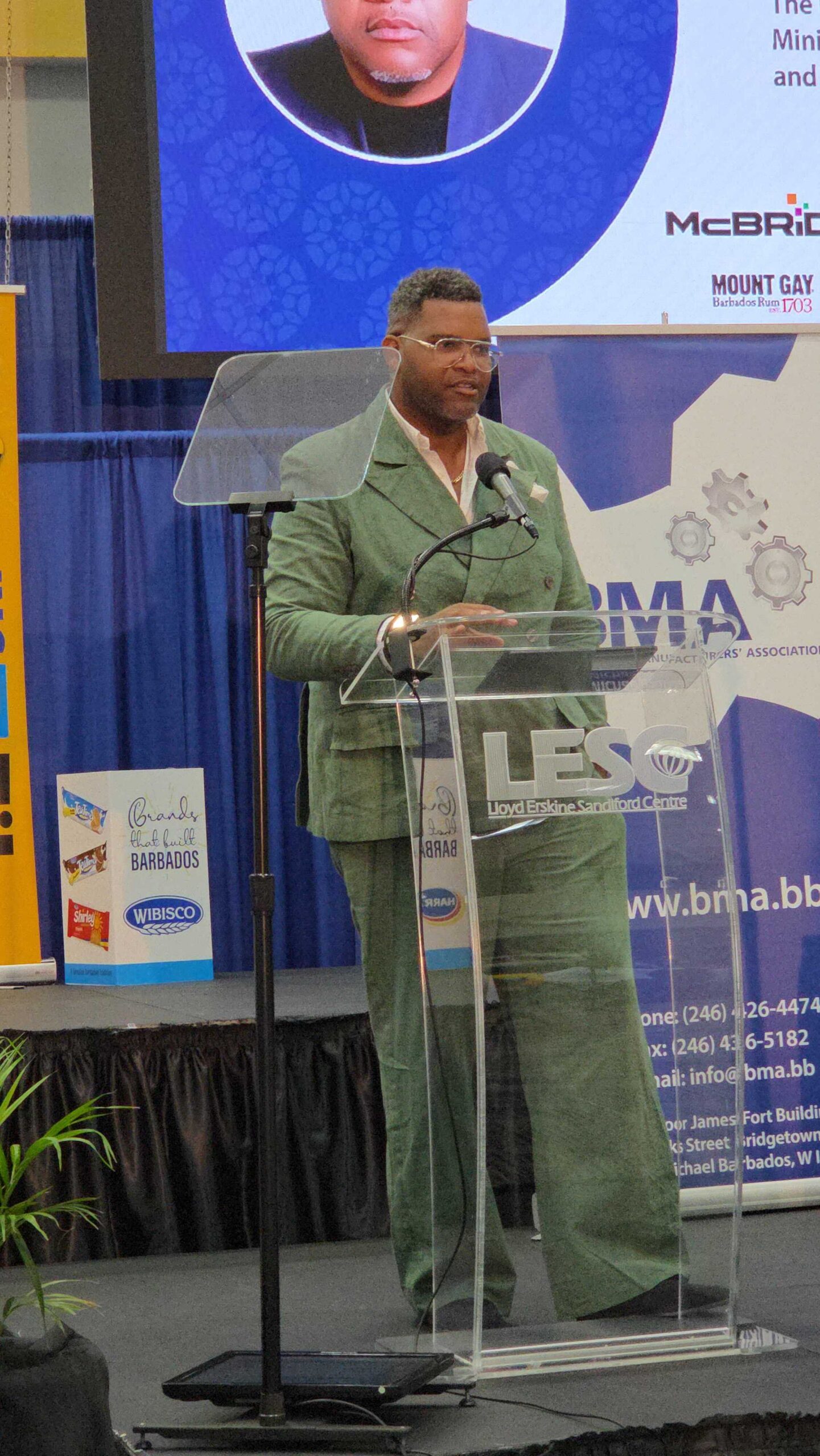
Barbados urged to become creator of global tech solutions
At the BMA’s annual State of the Industry conference, Barbados’ Minister of Industry Senator Jonathan Reid has issued a stark call to action, urging the small island nation to capitalize on a rapidly closing window of opportunity to reorient its economy away from dependence on imported technologies and toward building homegrown, globally competitive digital and AI-powered solutions.
Opening his address, Reid drew a clear line between his appearance at the conference and typical political events, noting he was eager to engage directly with the business community of practitioners who turn abstract ideas into tangible, on-the-ground results. Too often, he observed, policy discussions remain disconnected from real-world execution, but the conference attendees represented a network committed to bridging that gap between concept and impact. “We are standing at a unique historical juncture,” Reid told the audience. “More than ever before, we need to focus on turning bold ideas into market-ready products and solutions tailored to the demands of the new global economy.”
Reid pushed back against the long-held narrative that small island developing states are inherently constrained by their size, limited domestic populations, and small market footprints — limitations that have long shaped regional economic planning. The explosive growth of accessible digital tools and artificial intelligence, he argued, has fundamentally leveled the global playing field for small nations in a way never seen before.
“For the first time in human history, the most advanced technologies ever developed are literally in the pockets of nearly every one of our citizens,” Reid said, pointing to widely accessible generative AI platforms such as ChatGPT and Claude as examples of this new accessibility. “Generative AI puts a rocket ship of innovation in the hands of anyone with a smartphone. It lets small nations build solutions at a scale, speed, and quality that were unimaginable just a decade ago.”
Reid contrasted this current era of digital democratization with past industrial revolutions, where cutting-edge technologies such as aviation and mass manufacturing were out of reach for small territories, leaving them trapped in the role of passive technology consumers that could only produce lower-quality imitations of products developed in larger, wealthier nations. Today, that dynamic has been completely upended.
“A young innovator growing up in Grazettes or Crab Hill now has the exact same access to these transformative tools as a young creator in Singapore, San Francisco, or Toronto,” Reid noted. “That level of equal access is unprecedented for our country, and it changes everything.”
While Reid expressed deep optimism about the transformative potential of AI and digital innovation for Barbados, he did not shy away from his central concern: that the accelerating pace of global technological advancement means the window for Barbados to claim its place as an innovator is closing quickly. If the nation delays strategic action, he warned, the gap between Barbados and early-adopting countries will widen, making catch-up nearly impossible.
To capture this opportunity, Reid called for a fundamental rethink of Barbados’ core economic philosophy. Traditional economic frameworks are built around managing scarcity, but modern digital technology has created a new reality defined by abundant information and capability. Navigating this new landscape, he argued, requires deliberate, strategic decision-making tailored to Barbados’ unique context, rather than relying on outdated economic models.
Drawing on the work of Nobel Prize-winning economist Paul Romer’s theory of endogenous growth, Reid urged Barbados to leverage its own distinct domestic assets to carve out a role in global markets, rather than merely reacting to external economic shocks. He also referenced venture capitalist Mark Andreessen’s post-pandemic manifesto *It’s Time to Build*, warning against a complacent “warehousing” mentality that prioritizes replicating existing foreign technologies over nurturing original, homegrown innovation.
Reid highlighted several pressing domestic challenges — including rising rates of non-communicable diseases, the urgent need for climate resilience, and improving small-scale local mobility — as untapped opportunities to develop scalable solutions that can be exported globally. He pointed to early progress already underway: Barbadian food manufacturers are already advancing cutting-edge work in food science and nutrition, while local logistics firms are innovating new approaches to supply chain optimization amid ongoing global disruptions.
Reid emphasized that Barbados’ longstanding commitment to people-centered development puts the nation in a unique position to lead responsible AI experimentation. “Our approach to AI will always be rooted in advancing quality of life for our people, and that model can be a lesson for the rest of the world,” he said. “There is no reason for our productive or industrial sectors to fear this transformation. The government will walk alongside every stakeholder to make this transition smooth.”
The minister also announced a shift in how his government department will engage with the private sector: moving beyond a purely regulatory role to become an active, value-creating partner for innovators and builders. “Our goal is to become creators of the new,” Reid said. “Being a small nation does not bar us from building world-class technologies and sharing them with the globe. It simply means we have to be strategic, focused, and urgent in how we pursue this transformation.”
-

Military Action on Iran ‘Held Off’ as Trump Cites Diplomatic Push
In a last-minute reversal of planned hostilities that has shifted the trajectory of Middle Eastern tensions, former U.S. President Donald Trump announced on May 18, 2026 that he has called off an imminent military strike against Iran that was scheduled for the same day. The decision, Trump confirmed in a post to his social media platform Truth Social, came in direct response to appeals from key regional leaders. Top officials from Qatar, Saudi Arabia, and the United Arab Emirates reportedly reached out to the White House to ask for additional time to advance ongoing diplomatic negotiations between the two nations. According to Trump, these influential Gulf leaders share the assessment that there is a meaningful, credible chance to broker a mutually acceptable deal that satisfies both Washington and other stakeholders across the Middle East. While the strike is on hold for now, Trump emphasized that the pause is only temporary. He has issued explicit instructions to U.S. military commanders and senior defense leadership to maintain full readiness, enabling the U.S. to launch a large-scale full assault against Iran immediately if diplomatic efforts collapse and no viable agreement is reached. The core of the prospective agreement under discussion centers heavily on Iran’s controversial nuclear program. U.S. negotiating teams have remained firm on one non-negotiable condition: Tehran must permanently abandon any capacity to develop nuclear weapons. Tensions between the United States and Iran have been steadily escalating for months leading up to this moment. Trump has repeatedly issued public warnings that the window for a diplomatic resolution is closing, while consistently making clear that military action would immediately resume if negotiations fail to deliver acceptable outcomes. Beyond the direct geopolitical risk of open conflict between the two nations, the escalating standoff has already triggered tangible economic ripple effects across global markets. It has contributed to a measurable uptick in international fuel prices and stoked widespread anxiety among governments and investors over the future of global energy security and broad regional stability.
-

Man charged with Marchand double homicide
A violent shooting incident that left two people dead on Marchand Road earlier this month has resulted in murder charges against a local man, according to official updates from the Royal Saint Lucia Police Force. The fatal attack unfolded on the evening of May 9, prompting a rapid response from law enforcement and subsequent investigative work that led to an arrest within three days.
At approximately 11 p.m. on May 9, patrol officers assigned to the Marchand Police Station received an urgent emergency call reporting active gunfire in the Marchand Road area. First responders rushed to the scene immediately, where they found two victims who had sustained multiple gunshot wounds. Among them, 64-year-old Pearl Ramsay, a long-time resident of Marchand, was confirmed dead at the location by first responders. The second victim, 34-year-old Sheston Duncan—who also went by the alias “Bolom” and resided in Black Mallet, Marchand—was rushed via emergency ambulance to the Owen King European Union Hospital for urgent care. Despite medical teams’ best efforts, Duncan was pronounced dead shortly after arriving at the medical facility.
Investigators launched a full probe into the double homicide immediately after securing the crime scene. According to an official statement released by the Royal Saint Lucia Police Force this past Monday, 29-year-old Seth Shem John was taken into police custody last Tuesday, exactly three days after the shooting took place. Following processing and the completion of initial investigative steps, prosecutors formally charged John with two separate counts of murder in connection with the deaths of Ramsay and Duncan.
John made his first court appearance before the First District Court this past Friday. Following the brief hearing, the judge ordered John to be remanded into custody at the Bordelais Correctional Facility, where he will remain held as the legal process moves forward. No additional details about possible motives for the shooting or upcoming court hearings have been released by police as of the statement’s publication.
-
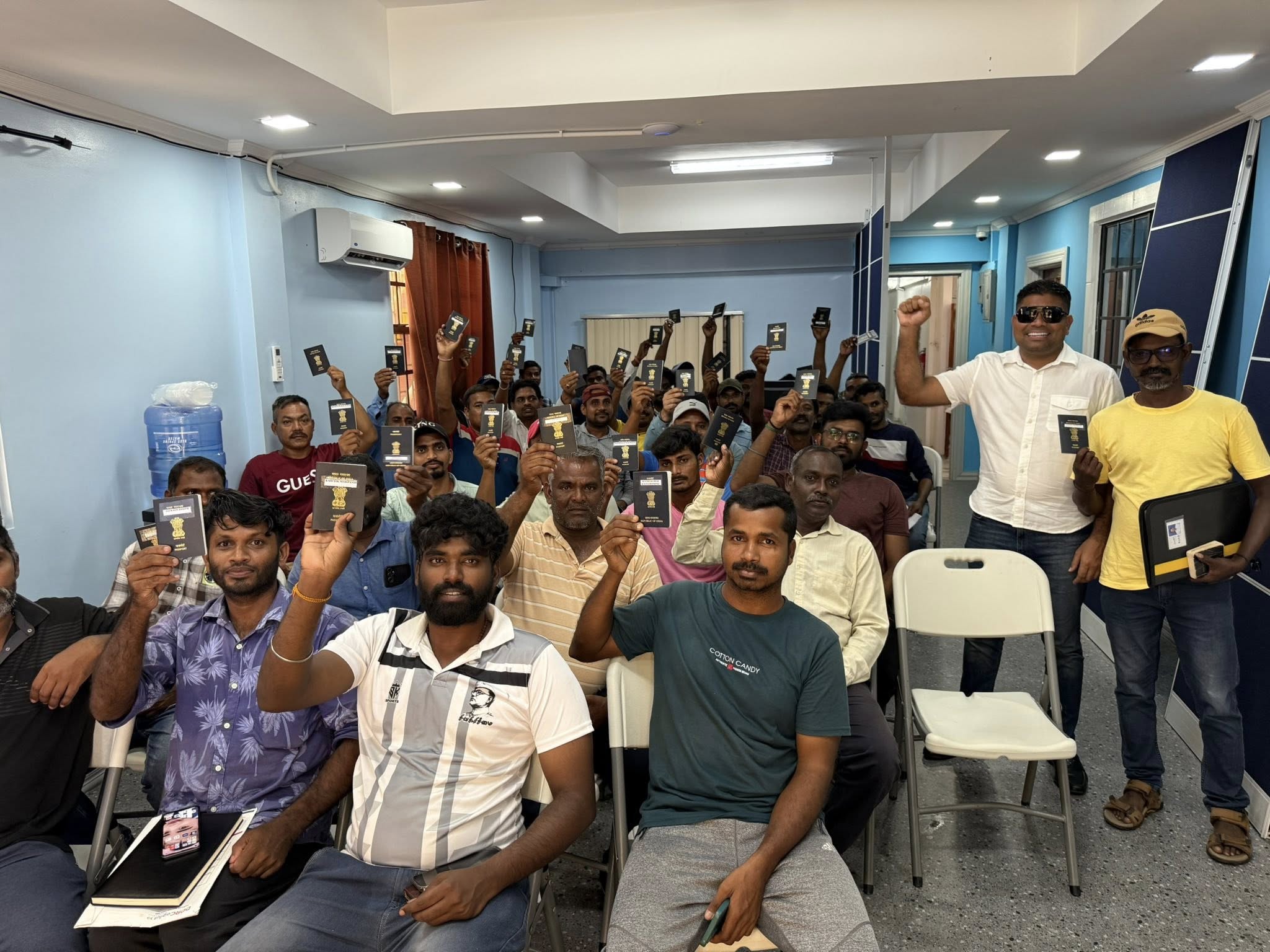
Govt gives Indian quarry company 24 hours to respond to alleged labour rights violations
On Monday, May 18, 2026, Guyana’s Ministry of Labour and Manpower Planning issued an urgent 24-hour ultimatum to EKAA HRIM Earth Resources Management, an India-based mining firm operating in the country, demanding the company respond to multiple formal allegations of labor rights violations linked to the recent death of one of its 38 Indian national employees. The fatal incident, which occurred on May 12, will be a core focus of a wide-ranging official investigation that will also examine claims of unpaid wages, unsafe working conditions, and failures to uphold worker welfare standards at the company’s Batavia quarry, located in Guyana’s Region Seven Cuyuni-Mazaruni.
A multi-agency investigative task force has already been assembled to conduct on-site assessments of the quarry. The team draws personnel from the Labour Ministry, the Guyana Police Force, the Ministry of Home Affairs’ Anti-Trafficking in Persons Unit, and other relevant regulatory bodies, all of whom have been mobilized to probe the full scope of the allegations. Prior to launching the formal investigation, Labour Minister Keoma Griffith held an urgent diplomatic meeting with Manoj Kumar, India’s Acting High Commissioner to Guyana, to address the immediate concern of withheld worker passports. Following Griffith’s intervention, all held passports were returned to the 38 Indian workers, a resolution the Labour Ministry has credited to the minister’s direct action.
After the diplomatic talks, the ministry convened a tripartite meeting between the affected workers, EKAA HRIM company management, and government officials to create a formal space for workers to lay out their grievances. The ministry has publicly committed to ongoing monitoring of the case and pledged to take all regulatory and legal steps required to ensure full compliance with Guyana’s domestic labor laws.
Notably absent from the ministry’s official statement was any acknowledgment of We Invest in Nationhood (WIN), Guyana’s main opposition political party, which first brought the workers’ allegations to public attention. According to WIN, the party arranged transportation for the aggrieved workers from the remote Batavia quarry site to Georgetown, provided temporary accommodation for the group, and lodged a formal representation with the Indian High Commission before the government launched its official probe. On the day the passports were returned, WIN party leader Azruddin Mohamed and senior executive Tabitha Sarabo-Ally were present at the Labour Ministry’s Brickdam headquarters alongside the Indian workers as the employees reclaimed their travel documents.
-

Barranco Family Gets New Home After Fire Destroys House
In the small community of Barranco Village, located in southern Belize’s Toledo District, one family is turning the page on a devastating disaster after receiving the keys to a brand-new home months after an unexpected fire left them completely homeless. Back in an incident that destroyed every possession the family owned, the blaze left homeowner Shamira Zuniga and her children with no shelter, no personal belongings, and a long, uncertain road to recovery.
For months, Zuniga navigated the heavy emotional and logistical toll of rebuilding her life from absolute zero. But on a hopeful day that marks a major turning point for the family, the completed new home offers a fresh start that many never expected they would get so quickly. In an interview reflecting on her journey, Zuniga opened up about the despair she felt after losing everything, and the overwhelming gratitude she holds for the support that has changed her family’s future.
“When my home burned to the ground, I hit rock bottom. I had nothing left, and I had to start every single part of my life over from scratch,” Zuniga explained. “Now, standing in front of this new house, I feel so much hope. I can build onto this space, make it feel like our own, and turn it into something good for my family. I’m so happy, I can’t even put it into words – this is such a blessing for us.”
The new home was delivered as part of government-backed support for vulnerable families across the country, spearheaded by Osmond Martinez, the Area Representative for Toledo East. Martinez emphasized that the project extends far beyond just putting a roof over the family’s head, noting that stable housing will have a life-changing impact on Zuniga’s three children – two daughters and one son.
“For these kids, this new home means they finally have a safe, consistent place to sleep at night and a quiet space to focus on their schoolwork,” Martinez said. “Beyond that, it lifts up their whole family’s sense of dignity and confidence. That is the greatest outcome you can ask for from this work.”
Martinez also shared that his personal experience growing up in low-income conditions gives him a unique understanding of how critical stable housing is for families facing crisis. “I know what it’s like to grow up without reliable housing, so I understand how much this changes things for them,” he said. “Now that I am in a position to help, it’s so important that we pass the blessings we have received on to people who are going through hard times.”
The initiative to support Zuniga’s family is part of Plan Belize 2.0, a broader national program focused on expanding social support and improving living conditions for vulnerable households across the country. Local community leaders say this project is just one example of the ongoing work the plan is bringing to rural communities in southern Belize, with more housing support expected to roll out to other families in need in the coming months.
-
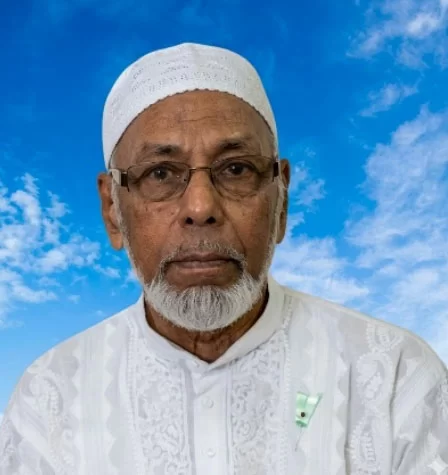
In Memoriam: Toyabali Ahmadali
On May 17, 2026, Suriname lost one of its most prominent public figures: Toyabali “Hadji Toyab” Ahmadali, a former parliamentarian, government minister and respected Islamic community leader, passed away at the age of 95. Born on January 21, 1931, Ahmadali built a decades-long legacy that bridged Suriname’s political landscape and multi-religious civil society, leaving an enduring mark on the nation’s development.
Ahmadali’s educational and early career path laid the foundation for his future public service. After completing studies at the Suriname Law School, he moved to the Netherlands in 1958 to pursue higher education, graduating from the Amsterdam Social Academy in 1962. He returned to his home country shortly after, taking a position at Suriname’s Ministry of Justice and Police. There, he focused his work on parole reform and prison administration, eventually rising to lead the nation’s Delinquent Care Service.
His formal political career began in 1967, when he was elected to the Estates of Suriname, the country’s national legislative body. He won re-election in late 1969, and was quickly appointed Minister of Social Affairs in the cabinet led by Prime Minister J. Sedney, a post he held through the cabinet’s 1969 to 1973 term. Following the 1973 and 1977 general elections, he returned to parliament to continue his legislative work. In the early 1980s, he served first as an advisor to the Council of Ministers, and later as a member of the President’s Advisory Council.
One of Ahmadali’s most landmark policy contributions came during his tenure as Social Affairs Minister. He championed a critical shift in how Dutch development aid was allocated in Suriname, ensuring that not just the Surinaamse Islamitische Vereniging (SIV, Suriname Islamic Association) qualified for funding to build a children’s home and school complex, but also non-Islamic community organizations including the SMA and Sanatan Dharm. Before this policy change, which Ahmadali championed into implementation, almost all international development aid in Suriname was reserved exclusively for Christian organizations—an inequity he worked successfully to dismantle.
Beyond his political career, Ahmadali was a central and deeply respected leader within Suriname’s Muslim community, holding multiple key roles within the SIV for decades. He served as chairman of Imdadia Isha’at Islam, chaired the SIV Advisory Council, and acted as imam of Imdadia Isha’at Islam from 2004 through 2025. Throughout his life, he worked tirelessly to spread Islamic teachings, foster unity across all Surinamese communities, and provide spiritual guidance to people of all ages. His wisdom, dedication, and commitment to collective well-being earned him widespread respect across ideological and religious divides.
In recognition of his far-reaching contributions to public life and faith communities, Ahmadali was awarded numerous high honors, including being named a Knight of the Order of the Netherlands Lion and an Officer of the Order of the Yellow Star. He is survived by his wife, four children, four step-children and eight grandchildren. In a statement announcing his passing, his family noted that the loss of Ahmadali will be deeply felt for generations by his loved ones, the SIV community, and the entire nation. While his passing leaves a gap that cannot be filled, his legacy of service, inclusive policy-making, and intercommunity unity will continue to live on in the hearts and minds of all who knew him.
-
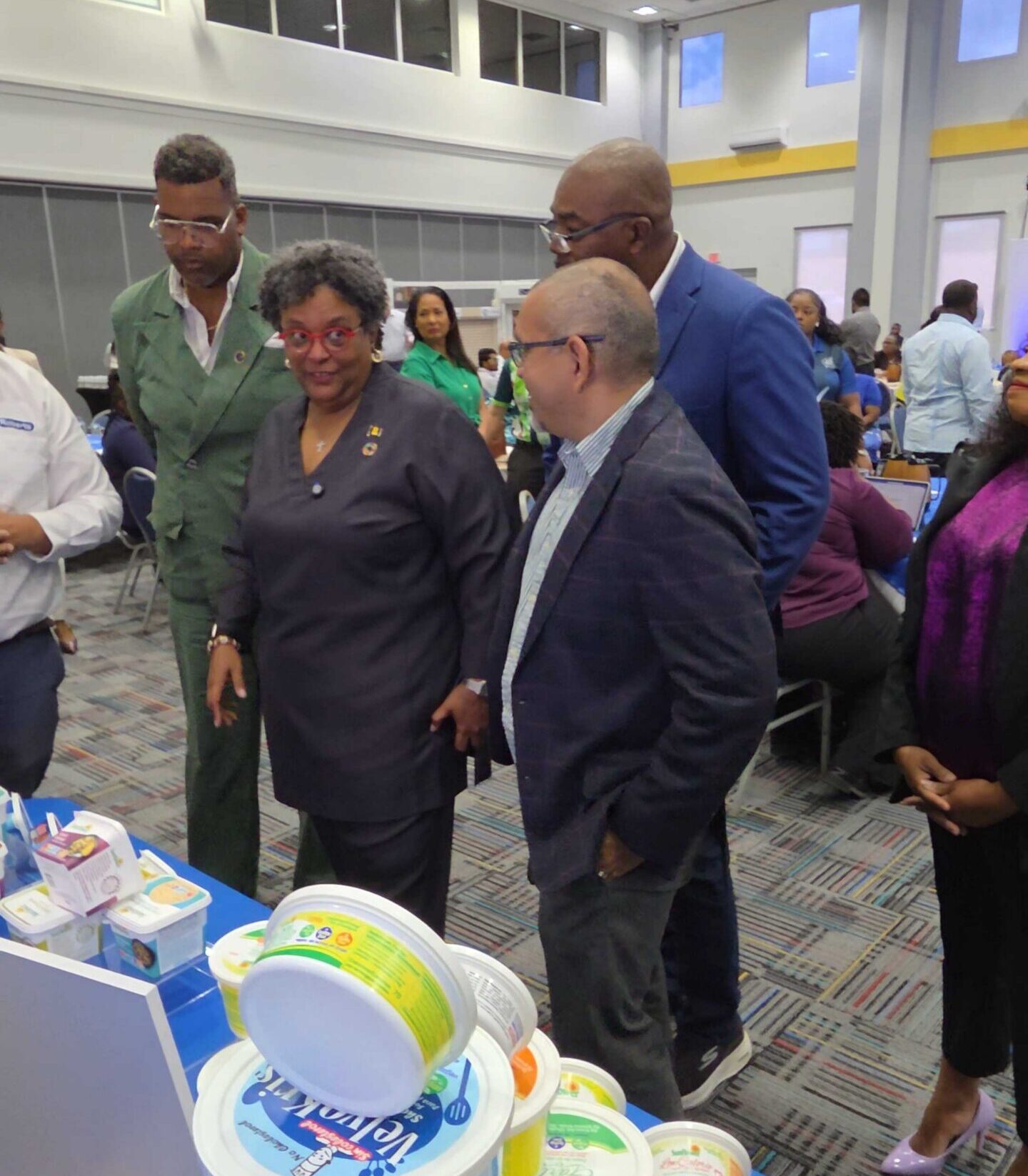
Manufacturing driving resilience and innovation, says BMA president
Against a backdrop of persistent global economic headwinds, Barbados’ manufacturing industry is emerging as a core engine of national resilience, creative innovation and economic diversification, according to Rakesh Bernard, president of the Barbados Manufacturers Association (BMA). Bernard made the remarks Monday during the opening ceremony of the annual Manufacturers’ Week, where he positioned domestic manufacturing as a cornerstone of the island nation’s long-term economic future and officially kicked off preparations for a landmark international trade initiative set for 2027.
The high-profile opening event drew a roster of top government and trade stakeholders, including Prime Minister Mia Mottley, Industry, Innovation, Science and Technology Minister Jonathan Reid, and Mark Hill, CEO of Export Barbados. In his keynote address to the assembled group, Bernard underscored that local manufacturing delivers far-reaching, irreplaceable value to Barbados’ national economy and social fabric.
“This occasion is far more than just another entry on the national business calendar,” Bernard told attendees. “It is a celebration of an industry that remains the backbone of Barbados’ economic resilience, innovative capacity, and sustained growth. Manufacturing matters because every good made right here on our island is a testament to Barbadian ingenuity: it creates stable local jobs, nurtures critical industry skills, draws new domestic and foreign investment, and sharpens our global competitive edge.”
Bernard did not shy away from acknowledging the widespread challenges currently buffeting businesses across the globe, from persistent economic uncertainty to soaring operational costs and ongoing supply chain disruptions. But he emphasized that Barbados’ domestic manufacturing operators have demonstrated extraordinary grit and adaptability in the face of these pressures.
“Even amid widespread global uncertainty, rising input costs, and broken supply chains, Barbados’ manufacturers have kept pushing forward: innovating, adapting their operations, and contributing meaningfully to ongoing national development,” he said. He framed the week-long Manufacturers’ Week series as both a celebration of the sector’s achievements and a clear statement that Barbados is fully committed to expanding its domestic productive capacity for long-term growth.
A core focus of Bernard’s address was the critical need for aligned cooperation between the public and private sectors to drive sector-wide growth. He pointed out that the key modernization priorities shaping Barbados’ manufacturing industry today—including digital transformation, strengthened national food security, expanded renewable energy adoption, and broader sustainable business practices—align directly with the Mia Mottley administration’s overarching national economic goals.
“Meaningful national transformation can only happen when policy and production, investment and innovation, government and industry all move in the same direction,” Bernard explained. “The work underway across our manufacturing sector today aligns perfectly with the vision laid out in Mission Barbados, which seeks to build a smarter, greener, more economically resilient and inclusive national economy. Manufacturers sit at the heart of this mission because we turn ideas into tangible solutions, transform concepts into market-ready products, and create widespread economic opportunity for Barbadians across the country.”
During the event, attendees had the chance to explore industry exhibits including a showcase from leading local operator Roberts Manufacturing at the BMA’s annual State of the Industry Conference. It was on this same platform that Bernard formally launched the multi-year planning process for the 2027 Trade and Innovation Expo (TI 2027). Acknowledging members of the international diplomatic corps in attendance, Bernard positioned the upcoming expo as a transformative step forward for regional and international business collaboration centered on Barbados.
“TI 2027 will be far more than a traditional product exhibition,” Bernard noted. “It will be a dynamic, forward-looking platform for cross-border trade, new investment partnerships, technology sharing, and expanded collaboration between regional and international business stakeholders.” He extended an open invitation to global business and government partners to begin building stronger connections in entrepreneurship and technology ahead of the 2027 showcase.
Closing his address, Bernard issued a rallying cry for accelerated economic diversification across Barbados, urging all national stakeholders to look beyond the nation’s traditional economic pillars and offer robust support to homegrown domestic enterprise. “Barbados’ future cannot be tied to a single industry alone,” he declared. “It must be built on a foundation of diversification, innovation, domestic production, and strategic global engagement. Manufacturing has a non-negotiable, critical role to play in that future. And the time is now to invest boldly in local industry, local talent, and local innovation.”
-

Bodybuilding legend Beckles passes away
The global bodybuilding community is mourning the loss of one of its most iconic and enduring figures, Albert “The Ageless One” Beckles, the Barbadian pro who passed away at the age of 95. Leading tributes to the trailblazing athlete is Dr. Alfred Sparman, president of the Barbados Bodybuilding and Fitness Federation, who lauded Beckles as a transformative pioneer who put his home nation on the international bodybuilding map.\n\nBeckles’ decades-long professional career remains unmatched in its longevity and consistency, a feat that earned him his famous nickname “The Ageless One”. Over the course of his career, he earned 13 coveted invitations to compete at the Mr. Olympia, the sport’s most prestigious annual competition, and remained a ranked elite competitor well into his 60s, a level of sustained achievement rarely seen in bodybuilding.\n\nHis collection of professional titles is extensive: among his major wins are the 1981 IFBB Grand Prix New England, the 1982 Night of Champions, the 1982 IFBB World Pro Championships, the 1984 Canada Pro Cup, the 1984 World Grand Prix, and a second World Pro Championship title later that same year. One of his most high-profile career highlights came in 1985, when he claimed the second-place spot at the Mr. Olympia, cementing his status as one of the world’s top bodybuilders.\n\nIn an official statement shared following the news of Beckles’ passing, Sparman honored the legend’s lasting impact on the sport. “The bodybuilding fraternity in Barbados and across the world mourns the passing of legendary Barbadian bodybuilder Albert Beckles,” he said. “On behalf of the Barbados Bodybuilding and Fitness Federation, I extend sincere condolences to his family, friends, and the entire international bodybuilding community.”\n\nSparman emphasized that Beckles’ legacy extends far beyond his competition results. “Albert Beckles was a true pioneer whose discipline, excellence, and achievements helped place Barbados on the global bodybuilding stage. His remarkable career inspired a generation of athletes throughout the Caribbean and beyond, and his contribution to the sport will never be forgotten,” Sparman added.\n\nThroughout his decades in the spotlight, Beckles represented Barbados with unwavering pride, dignity, and distinction, growing into a global symbol of perseverance and exceptional longevity in professional sport. “So we have lost not only a great athlete, but also a man whose legacy will continue to motivate future champions for years to come,” Sparman said. “May he rest in peace and may God bless his soul.”
-
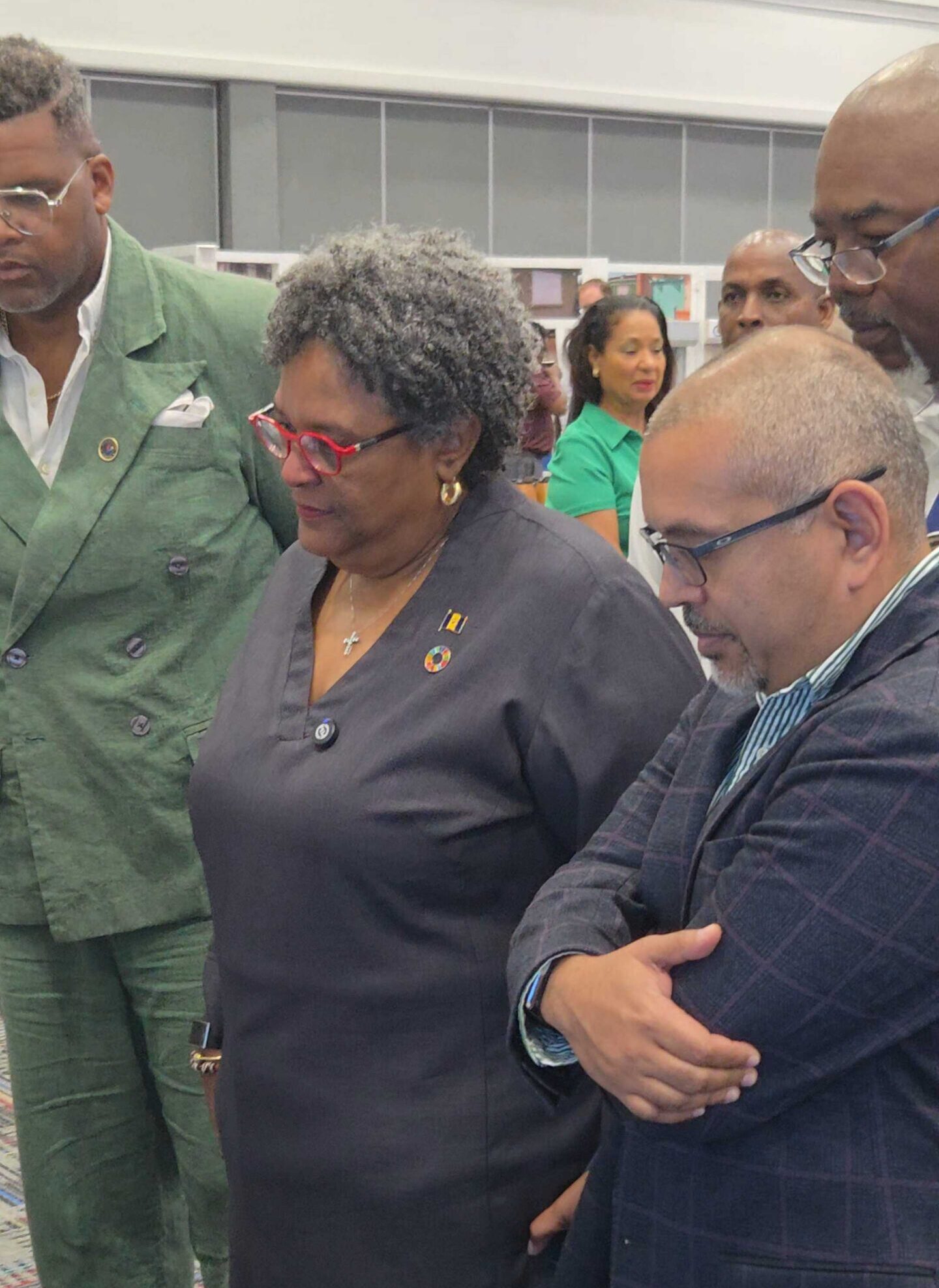
Mottley urges export pivot as nation at ‘critical crossroads’
Standing before a packed room of industry leaders at the Barbados Manufacturers’ Association (BMA) State of Industry Conference, Prime Minister Mia Mottley delivered an unscripted, blunt wake-up call this week, urging the island nation’s manufacturing sector to immediately pivot toward an export-driven growth model or risk being left behind permanently in the global economy.
Ditching her prepared remarks to frame Barbados as standing at a defining “critical historical crossroads,” Mottley opened by acknowledging the country’s recent economic progress: 20 consecutive quarters of expansion that have put the nation on a positive trajectory. But that progress, she stressed, is not enough to secure long-term prosperity, and future growth will not come from government mandate alone. “It is going to do better only when we actually come to work to produce to do better,” she told attendees.
The prime minister directly rejected the policy path the country has followed for the past four decades, a approach she argued has gradually sidelined the manufacturing sector and created a dangerous structural trade imbalance. While reaffirming her administration’s unwavering commitment to revitalizing domestic industry, she made clear that government can only lay the enabling infrastructure—real, sustainable growth will require a fundamental shift in private sector mindset, one that prioritizes global market expansion over limited local focus.
To illustrate the growing gap between imports and exports that threatens the nation’s economic stability, Mottley pointed to decades of trade data. In 1960, Barbados exported roughly $24 million in merchandise while importing $49 million in goods. Today, that gap has exploded exponentially: exports stand at $461 million, while imports have surged to $2.2 billion—making imports nearly five times larger than exports over the course of Barbados’ post-independence history. While she acknowledged that rising consumer demand has fueled much of the import growth, she placed blame squarely on domestic businesses for failing to expand into international markets at a sufficient pace. “What hasn’t happened with sufficient pace and sufficient progress has been the extent to which we are prepared to claim the export market,” she said. “And unless that changes, we’re going to continue to be playing catch up all the time.”
Mottley challenged local manufacturers to move past the self-imposed limitation of Barbados’ small 287,000-person population, urging them to embrace the CARICOM Single Market and Economy (CSME)—a regional bloc of 6 million consumers—as their effective domestic market. She framed the nation’s small size as a choice: it can either be a mental “noose” that limits ambition, or a strength that enables the nimbleness and agility needed to compete in niche global markets. Competing in high-volume, low-value global sectors, she warned, is simply not viable for Barbados, given the nation’s inherent structural disadvantages including high production costs.
Instead, she emphasized that adherence to rigorous international product standards is the key to unlocking global market access, and called on local manufacturers to not only meet existing standards but to claim a seat at the table when global rules are being set—drawing a direct parallel to her government’s high-profile Bridgetown Initiative, which advocates for reform of the global financial architecture to give developing nations greater representation. “That we have determined that nobody is going to set standards for us without us being present at the table because the standards which they set, the rules which they set, hobble us,” she explained.
On the topic of business financing, Mottley criticized the local private sector’s overreliance on debt financing and deep-seated cultural reluctance to pursue equity financing or share ownership, which she traced back to lingering colonial and post-enslavement attitudes toward trust. “We are still suffering from a colonial-stroke-slave mentality as it relates to trust and therefore rather than open up and build the biggest company that we can with all of us putting in, we want all to keep a small one here, a small one there,” she said. “We don’t realise that the high wind can take out each of the small ones, but if we come together and aggregate, we now have a different ball game.” Aggregation, innovation and a willingness to collaborate, she argued, are the only ways to build businesses resilient enough to withstand global economic volatility.
The prime minister pointed to her own administration’s successful fiscal reforms as proof that structural adjustment can deliver results. Under her watch, Barbados’ debt-to-GDP ratio has plummeted from 177.5% to just 93%, while overall economic output is projected to reach an estimated $17 billion by the end of the current fiscal year. Mottley also identified affordable energy as the “oxygen” of competitive manufacturing, noting that neighboring Trinidad and Tobago’s $40 billion trade surplus with CARICOM is largely driven by its energy cost advantage.
Against a backdrop of escalating Middle East geopolitical tensions that have driven global oil prices sharply higher, Mottley revealed that the government spent nearly two months negotiating to shield Barbados consumers and businesses from price shocks. The administration has implemented a policy capping fuel and excise taxes at a price equivalent to an $80 per barrel of crude, limiting price increases far below the 40-cent-per-liter hikes seen in the U.S. and U.K. “What we cannot withstand is a deluge. And a deluge is what is on us if we were to allow a 40 cents per litre price to come,” she said. “And this is where the hand of government policy makes the difference. You have to help carry some of the weight. The country is being asked to carry one-third of the weight, and the government, because it has a little more girth, is carrying two-thirds of the weight.” Still, she warned that prolonged global instability could force future adjustments, and urged manufacturers to prioritize energy efficiency and more sustainable production practices.
Looking ahead, Mottley laid out an ambitious long-term vision for regional economic integration: Caribbean nations can pool their abundant renewable energy resources to position the region as a leading global exporter of green hydrogen to markets in the European Union and beyond.
Closing her address, Mottley commended the local manufacturers who have kept their operations running through decades of sectoral decline, but urged the industry to raise its ambitions dramatically. “Our ambitions must never, never be so low as to limit us from what is possible globally,” she said. “We don’t need to produce more than five goods—five, out of the millions of goods that are produced globally. Pick five, but make them the best that you can make them.”