作者: admin

  • Foundation seeks urgent help to get hurricane relief supplies to Jamaica

    Foundation seeks urgent help to get hurricane relief supplies to Jamaica

    Nearly seven months have passed since Hurricane Melissa carved a path of destruction through western Jamaica, and a community-focused charity led by Jamaican expats in South Florida is facing a devastating last-mile barrier: it has amassed a 40-foot shipping container full of life-saving aid, but cannot afford to send the shipment to the island that needs it.

    Founded by Jamaican expat Derry-Ann Allen, the KaGra Foundation has spent months rallying grassroots donors to build a massive stockpile of relief supplies tailored to the ongoing needs of hurricane-battered communities. The full container holds everything from critical medical equipment and mobility aids like wheelchairs and crutches to baby formula, mattresses, solar-powered radios, water purification tablets, tarpaulins, sanitary products, and even a brand-new mini refrigerator. Now, the organisation is sounding the alarm for urgent public and corporate financial support, as accumulated shipping and Jamaican customs costs have climbed to sums far beyond the small charity’s current budget.

    “We already asked the community for donated goods, and they delivered beyond our wildest expectations,” Allen explained in an interview with the Jamaica Observer. “Now we just need help covering the costs to get these supplies where they belong.”

    The foundation’s relief effort gained its first major traction after the Jamaica Observer published its initial appeal for donations, sparking a flood of inquiries from community members eager to contribute. “That first story gave us the push we needed to get started,” Allen said. “From there it spread by word of mouth. People reached out nonstop asking where they could drop off supplies, because they wanted to know their donations would actually go to people who needed them most, not get lost in a large bureaucracy.”

    Donations poured in from communities across South Florida, spanning from Miami up to Orlando. Additional interest and contributions even came from as far as England after Allen gave a radio interview about the effort to a UK audience.

    Among the donated goods, Allen highlighted water purification tablets as one of the most immediately useful contributions for Jamaican residents still relying on untreated collected rainwater months after the storm. “If people have catchment water, one tablet makes it safe to drink. That’s a game-changer for communities that still don’t have consistent access to clean drinking water,” she explained.

    But the months-long delay in securing shipping funds has already led to heartbreaking losses: a large portion of donated baby formula had to be thrown out over expiration date safety concerns, a loss that weighs heavily on Allen.

    “It pains my heart to throw anything away when I know there are babies on the island that desperately need this formula,” she said. “That’s why this shipping gap is so urgent – we can’t afford to lose more supplies that people are counting on.”

    Complicating the charity’s challenge is the expiration of Jamaica’s post-hurricane customs waiver, which eliminated duty-free processing for disaster relief shipments entering the country. While local shipping firm Sydcam Shipping has stepped up to offer critical pro bono support – including free warehouse storage and a donated 40-foot container valued at roughly $3,000 USD – the KaGra Foundation still needs between $6,000 and $9,000 USD to cover the cost of transporting the container across the Caribbean to Jamaica. Once the shipment arrives on the island, additional local costs for customs clearance and last-mile distribution to affected communities are expected to total between 500,000 and 2.5 million Jamaican dollars.

    As a small, privately run grassroots organisation, KaGra Foundation has no major corporate financial backing to cover these unexpected costs. Every contribution so far has come from individual community members giving whatever they can spare. “This all comes from regular people chipping in $5, $10, $20 – whatever they could afford to give,” Allen said. Before the supplies were consolidated into the donated shipping container, volunteers stored the growing stockpile across four separate volunteer family homes across South Florida. “We had no idea how much we had collected until we brought everything into one space,” Allen recalled. “It added up to roughly five full garages of supplies. The community really showed up for western Jamaica.”

    Once the funding goal is met, Allen and other KaGra Foundation members plan to travel to Jamaica themselves to personally deliver the aid and directly identify the communities that are still struggling the most, seven months after the storm made landfall. “I don’t worry that it’s been this long,” Allen said. “Most formal disaster aid was distributed in the weeks right after the hurricane. The people still hurting six or seven months later are the ones that got missed, and they’re the ones who need this help the most.”

    Getting the aid to Jamaica is a deeply personal goal for Allen, who calls the successful shipment the best possible birthday gift she could imagine. “Just knowing that we’re getting these vital supplies to people who genuinely need them would bring me more joy than anything else,” she said. Photos from the foundation’s South Florida warehouse capture volunteers sorting and packing the thousands of donated items, preparing for the day they can finally ship the full container to the communities waiting for help.


  • Use Labour Day as pre-hurricane season prep

    Use Labour Day as pre-hurricane season prep

    As Jamaicans gear up for their annual Labour Day tradition of community improvement and local beautification projects, a top executive from one of the island’s leading financial groups is calling on residents to add one critical task to their to-do list: reviewing their property insurance coverage to protect the assets they have spent years building.

    Tammara Glaves-Hucey, managing director of GK General Insurance and Key Insurance under the GraceKennedy Financial Group (GKFG), is sounding the alarm over a widespread gap in property protection across Jamaica. New data compiled by the Insurance Association of Jamaica (IAJ) paints a stark picture: only 1 in 5 residential properties in the country currently hold active insurance coverage, leaving a full 80% of Jamaican homes exposed to devastating financial loss in the event of damage, natural disaster, or accident.

    Glaves-Hucey notes that many property owners – both residential homeowners and commercial operators – often do not realize they are underinsured until it is too late. The issue typically develops gradually over time: a policy purchased years ago remains in place, with annual premiums paid on time, leading owners to assume their coverage is still sufficient. But circumstances shift, market values change, properties are upgraded, and business operations expand. As construction and replacement costs continue to climb year over year, old policy limits quickly fall out of step with actual current needs.

    To help Jamaican property owners address this gap, Glaves-Hucey has outlined five actionable steps people can complete this Labour Day to shore up their coverage and protect their long-term assets:

    First, take time to review your current insured sums. While pulling together important documents during your annual holiday cleaning, pull out your insurance policy and double-check the listed coverage amount. Ask yourself a critical question: if my property suffered major damage today, would this payout be enough to fully rebuild at current construction prices? If the answer is no, or if you are uncertain at all, reach out to your insurance agent or advisor to request an updated property valuation.

    Second, account for any upgrades or improvements made to your property since you first took out your policy. Many Jamaicans invest in home upgrades over the years – everything from kitchen remodels and new bathrooms to added bedrooms, solar water heaters, upgraded roofing, new windows, security systems, tiled patios, and higher-value furniture. All of these changes raise your property’s value and require updated coverage. For commercial property owners, this step also applies to new machinery, office equipment, expanded inventory, updated technology, and signage added since the last policy review.

    Third, conduct a full review of your personal property and content coverage. Building insurance only covers the physical structure of your home or business; coverage for the items inside is a separate policy line. Walk through every room of your property and catalog all high-value items, including electronics, appliances, furniture, jewelry, tools, and core business assets. Document your inventory with photos and video, and store digital copies of receipts, valuation documents, serial numbers, and warranties in a secure cloud storage account or email to avoid losing them if physical documents are destroyed in an incident.

    Fourth, identify and fill gaps in your coverage. Underinsurance is not an issue that only affects large estates or major corporations – it impacts everyday families and small business owners across Jamaica just as often. A small shop owner may insure their building but overlook coverage for their inventory and in-store equipment. A homeowner may cover their house structure but leave personal property unprotected. A landlord who completes a major renovation may forget to update their policy limits, and a small manufacturer that adds new production equipment may fail to expand their coverage to match the new asset value. Glaves-Hucey emphasizes this step is especially urgent today, as rising fuel, energy, transportation, and raw material costs continue to push construction and replacement prices higher. If rebuilding costs have gone up but your coverage has stayed the same, you will be stuck covering the gap out of pocket after a major loss from a fire, hurricane, flood, or other disaster.

    The fifth and final step is to use Labour Day as a head start on hurricane season preparedness. Jamaica’s annual Labour Day falls just weeks before the official June 1 start of the Atlantic hurricane season, when insurance adjustments often become impossible once a storm is already bearing down on the island. As residents complete their usual Labour Day prep – clearing storm drains, trimming overgrown trees, repairing fences, inspecting roofing, and securing loose outdoor items – Glaves-Hucey says setting aside just one extra hour to review insurance coverage can save homeowners and business owners from catastrophic financial loss later.

    “Use Labour Day as a practical annual reminder,” she shared. “The home you repaired, the business you built, the contents you bought, and the dreams you continue to work for are all fruits of your labour. Progress, though built by effort, must be protected.”

  • New dairy rules aim to close loopholes

    New dairy rules aim to close loopholes

    During a legislative sitting held Friday, Jamaica’s Senate advanced two key industry-focused bills, drawing heated debate over proposed changes to the island nation’s dairy regulatory framework and bipartisan support paired with pointed oversight concerns for reforms to conch export levy rules. The most contentious of the two pieces of legislation is the amendment to the 2026 Jamaica Dairy Development Board Act, which redefines qualifying dairy products to include items containing as little as 5% milk solids — a sharp drop from the previous 50% threshold set in alignment with European Union regulations. The bill also expands the formal definition of milk beyond cattle to include milk from all animal sources, a change framed by government legislators as a long-overdue modernization aligned with global industry trends. Piloting the legislative debate, Government Senator Aubyn Hill framed the amendments as a targeted fix for longstanding regulatory gaps that have allowed unregulated imported dairy-containing products to enter Jamaican markets. He noted that major North American markets including the United States and Canada have already updated their own dairy classifications to include milk from small ruminants like goats and sheep, and Jamaica’s update brings the nation into line with these shifting international standards. Explaining the rationale for the dramatically lower milk solids threshold, Hill emphasized that the original 50% requirement was far too restrictive, creating a loophole that allowed a wide range of processed products with significant dairy content to avoid classification as dairy products entirely, slipping past regulatory oversight and skipping required cess payments. “To create a clear, consistent regulatory framework in Jamaica, we are establishing a five per cent milk solid content threshold for set purposes in relation to the trade of milk products and milk by-products,” Hill told the chamber. Under the new rule, any product with more than 5% milk solids will be formally classified as a dairy product, requiring official import approval and falling under full regulatory supervision, a change Hill argues will strengthen, rather than weaken, the nation’s food import oversight. But the changes have drawn sharp pushback from opposition legislators, who warn the amendment threatens Jamaican food safety standards, hurts local dairy producers, and creates unaddressed regulatory ambiguity. Opposition Senator Allan Bernard argued that the new, lower threshold will disproportionately benefit importers of heavily processed imported dairy substitutes, while putting additional economic strain on local dairy farmers who are already grappling with spiking input costs for feed, land and energy. Bernard also raised questions about the vague, broad language of the updated definition of milk, which now includes milk from “any animal.” “Jamaicans will legitimately ask, what exactly does any animal mean? What limitations exist? What protections are established? And who determines what may ultimately enter the Jamaican food chain under the label of dairy?” Bernard asked. Hill rejected these criticisms, asserting that Bernard had misinterpreted the core purpose of the amendment, repeating that the lower threshold brings more imported products under regulation rather than opening the market to uninspected goods. Alongside the dairy amendments, the Senate also unanimously approved the 2026 Conch (Export Levy) (Amendment) Act, a bill designed to give conch exporters much-needed financial flexibility during periods of industry disruption. The new framework authorizes the relevant government minister to approve instalment payments for export levies tied to licences and health certificates, extend payment deadlines for up to 12 months, and waive or reduce levy obligations under specific circumstances, following formal recommendations from Jamaican fisheries authorities. Hill explained that the reform is a direct response to the growing frequency of disruptive events that upend conch fishing operations, from severe weather events driven by climate change to unexpected external trade shocks. “The rationale for this amendment is that, in the event of a disruption in the fishing season, for instance severe weather conditions and or other external trade factors, this enlarged period would provide adequate time for an exporter of conch to make the relevant payment of the levy,” he said. While opposition legislators supported the bill, they used the debate to highlight longstanding concerns about unsustainable fishing practices, including illegal poaching and overfishing in Jamaican waters, and questioned the effectiveness of the Fisheries Management and Development Fund in protecting the nation’s wild conch stocks. In response, Hill confirmed that the Andrew Holness administration has significantly bolstered maritime enforcement capacity by expanding the coast guard’s fleet of well-armed patrol vessels, cracking down on unauthorised foreign vessels that enter Jamaican waters to poach fish and other marine resources. “No country really is going to get rid of illegal fishing entirely…but what we have to do is make sure we reduce the level — and that is a continuing work,” Hill added. Both pieces of legislation have now passed the Senate and will move forward to the next stage of implementation.

  • Portland bee farmers lose big after failed April honey flow

    Portland bee farmers lose big after failed April honey flow

    For the first time in a decade and a half, commercial beekeepers across Portland, Jamaica have walked away from their hives empty-handed during April – the parish’s most productive month for honey collection. According to Bernard Walker, president of the Portland Bee Farmers Association, this unprecedented disruption traces directly to a shifting seasonal blossoming schedule of local flora across the northeastern parish.

    Walker estimates that the missed first major honey flow of the year has cost local producers roughly 1,000 gallons of unsold honey, equal to a minimum revenue loss of $14 million Jamaican dollars. In interviews, he explained that long-standing regional blooming cycles have broken down in recent years: where mango trees once consistently produced full blooms across December, the crop now reaches peak blossoming as early as March. By the time April arrives, mango flowering has long tapered off, and while other local crops do blossom later in the season, their combined bloom period shifted entirely to March, leaving bees with no major nectar source as harvest season traditionally begins.

    This disruption has also created an unusual supply gap across Jamaica. Following Hurricane Melissa’s damage to honey production in western Jamaica, local food manufacturers and the Jamaica Promotions Corporation have flooded Portland’s producers with requests for additional honey to make up for regional shortages. But Walker says that after checking in with all member farmers during the association’s monthly second-Thursday meeting, there is currently no harvestable honey available anywhere in the parish. Producers are now a full seven weeks behind their standard harvesting calendar.

    Portland’s beekeepers typically collect honey four times annually between March and September. Having missed the critical March-April opening harvest, the association now anticipates holding the first collection of 2024 in June – a date that would normally mark the second harvest of the year. Even with this adjusted schedule, Walker warns that yields are expected to be far lower than average.

    Compounding the risk is the timing: June marks the official start of the Atlantic hurricane season, and with production already lagging far behind normal, even a weak tropical depression could spell total disaster for the parish’s producers. Walker noted that a single major storm could end the entire honey harvesting season for Portland, potentially resulting in the first year on record with zero commercial honey production from the parish. For full-time commercial beekeepers, who rely on honey sales as their primary source of household income, such an outcome would be financially devastating. “This is what we do for a living,” Walker emphasized.

    In the wake of recent hurricanes Beryl and Melissa, the Jamaica Social Investment Fund (JSIF) and the national Ministry of Agriculture stepped in to provide emergency supplementary feed for Portland’s bee populations, a move that helped stabilize colonies after a prolonged dry period. Moving forward, Walker says the association plans to stretch the remaining feed stock through 2026 to support colony health through future dry seasons. Adequate nutrition allows queen bees to lay more eggs during dry periods, cutting rates of colony collapse caused by starvation, he explained.

    To address the root cause of shifting nectar supplies, the association is organizing community-wide tree planting events over the upcoming Labour Day weekend. The initiative aims to expand native foraging habitat for bees and ensure consistent, long-term food sources for hives across the parish. Walker is urging all local residents and community groups to participate, noting that healthy bee populations do more than produce honey: they are foundational to global and local food security. As the world’s primary pollinators, bees are responsible for fertilizing roughly one-third of all food consumed by humans.

    “To make sure our bees have enough feed, the general public has to play a major role,” Walker said. “Even in urban neighborhoods and housing developments, if every household plants one or two fruit trees like ackee or mango, that small change adds up to make a huge difference for local bees.”

    The association has also adopted a new adaptive practice to boost colony nutrition: mixing moringa powder, a nutrient-dense plant-based supplement, into sugar syrup for bee feed. Early results have been promising, Walker says, with bees readily accepting the supplement. Moringa’s high nutritional content, wide availability, and ease of cultivation across Jamaica make it an ideal local solution that cuts reliance on imported feed, while also improving food safety safeguards for the industry.

    As producers wait for June’s adjusted harvest, the entire community of Portland beekeepers is holding out for a quiet, storm-free Atlantic hurricane season to avoid a total annual loss.

  • From Top Alston to top command

    From Top Alston to top command

    As the world’s only female head of a national armed force, Vice Admiral Antonette Wemyss-Gorman, Jamaica Defence Force (JDF) Chief of Defence Staff, is opening up about her decades-long groundbreaking military career in an upcoming memoir, pushing back against early assumptions that her account frames the JDF as a patriarchal or misogynistic institution.

    Published first in digital format, with hardcover editions set to hit shelves in coming weeks, *Life, Duty and Command* traces Wemyss-Gorman’s journey from her childhood growing up in Top Alston, Clarendon, through her 1994 enlistment in the JDF Coast Guard, to her historic appointment as CDS in January 2022. The memoir does not shy away from candid accounts of the barriers women still face in military spaces — a challenge that persists across armed forces globally, where long-standing masculine-centric traditions have slowed gender integration, despite incremental progress in closing opportunity gaps.

    Far from criticizing the JDF, however, Wemyss-Gorman frames the institution as a global leader in inclusive transformation. In a composed, confident interview with the Jamaica Observer, she emphasized that the JDF has made steady, meaningful progress in evolving its gender culture, noting that the force’s successful integration of women and men into all ranks stands as a model for other militaries worldwide — a milestone that extends beyond her own historic appointment to the service’s top role.

    Notably, Wemyss-Gorman reveals in the book that she never actively sought the position of CDS. Her early career ambition was centered on commanding a ship and serving at sea, rather than taking on a desk-bound leadership role in headquarters. She also cites the heavy personal toll of senior military service: her young son made significant sacrifices to accommodate the demanding pace of her career, and she saw firsthand the weight of the CDS role while serving as force executive officer, working closely alongside the previous chief. Convinced other equally competent candidates aspired to the post, she had no personal ambition to take the top job herself.

    The memoir also includes unflinching accounts of controversial career incidents that have drawn public scrutiny. One high-profile episode dates back more than a decade to Wemyss-Gorman’s tenure as the first female commanding officer of the JDF Coast Guard. At the time, she discovered a fellow senior officer had hidden information from her: the driver assigned to her was under active investigation for drug trafficking, but her colleague never alerted her to the probe.

    In her book, Wemyss-Gorman describes the experience as one of the most devastatingly disappointing and betraying moments of her professional life. The unsuspecting admiral continued carrying out sensitive operations with the driver, who had access to classified information, putting her personal safety, her family’s security, her unit’s operations and her entire command at serious risk. To this day, she says she remains uncertain of her colleague’s motive — whether he suspected her of involvement, intended to damage her reputation, or had another reason for silence. Immediately after uncovering the hidden information, Wemyss-Gorman acted quickly to remove the driver from the JDF.

    When asked why she chose to include the difficult incident in her memoir, she explained that documenting the failure was critical to preventing similar oversights from harming other service members in the future. As a personal memoir, she added, it was important to include the full reality of her experiences, both positive and negative. She stressed that the JDF has progressed significantly since the incident occurred more than 10 years ago, noting that the force now moves rapidly to investigate breaches of civil or military rules, and the core failure in the case was the deliberate concealment of information that put her and her operations at risk.

    Despite the challenges and setbacks she has navigated as a trailblazer for women in the military, Wemyss-Gorman says her decades-long career with the JDF has been deeply fulfilling. When asked if enlistment was the right choice for her, she answered without hesitation: she would make the exact same decision again, noting that military service never promises an easy path, but has given her unparalleled opportunities to serve her country and make history.

  • ‘I prayed to hear my son’s voice’

    ‘I prayed to hear my son’s voice’

    For most parents, a child’s first birthday marks a joyous milestone of growth and new beginnings. For Peta-Gaye Forbes Robinson, a Jamaican mother based in Kingston, that celebration was quickly followed by an unsettling turn that would reshape the course of her entire family’s life. Just two months after her son Shadrach turned one, the toddler who had already mastered reciting the full alphabet and counting to 20 suddenly lost nearly all his verbal skills, reduced only to forcing out the single letter “E”.

    Alarmed by the obvious developmental regression and repeated concerns from loved ones that Shadrach was not hitting key growth markers, Robinson sought medical evaluation immediately. After months of waiting for a assessment with a behavioural specialist, there was no clear path forward. It was not until Shadrach turned three that a formal neurological diagnosis delivered a devastating blow: the young boy was non-verbal autistic, medical professionals told the couple, and he would never speak, requiring 24/7 lifelong care.

    Robinson, however, refused to accept this grim prognosis. With a professional background in early childhood education, she began diving deep into autism research to better understand her son’s condition and explore every possible intervention. At the time, she held a demanding corporate role that kept her away from home for long hours. Though she repeatedly felt a spiritual pull to leave her job to focus full-time on Shadrach, fear of the financial strain on her family kept her from making the leap, and she left her son’s progress in the hands of public state institutions. For years, little improvement came.

    The 2020 COVID-19 pandemic amplified that persistent calling to resign, turning a quiet nudge into an unavoidable conviction. A follow-up assessment confirmed what Robinson had feared: Shadrach had made almost no progress in years, and the couple’s hope was wearing thin. That was when Robinson made the irreversible decision: she walked away from her corporate career, pulled Shadrach from traditional school, and launched a structured homeschooling programme with support from local homeschooling collective Jamaica Life Learners.

    The early months of homeschooling were fraught with struggle and frustration. Robinson came close to abandoning her efforts entirely, and one Friday, overwhelmed, she decided to set aside all formal lessons. It was in that moment of pause that she followed spiritual guidance to test a new phonics-based speech technique, grouping letters by vowels and consonants to build foundational speech skills. At first, Shadrach showed no response. Robinson, frustrated, sent him off to play. Minutes later, she heard a clear, quiet voice repeating the vowels: A, E, I, O, U. Shadrach was five years old, and that small moment was the turning point the family had waited years for.

    The most cherished milestone came soon after, when Robinson cried alone in Shadrach’s room, wondering if she would ever hear her son say “I love you”. As she turned away weeping, she felt Shadrach approach, and a jumbled, quiet phrase reached her ears: “I love you.” Over and over, he repeated the words, growing louder and clearer each time. To this day, Shadrach, now 10, repeats the phrase to his mother constantly – a gift she never takes for granted.

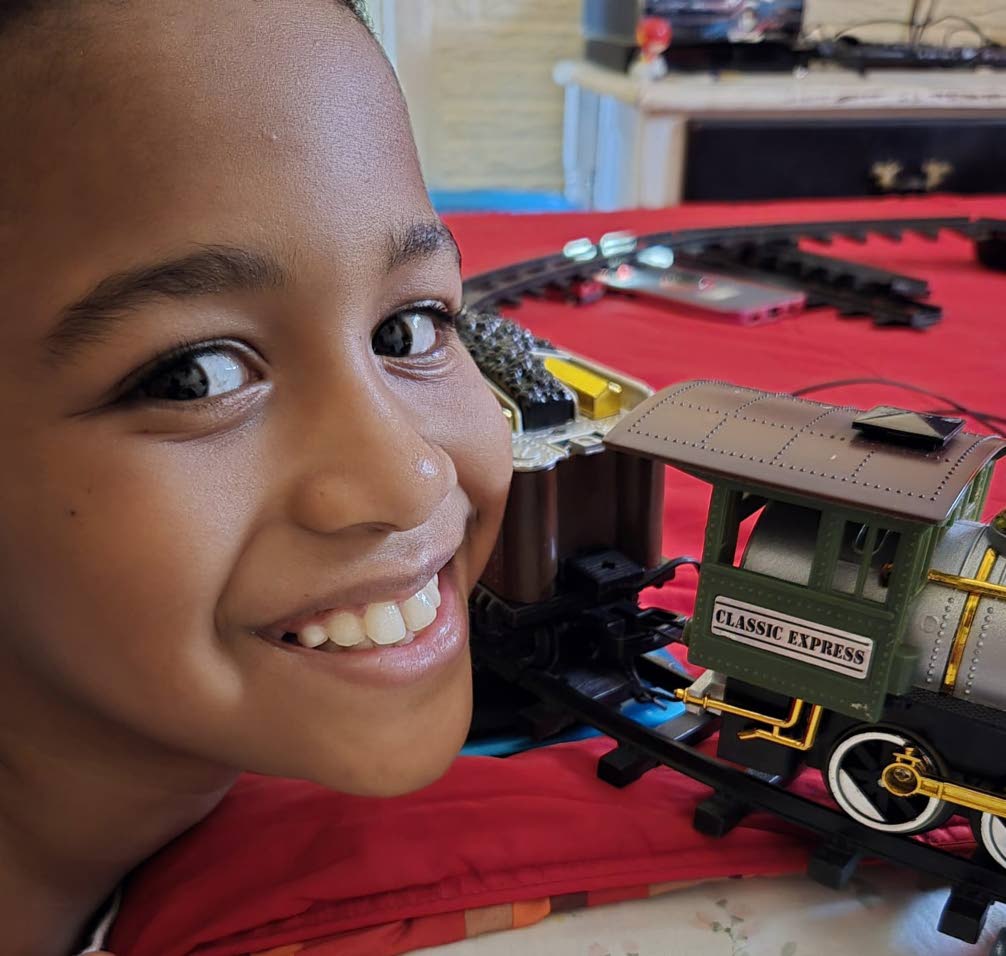
    Following that breakthrough, Robinson continued to adapt her approach, drawing on targeted resources and integrating consistent spiritual intercession into her work with Shadrach. Over five years of steady effort, the transformation extended far beyond speech. Once, the boy’s severe sensory issues meant five adults had to restrain him just to clean his teeth; he refused all but a tiny handful of foods due to texture aversions, and was triggered by common sounds and numbers. Today, Shadrach eats a full range of foods, manages his sensory challenges independently, and attends a mainstream public school. A recent re-evaluation only diagnosed a mild expressive receptive language gap, and he is fully capable of caring for himself. An aspiring engineer with a passion for aviation, he regularly repairs old gadgets and phones around the house, and can identify aircraft make and model mid-flight just by looking up at the sky.

    Buoyed by her son’s unimaginable progress, Robinson founded Gifted Minds in 2021, a home-based, individualised intervention programme that supports other children on the autism spectrum across Jamaica. What began as a personal journey to save her own son has become a mission to bring hope to other families who have been given devastating diagnoses.

    In encouraging other parents facing similar struggles, Robinson urges people not to get stuck in grief or the question of “why me.” Instead, she advises shifting focus to asking “how” – how to learn, how to adapt, how to advocate for your child. It is that shift, she says, that opened the door to every breakthrough her family has experienced, turning a prognosis of lifelong dependence into a story of radical transformation and purpose.

  • Birthday heartbreak

    Birthday heartbreak

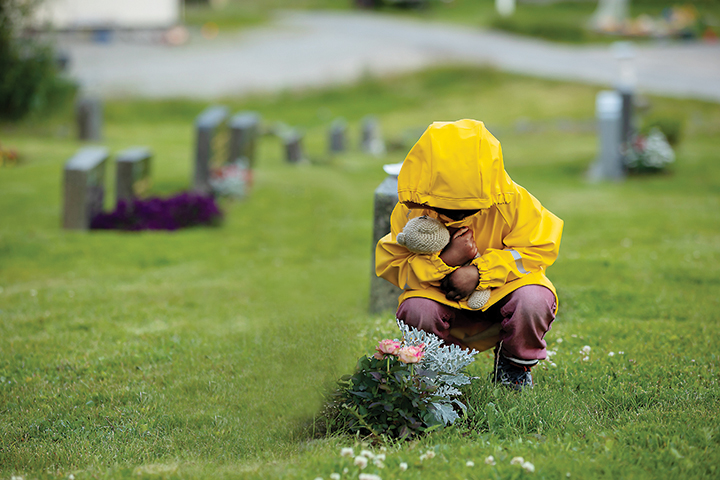
    For months, 10-year-old Nicholi Smith held tightly to one simple, heartfelt birthday wish: to stand at his mother Natalie Dobson’s graveside, speak to her just as he did when she was alive, and mark his 10th year in her presence. What should have been a tender, healing moment at Jamaica’s Dovecot Memorial Park and Crematory last Tuesday instead dissolved into heartbreak, leaving the boy sobbing and unable to fulfill the only wish he asked for. Now, the family’s devastating experience has sparked widespread public outcry over the disrespectful treatment of deceased loved ones at the St Catherine-based burial ground.

    Nicholi’s wish was born from profound grief. Dobson, a beloved mother of five who had shared 22 years with Rupert Smith, Nicholi’s father, died in December 2025 at age not disclosed, from a fungal infection linked to her asthma inhaler. Just days after Dobson’s January 2026 funeral, Nicholi told his family the only thing he wanted for his 10th birthday was a trip to his mother’s grave. He turned down toys, new clothes, and even a birthday party—all he wanted was to be at her final resting place.

    “He’s a Taurus, so he was not going to forget just like that. He told me, he told his grandmother and his aunt that’s what he wants — to go visit his mom for his birthday. He never said he wanted anything else,” Rupert Smith shared in an interview with the Jamaica Observer. “It mash me up wicked. After I calmed him down, I said, ‘See your mother wreath here, talk to her.’ He hissed his teeth and said he doesn’t want to talk to her that way, he wants to know for sure he is right where her grave is so that he can say, ‘Yes, she is right here.’ He said speaking to the wreath is not her, it’s just a photo.”

    When the pair arrived at the cemetery, they made a devastating discovery: all the plot markers marking individual grave sites had been uprooted by construction workers digging new graves, and left piled haphazardly on the ground. A wreath holding Dobson’s portrait, placed at her grave earlier by the family, lay half-buried in dirt nearby, but there was no way to confirm the exact spot where she was buried. Rupert Smith captured the moment on camera, and the viral video shows him brushing dirt off the wilted wreath while expressing his frustration, before panning to a confused, heartbroken Nicholi, who breaks down into tears when he realizes his wish will not come true.

    After leaving the cemetery, Nicholi sat silent for the entire ride home, and burst into inconsolable tears as soon as the pair walked through their front door. Speaking to the Sunday Observer, the 10-year-old said he just wanted to tell his mother how much he missed her.

    “I miss her smile, her kindness, and her love,” Nicholi said. “She always took care of me when I was sick and was always there for me. They need to put back the things in the ground so that we can find her and take care of her. I hope to visit my mother every year for my birthday.”

    Rupert Smith, who described Dobson as a woman of extraordinary kindness who welcomed and raised his three children from previous relationships as her own, said the cemetery’s neglectful treatment of her grave is a fundamental violation of the basic respect owed to the deceased. He noted that families pay the cemetery to care for their loved ones’ final resting places, and that returning visitors deserve to be able to find the sites without unnecessary pain.

    “She was the best mom ever. She always puts her kids first, and she even takes care of my kids,” Smith said. “In Jamaica a lot of women nah go accept a man that have kids outside the relationship and make them come live with them and take care of them as their own, but she was different from everybody else, trust me. She deserved to be laid to rest with respect. Them nuh care. She is dead, yes, but at least she should die with some respect, because people pay unnu to do that. They can’t just say them done dead and gone so unnu don’t care what happen after the people dem gone. That’s not right.”

    Since the video was posted to social media, it has sparked widespread discussion of poor cemetery maintenance across Jamaica, with dozens of viewers sharing their own stories of being unable to locate loved ones’ graves due to lost or discarded markers. Smith said the outpouring of shared experience confirms the issue is systemic, and that cemetery leadership needs to implement new protocols to ensure grounds crew prioritize the needs of returning visitors.

    “It’s a business for them, but we are the customers, and so they must know that customers come first,” Smith stressed. “You can’t treat customers that way. People nah go want to do business with you if they know that they have their loved ones and they can’t carry them to you knowing that you are going to do what you are supposed to do so that when they come back they can say, ‘This is where such and such buried.’ The supervisors need to speak with the grounds people and make them know that it’s not all the time people a guh bury their loved ones and don’t come back. You a guh have people who a guh come back and look for their loved ones, so they have to bear that in mind. You have people who come back and look for their loved ones, and it a guh painful to know that they can’t find them… It’s not supposed to happen that way.”

    Multiple attempts to get comment from Dovecot Memorial Park management have so far gone unanswered, with a representative saying the authorized spokesperson was unavailable to provide a statement as of press time.

  • EDITORIAL: Hope, hard choices for sugar

    EDITORIAL: Hope, hard choices for sugar

    For Barbados, the sugar cane sector is far more than just an agricultural commodity — it is woven into the very fabric of the nation’s identity, economy, history and natural landscape. Tied inextricably to the island’s painful legacy of slavery and plantocracy, while also shaping its financial systems, cultural traditions and ecological health, the industry cannot be sidelined even as the country develops new alternative revenue streams. Though sugar contributes far less to national GDP today than it did at its historic peak, it remains a critical source of livelihood for thousands of farmers, workers and small businesses across the island. It is for this reason that the recent announcement of a new round of industry restructuring has drawn close public and policy attention.

    This week, Minister of Agriculture Dr. Shantal Munro-Knight outlined the core priorities of the latest restructuring push: boosting crop yields, elevating sugar quality, and securing the long-term viability of the sector. She framed the effort as a strategic “right-sizing” of Barbados’ sugar cane production that aligns with modern economic realities. Notably, this marks the second major restructuring attempt in just two years, a fact that underscores the deep, persistent challenges facing the industry and the difficulty of forging a lasting, sustainable solution.

    The current 2024 crop season has already been thrown off course by repeated shutdowns at the Portvale sugar factory, triggered by unresolved mechanical failures and ongoing labour disputes. Cane farmers have voiced loud frustration over extended delays in the factory accepting harvested crops, while factory workers have raised urgent concerns around union recognition and unsafe, inadequate working conditions. These ongoing disruptions have eroded stakeholder confidence in the industry and laid bare long-standing weaknesses in operational and management practices.

    Beyond Barbados’ borders, global shifts have fundamentally reshaped the international sugar market, creating significant headwinds for small island producers. World sugar prices are plagued by constant volatility, driven largely by production and policy changes in major exporting nations including Brazil, India and Thailand, which enjoy massive economies of scale and far lower labour and production costs. International trade policy has also dramatically altered the playing field for Barbados: for decades, local sugar producers benefited from protected preferential access to European Union markets, which delivered stable prices and guaranteed demand. But sweeping reforms to the EU sugar regime and updates to global trade rules have eroded nearly all of those historic advantages, leaving most Caribbean sugar industries grappling with declining competitiveness over the past two decades.

    Domestic challenges compound these global pressures. Barbados faces inherently high production costs for sugar, and climate change has introduced new layers of uncertainty, with erratic rainfall and more frequent extreme weather events disrupting planting and harvesting cycles. Combined, these factors make it impossible for Barbados to compete globally in bulk sugar production on cost alone. Against this backdrop, the government’s decision to revisit restructuring is widely viewed as a necessary step. Dr. Munro-Knight’s focus on boosting productivity and product quality is strategically sound: for the industry to survive, it must become far more efficient and deliver higher-value output to stand out in crowded global markets.

    Even so, policy makers and stakeholders must confront hard realities. Beyond productivity gains, there needs to be an open, honest conversation about the realistic scale of sugar production moving forward. Fewer young farmers are interested in entering the cane sector, and growing demand for residential housing has steadily encroached on prime agricultural land, reducing the total area available for cane cultivation. It is also critical to acknowledge that restructuring alone will not fix the industry’s problems. Barbados has overhauled the sugar sector multiple times in recent decades, yet many of the same operational, labour and financial challenges have reemerged repeatedly. Unsurprisingly, stakeholders are questioning whether this latest effort will deliver different outcomes. Key open questions remain: how will the restructured industry be financed, what is the long-term role of government in supporting the sector, and how will changes impact the livelihoods of the workers and small farmers who form the backbone of the industry. For many dependent on sugar, the term “right-sizing” carries deep fears of job losses, reduced growing acreage, and disruptive changes to ownership and management structures that threaten their livelihoods.

    Looking ahead, Barbados must expand its vision for what the sugar cane industry can contribute to the national economy. The sector’s future likely does not rest primarily on bulk sugar exports. Instead, stakeholders must integrate opportunities from sugar cane by-products, bio-renewable energy production, high-value specialty sugars, and value-added rum production into a new, diversified industry model.

    None of these changes will be easy to implement, but abandoning the sugar cane industry entirely is not a viable option for the nation. Beyond its economic contributions, sugar cane continues to play a central role in maintaining Barbados’ iconic landscape and preserving a critical (if complicated) part of the country’s history and cultural heritage. The core challenge facing policy makers and stakeholders today is striking a sustainable balance between the nation’s historic ties to sugar cane and the unforgiving economic realities of the 21st century global market.

    To build buy-in and deliver tangible results, the latest restructuring process must be fully transparent and inclusive, centering the voices of all farmers, workers, businesses and community stakeholders who have a stake in the industry’s future.

  • Wanted: Shane Anthony Greene

    Wanted: Shane Anthony Greene

    Law enforcement authorities in Barbados are calling on community members to help track down a wanted individual suspected of involvement in serious criminal activity. The Barbados Police Service has issued an official appeal for public assistance locating Shane Anthony Greene, who is also known by the street aliases “Thuggy” and “Shaney Poo”, as investigators work to move forward with questioning in an ongoing criminal probe.

    Authorities have released detailed identifying information to help members of the public recognize Greene. His last confirmed address was in Ashby Land, along Lodge Road in the parish of Christ Church. According to police descriptions, Greene stands roughly 5 feet 10 inches tall, has a dark complexion, and a slim physical build. He also has two distinct identifying tattoos: the word “Thug” is inked on his right hand, while his left hand features the word “Faith” paired with a tattoo of several birds.

    In a formal notification to the suspect, police have stated that Greene may voluntarily surrender to investigators at the Criminal Investigations Department housed within the Oistins Police Station. Authorities have added that he is permitted to bring a legal representative with him when turning himself in.

    Police are urging anyone with current information about Greene’s location to contact law enforcement immediately. Tip lines available for leads include the Oistins CID office at 418-2609 or 418-2612, the national 24/7 police emergency line at 211, the anonymous Crime Stoppers hotline at 1 800-8477, or any local police station closest to the member of the public.

    The Barbados Police Service has also issued a critical reminder to the public: harboring or intentionally providing aid to a wanted person is classified as a serious criminal offense under Barbadian law. Anyone found to have helped Greene avoid arrest will face prosecution, authorities confirmed.

  • Dominican broadcasting pioneer, Jeff Charles, has died

    Dominican broadcasting pioneer, Jeff Charles, has died

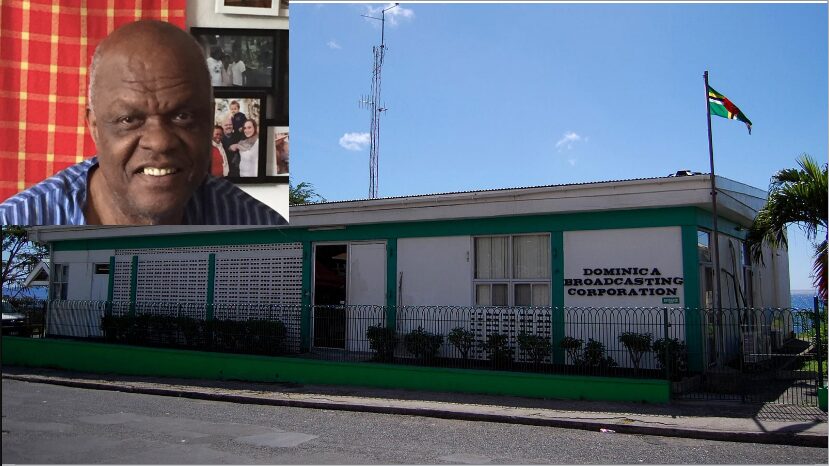
    The Caribbean island nation of Dominica is mourning the loss of one of its most influential media trailblazers, Jefferson “Jeff” Charles, whose passing was confirmed by Dominica News Online.

    Charles’ career stands as a foundational chapter in Dominica’s modern media history. As a veteran local broadcaster, he earned the distinction of becoming the first manager of Radio Dominica — the country’s first ever national broadcasting outlet, which was reorganized into the Dominica Broadcasting Corporation in 1976. During an era when radio served as the primary channel for public information and community connection across the island, Charles guided the development of the station’s first local content schedules and built the institutional framework that would support national broadcasting for decades. His early work not only gave Dominicans a dedicated local voice on airwaves but also permanently shaped the small island’s emerging media ecosystem.

    Later in life, Charles relocated to the United States to expand his expertise in the rapidly evolving communications field. He pursued advanced academic study in communications technology, ultimately completing a doctorate in satellite communication — a cutting-edge discipline that was undergoing explosive growth in the late 20th century. His academic research and technical contributions advanced global satellite communication systems, creating a unique throughline between his hands-on experience building local media in the Caribbean and the global push to connect the world through advanced communications technology.

    Today, Charles is remembered by communities in Dominica and across international communications circles for his far-reaching dual contributions. His passing represents the loss of a rare figure who left indelible marks on both the development of national media in his home country and the advancement of global communication technology. His decades-long career remains a notable example of how local media innovation can intersect with and contribute to global scientific progress.