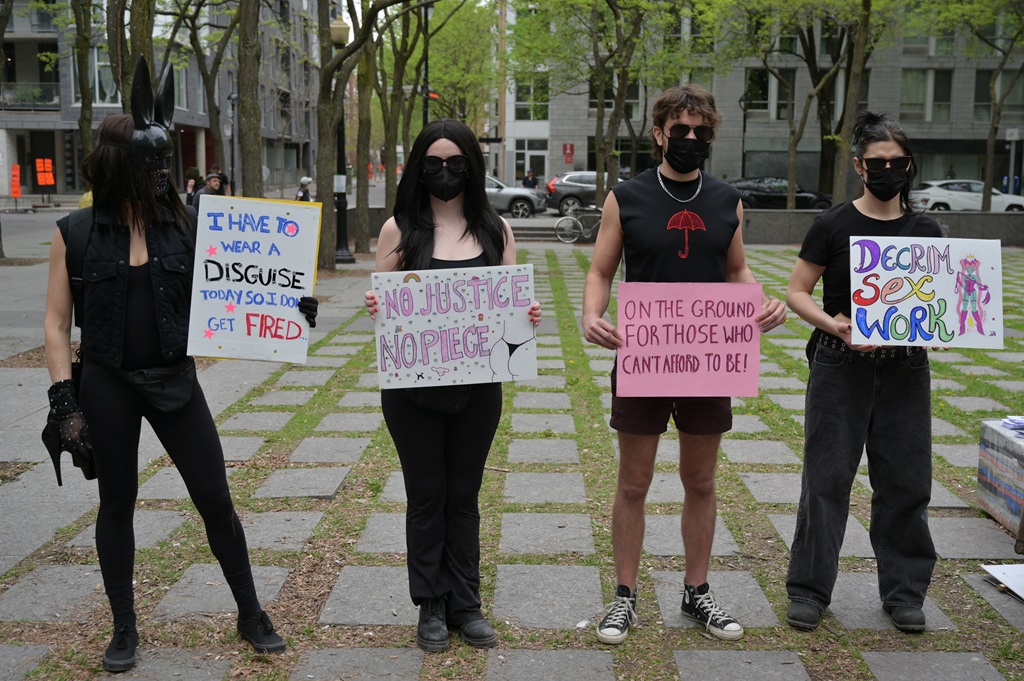
MONTREAL, Canada – One of Canada’s most high-profile annual motorsports events, the Canadian Formula 1 Grand Prix, became the backdrop for a historic labor and rights demonstration this year, as dozens of Montreal-based sex workers launched a coordinated strike to push for systemic changes to working conditions and national sex work policy.
作者: admin
-

400 deaths The tragedy that marked Jimaní: when the Blanco River swept away hundreds of lives
It has been 22 years since one of the worst natural disasters in Dominican Republic’s modern history reshaped the border community of Jimaní permanently. In the early hours of May 24, 2004, the once-dormant Blanco River — known as the Soliette River on the Haitian side of the border — burst its banks, turning a quiet residential neighborhood into a wreckage-strewn wasteland in mere minutes.
The transboundary river begins high in Haiti’s La Selle Mountain range, rising more than 2,680 meters above sea level before crossing into Dominican territory where it takes the name Blanco and eventually empties into Lake Enriquillo. For decades, the waterway had posed little visible threat to nearby communities, but days of heavy rainfall had built up deadly pressure along its banks that would break shortly after midnight.
Residents of the low-lying Las 40 neighborhood were jolted awake by a thunderous cracking sound as the river surged past its barriers. What followed was a raging torrent that swept away entire homes, uprooted mature trees, and carried away personal possessions, lives, and the close-knit fabric of the community. By dawn, the flood had left a landscape of total destruction: most structures were reduced to rubble, with even steel rebar torn away and washed downstream.
Preliminary casualty figures tell the scale of the tragedy: at least 400 Dominican residents and 300 Haitian nationals were killed by the floodwaters, with an additional 250 people injured and more than 270 still unaccounted for two decades later. Across Jimaní municipality, the disaster displaced and impacted 601 families, totaling more than 3,300 people whose lives were upended overnight.
For survivors who lived through the catastrophe, the memories remain as sharp as they were in 2004. In a recent interview with YouTube channel Chulo Wey TV, Las 40 survivor Tatis recounted the frantic moments that unfolded after his wife alerted him that rising water had seeped into their home around midnight. Tatis, his wife, and their three-month-old daughter managed to climb onto the roof of a neighboring house to wait out the flood, but many of his family members and friends were not as fortunate. His grandmother, a young niece, and multiple close neighbors died in the surge. “People were shouting: ‘Help, help, help me.’ But that water was higher than a light pole,” Tatis remembered.
Another survivor, Josefina Gabriela Niquel Bórquez, recalled that unrelenting heavy rain had fallen across the area from the start of the day, and the aftermath was almost too terrible to process. She described the dark, chaotic night after the flood: “Everyone was crying for their loved ones. The night was so dark we couldn’t even see our own hands.” Josefina also shared that the bodies of Haitian nationals swept downstream by the current washed up near her property in the disaster’s wake.
María Virgen Matos still carries the trauma of searching for her daughter through the flood’s destruction in the chaotic early hours. Before the disaster, she remembered, the neighborhood was a tight-knit, pleasant place full of good people. Refusing to leave the area until she found her child, Matos eventually was reunited with her daughter, who survived the disaster and went on to serve as a soldier 22 years later. For the families who lost loved ones and the community that was washed away, the tragedy remains an indelible part of the border region’s collective memory.
-

Figures: Mortality and aging: what the latest statistics show
Newly released 2025 demographic data from the Dominican Republic’s National Statistics Office, published in the annual *Vital Statistics Yearbook*, offers a clear snapshot of the country’s mortality landscape, reinforcing two persistent demographic trends that have been observed for years: consistently higher death rates among men, and a mortality burden heavily concentrated among older populations.
According to the official dataset, a total of 43,032 deaths were registered across the Caribbean nation in 2025. Breaking down the figures by gender, men accounted for the majority of fatalities at 25,213, representing 58.59% of all recorded deaths. Women made up 41.35% of total deaths, with 17,795 registered fatalities. Just 0.06% of all deaths had no gender designation recorded on death certificates; of these 24 unclassified cases, 10 involved infants under one year of age, pointing to gaps in early-life vital documentation in some cases.
The most striking demographic pattern highlighted in the yearbook is the persistent excess mortality among men, a trend that holds particularly strong across the working-age and late middle-age spectrum. For individuals between 15 and 79 years old, male death rates are twice as high as those for women. Demographic analysts attribute this persistent gap to a combination of interconnected factors: inherent biological differences in disease susceptibility, higher rates of risky behaviors among men in the region, and greater occupational exposure to dangerous working conditions that elevate mortality risk.
When sorted by age group, the data also underscores the heavy impact of population aging on Dominican Republic’s mortality structure. More than 80% of all recorded deaths — 80.34% to be exact — occurred among people aged 50 years or older, confirming that the bulk of mortality burden falls on the country’s older population. Working-age adults between 25 and 49 accounted for 14.05% of total deaths, while children and young people between 5 and 24 made up just 3.41% of fatalities. The lowest share of mortality came from children under five years old, who represented only 1.86% of all registered deaths in 2025. A small fraction of cases, 0.33%, lacked any recorded age information at the time of publication.
The 2025 yearbook’s findings align with the most recent demographic trends tracked by national statistics officials, confirming that long-standing patterns in Dominican mortality remain intact. As the country’s population continues to age, public health officials note that these data will be critical for shaping targeted healthcare policies, addressing gender-specific health risks, and planning for the evolving health needs of an older population.
-
LMD admits that the Municipal Police operate without clear legal limits
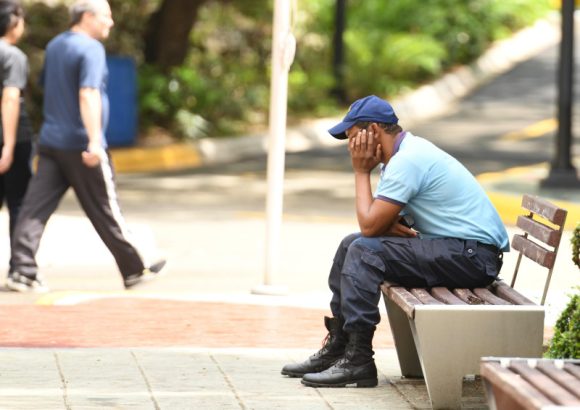
In the Dominican capital of Santo Domingo, the nation’s leading municipal governance body has publicly confirmed a long-standing systemic gap: the country currently lacks a detailed, clear legal framework to govern the operations of Municipal Police forces across all jurisdictions. The admission comes directly after local newspaper Listín Diario published an investigative report that exposed the absence of defined boundaries for municipal law enforcement officers, alongside findings that many on-duty agents prioritize personal cell phone use over monitoring public spaces in their patrol areas.
In an official press statement, LMD President Víctor D’Aza outlined the core flaw in the existing regulation. Current governing provisions, laid out in Articles 173 and 174 of 2007’s Law No. 176-07 covering the National District and municipal governance, fail to fully outline the necessary tools, legal authority, and operational mechanisms required for Municipal Police to carry out daily duties. This regulatory vacuum has created two contrasting problematic outcomes: in some instances, officers remain inactive out of uncertainty over their powers, while in others, unclarified boundaries open the door to excessive use of authority and potential abuses of power.
To address this out-of-date legislation, D’Aza confirmed that the Dominican Municipal League (LMD), the umbrella organization supporting the country’s municipalities and local municipal boards, is currently developing a new Draft Organic Law of Local Administration. The proposed legislation will expand and update the 17-year-old 2007 law, which D’Aza notes has become inadequate amid major shifts to the Dominican Republic’s broader national legal system. Most critically, the 2007 law does not align with the mandates of the country’s current Constitution, which requires dozens of existing laws—particularly regulations governing municipal legal frameworks—to be adapted to the new constitutional governance model.
The new proposed law is designed to strengthen key components of local governments’ sanctioning authority across a range of critical municipal matters, including urban planning violations, territorial organization, municipal fee non-compliance, and misuse of public spaces. Once enacted, the updated framework will equip both Municipal Police officers and municipal inspectors with clearer legal authority to address violations that disrupt municipal order and citizen coexistence, D’Aza explained.
As the new regulatory framework remains in the drafting phase, LMD has already taken preliminary steps to clarify Municipal Police roles for the public and local authorities. In January 2024, the organization published a public informational brochure titled *Municipal Police: Questions and Answers*, which breaks down key details of officers’ work: core functions, their formal relationship with the National Police, hiring requirements, operational guiding principles, roles during emergency responses, responsibilities for violence prevention and neighbor conflict mediation, and other frequently asked topics.
Through the brochure, LMD has also called on local governments to implement immediate interim measures to ensure Municipal Police operate under clear operational protocols, robust internal institutional controls, and full adherence to due process and constitutional citizen rights. While the Dominican Republic Bar Association has publicly expressed support for updated regulation of municipal law enforcement, LMD identifies one major barrier to advancing the new legislation: a lack of consistent cooperation with the Public Prosecutor’s Office.
The organization emphasized that limited specialized understanding of municipal regulation among Justice of the Peace Courts has left many violation reports filed by local governments stalled, without progressing through required judicial proceedings. Despite this hurdle, the LMD has reaffirmed its commitment to continuing work on the new draft law and advancing institutional strengthening for Municipal Police nationwide. The end goal, D’Aza stressed, is to ensure that local authority is exercised in a accessible, efficient, and consistent manner—always operating within clearly defined legal limits that protect both public safety and citizen rights.
-

Dr Aggrey Irons has died
Jamaica’s mental health community is mourning the loss of one of its most influential figures, prominent consultant psychiatrist Dr. Aggrey Irons, who died at the age of 74. Multiple sources familiar with the matter confirm Irons passed away on a Saturday evening, according to confirmation obtained by Observer Online.
Over a medical career spanning decades, Irons left an indelible mark on Jamaica’s public health landscape. For more than 20 years, he held the position of senior medical officer at Bellevue Hospital, one of the island nation’s leading public health facilities for psychiatric care. During his tenure, he earned widespread respect from colleagues and patients alike for his compassionate approach to treatment and his unwavering commitment to expanding access to mental health support across the country.
Beyond his clinical work, Irons was a towering figure in Jamaica’s broader medical community. He rose to the presidency of the Medical Association of Jamaica, where he advocated for improved working conditions for medical professionals and stronger public health policies for all Jamaicans. He also dedicated his time to public health prevention efforts, serving as the former chairman of the Jamaica Coalition for Tobacco Control, leading the organization’s work to reduce tobacco use and tobacco-related illness across the island.
Throughout his decades of service, Irons distinguished himself as more than a medical practitioner: he was a tireless public health advocate who used his platform to lift up issues that were often overlooked, from expanding mental health awareness to curbing the harms of tobacco use. Tributes are expected to pour in from across Jamaica’s medical, public health, and political communities in the coming days as colleagues and loved ones remember his decades of service.
-

Judges hang up their robes and caps during a nationwide work stoppage
SANTO DOMINGO — In an unprecedented show of collective action across the Dominican Republic’s judicial branch, nearly 400 judges from every level of the national court system joined a coordinated work stoppage Thursday, alongside hundreds of other judicial employees, to demand sweeping reforms to their substandard working conditions and unfair pay structures.
The protest, which included justices of the peace, first-instance judges, and appellate court judges, suspended all routine scheduled hearings with the sole exception of Permanent Attention courts, which continued to process urgent hearings on coercive measures to avoid endangering ongoing criminal cases. The strike was organized jointly by the Association of Judges of the Dominican Republic (Asojurd), the Network of Judges of the Dominican Republic, the Association of Dominican Judges for Democracy (Judemo), the Association of Justices of the Peace, and independent judges unaffiliated with the organizing groups.
The day of peaceful protest opened with a solemn, unified ritual across courthouses nationwide: after singing the Dominican national anthem and the Judicial Power anthem, all participating judicial workers, dressed in black and carrying protest signs emblazoned with slogans including the rallying cry “justice for justice”, gathered to read the movement’s founding document, the *Manifesto for the Dignity of Justice*, under the central slogan “Let dignity begin at home!” Gatherings were held at major judicial hubs including the Ciudad Nueva Palace of Justice, the Santo Domingo East Judicial City, the Real Estate Jurisdiction courthouse, and regional courthouses across the country.
At the Ciudad Nueva Palace of Justice, Magistrate Suinda Brito delivered the manifesto’s text, outlining the core grievances driving the action. Brito highlighted systemic understaffing that forces individual judges and court employees to handle the workload of three or four full-time positions, stagnant salaries that have not kept pace with the country’s soaring cost of living despite the enormous legal and ethical responsibilities of judicial roles, and a wave of mass resignations among administrative staff driven by chronic burnout. Protesters also pointed out severe disrepair to court facilities and a total lack of adequate personal safety protections for staff working in courthouses.
The strikers argue that a functional justice system cannot rely solely on personal vocation, individual sacrifice, and private commitment from the people who run it. To deliver timely, efficient, and impartial justice to the public, the branch requires sufficient material, human, and financial resources that it has long been denied, they said.
The most contentious complaint centers on stark economic inequity within the judicial branch. Strikers condemned that while local courts operate with crippling basic deficiencies, senior internal management bodies control multi-million-dollar budgets allocated to luxury travel, hotel accommodations, fine dining, advertising, public events, and payments to social media influencers. They added that some senior administrative secretaries and top management staff take home salaries that far outpace the earnings of active sitting judges.
The national strike has received broad backing from across the Dominican legal community, including the national Bar Association, multiple legal professional associations, and prominent individual jurists such as Carlos Olivares. Olivares expressed unwavering support for the industrial action, calling the current salary structure for sitting judges completely unacceptable. He emphasized that the judicial sector deserves public backing, noting it is long past time judges stopped earning what he described as “miserable wages” and faced routine institutional disrespect.
The Dominican Association of Prosecutors (Fiscaldom) has also publicly expressed its support and solidarity with the striking judges, joining calls for salary improvements and broader reforms to strengthen the national justice system. In an official statement, Fiscaldom confirmed it recognizes the right of judicial worker organizations to advance demands for improved working, salary, and institutional conditions for public servants, so long as actions remain within the bounds of the country’s legal framework, principles of social democracy, and the rule of law. The association reiterated its backing for the judges’ demands, stressing that ensuring dignified working conditions for judicial staff is a core requirement for institutional strengthening and improved public access to justice. Fiscaldom also called on relevant authorities to open spaces for frank, respectful, and urgent dialogue to address the strikers’ demands and advance fair, sustainable solutions that benefit the entire Dominican justice system.
In the country’s second-largest city of Santiago, regional judicial staff joined the national movement, with the area outside the Santiago Palace of Justice filled with demonstrators dressed in black, including dozens of judges, court employees, and local lawyers gathered to back the strike. Representatives from regional jurisdictions unified around demands opposing excessive workloads, systemic wage inequality, and what they describe as the “industrialization of justice” — a backlogged system that prioritizes speed over fair process. The regional strike canceled roughly 200 routine hearings in the area.
Demonstrators in Santiago recalled that the Judicial Council, the judicial branch’s governing body, first issued a formal response to the group’s demands on May 19. But judges dismissed the council’s proposal as “vague, conditional, and ineffective.” The council’s offer includes a salary indexation plan that is contingent on approval from the Ministry of Finance, with no set timeline for implementation or clear mechanisms to roll out changes. Judicial mobility reforms were reduced to a non-binding “roadmap” with no concrete policy measures, the strikers said. Core outstanding issues including rules for horizontal substitution, wage gaps created by the current remuneration manual, and advancement opportunities for administrative staff have all gone completely unanswered, they added.
Protesters also questioned senior management’s resource allocation across the judicial branch, noting that the Judiciary has spent more than 400 million Dominican pesos on international air travel and accommodations since 2021, while structural and salary deficiencies remain unaddressed in local courts. They also denounced institutional inaction on more than 18 formal communications sent by judges to the Judicial Council dating back to May 2021, requesting solutions to a wide range of systemic issues that have never received a response.
Despite the full-scale work stoppage, strikers have guaranteed that all urgent judicial services remain operational throughout the country. Single-judge courtrooms, the Second Court of Instruction, and Permanent Attention Offices all remained open to handle emergency matters.
In addition to the core grievances around wage inequality and misallocated budgets, the movement’s key demands include addressing severe understaffing, a nationwide shortage of sitting judges, excessive workloads, ongoing mass resignations of burned-out administrative staff, crumbling judicial infrastructure, and inadequate on-site security for courthouse employees.
Protesters emphasized they remain open to good-faith dialogue with the Judicial Council, but warned that if they do not receive concrete, actionable responses to their demands in the near future, they will launch additional collective actions to press their case.
-

Coral scientists fear bleaching El Nino could bring devastation
BANGKOK, Thailand – A growing body of climate science experts is sounding the alarm that an unusually powerful El Niño weather pattern set to arrive this year could drive catastrophic damage to the world’s coral reefs, many of which are already teetering after consecutive mass bleaching events that have eroded their resilience. Meteorological forecasting models have increasingly converged on the conclusion that the cyclical climate phenomenon, which occurs every two to seven years, will return in 2025 with unusual strength, reshaping weather patterns across the globe—bringing severe drought to some regions and catastrophic flooding to others. For coral ecosystems, the greatest risk stems from El Niño’s close link to elevated ocean temperatures and reduced cloud cover in many tropical regions, two conditions that are proven triggers for large-scale coral bleaching.
“Every global coral bleaching event in recorded history has occurred during an El Niño year,” noted Clint Oakley, a coral reef ecologist at Victoria University of Wellington. Oakley described his reaction to the forecast of a strong event as a feeling of “dread, although not surprise,” warning that a major El Niño this year could prove “serious and devastating for many reefs around the world.”
To understand why even small temperature increases pose such a grave threat to corals, it is necessary to examine the symbiotic relationship that underpins their survival. Corals build the hard calcium carbonate structures that form reef frameworks, and host tiny algae called zooxanthellae within their tissues. In exchange for shelter, the algae produce nutrient-rich compounds via photosynthesis that feed the coral, and also give reefs their vibrant, distinctive colors. When ocean temperatures rise beyond a coral’s tolerance threshold, however, this mutually beneficial partnership breaks down: the algae are either expelled by the coral or leave voluntarily, a process that scientists have yet to fully explain. Without their algae symbionts, corals lose their color, turning the stark white that gives bleaching its name, and are slowly starved of the nutrients they need to survive.
If ocean temperatures cool rapidly enough, corals can survive off stored energy reserves until the algae return. But even partial recovery leaves corals malnourished, more susceptible to bacterial and viral infections, and unable to allocate the energy required for successful reproduction. If elevated temperatures persist or reach extreme levels, the outcome is far grimmer. “If it takes too long for the waters to cool down, or if the heat is too extreme, then they will essentially starve and they’ll die,” explained Jen Matthews, a coral researcher at the University of Technology Sydney.
Occasional, localized bleaching is a natural part of reef ecosystem dynamics, and healthy reefs can recover from small-scale events. The modern crisis stems from repeated mass bleaching events that have become the new normal as anthropogenic climate change drives long-term rising ocean temperatures. Many reefs have not had enough time between events to fully recover and replenish their populations with young coral juveniles. “If you’re being bleached before you’ve even recovered and been able to produce juveniles again, then that’s only a downwards trajectory from there,” Oakley said.
The most recent global mass bleaching event was formally declared in 2024, and the damage already recorded is extensive. Some coral species in the Caribbean have already been classified as functionally extinct, meaning they can no longer sustain viable populations or fulfill their ecological roles. Australia’s Great Barrier Reef, the world’s largest reef system and the only living structure visible from outer space, lost between 15% and 40% of its total coral cover across different regions between 2024 and 2025.
A strong, or “super”, El Niño would push ocean temperatures even higher, starting from a baseline that is already too warm for most corals to thrive. Oakley pointed out that average global ocean temperatures over the past five years match the peak temperatures recorded during the 1998 global bleaching event, one of the most destructive on record to that point. While a small share of the world’s corals have shown natural resilience to warmer waters, their numbers are not nearly enough to offset the widespread losses from repeated bleaching cycles.
In response to the growing crisis, scientists are testing a range of experimental interventions to buy reefs more time: these include nutrient-infused gels to feed stressed corals, shading systems to reduce heat exposure, and genetic engineering to breed more heat-tolerant coral strains. Matthews emphasized that while many of these innovative management strategies show promise, they are not a long-term solution. “There’s a lot of really important and innovative management strategies out there, but they’re all just buying time,” she said.
Forecasters still note some uncertainty around El Niño’s exact timing, strength, and regional impacts, and urge that projections be interpreted with that caveat in mind. “An El Niño is likely, but the strength and duration are still uncertain,” said Kimberley Reid, a research fellow in atmospheric sciences at the University of Melbourne. “El Niño is one piece of the puzzle that affects the weather at a certain location but there are other factors like local ocean temperatures and winds across the Indian Ocean,” she added.
Even without a major El Niño event this year, the long-term outlook for global coral reefs remains deeply troubling. Scientists estimate that up to 50% of the world’s coral cover has been lost over the past four decades, eroding irreplaceable ecosystems that provide critical nursery habitat for commercial fish populations that feed billions of people, and act as natural sea walls that protect coastlines from storm surge and erosion.
Matthews called the current trajectory a sobering reminder of the stakes of climate inaction. “If we don’t get our act together on climate change then all we’re doing is buying time until our reefs, as we know them, disappear.”
-

J’can stories on the global screen
Jamaica’s burgeoning film and television sector stepped into the global spotlight last Friday, when local production company LAB Studios played host to SLATE | Jamaica on Screen — a high-profile industry showcase designed to highlight the island nation’s untapped potential as a leading hub for international content creation.
The one-night event drew a cross-section of key stakeholders, ranging from top Jamaican government officials and global studio executives to local creative talent, international investors, and industry insiders. Conversations across the evening centered on three core pillars: elevating authentic Jamaican storytelling, unlocking new avenues for foreign and domestic investment, and laying the groundwork for long-term industry growth.
Co-hosted at the Carib 5 cinema by LAB Studios in collaboration with Jamaica Promotions Corporation (Jampro) and the Jamaica Screen Development Initiative (JSDI), the event opened with an exclusive private screening of *Love Offside*, a feature-length film produced entirely in Jamaica. The movie stars a mixed lineup of local and Hollywood talent, including Judi Johnson, Mike Merril, Victoria Rowell, and Sundra Oakley.
Following the screening, attendees were treated to a dynamic fireside chat titled “Building the future: Jamaican stories on the global stage”, featuring LAB Studios CEO Kimala Bennett and Mika Pryce, Senior Vice President of Development and Production at Paramount Pictures. The pair unpacked shifting trends in global content, the growing importance of intellectual property (IP)-centered production ecosystems, and the once-in-a-generation opportunity for emerging markets like Jamaica to carve out a competitive space on the international entertainment landscape.
Pryce, whose industry credits include blockbuster and critical hits such as *Get Out*, *Good Boys*, *Little*, and *Pacific Rim: Uprising*, shared actionable insights into what major global studios prioritize when evaluating new projects: content that balances commercial appeal with authentic cultural resonance that connects with global audiences.
The evening also included the world premiere of first-look trailers for LAB Studios’ upcoming slate of original productions, including *Christmas in the Tropics*, *Jenna In Law*, *SEEN*, *Happily Ever Awkward*, and *The Marriage Clause*. The lineup of new projects underscores the company’s sustained commitment to developing original IP rooted in Caribbean stories and perspectives.
LAB Studios made history as one of the first production companies to secure funding through the JSDI, a government-backed program that has allocated $50 million in national film financing to support homegrown projects and grow the local screen industry. This forms part of the Jamaican government’s broader 1-billion-dollar commitment to expanding the island’s creative economy.
For Bennett, the SLATE event is far more than a launch pad for new original content. It marks a deliberate step toward repositioning Jamaica and the wider Caribbean as key players in the $2.8 trillion global content economy.
“The global media and entertainment industry is now valued at more than US$2.8 trillion, and as audiences continue searching for stories that feel authentic and emotionally connected, the opportunity for culturally-driven storytelling has never been greater,” Bennett explained in her remarks. “Few countries our size have had the cultural impact Jamaica has had globally, and the opportunity now is to build the infrastructure and production ecosystem needed to consistently bring Jamaican stories to international audiences while creating real economic value in the process. That is the opportunity we see at LAB Studios.”
She added: “We are grateful to our government partners for recognising the value of the creative economy and helping to position Jamaica as a global content hub.”
Prime Minister Dr Andrew Holness delivered the event’s keynote address, reaffirming the government’s commitment to growing the screen sector as a core driver of future economic expansion. “This is the latest signal that Jamaica has the talent, the stories, the locations, and the cultural appeal to build a serious film industry,” Holness said. “Jamaica has long been globally recognised as a cultural superhub, but we have not always converted that cultural influence into structured economic opportunity. We need to have an unvarnished view of where we are in our development and be honest with ourselves about the things we need to improve… The Government sees film as part of Jamaica’s next frontier of economic growth.”
Jampro President Shullette Cox echoed calls for cross-sector collaboration to sustain the industry’s momentum, noting that the SLATE event perfectly embodies the core mission of the JSDI. “SLATE represents the embodiment of the vision of the JSDI: Supporting content creators in bringing their stories onto the screen,” Cox said. “We look forward to supporting more screenings such as this one in the future, as we continue to issue funding under the JSDI, and give support through the Jamaica Film Commission in an effort to ensure that Jamaican stories have visibility on the global stage.”
-

Pablo Hoilett returns with hilarious new comedy
After decades shaping Jamaica’s vibrant local comedy theatre scene, one of the country’s most respected creative minds is gearing up to unveil his latest side-splitting work: veteran producer and director Pablo Hoilett’s brand-new comedy *Brazen to di Bone* is set to open its doors to audiences on June 5 at Kingston’s iconic Courtleigh Auditorium.
Boasting a cast packed with some of Jamaica’s most beloved local performing talent, the fast-paced, high-energy production features fan-favorite stage performers including Chris “Johnny” Daley, Donald “Slashie” Anderson, Peter “Maestro” Heslop, and Joan “Kenzie” McKenzie, each bringing their signature comedic timing to the production.
In comments ahead of the opening night, Hoilett emphasized that the core mission of *Brazen to di Bone* is unapologetic, joyful entertainment tailored to Jamaican audiences. “Jamaican theatre-goers don’t just love comedy — they love comedy that feels authentic to their lives, rooted in characters and scenarios that feel like something you’d spot on any street corner or community,” he explained. “So many people are carrying daily stress right now, and we set out to build a production that lets everyone leave their worries at the door for a couple of hours, and just laugh. That’s exactly what *Brazen to di Bone* delivers.”
The play’s plot centers on the chaotic, outrageous misadventures of Alrick Smith, a charming drifter who constructs an elaborate, tangled web of fake identities to fraudulently claim multiple government benefits, all to sustain a comfortable lifestyle without ever holding down a steady job. The scheme hums along smoothly until an unexpected government investigator shows up at his door to probe the suspiciously large number of benefit claims tied to his single address. What follows is a nonstop rollercoaster of increasingly absurd lies, crossed wires, and laugh-out-loud misunderstandings that spiral far beyond Alrick’s control.
Hoilett has long stood as a foundational figure in Jamaican theatre, building a decades-long career marked by dozens of commercially and critically successful productions that have helped elevate homegrown Jamaican comedic storytelling onto the national stage, nurturing new talent and cementing local comedy as a beloved staple of Jamaican cultural life. With its relatable premise, star-studded local cast, and signature Hoilett wit, *Brazen to di Bone* is shaping up to be one of the most anticipated theatrical events of the Jamaican entertainment calendar this summer.
-

Omari Edwards takes on Hill & Gully Ride
Jamaican recording artiste Omari Edwards has sparked widespread discussion among music fans with the launch of his latest culturally rooted and uplifting track, *God Is Good*. The new single is featured on the popular Hill & Gully Ride rhythm, helmed by award-winning, industry-acclaimed producer Stephen McGregor.
Beyond its musical merit, the release carries deep personal meaning for Edwards: it is crafted as a loving tribute to the late Jamaican gospel icon David “Kukudoo” McDermott, who passed away in early May at 56. A widely respected mainstay of Jamaica’s music community, Kukudoo served as a beloved older brother figure and mentor to Edwards throughout his career.
*God Is Good* is a sincere, soulful exploration of faith, gratitude, worship and perseverance, woven tightly into the fabric of Jamaican daily life and cultural identity. Edwards draws on both timeless biblical symbolism and the lived realities of Jamaican people to frame his message, emphasizing that divine presence remains constant through every high and low of life.
The song leans into the iconic metaphor that runs through the Hill & Gully Ride project, echoing biblical imagery where hills and valleys represent moments of triumph and struggle. Just as scripture uses these landscapes to illustrate the full spectrum of human experience, *God Is Good* reminds audiences that faith remains a steady anchor regardless of how life’s circumstances shift. The track’s core concept of “hill and gully” ultimately becomes a stand-in for the journey of life itself.
Through his warm, soul-driven vocal delivery, Edwards captures the resilience of everyday Jamaicans who show up to work hard, sacrifice for their loved ones, and navigate both joyful seasons and difficult periods. More than just a musical release, the single acts as a cultural and spiritual touchstone for modern Jamaican society, highlighting the enduring importance of faith, resilience, and gratitude amid daily challenges.
It also honors Jamaica’s deep musical history, folk traditions, and famously uplifting national spirit, while encouraging listeners across the globe to hold onto hope and gratitude even when facing obstacles. This latest release follows Edwards’ 2024 track *Winners Anthem*, produced by Da Journey, and reinforces his consistent commitment to creating inspirational music that resonates with the lived experiences of ordinary people.
As the single gains traction among gospel-reggae fans, cultural advocates, and casual music lovers alike, Edwards has made a meaningful, refreshing contribution to the expanding Hill & Gully Ride movement — all while upholding the profound legacy left by Kukudoo.