作者: admin

  • Organisers expect strong Carnival turnout despite no state backing

    Organisers expect strong Carnival turnout despite no state backing

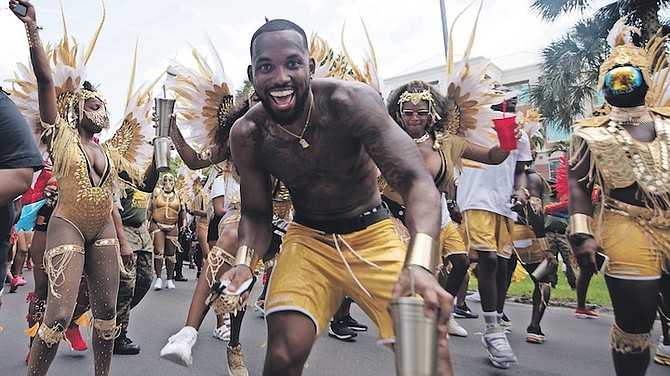
    As the Bahamas gears up for its 2025 Carnival celebration, scheduled for June 3 to 7 on New Providence, event organizers are stepping into an ambitious new chapter: this year’s gathering will proceed without any government financial backing, a deliberate choice meant to prove the cultural festival can thrive as an independent, self-sustaining Bahamian treasure.

    The shift to full self-funding comes after years of declining government support. In 2017, the government cut the annual carnival subsidy in half, and eliminated all public funding entirely the following year. That financial withdrawal left many performing and presentation bands scrambling to maintain their momentum, even as industry stakeholders have long highlighted the event’s outsized positive impact on the national economy through tourism and local spending.

    Despite the funding gap, event leaders are projecting strong growth in attendance for 2025. Paul Farquharson III, co-founder of the prominent carnival group Mas Khaos, explained that the decision to forgo additional government sponsorship this year was rooted in a desire to claim full ownership of the festival. “We wanted to make something that’s ours rather than rely on government support,” he said. “This is a distinctly Bahamian product that shapes local culture, even as it draws international visitors who boost the local economy when they travel here. We aren’t opposed to future collaboration with the government, but we wanted to build a proven, unified cultural product that everyone can see delivers clear benefits to The Bahamas.”

    Farquharson projects that Mas Khaos’ participant numbers will jump this year, climbing from 80 to 100 attendees in previous editions to between 120 and 150 for 2025. International participation is also set to rise, growing from roughly 35 overseas participants in 2024 to between 47 and 50 this year. Even with this optimistic outlook, Farquharson acknowledged that reconnecting with wider local community engagement remains one of the festival’s core ongoing challenges. Many stakeholders have pinned post-pandemic declines in local attendance on the global health crisis, even as they praise the consistent strong support the event has received from international carnival fans.

    That global backing is reflected in local sales data, according to A’Shad Bowe, operations representative for Bahamas Masqueraders. Bowe told reporters that roughly 80 percent of the group’s online ticket and package sales come from customers outside the Bahamas. “We’re excited for our product, and we have a lot of international people coming in from places all across the world: the UK, Texas, Florida, New York, Canada, even the Virgin Islands,” he said. “It’s incredibly exciting to see our cultural reach extend so far beyond our shoreline to bring people here to play carnival with us.”

    Bowe pushed back on popular narratives that the festival lacks local support, pointing to consistent turnout for year-round carnival-related events. “Bahamas Masqueraders runs events from February straight through June, and all of them draw solid crowds,” he explained. “Our biggest event alone brought out 1,500 attendees. It’s not that carnival isn’t supported locally. The issue is economic: many local residents simply can’t afford the cost of costume packages. That doesn’t mean there’s a lack of interest or community backing.”

    Not all organizer groups are ruling out public support for the future, however. Dillion Bethel, a representative for JunkaBrations, shared that his organization hopes to secure government financial assistance for the 2026 carnival. Bethel also voiced disappointment over the discontinuation of Music Masters, a popular annual competition for Bahamian soca artists that had long been a core part of the broader carnival experience. When asked if the competition’s cancellation affected the local carnival community, Bethel confirmed: “Yes it will, and people are still asking about it – both locals and international visitors.”

    With carnival week just around the corner, organizers across groups are unified in their optimism that the 2025 event will cement the festival’s reputation as a must-attend cultural celebration that delivers widespread economic and social benefits to The Bahamas.

  • Malecón Deportivo draws 40,000 visitors in first month

    Malecón Deportivo draws 40,000 visitors in first month

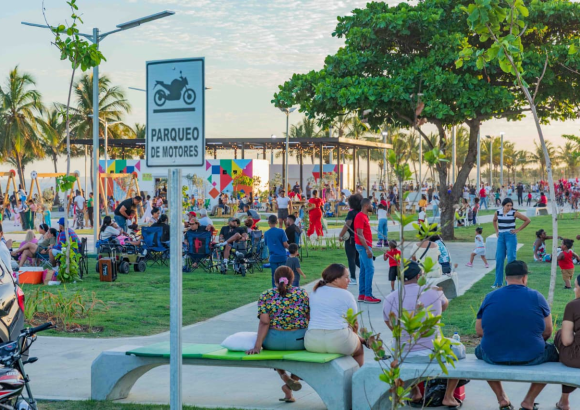
    Just one month after opening to the public, Santo Domingo’s newly redeveloped Malecón Deportivo has emerged as a hit among local residents and visitors alike, with the National District Mayor’s Office confirming the recreational waterfront space has attracted roughly 40,000 visitors since its inauguration. The strong turnout underscores broad public enthusiasm for a project that has transformed the capital’s southern coastline into a vibrant hub for community activity.

    First opened to the public on April 23, the nearly two-kilometer waterfront revitalization project was a joint initiative led by National District Mayor Carolina Mejía and Dominican Republic President Luis Abinader. In its first 30 days of operation, the space has already hosted a diverse range of events, from intimate private gatherings including weddings and birthday celebrations to large-scale community activities and competitive sporting events. Two major running events, the Ofit SDRun5K and the Carrefour 10K, were among the standout activities, drawing thousands of runners and spectators to the new waterfront venue over the past month.

    City officials emphasized that the completed Malecón Deportivo is a key component of a much larger coastal recovery effort. When combined with adjacent revitalized areas, the project brings the total length of reclaimed public coastal space in the capital to 5.8 kilometers, marking the largest single urban renewal initiative ever undertaken along Santo Domingo’s southern coastline. Looking ahead, the popular local group Bonyé will return to the venue for a second free public concert on May 29, following a massively well-attended performance during the site’s inaugural celebration that drew thousands of music fans.

    As Malecón Deportio settles into its role as a go-to community space, work is already progressing on the next major phase of the capital’s waterfront renewal: the upcoming Paseo 30 de Mayo project. Planned improvements for that initiative include new additional sports facilities, expanded public green spaces, dedicated bike paths, and a state-of-the-art speed skating rink built to meet international competition standards. The rink will be used as a competition venue for the 2026 Central American and Caribbean Games, which Santo Domingo is set to host.

    Overall, the two projects form part of a coordinated, long-term strategy by local and national authorities to reconnect Santo Domingo’s urban core with its historic waterfront, expand access to free public recreational and sports infrastructure for residents, and drive inclusive urban renewal across the capital region.

  • Faride Raful leads security meeting with governors from all 32 provinces to combat crime and disorder

    Faride Raful leads security meeting with governors from all 32 provinces to combat crime and disorder

    In a key gathering focused on shoring up public safety across the Dominican Republic, Interior and Police Minister Faride Raful convened governors from all 32 of the country’s provinces in Santo Domingo to align cross-regional strategies targeting a suite of pressing criminal threats. The high-level meeting operated under the umbrella of the national security framework advanced by sitting President Luis Abinader, bringing together local and national authorities to map out coordinated responses to challenges ranging from drug micro-trafficking and illegal street motorcycle racing to rampant cattle rustling and frequent traffic accidents that have eroded community safety.

    During the day-long discussions, provincial leaders opened up about the tangible harm that persistent crime has inflicted on their local populations, and outlined critical unmet needs for frontline security and emergency services. These gaps included updated equipment for police and fire departments, additional operational vehicles, and upgrades to aging institutional infrastructure that hampers effective response.

    Minister Raful centered part of her remarks on the urgent need for formal reporting of cattle rustling incidents, a crime that hits agricultural communities particularly hard in provinces like La Altagracia. She stressed that official complaints are the foundational first step that allows law enforcement to launch thorough investigations and successfully prosecute offenders who steal livestock, a crime that costs rural producers thousands of dollars in losses annually. Echoing this focus on cracking down on livestock crime, Deputy Minister Angela Jáquez called for tighter, more consistent regulatory controls over both livestock transportation and commercial slaughter operations, noting that weak oversight creates open pathways for illegal rustling rings to operate undetected.

    On the topic of long-term security system reform, Andrés Modesto Cruz Cruz outlined steady progress in the administration’s flagship police expansion initiative, which has set a target of adding 20,000 new uniformed officers to national ranks by 2028. To date, he confirmed that nearly 13,000 new recruits have already completed training and joined active duty, with a cohort of more than 2,500 additional trainees on track to graduate in the near future to boost security presence across every region of the country. Attendees also dedicated time to reviewing a newly designed motorcycle regulation plan, which specifically targets the dangerous, unauthorized illegal street racing events that have become a public safety hazard in many urban and suburban areas.

    Beyond violent and organized crime, the agenda also covered less high-profile but equally disruptive community issues: excessive public noise and permitting protocols for large public events. Officials from the southwestern province of Barahona brought forward a proposal to enforce stricter time limits on outdoor events and amplified music to reduce quality of life disruptions for local residents. Separately, Delsa de Óleo, governor of La Altagracia, raised urgent alarms over rising youth violence in the resort area of Verón, specifically pointing to the presence of unsupervised foreign minors who have been tied to local criminal activity in the region.

  • Leonel Fernández leads OAS Electoral Observation Mission in Colombia

    Leonel Fernández leads OAS Electoral Observation Mission in Colombia

    Colombia is preparing to hold its national presidential election on May 31, and a high-stakes international observation effort led by former Dominican Republic President Leonel Fernández has officially launched its work on the ground. This deployment marks a landmark milestone for the Organization of American States (OAS), as it stands as the 25th electoral observation mission the regional body has conducted in Colombia over recent decades.

    Fernández now assumes leadership of a robust team consisting of 96 experienced observers and technical specialists drawn from 24 different nations across the globe. To ensure comprehensive oversight of every stage of the electoral process, the mission has distributed its personnel across all major voting regions in Colombia: covering 26 of the country’s administrative departments, the national Capital District, and even five major international cities that host large Colombian expatriate communities. Those overseas locations include Madrid and Barcelona in Spain, plus New York, Miami, and Washington, D.C. in the United States, where Colombian citizens living abroad will cast their ballots in the election.

    Technical preparations for the observation work began more than a week before election day, on May 19. From that date, OAS technical experts have already engaged in a range of hands-on activities tied to the mechanics of the vote, including participating in full simulations and independent testing of Colombia’s vote-counting and results transmission digital systems. Moving through election day and the post-vote tabulation period, the mission’s mandate covers far more than just in-person voting monitoring. Observers will conduct a full evaluation of six core components of the electoral process: overall election administration, overseas voting operations, the performance of electoral technology systems, compliance with campaign finance regulations, the work of electoral judicial bodies, and the security measures put in place to protect voters and polling sites.

    In addition to technical and procedural evaluations, Fernández and his observation team will also carry out broader assessments of the electoral environment. This includes tracking the progress of all presidential candidates’ campaigns, reviewing how media outlets across the country cover the election, and analyzing the role of digital communication strategies used by campaign teams. To gather input from all stakeholders, the mission has scheduled a full program of meetings with national electoral authorities, senior Colombian government officials, all competing presidential candidates, representatives from domestic civil society organizations, and foreign diplomatic delegations based in the country.

    The entire observation mission is funded through contributions from a group of six foreign governments: Brazil, Canada, Spain, the United States, France, and Italy, reflecting broad international interest in ensuring the Colombian presidential election proceeds in a free, fair, and transparent manner.

  • Suriname President Jennifer Geerlings-Simons to visit Dominican Republic

    Suriname President Jennifer Geerlings-Simons to visit Dominican Republic

    One of the highest-profile diplomatic engagements between two Caribbean nations is set to kick off this weekend, as the President of Suriname, Jennifer Geerlings-Simons, travels to the Dominican Republic for an official working visit that will run through June 2.

    Geerlings-Simons and her official delegation are scheduled to touch down at Punta Cana International Airport on Saturday morning, kicking off a packed three-day schedule of formal diplomatic activities set to launch on Monday. The official welcome will be held at the Dominican Republic’s National Palace, where the visiting head of state will receive full military honors before entering a closed-door private meeting with her Dominican counterpart, President Luis Abinader.

    Following the one-on-one discussion, delegations from both countries will hold expanded bilateral talks focused on deepening cross-national cooperation. The morning’s official events will conclude with a formal signing ceremony for new bilateral agreements and a shared joint statement outlining shared priorities for the two nations moving forward.

    Later on Monday, Geerlings-Simons will join Dominican Republic Foreign Minister Roberto Álvarez for a commemorative visit to the Altar of the Fatherland, where the pair will lay a wreath to honor the Dominican Republic’s national heritage. On Tuesday, the final day of the visit, the Surinamese president will meet with the Dominican Republic’s top congressional leaders — Senate President Ricardo de los Santos and Chamber of Deputies President Alfredo Pacheco — at the National Congress. She is scheduled to depart the country from Las Américas International Airport later that same afternoon, bringing the official visit to a close.

  • US preparing Ebola quarantine centre in Kenya — WSJ

    US preparing Ebola quarantine centre in Kenya — WSJ

    As the Democratic Republic of the Congo grapples with an uncontrolled, deadly Ebola outbreak, the United States is moving forward with plans to establish a dedicated quarantine facility in neighboring Kenya, according to a Tuesday report from The Wall Street Journal. Multiple anonymous sources familiar with the internal planning confirmed that the site is designed specifically for American citizens who either receive a positive Ebola diagnosis or have documented close exposure to the virus. One senior U.S. administration official clarified the core purpose of the facility, noting it would serve as a holding point for Americans requiring emergency evacuation out of the DRC who need to complete their required isolation period before any further travel. As of recent counts, the World Health Organization has tracked 10 confirmed Ebola deaths, alongside 220 suspected fatalities and roughly 900 suspected cases across the DRC since the outbreak was first detected in mid-May. As of Tuesday, the proposal was still awaiting final regulatory approval from Kenyan government officials, and Kenya has not recorded any confirmed Ebola cases to date. The planning for the Kenyan facility comes on the heels of a recent high-profile case: an American doctor who contracted Ebola during aid work in the DRC was evacuated to Germany for medical care just last week. Just days prior, the U.S. Centers for Disease Control and Prevention announced strict new entry restrictions, barring lawful permanent U.S. residents who have traveled to the DRC, Uganda, or South Sudan in the previous 21 days from entering the United States. A key factor amplifying risk in this outbreak is the lack of targeted medical countermeasures: the specific strain driving DRC’s 17th documented Ebola epidemic, the Bundibugyo strain, has no approved vaccine or specific treatment available to date.

  • WHO chief says DR Congo facing ‘catastrophic collision’ of Ebola and war

    WHO chief says DR Congo facing ‘catastrophic collision’ of Ebola and war

    GENEVA, Switzerland – In an urgent public appeal posted to the social platform X on Wednesday, World Health Organization (WHO) Director-General Tedros Adhanom Ghebreyesus sounded the alarm over the escalating Ebola crisis in the eastern Democratic Republic of the Congo (DRC), warning that ongoing armed conflict has severely criiled global and local efforts to curb the deadly outbreak and demanding an immediate halt to all hostilities.

    Tedros described the situation in Ituri province as a catastrophic convergence of two humanitarian disasters: unregulated spread of the Ebola virus and persistent, large-scale violence. Currently, he noted, the outbreak is outpacing all response initiatives launched by health authorities.

    Since the DRC government formally declared the outbreak on May 15, the UN health agency has documented 10 confirmed Ebola deaths and 220 suspected fatalities, alongside more than 900 reported suspected cases across the country. WHO officials emphasize that these official numbers almost certainly underrepresent the true scale of the virus’s spread, as experts believe the pathogen has been circulating undetected in the region for weeks before the official declaration.

    Complicating response efforts further, the strain circulating in the DRC – the Bundibugyo Ebola variant – has no globally approved vaccine or specific, targeted treatment available. Unlike other Ebola strains that have been successfully contained with approved medical countermeasures, stopping transmission of this variant relies entirely on unimpeded access for humanitarian and medical teams to reach affected communities.

    That critical access has been blocked by widespread insecurity that has plagued eastern DRC for nearly 30 years, where dozens of armed groups operate in a long-running, fragmented conflict. In rural areas of Ituri province, core state services have been non-existent for decades, leaving local populations without basic health infrastructure even before the outbreak began.

    Tedros explained that ongoing armed clashes have triggered mass population displacement, forcing people who may have been exposed to the virus to crowd into overcrowded displacement camps where the risk of rapid viral spread is drastically amplified. The violence has also cut off key routes that health teams rely on to reach affected areas and implement containment measures.

    “Frontline workers are risking everything, while attacks on health facilities make tracking cases and their contacts nearly impossible,” Tedros warned. “We cannot build community trust or isolate the sick while bombs are falling.”

    In closing his appeal, the WHO chief reiterated the global health body’s demand for all warring factions to agree to an immediate ceasefire to allow health teams to carry out their life-saving work. “We urge all warring parties to agree to an immediate ceasefire to contain this outbreak. To allow us safe and sustained access for medical teams,” he said. “We plea to prioritise human survival above everything else.”

  • Europe heatwave ‘brutal reminder’ of climate change — UN

    Europe heatwave ‘brutal reminder’ of climate change — UN

    An unprecedented early-season heatwave, amplified by a stationary ‘heat dome’ pushing midsummer-level temperatures across Western Europe, has triggered fatalities and broken national temperature records this week, prompting urgent warnings from the United Nations’ top climate official about the accelerating harms of unaddressed climate change.

    By mid-week, both France and the United Kingdom had shattered all-time national temperature records for the month of May twice in as many days, with readings hitting highs not normally seen until the height of summer. Neighboring Ireland also set its own May temperature record, while Spain, Italy and Austria have all battled far hotter conditions than average for this point in the calendar.

    The extreme heat has already turned deadly: French public health officials confirmed at least seven heatwave-linked fatalities as of Tuesday, five of which were drownings as residents flocked to lakes, rivers and beaches to escape the sweltering conditions. Across the English Channel, British authorities reported that four teenagers had drowned in England since Sunday, amid a surge of people seeking cool water relief.

    The extreme weather event is not isolated to Europe. Thousands of miles away, South Asia is also grappling with a crippling heat event: as of midday Wednesday, international air quality monitoring network AQI recorded that all 45 of the world’s hottest cities were located in India, with every one registering temperatures above 43 degrees Celsius. Indian security forces are currently working to contain widespread forest fires stoked by the dry, blistering heat, and local officials have already confirmed multiple deaths from heatstroke.

    In an official statement released Wednesday, UN Climate Change Executive Secretary Simon Stiell called the record-breaking heatwave a “brutal reminder” of the rapidly worsening impacts of the global climate crisis. Stiell emphasized that the main driver of more frequent and extreme heat events is no secret: human activity, specifically the continued burning of coal, oil and natural gas that drives global warming.

    “The science is clear that human-induced climate change is making these heatwaves more frequent and extreme,” Stiell said. He added that protecting communities, businesses and national economies from extreme heat and the growing economic and human costs of climate change must be a top policy priority for every nation around the world – and that transformation begins with speeding up the transition away from fossil fuel dependence.

    Stiell also noted that the ongoing war in the Middle East has further underscored the economic and geopolitical risks of continued reliance on fossil fuels, reinforcing the urgent need for a faster global shift to affordable, renewable clean energy sources.

    Climate scientists have repeatedly warned in recent years that unmitigated greenhouse gas emissions will continue to increase the frequency and intensity of extreme weather events including heatwaves, droughts, flooding and wildfires, with disproportionate impacts on low-income and vulnerable communities that have contributed the least to global emissions.

  • Dominican Republic, Trinidad and Tobago sign Air Services Agreement

    Dominican Republic, Trinidad and Tobago sign Air Services Agreement

    Two Caribbean nations, the Dominican Republic and Trinidad and Tobago, have formalized a new Air Services Agreement designed to unlock expanded economic and connectivity ties between them, with a focus on growing trade, tourism and cross-border investment. The official signing ceremony brought together lead negotiators Roberto Álvarez, representing the Dominican Republic, and Eli Zakour for Trinidad and Tobago, marking a key milestone in bilateral relations between the two countries.

    This new agreement is structured to align with and complement the existing Chicago Convention on International Civil Aviation, the global framework that governs standards for international air travel. It incorporates a series of critical provisions that lay the groundwork for more flexible air connectivity: it grants formal overflight and emergency landing rights for airlines from both nations, authorizes the operation of non-scheduled and multi-destination air transport services, and puts in place rigorous shared standards for aviation safety to protect passengers and cargo.

    Speaking at the signing event, Álvarez outlined the Dominican Republic’s expanding position as a leading aviation hub across the Caribbean region. He attributed this growth to three core drivers: major investments in expanding and modernizing airport infrastructure across the country, the continuous launch of new domestic and international air routes, and proactive government policies that support the expansion of commercial aviation. He also emphasized that Trinidad and Tobago holds the status of a strategic partner for the Dominican Republic, with shared goals to advance broader integration across the entire Caribbean in multiple priority sectors, including trade, tourism, logistics, energy, and climate-focused sustainable development.

  • Strictly 2K parties to 10

    Strictly 2K parties to 10

    Jamaica’s iconic throwback music gathering, the Strictly 2K Throwback Music Festival, wrapped up its 10th anniversary edition Saturday night with a nonstop explosion of nostalgia, energy, and celebration that drew hundreds of dedicated partygoers to the National Stadium car park. The venue was quickly transformed into a vibrant tapestry of team spirit, as attendees packed the space in an array of sports jerseys representing iconic local and international football and basketball squads. From the signature blue of Chelsea, red of Arsenal, and sky blue of Manchester City to the iconic black and red of Manchester United, the purple and gold of the Los Angeles Lakers, and red of the Chicago Bulls, plus Jamaica’s national football kit, the fashion-forward crowd set a lively tone that matched the festival’s celebratory mission from the first note.

    Organized by local promoter 433 Entertainment, the 10th anniversary event was built around a core concept: bringing fans back to the golden era of early 2000s and 2010s music, with a lineup packed full of the dancehall, hip hop, and reggae anthems that defined the period. Top selectors including ZJ Chrome, DJ Vinchi, Coppershot Sound, and ZJ Johnny Kool kept the energy peaked from sundown well into the early morning, spinning nonstop nostalgic hits that had the crowd reciting every lyric and dancing without pause. Longtime sponsor Wray & Nephew kept momentum high all night, with a steady flow of its signature rum mixes to keep the party going.

    The night’s highly anticipated headline performance came just after 2 a.m., when dancehall star Tommy Lee Sparta stepped onto the stage to deafening cheers from hundreds of waiting fans. He delivered a high-octane 30-minute set featuring many of his biggest career hits, including *Psycho*, *Some Bwoy*, *Mechanic*, and *Under Vibes*. His performance was elevated by choreographed backup dancers from Boom Energy Drink, whose dynamic stage presence added an extra layer of visual flair to the headline set.

    Beyond the music and celebration, the 10th anniversary event included a special honors segment to recognize longstanding contributions to Jamaica’s dancehall culture. Industry veterans Chimney Records co-founders Jordan and David, legendary dancer and choreographer John Hype, and selector ZJ Chrome were all awarded custom plaques in recognition of their decades of impact on dancehall music and Jamaican entertainment.

    In an interview with the Jamaica Observer, Strictly 2K Co-Director Ibrahim Konteh reflected on the brand’s 10-year milestone, noting that what began as a small creative concept has grown into a staple of Jamaica’s annual entertainment calendar. “What started as a concept has become a staple on Jamaica’s entertainment calendar and that doesn’t happen without consistency, vision, and an audience that believes in what you’re building,” Konteh said when asked about the festival’s biggest achievement over the past decade.

    Konteh expressed full satisfaction with the 10th anniversary staging, which debuted a reconfigured new venue layout that offered upgraded amenities for attendees. “Extremely pleased. We raised the bar across the board — new venue, seamless parking, elevated aesthetics, better merchandise, dedicated photo experiences. No complaints. This is the version of Strictly 2K we’ve been working toward,” he added.

    Explaining the decision to tap Tommy Lee Sparta as the anniversary headline act, Konteh noted the artist’s deep catalog of hits made him the obvious fit for a celebration of 2000s and 2010s party culture. “Tommy Lee is a hit machine. His catalogue defined a generation. If you were in a party in the 2010s his music was in the mix. For a 10th anniversary celebration of that era, he was the perfect fit,” he explained.

    Closing out his reflections on the milestone, Konteh credited the event’s decade-long success to the loyalty and feedback of its fanbase. “You can plan all you want, but that energy from the crowd tells you everything you need to know… Simply, thank you for your support, your loyalty, and your feedback, whether it was tough or kind. That feedback told us you cared, and we listened. Here we are at 10 years because of you, and we’re just getting started on the next 10,” he said.