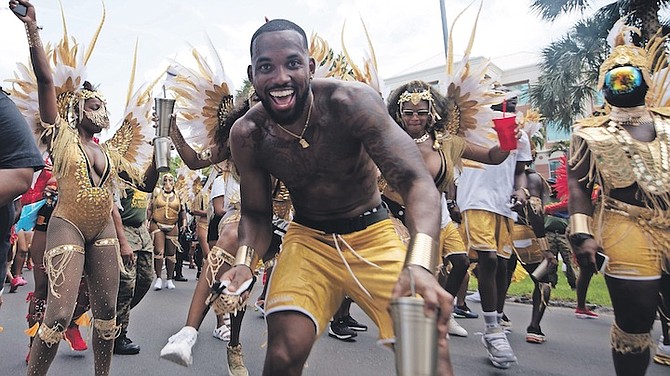
As the Bahamas gears up for its 2025 Carnival celebration, scheduled for June 3 to 7 on New Providence, event organizers are stepping into an ambitious new chapter: this year’s gathering will proceed without any government financial backing, a deliberate choice meant to prove the cultural festival can thrive as an independent, self-sustaining Bahamian treasure.
The shift to full self-funding comes after years of declining government support. In 2017, the government cut the annual carnival subsidy in half, and eliminated all public funding entirely the following year. That financial withdrawal left many performing and presentation bands scrambling to maintain their momentum, even as industry stakeholders have long highlighted the event’s outsized positive impact on the national economy through tourism and local spending.
Despite the funding gap, event leaders are projecting strong growth in attendance for 2025. Paul Farquharson III, co-founder of the prominent carnival group Mas Khaos, explained that the decision to forgo additional government sponsorship this year was rooted in a desire to claim full ownership of the festival. “We wanted to make something that’s ours rather than rely on government support,” he said. “This is a distinctly Bahamian product that shapes local culture, even as it draws international visitors who boost the local economy when they travel here. We aren’t opposed to future collaboration with the government, but we wanted to build a proven, unified cultural product that everyone can see delivers clear benefits to The Bahamas.”
Farquharson projects that Mas Khaos’ participant numbers will jump this year, climbing from 80 to 100 attendees in previous editions to between 120 and 150 for 2025. International participation is also set to rise, growing from roughly 35 overseas participants in 2024 to between 47 and 50 this year. Even with this optimistic outlook, Farquharson acknowledged that reconnecting with wider local community engagement remains one of the festival’s core ongoing challenges. Many stakeholders have pinned post-pandemic declines in local attendance on the global health crisis, even as they praise the consistent strong support the event has received from international carnival fans.
That global backing is reflected in local sales data, according to A’Shad Bowe, operations representative for Bahamas Masqueraders. Bowe told reporters that roughly 80 percent of the group’s online ticket and package sales come from customers outside the Bahamas. “We’re excited for our product, and we have a lot of international people coming in from places all across the world: the UK, Texas, Florida, New York, Canada, even the Virgin Islands,” he said. “It’s incredibly exciting to see our cultural reach extend so far beyond our shoreline to bring people here to play carnival with us.”
Bowe pushed back on popular narratives that the festival lacks local support, pointing to consistent turnout for year-round carnival-related events. “Bahamas Masqueraders runs events from February straight through June, and all of them draw solid crowds,” he explained. “Our biggest event alone brought out 1,500 attendees. It’s not that carnival isn’t supported locally. The issue is economic: many local residents simply can’t afford the cost of costume packages. That doesn’t mean there’s a lack of interest or community backing.”
Not all organizer groups are ruling out public support for the future, however. Dillion Bethel, a representative for JunkaBrations, shared that his organization hopes to secure government financial assistance for the 2026 carnival. Bethel also voiced disappointment over the discontinuation of Music Masters, a popular annual competition for Bahamian soca artists that had long been a core part of the broader carnival experience. When asked if the competition’s cancellation affected the local carnival community, Bethel confirmed: “Yes it will, and people are still asking about it – both locals and international visitors.”
With carnival week just around the corner, organizers across groups are unified in their optimism that the 2025 event will cement the festival’s reputation as a must-attend cultural celebration that delivers widespread economic and social benefits to The Bahamas.