作者: admin

  • BlackRock-led consortium to acquire AES, key player in Dominican energy sector

    BlackRock-led consortium to acquire AES, key player in Dominican energy sector

    In a landmark transaction reshaping the global energy landscape, a consortium of institutional investors led by BlackRock’s Global Infrastructure Partners has reached a definitive agreement to acquire Virginia-based AES Corporation. The equity valuation of $10.7 billion represents a substantial 40.3% premium over recent trading prices, with the total enterprise value reaching approximately $33.4 billion when accounting for outstanding debt.

    The investor group, which includes Swedish private equity firm EQT alongside other major financial institutions, will pay $15 per share in a deal structured to conclude between late 2026 and early 2027, pending customary regulatory approvals. This acquisition occurs against the backdrop of surging electricity demand across the United States, particularly driven by the exponential growth of data centers requiring massive power resources.

    AES brings substantial assets to the transaction, boasting a global generation portfolio of 32.1 gigawatts—with renewables constituting 64% of this capacity. The company reported $12.3 billion in revenue for 2024, demonstrating its robust market position. Corporate leadership indicated that transitioning to private ownership would provide enhanced financial flexibility to address capital requirements and accelerate expansion initiatives within power generation and utility operations.

    The transaction carries particular significance for the Dominican Republic, where AES maintains considerable presence through its local subsidiary AES Dominicana. The company operates critical energy infrastructure including the AES Andrés power plant—a cornerstone natural gas facility—and the strategically vital LNG terminal at Boca Chica. Additional involvement includes participation in the Eastern gas pipeline consortium and operations at Los Mina and Itabo power plants, the latter managed jointly with Dominican state entities.

    AES Dominicana’s current portfolio encompasses 392.5 megawatts of solar generation, 52.5 megawatts of wind capacity, 11 megawatts of storage systems, and 319 megawatts of natural gas-fired generation. The company is further developing an additional 572 megawatts of renewable projects alongside a 138.1 megawatt battery energy storage system, positioning it as a pivotal contributor to the nation’s energy diversification objectives.

    While immediate operational changes appear unlikely, the infusion of capital from financially substantial global investors may potentially influence future energy infrastructure development in the Dominican Republic. This occurs as the country experiences continued electricity demand growth and pursues aggressive renewable energy expansion as a national priority.
  • St. Kitts and Nevis: PM Drew tours US Navy Ship at Port Zante – WIC News

    St. Kitts and Nevis: PM Drew tours US Navy Ship at Port Zante – WIC News

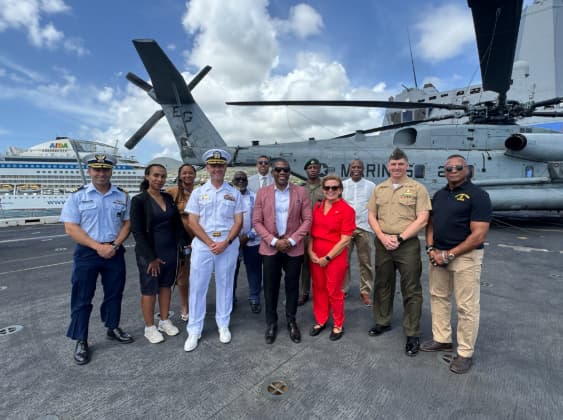
    In a significant demonstration of bilateral cooperation, Prime Minister Dr. Terrance Drew of St. Kitts and Nevis conducted an official tour of the USS San Antonio, a formidable US Navy amphibious transport dock vessel stationed at Port Zante in Basseterre. The high-level visit, which occurred during the ship’s regional deployment this past week, underscores the deepening diplomatic and security relationship between the two nations.

    Accompanied by Karin Sullivan, Chargé d’Affaires at the US Embassy in Barbados, Prime Minister Drew received comprehensive operational briefings from naval personnel regarding the vessel’s advanced capabilities and strategic mission objectives. The diplomatic engagement provided firsthand insight into the ship’s sophisticated infrastructure designed for contemporary military operations.

    The USS San Antonio represents cutting-edge naval engineering with enhanced aviation facilities including an expansive hangar capable of housing multiple helicopter variants and MV-22 Osprey tiltrotor aircraft. Its flight deck supports Marine Corps aviation operations, while the integrated well deck facilitates the deployment of Landing Craft Air Cushion (LCAC) vehicles—high-speed amphibious landing craft essential for rapid transportation of troops, equipment, and humanitarian supplies.

    US diplomatic officials emphasized the symbolic importance of this naval presence, characterizing the deployment as instrumental in fostering regional security collaboration and counter-narcotics efforts. “This naval platform significantly contributes to US-Caribbean cooperation on regional security initiatives, combating illicit trafficking networks, and enhancing disaster response capabilities,” stated the US Embassy in Barbados.

    The embassy further articulated that the USS San Antonio embodies the strengthened partnership between the United States and the Federation of St. Kitts and Nevis, while simultaneously reinforcing Washington’s commitment to broader Caribbean regional stability and humanitarian assistance preparedness.

  • China kiest voor terughoudendheid in Iran-conflict

    China kiest voor terughoudendheid in Iran-conflict

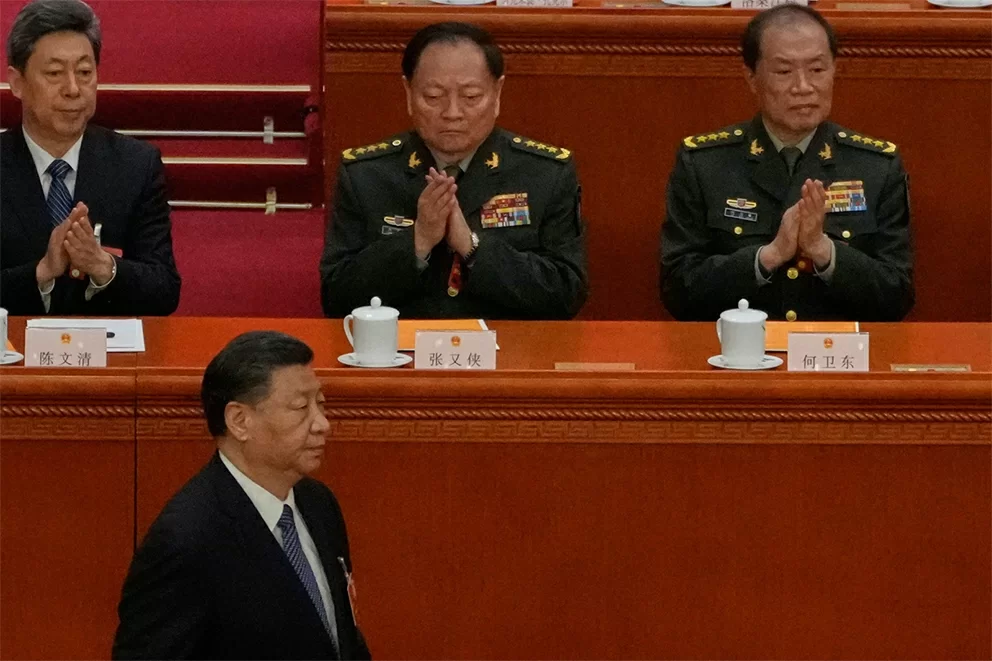
    When the United States and Israel launched military strikes against Iran, China maintained a characteristically cautious diplomatic posture, waiting several hours before issuing its first official response. Beijing expressed “grave concern” over the escalation while calling for an immediate cessation of military operations and a return to diplomatic dialogue.

    The following day, Chinese Foreign Minister Wang Yi condemned the attacks as unacceptable while reiterating China’s commitment to peaceful resolution through negotiation. Notably absent were any indications of direct intervention—an expectation that analysts consider unrealistic given China’s established foreign policy patterns.

    This measured response reflects China’s consistent approach to international conflicts, including previous attacks on Iranian assets. While condemning violence rhetorically, Beijing typically avoids direct involvement, prioritizing its long-term strategic interests. The timing is particularly significant given the anticipated state visit of former U.S. President Donald Trump to Beijing, expected in early April.

    China’s strategic calculus emphasizes regional priorities over global military projection. Despite possessing a rapidly modernizing military and conducting joint exercises with Iran—plus maintaining a military base in Djibouti—China’s defense focus remains concentrated on protecting its immediate interests in Asia, particularly regarding Taiwan and the South China Sea.

    In the Middle East, China selectively engages where economic and diplomatic opportunities arise, as demonstrated by its successful mediation between Iran and Saudi Arabia in 2023. However, China views U.S. military engagements in Afghanistan and Iraq as cautionary tales to be avoided rather than emulated.

    According to Craig Singleton of the Foundation for Defense of Democracies, China’s restrained response highlights the limitations of its global geopolitical influence: “Beijing’s reaction is predictably cautious and underscores China’s limited influence once hard power comes into play. China can express displeasure but cannot actually stop or meaningfully influence U.S. and Israeli military actions.”

    Despite being Iran’s largest oil importer, China’s primary concern remains broader energy security rather than specific bilateral ties. With sufficient oil reserves to bridge four to five months of potential supply disruptions, Chinese refineries have adequate time to seek alternatives, with discounted Russian oil representing the most likely substitute.

    Analysts unanimously dismiss the possibility of China providing military assistance to Iran beyond existing defense agreements, as Beijing seeks to avoid direct confrontation with the United States and its allies. As researcher Muhammad Zulfikar Rakhmat notes, China’s priority remains conflict resolution rather than escalation.

  • Abinader opens international symposium on criminal investigation reform

    Abinader opens international symposium on criminal investigation reform

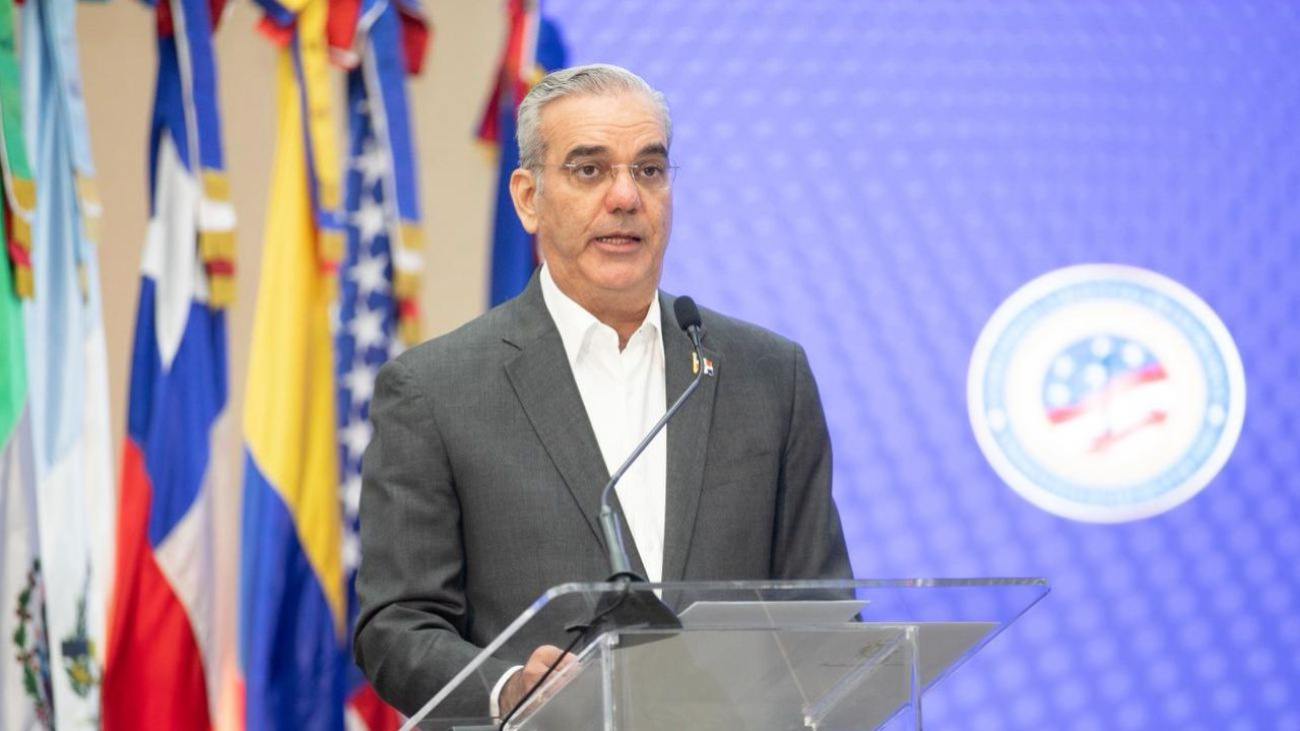
    SANTO DOMINGO – In a landmark initiative to transform law enforcement methodologies, Dominican President Luis Abinader inaugurated the First International Symposium on Criminal Investigation, Science and Innovation against Crime. The event, attended by over 400 national and international delegates, signals a paradigm shift toward evidence-based prosecution integrating advanced technology, intelligence gathering, and scientific rigor.

    President Abinader emphasized that sustainable public security hinges on closing impunity gaps through technical evidence and systematic investigative reforms. The symposium constitutes a critical component of the modernization agenda for the Central Directorate of Criminal Investigation (DICRIM), transitioning from traditional reactive policing to a proactive model built on data analytics, institutional interoperability, and operational transparency.

    Beyond superficial changes in equipment or uniforms, Abinader framed the reform as a profound institutional overhaul grounded in scientific principles and strategic management. A key outcome will be the adoption of a ten-point code of conduct for police investigations, to be formally endorsed by senior law enforcement leadership to guarantee nationwide compliance.

    Interior and Police Minister Faride Raful outlined priority challenges including organized crime, ethical artificial intelligence applications, and secure inter-agency data exchange. She highlighted existing successes through joint task forces, which have already contributed to reduced homicide rates and disruption of criminal networks.

    National Police Director Andres Modesto Cruz Cruz addressed the evolving nature of crime, noting its increasingly technological and cross-border characteristics. He advocated for a response strategy combining rigorous methodology with unwavering respect for human rights. This symposium forms part of the comprehensive reform of the National Police, aiming to establish an internationally aligned, professional, and scientifically-driven investigative culture focused on impunity reduction.

  • Trinidad and Tobago remains under State of Emergency

    Trinidad and Tobago remains under State of Emergency

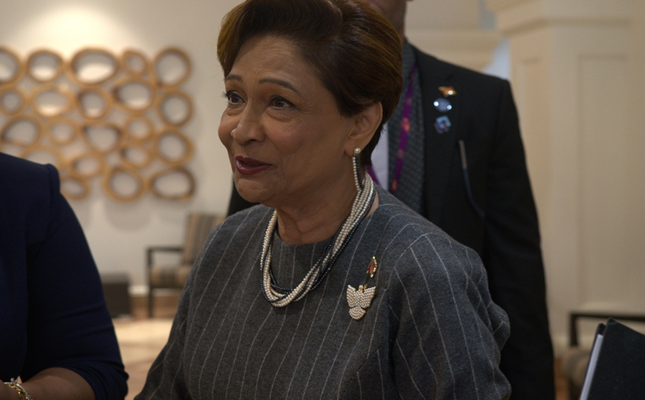
    The Government of Trinidad and Tobago has reinstated a 15-day State of Emergency following a concerning escalation in criminal incidents during the recent Carnival season. Prime Minister Kamla Persad-Bissessar announced the decision on Tuesday, March 3rd, 2026, citing specific threats against law enforcement officials and increased gang activity as primary justification for the measure.

    This marks the return of emergency powers that had been temporarily suspended in February to accommodate traditional Carnival celebrations. Government data indicates criminal activity had decreased by over 40% during the previous emergency period from June to January, creating a stark contrast to the recent spike observed during the brief suspension.

    Prime Minister Persad-Bissessar issued a direct warning to criminal elements: ‘I had previously cautioned gang members and released detainees that law-abiding citizens have reached their limit with criminality. Should they refuse to comply with legal standards, I would not hesitate to implement another State of Emergency.’

    Attorney General John Jeremie defended the administration’s position, emphasizing that security operations targeting known offenders are already underway. He characterized the emergency measures as part of a comprehensive strategy, stating, ‘We are implementing this initial approach while simultaneously developing longer-term, sustainable solutions to maintain order, peace, and safety in our society.’

    The decision has generated mixed reactions within the business community, with some expressing concerns about potential economic repercussions from emergency restrictions. Trinidad and Tobago has consistently recorded one of the Caribbean’s highest murder rates, creating persistent pressure on governments to address violent crime through decisive measures.

    Under the country’s legal framework, any extension beyond the initial 15-day period would require formal parliamentary approval.

  • CAMAARD promotes “Barahona cradle of Larimar” campaign

    CAMAARD promotes “Barahona cradle of Larimar” campaign

    BARAHONA, Dominican Republic – A strategic rebranding initiative is underway in the southern Dominican province of Barahona, where business leaders and artisans are mobilizing to redefine the region’s global identity. The Chamber of Commerce and Handicraft Production Foundation (CAMAARD) is spearheading the “Barahona Cradle of Larimar” campaign, advocating for official recognition of the province’s exclusive claim to the rare blue pectolite gemstone.

    The movement, championed by master goldsmith Julio Humberto Fricá and formally endorsed by CAMAARD, proposes replacing the current regional slogan “Barahona, the Pearl of the South” with terminology that emphasizes the area’s unique geological heritage. Larimar, found exclusively in this Caribbean region, represents both a cultural treasure and economic asset that proponents believe deserves center stage in the province’s identity.

    CAMAARD President Valentín Guerrero confirmed the organization’s full institutional support, noting that formal proposals are being prepared for legislative consideration. “This strategic repositioning will enhance tourism appeal, strengthen cultural identity, and elevate larimar’s commercial status as a national symbol,” Guerrero stated.

    The campaign gains significant momentum following the World Intellectual Property Organization’s 2025 certification of “Of Barahona Origin” for larimar, which received international recognition across 18 countries. This designation provides legal protection and marketing advantages that advocates plan to leverage in building the country’s brand equity.

    Organizers are currently forming a specialized commission through CAMAARD and the SELECTA-RD exhibition platform, with Fricá playing a central role. The committee will engage government officials and legislators while circulating public registration forms to gather institutional and individual support for the landmark initiative.

  • U-20 Natio wint van El Salvador, maar mist kwalificatie op doelsaldo

    U-20 Natio wint van El Salvador, maar mist kwalificatie op doelsaldo

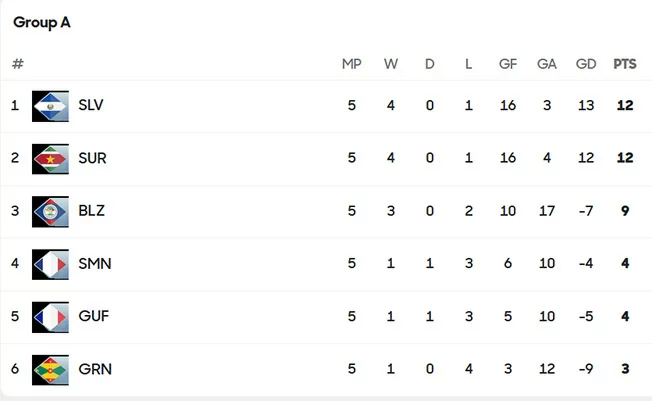
    In a dramatic turn of events at the international youth tournament, Suriname’s U-20 national team secured a 2-0 victory against El Salvador only to face elimination from the competition due to inferior goal difference. The match, played overnight, showcased Suriname’s dominance in the first half followed by a challenging second period that ultimately led to their unexpected exit.

    The Surinamese squad, known as Natio, demonstrated exceptional early initiative by controlling possession and creating numerous scoring opportunities. Their efforts were rewarded in the 34th minute when Xavi Dors executed a spectacular goal, placing Suriname in the lead. Just before halftime, Gino Grootfaam extended the advantage with a decisive strike in the 45th minute, establishing a comfortable 2-0 margin at the break.

    The match dynamics shifted dramatically in the 57th minute when Chaverno Edelsteen received his second yellow card, forcing Suriname to continue with ten players. This numerical disadvantage allowed El Salvador to gain midfield dominance and increase offensive pressure during the second half. Despite both teams creating additional scoring opportunities, no further goals were recorded before the final whistle.

    While Suriname celebrated their 2-0 victory on the pitch, the tournament standings revealed that El Salvador advanced to the next round with a superior goal difference of +1. The result marks a bittersweet conclusion for the determined Surinamese U-20 team, whose valiant performance ultimately proved insufficient for tournament progression.

  • Prime Minister Drew receives full State Honours at Jubilee House during Official Visit to the Republic of Ghana

    Prime Minister Drew receives full State Honours at Jubilee House during Official Visit to the Republic of Ghana

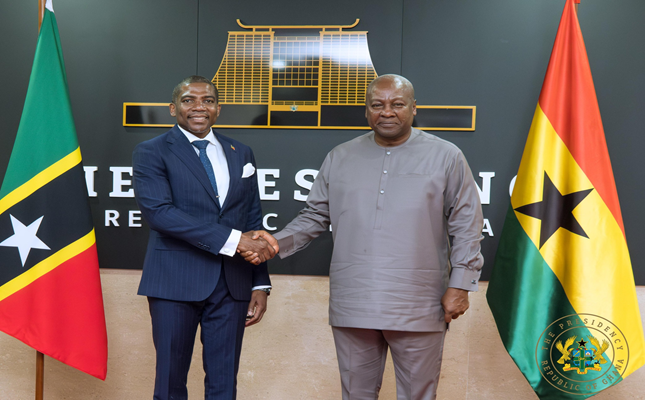
    ACCRA, GHANA – March 4, 2026 witnessed a significant moment in Caribbean-African relations as Ghanaian President John Dramani Mahama hosted Saint Kitts and Nevis Prime Minister Dr. Terrance Drew with full state honors at Jubilee House. The ceremonial welcome, marked by military precision and diplomatic pageantry, signaled a new chapter in bilateral cooperation between the two nations.

    The official reception commenced with a meticulously orchestrated military parade conducted by the Ghana Air Force, symbolizing the mutual respect and growing friendship between the African nation and its Caribbean counterpart. Following the performance of both national anthems, Prime Minister Drew conducted a formal inspection of the Guard of Honour before engaging in diplomatic introductions with members of both delegations.

    This high-profile encounter represents a strategic effort to deepen ties across multiple sectors including educational exchange programs, trade expansion, cultural collaboration, and enhanced people-to-people connections. The meeting underscores the historical bonds that link Africa with the Caribbean diaspora, particularly through shared heritage and post-colonial development challenges.

    The bilateral discussions that followed the ceremonial events focused on identifying concrete opportunities for partnership, with both leaders expressing commitment to transforming historical connections into practical frameworks for economic and social advancement. The engagement forms part of a broader diplomatic initiative to strengthen South-South cooperation and create sustainable development pathways.

    Prime Minister Drew’s extended itinerary in Ghana includes multiple high-level meetings and cultural exchanges designed to foster deeper understanding between the two nations. This diplomatic mission reflects the increasing importance Caribbean nations place on building substantive relationships with African countries, moving beyond symbolic gestures toward tangible cooperation agreements.

  • Alertheid geboden bij cassaveziekte ‘heksenbezem’

    Alertheid geboden bij cassaveziekte ‘heksenbezem’

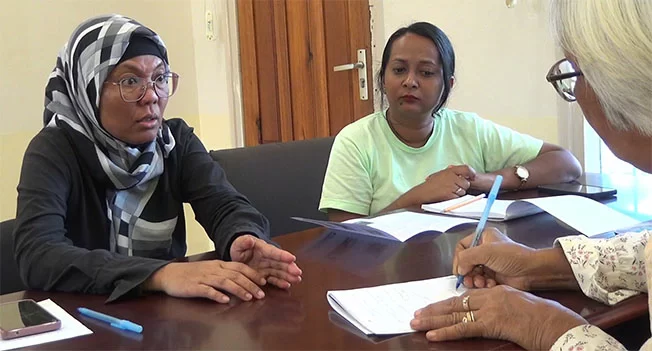
    Surinamese agricultural authorities have issued an urgent alert regarding the escalating threat of Cassava Witches’ Broom Disease (CWBD), a devastating fungal infection that jeopardizes both food security and economic stability in remote communities. Antoinette Djoeneri, Head of the Mycology/Bacteriology Department at the Ministry of Agriculture, Livestock and Fisheries (LVV), emphasizes that this crisis demands coordinated national and regional response efforts.

    The pathogen, which manifests through distinctive stunted growth and excessive branching in cassava plants, currently has no known effective fungicide treatment. Research initiatives across Brazil, French Guiana, and Colombia have similarly failed to develop chemical controls against this persistent fungus.

    CWBD’s impact extends beyond agricultural damage to threaten the livelihoods of processing communities that depend on cassava for chip production and bread-making. The districts of Brokopondo, Marowijne and Sipaliwini face particular vulnerability due to their geographical isolation and reliance on cassava as a dietary staple.

    Senior researcher Santusha Bhaggoe recommends immediate destruction of infected plants through controlled burning to prevent spore dissemination by insects. The practice of stacking contaminated plant material risks creating permanent infection reservoirs, as cuttings may resprout into diseased plants.

    First identified in August 2025, the disease has prompted collaborative intervention between LVV, the Ministry of Regional Development, and research institution CELOS. Their multi-faceted approach includes:
    – Distribution of educational materials and instructional videos
    – Training technical staff to guide farmers through containment protocols
    – Establishing reporting mechanisms through local agricultural offices
    – Promoting crop diversification strategies to ensure food security

    Authorities urge farmers to report suspected cases immediately to trained personnel who can provide guidance on containment measures and destruction techniques for infected crops.

  • CARPHA Champions Urgent Regional Action to Prevent Childhood Obesity and Create Healthier Caribbean Food Environments on World Obesity Day

    CARPHA Champions Urgent Regional Action to Prevent Childhood Obesity and Create Healthier Caribbean Food Environments on World Obesity Day

    The Caribbean Public Health Agency (CARPHA) has issued a compelling call for immediate regional collaboration to combat childhood obesity, marking World Obesity Day with urgent recommendations for systemic change. With the global obesity population surpassing one billion, CARPHA emphasizes this complex health challenge demands coordinated societal response at all levels.

    Regional statistics reveal a critical situation: one in three Caribbean children currently qualifies as overweight or obese. This early-life condition substantially elevates risks for persistent obesity through adolescence and adulthood, dramatically increasing vulnerability to non-communicable diseases (NCDs). Cardiovascular conditions, diabetes, cancers, and chronic respiratory illnesses—already the leading causes of morbidity and mortality in the region—are directly linked to childhood weight issues.

    Notably, three CARPHA member states—The Bahamas, Saint Kitts and Nevis, and Belize—rank among the global top 20% for highest overweight and obesity prevalence according to Pan American Health Organization data.

    CARPHA’s strategic response centers on its Six-Point Policy Package (6-PPP), developed in partnership with CARICOM Secretariat. This comprehensive framework targets healthier food environments through:
    – Implementation of front-of-package warning labels
    – Establishment of nutrition standards for schools and institutions
    – Regulation of food marketing practices
    – Enhancement of nutritional quality across food supplies
    – Adjustment of trade and fiscal policies
    – Creation of food chain incentives

    Dr. Lisa Indar, Executive Director of CARPHA, highlighted recent advancements: “Our collaboration with PAHO/WHO has produced Technical Recommendations for Caribbean School Nutrition Standards. These guidelines address all foods and beverages within primary and secondary schools, creating environments that discourage unhealthy consumption while promoting nutritious habits.”

    The agency advocates a whole-of-society approach, complementing policy measures with its Caribbean Moves initiative promoting physical activity, nutritional education, and health monitoring.

    On World Obesity Day 2026, under the theme “8 Billion Reasons to Act on Obesity,” CARPHA reframes obesity as a systemic challenge rather than individual failing. The agency urges governments, civil organizations, communities, and families to collaborate on creating equitable health systems, moving toward the UN Sustainable Development Goal of reducing premature NCD mortality by one-third before 2030.