作者: admin

  • Vissersorganisaties delen kennis over verwerking en waardetoevoeging

    Vissersorganisaties delen kennis over verwerking en waardetoevoeging

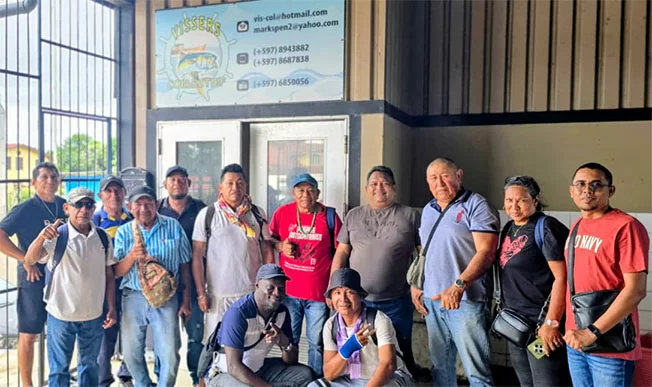
    In a significant cross-regional collaboration, fishermen from Galibi embarked on an educational visit to their counterparts at the Fishermen’s Collective in Commewijne this Wednesday. The exchange focused on innovative fish processing techniques and developing market-ready products for local consumption.

    This initiative forms part of a broader project orchestrated by ABIC Consultancy in partnership with the Fisheries Sub-Directorate of Suriname’s Ministry of Agriculture, Livestock, and Fisheries (LVV). Delegates included members of the Wono Poko Nokon cooperative, representing organized fishing communities.

    During the field visit, participants gained hands-on exposure to various value-addition methodologies for caught fish. The knowledge transfer encompassed traditional preservation techniques including smoking, salting, and drying processes for fish and shrimp. The itinerary also featured tours of multiple fish processing facilities and commercial enterprises operating within the sector.

    Mark Lall, Secretary of the Fishermen’s Collective, emphasized the program’s significance in demonstrating how fishing organizations can mutually support each other in developing value-added products. He noted that the shared expertise contributes substantially to both food security and food safety objectives nationwide.

    Lall expressed optimism about future collaborations, highlighting the need for expanded projects to strengthen inter-organizational partnerships and advance sector-wide development. The Collective affirmed that cooperation and consolidated efforts within the fishing industry remain imperative for its sustainability and continued growth.

  • Police Say Targeted Shooting Claimed the Life of Clinton Pou

    Police Say Targeted Shooting Claimed the Life of Clinton Pou

    BELIZE CITY – A violent incident initially perceived as an attempted robbery has been reclassified by authorities as a deliberate assassination following a fatal shooting at a local fish market on March 12, 2026. Clinton Pou was killed in the attack, which also left his sister, 27-year-old Kiandra Pou, hospitalized with gunshot wounds.

    The assault occurred while the victims were near their mother’s food trailer. According to police reports, assailants on a motorcycle opened fire on the siblings. A senior law enforcement official confirmed that responding officers, already present in the vicinity, immediately pursued the suspects. During the chase, police engaged the perpetrators, wounding one suspect who was subsequently apprehended and transported to a medical facility for treatment.

    Eyewitness accounts described scenes of pandemonium as the violence unfolded. One bystander recounted the confusion to local media: “The police were shooting and the civilians were shooting at the same time. It was like a shootout. At least twenty shots were fired… All I did was run into a yard because I saw my friend running.”

    Investigators revealed that the firearm used in the attack was potentially discarded in adjacent waters. Dive teams are scheduled to conduct searches to recover the weapon. This episode represents the second known attempt on Clinton Pou’s life, following a previous shooting at his North Front Street residence in 2019 where he sustained injuries but survived.

  • UN Declares October 1 as International Coffee Day

    UN Declares October 1 as International Coffee Day

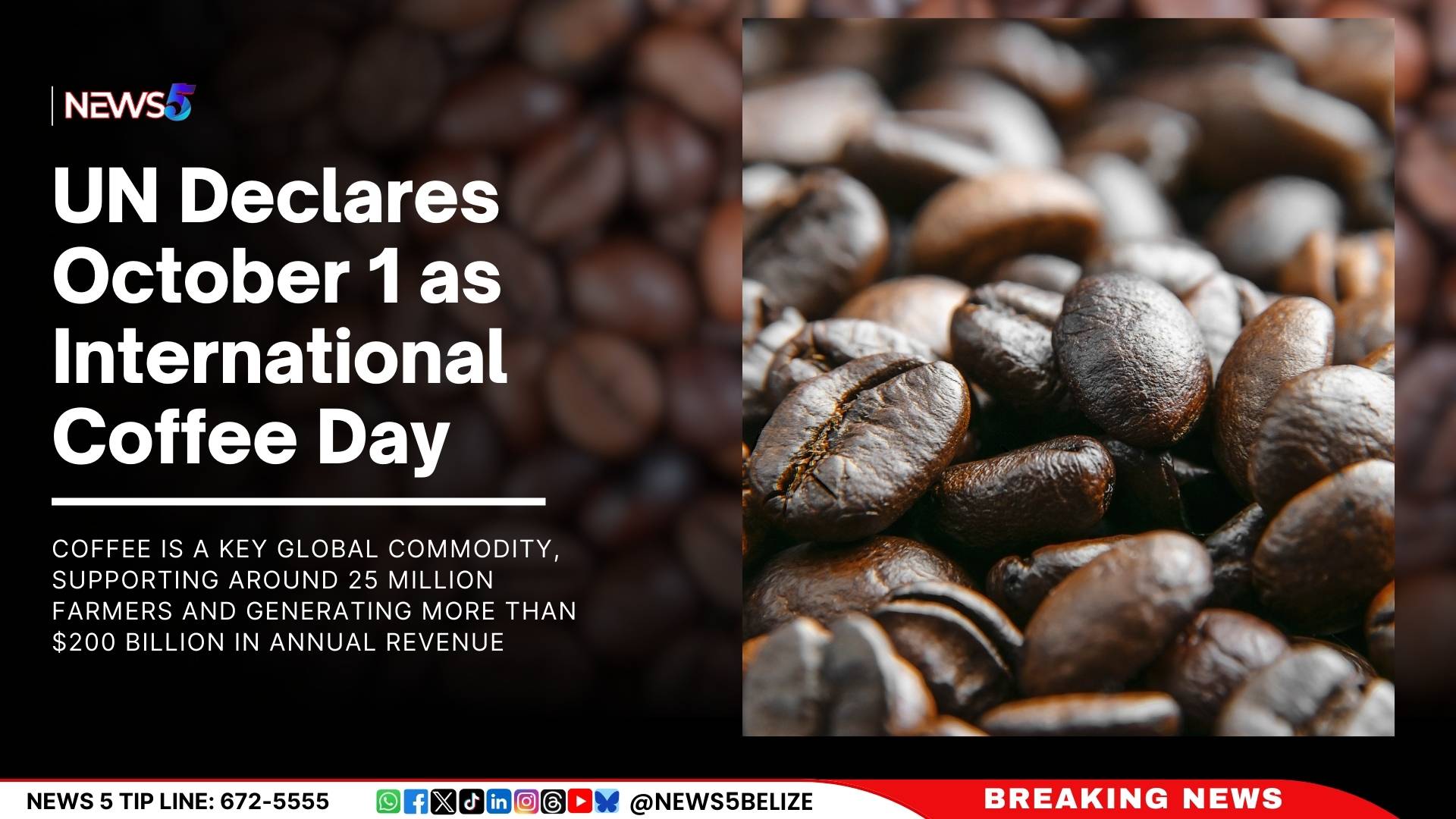
    In a landmark decision on March 12, 2026, the United Nations General Assembly formally designated October 1 as International Coffee Day, creating an annual global observance celebrating coffee’s profound socioeconomic significance. This resolution recognizes coffee’s multifaceted role in sustaining communities, driving economic development, and enhancing food security worldwide.

    The declaration underscores coffee’s critical function in supporting approximately 25 million agricultural producers globally while generating over $200 billion in annual revenue. The resolution specifically highlights coffee’s contribution to achieving key UN development objectives, including poverty reduction, hunger eradication, gender equality through women’s empowerment, and the promotion of sustainable employment opportunities.

    FAO Director-General QU Dongyu emphasized the commodity’s connective power, stating: “Coffee serves as a vital bridge linking rural farming communities with international markets. This formal recognition will elevate global awareness of its socioeconomic value and accelerate poverty alleviation efforts.”

    The economic impact is particularly significant for producing nations. Brazil and Viet Nam lead global production, while the European Union and United States represent the primary import markets. For several developing economies including Ethiopia, Uganda, and Burundi, coffee exports constitute a substantial portion of national income and foreign exchange reserves, making the crop fundamental to their economic stability.

    Beyond economics, the resolution acknowledges coffee’s enduring cultural significance as a tradition spanning generations and continents. The establishment of International Coffee Day aims to foster greater appreciation for the entire coffee value chain, from cultivation to consumption, while promoting sustainable practices throughout the industry.

  • Grenada Price Watch 2026: More than just groceries

    Grenada Price Watch 2026: More than just groceries

    Amid ongoing political discourse surrounding the cost-of-living crisis, Grenada’s latest Government Gazette (Volume 144, No. 11) published on March 6, 2026, presents a multifaceted economic landscape for ordinary citizens. The official Consumer Price Index data for December 2025 indicates a marginal 0.05% decline in overall living costs compared to November 2025. However, this superficial improvement masks substantial inflationary pressures affecting essential household commodities.

    Critical examination of consumer expenditure patterns reveals alarming price surges in fundamental necessities. Most notably, elderly care services have experienced a dramatic 33.33% year-on-year increase, imposing severe financial strain on families supporting aging relatives. Water utilities have risen by 5.53%, while healthcare and education—two vital public service sectors—recorded respective increases of 2.44% and 1.74%. Basic food items including margarine (5.02%), eggs (1.56%), and pasta (1.14%) have likewise become significantly more expensive compared to December 2024 levels.

    Contrasting this trend of rising essentials, the Gazette documents remarkable entrepreneurial activity within the leisure industry. Despite increasing utility costs, St. George and St. Andrew parishes alone witnessed 41 new applications for Liquor Dealing Licenses from diverse professional backgrounds including educators and construction workers. This development underscores a peculiar economic resilience within the social spending sector, with beer prices increasing 3.75% annually—substantially exceeding the general inflation rate of 0.57%.

    Global market influences continue to impact Grenada’s economy, as evidenced by imported preserved fish prices rising 2.54% compared to just 0.66% for locally sourced fresh fish. Even domestic fresh vegetables experienced a concerning 1.93% price hike in December alone. Current government stabilization measures—including a EC$10 electricity subsidy for small consumers, EC$40 cooking gas price cap, and VAT exemptions on twenty essential items—are providing crucial mitigation against international price volatility.

    The emerging economic challenge lies in the offsetting effect where utility savings are negated by rising service costs. For Grenadian households, managing living expenses represents a complex balancing act between modest savings and persistent increases across essential services. The proliferation of liquor license applications suggests many citizens are pursuing secondary income sources to maintain existing social expenditure patterns amid financial pressures.

    Sustainable economic relief will likely require multipronged approaches: containing service sector inflation, bolstering local agricultural production against global market fluctuations, and potential consumer recalibration of discretionary spending priorities.

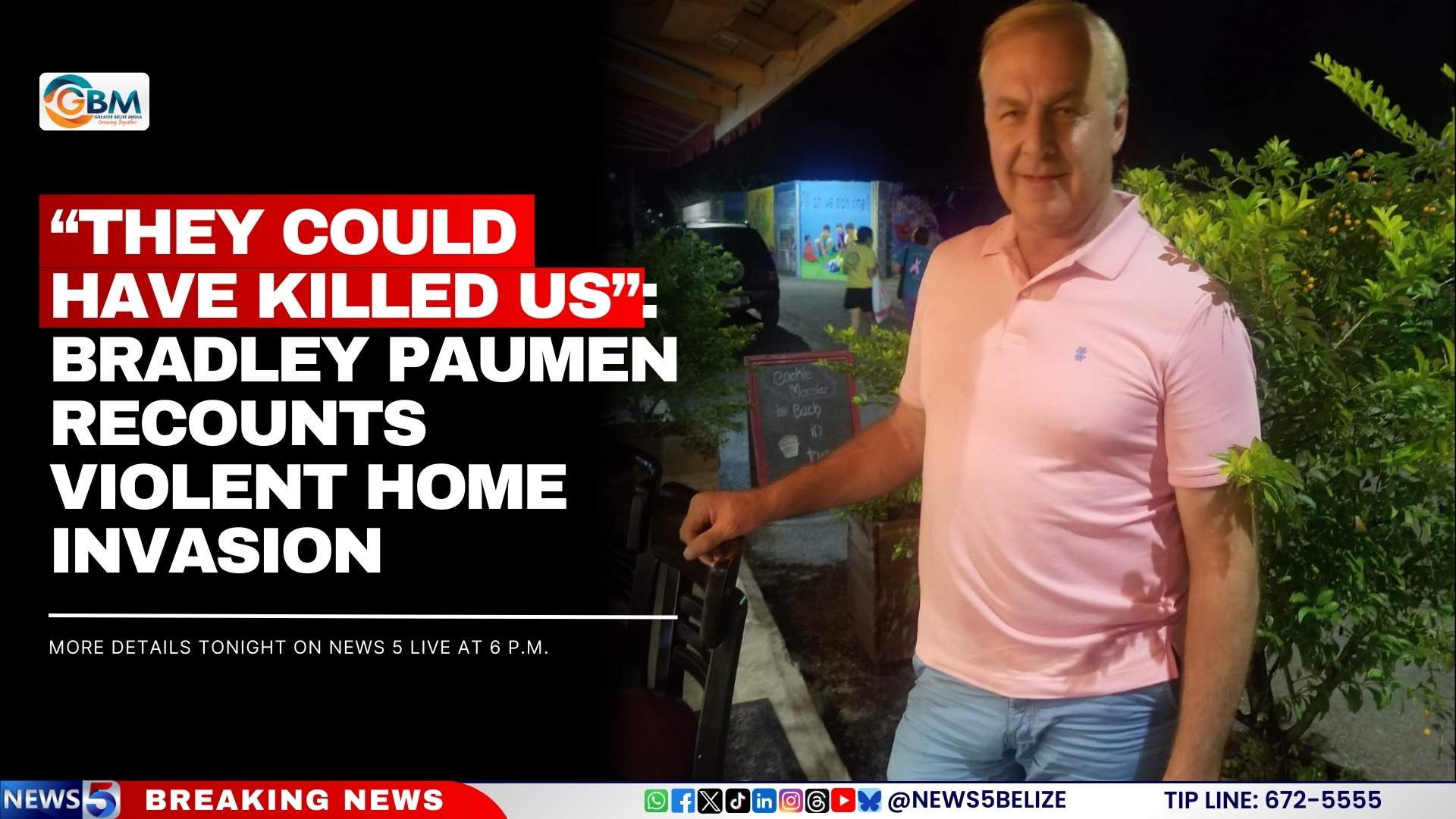
  • “They Could Have Killed Us”: Bradley Paumen Recounts Violent Home Invasion

    “They Could Have Killed Us”: Bradley Paumen Recounts Violent Home Invasion

    A brutal home invasion has left a Cayo District family traumatized after three armed assailants stormed their residence in Frank’s Eddy Village. The incident, which police are investigating as attempted murder, occurred Wednesday evening in the Dark Knight area.

    Bradley Paumen, 68, provided a chilling firsthand account of the violent encounter to News 5 Live. The ordeal began when Paumen returned home after transporting his children, only to discover masked gunmen had already infiltrated the property and were holding his wife and children at gunpoint.

    “When I rushed to protect the children, one assailant pressed a firearm directly against my 9-year-old son’s head while demanding my wife surrender the safe and cash,” Paumen recounted. The situation escalated dramatically when Paumen confronted the intruders, resulting in a physical altercation.

    In a remarkable twist of fate, one attacker’s weapon malfunctioned when aimed at Paumen’s head. “The pistol jammed during the attempted execution,” he stated. Despite being shot in both his back and chest during the confrontation, Paumen managed to survive the brutal attack by attempting to disarm one assailant.

    The perpetrators specifically targeted cash reserves, payroll funds, and valuable family jewelry during the meticulously planned invasion. “They systematically emptied our coin collection where we keep children’s savings,” Paumen noted, emphasizing the comprehensive nature of the theft. The family confirmed they had no prior recognition of the assailants, though the attackers demonstrated precise knowledge of household routines.

    Expressing both gratitude and determination, Paumen concluded: “Surviving this ordeal feels miraculous. My primary hope remains that authorities apprehend these individuals before they can inflict similar trauma upon other families.” Additional details will be revealed during News 5 Live’s evening broadcast at 6 p.m.

  • FSC seeks court order to liquidate troubled insurer

    FSC seeks court order to liquidate troubled insurer

    In a decisive regulatory move, the Financial Services Commission (FSC) has petitioned the High Court to initiate liquidation proceedings against Equity Insurance Company Limited. The financial regulator contends that the insurer’s rapidly deteriorating fiscal health presents an escalating threat to both policyholders and broader market stability.

    The legal action follows the court’s prior authorization to revoke Equity Insurance’s operating license, which empowered the FSC to assume managerial control. This initial intervention came in response to what regulators identified as multiple violations of insurance industry regulations.

    FSC Chief Executive Warrick Ward revealed that subsequent developments have ‘substantially’ intensified the company’s risk profile. These include newly emerged financial vulnerabilities and the consequent collapse of the insurer’s reinsurance arrangements, exacerbating a well-documented history of non-compliance with statutory requirements.

    ‘After providing Equity with multiple opportunities to address its deficiencies,’ Ward stated, ‘the Commission has determined that court-supervised liquidation represents the most appropriate mechanism for orderly resolution. This course of action aligns with our mandate to safeguard policyholder interests and maintain financial market stability.’

    Equity Insurance has mounted a vigorous defense, alleging the regulator violated principles of natural justice in handling its case. The company maintains it had committed to addressing operational shortcomings identified in an assessment report and was actively implementing corrective measures when regulatory intervention halted this remediation process.

    The High Court has scheduled further proceedings for March 25, when both parties will present additional arguments regarding the proposed liquidation.

  • Senegal doubles maximum penalty for same-sex activity to 10 years’ jail

    Senegal doubles maximum penalty for same-sex activity to 10 years’ jail

    In a sweeping legislative move, Senegal’s National Assembly has passed a stringent anti-homosexuality bill that significantly escalates penalties for same-sex acts. The Wednesday evening vote saw overwhelming approval with 135 votes in favor, zero against, and three abstentions.

    The new legislation doubles the maximum prison sentence from five to ten years for same-sex relations and introduces substantial fines up to 10 million CFA francs (approximately $16,300). The law specifically criminalizes homosexuality, bisexuality, transsexuality, zoophilia, and necrophilia under the umbrella term “acts against nature.”

    Notably, the bill removes judicial discretion, mandating that courts cannot grant suspended sentences or reduce prison terms below the statutory minimum. This represents a significant hardening of Senegal’s existing penal code, which previously carried a maximum five-year sentence under legislation last amended in 1966.

    The legislation fulfills campaign promises made by President Bassirou Diomaye Faye’s administration, which assumed power in 2024. Religious leaders including Imam Babacar Sylla of the And Samm Jikko Yi network have publicly urged President Faye to promptly sign the bill into law, characterizing LGBT individuals as “public dangers.”

    In the weeks preceding the vote, supporters organized demonstrations in Dakar featuring crossed-out rainbow symbols and chants of “No to homosexuality!” This development occurs amid a broader regional trend of tightening anti-LGBT laws across West Africa.

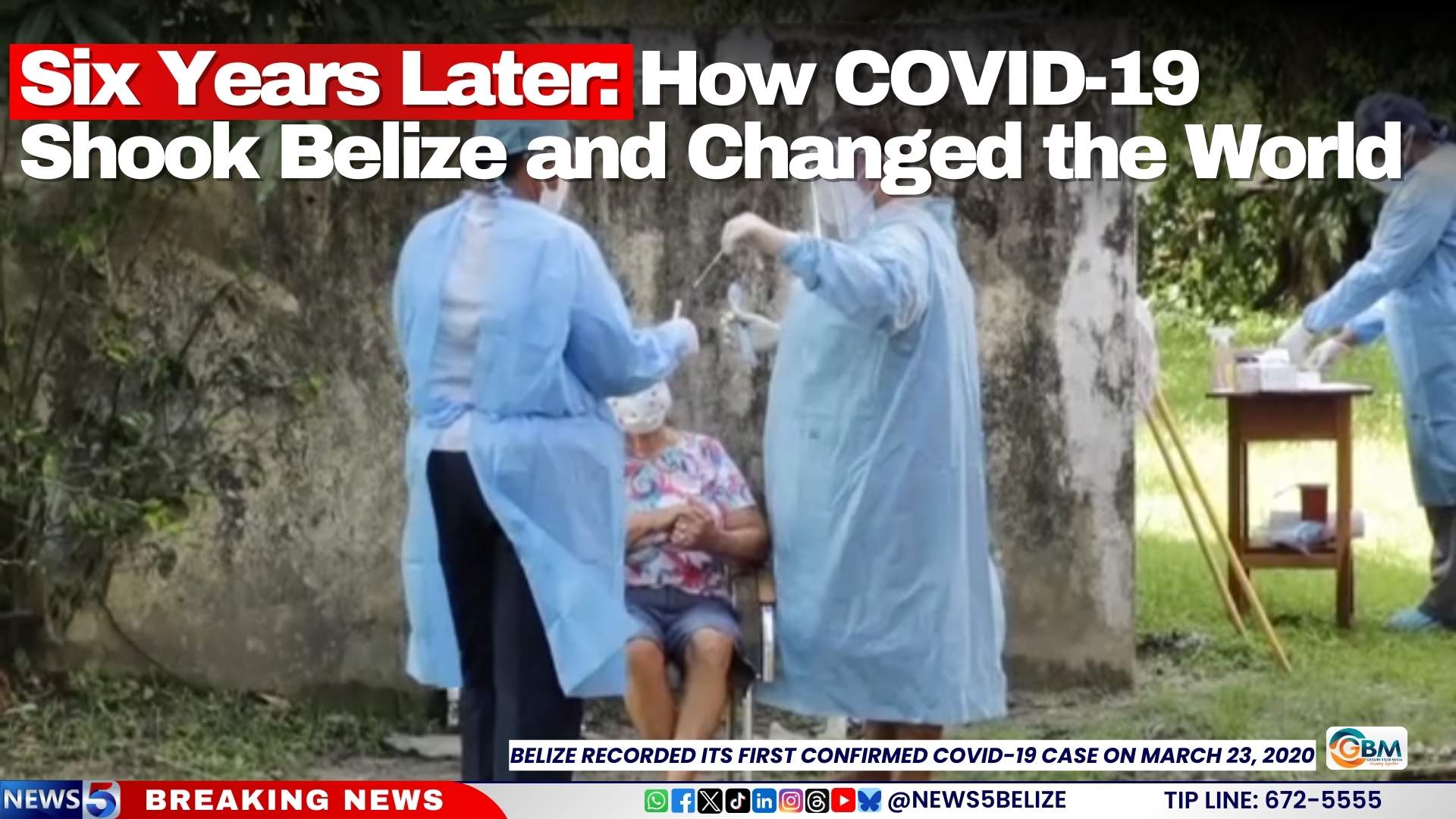
  • Six Years Later: How COVID-19 Shook Belize and Changed the World

    Six Years Later: How COVID-19 Shook Belize and Changed the World

    March 12, 2026 marks six years since the World Health Organization’s historic declaration of COVID-19 as a global pandemic—an announcement that triggered unprecedented challenges worldwide. For Belize, a Caribbean nation of approximately 400,000 people with heavy dependence on tourism and cross-border trade, this moment initiated a profound socioeconomic transformation.

    The initial containment measures appeared successful initially, with Belize recording only 48 confirmed infections and two deaths by July 2020 according to United Nations Development Programme data. However, the situation deteriorated dramatically by summer 2020 when a major domestic outbreak surged through northern districts, eventually giving Belize one of the Caribbean’s highest per capita case and death rates according to IMF metrics.

    Tourism—contributing 40% of GDP and 60% of foreign exchange earnings—suffered catastrophic collapse. Tourist arrivals plummeted 72% in 2020, triggering a 14.1% GDP contraction. The government implemented emergency social programs including the Belize COVID-19 Cash Transfer program, unemployment relief funds, and expanded food assistance initiatives.

    Healthcare infrastructure faced immense strain despite international support. The Pan American Health Organization facilitated procurement of over 50,000 test kits and 250,000 laboratory supplies. Critical assistance came from multiple nations: India provided $1 million for medical equipment, Mexico donated 400,000 AstraZeneca vaccine doses, and the UAE contributed 10,000 Sinopharm doses.

    Belize achieved the fourth-fastest vaccination rollout in Central America, administering over 73,000 doses by June 2021 primarily through COVAX mechanisms. The phased tourism reopening beginning August 15, 2020 with mandatory testing represented among the region’s earliest restart attempts.

    Six years later, recovery shows promising indicators with overnight visitor arrivals surging approximately 70% in 2022. However, structural vulnerabilities persist in healthcare capacity and economic diversification. The social legacy includes business closures, employment losses, mental health challenges, and educational disruptions with generational impacts.

    Globally, the pandemic accelerated scientific innovation—notably mRNA vaccine development within 11 months of viral sequencing—while exposing health inequalities. The WHO reports mixed progress on pandemic preparedness, noting meaningful advances including the 2025 Pandemic Agreement and $1.2 billion Pandemic Fund distribution to 98 countries, but warning these gains remain fragile amid shifting political priorities.

  • STATEMENT:  DOMLEC re March 11 outage

    STATEMENT: DOMLEC re March 11 outage

    DOMLEC has issued an official clarification regarding the widespread power interruption that affected its network on March 11, 2026, confirming that the incident was unrelated to the upcoming geothermal plant integration. According to Daryl Dalrymple, Manager of ET&D at DOMLEC, the outage resulted from an unexpected system fault during preparatory work at the Fond Colé power station.

    The electrical company was conducting critical reconfiguration procedures to accommodate the future interface with the geothermal energy facility when a technical fault triggered a cascade failure. This malfunction caused multiple generators at the Fond Colé plant to trip offline simultaneously, creating an extensive service disruption across the network.

    Dalrymple emphasized that the geothermal plant itself performed without issues and remains disconnected from the main grid during this preparatory phase. The prolonged restoration period resulted from the complete shutdown of Fond Colé generators necessary for the reconfiguration work, compounded by technical challenges encountered when reactivating the units.

    DOMLEC technicians worked extensively to restore power to all affected customers, though the process required additional time due to complications with bringing certain generators back online. The company maintains that the incident represents a temporary setback in their broader strategy to integrate renewable geothermal energy into Dominica’s power infrastructure.

    The utility provider reassures the public that commissioning activities for the geothermal plant will continue as planned, with the incident providing valuable operational insights for future system integration projects.

  • Discover Dominica’s Natural wonders at HikeFest 2026 – An adventure for all

    Discover Dominica’s Natural wonders at HikeFest 2026 – An adventure for all

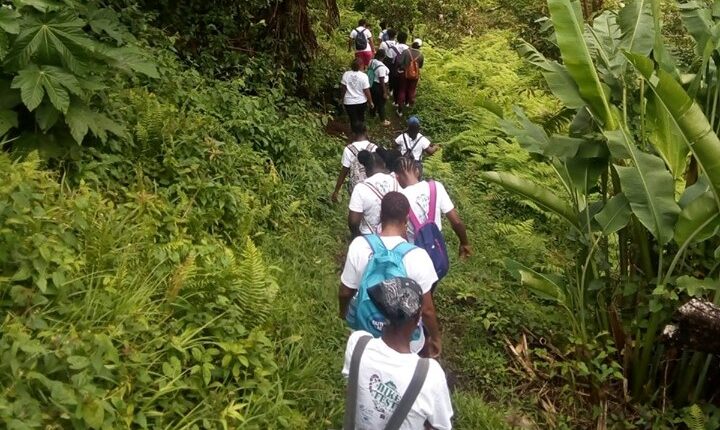
    The Caribbean’s renowned ‘Nature Island’ is preparing to showcase its ecological treasures through HikeFest 2026, an immersive month-long celebration scheduled throughout May. Organized by the Dominica Hotel & Tourism Association (DHTA), this annual event transforms the island into an adventurer’s paradise with the compelling theme “Beyond the Beaten Path.”

    The festival is strategically designed to reveal Dominica’s most spectacular and less-traveled natural wonders, from hidden waterfalls and secluded lakes to pristine forests and dramatic mountain ridges. This initiative represents a conscious shift toward sustainable tourism practices that distribute visitor impact while providing authentic experiences.

    Throughout five consecutive Saturdays in May, participants can select from professionally guided expeditions categorized by difficulty levels. The curated schedule accommodates all adventure appetites—from gentle nature walks perfect for families to challenging full-day treks for experienced hikers. Each excursion is led by certified guides who provide fascinating commentary on local ecology, historical significance, and cultural heritage.

    The comprehensive program features seven primary hikes:
    – May 2: Boeri Lake (Moderate, 1.5 hours) and Trinity Lakes (Challenging, 3 hours)
    – May 9: Chemin Letang Trail (Moderate, 3 hours)
    – May 16: Jaco Flats (Challenging, 2.5 hours)
    – May 23: Middleham Trail Segment (Easy, 1.5–2 hours)
    – May 30: Boiling Lake (Challenging, 6–8 hours) and Charles Warner Trail (Easy, 1 hour)

    Supplementing these weekend adventures, three mid-week excursions on May 14, 18, and 21 offer additional opportunities for exploration.

    DHTA executives characterize HikeFest as both a tourism product and conservation movement that fosters deeper appreciation for Dominica’s natural assets. The event reinforces the island’s positioning as the Caribbean’s premier adventure destination while encouraging responsible exploration practices.

    Registration details and additional information are available through DHTA’s direct contacts: telephone (767) 275-7454 or email info@discoverdominica.com.