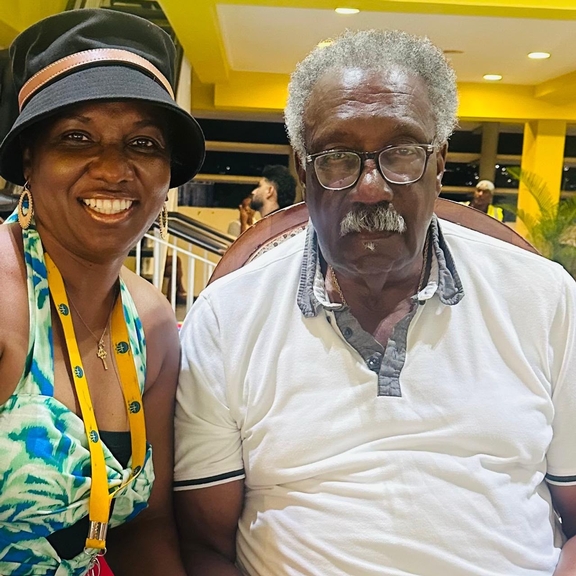
BRIDGETOWN, BARBADOS – September 21, 2026 — As the architect of one of the most dominant dynasties in men’s cricket history, Sir Clive Lloyd knows better than most that sustained success on the international pitch is not born from raw talent alone. It is forged from intentional investment, structured support, and a systemic commitment to excellence. Now, the legendary former West Indies captain is turning his focus to the next era of Caribbean cricket, arguing that closing the gap with global leaders like Australia requires the same deliberate investment in women’s cricket that built the men’s program’s golden age.
作者: admin
-

Friday keeps ban on jet skis as SVG courts new tourism mix
During a recent public town hall meeting held in Brooklyn, New York, Prime Minister Godwin Friday of St. Vincent and the Grenadines has formally reaffirmed his administration’s commitment to upholding the country’s decades-long ban on personal watercraft jet skis in all local territorial waters. The announcement came in direct response to a question from a Vincentian expatriate based in New York, who pressed for the restriction to be lifted to align SVG with jet ski-accessible destinations across the Caribbean, noting the recreational activity’s widespread popularity with both tourists and returning nationals.
In his response, Friday acknowledged the broad appeal of jet skiing as a coastal recreational activity across the Caribbean region, but explained that unresolved public safety risks and gaps in the country’s current regulatory enforcement capacity have led the government to retain the longstanding ban for the foreseeable future.
“Jet skis is an issue that has come up over and over again in certain areas,” the prime minister told attendees. “We have looked at the pros and cons of it, and for the time being, we have said that we will not change with respect to that. And so it continues to be [that] we… restrict or… ban the use of jet ski in our bays and waters and so forth.”
Drawing on personal experience from his home community of Bequia, Friday framed unregulated high-speed watercraft operation as an inherent threat to recreational water users including swimmers and casual bathers. He emphasized that the core challenge is not the activity itself, but the absence of a robust framework to enforce operating boundaries and safety standards. Adding jet skis to already busy nearshore waters, he argued, would only exacerbate existing regulatory gaps rather than resolve them.
“Unless we can find a solution to that with respect to jet skis, for the time being, that is the approach that we have adopted,” Friday said. The prime minister did not rule out future policy changes, however, noting that the government remains open to revisiting the ban if and when SVG can strengthen its regulatory capacity and implement a comprehensive safety framework to manage jet ski operations.
“Sometimes it’s necessary for us to review policies that we have had, and we are open to doing that,” he added. “But the matter came up… since we’ve been in government, and we have confirmed the decision that was taken many years ago.”
Beyond the jet ski discussion, the town hall meeting served as a platform for Friday to lay out his administration’s transformative new vision for SVG’s tourism sector, which sits at the heart of the country’s broader economic growth and debt-reduction strategy. The prime minister stressed that the days of the government relying on heavy public borrowing to fund large-scale infrastructure projects are over, and the administration is now turning to private sector investment and diaspora capital to drive modernization and expansion of the country’s tourism offerings.
“We are entering into an era where we are going to rely more on private investment,” Friday told the gathering. “We need your input. We are going to engage in public-private partnerships in a way that accelerates investment in the country and generates economic growth that brings a better standard of living, more jobs, more investment opportunities, more services… to our economy.”
As a flagship example of this new approach, Friday revealed that the government is currently in active negotiations with Global Ports Holding (GPH), a leading regional cruise port operator, for a concession agreement to operate and upgrade the aging Kingstown cruise terminal. Built more than three decades ago, the existing terminal no longer meets the needs of the modern cruise industry, which has shifted to far larger vessels and demands higher-quality visitor amenities than the current facility can provide.
Friday noted that the government lacks the fiscal room to undertake the multi-million dollar modernization project on its own, and a partnership with GPH will deliver the required upgrades immediately without adding additional burden to the country’s national debt. Under the proposed agreement, the government will retain public ownership of the terminal while capturing a share of operating revenue, creating a model that can be replicated for other key tourism infrastructure projects across SVG.
This public-private partnership framework aligns with Friday’s three-pronged national strategy: stabilizing public finances, shielding vulnerable communities from the impacts of fiscal adjustment, and driving sustainable growth through private sector-led expansion. The prime minister added that this strategy marks a return to SVG’s historic roots as an export-led economy, a tradition he said has been eroded in recent years by growing risk aversion to engaging global markets.
“Since we have had agriculture in the past, where we used to export — we were an export-led economy,” he reminded the audience. “People seem to forget that we made our living by selling things abroad. Nowadays, there seems to be this reticence to take a chance, to think, well, we can’t sell things outside of St. Vincent and the Grenadines’ shores. We have to bring back that… environment in which we build and we invest, so that we can sell abroad, and there is a larger market, and that way we earn more, improve the standing of our people.”
For Friday, tourism extends far beyond physical infrastructure like ports and hotels. It is a platform to build new domestic businesses, distinctive destination brands, and immersive visitor experiences that can be marketed to global travelers through modern digital channels, unlocking long-term inclusive growth for all Vincentians.
-

Our expert reveals the best twin-island Caribbean breaks
As winter approaches the Northern Hemisphere, sun-starved travelers are increasingly turning to multi-destination getaways to make the most of their time off, and few regions cater better to island-hopping dreams than the Caribbean. Boasting more than 30 distinct nations and territories, the Caribbean stretches from volcanic mountain peaks draped in dense rainforest to flat, powdery coral cays ringed by turquoise waters, with a layered cultural tapestry shaped by centuries of British, French, Dutch and Spanish colonial influence. It is little surprise, then, that demand for twin- and multi-island holidays is surging: industry data from regional travel specialist ITC shows twin-centre bookings have jumped 20% compared to 2025, with popular pairings including Grenada and St Lucia, and Antigua and St Kitts. Most neighbouring islands are connected by short ferry rides or quick connecting flights, and major tour operators offer all-inclusive packages that simplify inter-island travel as much as sipping a cold rum punch on the beach. To help travelers plan their perfect winter escape, travel expert Nigel Tisdall has curated 12 handpicked twin- and multi-island breaks to suit every budget, interest and group type, detailed below.
-
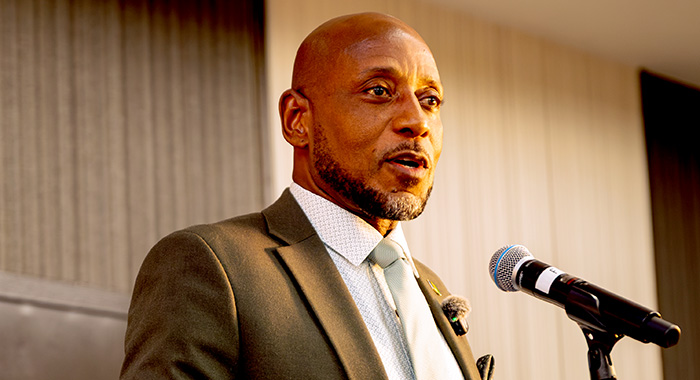
NY diaspora ‘critical’ to SVG’s future — Minister Bramble
At a diaspora-focused investment gathering held Saturday in New York City, Dwight Fitzgerald Bramble, St. Vincent and the Grenadines’ Minister of Foreign Affairs, Foreign Trade, Foreign Investment and Diaspora Affairs, positioned the nation’s global Vincentian community as indispensable central partners, not distant peripheral supporters, in the push to build a more resilient, inclusive domestic economy.
The event, themed “Reconnect, Reinvest, Rebuild: Turning Vincentian Global Success into Local Opportunity”, framed Bramble’s address, which opened with a straightforward acknowledgment of the decades-long history of Vincentian migration. Many who left St. Vincent and the Grenadines (SVG) carried little more than a suitcase of belongings, a store of hope, and the well-wishes of loved ones, building new lives in the United States and other nations. Despite the challenges of resettlement, these migrants persevered, growing into successful homeowners, industry professionals, entrepreneurs, and community leaders — all while holding tight to their Vincentian identity, passing down cultural traditions, food, language, and values to generations born abroad, Bramble noted.
But today’s economic and social context demands more than nostalgic connection to homeland, Bramble argued. For the SVG government, meaningful reconnection requires building active, structured, long-term engagement between the national government and the global Vincentian diaspora. To advance this goal, his ministry is expanding the mandate of its dedicated diaspora desk and the nation’s global diplomatic missions: to center the concerns and ideas of overseas Vincentians, keep the community updated on domestic development opportunities, and streamline processes for investment, return migration, and collaborative projects. “You are not outsiders. You are Vincentians,” Bramble emphasized, adding that the nation’s foreign, trade, and investment policies will be updated to reflect this core reality.
Turning to the theme’s second pillar — reinvestment — Bramble acknowledged the deep emotional bond that ties most overseas Vincentians to their homeland, noting that the government values this connection deeply, but aims to translate that emotional loyalty into tangible enterprise and local opportunity. Contrary to common assumptions, he explained, reinvestment does not require large-scale capital commitments from diaspora members. Smaller actions, from a professional overseas partnering with a local SVG entrepreneur to scale their small business, to individual diaspora members mentoring young Vincentians via digital platforms, to groups of overseas Vincentians launching collective investment clubs focused on key domestic sectors including tourism, agriculture, technology, and renewable energy, all count as meaningful reinvestment. Bramble also highlighted the underutilized role diaspora members can play in connecting SVG products and services to global markets via trade missions and international business expos.
Against a backdrop of intensifying global competition for capital, skilled talent, and cutting-edge technology, Bramble noted that every small developing state is vying for these critical resources — but SVG holds a unique advantage: a global network of people already deeply invested in the nation’s success. The government’s core task, he said, is to align the diaspora’s existing goodwill with actionable, viable investment opportunities on the ground. To that end, the administration is working to streamline regulatory processes to improve the ease of doing business, identify bankable, high-impact projects across key sectors, strengthen investor support and aftercare services, and develop new frameworks to formally recognize diaspora investors as core development partners. “When you return to invest, we do not see you merely as ‘foreign investors’… We see you as members of our extended national family, coming home to help build the house,” Bramble said.Addressing the third pillar of the event’s theme — rebuilding — Bramble reframed the concept not as an acknowledgment of SVG’s vulnerability, but as a declaration of the nation’s inherent resilience. Like other small island developing states, SVG sits on the frontlines of climate change impacts and volatile global economic shifts, and has faced significant hardship. But through decades of challenge, the nation has demonstrated consistent courage, creativity, and faith, Bramble said.
Any meaningful rebuilding effort must center on a clear vision for the future SVG economy: one that is more diversified to reduce vulnerability to external shocks, more inclusive to expand opportunities for women, young people, and rural communities, more innovative to leverage technology as a transformative driver of growth, and more sustainable to protect the nation’s iconic natural beauty and resources. In this economic transformation, Bramble positioned diaspora engagement as a central pillar of the national rebuilding agenda. The diverse skills diaspora members hold across engineering, medicine, finance, marketing, logistics, and digital technology, paired with their exposure to global best practices, can help modernize core domestic sectors, avoid costly developmental missteps, and accelerate access to emerging global opportunities, he explained.
Bramble was careful to clarify that the government is not asking overseas Vincentians to shoulder the full burden of national rebuilding. “When we say ‘rebuild,’ we are not asking you to come and do everything,” he said. “We are inviting you to partner with our people at home, with our businesses, our institutions, and our government, in a spirit of mutual respect and shared responsibility.”
Today, the Vincentian national story spans the globe, with thriving communities across New York, Toronto, London, Miami, and the wider Caribbean. Overseas Vincentians have succeeded in highly competitive global environments, gained hard-won professional experience, built robust global networks, and earned strong reputations in their fields. The critical question now, Bramble argued, is how to convert this global success into concrete opportunity for communities back home. This work begins with conversations like the New York gathering, but must quickly move to formal collaboration and shared commitment, he said.
Bramble pledged that over the coming months and years, his ministry, working in lockstep with other government agencies, will develop clearer, more accessible pathways for diaspora investment and business partnership. The administration will also expand cross-border knowledge exchange programs that connect diaspora experts with domestic counterparts for training and advisory support, grow youth-focused initiatives that pair young Vincentians with mentors living abroad, and create formal programs to celebrate and recognize outstanding contributions from the diaspora — a move designed both to honor existing work and signal to the wider global community that engagement with SVG is meaningful and valued.
“We want you to see St. Vincent and the Grenadines not only as the place of your birth or heritage,” Bramble said, “but as a serious place to do business, to innovate, and to make a difference.”
Closing with a personal reflection, Bramble reminded attendees that each person in the room carried a unique journey: one that led them from a small Caribbean nation to one of the world’s great global cities. These community members know firsthand what it means to build something meaningful from humble beginnings, to make sacrifice for long-term gain, and to hold fast to hope even through challenge. “Imagine what we can achieve if we align your experience, your resources, and your vision with the aspirations of our people at home,” he said. “Imagine a St. Vincent and the Grenadines where a talented young person, instead of feeling that they must leave to succeed, feels that they can also return, or stay, and thrive — because the diaspora has helped to open up new paths. That is the essence of our theme: to reconnect hearts and minds; to reinvest resources and knowledge; to rebuild a stronger, more inclusive, more resilient St. Vincent and the Grenadines.”
-
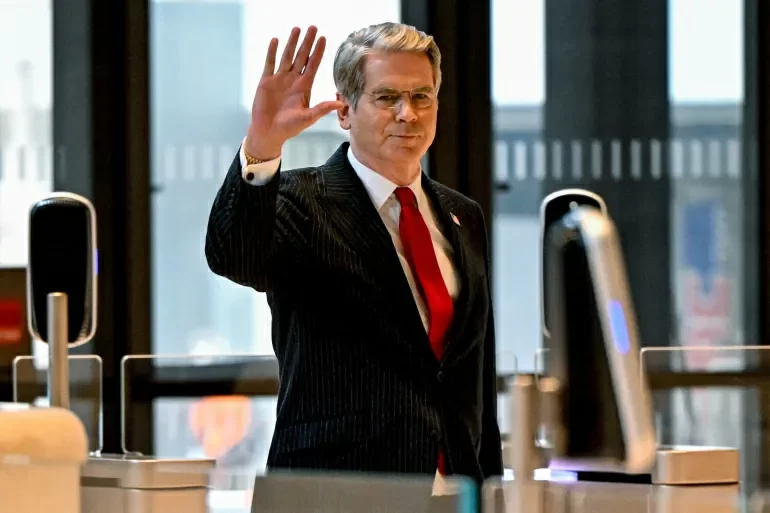
VS en China voeren overleg in aanloop naar ontmoeting Trump en Xi
Top economic officials from the United States and China have launched high-stakes discussions in New York on Sunday, covering three core areas: bilateral trade, artificial intelligence governance, and critical mineral supplies. These talks are explicitly designed to lay diplomatic and policy groundwork for the much-anticipated upcoming summit between US President Donald Trump and Chinese President Xi Jinping, scheduled to take place later this week in Washington D.C.
Hosted at JPMorgan Chase’s global headquarters in Manhattan, the meeting is led by US Treasury Secretary Scott Bessent and Chinese Vice Premier He Lifeng, with US Trade Representative Jamieson Greer also participating in the negotiations. The session forms part of a sustained series of bilateral engagements aimed at managing the complex economic relationship between the world’s two largest economies. In opening remarks upon his arrival, Bessent emphasized that the US side looked forward to “focused, substantive and constructive discussions that can lay a solid foundation for the meeting of our two national leaders.”
One of the most urgent agenda items is the future of the temporary bilateral trade truce, which is set to expire on November 10 under current terms. This existing arrangement has played a key role in preventing a fresh escalation of long-running trade tensions between Washington and Beijing, making its extension or replacement a top priority for negotiators.
Critical raw material supply chains, particularly for rare earth metals and other strategically vital minerals, also take a central spot in the talks. These resources are foundational to the production of a wide range of high-tech goods, from consumer electronics and electric vehicles to advanced semiconductors. Washington has long pushed for guaranteed, stable access to these supplies, while Beijing has increasingly framed control over key mineral exports as a core economic and strategic tool. Reuters sources confirm that securing reliable rare earth supply chains ranks among the US’s top negotiating priorities. Additional trade-related topics on the table include potential tariff reductions for selected non-strategic goods, and discussions around Chinese purchases of American agricultural commodities and Boeing commercial aircraft.
A new addition to the bilateral negotiating agenda is governance of artificial intelligence, a sector where both countries are global leaders in advanced system development, even as they maintain sharp competition over technological supremacy and national security. Bessent has confirmed that Washington is open to discussing shared AI risks, including potential regulatory frameworks for both open-weight and closed-weight AI models. Open-weight models allow users to download and modify core model parameters, while closed-weight models keep core system architecture fully controlled by their developers. In recent years, Chinese open-weight AI models have grown in popularity among US businesses, in large part due to their lower cost compared to comparable American-developed alternatives. This growing adoption has, however, reinforced Washington’s ongoing concerns over potential national security risks stemming from access to advanced Chinese AI technology.
Beyond economic and technological issues, the talks also touch on geopolitical matters with global ramifications, specifically US policy toward Iran. China maintains extensive economic ties with Iran and is one of the largest importers of Iranian crude oil, putting Beijing in a critical position for US efforts to ramp up economic pressure on Tehran. This inclusion of the Iran issue underscores how modern US-China negotiations now extend far beyond the original bounds of their bilateral trade dispute, touching on interconnected global geopolitics.
Despite the broad range of topics up for discussion, analysts and policymakers broadly do not expect a sweeping, comprehensive breakthrough agreement to emerge from the New York talks. Over the past several years, the two countries have prioritized stabilizing their economic relationship without resolving their broader structural strategic rivalry, leading most observers to anticipate only limited incremental agreements or extensions of existing arrangements rather than fundamental progress.
Anna Ashton, a leading analyst specializing in China and trade policy, argues that the most likely outcome is that both sides will prioritize preserving the status quo. Kurt Campbell, former US Deputy Secretary of State, has echoed this assessment, noting that the immediate core goal of the talks is to prevent a new escalation of bilateral tensions, rather than achieve a grand resolution. The New York discussions are ultimately aimed at refining and aligning positions to prepare for deliverables at the upcoming Trump-Xi summit in Washington, where the two leaders will address the full scope of economic and strategic relations between the United States and China.
-

Column: Vrede begint niet op een podium
September 21 marks the annual International Day of Peace, a global observance where communities, leaders and citizens across the world come together to deliver speeches, raise symbols of unity, and issue public statements reaffirming their shared commitment to peace. We often claim peace is one of our core values, so important that we have set aside an entire dedicated day to honor it. But how often do our actions match these grand words?
Even as speeches echoing across auditoriums and public squares today, many of us carry small, daily actions that undermine the very peace we claim to celebrate: quarrels with a neighbor over a boundary fence, judgment of a colleague for their different appearance or background, angry outbursts over minor traffic inconveniences, sharing divisive online content that targets and dehumanizes others, and staying silent when injustice demands we speak up. Preaching peace on a global stage is simple. Living peace in our daily lives is an entirely different, far more challenging practice.
Perhaps it is long past time we reexamined what peace actually means. For many, peace is defined only as the absence of large-scale war between nations. For others, it means basic security: a roof over one’s head, consistent food on the table, and safety walking home at night. For many more, peace is far smaller, more intimate: an evening free of persistent worry, a conversation free of blame and resentment, a quiet mind unburdened by constant stress and conflict.
Peace is not some lofty, abstract state that only exists between world leaders in international summits. It starts small. It starts with each of us, as individuals.
Inner peace is arguably the most underrated form of peace. A person who has found calm and balance within themselves carries that calm out into the world around them. They do not need to scream to be heard. They can listen to different perspectives without jumping to unfair judgment. They do not spread chaos and anger; they spread calm and perspective. This effect ripples outward, too. A person at peace with themselves passes that peace to their family, their friends, the strangers they interact with on the street. It is contagious, in the best possible way. Unfortunately, the opposite is just as true: unrest, frustration and distrust spread just as quickly through communities.
Building peace in our personal lives does not require every part of life to be perfect. It means learning to adapt to and handle the imperfections that are inevitable. It means choosing to address conflict head-on, rather than avoiding it or trying to destroy the other person to win. It means holding our own convictions while still respecting other people’s right to their own differing views.
Peace in our local communities means showing up for the people around us: the lonely neighbor living down the street, the young person struggling with unemployment or mental health, the colleague navigating a hard personal season. More often than not, peace only requires pausing for one minute and asking a simple question: “Are you okay?”
This reflection on peace hits especially close to home here in Suriname, a nation built by generations of people from vastly different roots, languages, faiths and cultural traditions: Creoles, Hindustanis, Javanese, Maroons, Indigenous peoples, Chinese, Lebanese and many more communities have built this country together. Of course, coexistence is not always smooth. There are still tensions, persistent prejudices, and occasional distrust between groups. But at the end of the day, we have built a remarkably peaceful shared life here. That is no accident. It is the product of generations of ordinary people who chose day after day to learn to tolerate, respect, and ultimately value one another’s differences.
We have a duty to cherish this hard-won peace, and most importantly, to keep building on it. As long as we only see each other as members of separate ethnic or cultural groups, we sell ourselves and our nation short. The true strength and wealth of Suriname comes from seeing each other first and foremost as Surinamers. This unity is not built on erasing our differences; it is built on embracing those differences while still choosing to move forward together. Look at the young people growing up here today: they play together, learn together, dream together. Why would we force on them the rigid, divisive social boxes that we have carried for generations?
On a day dedicated to global peace, it is entirely right to dream of a world free of war and division. But we must not forget that global peace does not start in a United Nations conference room in New York or a diplomatic meeting hall in Geneva. It starts at the kitchen table, in a school classroom, on the city bus, in the office, in the aisle of the local supermarket.
Peace is not some far-off destination we reach after decades of global negotiation. It is a small, daily choice each of us makes.
So today, yes, let us talk about peace. But more importantly, let us match our words with action. We do not need grand gestures; we only need small, consistent choices. Choose not to yell back when someone snaps at you. Choose to really listen when someone shares a different view. Choose to stay silent instead of adding fuel to a growing conflict.
Because peace does not start on a stage, at a podium, or in an international treaty. It starts with you. And it starts with me.
-
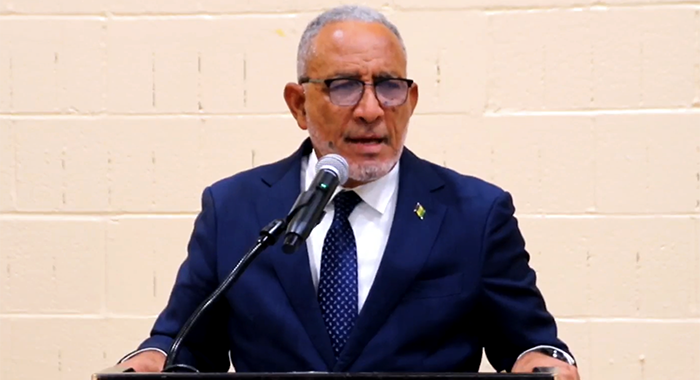
Investigation of ULP govt quietly moves to next step
During a recent diaspora town hall held in New York on September 20, 2026, Prime Minister Godwin Friday of St. Vincent and the Grenadines (SVG) has laid out a deliberate, evidence-first approach to addressing potential mismanagement and corruption in state-owned entities, following the completion of a nationwide rapid assessment of public enterprises.
Shortly after his new administration took office in November, Friday announced that his government quietly commissioned a two-person team of local SVG experts to conduct a comprehensive review of the financial standing and governance structures of all statutory bodies and state-owned companies. The independent review was split into two phases: an initial diagnostic report covering 12 major public entities was delivered to the Prime Minister roughly three months ago, and the team has now finalized its full assessment of all remaining public enterprises. While Friday has not yet reviewed the complete final report, he confirmed that the initial batch of findings already identified multiple areas that demand deeper formal investigation.
The Prime Minister’s comments came directly in response to pressing questions from members of the Vincentian diaspora community in attendance, who raised widespread concerns about alleged corruption that occurred under the previous Unity Labour Party administration. Many attendees also shared fears that the new government would maintain the status quo of “business as usual” despite campaign promises of institutional reform and accountability, pointing to high-profile past controversies and questionable management of public resources.
Rejecting calls for rushed, theatrical action to satisfy arbitrary timelines, Friday emphasized that his administration would prioritize methodical, systematic review over headline-grabbing accusations that lack sufficient evidence. He drew a clear contrast between his government’s approach and what he framed as politicized accountability efforts by past administrations, where high-profile probes ultimately collapsed after years of public attention because they were launched from unsubstantiated premises.
“We have said, and I’ve said this when we were campaigning, I said in office now: we are going about the assessment as to how government has functioned in a methodical and systematic manner, not to meet any kind of timeline that somebody’s arbitrarily set,” Friday stated.
The Prime Minister framed the full rapid assessment as the foundational diagnostic first step of his government’s accountability process, designed to identify systemic patterns of mismanagement or misconduct rather than targeting specific individuals for political gain. “There are things there that require further investigation, and where the information and the evidence lead, we will follow,” he repeated, adding that the end goal of the process is to correct institutional failures, hold wrongdoers accountable, and implement meaningful reform. He reaffirmed the new government’s commitment to delivering on its campaign promise of transparency and accountability, urging attendees to judge the administration by its actions rather than rushed public announcements.
Foreign Affairs Minister Dwight Fitzgerald Bramble, who also spoke at the town hall, reinforced this approach when addressing a specific ongoing probe: the wiping of data from consulate computers ahead of the transition of power between administrations. Bramble, who first revealed the wiped devices after the handover, confirmed that the investigation is still active and progressing, noting that thorough probes require time to build a solid evidence base.
Responding directly to the concern that the new government would maintain unaddressed problematic practices, Bramble stated, “In response to your general question about whether this is business as usual, of course it cannot be business as usual. Simply because we don’t come forward with something on your timing doesn’t mean that it’s not forthcoming.” The East Kingstown MP reaffirmed that the current administration frames itself as a government of accountability and transparency, pledging that any confirmed evidence of corruption or misconduct will be met with appropriate action, including potential legal and administrative consequences once investigations are complete.
-
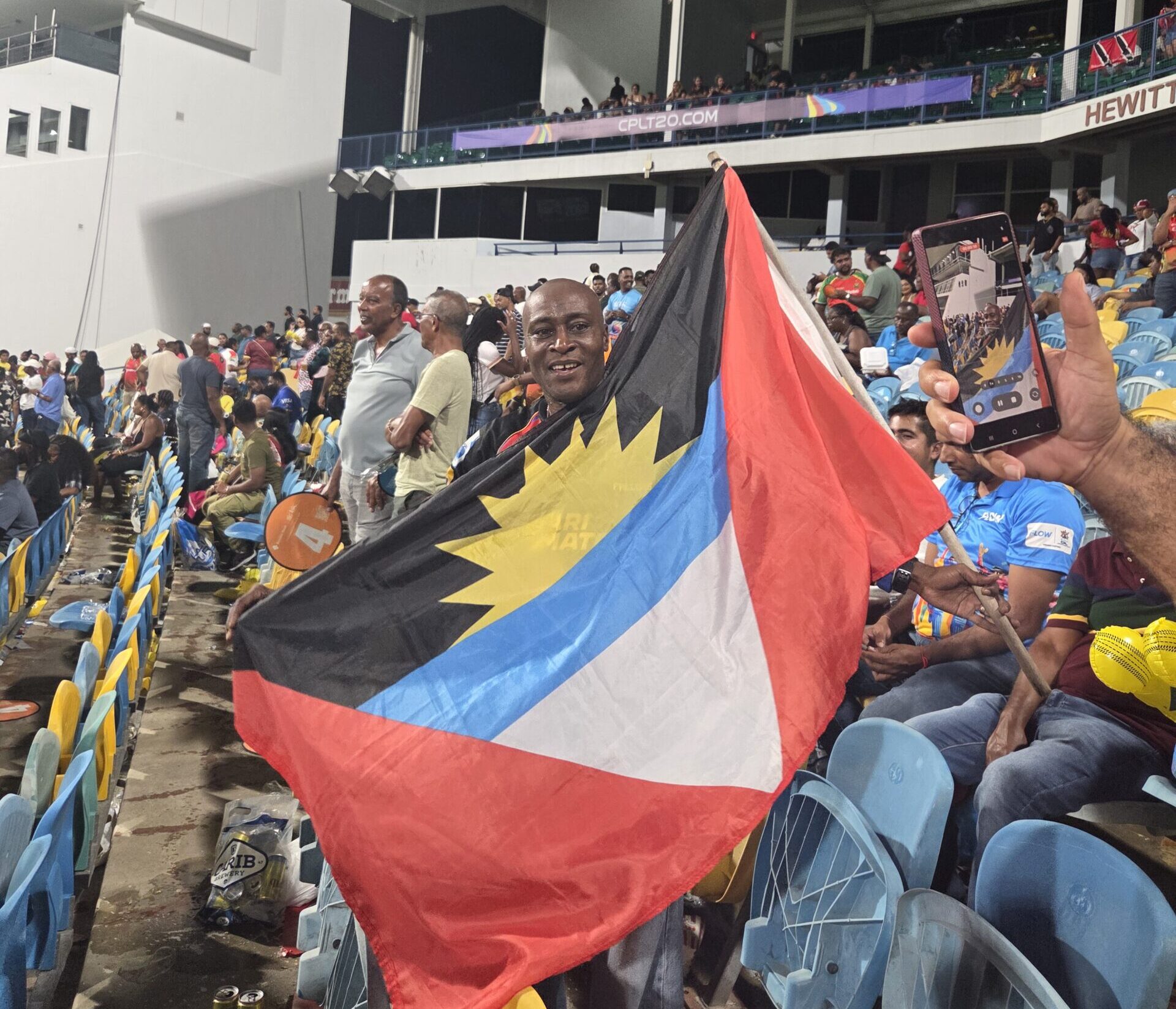
Antigua and Barbuda Falcons win CPL title
The 2026 Republic Bank Caribbean Premier League (CPL) crowned a historic new champion Sunday, as the Antigua and Barbuda Falcons pulled off a clinical eight-wicket victory over fellow expansion side Jamaica Kingsmen in a thrilling championship decider at Bridgetown’s iconic Kensington Oval. Played in front of a near-capacity crowd that packed one of Caribbean cricket’s most famous venues, the final marked a milestone for the league, bringing together its two newest franchises in a battle for the ultimate regional prize.
After winning the toss and electing to bowl first, the Falcons put early pressure on the Kingsmen’s batting lineup. The expansion side responded with a standout innings from opener Maaz Sadaqat, who anchored the entire innings with a blistering century. Sadaqat smashed an aggressive 114 runs off just 58 deliveries, sending eight fours and nine sixes flying to the boundary to lift his side to a seemingly competitive total. He was the only Kingsmen batter to find consistent form, however; number four batter Saim Ayub was the only other player to reach double digits, notching 29 runs off 22 balls. The rest of the lineup collapsed quickly under Falcons bowling pressure, with the Kingsmen finishing their 20 overs at 170 for nine.
Sufyan Moqim delivered the match-winning performance with the ball for the Falcons, earning Player-of-the-Match honors after recording devastating figures of four wickets for just 14 runs. Alzarri Joseph provided solid support, claiming two wickets for 27 runs to help contain the Kingsmen’s late-innings scoring.
Chasing a target of 171 to claim the title, the Falcons got off to a rapid start that put them firmly in control from the earliest overs. They lost opening batter Rahkeem Cornwall off the final delivery of Saim Ayub’s first over, but not before Cornwall hammered 20 runs off just six balls to set the tone for the chase. By the end of the mandatory powerplay, the Falcons had powered to 76 for one, putting the Kingsmen on the back foot immediately.
Evin Lewis, Cornwall’s opening partner, was the second Falcons batter dismissed, falling for 38 in the eighth over with the side sitting comfortably at 84 for two. That early advantage allowed the Falcons’ middle order to close out the chase with minimal risk. Wicketkeeper-batter Amir Jangoo anchored the closing innings, finishing unbeaten on 57 off 34 deliveries that included four boundaries and one maximum. Hasan Nawaz provided steady support at the other end, also remaining unbeaten on 47 off 35 balls. The Falcons reached the winning target of 171 in just 17 overs, finishing at 173 for two to secure the title and cap off a successful debut campaign for the new franchise.
-

Sadaqat powers Jamaica Kingsmen to 170 in CPL final
The 2026 Republic Bank Caribbean Premier League final delivered its first dramatic twist on Sunday night at Bridgetown’s iconic Kensington Oval, after Antigua and Barbuda Falcons won the pre-match coin toss and elected to send Jamaica Kingsmen into bat first. What followed was a masterclass in aggressive opening batting that would define the first half of the championship decider.
Left out of many pre-tournament pundit predictions, the Kingsmen’s innings relied heavily on a career-best knock from opener Maaz Sadaqat, who anchored the entire batting lineup with a blistering 114 runs off just 58 deliveries. Sadaqat’s innings was a display of controlled power: he found the boundary eight times for four, cleared the rope on nine occasions for sixes, and carried his team through a steady collapse of middle-order wickets to post a competitive total. Outside of Sadaqat’s historic knock, only one other Kingsmen batter managed to reach double figures: number four batter Saim Ayub, who contributed a solid 29 runs off 22 deliveries to boost the total before being dismissed.
For the Falcons, the bowling attack put in a disciplined performance that restricted what could have been an even larger target, led by spin bowler Sufyan Moqim, who turned in the best bowling figures of the innings. Moqim claimed four key wickets for just 14 runs, breaking key partnerships and stopping the Kingsmen’s momentum in the late overs. Experienced fast bowler Alzarri Joseph also delivered for the Falcons, picking up two wickets for 27 runs to help contain the Kingsmen’s scoring. By the end of their 20 overs, Jamaica Kingsmen had posted a total of 170 runs for the loss of nine wickets, setting Antigua and Barbuda Falcons a 171-run target to claim the 2026 Caribbean Premier League title.
-
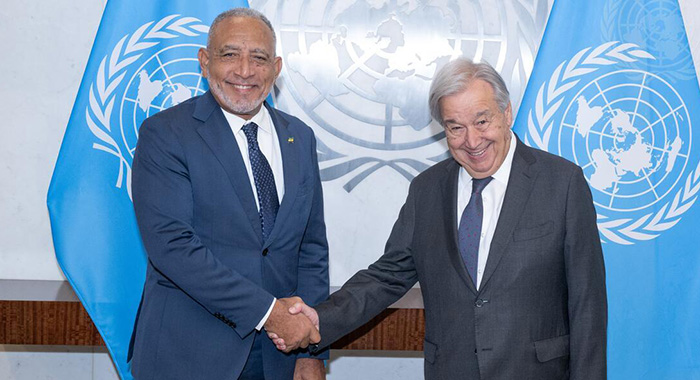
PM Friday, UNSG discuss climate resilience, SIDS priorities
Against the backdrop of the 81st United Nations General Assembly (UNGA) underway in New York, St. Vincent and the Grenadines Prime Minister Godwin Friday held a high-level bilateral meeting with United Nations Secretary-General António Guterres at UN Headquarters Sunday, centered on pressing global challenges that disproportionately impact the world’s most vulnerable nations. The discussion brought two interconnected priorities to the forefront: strengthening global climate resilience and advancing structural reform of the international financial system. This meeting marked one of the key diplomatic engagements Friday has taken part in during the UNGA’s annual gathering of global leaders.
In remarks after the closed-door talks, Friday emphasized that the conversation reinforced the critical need for consistent, high-level advocacy to advance the interests of Small Island Developing States (SIDS) – a group that includes his own country and the majority of members of the Caribbean Community (CARICOM). “We spoke about issues confronting the planet, climate change and strong advocacy for the interests of Small Island Developing States,” Friday told reporters.
For SIDS including St. Vincent and the Grenadines, the two core topics on the meeting’s agenda are far from abstract global policy debates: they are directly tied to the survival and long-term development of vulnerable coastal nations. Rising sea levels, more frequent extreme weather events, and growing climate-related disaster costs have pushed many SIDS to the brink of economic instability, while outdated international lending rules and limited access to affordable financing have left these states unable to invest in critical climate adaptation and sustainable development infrastructure. Friday noted that these shared concerns are top priorities for CARICOM as a bloc, which has worked for weeks to ensure the unique challenges facing small island nations remain a central topic of discussion across UNGA side events and bilateral meetings throughout the New York gathering.
Friday stressed that it remains essential for the international community’s highest decision-making and diplomatic bodies to continue centering the specific circumstances and systemic vulnerabilities SIDS face, rather than sidelining their needs in broader global policy discussions. The meeting between Friday and Guterres comes as SIDS ramp up collective pressure to secure meaningful commitments on climate finance and financial system reform during this year’s UNGA session.