作者: admin

  • Dominica launches US$26 million climate resilience initiative for vulnerable communities

    Dominica launches US$26 million climate resilience initiative for vulnerable communities

    Against a backdrop of rising global climate uncertainty and growing storm-related risks across small island developing states, the Government of Dominica has teamed up with the Caribbean Community Climate Change Centre (CCCCC) to launch an ambitious $26 million initiative targeting climate adaptation and inclusive sustainable growth for at-risk local populations.

    Named the Dominica Community Resilience Enhancement Project (DOMCREP), the five-year undertaking draws most of its financing from the Green Climate Fund (GCF), with complementary contributions from the Dominican government. It marks a major milestone in Dominica’s long-standing national pledge to become the world’s first fully climate-resilient nation, a goal set years ago as the island grapples with intensifying hurricanes, coastal flooding and erratic weather patterns that threaten livelihoods and national development.

    Officially announced this Wednesday via an official statement from the CCCCC, the project will center on four core priority areas: shoring up national food security, upgrading disaster preparedness frameworks, expanding early warning system coverage, and building community-level skills and resource access to address accelerating climate impacts. Eight communities across Dominica, all ranked at extremely high risk of climate disasters including hurricanes, flash flooding and storm surge, have been selected as direct beneficiaries: Bagatelle, Campbell, Colihaut, Coulibistrie, Good Hope, Petite Soufriere, Pichelin, and San Sauveur.

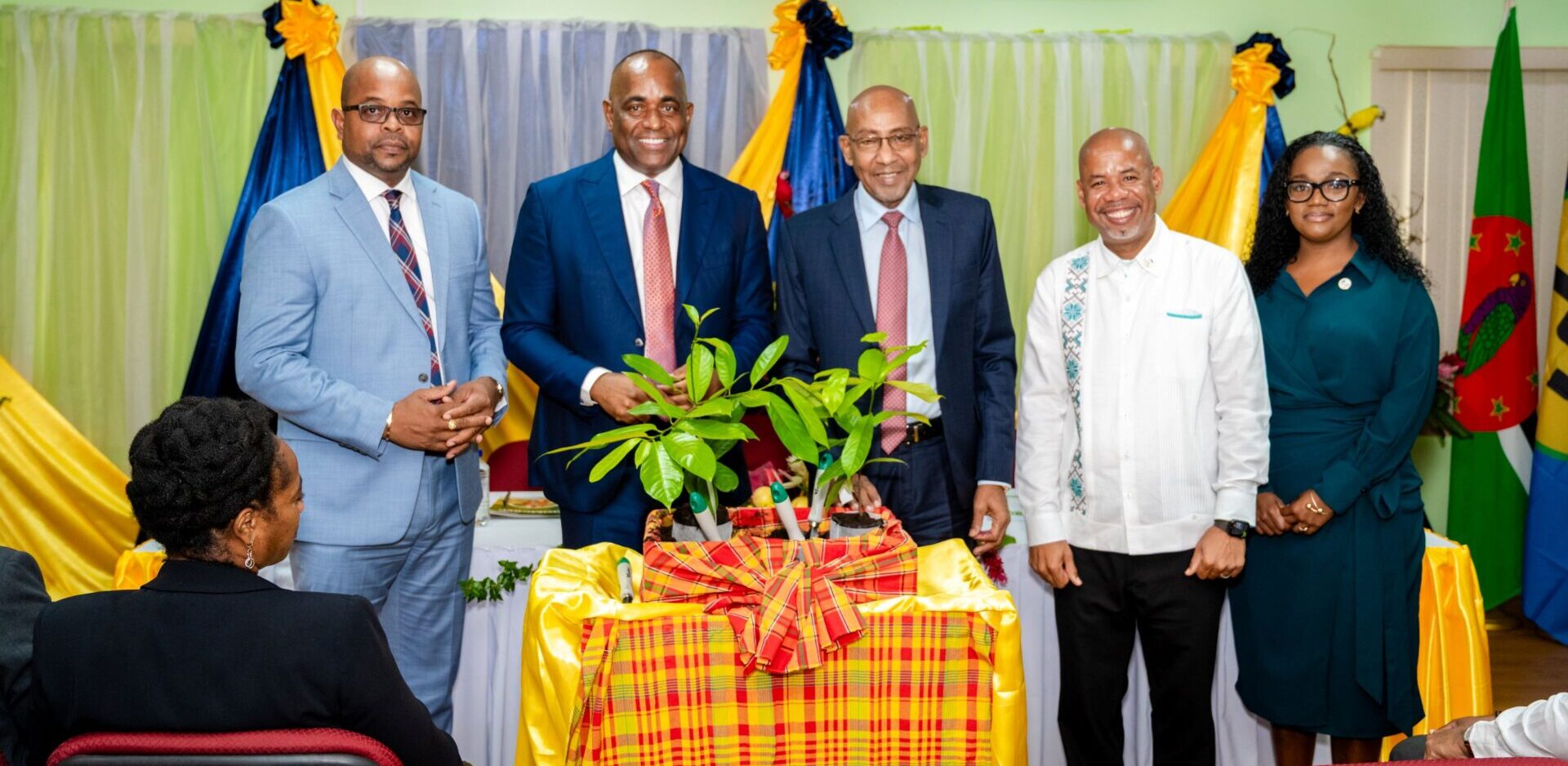
    Speaking at the project’s launch ceremony, Prime Minister Roosevelt Skerrit emphasized that the initiative is designed to deliver direct, tangible benefits to grassroots residents. He noted the investment totals roughly EC$70 million, all of which will flow directly to participating communities, with more than half of the total budget earmarked for agriculture, agro-processing, and expanding economic access specifically for women. “It is important for us in the communities to prepare ourselves for these investments,” Skerrit stated.

    A large share of the funding will be dedicated to scaling climate-smart agriculture across the target communities, where smallholder farming forms a core part of local livelihoods. Participating farmers will receive access to upgraded climate-resilient technologies, training in sustainable low-emission production methods, and support to adapt to shifting growing conditions. The end goal of this focus is to boost crop yields, cut climate-related production losses, and strengthen the country’s overall food security, reducing dependence on costly imported food supplies.

    Beyond agricultural support, DOMCREP will also finance critical upgrades to national disaster management infrastructure, including the retrofitting and construction of emergency shelters and associated response facilities. The upgrades are designed to ensure these critical hubs can withstand severe weather events, offering more reliable protection for residents when disasters strike.

    Dr. Colin Young, Executive Director of the CCCCC, framed the project as a far-reaching investment in shared social and economic prosperity, rather than just environmental adaptation. “When we invest in a farmer’s ability to adapt, we invest in a family’s food security and a community’s economic future,” he explained.

    In addition to infrastructure and agricultural improvements, the project will upgrade Dominica’s national multi-hazard early warning systems, boosting the country’s ability to detect and respond to a wide range of impending climate threats. Extensive skills training programs and public education campaigns will also be rolled out to increase community climate awareness and build long-term local capacity to address evolving climate challenges.

    A defining feature of DOMCREP is its intentional focus on inclusive development. Women, young people, and other marginalized vulnerable groups are positioned as core participants and beneficiaries of the initiative, which aims to create sustainable, long-term economic opportunities while strengthening overall community resilience.

    Dr. Young stressed that the success of the project will not be measured by spending or completed construction alone, but by the measurable improvement it brings to the daily lives of participating residents. “Ultimately, the success of this project will be measured not by budgets or outputs, but by the difference it makes in people’s lives,” he said. “By investing in women and youth, we are investing in the longterm resilience, prosperity, and sustainability of communities across this country. As the CARICOM institution with responsibility for coordinating the region’s response to climate change, the CCCCC remains committed to supporting Dominica and our Member States in accessing climate finance and transforming those investments into meaningful results for people and communities.”

    The CCCCC, an intergovernmental body established by CARICOM Heads of Government to coordinate regional climate action, serves multiple key roles across the Caribbean: it acts as a leading implementing partner for international climate finance, maintains a regional repository of climate data and research, and provides policy guidance and technical support to all CARICOM member states as they work to address climate change.

    Over the five-year implementation period, DOMCREP is expected to deliver lasting progress toward Dominica’s national climate resilience agenda, while advancing the country’s commitments to broader global sustainable development goals.

  • DNA vergadert openbaar over vorderingen pg tegen drie voormalige ministers

    DNA vergadert openbaar over vorderingen pg tegen drie voormalige ministers

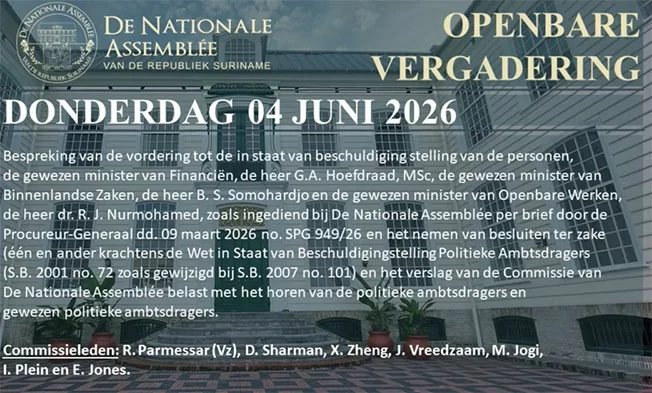
    After hours of procedural delays, extended adjournments and last-minute negotiations, Suriname’s National Assembly (DNA) has formally approved holding a public plenary session to debate the Prosecutor General’s motions against three former senior political office holders, bringing a days-long parliamentary standoff to a temporary resolution. The green light for the public hearing came only after the parliamentary committee tasked with reviewing the motions finally tabled its final report, a step that was thrown into doubt earlier the same day.

    When the assembly convened for an internal procedural meeting on Wednesday, committee chair Rabin Parmessar initially told lawmakers he could not deliver the committee’s final report. The announcement triggered immediate heated debate across the chamber, with multiple assembly members stressing that the full National Assembly holds the ultimate authority to decide whether to proceed with a public hearing. Following closed-door consultations and a lengthy adjournment, the committee ultimately submitted its report, clearing the way for the assembly to vote to advance the debate to an open public session.

    The Prosecutor General’s motions relate to three former cabinet members: Riad Nurmohamed, ex-Minister of Public Works, Gillmore Hoefdraad, former Minister of Finance, and Bronto Somohardjo, ex-Minister of Home Affairs. The assembly is required to vote on requests connected to a potential impeachment and formal indictment of the three former officials, a process that carries significant weight for Suriname’s ongoing efforts to address alleged past official misconduct.

    Procedural tensions emerged even before the internal meeting got underway, centered on the requirement to establish a quorum to validate proceedings. Initially, the parliamentary factions of the National Democratic Party (NDP) and Pertjajah Luhur (PL) declined to sign the attendance register, a move that put the meeting’s validity at risk. It was only after it was confirmed that a sufficient quorum had already been reached through the attendance of lawmakers from the VHP, NPS, ABOP, BEP and A20 parties that the NDP faction agreed to add their signatures to the register.

    The entire process is playing out against a strict legal deadline that binds the National Assembly to reach a final decision no later than June 9, leaving lawmakers just days to complete their debate and vote on the next steps for the three former ministers.

  • DOMLEC announces Island-Wide power outage

    DOMLEC announces Island-Wide power outage

    The submitted news material only contains social media sharing prompts and two image links, with no complete, legible news text content provided for processing. Without the core narrative and factual information of the original news, it is impossible to carry out in-depth analysis, structural reconstruction, or content rewriting. Users are requested to provide the complete text content of the target news to receive professional rewriting, classification, and sentiment analysis services in line with the specified requirements.

  • LETTER: Who Cares About the Future Sustainability of Caribbean Resorts?

    LETTER: Who Cares About the Future Sustainability of Caribbean Resorts?

    The Caribbean region has long stood as one of the world’s most coveted tourism destinations, drawing millions of visitors annually to its sun-drenched coastlines, crystal-clear waters, and vibrant cultural heritage. At the heart of this $30 billion annual industry sit hundreds of large and small resorts, which form the backbone of local economies across dozens of island nations. Yet, as the climate crisis accelerates and global travel patterns evolve, a critical question is gaining increasing urgency: who is taking meaningful action to safeguard the long-term sustainability of these vital economic assets?

    This question, first raised in an open letter from Caribbean tourism industry insiders and environmental advocates, shines a light on a growing gap between stated sustainability commitments and on-the-ground action. Many resort operators have rolled out green marketing initiatives in recent years, from reducing single-use plastics to offering carbon-neutral vacation packages. But critics argue these efforts often amount to little more than surface-level changes, failing to address the core systemic threats that put the entire region’s tourism future at risk.

    The most pressing threat is climate change itself. Caribbean islands are on the frontlines of rising sea levels, more intense tropical storm systems, and coastal erosion that is already eating away at valuable beachfront property. A 2023 study from the Intergovernmental Panel on Climate Change (IPCC) estimates that up to 30% of the Caribbean’s coastal tourism infrastructure could be submerged or rendered uninhabitable by 2050 if current emission rates continue. Despite this stark warning, many resort developers are still pushing forward with new construction projects in low-lying coastal zones, with minimal investment in adaptive infrastructure like sea walls, elevated foundations, or natural mangrove barriers that can buffer against storm damage.

    Beyond climate risks, the region also faces ongoing challenges around resource management. Water scarcity is an increasingly urgent issue on many arid islands, yet large resorts often consume up to 10 times more water per guest than local residents, with little investment in recycling or conservation infrastructure. Similarly, many resorts still struggle with proper waste management, sending thousands of tons of solid waste annually to already overcrowded local landfills, while failing to invest in circular economy practices that could reduce waste generation.

    Local communities, who rely on tourism for more than 50% of GDP in many Caribbean nations, are also calling for greater social sustainability. Many large resort operations are owned by foreign companies, meaning a significant portion of tourism revenue leaves the region rather than circulating through local economies. Critics also point to ongoing issues with inadequate wages for resort workers, limited access to affordable housing for local staff, and the exclusion of small local businesses from resort supply chains.

    So far, responsibility for driving sustainability change has fallen between multiple stakeholders. National governments across the region have often prioritized short-term tourism revenue growth over long-term regulation, citing the need to attract foreign investment and create jobs. International hotel brands have framed their incremental sustainability steps as sufficient, arguing that larger systemic changes would raise costs and make their properties less competitive. Meanwhile, consumers often say they care about sustainability when booking travel, but few are willing to pay the premium that more transformative sustainable practices require.

    The authors of the open letter argue that this fragmented approach is no longer viable. They are calling for a coordinated regional pact that brings together governments, hotel brands, local communities, and multilateral development banks to drive transformative change. Key proposals include mandatory climate risk assessments for all new resort projects, tax incentives for resorts that invest in renewable energy and water conservation, and requirements that resorts source a minimum percentage of their goods and services from local suppliers. They are also calling for billions in climate adaptation funding from wealthy nations, which have contributed the most to global emissions but have done little to help frontline regions like the Caribbean adapt to existing impacts.

    Industry leaders who support the initiative note that investing in sustainability is not just an environmental imperative—it is also a business necessity. A growing number of travelers are prioritizing sustainable destinations, and resorts that can demonstrate genuine sustainability are already seeing higher occupancy rates and can charge premium prices. Furthermore, investing in adaptive infrastructure now can prevent billions of dollars in damage from future storms and sea level rise, protecting jobs and economic stability for generations to come.

    As the Caribbean enters its peak 2024 tourism season, the conversation around resort sustainability is only expected to grow. The question that started as a single open letter has now sparked a regional debate about the future of the Caribbean’s most important industry: whether stakeholders will continue to prioritize short-term profits, or come together to build a resilient, equitable, and sustainable tourism model that can benefit both visitors and local communities for decades to come.

  • THE KWAK: Women feel attacked by higher male suicide rates, ask for more attention to female issues

    THE KWAK: Women feel attacked by higher male suicide rates, ask for more attention to female issues

    In a provocative satirical piece published by Dominican outlet THE Kwak, a tongue-in-cheek commentary on gendered discourse around suicide has sparked conversation while ultimately underscoring the universal need for accessible mental healthcare. The article opens with a playful skewering of the polarizing rhetoric that often plagues discussions of public health disparities, leaning into absurdity to call out competitive framing of mental health suffering between genders. The satire opens by leaning into a caricature of gender activists, framing an absurd hypothetical where women push back against the public focus on male suicide — noting that global data has long recorded male suicide death rates three times higher than female rates globally, while women report more non-fatal suicide attempts. TikTok-based feminist commentators are parodied as arguing that female mental health struggles deserve greater attention, with one non-feminist Dominican woman given a satirical, over-the-top quote: “Bon dye! You already take so much from us and now you want to take your own lives too? When will your discrimination against us end?” The piece then turns its mockery to men’s rights groups, quipping that journalists found nothing of value to include from standard men’s rights takes even after the group submitted an unsolicited statement, before leaning into a farcical reveal from a splinter Red Pill faction calling itself “Bros Are Better In Every Situation” (BABIES). In the article’s most absurd narrative beat, BABES claims to have built a time machine powered by “noticing” and the “collective female ego” to alter historical records and inflate male suicide rates just to undermine women’s issues, ending with their tongue-in-cheek line: “It’s not a competition and we’re still winning.” At the close of the satirical piece, the publication steps back to clarify its intent and ground the conversation in a serious, evidence-based message: mental health is never a competition between genders. The article notes that people of all genders face unmet mental health needs, with many living with suicidal ideation that goes unrecognized by loved ones and broader society. Systemic barriers including persistent stigma, dismissive attitudes toward mental distress, systemic marginalization, and widespread misinformation all contribute to underreporting of struggles and gaps in access to life-saving care. To turn this conversation into actionable support, the piece closes with a link to an updated, child-friendly directory of mental health resources available to all residents of Dominica hosted by Healthy Caribbean. A full disclaimer at the end of the piece confirms that THE Kwak’s content is intentionally satirical, designed to poke gentle fun at divisive cultural discourse while raising awareness of ongoing, serious public health challenges. The views expressed in the piece are also noted as solely those of the author, and do not represent the official stances of Duravision Inc., Dominica News Online, or any of its affiliated brands.

  • Tourism Authority Promotes Charmaine Spencer To Chief Marketing Officer and Shermain Jeremy To Regional Tourism Director

    Tourism Authority Promotes Charmaine Spencer To Chief Marketing Officer and Shermain Jeremy To Regional Tourism Director

    The regional tourism authority has announced a pair of high-impact executive promotions that strengthen its leadership team as the organization works to accelerate post-pandemic tourism recovery and expand market reach. Charmaine Spencer has been elevated to the position of Chief Marketing Officer, while Shermain Jeremy will step into the role of Regional Tourism Director, according to an official statement released by the authority this week.

    Both promotions come at a critical juncture for the region’s tourism sector, which has been working to rebuild visitor volumes and diversify its audience base after years of global travel disruption. Industry observers note that the internal appointments signal the organization’s confidence in the experience and strategic vision of both long-standing team members.

    In her new role as Chief Marketing Officer, Spencer will oversee all global marketing strategies, brand development initiatives, and digital outreach campaigns designed to attract key visitor segments from emerging and established source markets. She brings years of hands-on experience in tourism marketing and audience engagement to the C-suite, having previously led multiple successful destination promotion campaigns that delivered double-digit growth in visitor inquiries for the authority.

    Jeremy, meanwhile, will take on end-to-end responsibility for coordinating regional tourism operations, aligning the work of local tourism boards, hospitality stakeholders, and community partners to deliver cohesive visitor experiences. Her remit will also include developing sustainable tourism frameworks that support local livelihoods while preserving the region’s natural and cultural heritage.

    A spokesperson for the tourism authority noted that both leaders have deep roots in the region and a proven track record of delivering results that benefit both the sector and local communities. The appointments are expected to be formally effective starting next month, with a transition plan already in place to ensure continuity across all ongoing tourism development projects.

  • $7,000 Reward Offered for Safe Return of Missing Dog Velvet Before Midnight

    $7,000 Reward Offered for Safe Return of Missing Dog Velvet Before Midnight

    A distraught family in Antigua is extending a $7,000 cash reward to any member of the public who can provide credible information that helps them recover their missing canine companion, Velvet, safe and unharmed. To qualify for the full payout, the dog must be returned to the family by midnight tonight, according to the official public appeal. Velvet is far more than just a pet to the household: the owners describe her as a core member of their family, emphasizing that she is deeply cherished by everyone in the home and her absence has left a painful gap. The family has issued a heartfelt plea to local communities and social media users to help them track Velvet’s location and bring her back to her familiar home. Any person who has seen the dog or has details about where she may be staying is asked to reach out immediately to the family through two dedicated contact lines: 785-5103 and 723-5377. Since the appeal was first posted, it has spread rapidly across social platforms and local community groups, with hundreds of users sharing the call for information as the family and their supporters ramp up their search efforts ahead of the midnight deadline.

  • Government Opens Consultation on Barbuda Road and Wharf Rehabilitation Works

    Government Opens Consultation on Barbuda Road and Wharf Rehabilitation Works

    Antigua and Barbuda’s government has launched a public consultation period for a transformative 12.6-kilometer road rehabilitation initiative on the island of Barbuda, releasing all required planning, engineering and environmental assessments to invite input from residents and industry stakeholders ahead of construction. The project, which forms a core part of the national post-Hurricane Irma recovery program, is backed by financing from the Caribbean Development Bank and falls under the country’s Hurricane Irma Rehabilitation and Reconstruction Loan framework.

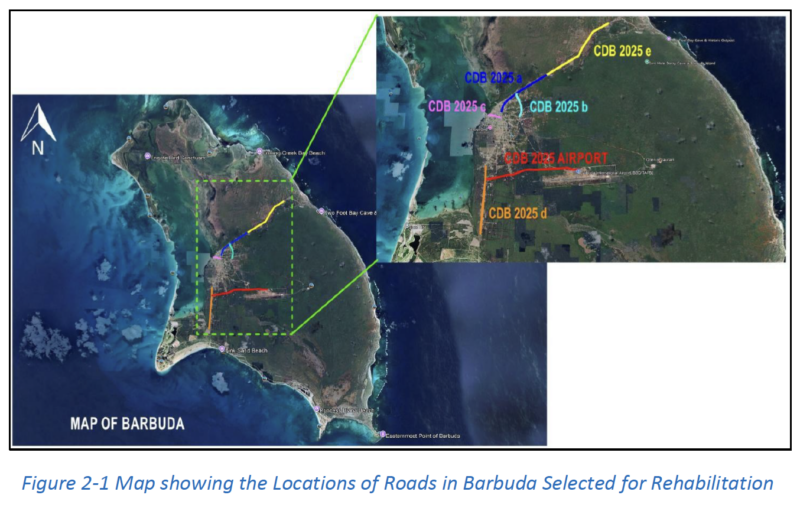
    The Ministry of Housing and Works has made a full suite of planning documents available for public review, including a comprehensive Environmental and Social Management Plan, an initial engineering inception report, a corridor characterization and priority ranking analysis, and a groundbreaking social and gender sensitisation study. Upgrades are targeted at six high-priority road corridors across the island, spanning key routes that serve critical public and economic infrastructure: sections of River Road, the Codrington Wharf access zone, routes connecting to Sir McChesney George Secondary School, the Green Barbuda Solar Hybrid Power Station, and Burton-Nibbs International Airport. These routes were selected specifically for their outsize role in supporting daily transportation, emergency response operations, community access to services, and long-term economic growth for the island.

    Environmental assessors have categorized the project as a Category B development, meaning all potential negative environmental and social impacts are predicted to be geographically limited and fully manageable through targeted mitigation strategies. The initial environmental review identified a set of key risks that will require continuous monitoring throughout the construction phase, including potential contamination of local groundwater reserves, excess water consumption during works, risks to community health and safety, occupational hazards for construction crews, and potential harm to sensitive marine and coastal ecosystems surrounding the protected Codrington Lagoon. To address these concerns, project planners have pre-approved a series of protective measures: targeted erosion control infrastructure, expanded and upgraded drainage networks, ongoing third-party environmental monitoring, formalized waste management protocols, and specific protocols to protect any unknown archaeological or cultural resources that may be uncovered during excavation.

    A key priority integrated into the project design is a comprehensive set of climate resilience upgrades, developed to address Barbuda’s long-standing geographic vulnerabilities. The proposed road design uses reinforced concrete pavement engineered to withstand severe flooding, alongside larger, upgraded culverts, a fully redesigned island-wide drainage system, and pre-construction geophysical surveys to map and fill underground voids before heavy building works begin. These changes are designed to resolve persistent challenges tied to Barbuda’s flat terrain, naturally poor drainage, and ongoing high risk of storm-related flooding as climate change increases the frequency of extreme weather events in the Caribbean.

    The corridor characterization report positions the road upgrades as a foundational piece of Barbuda’s broader long-term development strategy. The document notes that the island is poised to see a wave of new private and public investment in coming years, including expanded tourism infrastructure, expansion of Burton-Nibbs International Airport, construction of a new combined cargo and tourism port, new residential housing developments, and additional renewable energy projects. Improved, more resilient road networks will be critical to supporting this growth while also making daily travel easier for residents and cutting response times for emergency services during crises.

    The accompanying gender sensitisation study also highlights a long-standing equity gap in Antigua and Barbuda’s construction sector: official employment data shows just 138 women working in construction across the country, compared to more than 3,400 men. The study’s findings will be used to help government agencies and private contractors implement policies that advance gender equality and social inclusion across all future infrastructure projects on the island.

    Once construction gets underway, the full build-out is expected to take between 18 and 24 months to complete. Following the conclusion of construction, a mandatory 12-month monitoring period will be held to assess the performance of the new drainage systems and resolve any remaining unforeseen environmental impacts. Government officials have emphasized that public input is a core part of the project development process, and are encouraging all residents and interested stakeholders to review the full set of released documents and submit comments, concerns, or recommendations to help refine the project’s final design and implementation plan before works break ground. All full documents are available for review via the official website of Antigua and Barbuda’s Department of Environment.

  • Royal Caribbean Crew Member Found Dead in St. Kitts After Making Solo Hike

    Royal Caribbean Crew Member Found Dead in St. Kitts After Making Solo Hike

    A multi-day search operation in the Caribbean island nation of St. Kitts and Nevis has concluded in tragedy, as local law enforcement confirmed Monday, June 1, that the body of a missing 33-year-old Chinese national had been recovered. The man, identified as Wang Zyuan, was later confirmed to be a crew member working aboard Royal Caribbean International’s *Rhapsody of the Seas*, correcting initial reports that incorrectly labeled him a passenger.

    Wang had been docked in St. Kitts with his vessel when he set off alone on an unguided hike of Mount Liamuiga, the island’s iconic dormant volcano and highest peak, which rises nearly 3,800 feet above sea level. Hiking the trails that crisscross the volcano is one of the most popular outdoor activities for visitors and crew members visiting the island cruise port.

    According to official updates posted to the Royal St. Christopher and Nevis Police Force (RSCNPF) Facebook page, Wang was last spotted heading toward the trailhead around 10 a.m. on Wednesday, May 27. Just four hours after starting his hike, the situation turned dangerous: Wang placed an emergency 911 call to local first responders, reporting he had become completely lost and disoriented deep within the mountain’s thick tropical rainforest.

    Rescue teams immediately mobilized to locate Wang, but contact was cut off moments after that initial distress call. All subsequent attempts to ping his mobile device or re-establish communication failed, leaving search teams to comb the mountain without a clear location target.

    The rugged, dense terrain of Mount Liamuiga presented major challenges to the search effort. Even maintained marked trails feature steep rock outcrops, thick mud, and notoriously slippery surfaces, and the search expanded across large swathes of off-train wilderness around the volcano’s crater in the days following Wang’s disappearance. The operation grew into an island-wide coordinated effort between local police, emergency rescue groups, and port authorities.

    After confirming Wang’s employment status with the cruise line, Royal Caribbean released an official statement expressing its sorrow over the loss. “We are saddened to learn a crew member has passed away. We appreciate the tremendous efforts of the local authorities and rescue teams, who worked tirelessly over the past several days,” the line said.

    In their official public confirmation of the recovery, the RSCNPF extended its sympathies to Wang’s loved ones. “It is with deep regret that the Royal St. Christopher and Nevis Police Force confirms that Mr Wang Zyuan, who had been missing on the Mt. Liamuiga trail since Wednesday, May 27th, 2026, was located deceased on Monday, June 1st, 2026, by one of the search teams,” the post read.

    As of this report, official details on the exact cause and circumstances of Wang’s death have not been released, and the investigation remains ongoing. Local law enforcement have asked the public to avoid unsubstantiated speculation and only rely on official updates as the case progresses. Multiple industry sources have confirmed Wang worked in the cruise ship’s restaurant department.

    The tragedy has prompted local tourism and law enforcement agencies to issue renewed safety warnings for hikers exploring St. Kitts’ backcountry trails. Officials strongly advise against hiking remote, unfamiliar rainforest trails alone, recommending that all visitors hire certified local guides, fully charge all communication devices, and download offline mapping tools before starting any backcountry hike.

    This incident mirrors a similar fatal solo hiking incident last year in Juneau, Alaska, where 69-year-old hiker Thomas Casey disappeared while hiking alone. Search teams also relied on last-known cell phone pings to narrow their search, before ultimately recovering Casey’s body in a remote area near Mendenhall Glacier, where he had died following a fatal fall.

  • 300 more container homes to arrive today

    300 more container homes to arrive today

    Nearly eight months after Category 5 Hurricane Melissa devastated coastal and southern communities across Jamaica, the Jamaican government is continuing its rolling delivery of prefabricated container housing for displaced storm survivors, Prime Minister Andrew Holness has confirmed. Speaking Thursday at a National Housing Trust (NHT) event marking the handover of 27 serviced residential lots in Malvern, St Elizabeth — one of the parishes hardest hit by the 2023 storm — Holness announced that an additional 300 modular container homes will arrive on Jamaican shores Friday. This shipment follows an earlier delivery of 1,200 units already in the country, with the remaining 1,000 of the total 2,500 pre-ordered units scheduled to arrive by July. The NHT has already allocated more than US$29 million to acquire this full fleet of semi-permanent housing solutions, which will serve as core government support for residents forced to relocate from severely damaged storm zones and those who lost all their property and cannot afford to rebuild. St Elizabeth will be a primary beneficiary of the new housing, Holness confirmed, with the hard-hit coastal community of Parottee earmarked for a full, community-wide relocation. Following a post-storm assessment, Holness noted that rebuilding homes in the erosion-prone coastal zone of Parottee would cost far more than replacing the damaged structures with the new modular container units, making full relocation the most practical and cost-effective path forward. The prime minister emphasized that the relocation process will center resident input at every stage, with commitments to protect local livelihoods, preserve the value of residents’ existing assets, and uphold the dignity of all affected community members. Multiple government agencies will partner to deliver the initiative: the NHT, Urban Development Corporation, and St Elizabeth Municipal Corporation will lead on-the-ground implementation, while the National Reconstruction and Resilience Authority (NaRRA) will coordinate cross-agency work to speed up delivery for displaced households. Displaced residents currently sheltering at Petersfield High School will also receive the new container homes, and the NHT has already identified two sites in Westmoreland parish for clustered semi-permanent housing developments. Beyond immediate disaster response, Holness said the government will conduct a comprehensive evaluation of the container housing model to explore whether it can be scaled up for wider use across Jamaica, including the development of accessible long-term financing mechanisms. The study will examine not just the structural practicality of the units, but also their social impact, tracking how access to secure stable housing changes residents’ daily lives and long-term outcomes. Five deployment sites have been confirmed across the island, with scattered units assigned through the Ministry of Economic Growth and Infrastructure Development, and the NHT is currently funding construction of foundation bases for all semi-permanent units. During his remarks, Holness also addressed ongoing public criticism over the still largely unspent $1.4 billion in private hurricane relief donations. He pushed back against critics, noting that the government has already allocated almost $67 billion in public funds to cover immediate disaster relief needs for affected Jamaicans. The administration has intentionally held the donated funds to allocate them to tangible, long-lasting, traceable recovery projects rather than spending them on short-term relief that would leave no lasting public record, he explained. Holness framed this deliberate approach as a key departure from past administrations’ handling of disaster relief, arguing that donors will be able to see exactly how their contributions are used in the form of visible, permanent housing for storm survivors, rather than the unrecorded distribution of short-term food grants that leave no lasting public benefit. “That is what distinguishes my administration from administrations of the past. We make wise financial decisions,” Holness said, adding that there is no excuse for the deliberate, transparent approach the government is taking.