作者: admin

  • Shirley Chisholm Primary blank St Gabriel’s 7-0 NSC netball

    Shirley Chisholm Primary blank St Gabriel’s 7-0 NSC netball

    The National Sports Council and Pedialyte Sport-sponsored Primary School Netball Competition continued this week, with defending title holders Shirley Chisholm Primary extending their impressive winning streak with a dominant shutout victory on Thursday.

    Hosted at the Dover sporting facility, the reigning champions put on a masterclass of attacking netball from the first whistle, building an unassailable 4-0 lead by the half-time break against St Gabriel’s School. They maintained their clinical momentum through the second half, ultimately closing out the match with a crushing 7-0 blanking that cements their status as the team to beat in this year’s tournament.

    Leading the charge for Shirley Chisholm Primary was goal shooter Lashanae Passley, who delivered a perfect performance by converting every one of her four scoring attempts. Supporting her was teammate Kimaria Allen-Farrell, who notched three goals from five attempts to round out the defending champions’ scoring.

    Thursday’s matchday featured a packed schedule of other closely contested fixtures across the competition. Arthur Smith Primary secured one win and one loss across their two outings: they first pulled off a solid 6-1 victory over St Christopher, but fell to a 5-1 defeat at the hands of St Paul’s Primary later in the day. In other results, St Lawrence claimed a comfortable 6-1 win against Bay Primary, while St Christopher and St Gabriel’s played out an exciting 3-3 draw. St Paul’s continued their strong form with a narrow 2-1 edge over Bay Primary to close out the day’s play.

  • Data-sharing gaps hinder Caribbean climate science – CIMH

    Data-sharing gaps hinder Caribbean climate science – CIMH

    As climate change intensifies threats to small island nations across the Caribbean, a leading regional scientific leader has sounded an urgent alarm: fragmented data sharing across national and institutional borders is severely limiting climate research, undermining evidence-based policy, and putting the entire region at a critical turning point that could derail climate adaptation efforts. Dr. David Farrell, principal of the Barbados-based Caribbean Institute for Meteorology and Hydrology (CIMH), outlined these deep-rooted challenges in an exclusive interview with Barbados TODAY, stressing that immediate government policy intervention is required to unlock trapped critical climate and cross-sectoral datasets.

    Farrell explained that even CIMH, the region’s primary meteorological and hydrological training and research body, faces persistent barriers accessing key data within Barbados itself, a gap that directly restricts the institute’s ability to deliver actionable insights for decision-makers. He framed the current impasse as a defining moment for the region: if data holders continue to refuse collaboration with scientific researchers, Caribbean nations will fall far behind in global efforts to leverage technology for climate resilience.

    “Data sharing is non-negotiable for progress right now – I cannot overstate how central it is to every challenge we face,” Farrell said. He highlighted that interconnected “nexus problems” – overlapping issues that cut across multiple economic and social sectors – are growing increasingly complex, and solving them depends on cross-sector information flow. For example, public health outcomes directly shape agricultural productivity, meaning food system planners require access to public health data to make informed decisions. Similarly, long-term economic planning relies on detailed, up-to-date labor force data that is often locked away in siloed government or private databases.

    Farrell acknowledged concerns about sensitive data, noting that existing frameworks already address these risks: sensitive datasets can be clearly marked, and legally binding access agreements can be put in place to govern use. What serves no purpose, he argued, is hoarding data on private servers where it cannot contribute to better decision-making. “Data that is not shared has zero value,” he emphasized. “It cannot improve livelihoods, attract investment, or solve the problems we are all facing.”

    The push for open data is particularly urgent as the region looks to adopt cutting-edge technologies like artificial intelligence and machine learning to address climate and development challenges, Farrell noted. Both AI and machine learning are deeply data-dependent, and claims of investing in these technologies ring hollow without a commitment to open data sharing. “You can’t say you’re building AI systems if you’re not willing to provide the data that powers them,” he said. “Data is the fuel for these tools – without it, they cannot produce the actionable insights we need.”

    Farrell pointed out that data sharing challenges exist at both national and regional levels, but there has been incremental progress. As more regional institutions recognize the scientific and economic value of open data, collaboration has become easier. The biggest gap remains at the interface between national governments and regional bodies, he said, where data holders often hesitate to share information without formal policies in place to protect their interests. Suspicion around the purpose of data requests also slows progress.

    To illustrate the benefits of a robust open data policy, Farrell pointed to the United States, where most government-generated data is freely available to the public. This open data ecosystem is a core reason the U.S. leads in many fields of research and technological innovation, he argued, because it allows researchers to test models, validate concepts, and build new products and services that drive economic growth.

    Against this backdrop, Farrell is calling on Caribbean governments to lead the shift by enacting formal data sharing policies that encourage open access and streamlined cross-border data movement. In today’s fast-paced digital age, delayed data sharing renders information irrelevant by the time it is released, he warned. If the region moves too slowly to open up its datasets, outside entities will fill the gap with alternative data sources, and local stakeholders will lose out on the economic and scientific benefits of controlling their own information.

    “If we want to keep pace with global technological advances and use them to improve climate resilience and quality of life across the Caribbean, we have to revisit our outdated data models and policies,” Farrell insisted. “We are already at a crossroads. The choice to implement thoughtful open data policies will set the region up for progress; failing to act will leave us locked out of the benefits of modern science and technology.”

  • Police search for person of interest

    Police search for person of interest

    Law enforcement authorities in Barbados are turning to the public for critical support as they work to track down and identify an individual sought for questioning connected to a major criminal investigation. The Barbados Police Service (TBPS) has issued a public appeal urging residents and visitors alike to come forward with any details that could lead to the location of the unnamed person of interest.

    To make submitting information as accessible as possible, law enforcement has released multiple contact channels for tipsters. Those with relevant knowledge about the individual’s current whereabouts can reach out directly to the Hastings/Worthing Police Station via phone at either 430-7612 or 430-7614. For urgent reports, members of the public can also contact the national police emergency line at 211, reach the anonymous tip line run by Crime Stoppers at 1-800-8477, or visit any local police station in person to share information.

    In a clear formal notice accompanying the appeal, TBPS has reminded the general public that providing shelter, hiding space, or any other form of aid to individuals sought by police for questioning constitutes a severe criminal offense. Authorities emphasized that any person found to be knowingly assisting the wanted individual will face legal action and possible prosecution, underscoring the importance of full cooperation with the ongoing investigation.

  • “Just My Mum Saying She Misses Me”: Man Finally Gets Birthday Card

    “Just My Mum Saying She Misses Me”: Man Finally Gets Birthday Card

    A decades-long bond between a mother and her son has captured public attention after an 82-year-old American woman’s heartfelt birthday card completed a weeks-long cross-border journey, finally landing in her son’s hands in Belize in late May 2026.

    The recipient confirmed he took delivery of the long-awaited envelope on May 27, following a series of unexpected holdups that put the small package in limbo for days. Inside the plain greeting card, the mother left a simple, tender handwritten note: “Miss you, love Mom, xxoo & Happy Birthday.” What many might see as an ordinary piece of mail carries extraordinary weight for the pair, who are separated by thousands of miles.

    When customs officials processed the parcel, they opened the envelope to inspect its contents. All they found inside was the handwritten message. “You can see what’s in there, just my mum saying she’s missing me,” the son shared in an interview.

    To beat delivery timelines and make sure the card arrived in time for her son’s birthday, the 82-year-old mother paid a steep premium for expedited international shipping. When asked why his mother would choose to spend such a large sum on a single greeting card, the son offered a gentle, intimate explanation: “That was her choice. She’s 82, I can’t see her, she’s not doing the best, and she wanted to make sure I got the birthday card. That’s all.”

    The road to delivery was not smooth. Initially, customs authorities notified the son that he owed more than 210 Belize dollars in customs clearance fees to claim the package. The parcel was held back multiple times before officials ultimately agreed to release it for just a 10 Belize dollar fee.

    While the mother and son speak to one another over the phone every single day, the physical card represents far more than a birthday greeting. “My mom and I talk every day, but getting the card, it’s definitely something special,” the son said. The story, first published online on June 4, 2026, has resonated with readers around the world, highlighting the quiet power of familial love that transcends distance and bureaucratic red tape.

  • Beleidsplan moet arbeidskansen voor personen met beperking vergroten

    Beleidsplan moet arbeidskansen voor personen met beperking vergroten

    On June 4, a leading advocacy coalition focused on equitable employment opportunities for people living with disabilities marked a key milestone in its push for systemic change, formally presenting a comprehensive policy plan to the Welfare and Work Directorate of the Dutch Ministry of Health, Welfare and Sport. The formal handover was led by Alliance Decent Work for Persons with a Disability chair Renate Wartes, who delivered the document to Naomi Esajas-Friperson, deputy director of the ministry’s Labor Market Division.

    In an official response to the submission, Esajas-Friperson reaffirmed the Dutch ministry’s long-standing commitment to expanding labor market participation for people with disabilities, and to creating pathways to work that upholds human dignity and fair working conditions. She highlighted that the ministry welcomes the Alliance’s targeted proposals, which are designed to narrow the accessibility gap that keeps many disabled people out of the workforce and remove persistent structural barriers that prevent long-term, sustainable employment participation.

    The submission of the policy plan represents another critical step forward in the ongoing collaborative partnership between the Alliance and the Welfare and Work Directorate. Both stakeholders share a core goal of building a fully inclusive Dutch labor market, one that guarantees people with disabilities equal access to paid work, professional development opportunities, and full meaningful participation in wider society.

  • RTA Driver Alleges Police Fed Him False Information, Pressured Him to Accept Fault

    RTA Driver Alleges Police Fed Him False Information, Pressured Him to Accept Fault

    A 2026 motor vehicle collision in Belmopan has sparked serious allegations of official misconduct, as the injured driver claims law enforcement fed him false information to coerce a false admission of fault. The incident unfolded on the night of May 1, Labour Day, along North Ring Road, when Cory Middleton, a driver for Belize’s Road Transport Authority (RTA), was attempting a legal overtake in a designated passing zone. His vehicle collided head-on with a red pickup truck operated by Dean Flowers, sending Middleton’s car careening off the roadway into a nearby ditch.

    Middleton was rushed to a local medical facility following the crash, suffering a traumatic head injury and multiple other bodily harms that left him unable to file an official accident report the same night. When he attended the local police station the following evening to give his account, Middleton says one responding officer immediately insisted he had initiated the collision and was fully responsible for the crash. Speaking to local outlet News 5, Middleton explained that he initially accepted the officer’s framing because of the public trust placed in law enforcement.

    “My first statement was made under false pretence of the information that was given to me. I believed him because he was an officer. He is there to help and protect civilians, so I wouldn’t expect the first thing he did to me was lie,” Middleton told reporters.

    According to Middleton’s account, the officer continued to pressure him in the days after the collision, placing two follow-up calls urging him to inform his insurance provider that he accepted full blame for the crash. Growing suspicious of the repeated coercion, Middleton reached out to the officer’s supervising superintendent to request a secondary review of the case. The superintendent launched a follow-up investigation, and told Middleton that physical and witness evidence actually pointed to Flowers as the responsible party, a conversation Middleton says he recorded in full.

    When Middleton returned to the police station to correct his initial statement, he faced pushback from department staff before ultimately being permitted to amend his account. The case moved to Belmopan’s court system for a first hearing on May 29, where both drivers entered not guilty pleas to related traffic offenses.

    Flowers has pushed back forcefully against Middleton’s allegations, responding to News 5’s request for comment with a written statement rejecting the entire narrative of wrongdoing by police or himself. “The young man ran into me and is not taking responsibility. He did file a report accepting responsibility, then a few days after returned to the station to withdraw his statement, so the matter will proceed to court for the court to decide who was at fault. I’m just grateful no one was severely injured or died because of his reckless speeding and overtaking at an intersection,” Flowers wrote.

    The court has adjourned the proceedings to allow for full evidence collection and review, with the next hearing scheduled for July 31. For his part, Middleton says he is not seeking to try the case in the media or undermine the court’s authority, but rather to draw attention to gaps in processing that left him facing wrongful blame. He emphasized that all residents of Belize are entitled to a fair, impartial, and transparent legal process following traffic incidents, and he is seeking full accountability and a clear ruling on who bears responsibility for the May 1 crash.

    As the case awaits its next court date, the allegations have raised quiet questions about the protocols local law enforcement follow when investigating and documenting motor vehicle collisions, particularly when one driver is injured and unable to give an immediate statement.

  • APNU’s parliamentary question on powership negotiations triggers govt’s response

    APNU’s parliamentary question on powership negotiations triggers govt’s response

    Almost one full week of public silence on the future of Guyana’s powership electricity supply came to an end on Thursday 4 June 2026, after the country’s parliamentary opposition tabled an urgent oral question without notice to press for answers on the critical energy deal.

    Public Utilities and Aviation Minister Deodat Indar broke the informational drought in a public statement posted to Facebook, addressing growing public and political commentary around the renewal of the contract for two Turkish-owned Karpowerships that currently supply a large share of the country’s electricity.

    Indar emphasized that negotiations are actively ongoing, with the government focused exclusively on securing the lowest possible commercial rate for the continued supply of power, framing the work as aligned with the best interests of all Guyanese citizens. “I would like to assure the public that the Government of Guyana is working in the best interests of the people of Guyana to get the best possible commercial rate for the renewal of the contract,” Indar said in the statement.

    Prior to Thursday’s public update, all senior government officials—including President Irfaan Ali, Vice President Bharrat Jagdeo, Finance Minister Ashni Singh, and Indar himself—had declined repeated requests for comment on the status of the talks. This silence came even after Karpowership issued a formal warning that power supplies could be interrupted after the end of a grace period on 1 June, when the previous contract expired.

    While Indar moved to reassure Guyanese that the national grid has not experienced any power disruptions to date, he confirmed that no additional details will be released publicly until negotiations conclude between state-owned utility Guyana Power and Light Inc., UCC JV, and Karpowership. “We continue to be in the negotiation process, while the powership maintains an uninterrupted supply of electricity to the national grid. The public will be apprised at the appropriate time on the completion of the contractual negotiations,” he added.

    The government’s statement came just two hours after A Partnership for National Unity (APNU), the country’s main parliamentary opposition, submitted its urgent question to National Assembly Speaker Manzoor Nadir. APNU parliamentarian Ganesh Mahipaul, who filed the question around 11:15 AM Thursday, is seeking answers to a series of pressing public concerns: whether Karpowership has demanded additional payments outside the terms of the original contract, the total amount of any such demands and their legal or commercial basis, and whether the government has conducted a formal assessment of grid risks if one or both powerships suspend operations before the long-delayed Wales Gas-to-Energy Project comes online. Mahipaul also pushed for clarity on contingency plans to prevent a return to widespread blackouts and rolling load shedding that would harm households and businesses across the country.

    Currently, the two Karpowerships are anchored off Guyana’s coast: one at Meadowbank in Greater Georgetown on the Demerara River, and the second at Everton on the Berbice River. The status of their contract has emerged as a critical flashpoint amid ongoing delays to the 300 megawatt Wales Gas-to-Energy Project, which has already missed multiple publicly announced completion targets. Without power supplied by the two powerships, Guyana Power and Light does not have enough domestic generation capacity to meet the country’s peak demand of just over 200 megawatts, leaving the national grid heavily dependent on the Turkish firm’s output.

  • Former BEL Workers Protest Outside National Assembly

    Former BEL Workers Protest Outside National Assembly

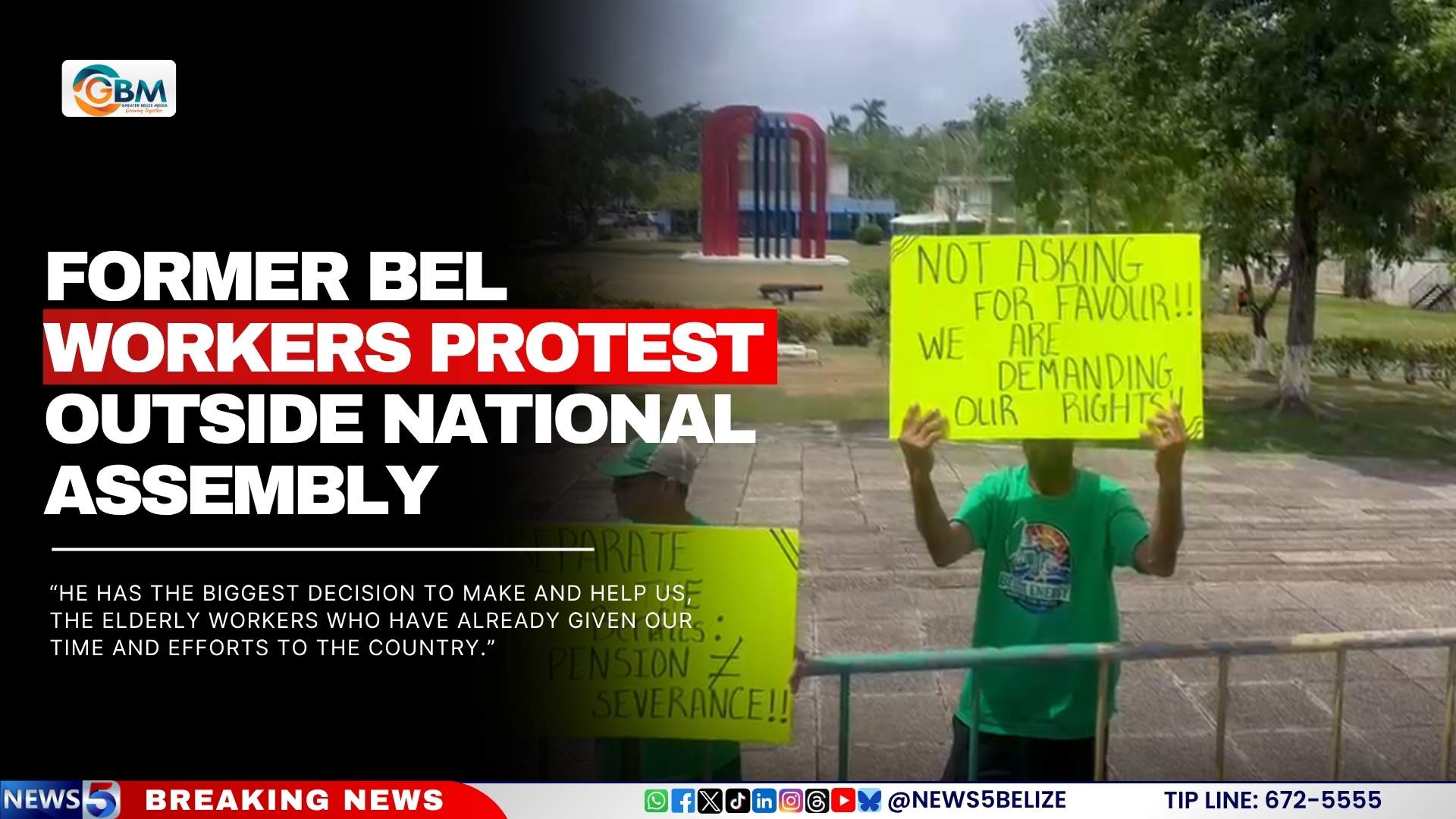
    On June 4, 2026, as Belize’s legislative body gathered for its scheduled sitting at the National Assembly, a small but determined cohort of ex-employees of Belize Electricity Limited (BEL) assembled outside its gates to amplify their months-long fight for unpaid severance compensation.

    Organized under the banner of Belize Energy Workers for Justice, the group centered its demands on urgent government intervention to break the months-long stalemate that has left their severance claims unaddressed. Though their numbers were limited, the protesters made their voices unequivocally clear: they are calling for Prime Minister John Briceño to personally intervene in the dispute, framing him as the only decision-maker with the authority to deliver a just resolution.

    In an interview with local outlet News Five, Dorla Staine, a group representative and former BEL worker, outlined the exhaustive steps the group has already taken to resolve the issue outside of legal channels. “We have tried other means. We have protested before. We had press conferences; we have spoken to the minister,” Staine explained, noting that every prior attempt at negotiation has failed to produce a meaningful outcome.

    Staine added that officials previously committed to elevate the dispute for a full Cabinet review and examination by the Office of the Attorney General, with pledges of support for the workers’ cause. To date, however, no satisfactory resolution has been reached. Compounding the group’s frustration, BEL has signaled it intends to return to court to re-litigate a matter that has already received a formal ruling, a move Staine says the former workers find baffling.

    The choice to protest during a sitting of the House of Representatives was deliberate, Staine emphasized. For the elderly former workers who dedicated decades of their labor to the national utility, the prime minister’s direct attention is the last best hope for ending the impasse before it moves to a drawn-out legal battle. “He has the biggest decision to make and help us, the elderly workers who have already given our time and efforts to the country,” she said.

  • Depeiza: Public transport failures hurting productivity

    Depeiza: Public transport failures hurting productivity

    Barbados’ largest labor umbrella organization, the Congress of Trade Unions and Staff Associations of Barbados (CTUSAB), is amplifying longstanding calls for a full systemic overhaul of the Caribbean island’s broken public transportation network, arguing that decades of unresolved deficiencies have dragged down national productivity, eroded quality of life for daily commuters, and slowed overall national development.

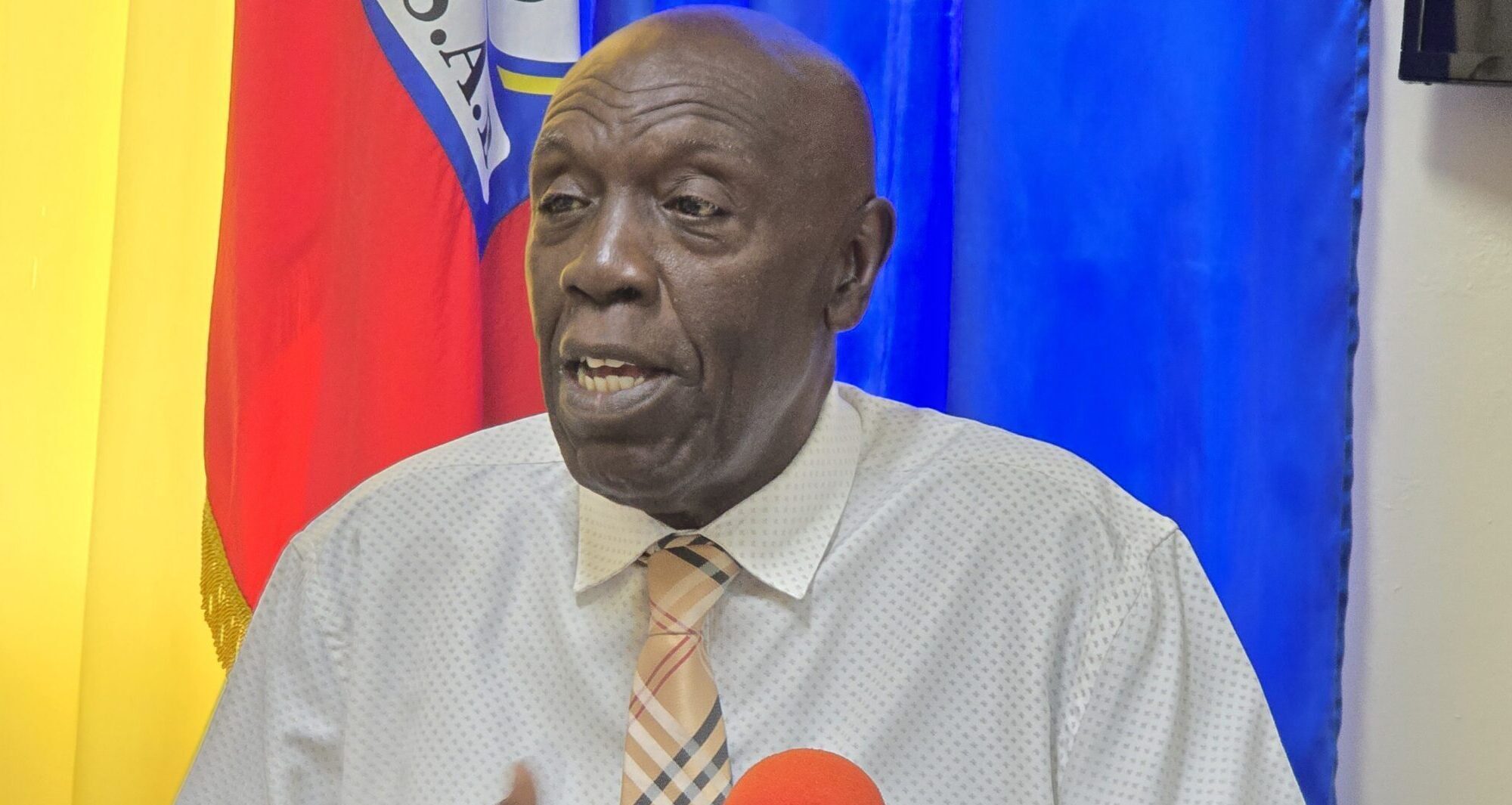
    Speaking at the union’s regular monthly press briefing held at its Garrison headquarters this week, CTUSAB General Secretary Dennis DePeiza laid out the scope of the crisis, emphasizing that unreliable and inconsistent service has become a persistent, disruptive force in the daily lives of working Barbadians and members of the general public alike. DePeiza pushed back firmly against ongoing speculation that full privatization of the state-owned Transport Board would resolve the sector’s deep-seated issues, calling the idea a mistaken solution that would not address the core of the problem.

    “Privatizing the Transport Board is not the fix for the inefficiencies plaguing the public transportation sector,” DePeiza stated. “As an initial step toward building a more reliable, efficient system, we must first confront long-neglected failures in both management and regulation. CTUSAB holds that the government must recognize public transportation as a critical national public good, not a disposable service.”

    DePeiza pointed to the 2019 Transport Augmentation Programme (TAP), a government initiative launched to fill service gaps across the island, noting that the patchwork measure has failed to fully resolve the challenges that commuters face daily. Without a consistent, functional public transit network, he argued, Barbados is seeing measurable declines in national output, largely driven by massive unproductive time lost as workers wait hours for unreliable connections to and from their workplaces.

    He stressed that the Caribbean government must prioritize transit reform as an urgent national priority and take decisive action to resolve problems that have gone unaddressed for generations. “It is fundamentally unfair that Barbadians living outside major urban centers are forced to continually endure the indignity of second-class access to public transportation,” DePeiza said. “It is completely unacceptable that commuters are forced to wait hours for a bus to any destination, or live with the constant uncertainty of not knowing when, or even if, a bus will arrive.”

    DePeiza called for an end to the government’s decades-long piecemeal approach to reform, urging officials to adopt a cohesive, comprehensive national strategy. “Since public transportation is a core national priority, the government must redirect funding to acquire the full fleet of buses the country actually needs. While there is a legitimate role for private sector vehicles within the public transit ecosystem, it would be a fundamental failure if the government and its agencies refused to reassess how these private operators can be properly integrated into a fully reformed system,” he added.

    The union leader also called out widespread unsafe and unprofessional conduct among some public service vehicle (PSV) operators, demanding a strict zero-tolerance policy for dangerous driving practices that put commuters and other road users at risk. He questioned why compliance failures have persisted for decades, noting that Barbados could learn valuable lessons from proven transit management models already in place across the Caribbean Community (CARICOM).

    “These unregulated practices put the lives of commuters and other road users in direct danger. Many operators refuse to complete their permitted routes, consistently violate road traffic rules, and engage in reckless habits like overloading, speeding, and route hogging — none of these can be ignored or tolerated any longer,” DePeiza said. “Barbados stands to gain a great deal from adopting the successful management systems and practices already used by CARICOM member states like Trinidad and Tobago and Saint Lucia.”

    DePeiza also addressed the persistent problem of unlicensed illegal PSV operations, widely known locally as “pirate” taxis and buses, arguing that the growth of this black market is directly fueled by licensed operators’ consistent failure to service their approved routes. “Licensed operators complain about pirate competition, but that competition only exists because they refuse to run the routes they are legally required to serve. When registered operators don’t go where they’re supposed to, unlicensed operators step in to fill the gap. If they want the competition gone, they need to fix their own conduct first,” DePeiza insisted.

    He also criticized the glaring lack of transit service during evenings, weekends, and public holidays, questioning how this gap can persist in an island that promotes itself as a 24-hour international business hub and a top-tier global tourism destination. “It is long past time we built an island-wide reliable transit system that does not only serve the tourist-heavy corridors of Highway 1 and Highway 7, or cater exclusively to the west and south coasts,” DePeiza noted.

    Alongside his criticisms, DePeiza offered praise for one recent government proposal: the planned introduction of a dedicated school bus service. He said the initiative would ease overcrowding and competition for space on the existing public transit network for working commuters, while also reducing schoolchildren’s exposure to the negative social influences commonly reported on private minibuses and ZR vans. “This is a genuinely positive step that reduces pressure on regular commuters. More importantly, it moves children away from the antisocial behavior that has become linked to ZR and minibus culture, so it is a step in exactly the right direction,” he said.


  • World Cup coverage boost

    World Cup coverage boost

    One of the most anticipated global sporting spectacles is just around the corner, and Caribbean football enthusiasts can now breathe easy: regional media firm Rush Sports has locked in exclusive broadcast rights for 13 markets across the region, guaranteeing extensive access to every moment of the upcoming FIFA World Cup.

    In an exclusive conversation with Barbados TODAY, Michael Look Tong, Chief Executive Officer of Rush Sports, outlined the scope of the landmark rights deal. The company’s coverage portfolio spans a wide swath of the Caribbean, including major markets such as Jamaica, Trinidad and Tobago, and Barbados, alongside smaller island nations and territories: St. Vincent and the Grenadines, Bonaire, Anguilla, Saint Kitts and Nevis, Montserrat, Dominica, Belize, Turks and Caicos Islands, the British Virgin Islands, and the Cayman Islands.

    Look Tong emphasized that securing the broadcast rights to the FIFA World Cup marks a major milestone for the independent regional sports broadcaster. As the most-watched sporting event on the planet, bringing the World Cup to audiences across these 13 Caribbean territories fills a key gap for local fans, he noted. This is not the first high-profile sporting event Rush Sports has brought to the region in recent weeks; just days before the announcement, the network aired both the UEFA Champions League Final on Saturday and the Indian Premier League (IPL) cricket final the following day, demonstrating its track record of delivering top-tier global sports content.

    One of the biggest benefits for fans is the network’s ability to broadcast every single one of the tournament’s 104 matches live, including simultaneous fixtures during the early group stage. Unlike many regional broadcasters that are forced to choose between overlapping matches, Rush Sports’ multi-channel infrastructure allows viewers to switch between concurrent games seamlessly, never missing a goal or a upset from any group.

    Beyond traditional television and streaming broadcasts, Rush Sports is expanding access through a popular innovative partnership with local cinemas across the region, a program that will continue throughout the World Cup. The network is currently working with cinema operators in Jamaica, Barbados, and Trinidad to select which matches will screen on big screens, giving fans the option to enjoy the electric atmosphere of a public viewing in a premium cinema setting. Look Tong added that this model was already put to the test during the recent Champions League Final, where the big-screen screenings earned glowing feedback from fans across all three test markets.