作者: admin

  • Baltimore Maintains Strong Lead as Four Boxes Counted in St. Philip North By-Election

    Baltimore Maintains Strong Lead as Four Boxes Counted in St. Philip North By-Election

    In a decisive political contest, Randy Baltimore of the Antigua and Barbuda Labour Party (ABLP) has established an overwhelming advantage in the St. Philip North by-election as electoral officials completed counting four of the seven ballot boxes. Current tallies reveal Baltimore has secured 543 votes, representing a dominant 67.96% of the validated ballots, while his opponent Alex Browne from the United Progressive Party (UPP) trails significantly with 256 votes, accounting for 32.04% of the counted votes.

    The electoral process, initiated following the retirement of political veteran Sir Robin Yearwood after nearly fifty years of parliamentary service, has demonstrated consistent momentum for the ABLP candidate. Baltimore’s lead expanded progressively with each box count: he captured 143 votes against Browne’s 86 in the first box, strengthened his position with 156 to 82 in the second, and extended his margin further with 117 votes against Browne’s 33 in the third box tally.

    Electoral authorities reported methodical and transparent counting procedures throughout the process. Voting earlier in the day proceeded under calm conditions, characterized by officials as consistently steady though occasionally slow in voter turnout. The remaining uncounted ballots from three boxes will determine the final margin of victory, though Baltimore’s substantial lead appears mathematically insurmountable.

    This by-election marks a significant political transition for the St. Philip North constituency, which had been represented by Sir Robin Yearwood for approximately half a century. The outcome solidifies ABLP’s foothold in the region and demonstrates continued voter confidence in the party’s representation.


  • Central Bank launches 2026 Economic and Financial Week

    Central Bank launches 2026 Economic and Financial Week

    SANTO DOMINGO – The Central Bank of the Dominican Republic has launched its flagship financial education program, the 2026 Economic and Financial Week (#sefBCRD), with unprecedented institutional support. Governor Héctor Valdez Albizu formally inaugurated the event, which operates under the bank’s Aula Central program and aligns with the worldwide Global Money Week campaign.

    The initiative represents a comprehensive effort to instill sound financial principles among youth through an array of interactive workshops, expert-led talks, and engaging activities designed to foster responsible monetary habits from an early age. Governor Valdez Albizu emphasized that the program serves dual purposes: advancing financial inclusion and supporting key United Nations Sustainable Development Goals related to quality education and multi-stakeholder partnerships.

    This year’s edition marks a significant expansion in both geographic reach and institutional participation. For the first time, the event will utilize cultural centers including the Centro Cultural Eduardo León Jimenes and the Centro Cultural Perelló as venues, dramatically increasing accessibility for students from diverse regions. The program has secured record-breaking involvement from 58 institutions spanning the financial sector, government agencies, academic circles, and civil society organizations.

    A highlight of this year’s inauguration was the unveiling of the new children’s publication ‘Rojilandia,’ specifically crafted to impart essential values like collaborative teamwork and prudent resource management. Organized under the theme ‘Smart Money Talks,’ the 2026 program features educational booths, guided tours, specialized workshops, and professional conferences. The popular ‘Economists of the Future’ competition returns after previously engaging over 1,300 students nationwide, reflecting the central bank’s sustained commitment to enhancing economic and financial literacy throughout the Dominican Republic.

  • WWF Celebrates Builders Who Protect Mangroves

    WWF Celebrates Builders Who Protect Mangroves

    In an innovative approach to coastal preservation, Belizean developers and community leaders are demonstrating that construction and conservation can coexist harmoniously. The World Wildlife Fund (WWF) recently honored these pioneers at their 2025 Mangrove Friendly Development Challenge ceremony, recognizing property owners, resorts, and community organizations that have embraced sustainable building practices.

    Nadia Bood, WWF’s Senior Program Officer, emphasized the critical importance of this paradigm shift, noting that approximately 70% of Belize’s mangrove ecosystems exist on privately held land. This geographical reality places the future of these vital natural defenses squarely in the hands of individual landowners and developers.

    Contrary to conventional development approaches that prioritize clearance and concrete construction, the award-winning projects showcase how integrating mangroves into architectural landscapes creates both aesthetic appeal and functional environmental benefits. Bood highlighted the superior resilience of natural mangrove barriers compared to artificial seawalls, which frequently succumb to cracking or catastrophic failure during severe weather events.

    “These projects prove that landowners don’t face a binary choice between development and conservation,” Bood stated. “By working with nature rather than against it, they’re creating beautiful, functional spaces that simultaneously protect Belize’s coastline and biodiversity.”

    The celebrated initiatives range from luxury eco-resorts that incorporate mangrove waterways into their design to community centers built on stilts that preserve the underlying ecosystem. This growing movement represents a significant advancement in sustainable coastal management, offering a replicable model for other tropical nations facing similar environmental challenges.

  • Belize, UNHCR, Japan Team Up to Modernize Asylum Services

    Belize, UNHCR, Japan Team Up to Modernize Asylum Services

    In a significant move to enhance refugee protection capabilities, Belize has entered a multilateral partnership with the United Nations High Commissioner for Refugees (UNHCR) and the Japanese government to digitally transform its national asylum services. Announced on March 16, 2026, this collaborative initiative injects over $600,000 in funding from Japan’s foreign aid program to revolutionize administrative procedures for asylum seekers.

    The comprehensive technological upgrade will implement advanced digital platforms to manage the entire asylum case lifecycle—from initial registration through final processing. This modernization effort addresses critical needs for improved data security, accelerated case resolution timelines, and enhanced capacity to respond to increasing global displacement patterns. The digital transformation represents Belize’s commitment to international protection standards while optimizing resource allocation during periods of heightened migration pressure.

    This tripartite cooperation demonstrates how middle-income nations can leverage international partnerships to build more resilient humanitarian infrastructure. The project aligns with UNHCR’s global strategy to promote digital identity solutions and efficient case management systems in host countries worldwide. Japanese Ambassador Hiroshi Watanabe emphasized that the investment reflects Japan’s ongoing commitment to supporting sustainable development and human security initiatives across Latin America and the Caribbean region.

    The technological implementation will include biometric data collection, cloud-based case tracking, and secure digital archiving systems that maintain strict confidentiality protocols while improving interoperability with international refugee databases. Belizean immigration officials will receive specialized training to operate the new systems effectively, ensuring both technical proficiency and adherence to international refugee law standards.

  • Long Marathon, Hoops and Long Balls This Weekend In Sports

    Long Marathon, Hoops and Long Balls This Weekend In Sports

    Belize witnessed an action-packed weekend of athletic excellence across multiple disciplines, showcasing both international and local talent. The sporting festivities kicked off with the annual Run for the Reef in Belize City, a cornerstone event of Reef Week celebrations aimed at supporting conservation efforts for the Belize Barrier Reef.

    The eight-mile competitive road race saw Canadian runner Oliver Sinclair clinch victory in a dramatic photo finish, crossing the line simultaneously with Belize’s Christopher Broaster from Belmopan at 52 minutes and 53 seconds. San Ignacio’s Omar Pulido secured third place just 50 seconds behind the leaders. In the women’s division, Sarteneja’s Chrystal Thomas dominated with a finishing time of 1 hour and 3 minutes, followed by BDF’s Alberta Coh (1:09:00) and San Ignacio’s Jane Champion (1:17:00). The event also featured a two-mile recreational run attracting families and casual participants, with proceeds dedicated to reef preservation initiatives.

    Meanwhile, the National Elite Basketball League (NEBL) delivered thrilling matchups in week four action. The Orange Walk Running Rebels narrowly defeated the Belmopan Trojans 103-100 in Friday’s high-scoring affair, powered by Kenneth Perkins Junior’s 28-point performance. Saturday’s games saw the Cayo Western Ballaz overcome the EZ Investments Griga Dream Ballers 86-74 behind Zoren Smith’s 24 points, while the San Pedro Tiger Sharks topped the Corozal Spartans 87-77 with Devin Moody contributing 25 points.

    Softball action intensified at Sandhill field with nine games played over the weekend. The most decisive victory came as BEL Power Sockets mercy-ruled the Maritime Enforcers 10-1 after five innings, highlighted by a leadoff home run from their shortstop. Other results included HRCU/BCC Eagles defeating Police/Tax Enforcers 14-9, Bowen and Bowen Brewers edging Belize Bank Bulldogs 8-7 in the weekend’s closest contest, and Biscayne Tropical Breeze prevailing over Tiga Town Red Necks 15-8 in coed league action.

  • Environment Ministry acts to reclaim Haina River from illegal exploitation

    Environment Ministry acts to reclaim Haina River from illegal exploitation

    The Dominican Republic’s Ministry of Environment and Natural Resources has initiated a comprehensive ecological restoration project targeting the critically degraded Haina River. This intervention, operating under the authority of Resolution 002-2026, officially designates the area between La Lechería and the Palavé batey as being in a state of environmental emergency. The declaration comes after decades of severe ecological damage that has disrupted the river’s natural balance and elevated risks for adjacent populations.

    A coalition of national agencies, including the National Environmental Protection Service (SENPA), the Ministry of Defense, the Dominican Army, and the Air Force, is providing critical operational support. The Air Force is conducting aerial surveillance missions to monitor the area, while military engineering units are contributing logistical expertise. Government analysis identifies prolonged illegal aggregate mining, widespread deforestation, and systematic neglect of the watershed as the primary drivers behind the river’s altered hydrology and increased flooding vulnerability.

    Environment Minister Paíno Henríquez emphasized a stringent zero-tolerance stance against environmental violations, underscoring the critical need to rehabilitate the vital waterway. The technical scope of the project encompasses extensive sediment removal, riverbed cleansing, bank stabilization, and hydraulic capacity enhancement to restore natural water flow and mitigate ecological harm.

    Concurrently, authorities unveiled a targeted security strategy establishing surveillance at five identified hotspots of illegal extraction activity. This plan involves installing fixed monitoring posts, deploying mobile patrol units, and implementing rapid-response teams to prevent further environmental crimes. Initial restoration efforts will focus on the La Lechería and Palavé sectors, representing the first phase of a larger, multi-agency initiative launched previously to achieve the complete rehabilitation of the Haina River basin and reinforce national environmental safeguards.

  • Magín Díaz: government acts to cushion Iran crisis impact

    Magín Díaz: government acts to cushion Iran crisis impact

    SANTO DOMINGO – Finance and Economy Minister Magín Díaz has unveiled a comprehensive governmental strategy designed to insulate the Dominican Republic’s economy from escalating global instability, primarily fueled by the Iran crisis and subsequent surges in international oil prices. The administration’s core objective centers on preserving macroeconomic stability as the fundamental defense against external economic pressures.

    Minister Díaz confirmed that authorities are implementing targeted measures to mitigate the domestic impact of increasing fuel costs and to ensure an uninterrupted supply of essential commodities. This proactive approach involves continuous inter-institutional coordination with key bodies, including the Ministry of Agriculture and the Central Bank, to uphold both economic and social equilibrium.

    A critical element of the nation’s defensive financial planning was the early securing of a substantial portion of its 2026 national budget financing. This forward-thinking maneuver has created vital fiscal flexibility, enabling the potential reallocation of resources to support vulnerable economic sectors should the need arise. Díaz further pointed to the country’s robust credit rating and ample liquidity within its financial system as pivotal assets. These strengths provide the government with access to international funding under favorable conditions, forming a crucial buffer.

    While acknowledging that higher oil prices inevitably pressure electricity generation and other areas, the Minister expressed confidence that the nation’s increasingly diversified energy matrix would significantly dampen the shock compared to previous economic crises. He contextualized the current challenge as the latest in a series of consecutive global shocks, following the COVID-19 pandemic, the Russia-Ukraine conflict, persistent trade tensions, and an environment of high worldwide interest rates.

    Addressing fiscal policy, Díaz recognized the longstanding constraint of a structural deficit, which hovers near 3% of GDP and has historically curtailed public investment. Emphasizing a forward path, he stressed the imperative to ramp up infrastructure expenditure to catalyze economic growth and foster private sector development. Concurrently, he advocated for enhancing efforts to combat tax evasion and amplify government revenue streams to support these ambitions.

  • Hilaire admits agencies failed to inform public, condemns fence cutting at Reduit Beach

    Hilaire admits agencies failed to inform public, condemns fence cutting at Reduit Beach

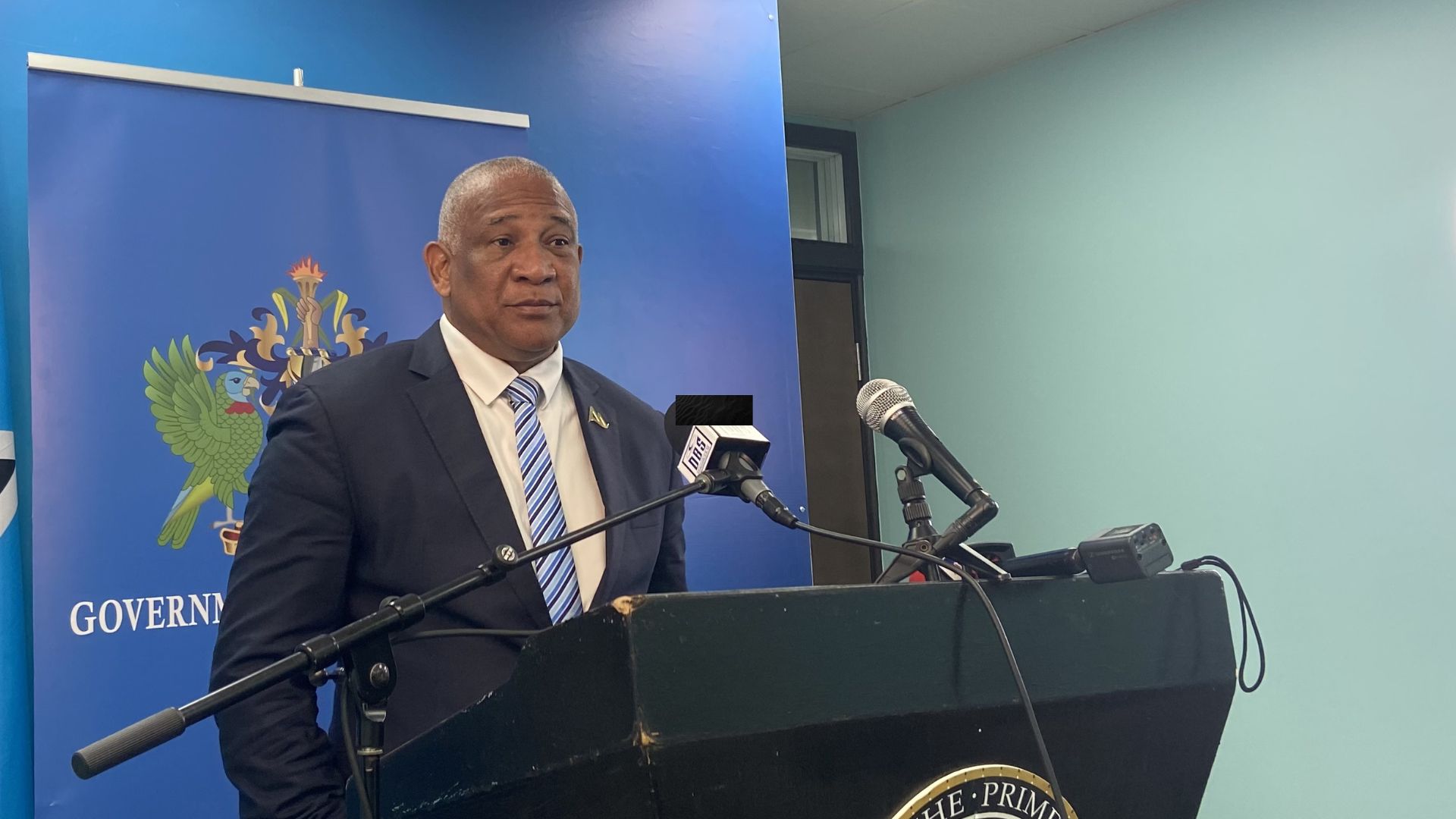
    Saint Lucia’s Tourism Minister Ernest Hilaire has issued a formal public apology regarding the controversial restricted access to Reduit Beach during recent development works. The minister conceded that government agencies, specifically the National Conservation Authority and Invest Saint Lucia, neglected their fundamental duty to adequately notify citizens about the temporary beach closure.

    Addressing journalists at Monday’s pre-cabinet briefing, Hilaire stated unequivocally that ‘our agencies failed on this occasion to perform some of their basic functions.’ The beach park construction, now completed, represents a component of a broader agreement between the government and A’ila Resort developers, who are concurrently building a luxury resort on adjacent Mount Pimard property.

    With beach enhancement operations currently in progress, the minister emphasized that these improvements will specifically accommodate local vendors, including the historic Marie’s Fish Shack, a longstanding beachfront establishment. Hilaire explained that public safety necessitated the temporary restrictions due to heavy machinery, construction materials, and ongoing works that posed potential hazards to beachgoers.

    The controversy gained national attention when Marcellus Stiede, an independent candidate in upcoming general elections, posted viral video footage expressing outrage over the beach access restrictions. In a subsequent video, Stiede documented himself removing sections of the barrier with wire cutters, declaring the beach reopened to public passage while acknowledging construction could continue.

    Minister Hilaire condemned Stiede’s actions as ‘unacceptable’ despite apologizing for the governmental communication failure, revealing he had personally contacted Stiede to explain the situation prior to the fence removal incident. While uncertain about potential legal consequences, Hilaire acknowledged police may pursue the matter further.

    Gros Islet Parliamentary Representative Kenson Casimir contributed to the discourse, recognizing the community’s diverse perspectives on rapid development while encouraging lawful expression of opinions. Casimir characterized the substantial development occurring across Saint Lucia’s shores and infrastructure as transformative, interpreting public dissent as emerging from genuine concern rather than malicious intent.

  • Baasaron lanceert ‘SRD Check’ om prijsopdrijving tegen te gaan

    Baasaron lanceert ‘SRD Check’ om prijsopdrijving tegen te gaan

    The Ministry of Economic Affairs, Entrepreneurship, and Technological Innovation has unveiled a groundbreaking digital solution to empower consumers and combat price gouging in retail markets. The innovative application, dubbed ‘SRD Check,’ represents a significant stride toward market transparency and consumer protection in Suriname.

    During an official launch ceremony held at G-Sale Supermarket on Johannes Mungrastraat, Minister Andrew Baasaron demonstrated the tool’s functionality by scanning a QR code with his mobile device. This symbolic activation marked the beginning of a new era in consumer-retailer relations.

    The SRD Check application enables shoppers to instantly verify whether product prices align with established market guidelines. By simply scanning the QR codes displayed in participating stores, consumers gain immediate access to reference pricing data, allowing them to identify potential discrepancies and make informed purchasing decisions.

    Beyond consumer benefits, the digital initiative serves as a protective measure for compliant businesses. Retailers adhering to pricing regulations can leverage the system to build customer trust and demonstrate their commitment to fair practices. Simultaneously, the tool creates an additional layer of accountability, making potential market violations more detectable.

    The ministry has initiated a widespread distribution of informational flyers containing the SRD Check QR codes to retail establishments nationwide. This infrastructure will enable seamless consumer access to the pricing verification system directly within store environments.

    This technological advancement aligns with the government’s broader policy objectives of enhancing consumer safeguards and fostering a more transparent, equitable business environment. The digital tool represents a convergence of technological innovation and economic policy, addressing both immediate consumer concerns and long-term market health.

  • Govt to subsidise electric bills, cut pump prices as global oil spikes

    Govt to subsidise electric bills, cut pump prices as global oil spikes

    In a decisive response to escalating global oil prices exacerbated by geopolitical tensions involving the United States, Israel, and Iran, the Barbadian government has unveiled a comprehensive energy subsidy package. Finance Minister Ryan Straughn announced during the Budget presentation that the state will absorb 50% of the impending electricity fuel charge increases for the next quarter.

    Without government intervention, households would have faced an average monthly electricity bill increase of approximately $32 starting in April. The state’s absorption of $16 from this hike aims to mitigate the financial burden on citizens. This direct subsidy, effective April 1, is projected to cost the treasury $7.9 million over three months.

    The government has executed a sophisticated financial strategy through the Barbados National Energy Company Limited (BNECL), securing heavy fuel oil at a fixed rate of US$92 per barrel via futures market hedging. With benchmark Brent crude currently trading near US$106 per barrel, this mechanism is already generating savings of approximately US$4 per barrel on imports. The hedge covers 240,000 barrels over three months, delivering estimated savings of about US$1 million compared to current market prices.

    Minister Straughn emphasized the protective nature of these measures: “This hedge was executed not as speculative gambling but as essential insurance against fuel price volatility during ongoing international conflicts.”

    Complementing electricity subsidies, the government announced significant transportation fuel relief measures:
    – Value Added Tax (VAT) caps maintained at 47 cents per litre for gasoline and 37 cents for diesel until March 2027
    – Excise tax reductions from 99.39 cents to 89.39 cents per litre for gasoline
    – Diesel excise cuts from 44.03 cents to 34.03 cents per litre
    – BNECL recovery rate reduction from nine cents to four cents per litre for losses incurred during the Russia-Ukraine conflict

    These combined adjustments will reduce pump prices by approximately 15 cents per litre beginning April 1. Government projections indicate gasoline will remain below $4 per litre unless global prices exceed US$110 per barrel.

    Looking toward long-term solutions, Minister Straughn revealed plans to collaborate with Light & Power to introduce off-peak electricity tariffs for households, mirroring successful programs already implemented by large manufacturers. This demand-side management approach aims to balance grid load, reduce reliance on peak-period power generation, and ultimately lower consumer energy costs.

    “These interventions provide temporary protection during this crisis period,” Straughn concluded. “Their ultimate effectiveness depends on how each citizen adapts their energy consumption patterns in response to these challenging market conditions.”