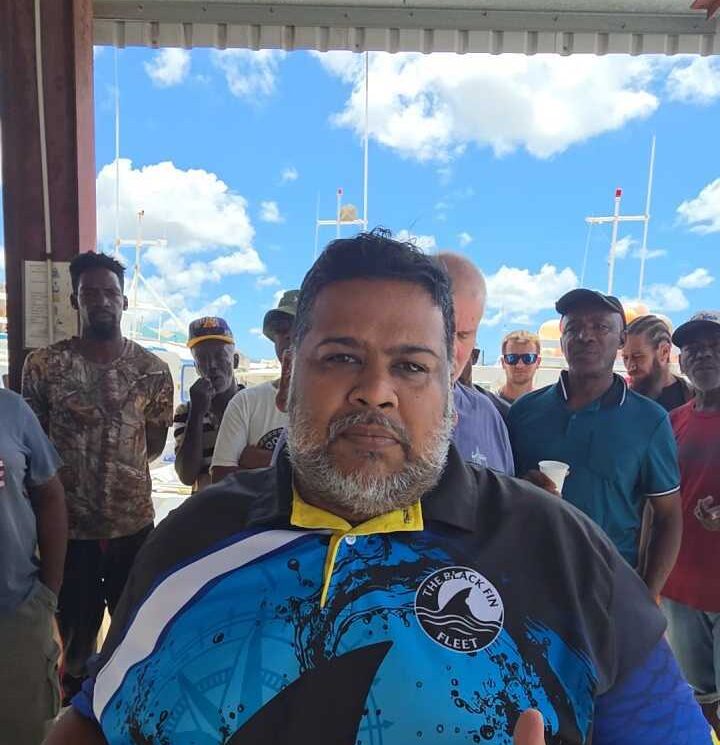
For six weeks, fishing communities based at Barbados’ Bridgetown Fisheries Complex have been trapped in a cascading operational crisis that has idled most of their fleet, pushed thousands out of work and pushed the entire local fishing industry to the brink of collapse. Three overlapping crises — a total outage of the complex’s two ice-making units, sky-high diesel prices, and unfair competition from misdirected imported fish — have combined to grind day-to-day operations to a halt, prompting industry leaders to demand immediate government intervention to save the sector.
作者: admin
-

Skipper praises Falcons after maiden CPL title
The 2024 Republic Bank Caribbean Premier League (CPL) T20 crowned its first-time champion Sunday at Bridgetown’s iconic Kensington Oval, where Antigua and Barbuda Falcons capped a dominant campaign by defeating Jamaica Kingsmen by eight wickets to lift the franchise’s maiden title. In front of a packed stadium that drew thousands of cricket fans from across the Caribbean long before the first ball was bowled, the Falcons chased down a 171-run target with three overs to spare, finishing on 173 for two to seal a historic win.
After winning the toss, Falcons captain Moeen Ali opted to send Jamaica Kingsmen into bat first, a decision that paid off early as the Falcons’ bowling attack put consistent pressure on the Kingsmen’s batting line-up. While most of the Kingsmen batters struggled to find rhythm against disciplined pace and spin, opener Maaz Sadaqat delivered a career-defining innings, anchoring his side’s total with a blistering 114 not out off just 58 deliveries, studded with boundary after boundary. Sadaqat’s knock allowed the Kingsmen to post a competitive 170 for nine from their full 20 overs, with only Saim Ayub managing to reach double figures alongside the centurion, finishing on 29 off 22 balls.
The Falcons’ bowling unit was led by Player-of-the-Match Sufyan Moqim, who turned in a devastating performance to finish with sensational figures of four wickets for just 14 runs. Alzarri Joseph supported Moqim’s effort with two wickets for 27 runs, keeping the Falcons firmly in control of the match heading into the second innings.
In response, the Falcons’ top order got off to a solid start and never surrendered the momentum, knocking off the required run rate comfortably across the chase. Wicketkeeper-batter Amir Jangoo anchored the Falcons’ innings with an unbeaten 57 from 34 balls, hitting four fours and one six, while Hasan Nawaz provided steady support with an unbeaten 47 from 35 balls to help the side cross the finish line in the 17th over.
Following the win, Ali praised his squad’s collective spirit and resilience throughout the tournament, crediting their tight bond off the field for their outstanding results on it. “It’s been a tough journey, but a great journey,” Ali told reporters post-match. “The time’s gone by quickly for us because we enjoyed each other’s company and you can see on the field the way we played. I thought tonight was an outstanding performance again, and I am really, really pleased with the way we performed throughout the competition.”
Despite falling short of the title in their own CPL finals run, Jamaica Kingsmen captain Rovman Powell expressed immense pride in his side’s progression through the tournament, noting that the Kingsmen had turned their slow start into a deep run by growing into one of the event’s most balanced and cohesive squads. “It’s a good feeling, to be honest. I think it was a very hard-fought campaign for us so I’m so proud of the boys,” Powell said. He added that the batting unit failed to capitalize on the good wicket and strong start provided by Sadaqat, and that the bowling group did not execute as planned in the power play during the Falcons’ chase: “It’s disappointing that as a batting group we didn’t really capitalise on a good start and as a bowling group, we didn’t control the power play as well as we wanted to.”
Off the field, the 2024 CPL final drew record crowd interest that extended far beyond the two competing franchises. Thousands of fans flooded Kensington Oval hours before the match began, creating heavy vehicular traffic on the venue’s outskirts and overwhelming nearby parking areas. While fans wearing the jerseys of the Falcons and Kingsmen turned out in force, they were outnumbered by large contingents of traveling supporters from the Guyana Amazon Warriors, who packed the stands despite their side’s elimination before the final. A sizable group of fans from Trinidad and Tobago also attended to show their support for the Trinibago Knight Riders, who were knocked out of the competition earlier in the knockout stage.
-
Teen awaits sentencing for robberies, theft
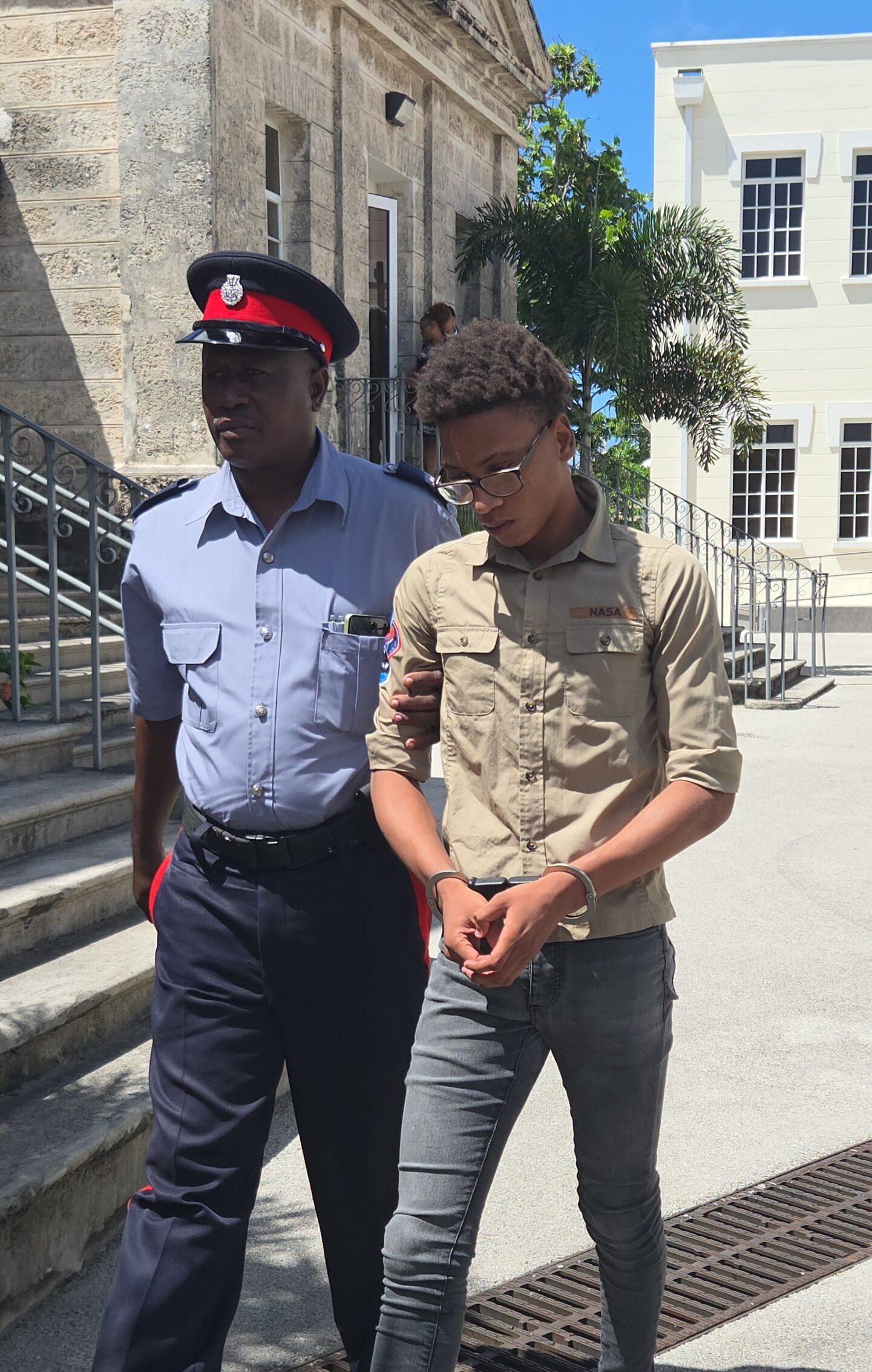
An 18-year-old Barbadian man is being held behind bars at Dodds Prison ahead of his sentencing, after a sitting magistrate flagged alarming repeated criminal behavior tied to fraudulent transactions arranged via Facebook Marketplace.
Robereico Ricardo Brathwaite, a resident of Block 4B, Rock Avenue in Wildey, appeared before the No. 2 District ‘A’ Magistrates’ Court this week, where he entered guilty pleas to three separate counts of robbery and theft committed between mid-August and mid-September. Acting Magistrate Shakieda Sealy made clear that the consistent pattern of predatory crime targeting people responding to online classified ads left her no choice but to order pre-sentencing detention.
“You have started off your adult life in the wrong way,” Sealy told Brathwaite as he stood in the defendant’s dock.
Prosecutor Sergeant Victoria Leacock outlined the details of all three incidents to the court, explaining that each followed the same calculated scheme: Brathwaite and an unidentified accomplice advertised fake jewelry for sale on Bajan Marketplace, the local Facebook buy-sell group, and arranged in-person meetings with interested buyers to carry out their robberies.
The first attack took place on August 17, when complainant Jaheim Harewood traveled to a Regent Hill, Pinelands location to meet the sellers and purchased a chain for $900. When Harewood discovered the jewelry was counterfeit and returned to confront the pair, Brathwaite pulled a knife while his accomplice brandished a firearm. The pair stole Harewood’s original chain, cash, wallet and all its contents, bringing the total value of stolen property to $1,532.
On September 5, the pair targeted buyer Ramon Wood at a meeting spot near a local public secondary school. When Wood pulled out $1,200 in cash to pay for a listed chain, Brathwaite snatched the money and fled. When Wood grabbed Brathwaite’s accomplice to block their escape, Brathwaite returned and threw a fake chain onto Wood’s car to force Wood to release his accomplice. Both suspects got away, and none of Wood’s stolen cash was ever recovered.
Six days later, on September 11, the pair carried out their most costly robbery against Dujuan Clarke at a meeting arranged on the grounds of St Barnabas Church. Clarke arrived with $2,000, the agreed price for the advertised jewelry, and was wearing multiple personal pieces of jewelry including several rings, a bangle, a chain and a pendant. When Clarke questioned the authenticity of the jewelry Brathwaite and his accomplice offered, the pair grew aggressive, overpowered Clarke and forcibly stripped him of his wallet and all his personal jewelry. The stolen items had a combined value of $5,550. Two of Clarke’s rings were recovered after Brathwaite’s arrest, but the rest remain missing.
Brathwaite’s legal representation urged the court to consider a non-custodial sentence, noting that Brathwaite has no prior criminal record, has expressed remorse for his actions, fully cooperated with law enforcement, and entered guilty pleas at the earliest possible stage of the proceedings. Addressing Magistrate Sealy directly, Brathwaite claimed he had been influenced by older associates to participate in the crimes. “I was led astray. I learn my lesson. I went following the multitude, and I am sorry, Ma’am,” he told the court.
Magistrate Sealy rejected the call for immediate release pending sentencing, emphasizing that the three coordinated attacks were not an isolated mistake but a deliberate pattern of criminal violence. “These are very serious matters. If it was just a one-off, maybe I could understand but this is definitely a pattern,” she said. “I will take time to think on this, so you will be kept tonight.”
-
NHC Monitoring New Tropical Wave Expected to Emerge Off Africa
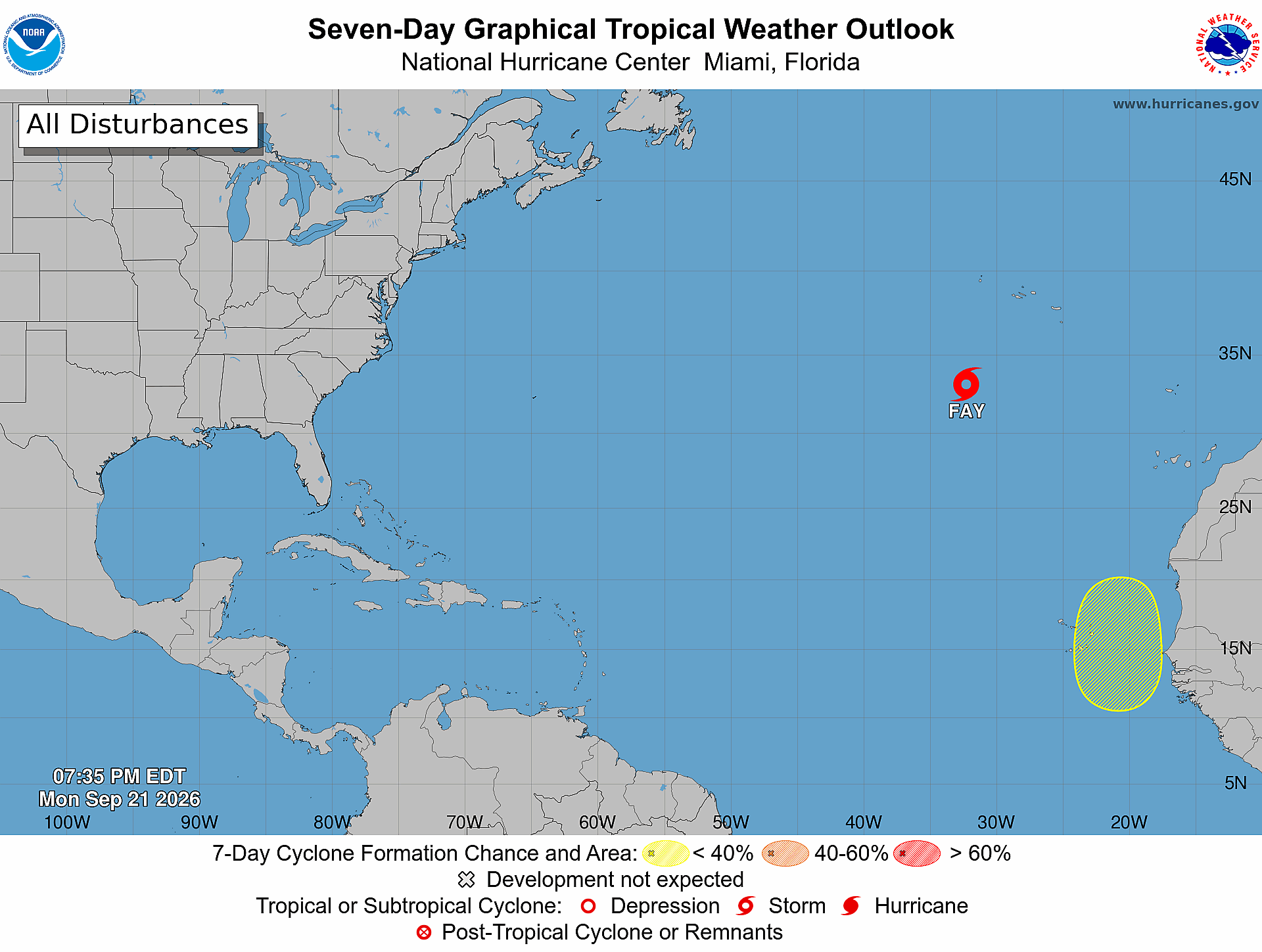
The U.S. National Hurricane Center (NHC) is closely tracking a newly emerged tropical disturbance that is projected to exit the western coast of Africa this Wednesday, bringing the potential for gradual cyclonic development across the eastern Atlantic later this week. In its official Monday update to the routine Tropical Weather Outlook, forecasters noted that any organization of the low-pressure system will likely unfold at a slow pace as it tracks westward past the Cabo Verde Islands over the coming days.
As of the latest forecast, the NHC assigns a near-zero probability of tropical cyclone formation within the next 48 hours, with a 20% chance of gradual development over the full seven-day forecasting window. This marks a downward revision from earlier projections, which had pegged the seven-day formation chance at 30% in a previously released outlook captured via screenshot.
For the moment, the disturbance sits hundreds of miles east of the Caribbean basin, and forecasters have confirmed that it poses no immediate danger to Antigua and Barbuda, or any other territories across the Leeward Islands chain. In a separate update on active Atlantic systems, Tropical Storm Fay continues to hold its structure as it churns across the central Atlantic Ocean, positioned several hundred miles to the southwest of Portugal’s Azores archipelago with no immediate threats to populated coastal areas.
-
US-deported Guyanese man charged with murder of gay man
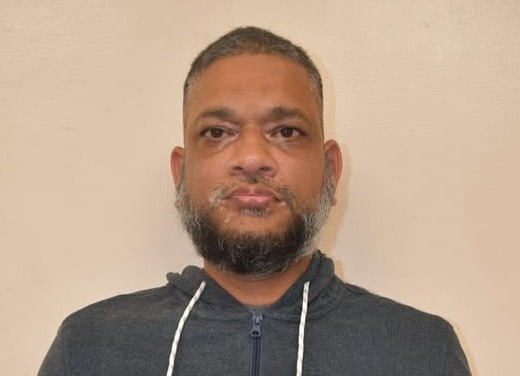
On Monday, September 21, 2026, a long-awaited step forward in a decade-old cold murder case unfolded in Guyana, as Kanand Ojha — a Guyanese national deported from the United States just days prior — appeared in court to face charges for the 2015 killing of Noel “Nephi” Luther, a gay sex worker.
The fatal incident dates back to July 22, 2015, when Luther was shot once in the chest during a public confrontation on Carmichael and Quamina Streets in Georgetown. Authorities allege Ojha carried out the shooting alongside accomplice Ron ‘Andel’ Forde. Forde accepted a plea deal for the lesser charge of manslaughter in June 2017 and was subsequently sentenced to 20 years behind bars, but Ojha fled the country before law enforcement could apprehend him.
A formal wanted bulletin for Ojha was first issued by Guyanese authorities in July 2019, marking the start of a years-long cross-border manhunt. Thanks to sustained collaborative efforts between Guyana’s law enforcement and legal bodies — including the Guyana Police Force, the Ministry of Home Affairs, and the Attorney General’s Chambers — and U.S. authorities operating under the international Mutual Assistance in Criminal Matters framework, Ojha was finally taken into custody in Queens, New York on September 8, 2025. He was deported back to Guyana last weekend, with local police arresting him immediately upon his landing at Eugene F. Correia “Ogle” International Airport on September 18, 2025.
During Monday’s arraignment hearing at the Georgetown Magistrates’ Court, Chief Magistrate Judy Latchman read the murder charge aloud to the 40-something-year-old defendant, who was not required to enter a formal plea at this stage of proceedings. Ojha, who last resided at Lot 2 First Street, Meadow Bank, East Bank Demerara, was remanded into prison custody ahead of his next court appearance, scheduled for October 12, 2026.
The successful apprehension and deportation of Ojha underscores the growing strength of joint law enforcement ties between Guyana and the United States. In recent years, the two nations have deepened their cooperation on transnational criminal cases, leveraging mutual legal assistance frameworks to track down fugitives who flee across borders to avoid prosecution. This case serves as a clear example of how cross-jurisdictional collaboration enables law enforcement to ensure that even suspects who evade capture for years can be brought to face justice in the country where their crimes were committed.
-

Reon Cuffy’s first international goal gives Dominica 1- 0 win over Anguilla
In a tightly contested international friendly played at Dominica’s home ground Windsor Park Stadium on Monday, a first career international strike from young forward Reon Cuffy handed the Dominica senior men’s national football team a hard-fought 1-0 victory over a resilient Anguilla side.
The first 45 minutes of the fixture produced no goals, as Anguilla’s well-drilled defensive structure successfully shut down Dominica’s attacking threats. Arriving in Dominica with a newly appointed head coach and eight players based at overseas clubs, Anguilla entered the match as a far more challenging opponent than many casual observers expected, a reality that Dominica head coach Kurt Herd had flagged to his squad ahead of kickoff.
Speaking after the final whistle, Herd explained that his side struggled to settle into their preferred possession-based game plan in the opening half, as the visitors’ compact organization made breaking through their defensive lines extremely difficult. “The boys weren’t accustomed to that level of compactness, and we simply couldn’t execute the style of play we had planned,” Herd noted.
To address this issue, the Dominica coaching staff implemented key tactical adjustments at halftime, specifically shifting the team away from the overreliance on long balls that had limited their attacking momentum in the first half. The changes quickly paid off: just four minutes into the second half, Cuffy found the back of the net to break the deadlock and put the home side ahead.
In the wake of Cuffy’s breakthrough, Dominica dominated possession and created a string of clear scoring opportunities to extend their lead, but wasteful finishing meant the side could not add to their tally. Herd acknowledged that the volume of missed chances created a far tighter finish than the scoreline could have reflected, noting that with better finishing, the result could have been a lopsided scoreline of 7 or 8-1 in Dominica’s favor.
The missed opportunities have also highlighted a persistent problem that the team will need to address ahead of their upcoming Concacaf Nations League campaign. Herd admitted that finishing has been a longstanding area of concern, dating back to his previous stint as interim head coach, when the side failed to score across multiple fixtures. “It’s clear for everybody to see after that that finishing is still a concern and we have to do something about that,” Herd said. “That’s my job as a coach — to either bring in the players that can do that for us or work with the players we’ve got to get them confident in front of goal.”
Despite the frustration over wasted chances, Herd highlighted several positive takeaways from the fixture, starting with Cuffy’s milestone first international goal. “On that, I was absolutely delighted to see Reon Cuffy get his first goal for the national team,” he said. “The man deserves nothing more, and I can only praise and credit him for his work to get this moment.”
The match also marked the senior international debut for goalkeeper Dwight Eloi, who delivered a solid performance to secure a clean sheet against Anguilla. While Herd noted that Eloi showed signs of early-match jitters, including a few occasions where he failed to kill off attacking pressure when given the chance, the head coach praised the debutant for his solid 90-minute performance. The clean sheet was even more impressive given that Dominica was forced to field an entirely new backline following the absence of key defender Titus Sandy, Herd added.
Overall, Herd expressed satisfaction with the result, but emphasized that the friendly has given the squad clear areas to improve as they prepare for the competitive Concacaf Nations League fixtures on the horizon. “Not too happy with one or two of the chances that we let go, but it gives us something to work on,” he said.
-
National naming competition for the new proposed Grenada Public Hospitals Authority
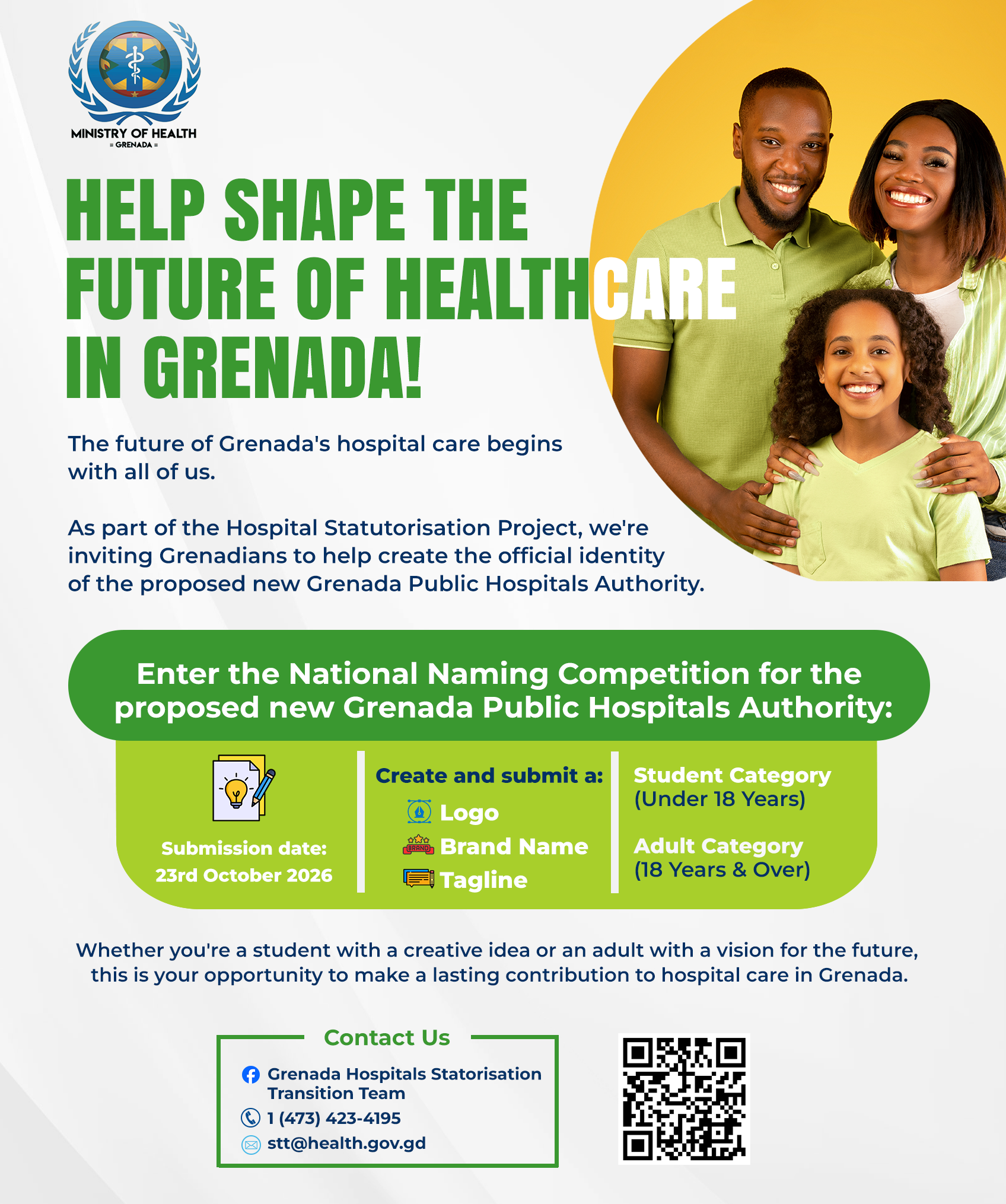
The Caribbean nation of Grenada is opening the door for public participation in a key healthcare transformation project, launching a National Naming Competition to crowdsource creative ideas for the official identity of its upcoming Grenada Public Hospitals Authority. The initiative is being led by the government’s Hospital Statutorisation Transition Team, and forms a core part of the broader hospital statutorisation effort – a landmark reform aimed at overhauling the country’s public healthcare services.\n\nAt its core, the statutorisation reform will create an independent statutory body with its own dedicated governing framework. This structural shift is designed to grant greater operational and resource management flexibility to public hospitals, with the end goal of cultivating a more efficient, transparent, and patient-centered care system across the country. Rather than imposing a pre-determined identity on this new institution, the transition team has opted to invite all Grenadians to help shape its public face, reflecting the reform’s focus on public ownership and accountability.\n\nThe competition calls on participants to submit original proposals across three core components of institutional identity: an official name, a logo, and a tagline. Entries are split into two divisions based on age: a Student Category for those under 18, and an Adult Category for participants 18 and older. The transition team encourages submissions that reflect Grenada’s unique national identity and collective pride, while also embodying key values including good governance, public trust, innovation, service excellence, inclusive care, and a long-term commitment to high-quality healthcare for future generations.\n\nCash prizes will be awarded to top entries in both categories, with first-place winners receiving EC$1,500 and second-place winners taking home EC$1,000. This competition represents more than just a branding exercise; it offers Grenadians a rare opportunity to leave a lasting mark on the future of the nation’s public hospital care. However, organizers note that winning submissions do not guarantee final adoption – the transition team retains the right to refine, adapt, or modify winning entries, and a winning proposal may not ultimately become the official identity of the new authority.\n\nAll entries must be submitted via email to hsttcompetition@gmail.com by the deadline of October 23, 2026. For up-to-date competition announcements, additional details about the hospital statutorisation initiative, and answers to frequently asked questions, the public is invited to follow the Hospital Statutorisation Transition Team’s official Facebook page. The campaign closes with a unifying call to action: “Your Voice. Your Hospitals. Our Future.”\n\nFor additional inquiries, interested participants can contact the transition team directly by phone at +1 (473) 423-4195, via email at the address listed above, or through messages sent to their official Facebook page. This public engagement exercise underscores the government’s commitment to inclusive, transparent healthcare reform, putting the design of the new system’s public identity directly into the hands of the people it will serve.
-

DDA targets travel advisors with new online Dominica training
As part of its ongoing efforts to boost international tourism growth and expand industry partnerships, the Discover Dominica Authority (DDA) has introduced a new specialized online training course tailored exclusively for travel industry professionals. The initiative, which builds on DDA’s long-term strategy to strengthen the island’s positioning as a top-tier Caribbean travel destination, is delivered through Online Travel Training (OTT), a leading digital platform that provides targeted professional development for travel and tourism workers worldwide, according to an official press statement from DDA.
Marva Williams, Chief Executive Officer of DDA, emphasized the critical role that travel advisors play in connecting prospective travelers with the unique offerings of Dominica, especially in the nation’s highest-priority international source markets. “Travel advisors are far more than just sales intermediaries — they are our core strategic partners, helping match curious travelers with all that Dominica has to offer,” Williams explained. “This new training program does more than just share basic facts about our island. It deepens travel professionals’ understanding of our distinct attractions, while also helping us reach a broader network of experts who can confidently recommend Dominica to their clients aligned with their interests.”
The self-guided course, which launched first on OTT’s United States and United Kingdom market portals, organizes its content around seven core tourism pillars that define the Dominica travel experience: Adventure tourism, Health & Wellness, Romance travel, Aqua adventures, Cultural tourism, Events & Entertainment, Agro-tourism, and experiences rooted in the indigenous Kalinago community. Beyond thematic learning, the training modules also highlight a wide range of one-of-a-kind experiences across the island, from exploring its sprawling ancient rainforests, winding rivers, dramatic waterfalls and otherworldly volcanic landscapes to world-class diving and other coastal marine activities, luxury wellness retreats, and immersive cultural and community-centered visits.
Unlike generic destination overviews, the DDA designed this program to deliver practical, actionable knowledge that travel advisors can immediately integrate into their work. Completing the training equips advisors to craft customized itineraries and make targeted activity recommendations that align perfectly with each client’s specific travel preferences.
Upon successfully finishing all course modules, participating travel professionals earn an official Certificate of Completion to recognize their new expertise. DDA’s immediate rollout plan focuses on promoting the program to travel professionals across the United States, United Kingdom, and Canada, with further expansion already scheduled. In the coming phase of the initiative, the course will be added to OTT’s France and Germany platforms, as DDA works to build a larger global network of travel advisors with in-depth familiarity with Dominica’s tourism brand.
This training program is a core component of DDA’s broader strategic framework, which prioritizes advancing travel trade education and raising the island’s profile among international tourism professionals. Travel advisors interested in enrolling in the program can register for access directly through OTT’s official destination training portal.
-

AuDelices Road reopens post-landslide, officials say are committed to finding lasting solution
After days of urgent cleanup work to remove landslide debris that blocked vehicle traffic over the weekend, AuDelices Road has officially reopened to motorists. The landslide, which was triggered by unstable ground conditions, cut off key access for local residents and through travelers, prompting rapid response from the Ministry of Public Works, Public Utilities and the Digital Economy.
Lynn Delsol, Acting Permanent Secretary of the ministry, confirmed that all debris removal operations have been fully completed, allowing for the safe resumption of traffic. In an official statement released this week, Delsol extended sincere gratitude to the heavy equipment operators, on-site technical teams, and all other frontline personnel who worked quickly to restore access to the critical roadway.
Delsol noted that the ministry has long been aware of recurring geotechnical challenges that plague this specific section of AuDelices Road. Prior to the weekend landslide, ministry teams had already carried out multiple technical evaluations of the site to map underlying risks. In the coming days, Delsol will lead a delegation of ministry technical experts back to the site to conduct a thorough post-landslide inspection. This on-site assessment will help officials determine if any additional immediate stabilization work is required to keep the road safe, while also laying the groundwork for long-term risk mitigation plans.
The Acting Permanent Secretary emphasized that AuDelices Road is a vital transportation link for surrounding communities, supporting daily commutes, local business activity, and emergency access. She reaffirmed the ministry’s commitment to delivering a durable, permanent solution that addresses the root causes of the recurring landslide risk. “We recognise the need for a permanent solution and remain committed to working towards the most appropriate way forward, taking into consideration the technical recommendations and the resources required,” Delsol said in the statement.
In the weeks and months ahead, the ministry will maintain continuous monitoring of the affected slope and road section to detect early signs of new movement or instability. For now, road users are being advised to exercise heightened caution when traveling along the reopened corridor. Officials urge motorists to reduce their driving speed, stay alert to changing conditions, and be especially vigilant during periods of heavy rainfall, which can increase the risk of further debris movement.
The ministry also closed its statement by thanking local residents and the traveling public for their patience, understanding, and cooperation while the cleanup and reopening work was carried out, acknowledging the inconvenience the road closure caused to daily routines.
-
Panka wil Surinaamse ondernemers in Nederland sterker verbinden met economie
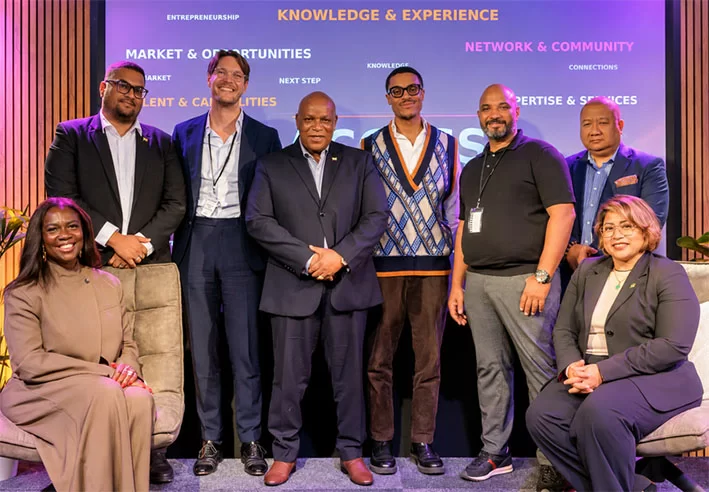
On a Friday gathering held in Amsterdam Zuidoost, Suriname’s ambassador to the Netherlands Ricardo Panka announced a new strategic push to integrate Surinamese diaspora entrepreneurs and young professionals based in the Netherlands into Suriname’s ongoing economic development and cross-border investment initiatives.
The event marked the official launch of ACCESS, a new entrepreneur support program organized by The Extra Mile, a regional business enablement organization. Lead by managing director Ryan Weibolt and co-initiator Mattias Scheek, ACCESS is designed to deliver targeted information, build professional connections, and stimulate growth among Surinamese-background entrepreneurs operating in the Netherlands. The partnership between The Extra Mile and the Surinamese embassy was facilitated by mediator Sandra Esseboom, and Panka was joined at the launch by other senior embassy officials, including councilor Shefron Kartowikromo, secretary Valeenee Wasimin, and commercial attaché Amrish Mankoe.
In his keynote address at the launch, Panka emphasized the untapped economic potential of the large Surinamese diaspora community in the Netherlands. Official embassy data shows more than 360,000 people of Surinamese descent currently reside in the Netherlands — a number that equals nearly half of Suriname’s total domestic population. “This makes the Surinamese community in the Netherlands one of our most important strategic priorities,” Panka stated.
Moving beyond traditional diplomatic functions, Panka outlined a new vision for the embassy as an open, accessible hub that supports not only standard diplomatic work but also prioritizes entrepreneurship development, young professional engagement, knowledge sharing, and bilateral economic progress. “We are reorienting our work to meet the evolving needs of our community and our nation,” he added.
The launch event also featured practical industry insights from guest speakers. Co-initiator Scheek, a veteran technology entrepreneur who co-founded Dutch audio technology firm Mayht Technologies, shared his professional journey with attendees. Mayht, which developed groundbreaking compact speaker technology, was acquired by U.S. audio giant Sonos for approximately $100 million in 2022, making it one of the most notable Dutch tech exits in recent years. Additionally, Niels Dolk, an M&A lawyer at international law firm Osborne Clarke, led a session covering key legal considerations that entrepreneurs face when navigating investment rounds, business acquisitions, and other major corporate transactions.
Following the event, Panka extended an invitation to Scheek for a follow-up discussion at the Suriname embassy to explore potential areas of collaboration and connection with Suriname’s domestic business ecosystem. According to the embassy’s communications department, the institution plans to continue expanding its outreach and connections with Surinamese entrepreneurs in the Netherlands long-term. The initiative focuses not only on attracting direct foreign investment to Suriname but also on leveraging the existing knowledge, professional experience, and extensive business networks built by members of the Surinamese diaspora to drive inclusive, sustainable economic growth at home.