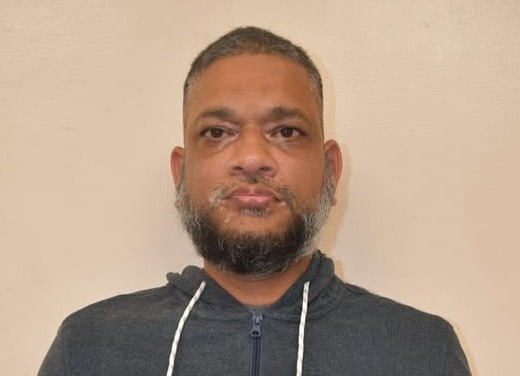
On Monday, September 21, 2026, a long-awaited step forward in a decade-old cold murder case unfolded in Guyana, as Kanand Ojha — a Guyanese national deported from the United States just days prior — appeared in court to face charges for the 2015 killing of Noel “Nephi” Luther, a gay sex worker.
The fatal incident dates back to July 22, 2015, when Luther was shot once in the chest during a public confrontation on Carmichael and Quamina Streets in Georgetown. Authorities allege Ojha carried out the shooting alongside accomplice Ron ‘Andel’ Forde. Forde accepted a plea deal for the lesser charge of manslaughter in June 2017 and was subsequently sentenced to 20 years behind bars, but Ojha fled the country before law enforcement could apprehend him.
A formal wanted bulletin for Ojha was first issued by Guyanese authorities in July 2019, marking the start of a years-long cross-border manhunt. Thanks to sustained collaborative efforts between Guyana’s law enforcement and legal bodies — including the Guyana Police Force, the Ministry of Home Affairs, and the Attorney General’s Chambers — and U.S. authorities operating under the international Mutual Assistance in Criminal Matters framework, Ojha was finally taken into custody in Queens, New York on September 8, 2025. He was deported back to Guyana last weekend, with local police arresting him immediately upon his landing at Eugene F. Correia “Ogle” International Airport on September 18, 2025.
During Monday’s arraignment hearing at the Georgetown Magistrates’ Court, Chief Magistrate Judy Latchman read the murder charge aloud to the 40-something-year-old defendant, who was not required to enter a formal plea at this stage of proceedings. Ojha, who last resided at Lot 2 First Street, Meadow Bank, East Bank Demerara, was remanded into prison custody ahead of his next court appearance, scheduled for October 12, 2026.
The successful apprehension and deportation of Ojha underscores the growing strength of joint law enforcement ties between Guyana and the United States. In recent years, the two nations have deepened their cooperation on transnational criminal cases, leveraging mutual legal assistance frameworks to track down fugitives who flee across borders to avoid prosecution. This case serves as a clear example of how cross-jurisdictional collaboration enables law enforcement to ensure that even suspects who evade capture for years can be brought to face justice in the country where their crimes were committed.