作者: admin

  • Kamla says process used to re-appoint Caricom SG could have long term effects for Trinidadians

    Kamla says process used to re-appoint Caricom SG could have long term effects for Trinidadians

    A deepening rift has emerged within the 15-member Caribbean Community (Caricom) over the controversial reappointment of Secretary-General Dr Carla Barnett, with Trinidad and Tobago’s Prime Minister Kamla Persad-Bissessar launching a fierce public campaign demanding full procedural transparency and threatening ongoing pushback against the regional bloc until her demands are met.

    Persad-Bissessar has labeled the process that led to Barnett’s second five-year term as a “surreptitious and odious” affair that carries lasting consequences for the citizens of Trinidad and Tobago, the Caribbean nation that contributes 22% of Caricom’s total annual operating budget. In a public statement published to her official Facebook page, the prime minister reiterated her call for the regional integration body to open its books on the reappointment, stressing that her administration will offer no reprieve to Caricom or its secretariat until the matter is resolved in a fully transparent manner.

    “This is not a routine administrative appointment. It shapes the trajectory of Trinidad and Tobago’s economy, national security, regional integration progress, and foreign policy over the next five years, which means it directly impacts the well-being of every one of my citizens,” Persad-Bissessar wrote. “I will pursue this issue mercilessly, relentlessly, and unapologetically in public until we get the transparency that we are owed.”

    The controversy first came to a head at Caricom’s heads of government summit held last month in Basseterre, St Kitts and Nevis. Shortly after the meeting closed, Caricom chairman and St Kitts and Nevis Prime Minister Dr Terrance Drew announced in a short official statement that Barnett had secured the required majority of votes from regional leaders to earn reappointment.

    But Trinidad and Tobago has pushed back hard against the outcome, asserting that the country was deliberately excluded from the closed-door deliberations that led to the vote. Port of Spain also confirms that two other member states, Antigua and Barbuda and The Bahamas, were similarly absent from the talks.

    Speaking to Trinidad and Tobago’s parliament last month, the country’s Minister of Foreign and Caricom Affairs Sean Sobers stressed, “I state clearly for the official record: Trinidad and Tobago was never invited, by email, phone, or in person, to the meeting where this decision was taken.”

    Persad-Bissessar, who departed the Basseterre summit before the heads of government retreat on neighboring Nevis where the vote was held, confirmed that Sobers sent an official letter to Drew on March 25 formally registering Trinidad and Tobago’s objection to Barnett’s reappointment.

    The core of Trinidad and Tobago’s complaint centers on procedural violations of Caricom’s governing rules. Persad-Bissessar explained that the reappointment was never added to the provisional agenda for the 50th Regular Meeting of the Conference of Heads of Government, was never discussed during open plenary sessions, and was only addressed during the restricted retreat, from which official representatives of Trinidad and Tobago and other member states were barred.

    “This process raises serious questions about a deliberate effort to circumvent established rules and push through Barnett’s reappointment through improper channels,” the prime minister said. She added that under Article 24 of the Revised Treaty of Chaguaramas, the Conference of Heads of Government must formally consider and approve all Secretary-General appointments, a requirement the current process failed to meet.

    In pursuit of clarification, the Trinidad and Tobago government sent two additional official letters on March 31, 2026: one addressed to Drew, and a second directly to Barnett. The letters request granular details including when the reappointment was added to meeting agendas, what communications were sent to all member states, whether governments were notified of the outcome after the summit’s joint communiqué and closing press conference, and whether any draft decision was circulated confidentially after the retreat. The government also asked for an explanation for any secrecy surrounding the process, noting that preserving member states’ trust in Caricom’s procedural rules and collective decision-making system is critical to the bloc’s function.

    On the same day, the Permanent Secretary at Trinidad and Tobago’s Ministry of Foreign and Caricom Affairs sent a separate formal request to Janice Miller, Chef-de-Cabinet in the Office of the Secretary-General, seeking clarification and supporting documentation related to the reappointment. That letter pointed out that past reappointments, including the 2016 selection process, fully followed established procedures, with all decisions properly recorded and reflecting the input of all heads of government. The Permanent Secretary emphasized that the 2026 process appears to deviate significantly from Caricom’s agreed rules of procedure.

    As of the publication of Persad-Bissessar’s latest statement, the Trinidad and Tobago government has yet to receive any response to its requests. “The people of Trinidad and Tobago fund nearly a quarter of Caricom’s budget. They deserve transparency, accountability, and full respect for the rules all members agreed to follow,” Persad-Bissessar added.

    Barnett first took office as Caricom’s eighth Secretary-General on August 15, 2021, after being unanimously appointed by regional leaders for her first term.

  • Family holds out hope a year after father vanishes at sea

    Family holds out hope a year after father vanishes at sea

    It has been 365 days since 32-year-old Emmanuel Bain, a father of two young boys, vanished off the waters of the Bahamas, and his loved ones have refused to let go of the belief that he will come home alive.

    Bain, who owned a local car wash and was an experienced jet ski enthusiast with a lifelong passion for the ocean, was last spotted on April 6, 2025, near Coral Cay. According to family accounts, he went missing while attempting to recover his drifting jet ski. In the 12 months that have followed, his relatives have been trapped in agonizing uncertainty, with no clear answers about the circumstances that led to his disappearance.

    A core point of conflict has emerged between the family and law enforcement: a senior family member, who requested anonymity to speak freely about the sensitive case, claims that Bahamian police never launched an official search operation for Bain. The relative explained that Bain’s mother filed a missing person report with the Central Detective Unit just 24 hours after he was last seen, but the family has yet to receive any formal updates on the case’s progress from authorities. Even basic missing person outreach steps were never taken, the family alleges: “They never even posted a picture of him,” the relative said, referencing Royal Bahamas Police Force’s standard missing person public notices.

    Frustrated by the lack of official action, Bain’s relatives took matters into their own hands, organizing multiple independent search missions across coastal areas near Saunders Beach and the surrounding waters. Despite weeks of combing the shoreline and ocean, these private efforts turned up no clues that could help locate Bain or shed light on what happened to him the day he went missing.

    Before his disappearance, Bain led a quiet, rooted life in the community: he leaves behind a fiancé and two sons, aged five and seven. The endless uncertainty of his case has inflicted a devastating emotional toll on the entire family, a weight that has only grown heavier as the one-year anniversary passed without answers.

    Even after a full year without any sign of Bain, his family’s hope remains unshaken. They continue to gather daily to pray for his safe return, holding onto the dream that he will walk back into their lives. “Every day we sit down through here we pray he come walking through,” the relative shared. “We always say we pray he come walking through Nassau Street. That’s the things we asked for, we just want to see him.”

    When asked if the family has accepted the possibility that Bain may not have survived, the relative rejected that idea outright. “I don’t even want to believe that even though it’s been a year,” she said, emphasizing that the family will hold out hope until they have definitive answers.

    In response to the family’s allegations, The Bahamas Tribune reached out to Royal Bahamas Police Force press liaison Chief Superintendent Sheria King for comment. King stated that she had been advised the missing person case was never formally reported to police, a claim that Bain’s family continues to firmly dispute.

  • American woman missing after falling overboard

    American woman missing after falling overboard

    A multi-agency search and rescue mission is actively ongoing after a 56-year-old American woman went missing overboard from a small dinghy during a night voyage in the waters off Abaco, The Bahamas, with authorities from both The Bahamas and the United States coordinating their response efforts.

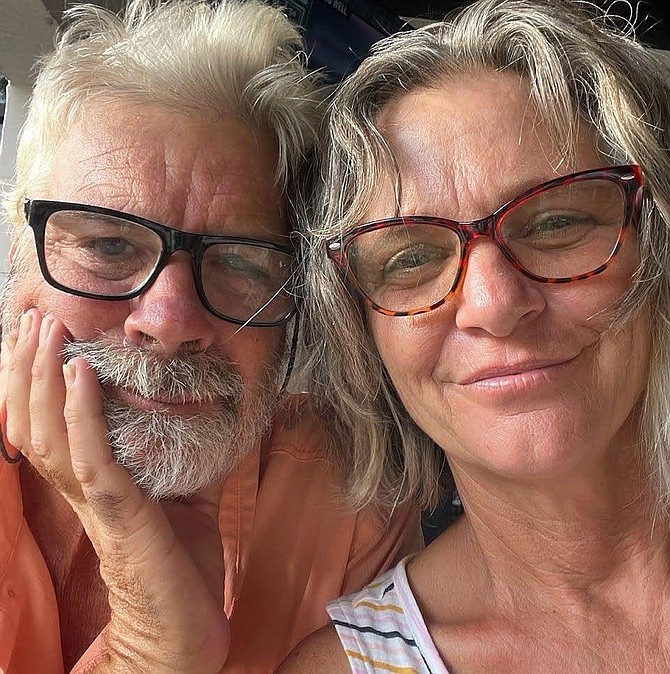
    The incident unfolded on Saturday evening, when Lynette Hooker and her 58-year-old husband Brian Hooker departed from Hope Town at approximately 7:30 p.m. The pair, confirmed by international media reports to be residents of Onsted, Michigan, were traveling on an 8-foot dinghy en route to their personal yacht, named Soulmate, anchored near Elbow Cay.

    According to official statements from Bahamian law enforcement, accounts from Brian Hooker indicate that Lynette fell overboard while she was holding the vessel’s ignition keys. The accidental fall cut power to the dinghy’s engine immediately, leaving the craft adrift as strong ocean currents pulled Lynette away from the boat before her husband could intervene. Brian quickly lost sight of her in the dark night conditions.

    Stranded without a working engine, Brian Hooker was forced to paddle the small dinghy to shore manually, a journey that took more than eight hours. He did not reach the Marsh Harbour Boat Yard until around 4 a.m. on Sunday, where he immediately notified on-site staff, who in turn contacted Bahamian police to launch the official response.

    Since receiving the alert, multiple Bahamian agencies have joined the search effort, including local police units, the Royal Bahamas Defence Force, and the Hope Town Fire & Rescue department. Search teams have been combing the surrounding coastal and open waters near the incident site for any sign of Lynette Hooker.

    A spokesperson for the U.S. Department of State confirmed that U.S. authorities are aware of the incident and are actively working alongside Bahamian counterparts to provide all necessary assistance to the operation. As of the latest update, investigations and search efforts remain ongoing, with no new information on Lynette Hooker’s status released to the public.

  • Ian Sweetness and Ti’a Smith team up for ‘I’m in Love’ remake

    Ian Sweetness and Ti’a Smith team up for ‘I’m in Love’ remake

    For Jamaican singer Ian Sweetness, admiration for legendary reggae artist Beres Hammond has burned for more than 50 years, stretching all the way back to the 1970s when Hammond was building his reputation with soul-infused rockers like the iconic hit *I’m in Love*. That long-running appreciation has now come to fruition, as Sweetness has teamed up with fellow vocalist Ti’a Smith to deliver a fresh take on the classic track for Philadelphia-based label Wildfire Records, helmed by producer Earl Messam.

    The original version of *I’m in Love*, which first hit airwaves in 1979, was produced by iconic Jamaican producer Joe Gibbs. It quickly became a breakout hit, holding the number one spot for multiple consecutive weeks on the official top 20 charts of Jamaica’s two competing leading radio broadcasters, Jamaica Broadcasting Corporation and Radio Jamaica. For Sweetness, taking on such a beloved, well-known track was no small undertaking.

    “It is a tough tune, and I decided to just do it over, but with a lady vocalist. We did our best to do Beres’ work justice because he is an artist I deeply respect,” Sweetness explained of the collaboration. The new reimagined version of *I’m in Love* is featured on *Champions In Action*, a 2025 compilation album released by Wildfire Records that gathers new work from a roster of contemporary reggae artists.

    The 1979 hit marked a pivotal early moment in Hammond’s decades-long career, foreshadowing the string of successful releases that would cement his status as a reggae legend. In the pre-dancehall era of his career, Hammond balanced uptempo rockers with soulful ballads including *One Step Ahead* and *Got to Get Away*. When his career exploded into mainstream acclaim throughout the 1980s and 1990s, with smash hits such as *What One Dance Can Do*, *Putting up Resistance*, and *Step Aside*, Sweetness’ admiration only grew deeper.

    “What draws me to Beres’ work is how he sings with such raw, authentic soul. I have always been attracted to any art or artist that carries that kind of genuine soul and energy,” Sweetness said.

    Raised in East Kingston, a neighborhood that was a core hub of Jamaica’s iconic vibrant sound system culture, Sweetness cut his teeth in an environment that nurtured reggae talent from an early age. Hammond is not the only legendary reggae figure to shape his artistic style: he counts iconic fellow Jamaican singer Dennis Brown as another major influence, and previously cut a cover of Brown’s classic take on *Ain’t That Loving You* for Messam as well.

  • Former Migos rapper Offset wounded in shooting

    Former Migos rapper Offset wounded in shooting

    In a shocking incident that has sent ripples through the global hip-hop community, Grammy-nominated rapper Offset — best known as one third of the iconic Atlanta rap trio Migos — is recovering in a South Florida hospital after sustaining a gunshot wound near a Seminole Tribe casino, multiple entertainment and law enforcement sources have confirmed.

    The 34-year-old artist, whose legal name is Kiari Kendrell Cephus, was in stable condition and receiving close medical observation at a facility in Hollywood, Florida, according to a spokesperson who spoke to celebrity news outlet TMZ. Law enforcement from the Seminole Police Department confirmed to Agence France-Presse that a shooting did occur in the area during the evening of Monday, though officials declined to publicly confirm the identity of the person struck by gunfire, consistent with ongoing investigative protocols.

    Witness accounts shared with TMZ paint a sudden, jarring picture of the incident: just moments before the shooting, Offset was in good spirits, smiling and engaging with fans who had approached him at the casino property.

    The shooting marks another devastating chapter of gun violence tied to the Migos collective, which permanently disbanded in 2022 following the fatal shooting of founding member Takeoff. Takeoff, 28 at the time of his death, was killed in a shooting at a private event in downtown Houston, Texas, a tragedy that cut short the life of one of the genre’s most promising young stars.

    Migos first catapulted to mainstream fame in 2013 on the back of their viral breakout hit *Versace*, which received a career-changing co-sign from global superstar Drake when he remixed the track. The trio went on to cement their status as 2010s rap royalty, collaborating with Drake again on the 2018 hit *Walk It Talk It*, and scoring their first Billboard Hot 100 number one single in 2016 with the cultural touchstone *Bad and Boujee*.

    Outside of his music career, Offset has long been in the public eye for his high-profile relationship with fellow chart-topping rapper Cardi B. The couple, who share three children together, finalized their split in 2024 after several years of on-again, off-again public separation.

    As of Tuesday, no further details have been released about potential suspects, motives for the shooting, or the exact extent of Offset’s injuries beyond the confirmation that he is in stable condition.

  • COI 100 day play would end naturalization in first few weeks

    COI 100 day play would end naturalization in first few weeks

    A small Bahamian political party, the Coalition of Independents (COI), has laid out an aggressive 100-day plan to reshape the nation’s immigration system, border security, and citizenship policies — a proposal that would kick off with a dramatic move to end naturalization just seven days after the party takes office, if elected.

    Under the blueprint shared by the opposition group, a COI administration would first table amendments to the Bahamas Nationality Act to remove the legal framework for naturalization. Within the first 12 months in office, the party would hold a public referendum to embed this change permanently in the national constitution. Legal analysts have already flagged a critical procedural inconsistency in this timeline: since Bahamian citizenship is ultimately governed by constitutional provisions, full elimination of naturalization would require a constitutional amendment and popular vote before any legislative change can take effect, not after.

    Notably, the party has left key details of the policy unaddressed. It has not clarified what pathways to citizenship would be available to replace naturalization, nor has it outlined how the backlog of pending naturalization applications would be resolved if the policy is scrapped. Competing as a third party in a political system long dominated by two major parties, the COI faces steep odds to secure power in upcoming elections.

    A central structural reform laid out in the plan merges the portfolios of immigration and national security into a single cabinet ministry, which would be led directly by COI leader Lincoln Bain. The consolidation would bring all relevant enforcement agencies under a unified command structure, with the goal of aligning planning, interdiction, applicant processing, and enforcement actions to a single coordinated national timeline.

    The proposal also includes a 30-day national amnesty program for individuals currently residing in The Bahamas without legal status. During this window, all undocumented people would be required to complete biometric registration, employment confirmation, housing verification, and full security background checks. Individuals found to meet basic compliance requirements would be granted temporary legal status, while those who fail checks or do not come forward would be processed for deportation.

    To streamline status verification for the public and private sectors, the plan calls for the launch of a centralized digital Legal Immigrant Portal. Employers and landlords would be required to check a migrant’s legal status via the platform before extending a job offer or signing a rental agreement. Entities that fail to comply with the verification requirement would face financial penalties, potential suspension of operating licenses, or court action.

    One of the plan’s most controversial planks is an immediate suspension of all new work permit applications from Haitian nationals, effective from day one of a COI administration. All existing work permits held by Haitian workers would also be subject to individual review as part of a broader audit of the entire work permit system. Legal experts have noted that a blanket suspension based solely on nationality could raise significant constitutional questions, as national policy is required to avoid arbitrary or discriminatory treatment under existing law.

    Strengthened border enforcement is a core priority of the plan. The COI proposes creating a layered “sea wall” of security around the island of Inagua, deploying marine patrol vessels, surveillance drones, radar systems, and rapid response teams to both the eastern and western coasts to intercept boats suspected of carrying undocumented migrants.

    Within the first 30 days of taking office, the COI says it will launch a public commission of inquiry to investigate longstanding allegations of corruption and abuse in the processing of passports, work permits, and residency approvals. The party also plans to declare a targeted state of emergency focused exclusively on illegal immigration and border security starting on day one.

    Additional proposed measures include clearing unregulated shanty towns that house large numbers of undocumented migrants, building purpose-built regulated housing for migrant workers with legal status, and mandating that all immigrants hold approved private health insurance to reduce strain on the country’s public healthcare system.

    The plan also introduces a volunteer deputization pilot program, which would allow thoroughly vetted civilian volunteers to assist law enforcement with surveillance and reporting in high-risk border areas, operating under the direct supervision of official security personnel. For serving immigration officers, the COI calls for a comprehensive modernization push, including higher pay and improved benefits, upgraded operational equipment, advanced specialized training, cross-agency intelligence sharing systems, and mental health and wellness support.

    In the final phase of the 100-day plan, between day 61 and day 100, the party intends to introduce new legislation targeting the hiring of undocumented workers and the provision of unregulated housing to migrants, as well as stricter anti-smuggling laws, rules allowing for the confiscation of smuggling vessels, and formal regulatory frameworks for the digital portal, regulated worker housing, mandatory health insurance, and anti-fraud protections.

    Party representatives say the entire plan is designed to return full control of The Bahamas’ borders to the national government, improve compliance with immigration laws, and expand the country’s enforcement capacity. However, the proposal leaves two critical gaps unaddressed: the COI has not outlined a funding plan for the wide-ranging series of reforms, nor has it confirmed that all measures — particularly large infrastructure projects such as a new national immigration headquarters and a dedicated enforcement base in Inagua — can be fully delivered within the ambitious 100-day timeline.

    The party says progress will be assessed at the 100-day mark based on three core metrics: increased border and internal enforcement activity, the completion of a fully verified national immigration database, and active repatriation of undocumented people found non-compliant. A full national public report will then be released to outline initial results and lay out the next phase of policy implementation.

  • Equality Bahamas: Govt failing on gender-based violence

    Equality Bahamas: Govt failing on gender-based violence

    Bahamian gender equality advocacy group Equality Bahamas has issued sharp criticism of the current Davis administration, accusing leaders of sidelining gender-based violence (GBV) as a policy priority during their term, pointing to chronically underfunded support systems for survivors and the government’s ongoing refusal to outlaw marital rape.

    In an interview outlining the group’s concerns, Equality Bahamas Director Alicia Wallace charged that the administration has rejected even the most straightforward, low-barrier actions to address widespread GBV, despite consistent calls for reform from both local advocacy organizations and international human rights bodies. Unlike the government’s claim that entirely new policy frameworks are needed to tackle the crisis, Wallace noted that actionable, vetted recommendations have existed for years from global groups including the UN Committee on the Elimination of Discrimination against Women (CEDAW) and the UN Human Rights Council. Existing draft legislation only requires minor updates and final approval to move into law, she added.

    A core point of contention is the long-running push to criminalize marital rape, a reform that CEDAW has recommended since 2018. Even after a new draft bill was introduced to amend the country’s Sexual Offences Act, Wallace said the current administration deliberately excluded this critical provision. In public comments made in February 2025, Prime Minister Philip “Brave” Davis argued that broad “consensus” from across Bahamian society was required to move forward with the change, saying the government must reflect the will of all groups, not just gender equality advocates. That same month, Attorney General Ryan Pinder confirmed that the administration does not plan to introduce the legislation before the end of its current term, citing the issue’s political sensitivity.

    Notably, the prime minister’s own spouse, Ann Marie Davis, has publicly broken with the administration’s position, voicing full support for criminalizing marital rape and calling for policymakers to act immediately. Back in 2022, Davis made an unusually public rebuke of the status quo, saying: “We must agitate and hold our policy makers accountable. We want them to upgrade our laws and we really need that. Imagine, we are still living in a society where no does not mean no. How could that be? I tell you no and you think I mean yes. No, sir. Of course I’m talking about marital rape right. No means no.”

    Critics of the administration’s delay point to past examples where Bahamian governments have moved forward on politically divisive policies without full national consensus. For instance, the former Christie administration moved to regularize the gaming industry after a referendum on the issue failed, and the current Davis administration implemented cannabis reforms despite widespread opposition from religious groups.

    Wallace explained that the legal exception for marital rape is not just a technical oversight, but a reflection of deep systemic gender inequality. “It suggests that women’s identities and autonomy cease to exist in the context of marriage, and dangerously, that we become the property of men. This is at the root of all other issues of gender inequality and gender-based violence,” she said.

    Beyond criticizing the ruling party, Wallace also called out the Bahamian opposition for failing to uphold its oversight role, noting that the opposition has not used its legislative leverage to push for reform or back advocates’ demands as high-profile domestic and sexual violence cases continue to make headlines. “As story after story of domestic violence and sexual violence reach headlines, they have not reiterated recommendations, support our demands, or made their own interventions, completely wasting the leverage they had as an opposition,” she said.

    Other youth and community leaders echoed these concerns. Prodesta Moore, from the Bahamas Urban Youth Development Centre, emphasized that GBV and the lack of legal protections do not only affect adult women, but shape the lives of young people across every community. “Domestic violence and sexual assault continue to affect families across communities, with young people often directly or indirectly impacted. These are not just adult issues, they are youth issues,” Moore said. “They shape the environments our young people grow up in, the trauma they carry, and the futures they are trying to build.” Moore called for expanded protections for women and girls, broader public education and prevention programming, and more accessible support services for survivors.

    Khandi Gibson, a representative of local group FOAM, acknowledged that many women face unique barriers to leaving abusive relationships that extend beyond government policy, but confirmed that limited resources remain a crippling barrier to support, particularly for temporary housing and mental health counselling.

    The Bahamian Tribune reached out to four senior female government ministers — Labour and Public Service Minister Pia Glover-Rolle, Energy and Transport Minister Jobeth Coleby-Davis, Education Minister Glenys Hanna-Martin, and Housing and Urban Renewal State Minister Lisa Rahming — for comment on the administration’s unaddressed gender equity commitments. None responded to requests for comment before the publication deadline.

  • Eleuthera project to be ‘game changer’

    Eleuthera project to be ‘game changer’

    A US-based hospitality and real estate developer has unveiled full details of a transformative $650 million integrated resort and residential development set to reshape central Eleuthera, Bahamas, marking what could become the largest tourist-focused investment in the region’s history. Jeff Jacobs, chairman and CEO of Jacobs Investments — a firm with decades of large-scale resort, gaming and real estate experience across the United States — first shared the broad outlines of his J Resort Eleuthera proposal with local media earlier this year, but new details of the project’s scope, evolving design and long-term vision have only just been made public.

    The planned development spans 600 acres of prime coastal land stretching from the Atlantic Ocean to the Caribbean Sea, positioned directly adjacent to the existing French Leave hotel near Governor’s Harbour. Under the original vision shared in a December 2025 strategic presentation, the project would combine a phased hospitality investment of more than $200 million with over $450 million in projected third-party residential real estate sales across five resort-linked neighborhoods, totaling more than 350 high-end vacation homes. To date, Jacobs has already poured $40 million into land assembly to secure the parcels required for the development, with additional acquisitions planned to reach the full 600-acre footprint.

    The original proposal included a diverse range of amenities: a boutique oceanfront hotel, a mega yacht marina capable of accommodating the largest private vessels cruising Florida and Bahamian waters, multiple waterfront dining venues, a public outdoor sculpture garden showcasing regional artists, an 18-hole “sea-to-sea” golf course, a boutique casino, and a connected network of community pathways linking Governor’s Harbour to the iconic French Leave Beach. The developer also committed to permanent public beach access for Bahamian residents and pathway expansions along major local thoroughfares as core components of the project.

    However, Jacobs confirmed that the development plan has evolved significantly since the 2025 presentation. Most notably, plans for the 177-acre 18-hole golf course near Governor’s Harbour airport have been paused indefinitely, citing a combination of economic headwinds, environmental protection concerns, and competitive market dynamics. Instead of pursuing a single large resort development, Jacobs is adopting a “master developer” model that will set aside three to four parcels within the 600-acre footprint for independent developers to build their own boutique resorts, a model that has proven successful across the Bahamas’ Family Islands. This phased approach is designed to deliver a steady pipeline of construction and permanent full-time jobs for local residents over the next 20 to 30 years.

    In a move to address long-standing local infrastructure gaps, Jacobs also revealed he is in early discussions with global US engineering and utility firm Kimley Horn to develop a self-contained, reliable power solution for central Eleuthera, with plans to also explore improvements to local water infrastructure. Responding to community concerns about the scale of the development and the proposed casino, Jacobs emphasized that the gaming space will be a small, boutique “James Bond-style gaming salon” roughly the size of a standard restaurant, far smaller than the large casino complexes at Nassau’s Atlantis and Baha Mar. The amenity is designed to attract high-net-worth visitors to Governor’s Harbour, rather than become a large-scale standalone gaming destination.

    To date, the project has not yet entered the formal government permitting and regulatory approval process, with Jacobs noting there is still substantial preparatory work to complete. Local consultant Janeen Bullard, principal of JSS Consulting, has already been engaged to lead the preparation of an Environmental Impact Assessment (EIA), and the first public community consultation meetings are scheduled to begin this summer to gather input from local residents. This public outreach comes as local residents and environmental activists have already raised concerns about the project’s potential strain on Eleuthera’s already overburdened power and water infrastructure, risks to the local environment, and the possibility that the development would rely on imported labor rather than local workers.

    Jacobs, whose portfolio includes major long-term developments such as the multi-decade redevelopment of Cleveland’s riverfront and the ongoing $1 billion transformation of downtown Reno, Nevada, pushed back against concerns, framing the project as a decades-long commitment to Governor’s Harbour rather than a short-term speculative investment. He noted that his firm has a 40-year track record of delivering community-focused large-scale developments that generate lasting social and economic benefits, positioning J Resort Eleuthera as a project that will create a transformative, lasting positive impact for both residents and visitors while opening central Eleuthera to a new market of high-net-worth mega yacht tourists that have previously not accessed the region.

  • Wireless music fest cancelled after Kanye West barred UK entry

    Wireless music fest cancelled after Kanye West barred UK entry

    LONDON – Organizers of the UK’s high-profile Wireless Festival, which was scheduled to welcome Kanye West (now legally known as Ye) as a headlining performer this July, announced Tuesday that the entire event has been scrapped, following a decision by British immigration authorities to bar the controversial American rapper from entering the country. The confirmation of the cancellation came via an official statement posted to the festival’s Instagram account, where organizers explicitly cited the Home Office’s entry ban on Ye as the direct cause of shutting down the event. In the wake of the sudden cancellation, organizers confirmed that every ticket purchased for the festival will be fully refunded automatically, with no extra action required from holders. The ban and subsequent cancellation come after a wave of global backlash triggered by a series of unapologetic antisemitic remarks made by West in recent months, which have seen the rapper dropped from multiple industry partnerships and shut out of major public events across multiple continents.

  • UK gov’t blocks Kanye West from London music fest — BBC

    UK gov’t blocks Kanye West from London music fest — BBC

    LONDON — In a high-profile decision that has sent ripples through the global entertainment industry, the United Kingdom government has barred controversial American rapper Kanye West from entering the country to perform as a headliner at London’s Wireless Festival, multiple sources confirm. The move comes in response to widespread public fury over a series of virally spread antisemitic comments the rapper made in recent months, according to public broadcaster BBC.

    West, who had lined up a three-night headline set at Finsbury Park’s July iteration of the popular festival as a key stop on his planned European comeback tour, submitted his formal entry application to UK authorities on Monday. Within 24 hours, the Home Office, the UK government department responsible for border control and public safety, rejected the request on official grounds. A spokesperson for the Home Office told the BBC that the refusal was issued because the government determined West’s presence in the UK would not serve the public good.

    The cancellation of West’s planned appearance marks one of the most significant institutional consequences the rapper has faced for his repeated inflammatory remarks targeting Jewish communities. Industry observers note that the decision signals a growing global intolerance for hate speech in the entertainment space, as event organizers and governments continue to grapple with balancing artistic expression and public accountability.