作者: admin

  • Belizean Deported After Leading Hunger Strike in ICE Jail

    Belizean Deported After Leading Hunger Strike in ICE Jail

    In a move that has reignited debates over immigration detention conditions and retaliation against activist detainees, a Belizean man who emerged as a key organizer of a high-profile hunger strike at a U.S. Immigration and Customs Enforcement (ICE) facility in California has been deported back to his home country. Immigrant rights organizations are calling the deportation an act of retaliation for Kyron Shakeel Swaso’s public criticism of abusive and unsanitary conditions inside the Adelanto ICE Processing Center.

    Per accounts from local outlet CALÒ News and legal nonprofit Immigrant Defenders Law Center (ImmDef), Swaso’s removal followed a pattern of improper transfers to detention facilities in Texas and Louisiana, carried out in what advocates say is violation of existing legal requirements. His deportation came fewer than 14 days after he held a meeting with members of the U.S. Congress, where he helped deliver a formal petition signed by 150 fellow detainees detailing systemic poor conditions at the Adelanto site.

    The document signed by detainees raised multiple serious allegations: toxic mould growth in holding areas, contaminated drinking water supplies, insufficient and low-quality food, and persistent barriers to accessing necessary medical care. In a final statement released before his deportation, Swaso emphasized the demands of the protesting detainees. “We want this place shut down and we want to be released… Our due process rights are being violated. They are using taxpayer dollars to abuse immigrants. The things they say publicly do not match what we are living through,” he said.

    ImmDef’s legal team has pushed back against the government’s process, confirming that Swaso was transferred out of California without the mandatory advance notice required under a federal court order. The organization argues the irregular transfers and subsequent deportation were explicitly retaliatory measures targeting Swaso for his leadership in the hunger strike and his willingness to bring detention abuses to national attention.

    The U.S. Department of Homeland Security (DHS), the federal agency that oversees ICE, has confirmed Swaso’s deportation but forcefully rejected all claims of retaliation. According to remarks shared with DemocracyNow, DHS stated that Swaso had already received a final, legally binding order of removal, and his transfer and deportation followed standard operating procedures for immigration removal cases. The agency also outlined background on Swaso’s immigration history: he entered the United States on a tourist visa in 2019, and overstayed the terms of his visa. DHS additionally claimed Swaso faced a series of criminal charges, including aggravated assault on a law enforcement officer, illegal firearm possession, and drug possession.

    ImmDef has pushed back against these criminal allegations, countering that the only charges on record against Swaso are minor drug offenses that were ultimately dismissed and cleared through post-conviction relief processes. The organization says Swaso has no other active convictions on his record.

    Beyond the dispute over Swaso’s deportation, DHS has also denied that any hunger strike is currently ongoing at the Adelanto facility, and rejected all allegations of systemic abuse against detainees. This official denial stands in direct contradiction to claims from current detainees and immigrant rights advocates, who have repeatedly documented poor conditions at the site. Local reporting from CALÒ News has recorded at least four detainee deaths at the Adelanto facility in recent years, further fueling calls for independent oversight and facility closure.


  • IRD, ECCO join forces on tax collection and music rights

    IRD, ECCO join forces on tax collection and music rights

    A new collaborative agreement between Saint Lucia’s tax regulator and the Eastern Caribbean’s leading music rights management organization is set to streamline enforcement of both tax collection and copyright compliance across the island’s entertainment sector.

    On [date undisclosed], the Inland Revenue Department (IRD) and the Eastern Caribbean Collective Organisation for Music Rights (ECCO) Inc. formalized their partnership with a signed Memorandum of Understanding (MOU) that establishes a structured framework for secure information sharing between the two entities.

    Under the terms of the arrangement, the two organizations will exchange key operational data to advance their respective enforcement goals. Shared datasets will include event ticket sales revenue, public attendance numbers for live and recorded music events, and other business records that enable accurate tax assessment and verify that venues and event organizers have met mandatory music licensing requirements.

    The MOU also lays out clear protocols for joint cooperation when regulatory responsibilities overlap. These protocols include formal referrals of suspected non-compliance cases between the two agencies and coordinated investigative work when potential violations of both tax law and copyright regulations are identified.

    To protect sensitive taxpayer and business data, the agreement includes strict confidentiality clauses that require all shared information to be processed and stored in full alignment with Saint Lucia’s existing legal framework. These binding requirements cover compliance with four core pieces of national legislation: the Income Tax Act, the Value Added Tax (VAT) Act, the Copyright Act, and the Companies Act.

    Martin A. James, Chief Executive Officer of ECCO, emphasized that the cross-agency partnership marks a transformative shift for the region’s music industry. “This MOU is a significant step forward in our ability to ensure that the business of music operates with integrity and fairness,” James explained. “By working hand-in-hand with IRD, we can better protect the intellectual property rights of our member composers, performers, and rights holders, while promoting accountability across the entire entertainment sector.”

    Felicia Ellie, Comptroller of Saint Lucia’s IRD, echoed that sentiment, noting that targeted collaboration between public revenue bodies and creative industry stakeholders delivers mutual benefits for both regulators and the sector itself. “Collaboration between public revenue authorities and creative sector organizations is essential,” Ellie stated. “This agreement will not only help strengthen overall tax compliance across the entertainment industry but also support the long-term growth of the creative industry by ensuring that all legal obligations are met transparently and efficiently.”

    The agreement will remain in force indefinitely, unless either party chooses to initiate modifications or terminate the arrangement through formal mutual agreement.

  • Browne Says Antigua and Barbuda Near Full Employment, Calls for New Labour Survey

    Browne Says Antigua and Barbuda Near Full Employment, Calls for New Labour Survey

    Antigua and Barbuda is currently operating at near-full employment, according to Prime Minister Gaston Browne, who has publicly committed the government to commissioning an updated national labour market survey to capture accurate, up-to-date workforce dynamics. Speaking during a parliamentary question-and-answer session, Browne acknowledged that the most recent comprehensive analysis of the country’s labour market dates back to between 2016 and 2017, leaving policymakers without the granular, current data needed to shape evidence-based employment policy. While formal statistical data is overdue for a refresh, Browne noted that on-the-ground and anecdotal observations paint a clear picture of a tight labour market, with the country hitting a near-full employment threshold. As primary evidence of robust labour demand, Browne highlighted the consistent stream of new arrivals to the twin-island nation who are able to secure employment almost immediately upon entry. “In fact, there are people coming into this country literally on a daily basis and obtaining employment,” he told parliament.

    Beyond the strong overall employment picture, however, the prime minister outlined a growing, persistent challenge that is disrupting local industries: a rising reluctance among native-born Antiguans and Barbudans to take on open roles that align with their existing qualifications. Browne framed this trend as an emerging cultural shift that is creating widespread staffing shortages across multiple key sectors of the national economy. “We have a developing cultural problem within the society,” he said. Local employers across critical service industries including retail, private security, domestic work and hospitality have consistently reported struggles to fill open entry-level and skilled positions with local workers, even as unemployment remains near historic lows. The surge in demand for foreign labour has been reflected in a sharp uptick in work permit applications across the country. In response to this trend, the national Cabinet recently moved to centralize the work permit approval process to streamline applications, but Browne confirmed that many businesses continue to face major challenges recruiting local candidates for open roles.

    Synthesizing his observations of the current labour market, Browne argued that the small number of working-age people who remain out of work are largely not unemployed due to a lack of available jobs. “I’m pretty convinced that we practically have full employment and that those who are not employed is that they’re either not willing to work or they’re unavailable to work,” he concluded.

  • BARNUFO, CFPA pay tribute to Dr Shelly-Ann Cox

    BARNUFO, CFPA pay tribute to Dr Shelly-Ann Cox

    Two leading industry bodies in Barbados’ fishing sector are honoring the life and legacy of Dr Shelly-Ann Cox, the nation’s Chief Fisheries Officer, who passed away recently. The Barbados National Union of Fisherfolk Organisations (BARNUFO) and the Central Fish Processors Association (CFPA), both led by president Vernel Nicholls, have issued public statements of grief and tribute to the late public servant.

    In statements released jointly on behalf of both organizations, Nicholls extended heartfelt condolences to Dr Cox’s immediate family, close friends, professional colleagues and all those who knew her well. He remembered Dr Cox as an unwaveringly committed public servant whose decades of work left an indelible, positive mark on the entire Barbadian fishing industry.

    Nicholls emphasized that Dr Cox left the community far too early in her career, highlighting the depth of expertise, steady leadership and contagious passion she brought to advancing the nation’s fisheries every day. He specifically noted her consistent advocacy for adopting new technology, scaling innovative practices and creating more opportunities for young people to join and lead the sector.

    Among Dr Cox’s most critical contributions, Nicholls pointed to her work in disaster preparedness and post-storm recovery for fishing communities. After Hurricane Beryl swept through the region, Dr Cox worked around the clock to educate fishers on critical hurricane safety protocols, while pulling together cross-stakeholder collaboration, streamlining inter-agency communication and coordination, organizing critical logistics and leading on-the-ground recovery efforts. Her long-term goal was to build a more resilient, forward-looking framework for disaster risk management that would protect the fishing sector for future generations.

    “As we mourn this devastating loss, we sincerely pray that divine strength and comforting peace will surround Dr Cox’s family, friends, co-workers, and all fisherfolk leaders across the country in this difficult time,” Nicholls added.

  • PM Browne Says Missing Back Pay Cases Stem From Documentation Gaps, Not Lack of Funds

    PM Browne Says Missing Back Pay Cases Stem From Documentation Gaps, Not Lack of Funds

    In a parliamentary address addressing growing public frustration over delayed pledged back pay for civil servants, Prime Minister Gaston Browne has pushed back against widespread claims that a lack of government funding is to blame for the outstanding payments, which the administration has committed to fully settling by the end of 2025. Instead, Browne pointed to a cascade of administrative and documentation issues as the core root of the ongoing delays, clarifying that only a tiny fraction of legitimate claims remain unprocessed.\n\nBrowne outlined multiple key problems that have slowed disbursement of the promised funds to public sector workers. Incomplete record-keeping across government ministries and departments, he explained, has led to major gaps in the payment rosters submitted to the national Treasury. Among the most high-profile omissions, the prime minister confirmed that dozens of active police officers were accidentally left off submitted lists, barring them from receiving the pay they are owed. Beyond accidental omissions, Browne added, widespread administrative errors and a flood of ineligible claims have further bogged down the processing system.\n\nThe prime minister specified exactly which groups do not qualify for the current round of back pay, including any individuals who left public sector employment before 2018, newly hired workers who have only recently joined the civil service, and people working on fixed-term government contracts. Contrary to public narratives that claim thousands of eligible workers are still waiting for payment, Browne emphasized that as of the day prior to his parliamentary address, the number of unresolved legitimate claims remained very small.\n\nBeyond processing issues, Browne publicly acknowledged long-running complaints about poor customer treatment from Treasury staff working on the back pay claims. Confirming reports that frontline Treasury employees have been dismissive or rude to claimants seeking updates on their payments, the prime minister said he has directly instructed the Financial Secretary to organize mandatory customer service training for all relevant staff to resolve this cultural issue.\n\nLooking ahead, Browne said the government is on track to clear all remaining outstanding claims within the next few months, and pushed back against critics who have attacked the administration’s handling of the back pay process. He stressed that his government is the first administration since Antigua and Barbuda gained independence to commit to bringing all public sector back pay completely up to date, reaffirming that the government has already set aside the full funding required to settle all eligible claims. “It’s not a matter of not having the monies to pay the back pay,” he reiterated. “We’re the first administration, certainly since independence, that would have brought back pay fully up to date.”

  • Work Continues at Information Commissioner’s Office, Parliament Told

    Work Continues at Information Commissioner’s Office, Parliament Told

    In a recent parliamentary update, Prime Minister Gaston Browne of Antigua and Barbuda has confirmed that final construction work is still progressing at the new permanent location for the Office of the Information Commissioner. The announcement came as Browne responded to two separate parliamentary questions regarding the office’s current location and expected completion date for its new facility.

    According to Browne, he received a progress report from the Member of Parliament representing St. John’s City South, which confirmed that the new purpose-built facility is not yet fully finished. “I’m told that there’s still some work to be done on the building,” the prime minister told lawmakers during the session.

    For the time being, the Office of the Information Commissioner will continue its operations out of its temporary accommodation at the Francis Trading building located on High Street in St. John’s. Browne did not share specific details about what work remains unfinished at the new site, nor did he outline an exact breakdown of construction costs or the scope of the remaining tasks.

    When pressed by legislators on a clear timeline for when the new office will be ready for the Information Commissioner to fully occupy, Browne shared that the Attorney General has advised the office will be prepared within a six-month window. This six-month timeline aligns with his earlier confirmation that work is still ongoing at the current site, bringing clarity to lawmakers who have sought updates on the establishment of the long-awaited government office. No firm specific completion date was announced alongside the six-month target, leaving room for potential adjustments as construction progresses.

  • ‘Win-Win’ or Not? US and Iran Sign a Page-and-a-Half MoU

    ‘Win-Win’ or Not? US and Iran Sign a Page-and-a-Half MoU

    After 109 days of open conflict between the United States and Iran, the two nations have finalized an electronic signature on a short ceasefire memorandum of understanding (MoU), but the fragile deal has already been mired in conflicting claims over its core terms and faces fierce resistance from key regional stakeholders.

    The June 16 agreement was billed by former U.S. President Donald Trump as a step toward opening up the strategically vital Strait of Hormuz to full commercial navigation by this coming Friday. Trump confirmed that he, U.S. Vice President JD Vance, and Iran’s chief negotiator and Parliament Speaker Mohammad Bagher Ghalibaf had all appended their signatures to the document. For its part, Iran’s National Security Council framed the deal as a full cessation of hostilities across all active fronts, including the Lebanese theater, and said it would bring an end to the U.S. naval blockade of Iranian territorial ports.

    However, major contradictions quickly emerged over the economic terms of the ceasefire. A senior anonymous Iranian official told Reuters that Washington had committed to unlocking $25 billion in Iranian assets that have been frozen by U.S. sanctions and temporarily waiving restrictions on Iranian oil exports. These claims were immediately rejected by Vance, who publicly emphasized that no provisions for sanctions relief or asset unfreezing are included in the text. Vance also clarified the scope of the agreement, describing it as a vague general document that totals only one and a half pages in length.

    Under the terms of the current framework, formal negotiations on more substantive issues – including Iran’s nuclear program and the future of U.S. sanctions on the country – are scheduled to begin after the MoU is formally signed in Geneva, Switzerland, on Friday, with a 60-day window allocated for these follow-up talks.

    The uncertain terms of the ceasefire have already sent ripples through global energy markets. As traders weighed the potential positive impact of a fully reopened Strait of Hormuz – through which roughly 20% of the world’s daily oil supplies pass – against the lack of clarity around the agreement’s actual guarantees, international crude prices moved upward in early trading.

    The deal also faces a major challenge from Israel, a key U.S. ally in the Middle East that has been actively involved in the regional conflict. Israeli Prime Minister Benjamin Netanyahu announced that Israeli military forces will continue their occupation of southern Lebanon regardless of the U.S.-Iran ceasefire agreement, and senior members of Netanyahu’s cabinet have explicitly stated that Israel does not consider itself bound by the terms of the MoU. Even as leaders on both sides claim a breakthrough toward de-escalation, ongoing fighting is still being reported in multiple conflict zones across the region, leaving the durability of the fragile ceasefire in serious doubt.

  • Ghana beat Panama 1-0 in World Cup opener after injury-time winner

    Ghana beat Panama 1-0 in World Cup opener after injury-time winner

    In a tense, rain-soaked opening Group H World Cup clash held in Toronto, Canada on Wednesday, Ghana snatched a last-gasp 1-0 victory over Panama that sent the city’s large Ghanaian supporter base into wild celebrations.

    The match got off to an early promising start for Panama, when striker Cecilio Waterman fired off a second-minute test on goal that was only just deflected away by Ghana’s sprawling goalkeeper Lawrence Ati Zigi. What followed after that early chance devolved into a gritty, attritional first half, with Ghana failing to register a single shot on target through the opening 45 minutes, as both sides struggled to break down stubborn defensive lines.

    Steady rainfall soaked the Toronto Stadium pitch for the entirety of the second half, but the game opened up into a far more attacking contest. In the 60th minute, Panama’s Cristian Martinez came agonizingly close to breaking the deadlock, lashing a hard shot that clipped the side-netting – drawing a huge roar of near-elation from the thousands of Panamanian fans packed into the stands of the 43,000-capacity venue. Even a mid-second-half hydration break held in the pouring rain drew loud boos from the crowd, restless for more action after a slow start to the game.

    As the clock ticked down, the fixture looked all but certain to end in a goalless draw. That all changed in the fifth minute of stoppage time, when Caleb Yirenkyi scrambled the ball over the line to secure the dramatic winning goal for the Black Stars. The strike sent thousands of Ghanaian supporters based in Canada’s largest city into a frenzy, and put Ghana atop its group after the opening round of fixtures.

    The victory marks a landmark moment for Ghana’s veteran head coach Carlos Queiroz, who only took charge of the national side a few months ahead of this World Cup. With Wednesday’s appearance, Queiroz became just the second head coach in World Cup history to lead a side at five consecutive men’s World Cup tournaments, following previous stints at the 2010 World Cup with Portugal and the 2014, 2018, and 2022 tournaments with Iran.

    Ghana’s opening win came despite a key absence: star midfielder Thomas Partey of Spanish club Villarreal was denied entry to Canada for the tournament due to an ongoing rape trial he faces in the United Kingdom, ruling him out of the squad for the clash.

  • Golding calls for removal of Wheatley from Cabinet amid IC report

    Golding calls for removal of Wheatley from Cabinet amid IC report

    KINGSTON, Jamaica — Jamaica’s main opposition has thrown the country’s governing administration into political turmoil, calling for the immediate ousting of a sitting cabinet minister after the national Integrity Commission tabled an investigative report recommending multiple criminal charges against him.

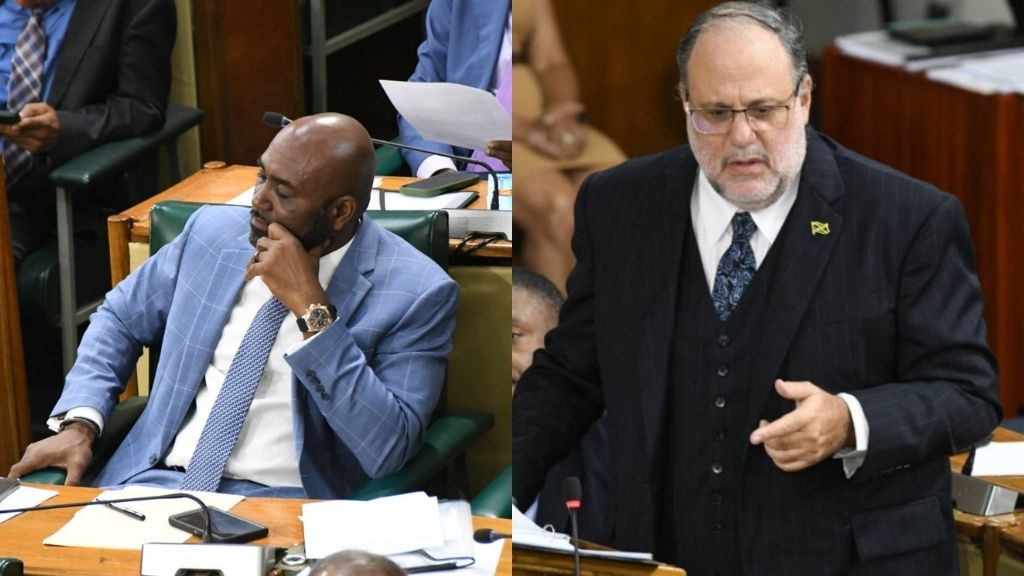
    Opposition Leader Mark Golding made the demand public in an official statement released Wednesday evening, breaking down the key findings of the completed probe. According to Golding, the Director of Corruption Prosecution has formally approved four criminal charges against Dr Andrew Wheatley, currently serving as minister without portfolio in the Office of the Prime Minister. The charges cover illicit enrichment, intentional submission of false statements on mandatory statutory declarations, and intentional failure to disclose required information to the Director of Information and Complaints, in violation of Jamaican anti-corruption law.

    In Golding’s view, any public official facing prosecution recommendations for such serious corruption-related offenses has no place in Jamaica’s national cabinet. “The integrity of our public institutions and the trust of the Jamaican people demand nothing less,” Golding emphasized, adding that Prime Minister Andrew Holness has an immediate obligation to remove Wheatley from his post.

    The Integrity Commission’s investigation, finalized by the Director of Investigation on March 20, 2026 and endorsed by the corruption prosecution director three months later on June 11, makes a damning allegation: over a nine-year period, Wheatley accumulated assets worth roughly 164 million Jamaican dollars that far outstripped his documented lawful income. When formally asked to account for the unexplained wealth, investigators say Wheatley failed to provide a credible, satisfactory explanation.

    Wheatley has publicly pushed back against the findings, vehemently maintaining his innocence. He argues that the Integrity Commission deliberately omitted 168 million Jamaican dollars in legitimate earnings he generated from real estate investments, dismissing the entire report as baseless and false.

    Golding notes that this is far from the first time serious ethical and legal questions have emerged about Wheatley’s conduct while holding public office. Previous controversies surrounding his ministerial work already led to his removal from cabinet for a lengthy period, yet following the 2025 Jamaican general election, Holness made the decision to reappoint Wheatley to his government.

    This reappointment has sparked new questions about the communication between the prime minister and his minister, Golding pointed out. It remains unclear whether Wheatley disclosed the ongoing Integrity Commission investigation to Holness before he accepted the cabinet post, or if he intentionally concealed the probe from the country’s leader.

    Regardless of which scenario is true, Golding argues that the decision to bring Wheatley back into cabinet has now been exposed as a serious error in judgment. “Good governance is not a mere slogan, it is a required standard,” Golding said. “The prime minister has a duty to uphold that standard, immediately and without hesitation.”

  • Gov’t workers to receive mandatory training in AI

    Gov’t workers to receive mandatory training in AI

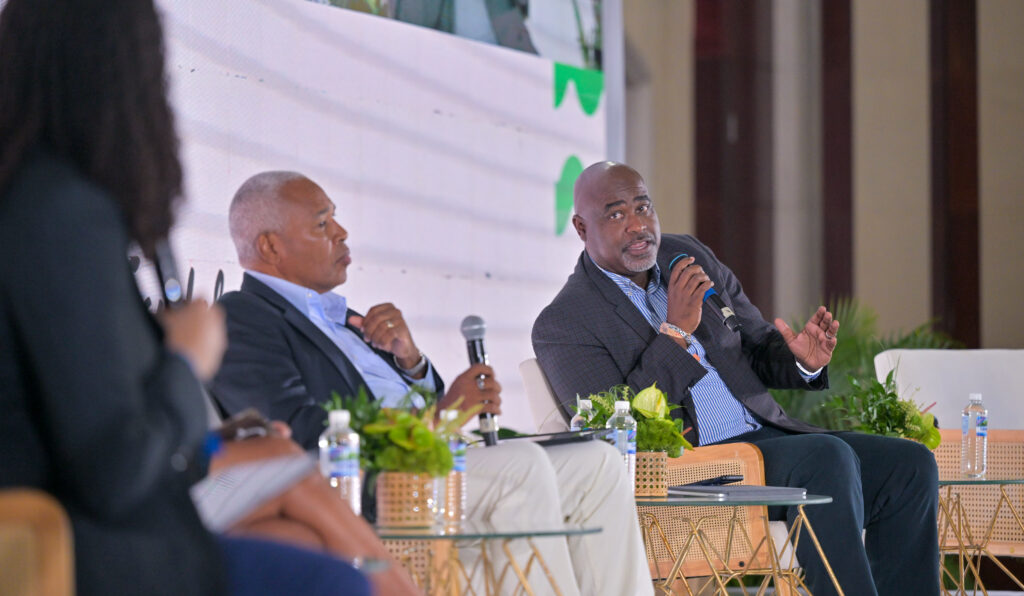
    At the 11th Biennial Jamaica Diaspora Conference held this week at Montego Bay’s St James Convention Centre, a major government digital modernization initiative was unveiled that will require all public sector employees from senior leadership to frontline staff to complete mandatory artificial intelligence training. The program, designed to upgrade Jamaica’s public service and streamline service delivery for citizens both at home and abroad, was announced by Trevor Forrest, senior advisor to Science, Technology and Special Projects Minister Dr Andrew Wheatley in the Office of the Prime Minister, during a plenary session focused on leveraging diaspora expertise to build Jamaica’s digital and AI-enabled future.

    Forrest explained that the core goal of the mandatory training scheme is to equip every government worker with a foundational understanding of artificial intelligence, its practical use cases across public administration, and the ethical frameworks that govern responsible AI deployment. A key barrier the initiative aims to address is the widespread apprehension many public sector employees hold toward emerging technologies: a common concern among workers is that AI will displace existing roles, leading to reluctance to adopt new tools that could otherwise improve operational performance.

    “Even as cutting-edge technological tools become more accessible to government institutions, their actual ability to drive improvement depends entirely on the people who use them daily,” Forrest noted during his address. “Many workers in the public system remain wary of these innovations, under the assumption that AI will take over their jobs. That misconception holds back progress across all ministries, departments, and agencies.”

    By centering training on both the practical benefits of AI and its ethical guidelines, the Jamaican government aims to build buy-in across the public workforce, encouraging smoother adoption of AI tools that cut red tape, reduce processing times, and make public services more accessible. Forrest emphasized that boosting internal government efficiency does not only benefit administrative operations — the gains will ultimately flow through to all Jamaicans, including members of the diaspora who engage with government institutions from overseas.

    The mandatory AI training program is just one component of Jamaica’s broader national strategy to prepare its workforce and public institutions for a rapidly evolving digital global economy. Government leaders have framed the initiative as a critical step toward modernizing the public sector, ensuring that AI is deployed responsibly across all government functions, and positioning Jamaica as a forward-looking leader in Caribbean digital transformation.