作者: admin

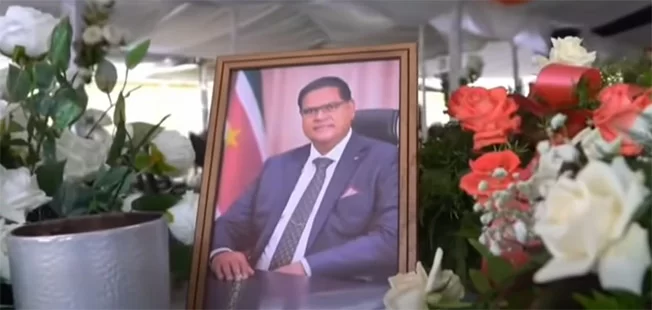
  • Afscheid van ex-president tevens VHP voorzitter Chan Santokhi

    Afscheid van ex-president tevens VHP voorzitter Chan Santokhi

    Early on the morning of April 7, formal ceremonies marking the state cremation of former Suriname President Chan Santokhi officially commenced, nearly a week after his sudden passing at the age of 67.

    The solemn procession began after a joint detachment of military and police personnel retrieved Santokhi’s remains from the morgue of Paramaribo Academic Hospital. Following the retrieval, the cortège embarked on a pre-planned processional route past multiple key government buildings, making its first major stops at the Presidential Palace and the National Assembly building. At these sites, official delegations and gathered dignitaries led formal tributes to bid farewell to the former leader, who died unexpectedly on March 30.

    From the National Assembly, the procession continued through Paramaribo’s inner city to De Olifant, the headquarters of the Progressive Reform Party (VHP). Santokhi had served as the party’s chairman from 2011 until his death, and crowds of residents had gathered along the processional route from early morning to pay their final respects to the fallen statesman.

    Another ceremonial stop was held along Eddy Brumastaat, near the national headquarters of the Boy Scouts Suriname (Weest Paraat). Santokhi held the title of Chief Scout for the organization for many years, and members of the scouting leadership rank-and-file scouts gathered to greet the procession, holding a formal farewell in accordance with scouting tradition.

    Local Surinamese media outlet Starnieuws is covering all events related to Santokhi’s state cremation via a continuously updated live blog to keep the public informed of the day’s proceedings.

  • Ministry of Sports Invites Public to Welcome Home CARIFTA Champions

    Ministry of Sports Invites Public to Welcome Home CARIFTA Champions

    The Jamaican Ministry of Sports has extended an open invitation to members of the public across the country to join in a joyous homecoming celebration honoring the nation’s standout CARIFTA Games champions, fresh off their dominant performance at the regional youth athletic competition.

    CARIFTA, the Caribbean Free Trade Association Games, stands as one of the most prestigious annual track and field events for young athletes across the Caribbean region, serving as a launching pad for many future Olympic and world championship competitors. This year’s edition saw Jamaican young athletes deliver a record-breaking performance, topping the overall medal standings once again and cementing the nation’s reputation as a global powerhouse in youth track and field.

    In a statement released to the media, a spokesperson for the Ministry of Sports noted that the public celebration is designed to recognize the hard work, dedication, and extraordinary achievement of every athlete who represented Jamaica at the games. Unlike closed private receptions, this event is open to all Jamaicans who wish to turn out and cheer on the next generation of sporting stars, allowing communities to connect directly with the young champions who have brought national pride to the country.

    Organizers have confirmed that the homecoming event will include a formal motorcade through key areas of the capital Kingston, giving community members on both sides of the route the chance to wave flags, hold celebratory signs, and personally congratulate the athletes. A short official ceremony will follow the motorcade, where government sporting officials will address the crowd and highlight the role of these young champions in inspiring the next generation of Jamaican athletes.

    The Ministry has encouraged members of the public to come out in large numbers, wear the national colors of black, gold, and green, and share their celebratory messages on social media using an official event hashtag to amplify the national pride surrounding the team’s historic win. This public welcome marks a long-standing tradition in Jamaican sports culture, where elite athletic achievements are celebrated as collective national victories rather than individual accomplishments.

  • Sluiting Straat van Hormuz verdeelt olie-inkomsten Midden-Oosten: winnaars en verliezers

    Sluiting Straat van Hormuz verdeelt olie-inkomsten Midden-Oosten: winnaars en verliezers

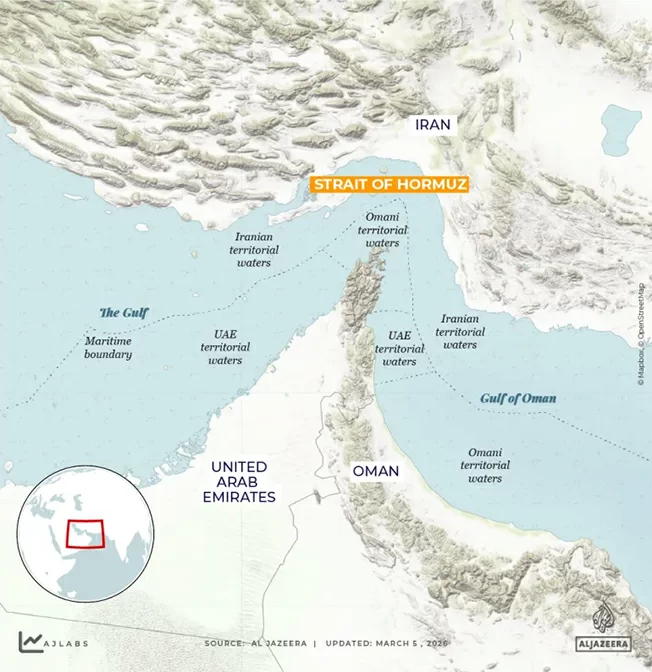
    Since late February, one of the world’s most critical energy chokepoints, the Strait of Hormuz, has been effectively closed by Iranian authorities, sending shockwaves through global energy markets and creating a stark divide in financial outcomes for oil-producing nations across the Middle East, a new Reuters analysis finds. Roughly 20% of the world’s daily oil and liquefied natural gas flows pass through this narrow waterway, making its disruption a major global economic flashpoint.

    The closure followed escalating regional tensions after the United States and Israel launched airstrikes on Iranian targets. While Iran later relaxed restrictions to allow vessels with no American or Israeli links to transit, keeping a small number of tankers moving through the strait, global energy markets have remained extremely volatile. Brent crude prices recorded a historic 60% jump in March alone, a surge that has reshaped revenue calculations for every major producer in the region.

    The uneven impact of the crisis boils down to one key factor: geography. Nations that control the strait or have pre-built alternative export routes are reaping massive financial windfalls from sky-high prices, while countries dependent entirely on Hormuz access are facing catastrophic revenue losses.

    Iran, which controls access to the strait, has seen its oil revenue climb 37% compared to last year. Oman and Saudi Arabia have also posted gains: Omani revenue rose 26% year-on-year in March, while Saudi Arabia recorded a 4.3% increase. The United Arab Emirates (UAE) saw a modest 2.6% dip in revenue, as higher global prices offset most of the losses from reduced export volumes.

    Saudi Arabia’s ability to weather the crisis stems from a key infrastructure investment made decades ago. During the 1980s Iran-Iraq War, the kingdom built the 1,200-kilometer East-West Pipeline, which connects its eastern oilfields directly to the Red Sea port of Yanbu, bypassing the Strait of Hormuz entirely. Since the closure, the pipeline has been operating at full capacity of 7 million barrels per day. Even though Saudi Arabia’s total crude export volume dropped 26% in March, the record-high oil prices pushed the total value of its exports up by more than $550 million compared to typical monthly levels. Exports through Yanbu have operated near maximum capacity despite recent attacks on the port, though the kingdom remains vulnerable to further strikes on its energy infrastructure and the nearby Bab el-Mandeb shipping lane from Iran and its Houthi allies in Yemen.

    For nations without alternative export routes, the picture is far grimmer. Iraq and Kuwait have been hit hardest, with year-on-year revenue drops of 76% and 73% respectively in March. Iraq’s total oil revenue for the month fell to just $1.73 billion, while Kuwait’s dropped to $864 million. Iraq saw limited support from cargoes that departed just before the escalation of tensions, but analysts warn April revenue will likely be even lower. Qatar has also suffered steep losses due to its lack of alternative export infrastructure for both oil and gas.

    The UAE, which operates the Habshan-Fujairah pipeline that can bypass Hormuz with capacity between 1.5 million and 1.8 million barrels per day, still saw its total revenue fall by more than $174 million in March after attacks targeted the Fujairah port, disrupting operations.

    Looking ahead, most Gulf states appear to have the financial buffer to absorb this short-term shock, according to Adriana Alvarado, vice president at ratings firm Morningstar DBRS. With the exception of Bahrain, most regional governments hold enough reserve savings and maintain public debt levels below 45% of GDP, giving them room to borrow or draw down savings to offset temporary revenue losses.

    In the longer term, the crisis has reignited global debates over energy security. Some Western oil companies and political leaders are calling for increased investment in fossil fuel production to avoid future supply disruptions, but many energy analysts argue that accelerating the transition to renewable energy is the only durable protection against future geopolitical price shocks. A recent high-profile example of this transition push came earlier this year, when French energy giant TotalEnergies and UAE-backed renewable firm Masdar announced a $2.2 billion joint venture to rapidly scale up renewable energy development across nine Asian nations.

    As the standoff over the strait continues, with U.S. President Donald Trump threatening severe retaliation against Iran if the waterway is not reopened by Tuesday, the global energy industry remains on edge, waiting to see how the crisis will reshape long-term energy policy and market dynamics.

  • Nevis’ Kymarni Newton secures Team SKN’s lone medal at CARIFTA 2026

    Nevis’ Kymarni Newton secures Team SKN’s lone medal at CARIFTA 2026

    The 2026 CARIFTA Games, held over the Easter weekend in Grenada, delivered a historic moment for tiny Caribbean federation St. Kitts and Nevis, as 17-year-old Nevisian runner Kymarni Newton secured Team SKN’s sole medal of the regional youth athletics competition.

    Competing in the hotly contested Under-17 Boys’ 800-meter race, Newton crossed the finish line to claim bronze with a stunning personal best time of 1:55.34. Beyond his spot on the podium, the young runner’s performance also broke a long-standing St. Kitts and Nevis Under-18 national record, marking a new high-water mark for his athletic career.

    Newton’s road to the 2026 podium was years in the making, and punctuated by off-track drama that tested his grit just days before the race. He first earned a spot to compete at CARIFTA back in 2024, when the Games were also hosted in Grenada, and narrowly missed qualifying for the 800m finals at the 2025 iteration in Trinidad. This year, 11 Nevisian athletes earned qualifying spots for the regional meet, and 10 ultimately made the trip to Grenada — a group that almost did not include Newton.

    In a recounting of the pre-race chaos that preceded his historic finish, the St. Kitts and Nevis Athletics Association revealed that Newton nearly missed his connecting flight from St. Kitts to Grenada after realizing he had left his passport at home. The last-minute scramble turned out to be a fitting metaphor for his entire 2026 Games journey, association officials noted.

    “Kymarni has proven that no hurdle, on or off the track, is too high,” the association said in its official congratulatory statement, highlighting how the young athlete overcame early career setbacks and last-minute travel chaos to reach the podium.

    Honourable Troy Liburd, Minister of Youth and Sports for the Nevis Island Administration, also joined in celebrating Newton’s win, noting that the runner has made his home community of Cherry Gardens, his alma mater Charlestown Secondary School, and the entire island of Nevis proud with his landmark performance.

    Newton’s medal is more than a personal achievement: it underscores the growing strength and untapped potential of Nevis’ emerging generation of young track and field athletes, who continue to hold their own against top regional competitors at one of the Caribbean’s most prestigious annual youth sports competitions.

  • NIA Celebrates Excellence, Honours Women Across Diverse Fields

    NIA Celebrates Excellence, Honours Women Across Diverse Fields

    CHARLESTOWN, NEVIS – April 7, 2026 – The Department of Gender Affairs under the Nevis Island Administration (NIA) has marked International Women’s Day 2026 by celebrating seven outstanding women whose work has shaped progress across multiple sectors of Nevisian society, shining a spotlight on the enduring influence of women’s leadership and community service across the island.

    Held at the scenic Malcolm Guishard Recreational Park, this year’s award ceremony carried the official theme “Rights, Justice, Action for All Women and Girls,” as a core event in the Department’s full calendar of activities to observe the global occasion. The 2026 global International Women’s Day framework centers on the theme “Give To Gain,” which encourages individuals, community groups, and institutions to contribute tangible resources, mentorship guidance, advocacy support, and time to uplift women and girls, strengthening collective commitments to closing gender equity gaps.

    Seven women received recognition for excellence in their respective professional and community spaces. Jackie Hunkins-Taylor claimed the Women in Law Award, while Sharmyn Powell took home the honor for the Finance sector. Valerie Hendrickson was recognized for her work in Agri-Processing, Noellisa Swaby for her contributions to the Circular Economy, and Dianne Hobson for her impact on Arts and Culture. The prestigious Minister’s Award went to Leander Cornelius, and Thema Ward was honored with the special Tricia Greaux Ocean Governance Award. Unlike the appointed Minister’s Award, all other honors were selected through public nomination, meaning awardees were chosen by their own neighbors and community members who have witnessed their work firsthand.

    Honourable Jahnel Nisbett, Nevis’ Minister of Gender Affairs, opened the ceremony with heartfelt congratulations to the recipients, emphasizing that public celebration of women’s work is a critical step toward advancing equity.

    “We are here to celebrate seven amazing women who have left an indelible mark on their fields,” Nisbett remarked. “With the exception of the Minister’s Award, the entire selection process was led by the general public. The people of Nevis see your work, they see the change you’ve created, and they have chosen you to be publicly celebrated. Through the Department of Gender Affairs, we are proud to serve as the platform to honor your dedication, say thank you, and present you with your honors while you are here with us, so you can truly understand how deeply valued you are by this community.”

    Feature speaker Ayana McCalman, a practicing attorney, used her address to push back against long-held harmful gender stereotypes, calling for lasting cultural change and consistent action to embed gender equity into daily life, rather than limiting progress to symbolic one-off events.

    “It is time that we write a new reality for women across our region and the world,” McCalman said. “Women are warriors, and they deserve space to lead every single day. As we celebrate these remarkable women today, let us also reflect on how we show up for the women in our own lives, not just in the month of March, not just at award ceremonies, but in the small, everyday moments. Do we show up to support them? Do we listen when they speak? Do we invest in their goals? Do we create space for them to heal, and to lead? Because empowering women is not a single annual event – it is a culture, it is an ongoing commitment, it is a choice we have to make again and again, in our homes, our workplaces, and our communities.”

    The event marked one of the NIA Department of Gender Affairs’ most visible public celebrations of women’s achievement in recent years, bringing together community members, government officials, and family to recognize the contributions of women that often go uncelebrated in public life.

  • Government calls for responsible vending practices while supporting livelihoods

    Government calls for responsible vending practices while supporting livelihoods

    On April 7, 2026, officials from the Federation of Saint Kitts and Nevis outlined a balanced, engagement-first policy for street vending regulation across the capital Basseterre and its adjacent neighborhoods, framing the approach as a way to support vulnerable livelihoods while safeguarding public health, environmental integrity, and urban order.

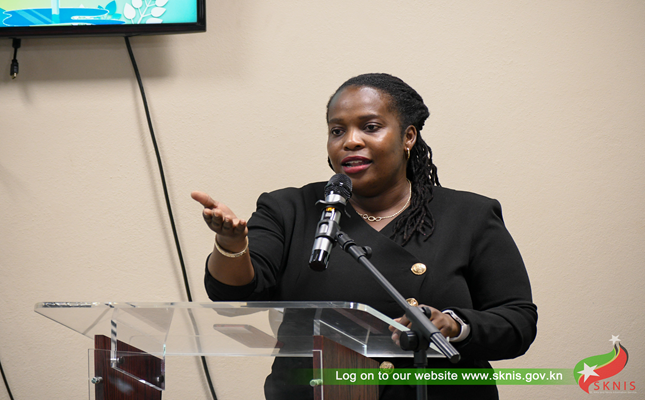
    Senator Dr. Joyelle Clarke, Minister of Sustainable Development, Environment, Climate Action and Constituency Empowerment, laid out the government’s position during a recent address to the country’s National Assembly, noting that unregulated unauthorized vending has emerged as a growing challenge with cascading negative impacts. These risks include unchecked environmental degradation, increased traffic congestion that disrupts daily movement for residents and visitors, and measurable public health hazards that can impact the broader community.

    Clarke emphasized that the government’s approach is rooted in collaboration rather than punitive enforcement, highlighting that the ministry prioritizes dialogue and partnership with vendors operating in unapproved green spaces. “For any vendor who has set up on greenspaces without permission, we engage several times to explain to them that this is not a place that is authorised for vending. Either it is going to create an environmental problem or traffic congestion,” Clarke stated. “We generally and in most cases, provide persons with alternatives,” she added, reinforcing the administration’s commitment to supporting vendors as they earn a living.

    Instead of relying solely on punitive measures to address noncompliance, the ministry has shifted its core strategy to proactive outreach. Officials work directly with vendors to facilitate relocation to officially designated vending zones, and provide flexible timelines and targeted guidance to ease the transition for small business owners.

    Even with this supportive framework, Clarke drew attention to ongoing problematic practices that require urgent action from vendors. Along high-traffic city corridors, improper waste disposal – particularly the dumping of coconut husks – has created ideal breeding grounds for mosquitoes, raising the risk of vector-borne illness and creating broader public health concerns for the surrounding area.

    “What we are saying to the vendors who are deciding to sell, you must take everything with you at the end of the day,” she stressed, calling on all vending operators to take greater personal responsibility for maintaining clean, safe vending sites that do not harm the surrounding community.

    To help vendors operate legally and sustainably, Clarke encouraged all street vendors to formally coordinate with either the Department of Physical Planning or the Department of Urban Development and Resilience to secure access to approved vending spaces. She concluded by noting that long-term sustainable livelihoods for vendors and planned, orderly urban development are complementary goals, not competing priorities, and that both must be advanced together to support the prosperity of all residents of Saint Kitts and Nevis.

  • J’keem Weste Jr. Makes Urgent Appeal for Kidney Donor to Support Life-Saving Transplant

    J’keem Weste Jr. Makes Urgent Appeal for Kidney Donor to Support Life-Saving Transplant

    For 36-year-old father J’keem Weste Jr., the chance to watch his child grow up hinges on one urgent, life-changing act: a stranger coming forward to donate a kidney. Facing end-stage kidney failure that leaves a transplant as his only shot at long-term survival, Weste has launched a public appeal to find a compatible donor who meets a key requirement: holding a valid U.S. visa. Because the transplant procedure is scheduled to take place outside the United States, only donors with active U.S. visas can complete the full pre-surgery evaluation and medical process, per the appeal. Unlike many donation scenarios that leave participants covering out-of-pocket costs for travel, medical testing, and post-procedure care, organizers behind the appeal have confirmed every expense tied to the donation will be fully covered. This provision eliminates one of the most common financial barriers that stop willing potential donors from moving forward with the process. Interested individuals can start the confidential medical evaluation process through a dedicated online portal, and organizers stress that even those who are not able to donate themselves can help by sharing the appeal across social media and personal networks. Wider distribution dramatically increases the chance of reaching a compatible, willing donor who may not otherwise see the request. For people seeking more detailed information about the process, eligibility criteria, or Weste’s story, direct contact is available via both phone call and WhatsApp messaging through the published contact channels. Medical experts and donor advocates have long emphasized that kidney transplantation remains the only clinically viable, life-extending treatment for people living with severe end-stage kidney failure. As demand for donor kidneys continues to outpace supply globally, public outreach efforts like Weste’s rely on community participation to connect patients with the donors that can save their lives. Advocates add that living kidney donation carries a low long-term risk for healthy donors, and can mean the difference between life and death for recipients waiting for a matching organ.

  • Government advances fair land transition for farmers and future homeowners

    Government advances fair land transition for farmers and future homeowners

    BASSETERRE, Saint Kitts – In a deliberate push to reconcile national development goals with the protection of vulnerable livelihoods, the Government of the Federation of Saint Kitts and Nevis has launched a compassionate, fair land transition process that aims to support relocating agricultural workers while unlocking long-awaited homeownership opportunities for hundreds of waiting citizens.

    The initiative, which reallocates land zoned for residential development away from current agricultural use, has been structured from its inception around a people-centred approach, Sustainable Development Minister Joyelle Clarke outlined in a recent address to Parliament on March 31. Clarke, who also holds portfolios for Environment, Climate Action and Constituency Empowerment, stressed that the administration has rejected rushed, uncompromising relocation that would leave farmers without critical support, while still upholding the property rights of citizens who have already paid for their residential land plots.

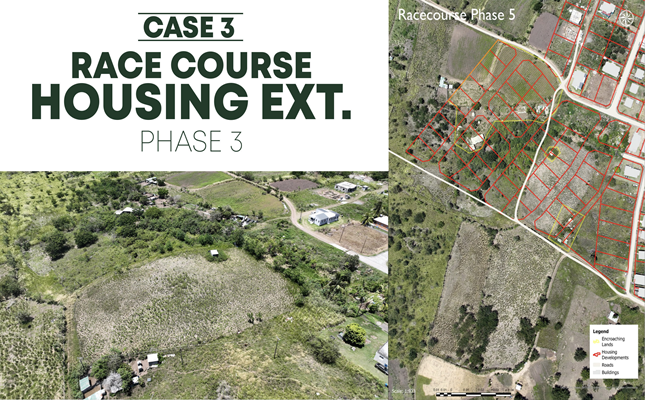
    According to Clarke, the Ministry of Sustainable Development has proactively engaged with all farmers occupying land marked for development through standardized, transparent outreach since July 2025, working to address concerns and identify solutions collaboratively. The process is already underway across three high-priority zones: Racecourse in Newton Ground, Cabbage Tree in Cayon, and Lemon Hill in Molineaux. In each site, government teams have worked one-on-one with affected farmers to craft tailored solutions, ranging from identifying suitable replacement agricultural land to providing ongoing agricultural support that preserves income stability. In at least one confirmed case, new land has already been secured for a transitioning farmer, ensuring they can continue their work without prolonged disruption to their livelihood.

    The transition initiative also addresses a years-long backlog for aspiring homeowners across the federation. More than 400 individuals and families have already completed payments for their allocated residential land, and have been waiting to begin construction on their homes. The government’s structured transition clears the way for these families to move forward with their long-planned property investments, expanding access to housing for local citizens as part of the administration’s broader development agenda.

    Clarke emphasized that the cross-ministerial collaboration between the Ministry of Sustainable Development and the Ministry of Agriculture underlying the process underscores the government’s core commitment to inclusive growth. “We are engaging the farmers to ensure we are not disrupting their livelihoods, but we are also allowing the almost 400 plus persons who have paid for their land… to move on to be homeowners,” Clarke explained, noting that the federation’s development progress will not leave any community behind.

    This press release was originally issued by the St. Kitts and Nevis Information Service (SKNIS) and distributed Tuesday, April 7, 2026.

  • Jomo explains why gov’t can’t ‘settle’ case against Adriana King

    Jomo explains why gov’t can’t ‘settle’ case against Adriana King

    Prominent defense attorney Jomo Thomas has recently cleared up widespread public confusion over why the newly inaugurated Godwin Friday-led New Democratic Party administration cannot unilaterally resolve the pending criminal case against well-known educator and activist Adriana King — a question that emerged after the government greenlit a civil settlement for the family of 18-year-old motorcyclist Cjea Weekes, who died in a 2022 police pursuit crash.

    Thomas, whose legal chambers have a long track record of winning high-profile suits against the previous Ralph Gonsalves administration, first announced the settlement of the Weekes case last month during his regular weekday “Plain Talk” segment on local radio station Boom FM. The agreement came just one day before the civil trial was set to begin, a move the lawyer praised for sparing the teen’s family additional emotional strain from a public court proceeding. He also highlighted that the settlement, authorized by Attorney General Louise Mitchell on Prime Minister Friday’s instruction, marked a break from the previous Gonsalves government’s years-long refusal to settle the suit, even noting that Weekes’ mother worked at Gonsalves’ official residence at the time of her son’s death.

    Following the public announcement, the news of the settlement, first reported by iWitness News, sparked intense debate across local social media platforms, with many listeners and readers asking why the Friday administration would not extend the same resolution to King’s case. King faces criminal charges stemming from allegations she intended to block then-Prime Minister Gonsalves from accessing Parliament on August 5, 2021.

    In his recent public address on the topic, Thomas emphasized that the core difference between the two matters lies in their legal classification: the Weekes dispute was a civil wrongful death claim against the government, while King’s case is a criminal prosecution. This legal distinction changes which government body has the authority to end the proceeding, he explained.

    To contextualize the comparison, Thomas noted that civil cases, such as the Weekes suit, center on claims for financial compensation for damages, and the sitting government, through the Attorney General, has the authority to reach a settlement to resolve the claim. Criminal cases, by contrast, are brought by the state to punish unlawful conduct, and can result in prison time, suspended sentences, or permanent criminal records for convicted defendants. Only the constitutionally independent Office of the Director of Public Prosecutions (DPP) has the authority to dismiss criminal charges, Thomas explained, adding that the Prime Minister and Attorney General have no power to direct the DPP to drop a case, even if they wished to do so.

    Thomas went on to share his personal assessment of King’s case, arguing that when applying the two core tests the DPP uses to evaluate criminal charges — the sufficiency of evidence test and the public interest test — the case against King fails on both counts. “I don’t think there’s a public interest in that case, I don’t think there’s sufficient evidence to support the charge against Miss King,” he stated.

    A timeline of King’s case shows that the charges were initially dismissed in May 2024, when Magistrate John Ballah ruled that pursuing the charge amounted to an abuse of process. However, then-DPP Sejilla McDowall filed an appeal against the dismissal, and the appeal has not yet been scheduled for a hearing.

    Thomas stressed that the DPP’s office is a constitutionally independent branch of government, so Prime Minister Friday cannot legally order the DPP to abandon the appeal. While he acknowledged that a sitting prime minister or attorney general may choose to privately communicate their position on a case to the DPP, they have no authority to force a specific outcome. “I think that we have to understand these things when we are having these conversations. Otherwise, we confuse and conflate issues, and we confuse a criminal case for a civil case,” he said.

    Thomas also pushed back against public questions over why the Weekes case was settled civilly but no criminal charges were ever filed against the police officers involved in the pursuit that led to Weekes’ death. Weekes was killed in February 2022, when he crashed his motorcycle on Twenty Hill during a high-speed police chase that began in Questelles, just over a mile from the crash site. A coroner’s inquest ruled Weekes’ death a misadventure, and McDowall previously concluded there was no basis for criminal liability. Thomas confirmed that he has formally asked current acting DPP Duane Daniel to re-examine the evidence in the case to reconsider pursuing criminal charges against the involved officers, a position he has maintained despite the previous findings.

    To correct another common misconception that only the current Friday administration settles civil claims against the government, Thomas added that the previous Gonsalves administration also greenlit settlements in other high-profile police brutality cases, including the 2008 beating of 15-year-old Jemark Jackson, who was left in a coma by officers at the Kingstown Criminal Investigation Department.

  • “Environment For Everyone” campaign tackles illegal dumping and community responsibility

    “Environment For Everyone” campaign tackles illegal dumping and community responsibility

    BASSETERRE, Saint Kitts – April 7, 2026 – A nationwide environmental protection initiative is growing in traction across Saint Kitts and Nevis, as the country’s Ministry of Environment scales up its high-profile “Environment For Everyone” campaign, a multi-agency effort designed to crack down on illegal waste dumping and embed a culture of collective environmental accountability across local communities.

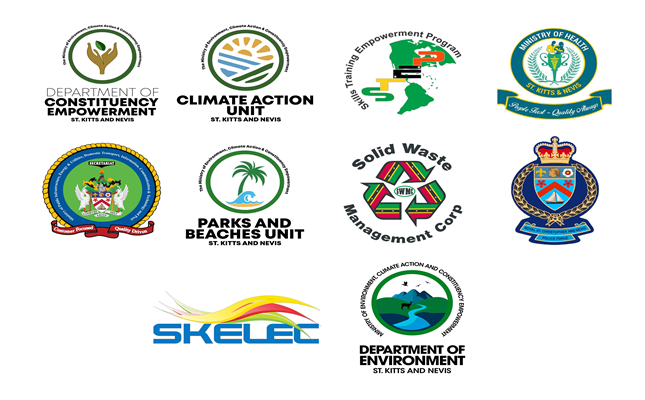
    Leading the push is Minister of Sustainable Development, Environment, Climate Action and Constituency Empowerment, the Honourable Senator Dr. Joyelle Clarke, who emphasized that the campaign represents a landmark cross-sector collaboration bringing together 10 distinct government and private entities. Partner agencies include the Parks and Beaches Unit, the Solid Waste Management Corporation, the S.T.E.P environmental program, His Majesty’s Prison, the Department of Public Infrastructure, the Ministry of Health, St. Kitts Electricity Company Ltd., the Traffic Department, and the Ministry of Environment itself.

    Clarke explained that the expanded campaign grows out of the nation’s popular Annual Christmas Cleanup, a long-running event that has evolved into a sustained movement that integrates public service, volunteer participation, and individual responsibility for environmental stewardship. “By uniting all these agencies under one umbrella, we are directly confronting the blight of illegal dumping that disfigures our public spaces,” Clarke noted in her remarks.

    Recent targeted cleanup operations in the Beacon Heights neighborhood laid bare the full scale of the illegal dumping crisis facing the island. Intervention teams pulled tonnes of improperly discarded large waste from public green spaces, including full-sized mattresses, broken household appliances, and accumulations of single-use plastic debris – all of which had been deliberately dumped in unauthorized areas rather than taken to official waste disposal sites.

    Clarke questioned the logic of illegal dumping practices, pointing out that Saint Kitts already offers some of the lowest official waste disposal tipping fees in the region, meaning proper disposal costs households and commercial haulers almost nothing. “Why go out of your way to offload waste illegally when disposing of it properly costs next to nothing?” she asked. The minister stressed that the act of illegal dumping imposes an unnecessary financial and ecological burden on local communities, erodes the island’s natural beauty, and undermines the country’s core tourism sector, which is branded under the national slogan “Venture Deeper.”

    “Environmental protection is not just about keeping our postcard-perfect beaches clean. It requires care for every green space, every community neighborhood, and every stretch of land across Saint Kitts and Nevis,” Clarke added.

    Backed by new regulatory authority granted under the recently passed Community Beautification and Safety Bill, the campaign is now rolling out to every electoral constituency across the federation, with organizers placing heavy emphasis on grassroots citizen participation. Central to the initiative’s core message is a simple but urgent reminder: safeguarding the islands’ natural environment is not a responsibility that falls to the government alone – it requires action from every resident.

    This report is based on an official press release from the St. Kitts and Nevis Information Service (SKNIS), distributed via SKNVibes.com.