作者: admin

  • Rebuilding learning

    Rebuilding learning

    In late October 2025, Category 5 Hurricane Melissa made landfall across Jamaica, leaving widespread destruction in its wake. Roofs were torn from buildings, road networks were submerged and blocked by floodwaters, and hundreds of families were forced to flee their homes. For communities across the island, the storm brought unparalleled disruption to daily life — and nowhere was this disruption felt more acutely than in the education sector, particularly in low-income, vulnerable regions where families were already grappling with persistent economic hardship.

    When the storm passed, education leaders across the island faced an urgent, human-centered question: how do we locate every displaced student and safely bring them back to structured learning? For two Jamaican primary and infant schools — Barrett Town in St James parish and Bromley in St Mary parish — the answer came from an unexpected source: a brand-new digital tool that had only been rolled out weeks before the hurricane made landfall.

    Weeks before Hurricane Melissa struck, both institutions had gone live with the Education Management Information System (EMIS), a digital platform developed through a joint three-year initiative between Jamaica’s Ministry of Education and the United Nations. Titled “Empowering Jamaica’s future: SDG joint programme on digital transformation for education”, the initiative was designed to modernize Jamaica’s entire public education system, with the core goal of improving learning outcomes for more than 450,000 students across the country. Before the storm, the project’s main focus was institutionalizing cross-sector digitalization: upgrading data governance frameworks, digitizing routine administrative tasks, and integrating nutrition program tracking through the new EMIS platform. For school staff, the tool was initially viewed as just a modern administrative upgrade to replace outdated paper record-keeping. No one anticipated how critical it would become just weeks after launch.

    When the hurricane hit, most physical paper records were destroyed by floodwater and wind damage, and traditional communication networks were severely disrupted. The digital student data stored on EMIS quickly became the backbone of post-storm recovery efforts. At Barrett Town Primary and Infant School, Principal Anthony Murray described the first days of reopening as a period of intense, community-led coordination rooted in compassion. The entire school community mobilized to deliver critical support to displaced families, providing everything from psychosocial counseling, new uniforms, textbooks and school supplies, to clothing, bedding, and daily hot meals, all designed to ease the burden on storm-impacted families and create a safe, welcoming space for students to return to learning.

    But every step of this coordinated response was guided by the data in EMIS. “Through EMIS we tracked attendance in real time and followed up on absences,” Murray explained. “This made it possible to reach families directly.” Daily attendance monitoring through the platform revealed that 90% of Barrett Town’s students had returned to school within the first week of reopening, and the remaining unaccounted-for students were immediately flagged for targeted follow-up by the school guidance department. Administrators quickly learned that many of the missing students had transferred to new schools after displacement, while others needed tailored support to be able to return. The digital system ensured that no child was overlooked amid the chaos of post-storm recovery.

    Murray now refers to EMIS as the school’s “early-warning and action system”, which pulls real-time data on student enrolment, attendance patterns, and unmet resource needs, allowing leaders to allocate support before small problems escalate into larger crises. The platform helps administrators quickly identify which students need access to emergency transportation, temporary shelter, or post-storm health follow-up. “That turns a crisis scramble into a coordinated response,” Murray said.

    Over at Bromley Primary and Infant School, Principal Calef Williams reported a similar experience, despite unique challenges the school faced during recovery. Bromley adopted EMIS in September 2025, starting with core attendance tracking functionality. When Hurricane Melissa hit, internet connectivity became severely intermittent across the region, but teachers collaborated continuously to keep the platform updated. “During the hurricane and early recovery, it was a bit tedious with intermittent connectivity,” Williams said. “However, we collaborated and used it to ensure we were consistent.” By November 17, just over three weeks after the storm, Bromley had fully resumed normal in-person operations, a milestone Williams credits directly to the stability and structure EMIS provided during the transition.

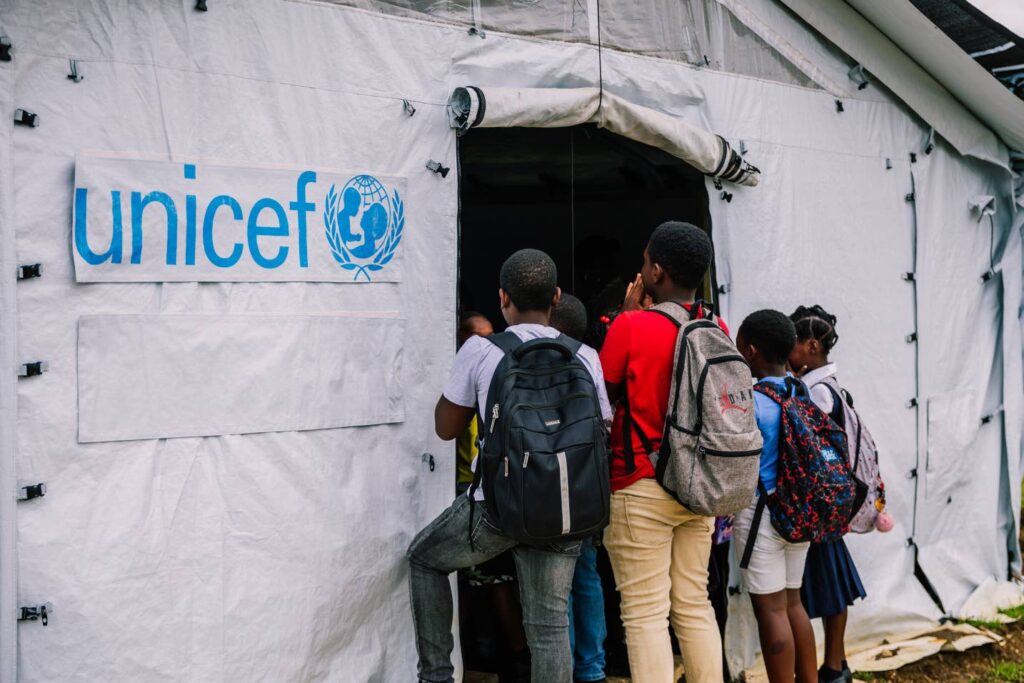
    Across both schools, EMIS proved to be far more than a digital replacement for paper attendance registers. It became a core tool for rebuilding learning communities after a devastating disaster. When communication networks were unreliable and families were scattered across the island in emergency shelters, centralized, accessible digital student records allowed recovery efforts to proceed faster and more equitably than would have been possible with destroyed paper records. Teachers were able to spend far less time reconstructing lost student files and far more time supporting students’ academic and emotional recovery after the storm. Temporary classroom tents donated by UNICEF provided the physical space for learning to resume, while EMIS provided the data backbone to reconnect students with their schools.

    The experience of these two schools reflects the broader mission of the SDG Joint Programme on Digital Transformation for Education, which works to integrate data tools like EMIS to strengthen education systems across Jamaica. While the initiative was originally designed to improve long-term planning and data-driven decision making in education, it has unexpectedly demonstrated enormous value in crisis response, enabling schools to act faster and more equitably when large-scale disruption hits.

    As Jamaica continues its long-term recovery from Hurricane Melissa, school leaders at both institutions are already looking ahead, planning to fully integrate EMIS into all daily school operations. Moving forward, they plan to use the platform’s data to monitor long-term attendance trends, identify unaddressed learning gaps, and build more robust preparedness plans for future climate shocks. Reflecting on the crisis, Murray noted that the hurricane laid bare how vulnerable coastal communities are to extreme weather events. But it also showed what can be achieved with the right digital tools. “The hurricane showed us how fragile things can be,” he said. “But it also showed us that with the right tools we can recover faster and build back stronger for our children.”

  • ‘We are in jeopardy’

    ‘We are in jeopardy’

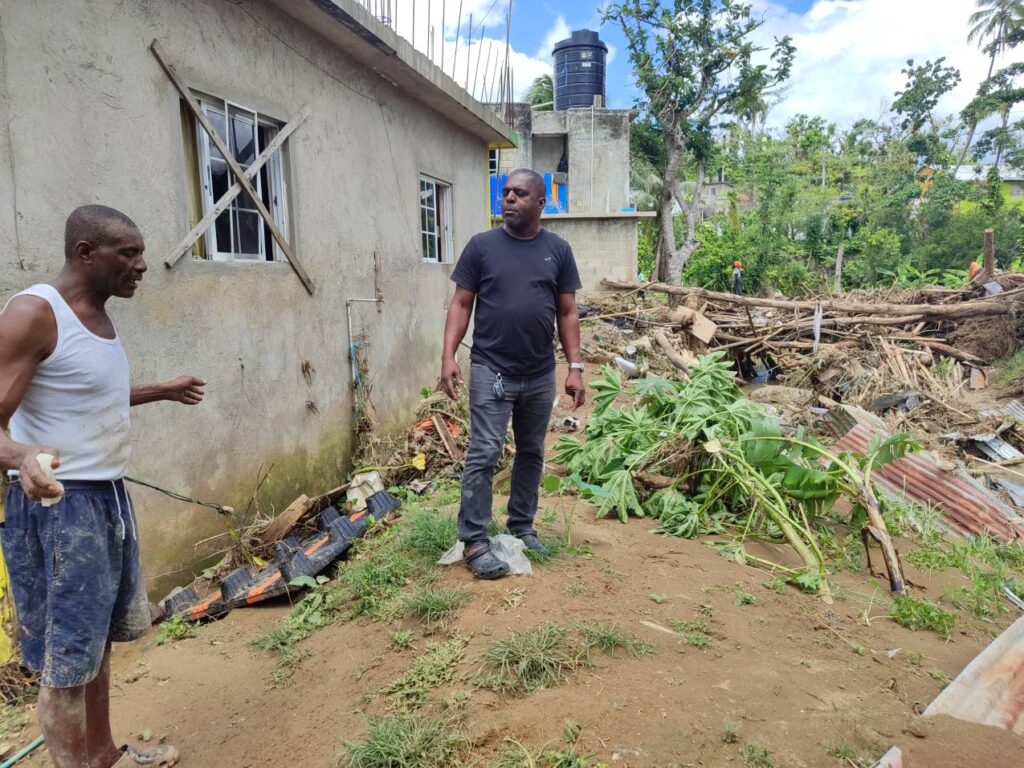
    On a grey, rain-threatened Easter Monday, residents of Amity Hall’s Gazer Road neighborhood in St James, Jamaica, surveyed the muddy wreckage of their properties and braced for more disaster. Just 24 hours after heavy downpours swept through parts of the parish, the community remained on edge: with the Montego River still choked with unremoved debris, another storm could bring a repeat of Sunday’s destructive flooding, leaving families displaced for a second consecutive day.

    Sunday’s flood, which sent river water pouring over the banks and into residential properties, stirred up harrowing memories from last October’s Category 5 Hurricane Melissa. When the waters receded, they left behind thick layers of mud, tangled debris, and new losses that have set back slow, already fragile recovery efforts for local families.

    Janet Dawkins, one of the hardest-hit residents, spoke with the Jamaica Observer amid the clean-up, her voice frazzled with worry. ‘People’s lives are in jeopardy, we are in jeopardy. The water flows right around our homes; we need help,’ she said, repeating her fear as dark storm clouds gathered overhead.

    Dawkins explained that the small bridge connecting Gazer Road to the rest of Amity Hall suffered major damage in Sunday’s flood. If residents had not worked through the day to clear broken debris, the crossing would have been completely cut off, leaving the community isolated. ‘We cut up the debris with saws so we could get across. We packed it ourselves yesterday just to be able to leave the area,’ she added.

    Local residents have pinned the blame for the repeat flooding on the buildup of trees and debris left uncleared in the Montego River since Hurricane Melissa struck last fall. That debris has piled up against the bridge, acting as a makeshift dam that forces rising flood waters to divert into the surrounding neighborhood instead of flowing downstream. For Dawkins, the damage went far beyond the flood that soaked her home: she lost all the building materials she had stockpiled to rebuild her small on-site shop, which was first destroyed in the hurricane.

    ‘I had stone and sand, everything washed away. Half my building blocks got carried off by the river; the impact is devastating,’ she said dejectedly. ‘I put up a new stall just three weeks after the storm, and yesterday the river came down and knocked it right down.’ Dawkins has joined her neighbors in an urgent appeal for authorities to clear the river, clearing the debris that puts the community at constant risk of repeated flooding. ‘We want help, we need help. I need help to rebuild my shop, and we need help to get the river flowing again. It can’t stay like this,’ she said.

    For Mark Samuels, another Gazer Road resident, Sunday’s flood put his partner and young granddaughter in danger. Samuels was not home when waters rose to nearly two feet inside his house, and neighbors had to step in to evacuate his family before he returned after 8 p.m. When he arrived, he found his entire home — including the small shop he runs from the property — coated in mud and filled with debris. Samuels and his family spent most of Easter Monday shoveling muck out of their property, and the constant threat of future flooding has left him under crippling mental stress. The blocked section of the bridge sits just meters from his back door. ‘I know that when it rains, I can’t sleep. I’m always watching, always ready to run. I worry all the time about my family, and we are human beings too,’ he said.

    Tameika Brown, another resident who spent all of Sunday and Monday cleaning up her flood-damaged home, said the disaster has reawakened the trauma of Hurricane Melissa. She was at church when Sunday’s rains began, and returned home late to find the same destruction she had worked for months to recover from. ‘It’s not a good feeling. It brings back all the trauma from Melissa, and it puts you right back in that place of being traumatized all over again. It’s not good, but this is our life now,’ she said resignedly.

    Michael Allen, councillor for the Somerton Division, told the Observer he has been pressing authorities to clear the river channel since Hurricane Melissa passed last year. ‘Right after the hurricane, the whole river was blocked and families were already flooded out,’ he explained. Allen confirmed that clearing the Montego River falls under the responsibility of Jamaica’s National Works Agency (NWA), and he has repeatedly reached out to the agency to request cleanup crews. He also contacted Edmund Bartlett, Member of Parliament for St James East Central, who dispatched a tractor to the site — but heavy machinery was not suited to the work and could not clear the blocked channel.

    Allen followed up three weeks ago to alert Bartlett that the tractor had failed, warning that any future rain would trigger flooding if the river was not cleared. Now, he says, his warning has come true. Beyond the damage to homes, Sunday’s flood also destroyed a section of Gazer Road that Allen had recently lobbied to repair at a cost of J$3.5 million. Work on the road was just completed last week. ‘Last week they finished the front section,’ he said wistfully.

    Allen confirmed that 10 homes were directly impacted by Sunday’s flooding, and he has joined residents in calling for urgent cleanup of the river bed before more severe damage occurs. ‘If they had come when I called first, this would never have happened. The flood waters pushed the accumulated debris down to the bridge, and that’s when it flooded the whole neighborhood. Now residents are left to pick up the pieces,’ he said.

  • Two men dead, others injured in separate Easter Monday shootings

    Two men dead, others injured in separate Easter Monday shootings

    A quiet Easter holiday in Barbados was shattered by two unconnected shooting incidents that left two men dead and multiple other people wounded, according to official police updates. Law enforcement first responded to the violence just before 7 p.m., when 911 callers reported gunfire breaking out along the popular Brownes Beach in the parish of St. Michael.

    When officers from the Hastings/Worthing Police District arrived on scene, they found an adult man unresponsive outside a local business. A responding medical examiner officially pronounced the man dead at the location, and police have not yet released his public identity as of the latest update.

    Roughly three hours later, a second violent outbreak unfolded in Oistins, Christ Church, just after 10 p.m. that same evening. Officers from the Oistins Police Station were dispatched to the scene after emergency calls about another shooting. Early investigative work has confirmed that the attack grew out of a public disturbance that erupted while a crowd of locals and visitors were gathered for a scheduled community event. When the altercation escalated, an unidentified shooter opened fire, striking three people: two men and one woman.

    One of the wounded men, who had been rushed to the Queen Elizabeth Hospital, the island nation’s leading public medical facility, by a private vehicle, died from his injuries while receiving care. He has since been formally identified by authorities as 22-year-old Raul Clarke, a resident of Gall Hill in Christ Church. The two remaining injured victims were transported to the same hospital via emergency ambulance, and they are currently receiving ongoing medical treatment for their wounds. As of the latest update, their conditions have not been publicly disclosed.

    Barbados Police Service investigators have launched parallel probes into both shooting events, and the investigations remain active and ongoing as law enforcement works to identify suspects, piece together the motives for both attacks, and gather physical and witness evidence. To speed up progress on the cases, police are issuing a public appeal for any members of the public who may have information about either incident – whether they were witnesses, found themselves in the areas around the time of the shootings, or hold any details that could help investigators – to come forward with their tips.

    Members of the public can submit information anonymously through Crime Stoppers at 1-800-8477, reach the police emergency line at 211, contact the Hastings/Worthing Police Station directly at 430-7608 or 430-7609, or reach the Oistins Police Station at 418-2612 or 418-2608. All information provided to authorities will be treated as strictly confidential, police confirmed.

  • Tourism minister addresses Stonefield quarrying concerns [with audio]

    Tourism minister addresses Stonefield quarrying concerns [with audio]

    Public anxiety has been building across Dominica in recent weeks over a planned basalt quarry in the Stonefield Concord area, prompting the island nation’s Tourism Minister, Honorable Denise Charles-Pemberton, to step forward to directly answer constituent concerns. According to official documents from the Office of the Prime Minister (OPM), the quarry operation is intended to extract raw basalt material to support ongoing expansion and construction work on the runway of Dominica’s planned new international airport — a major infrastructure project that has drawn both support for its long-term economic benefits and pushback from local communities worried about environmental and quality-of-life impacts. The project’s connection to a critical national development initiative has amplified public attention to the quarry proposal, with many local residents raising questions about unaddressed environmental degradation, noise pollution, and disruption to nearby residential and ecologically sensitive areas. In her public address, which was recorded and released to media for public distribution, Charles-Pemberton acknowledged the depth of community worry, emphasizing that the government is committed to full transparency around the project’s permitting, environmental impact assessments, and operational plans. The minister’s intervention marks a key step in the government’s engagement with local stakeholders, as the future of the quarry and its role in advancing the island’s flagship airport project remain top of public discussion in Dominica.

  • Potters Stalwart Walcott Lewis Remembered as Pillar of Community by ABLP St George Candidate Michael Freeland

    Potters Stalwart Walcott Lewis Remembered as Pillar of Community by ABLP St George Candidate Michael Freeland

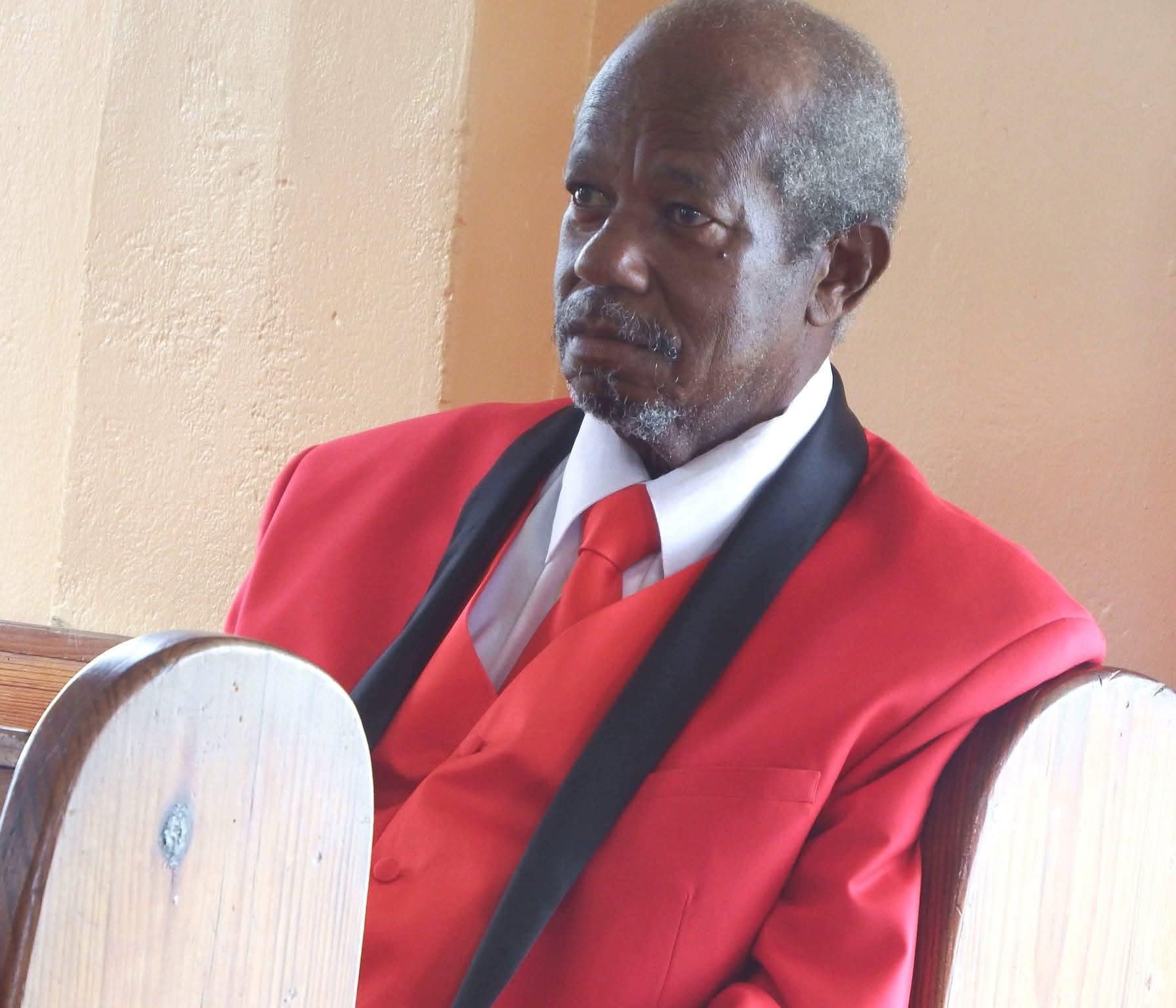
    ST JOHN’S, Antigua — The Antigua and Barbuda Labour Party (ABLP) candidate for the St George constituency, Michael Freeland, has opened up about his profound grief following the death of Walcott Lewis, a beloved and longstanding community leader from Potters Village.

    In a heartfelt statement shared this week, Freeland paid tribute to Lewis, remembering him as one of the most respected and reliably dedicated public figures the Potters Village community has ever known. Freeland characterized Lewis as a person defined by strong moral character, quiet resilience, and unshakable loyalty to the people and causes he cared about. Beyond his community impact, Freeland emphasized that Lewis’s death carries deep personal weight for him and his family.

    As a lifelong, dedicated member of the ABLP, Lewis’s commitment to both his neighborhood and his political principles set him apart from many, Freeland noted. He went on to share the close, decades-long tie that bonded Lewis to his late father, former political figure Sir Adolphus Freeland. The two men worked side by side through every high and low of their political and community work, standing together through all manner of challenges and celebrating every milestone of success along the way.

    Freeland described Lewis as a consistent, grounding presence in the lives of countless residents across Potters Village, calling him a foundational pillar of the community. His loss will leave a gaping hole that will be felt by residents of the village and many people beyond its borders, Freeland added. In a moving closing tribute, he said, “Walcott, you are never to be forgotten. Your impact on Potters and on our family will live on forever.”

    Freeland concluded his statement by extending his deepest condolences to all of Lewis’s loved ones, including immediate family members and close friends. He encouraged all those gathered to mourn Lewis to lean on one another for support during this challenging period of grief, ending with a simple, respectful wish: “Rest in peace, Walcott.”

  • HIRING: Bartenders and Cooks

    HIRING: Bartenders and Cooks

    The food and beverage sector continues to show signs of steady recovery, as one local hospitality business has recently posted open positions for two key front- and back-of-house roles: bartenders and cooks.

    As consumer demand for dining and social experiences out of the home continues to climb following years of industry disruption, venues across the country are working to rebuild their teams to match rising customer foot traffic. The open bartender role will be responsible for crafting beverage menus, mixing classic and signature drinks, interacting with guests to deliver a welcoming venue experience, and managing bar stock to keep service running smoothly. Ideal candidates will bring prior hospitality experience, a deep understanding of safe alcohol service protocols, and strong interpersonal skills to connect with patrons.

    For the open cook position, the business is seeking professionals who can maintain consistent food quality, work efficiently in a fast-paced kitchen environment, adhere to strict food safety and sanitation standards, and collaborate with front-of-house staff to coordinate timely order delivery. Relevant culinary experience, the ability to multitapse during peak service hours, and a commitment to delivering high-quality dishes are listed as key qualifications for the role.

    Industry analysts note that ongoing hiring activity in frontline hospitality roles signals growing confidence among small business owners in the sustained strength of consumer spending on leisure and dining experiences. Many venues are currently offering competitive hourly wages, flexible scheduling, and in some cases tips and performance-based bonuses to attract qualified workers to fill these critical positions.

  • Kentish Pentecostal Church Marks One Year Since Passing of Bishop Lester Emanuel

    Kentish Pentecostal Church Marks One Year Since Passing of Bishop Lester Emanuel

    One year ago this week, the Kentish Pentecostal community lost its long-serving spiritual leader, Bishop Rev. Dr. Lester Emanuel. On Monday, congregants and church leadership gathered to mark the somber anniversary, celebrating a life defined by 45 years of devoted ministry that transformed both the institution and the broader local area.

    In an official tribute released April 7, church leadership walked through the decades of impact Emanuel carved out during his tenure. Framed not just as a church leader but as a caring shepherd to his flock, Emanuel was credited with strengthening family bonds across the congregation and nurturing spiritual growth across multiple generations of worshippers.

    “Today, we pause not only to remember Bishop Emanuel’s remarkable journey, but to acknowledge the lasting imprint he left on every heart he touched,” the church’s official statement reads.

    Church leaders have repeatedly highlighted three core traits that defined Emanuel’s service: an unwavering commitment to his calling, a steady abiding faith that anchored the community through uncertain times, and a willingness to give sacrificially of his time and energy for others. Even a year after his passing, his influence remains palpable in the ministry he helped grow and the countless lives he mentored and supported.

    As a foundational pillar of Kentish Pentecostal Church for decades, Emanuel earned a reputation for preaching the gospel with unshakable conviction, guiding the congregation with thoughtful wisdom, and extending radical compassion to every member of his flock, from the youngest new worshipper to the longest-serving members.

    Though his voice no longer echoes from the church’s pulpit during weekly services, the institution emphasizes that his teachings and personal example continue to act as a guiding light for current leadership and congregants alike.

    “His legacy is alive in our worship, our fellowship, and the love we share as a community,” the statement added.

    The tribute was coordinated and issued by current Bishop Michael C. Butler, Sis. Bunny Butler, and the full Kentish Pentecostal Church Board. The group collectively affirmed that Emanuel’s entire life was marked by faithful, dedicated service to God, setting a benchmark for future leaders to follow.

    Moving forward, the church says it will continue to hold Emanuel’s memory in grateful esteem, noting that the strong institutional foundation he built over decades of work continues to inspire and direct all current and future work of the congregation.

  • Antigua and Barbuda swimmers claim four gold medals on Day 3 at CARIFTA Aquatics

    Antigua and Barbuda swimmers claim four gold medals on Day 3 at CARIFTA Aquatics

    On the third evening of finals at the CARIFTA Aquatics Championships, the swimming team from Antigua and Barbuda turned in an outstanding, career-defining performance that has cemented the country’s status as one of the most improved competitors in this year’s tournament. The team left the block with one clear goal: to exceed expectations and collect hardware, and they delivered far beyond projections, wrapping up the night with four gold medals and two bronze medals – the strongest single-session result the nation has posted throughout the entire competition.

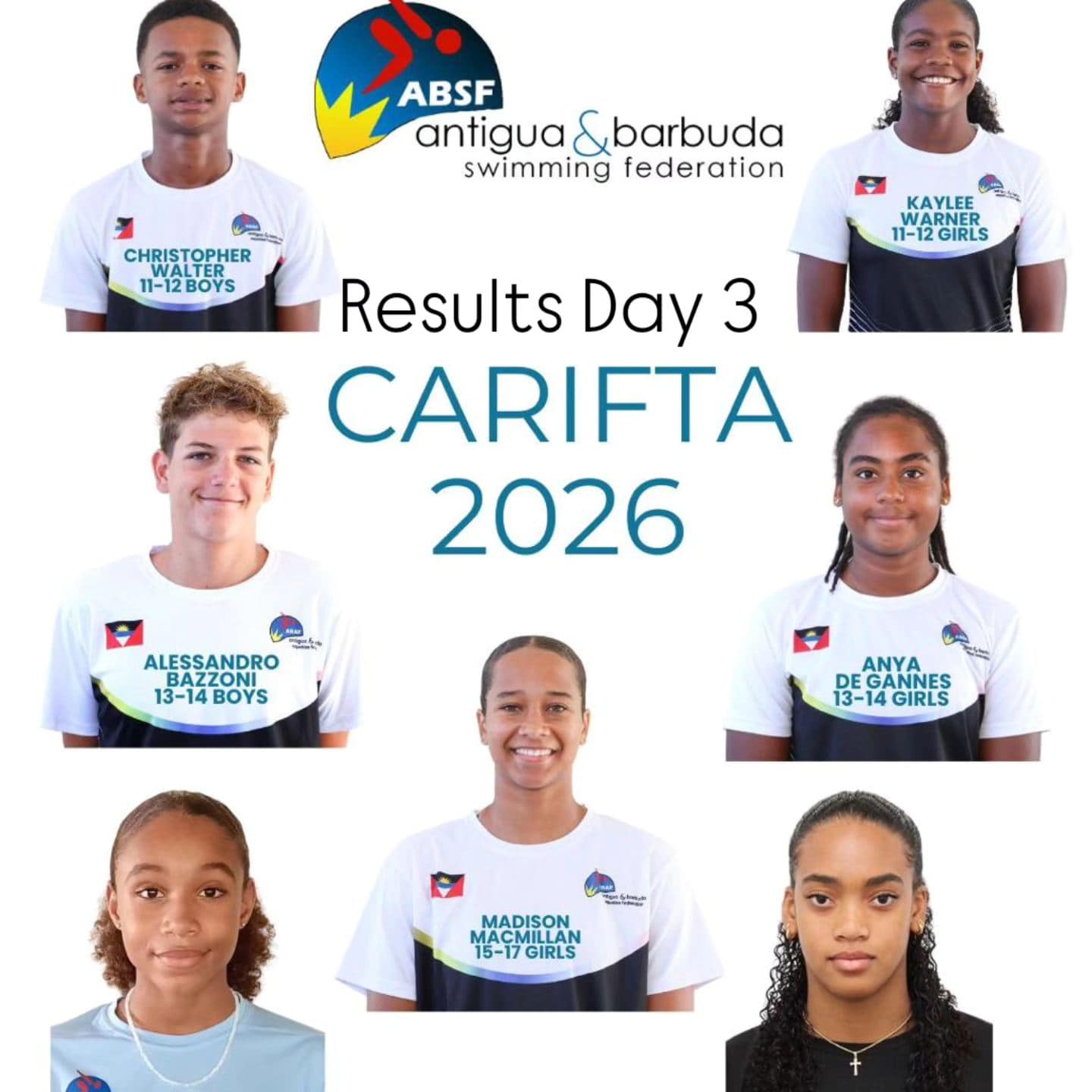
    Leading the charge for the underdog Caribbean squad were three standout young competitors: Madison MacMillan, Ellie Shaw, and Anya DeGannes, each of whom not only claimed top podium spots but also rewrote the Antigua and Barbuda national record book by the end of the session. Beyond the six medals, the team set two new all-time national records and three new age-group benchmarks, with multiple swimmers hitting personal best times across their events.

    MacMillan kicked off the medal surge for the team, claiming the top spot on the podium in the girls’ 1500-meter freestyle in a tightly contested race that came down to the final lap. It was Shaw, however, who delivered the most dominant performance of the night for Antigua and Barbuda, walking away with two gold medals in separate events. First, she claimed victory in the 200-meter individual medley, a race that saw her break both the long-standing national record and the age-group record while also clocking a new personal best time. She did not slow down after that win, returning to the pool shortly after to take another gold in the 50-meter breaststroke, further cementing her status as one of the tournament’s rising stars.

    DeGannes added the team’s fourth gold of the night in the 200-meter butterfly, turning in a personal best performance that also earned her a new national age-group record. Even in her non-medal race later that evening, the 200-meter individual medley, DeGannes continued to push boundaries, finishing fourth overall while clocking another age-group record and another new personal best, a testament to the team’s depth of training and competitive drive.

    The two bronze medals earned by the squad came from equally impressive efforts from Kaylee Warner and Alessandro Bazzoni. Warner finished third in the 100-meter freestyle, hitting a personal best time to secure her spot on the podium, while Bazzoni matched that result with a bronze of his own in the men’s 200-meter butterfly, also turning in a new personal best to round out the medal haul.

    Beyond the podium finishers, several other Antigua and Barbuda swimmers turned in strong performances that contributed to the team’s overall successful night. Christopher Walter finished sixth in both the 100-meter freestyle and the 200-meter individual medley, holding his own against far more experienced competitors from larger regional nations. Selah Wiltshire placed eighth in the 50-meter breaststroke, and even outside the top three, she walked away with a new personal best time to cap her performance.

    For Antigua and Barbuda, this historic medal haul is far more than just a one-night success: it caps off a string of strong results throughout the CARIFTA Aquatics Championships, with the nation’s swimmers consistently delivering podium finishes and record-breaking performances across a wide range of events. As the tournament progresses, the team has proven that small Caribbean nations can compete at the highest level of regional aquatics competition.

  • The Wrong Reform: Why Term Limits and Fixed Election Dates Cannot Work in Antigua and Barbuda

    The Wrong Reform: Why Term Limits and Fixed Election Dates Cannot Work in Antigua and Barbuda

    Across Caribbean political circles over recent years, two popular constitutional reform proposals have risen to prominence: legally fixed election dates and binding term limits for heads of government. Both are marketed as critical upgrades to democratic accountability, and both draw unacknowledged influence from the governing structures of presidential systems. As legal scholar Gavin V. Emmanuel argues in a landmark four-part series on Antigua and Barbuda’s constitutional framework, however, neither reform fits the Westminster model enshrined in the country’s 1981 independence constitution—they are not just impractical, but structurally incompatible with the nation’s core governing architecture.

    Emmanuel’s series analyzes each proposal individually, grounding its arguments in the specific text of Antigua and Barbuda’s founding document and drawing comparative lessons from other Commonwealth Westminster jurisdictions to contextualize its claims. The first installment lays the constitutional groundwork for the entire series, explaining the central doctrine of responsible government that underpins the Westminster system, and demonstrating how key sections of the constitution are explicitly structured around parliamentary confidence rather than rigid electoral timelines.

    The second part of the series tests this core argument against its most prominent counterexample: the United Kingdom’s 2011 Fixed-term Parliaments Act, the most high-profile attempt to impose a fixed electoral schedule on a Westminster parliament. Drawing lessons from the UK’s ultimately unsuccessful experiment with the policy, alongside analysis of boundary reform provisions laid out in Sections 62 through 65 of Antigua and Barbuda’s constitution, this section explains why date-fixed elections fail both in constitutional theory and on-the-ground practice.

    Part three shifts focus to the second popular reform proposal: term limits for prime ministers. Emmanuel contends that term limits import presidential-style logic into a parliamentary governing framework, directly contradicting key provisions of Section 69 of the constitution. Far from curbing excessive executive power, he argues, term limits would actually accelerate the presidentialization of the prime minister’s office—a outcome that critics of Caribbean governance have repeatedly identified as a core problem to solve.

    The final installment of the series concludes the argument by breaking down the actual impact term limits would have on democratic accountability. Emmanuel explains that term limits would weaken the electoral incentives that keep leaders responsive to voter demands, disrupt critical institutional memory in small island states like Antigua and Barbuda, and completely fail to address the root structural causes of patron-client political systems that undermine good governance. The series closes by outlining targeted, constitutionally permissible reforms that align with the existing framework and deliver the genuine democratic renewal that reformers seek.

    In the opening of the first series installment, Emmanuel addresses the appeal of reformism couched in the language of accountability, noting that many well-intentioned proposals carry a fundamental misunderstanding of how parliamentary democracy actually functions. While fixed election dates have gathered broad momentum across the Caribbean and sound intuitively appealing on paper, their structural incompatibility with the Westminster model is uniquely clear when examined through the lens of Antigua and Barbuda’s constitution.

    To understand the conflict, one must start with the core design of the Westminster system, not just surface-level political debate. The Westminster model is far more than a vote-counting procedure: it is a cohesive governing theory built around a single foundational principle: the executive branch derives its governing authority continuously and conditionally from the confidence of the elected legislature. The moment that confidence is withdrawn, executive authority collapses. Under this model, government is not a fixed, predetermined tenure—it is a living mandate that can be renewed, revoked, and is always contingent on parliamentary support. This is not a accidental feature of the system; it is the entire point of the design, and what constitutional scholars refer to as the doctrine of “responsible government.”

    Antigua and Barbuda’s 1981 independence constitution reflects this doctrine with intentional precision. Section 60(1) of the document grants the Governor-General the authority, acting on the advice of the prime minister, to prorogue or dissolve Parliament at any time. The word “any” is not just ceremonial wording—it is the constitutional codification of executive-legislative accountability, creating a mechanism that allows a government to call a new election if it loses its parliamentary majority, if a national crisis requires a fresh public mandate, or if an unresolvable legislative impasse gridlocks governance. While Section 60(2) sets a five-year maximum term for Parliament, after which it must automatically dissolve, this cap is not a rigid electoral schedule—it is simply an outer limit on an otherwise flexible governing instrument.

    This distinction is not a trivial legal technicality; it shapes how the entire system functions. A legally fixed election date fundamentally rewrites this arrangement, turning the five-year maximum cap into a mandatory floor. It requires that even if a government loses all parliamentary confidence, even if the country urgently needs a new policy direction, an election must wait for the pre-set date. This is not accountability—it is institutional paralysis framed as procedural reform.

    The Antigua and Barbuda constitution explicitly anticipates this risk. Section 60(4), often referred to as the Governor-General’s reserve power, grants the office discretionary authority to unilaterally dissolve Parliament if the House of Representatives passes a vote of no confidence and the prime minister fails to either resign or call an election within seven days. This is a non-partisan safety valve, a guarantee that no government can cling to power after losing the legislature’s support. A fixed election date would render this core constitutional provision legally incoherent: if the election date is set by statute, the Governor-General’s constitutionally mandated discretionary dissolution power becomes a source of legal conflict rather than a conflict resolution tool. Since Section 2 of the constitution explicitly names it the supreme law of Antigua and Barbuda, any statute conflicting with its provisions would be ruled void. This means a fixed election date law passed without a full constitutional amendment would not just be bad policy—it would be constitutionally invalid and unenforceable.

  • Saint Lucia finish 10th at CARIFTA Games

    Saint Lucia finish 10th at CARIFTA Games

    The Caribbean’s premier junior athletics showcase, the CARIFTA Games, wrapped up its 2025 edition on the evening of April 6 at Grenada’s Kirani James Stadium, with Saint Lucia matching its 2024 medal haul to finish 10th on the overall regional medals table. For the second straight year, the island nation left the competition with four podium finishes, all earned by its standout field event competitors.

    Saint Lucia’s medal count got off to a blazing start on the competition’s opening days, when 16-year-old Destinee Cenac claimed gold in the Under-17 girls’ high jump. Clearing a new personal best height of 1.72 meters, the St Joseph’s Convent student and Morne Stars Athletics Club member improved on her bronze medal finish from the 2024 Games, kicking off a dominant run for Saint Lucia’s field athletes. Cenac’s win marked the 16th high jump medal the island has earned in CARIFTA Games history, making it the nation’s most successful individual discipline – a legacy built by previous CARIFTA record holders and Olympic athletes Levern Spencer and Jeannelle Scheper.

    Naya Jules added a silver medal to Saint Lucia’s tally in the Under-20 girls’ pole vault, recording a clearance of 2.95 meters. This marked Jules’ fourth consecutive CARIFTA medal in the event, and her second straight silver after taking home gold in the Open girls’ division in both 2023 and 2024. Beyond pole vault, Jules also delivered a strong personal best performance of 41.59 meters in the Under-20 girls’ javelin throw, finishing just outside the podium in fifth place.

    Opening night of the Games saw Denzel Phillips claim his third career CARIFTA medal, taking bronze in the Under-20 boys’ discus throw with a best throw of 53.24 meters. The Saint Lucia athlete finished behind Jamaican pair Kamari Kennedy and Joseph Salmon on the podium, and narrowly missed a second medal after spending most of the competition in top-three position for the shot put, ultimately dropping to fifth in the final standings.

    The final medal of the competition for Saint Lucia came on Easter Monday, the event’s closing day, from Under-17 long jumper Randall Monroe. Making his CARIFTA Games debut just hours after finishing a narrow fourth in the Under-17 boys’ high jump, Monroe fought through challenging stiff headwind conditions to record a jump of 6.60 meters, good enough for bronze. The young athlete will remain eligible to compete in the Under-17 division when the next CARIFTA Games are held.

    The 12-member Saint Lucian delegation included a number of young athletes who are expected to build on their 2025 experience in future editions of the meet. Fifteen-year-old thrower Eavan Edgar placed 11th in the Under-17 shot put and fouled out of the discus competition, but will be eligible to return next year. Similarly, long jumpers Barbara-Marie Maximin and Syesha Rogers placed ninth in the Under-17 and Under-20 divisions respectively, with Maximin moving up to the Under-20 bracket in 2026.

    For the nation’s Under-20 male athletes, the 2025 Games marked their final appearance in the junior regional competition, as all will age out of the division ahead of 2026. Middle-distance runner Evann John delivered an impressive improved performance from his 2024 showing, qualifying for the 800m final and clocking 1:53.44 to finish fifth. Sprinter Joaqwan Alexander ran a faster time than he did in 2024 in the 400m event, but once again just missed out on a spot in the final round. Benique Mann placed 13th in the 1500m, Ryan Simeon finished 24th in the 100m, and triple jumper Darvin Forde placed 11th in his first and final CARIFTA Games appearance.