作者: admin

  • Mayberry Investments seeking $3 billion from bond market

    Mayberry Investments seeking $3 billion from bond market

    Jamaica-based leading securities dealer Mayberry Investments Limited (MIL) has announced a new secured bond issuance, seeking to raise between $2 billion and $3 billion from global and local investors to refinance a recently matured debt obligation and advance its ongoing corporate transformation strategy.

    On March 19, MIL fully redeemed its outstanding Tranche II bond, which carried a 10.75% interest rate and had a total face value of $2.06 billion. To replace this matured debt, the firm is launching a new 18-month bond tranche priced at a lower 10.50% interest rate, with an initial issuance target matching the size of the redeemed bond. In a positive sign of market accessibility, MIL chairman Gary Peart noted in the offering prospectus that the new issuance fills a gap in the market for small investors seeking stable, competitive fixed-income returns for their savings.

    To accommodate strong investor demand, MIL reserves the right to upsize the offering to a maximum of $3 billion. The new bond is backed by a fixed charge over MIL’s secured loan book pool, which is valued at $12.5 billion, underpinned by underlying assets worth $29.58 billion. To protect investor interests, MIL has agreed to binding financial covenants: its debt-to-equity leverage ratio will not exceed 4x, and it will maintain a minimum current ratio of 1.2x.

    Following the closure of the offering, MIL plans to apply to list the new tranche on the Jamaica Stock Exchange (JSE) Bond Market. Total transaction expenses are capped at $61.1 million, per the offering terms. This issuance marks the latest in a series of regular debt raisings by MIL and its sister subsidiary Mayberry Jamaican Equities Limited (MJE) on the JSE Bond Market, a trend that has continued annually since 2023. Currently, the two firms collectively have five listed securities worth $7.33 billion on the exchange. MIL previously redeemed its $1.98 billion Tranche IV bond in January 2025, while MJE faces $1.23 billion in combined bond maturities in August and October 2026. Both entities are core subsidiaries of the publicly traded Mayberry Group Limited.

    As of the latest market data, the JSE Bond Market hosts 15 listed securities with a total face value of $19.01 billion, alongside three USD-denominated bonds worth $32 million on the JSE USD Bond Market. MIL most recently served as lead broker and arranger for Dolla Financial Services Limited’s $1.5 billion dual-tranche bond listing, which closed on March 31.

    For the upcoming offering, the minimum subscription amount is set at $20,000, with additional increments available in multiples of $10,000 to accommodate different investor sizes. The offer opens for subscriptions on April 13 and is scheduled to close on May 11. Existing Mayberry clients can complete their subscriptions via the dedicated portal https://ipo.mayberryinv.com/mi-ipo, while new and non-client investors can apply through designated selling agent Sagicor Investments Jamaica Limited.

    The bond issuance comes on the heels of a landmark financial turnaround for MIL in 2025, which saw the 40-year-old broker swing from a pre-tax loss of $380.06 million in the prior year to a pre-tax profit of $377.61 million, representing a net $757.67 million improvement in profitability. The strong performance stemmed from a combination of aggressive cost-cutting initiatives and robust growth in the company’s core business lines, under the leadership of CEO Patrick Bataille in his first full year at the helm.

    Operating expenses fell 12% year-over-year, from $2.26 billion to $1.99 billion, a $275.63 million reduction. The largest single improvement came from a collapse in operational losses, which shrank from $255.49 million to just $1.87 million, driven by tighter operational oversight. The company also reversed $5.32 million in prior credit loss provisions, compared to a $148.13 million credit loss expense in the prior year. Bataille explained that the adjustment followed a comprehensive review of MIL’s loan book, which confirmed that existing collateral coverage was sufficient for all outstanding loans, eliminating the need for excess loss provisions.

    “What we did do in 2025, we reviewed everything that we’re provisioning. We identified where there were scenarios where we may have been over provisioning for things where we had enough collateral to cover it,” Bataille told attendees during a virtual investor briefing on Friday.

    Interest income for the year climbed 11% ($281.38 million) to $2.73 billion, fueled by a 20% expansion in the company’s loan and receivables book to $11.94 billion, alongside higher yields on repurchase agreements, promissory notes, and investment securities. While interest expense also rose 11% to $2.01 billion, MIL still posted $724.04 million in net interest income. Total full-year revenue grew 26% to $2.36 billion, lifted by higher consulting and commission fees, foreign exchange gains, and unrealized valuation gains on investment properties.

    Currently, 42% of MIL’s total revenue comes from fee-based consulting and commission income, and the company has set ambitious targets to grow this share over time: 50% in the near term, and 75% in the longer term. The strategic shift will see MIL reduce its reliance on balance sheet lending and reorient the business toward recurring fee income, a mandate Bataille received from the company’s board of directors.

    “Our goal is to really transform the business into a fee income generating business. That’s the mandate I got from my board,” the CEO said.

    As part of this transformation, MIL plans to de-risk its balance sheet through the use of structured financing vehicles to manage its lending portfolio more efficiently, alongside a planned sale of non-core assets to free up capital for its core advisory and wealth management lines. The company is also expanding its investment banking division, led by bankers Dan Theoc and Rachel Kirlew, and has multiple deals in the pipeline. Chairman Peart confirmed that the firm is on track to complete at least one initial public offering (IPO) within the next three months.

    Thanks to the strong full-year performance and the utilization of deferred tax credits, MIL’s net profit surged 358% year-over-year, from $139.28 million to $637.92 million. Total assets grew 7% to $44.25 billion, driven by the expanded loan book and $5.44 billion in net cash holdings. Total liabilities also rose 7% to $37.37 billion, with total outstanding loans standing at $13.21 billion and accounts payable growing 26% due to higher client payables. Shareholders’ equity improved 6% to $6.87 billion, translating to a book value of $5.72 per share. MIL’s capital adequacy ratio hit 18.16% at year-end, far exceeding the Jamaican regulatory minimum of 10%.

    “I’m very focused on our liquidity mix, what we’re borrowing at, what we’re lending at and identifying ways to become more efficient, particularly controlling our interest expense and getting a better balance of liquidity. We’re looking at more creative ways of managing that balance sheet,” Bataille said in closing.


  • Campari Xodus Wet Music Festival delivers

    Campari Xodus Wet Music Festival delivers

    Jamaica’s downtown Kingston came alive with color, rhythm and nonstop energy on Easter Monday, as the highly anticipated Campari Xodus Wet Music Festival kicked off Xodus Carnival week at Port Spectrum. True to its immersive, one-of-a-kind branding, the event drew hundreds of carnival enthusiasts who spent hours embracing the full experience: mixing sun, splashing water, vibrant paint and colored powder, and relentless soca beats that kept crowds moving from pre-dawn until late morning.

    Even an early 4:00 a.m. start time failed to dampen the spirit of diehard soca fans, with many arriving hours before sunrise to secure their spot and mark the official launch of the week-long carnival celebration. A stacked lineup of top-tier disc jockeys, including fan favorites Travis World, Tony X, Sinistar, Zess, Rico The DJ, Papi Jae, Fatalic, and Tegabrooks, kept the energy soaring for hours, with wet, paint-dusted partygoers dancing continuously until the event wrapped up just 20 minutes before noon.

    One of the festival’s defining features was its massive foam pit, a hit with attendees of all ages. Building on the momentum of the successful inaugural staging in October 2025, organizers upped the ante for 2026 by offering branded Xodus Wet monokinis for pre-order and purchase as early as 2025, giving attendees the chance to pick up themed apparel ahead of the main event.

    Scott Dunn, Group Managing Director of Dream Entertainment Limited, which produces the festival, shared his unreservedly positive assessment of the day’s events in an interview with the Jamaica Observer following the fete. “Campari Xodus Wet met all our metrics for success: crowd size, production quality, food and beverage offerings, and overall vibe,” he said, noting that he had no major complaints about how the day unfolded.

    Thanks to strategic collaborative partnerships with major food brands, attendees enjoyed complimentary catering from well-known names including Elle & Vire, Foska Oats, Pizza Hut, and KFC, adding extra value for early-morning partygoers who worked up an appetite dancing.

    The highlight of the festival came with a headlining live set from Trinidadian soca superstar and celebrated songwriter Voice, who delivered a high-energy performance packed with his most popular hits, including *Cyah Behave*, *Pandemonium*, and *Dear Promoter*. In a surprise crowd-pleasing moment, Voice invited legendary Trinidadian soca veteran Iwer George to the stage, where George delivered a fitting performance of his iconic track *Water* that sent the crowd into a frenzy.

    By the time the festival drew to a close, the Port Spectrum venue was transformed into a vivid kaleidoscope of rainbow hues from the paint and powder. Many attendees left so saturated with water and paint that some discarded clothing items that were too stained and soaked to be cleaned and saved.

    With the wet festival marking only the start of Xodus Carnival week, Dunn confirmed that Dream Entertainment is fully prepared to deliver the full “Xodus Xperience” for the rest of the season, which has been in planning for a full year under the event name OlympiX. “We’ve got five more large-scale events, costume distribution, and the biggest Road March Carnival Jamaica has ever seen coming up,” he said. “Everyone needs to feel what the Xodus Xperience is all about. Even if you only make it to one event this week, you’ll leave feeling like part of the Xodus Family.”

  • Market rises but participation weakens

    Market rises but participation weakens

    The first quarter of 202X closed with positive headline returns for Jamaica’s main stock market, but beneath the surface, the rally is losing foundational strength as upward momentum becomes concentrated in an increasingly narrow group of assets and investor risk appetite pulls back.

    For the three-month period ending March 31, the Main Market index logged an overall 8.83% gain, built on strong upward movement from the earlier months of the quarter. That overall gain, however, obscured a softening trend that intensified through March: the benchmark slipped 0.18% during the final month of the quarter, erasing a portion of earlier gains and signaling the broad rally was running out of steam by quarter-end.

    Market breadth shifted sharply negative in March, underscoring the uneven nature of recent gains. Only 14 stocks posted advances, while 38 closed lower, a marked deterioration from February’s 21 gains and 32 declines. The trend confirms that market participation has steadily weakened as the quarter progressed, meaning a shrinking share of listed companies are contributing to the index’s overall growth.

    Put plainly, the headline index has moved higher, but that growth is being driven by fewer and fewer names. This narrow leadership pattern was clearly visible in the performance of the market’s top outperformers: Kingston Properties and Sagicor Real Estate X Fund notched robust double-digit gains that propped up the broader index, while the majority of other listed assets lagged far behind.

    At the same time, several widely held large-cap stocks, including Caribbean Producers, Mayberry Jamaican Equities and JMMB Group, all trended downward, highlighting how fractured investor confidence is across different segments of the market. For the full quarter, the gap between top and bottom performers widened dramatically: TransJamaican Highway and Kingston Properties led the market with gains of roughly 50%, while dozens of other stocks posted double-digit losses.

    This growing divergence between a small cohort of strong winners and a much larger group of declining stocks signals a clear shift in investor strategy: the market is becoming far more selective, with market participants concentrating capital in a handful of targeted opportunities rather than spreading investments broadly across the benchmark.

    Trading data further reinforces the trend of rising investor caution. In March, the total number of transactions climbed 17% year-over-year to 27,101, but total trading volume plummeted 70% to 321.84 million units. The aggregate value of all trades also fell sharply, dropping to $4.11 billion from $24.51 billion in the same period a year earlier.

    This data points to a clear shift in investor positioning: while more trades are being executed, investors are committing far less capital per transaction, a clear signal of growing risk aversion and a shift toward shorter-term trading strategies. The pattern also suggests many market participants are testing the waters with small, tactical positions rather than making large, long-term commitments to equities.

    The junior market segment mirrored the main market’s weak underlying performance, even with more muted overall movement. The junior market index gained 1.04% in March and posted a meager 0.21% gain for the full first quarter, showing almost no net upward momentum for the period. Within the segment, performance was similarly uneven: Jetcon Corporation and Future Energy Source Company posted gains, while Kintyre Holdings and IronRock Insurance closed lower, echoing the main market’s pattern of narrow, uneven growth.

    Taken together, the data paints a clear picture of a stock market that still shows positive headline gains, but lacks broad underlying support. This dynamic matters for future performance: narrow rallies driven by a small handful of stocks and declining average trade values are notoriously difficult to sustain over the long term, particularly if broader investor confidence fails to improve in coming months. If the current trend of weakening breadth and declining capital commitment continues, the market will likely struggle to build on its strong early-quarter gains, even if benchmark headline indices remain in positive territory.

  • Gas tax under fire

    Gas tax under fire

    A sustained surge in global crude oil prices, driven by regional disruption in the Middle East’s Strait of Hormuz, has triggered a cumulative $21 to $22.50 increase in fuel prices at Jamaica’s state-owned sole refinery Petrojam over just five weeks, pushing industry leaders and top business figures to pressure the Jamaican government for an immediate cut to the special consumption tax (SCT) on petroleum products.

    Data from Petrojam’s April 1 pricing breakdown shows that for a gallon of 87 octane gasoline priced at $172.3828, SCT charges account for more than 31 percent of the final pump price, with $37.7761 in base SCT and an additional $15.6712 in ad valorem SCT applied to the ex-refinery base price of $118.9355. This disproportionate tax burden has drawn sharp criticism from Christopher Berry, Executive Chairman of leading investment firm Mayberry Group, who argues that skyrocketing energy costs are squeezing household budgets and eroding competitiveness across every sector of the Jamaican economy.

    Berry made the call during an April 2 virtual investor briefing hosted by Mayberry Investments, noting that the heavy SCT levy ripples through daily life for Jamaican consumers, appearing in higher electricity bills as well as direct fuel costs, with low- and middle-income families unable to absorb the extra expenses. His appeal comes as Jamaica navigates its second major external economic shock in just six months: after Hurricane Melissa caused extensive damage to western Jamaica and disrupted the key winter tourism season, the Middle East supply disruption has sent shockwaves through global commodity markets.

    Beyond transportation fuel, the spike in oil derivatives has driven up costs for critical agricultural inputs, most notably fertilizer, where a third of global seaborne fertilizer trade has been cut off by the crisis. For the manufacturing sector, higher fuel prices deliver a dual blow: rising liquified natural gas (LNG) and electricity costs push up production expenses, while higher diesel prices increase the cost of transporting finished goods to market. Richard Pandohie, CEO of Seprod Limited, one of Jamaica’s largest manufacturing and distribution conglomerates, warned in a recent Television Jamaica interview that while overall food availability will remain stable, widespread affordability will become a major challenge as price hikes filter through to grocery shelves.

    As of the most recent Monday trading session, global crude benchmarks have seen dramatic double-digit gains: Brent crude has risen 82 percent to $113.19, while West Texas Intermediate (WTI) has climbed 99 percent to $115.52. The unusual inversion of WTI trading above Brent, a reversal of the typical market dynamic where Brent carries a premium due to water transportation costs, signals that markets are pricing in persistent supply delivery risks. Other emerging economies across the Indo-Pacific have already moved to address the energy crisis: India and Vietnam have cut fuel taxes and excise duties on petrol and diesel to cushion consumer impact, while Bangladesh, Nepal, and Sri Lanka have implemented emergency measures including reduced business operating hours and national holidays to conserve energy.

    Jamaica has a recent precedent for targeted intervention during energy price shocks: in 2022, then Finance Minister Dr. Nigel Clarke rolled out a $2 billion targeted support package for vulnerable households, alongside a 20 percent electricity subsidy for Jamaica Public Service (JPS) customers using up to 200 kilowatt-hours per month between April and July. Berry argues that in the current crisis, cutting SCT is a necessary step to prevent broad economic damage, even with the near-term impact on government revenue. “Although the higher SCT on increased fuel prices offsets some of the government’s negative cash flows, the damage to the overall economy far outweighs that revenue gain,” Berry said, urging policymakers to immediately reduce fuel taxes to avoid long-term harm.

    Under Petrojam’s current pricing framework, the refinery adjusts product prices every Wednesday to align with changes in the US Gulf Coast reference price, which has risen 67 percent between February 27 and March 27 to hit $3.043 per gallon. A built-in cap limits weekly price movements to a maximum $4.50 increase or decrease, meaning the refinery must absorb excess costs when global prices spike sharply. Up to the week of March 27, Minister of Information and Technology Daryl Vaz confirmed that Petrojam has already absorbed $795 million (US$5 million) in unabsorbed price increases, and warned that the government may need to draw on the consolidated fund or net international reserves (NIR) to cover these costs. The refinery already posted a US$28.66 million net loss in the 2025 fiscal year ending March, and is projected to record a US$9.63 million net loss for the 2027 fiscal year.

    Vaz told Nationwide News Network that he has already briefed Finance Minister Fayval Williams on the situation, and that the government’s top priority is minimizing disruption to the broader economy. On the supply side, Vaz emphasized that while Petrojam sources most crude from Brazil, Ecuador, and Colombia, and purchases finished products on the open market primarily from the United States, the refinery holds four weeks of stock on hand and has secured written commitments from all suppliers guaranteeing no disruptions to deliveries, eliminating near-term supply shortage risks.

    Despite the clear benefits for consumers, a cut to SCT carries significant fiscal risks for the Jamaican government. Fuel SCT collected through Petrojam is a major revenue stream for the government, generating $45.3 billion in annual revenue. For the 2025 fiscal year, Petrojam collected US$225.82 million in SCT, with projections of US$247.49 million for 2026 and US$284.63 million for 2027, based on an average crude acquisition price of US$80.19 per barrel. The government is already projecting a $134.6 billion deficit for the 2026 fiscal year and a $190.7 billion deficit for the current fiscal year, with Williams’ 2027 budget including $18.04 billion in new taxes for the upcoming fiscal year and an additional $15.6 billion for the following year, a reflection of lingering fiscal damage from Hurricane Melissa.

    For ordinary Jamaicans, the pressure is already mounting: JPS customers have already seen higher fuel surcharges added to their monthly electricity bills, while businesses are preparing to implement a higher minimum wage starting June 1. Combined with broader economic slowdown pressures, the latest fuel price hikes are set to push household and business costs even higher in the coming months, leaving the Jamaican government caught between the urgent need to relieve consumer strain and the risk of exacerbating already wide fiscal deficits.

  • ‘NO RUSH’

    ‘NO RUSH’

    After Jamaica’s Reggae Boyz fell short of qualifying for the 2026 FIFA World Cup, two key members of the country’s interim national team technical staff find themselves at a professional crossroads, with the Jamaica Football Federation (JFF) set to finalize its long-term coaching plan in the coming weeks.

    Former interim head coach Rudolph Speid and ex-assistant coach Miguel Coley saw their short-term contracts expire immediately following the Reggae Boyz’s 1-0 defeat to DR Congo in the final World Cup inter-confederation play-off last month, a result that kept Jamaica out of this summer’s global tournament. The pair, alongside Arsenal youth coach Michael Donaldson and former Jamaica international goalkeeper Aaron Lawrence, stepped into the technical team last November. The group was tapped to lead the side’s final qualification push after former head coach Steve McClaren and his entire support staff parted ways with the federation, stepping in with just months to secure a World Cup spot.

    According to a Monday report from the Jamaica Observer, JFF President Michael Ricketts has publicly signaled his preference to retain both Speid and Coley in their current roles, aligning with his administration’s stated priority of building a full Jamaican-led national team technical staff. Despite this top-level support, neither coach is rushing to commit to a return, with both citing the need for reflection and consultation before making a final choice.

    Speid, who currently leads reigning Jamaica Premier League champions Cavalier FC, already returned to his club duties over the weekend, guiding the side to a 2-0 victory over Molynes United just days after returning from the play-offs in Mexico. Speaking on his potential return to the JFF setup, Speid emphasized that the decision requires careful consideration, balancing his personal goals and multiple professional opportunities both at home and abroad.

    “I have multiple avenues I can pursue right now,” Speid explained. “I could completely shift my career path tomorrow and step away from football entirely to work on other projects. This isn’t a quick call — I need to sit down with my family, weigh all my options, and take time away from the pressure of the play-offs to think it through. It’s not going to be an easy choice.”

    Already, Speid confirmed he has received offers for new roles from across the globe, not just within Jamaica’s football ecosystem. “I’m not concerned with public opinion on whether I should stay or go,” he added. “I’ve had people from multiple countries reach out to me with different opportunities. Once I’ve had time to reflect and talk through everything with my family, I’ll make the call that’s right for me.” Speid also confirmed he will step down from his post as chairman of the JFF’s Technical Committee regardless of his decision on the coaching role, a move that comes as some fans have called for a change in the top technical position.

    For Coley, who currently holds the role of caretaker manager at Zakho SC in Iraq’s top-flight football league, the timeline is equally unclear. The coach, who previously served a stint as assistant coach of the Reggae Boyz between 2014 and 2016 under German head coach Winfried Schaefer, said representing his country is always a point of pride, but he is not ready to commit immediately.

    “Contributing to Jamaican football is something I have always been proud to do, and I would jump at the chance to serve again in the future,” Coley told the Jamaica Observer. “But right now, it’s too soon after the play-off defeat to make a major decision. I need to speak to all stakeholders involved in my current role before I can map out the way forward.” If he does return to the national setup, Coley said his experience coaching abroad and deep connection to Jamaican football put him in a strong position to drive the team forward.

    “I’m a Jamaican through and through — no matter where I work in the world, I see myself as an ambassador for our country,” he said. “I’ve spent years building up my skills and experience to be ready to contribute at this level. I understand what Jamaican players need, I know how devastating it was to miss out on another World Cup, and that pressure only pushes me to work harder. If given the opportunity, I know I can get the job done for the Reggae Boyz.”

    Despite their own personal uncertainty about their next steps, both Speid and Coley offered unreserved praise for the current interim technical staff, arguing the group has the combination of skill, experience, and local knowledge to lead Jamaica to future success if given the chance to continue working together.

    Speid highlighted the depth of talent across the current team: “Michael Donaldson brings top-tier experience from his time at Tottenham Hotspur and now at Arsenal. Miguel has picked up invaluable expertise coaching overseas. Lamar Morgan, our physical trainer, is as good as any I’ve worked with anywhere in the game. Andrew Peart, our director of football, brings an incredible depth of knowledge to the group. What’s more, every single member of this staff is Jamaican. I don’t think any foreign group we could have brought in would have gotten better results than this group did. If we’d had this team together starting from the Gold Cup, I truly believe we would have walked straight into the World Cup.”

    Looking ahead, the Reggae Boyz are already scheduled to return to competitive action in just a few months. The team will take part in the Unity Cup, an exhibition tournament hosted in England at the end of May, where they will face off against national sides from Nigeria, Zimbabwe, and India. In September, Jamaica will kick off their 2026-27 Concacaf Nations League A campaign, marking the start of the next cycle of international competition for the side.

  • MoBay Night Run 2026 delivers major boost for student scholarships, hurricane recovery

    MoBay Night Run 2026 delivers major boost for student scholarships, hurricane recovery

    Montego Bay’s streets came alive under the night sky on Saturday as the 2026 MoBay Night Run concluded as the most successful iteration of the event in its history. More than 6,000 registered participants turned out in force, uniting to raise funds for two critical causes: regional educational development initiatives and post-hurricane recovery efforts across western Jamaica.

    Hosted by the Howard Ward Benefit Foundation, the third running of the popular 5K event turned Jamaica’s second city into a dynamic intersection of fitness, community culture, and charitable giving. Runners and casual walkers of all ages and ability levels joined thousands of local supporters, all aligned around the shared goal of expanding educational opportunity for students across western Jamaica.

    For 2026, the event carried extra weight for the region, which has been recovering in the wake of Hurricane Melissa. Foundation chairman Howard Ward expressed his sincere gratitude for the overwhelming public response to this year’s run. “We are truly humbled by the response this year,” Ward said. “To achieve a record turnout and record funds raised is a testament to the power of community. In the wake of Hurricane Melissa, events like this mean even more because they speak to resilience and the gradual return to normalcy for the west. We are happy to be able to bring this kind of energy and spirit back to Western Jamaica.”

    Ward emphasized that every participant’s effort would directly translate to tangible support for vulnerable students. “Every step taken tonight will directly translate into opportunities for students who need it most, and that is what continues to drive everything we do,” he added.

    The evening featured competitive and recreational divisions for both runners and walkers, with final results highlighting both elite athletic achievement and the event’s core commitment to inclusivity. Unlike competitive-only races, MoBay Night Run actively welcomes participants of all fitness levels, a policy that has contributed to its growing annual popularity.

    Alfred Francis, race director for event partner Running Events Jamaica, echoed Ward’s remarks on the meaning of pulling off the large-scale event in the wake of recent regional disruption. “Executing this year’s run meant a lot more, given everything the western region has experienced in recent months,” he explained. “To be able to safely deliver an event of this scale, with record participation, is a testament to the resilience of the community and the dedication of our team and partners.”

    A core pillar of the MoBay Night Run’s mission has always been investment in local education, and 2026 followed through on that commitment. The vast majority of funds raised are earmarked for need-based scholarships for high-achieving, low-income students across western Jamaica. These scholarships will remove crippling financial barriers and open new pathways for academic advancement for promising young scholars.

    In addition to the scholarship fund, a portion of the proceeds has been allocated directly to Anchovy High School, where critical campus infrastructure was damaged during Hurricane Melissa. The funding will support repairs and full restoration of damaged facilities, ensuring students and educators can return to a safe, fully functional learning environment. This dual allocation reinforces the event’s mission: strengthening local education through both direct student support and targeted investment in essential school infrastructure.

    As participants stepped across the starting line Saturday evening, they carried not just their own personal fitness goals, but the hopes of a community working to rebuild and lift up its next generation.

  • More than 600 homeless people receive Easter treat from Kiwanians

    More than 600 homeless people receive Easter treat from Kiwanians

    On the Easter holiday Monday, hundreds of vulnerable people across Kingston and St Andrew received a heartfelt boost of holiday cheer through a large-scale community outreach initiative organized by Kiwanis Club Division 23 East. The club’s annual Easter Breakfast for the Homeless program brought together a coalition of local businesses, municipal authorities and medical providers to deliver hot meals, traditional holiday food and free healthcare services to more than 600 people living in shelters and on the streets of the Jamaican capital.

    Volunteers and organizers began their work before dawn, with teams fanning out across multiple districts of the city to reach people wherever they were. Audrey Brown, Lieutenant Governor for Kiwanis Division 23 East, shared that preparation and distribution kicked off at 5:30 am, with separate teams covering zones including Dumfries, New Kingston, Cross Roads, Papine, Liguanea, Half-Way-Tree and downtown Kingston. Every public shelter in the area was included in the outreach, with services delivered to the Desmond McKenzie Transitional Centre, the Church Street Temporary Shelter, the Marie Atkins Night Shelter and the Denham Town Golden Age Home. Brown emphasized that the effort was not limited to shelter residents – unhoused people living on city streets were also priority recipients of support.

    For many recipients, the initiative represented far more than a free meal. Fredericka, a 78-year-old resident of the Marie Atkins Night Shelter who has lived at the facility for more than a year, called the outreach an incredible comfort. “As an elderly person over 78 years old it is hard for me to go out and get these things, so when they come here it is an extreme relief for me,” she shared, expressing deep gratitude for the program. Brown added that for many of the people served, the traditional bun and cheese provided by the organizers is the only special Easter meal they will access all year. “All the clubs decided to come together and do one massive project. And it has been so fulfilling to those who are on the streets and in the shelters. Our less fortunate, at times we take them for granted — and for some, this is the only bun and cheese that they will ever have. To us, that is something that we see fit to do. It’s something that means a lot to us,” Brown said, noting the work aligns with the Kiwanis mission of “Serving children in need, one community at a time” by lifting up vulnerable members of the community.

    Beyond food support, the initiative integrated free medical care to address unmet health needs among the unhoused and low-income shelter population. Dr. Andre McDonald, chief medical officer at lead sponsor Suretime Emergency Medical Services, explained that at least 50 people received on-site medical check-ups and assistance during the outreach. He framed the holistic effort as a demonstration of a complete definition of health, noting that wellness extends far beyond physical care to include mental, social, financial and even spiritual well-being. “We are here to ensure that people are okay,” Dr. McDonald said.

    Club President Carolyn McDonald Riley credited the broad cross-sector collaboration for the initiative’s success, noting that more than 300 holiday buns were donated by participating partners. Suretime Emergency Medical Services served as the lead sponsor, covering costs for cheese and providing on-site medical and security services. Additional in-kind and financial support came from a range of local partners: Island Car Rentals donated two buses to transport volunteers and supplies across all distribution sites; the Kingston and St Andrew Municipal Corporation provided on-ground guidance and coordination at the first distribution stop; Flavor Fresh and Newtown Bakery donated all 300 plus buns for the meals; Jet Tour provided gap funding to cover costs not covered by other sponsors; and Lifespan donated bottled water for the event.

    The volunteer-led outreach has been celebrated as a powerful example of community action to address food insecurity and unmet care needs among Kingston’s most vulnerable populations ahead of the Easter holiday, with organizers noting plans to continue expanding the annual initiative in coming years.

  • Powering a return to normal life

    Powering a return to normal life

    Nearly six months after Category 5 Hurricane Melissa carved a path of destruction across western Jamaica’s parishes, school leaders from storm-ravaged communities gathered Tuesday at the National Education Trust (NET) headquarters in St Andrew to receive a life-changing donation: 20 portable dual-fuel generators provided through a collaborative partnership between NET and the Mediterranean Shipping Company (MSC) Foundation.

    For educators and students still picking up the pieces of their learning environments after the devastating storm, the new power sources are far more than emergency equipment. They represent a critical step toward restoring normalcy, renewing hope, and securing stable, functional learning spaces for thousands of children displaced by the hurricane.

    Ryan Stone, acting principal of St Elizabeth’s Mulgrave Primary School, one of the beneficiary institutions, called the donation transformative. His campus suffered catastrophic damage when Hurricane Melissa’s high winds ripped off large sections of the school’s roof, destroyed furniture and learning materials, knocked down perimeter fencing, and fried the campus’s entire electrical system. While the school has partially reopened, students have continued to grapple with lingering trauma, requiring ongoing psychosocial support from visiting psychologists, guidance counselors from neighboring schools, and specialists from Jamaica’s Ministry of Health and Wellness.

    Stone recounted that some students have described the storm as “wicked” or “gluttonous,” with one young student telling counselors, “She ate up everything.” A recent cold front bringing heavy winds even triggered widespread re-traumatization, forcing school leaders to call in additional support teams. Against this backdrop, Stone said the generator donation is a much-needed boost to the school’s long recovery process.

    “ The generator represents more than just power — it symbolises hope, resilience and a renewed opportunity for our students to learn in a safe and stable environment,” Stone told the Jamaica Observer on the sidelines of Tuesday’s handover ceremony.

    Victoria Gooden-Green, vice-principal of Darliston Primary School in Westmoreland, echoed that gratitude, outlining the daily struggles her staff and students have faced since the storm destroyed their school’s roof. Currently, classes for the campus’s most vulnerable group, grade six students preparing for national exams, are held in two temporary tents donated by UNICEF — and not all students can attend in-person classes daily. Without consistent power, the school has also been unable to support digital learning activities that have become a core part of modern education, from streaming educational content to charging student devices.

    “Having the generators, that will help us immensely to do what we have to do,” Gooden-Green said, noting that many students lost everything when the storm hit their homes and communities, and continue to live with the lingering emotional impact of the disaster. “It’s not an easy time for us but we know that the toughest soldiers get the strongest fight. We will bounce back because we are resilient, and no matter how dark it seems, the sun will shine again.”

    The Generator Donation Initiative was launched in direct response to the widespread devastation caused by Hurricane Melissa in October 2023. In the aftermath of the storm, NET reached out to the MSC Foundation to mobilize support for the hardest-hit education institutions, and the partnership ultimately resulted in 20 15,000-watt DuroMax dual-fuel generators being procured for the affected schools.

    Speaking at the handover ceremony, Jamaica’s State Minister for Tourism Tova Hamilton praised the cross-sector collaboration, framing the donation as a model for community-focused recovery. She emphasized that public-private partnerships like this one deliver tangible benefits to communities through targeted educational support, infrastructure investment, and capacity building that strengthens national resilience.

    “We see today not as the end of a gesture but as the opening of a door — a door to stronger partnership, deeper engagement, and shared growth,” Hamilton said. “On behalf of the Government and people of Jamaica, I express sincere appreciation to MSC Foundation and MSC Mediterranean Shipping Company Jamaica Limited for this meaningful intervention. This is a demonstration that tourism at its best is a force for national development, strengthening communities, supporting education and building resilience. Jamaica is grateful, Jamaica remembers, and Jamaica looks forward to even stronger partnership in the months and years ahead.”

  • ‘Deeply troubling’

    ‘Deeply troubling’

    Six months after Category 5 Hurricane Melissa tore through large swathes of western Jamaica, a mounting controversy has erupted over the ongoing use of school buildings as emergency shelters for displaced storm victims, with the Jamaica Teachers’ Association (JTA) president Dr. Mark Malabver flagging deeply alarming incidents of inappropriate adult activity witnessed directly by students on campus.

    Dr. Malabver outlined the gravity of the situation during the opening ceremony of the 2026 JTA Education Conference, a three-day professional gathering hosted at the Princess Grand Jamaica Hotel in Green Island, Hanover. In his opening address, he emphasized that reports of shelter residents engaging in sexual acts within clear sight of attending students should spark universal outrage across the island.

    “The conditions are deeply troubling. Reports of shelterees engaging in sexual activity within the clear view of students is something that everyone should be outraged about,” Dr. Malabver said.

    Speaking on the sidelines of the conference with Jamaica Observer, Dr. Malabver confirmed that the first reports of these incidents reached his office from an unnamed western Jamaican parish over a two-week period last month. According to accounts gathered by JTA leadership, students who witnessed the inappropriate activity first filed formal reports with their classroom teachers, who then escalated the concerns up the association’s chain of communication. To date, Dr. Malabver noted that he cannot confirm whether these incidents are ongoing, nor have any formal police reports been filed over the alleged encounters.

    Beyond the high-profile incident of student exposure, the JTA has long held that the prolonged use of educational facilities as emergency shelters is entirely unsustainable. Dr. Malabver highlighted a litany of other ongoing disruptions facing schools and staff: teaching resources have gone missing from locked storage, and once-respectful learning spaces have devolved into overcrowded conditions more comparable to informal tenement yards than accredited educational institutions.

    The JTA president directly pushed back on recent public comments from Local Government Minister Desmond McKenzie, who claimed that the vast majority of displaced shelter residents had already relocated from school grounds, and that any remaining disruptions to academic operations have been kept to a minimum. Dr. Malabver refuted that claim point-by-point, noting that widespread disruptions remain a daily reality for students and staff across affected parishes.

    “When we hear, for example, the claim by the minister of local government that there is no displacement, we must ask, ‘What do we call it when students are removed from classrooms and placed in tents? What do we call it when schools operate on rotation systems because classrooms are occupied by shelterees?’ If that is not displacement, it must be replaced,” Dr. Malabver quipped during his address.

    Dr. Malabver clarified that the JTA’s campaign is not an attempt to interfere with the Local Government Ministry’s core portfolio responsibilities, which include waste management, public park maintenance, market operations and parish road upkeep. Instead, he framed the push for relocation of remaining shelter residents as a core obligation of the association to advocate for its members and protect the welfare of Jamaica’s students.

    “Our… students are exposed to the elements, along with their teachers, while classrooms are being occupied by shelterees under fans. That is not just unacceptable, it is outrageous — something that no modern society or Government should condone, let alone seek to defend,” he added.

    In closing, Dr. Malabver emphasized that the prolonged status quo is far more than an inconvenience for education communities — it constitutes a direct violation of fundamental rights for both children and teaching staff. He cited multiple binding international and domestic legal frameworks that Jamaica has already adopted, including the International Labour Organisation (ILO) Occupational Safety and Health Convention, which Jamaica ratified more than 25 years ago, the United Nations Convention on the Rights of the Child, and the island’s own domestic Child Care and Protection Act. The current conditions, he argued, run counter to both the letter and spirit of all of these binding agreements.

  • Spur Tree tragedy

    Spur Tree tragedy

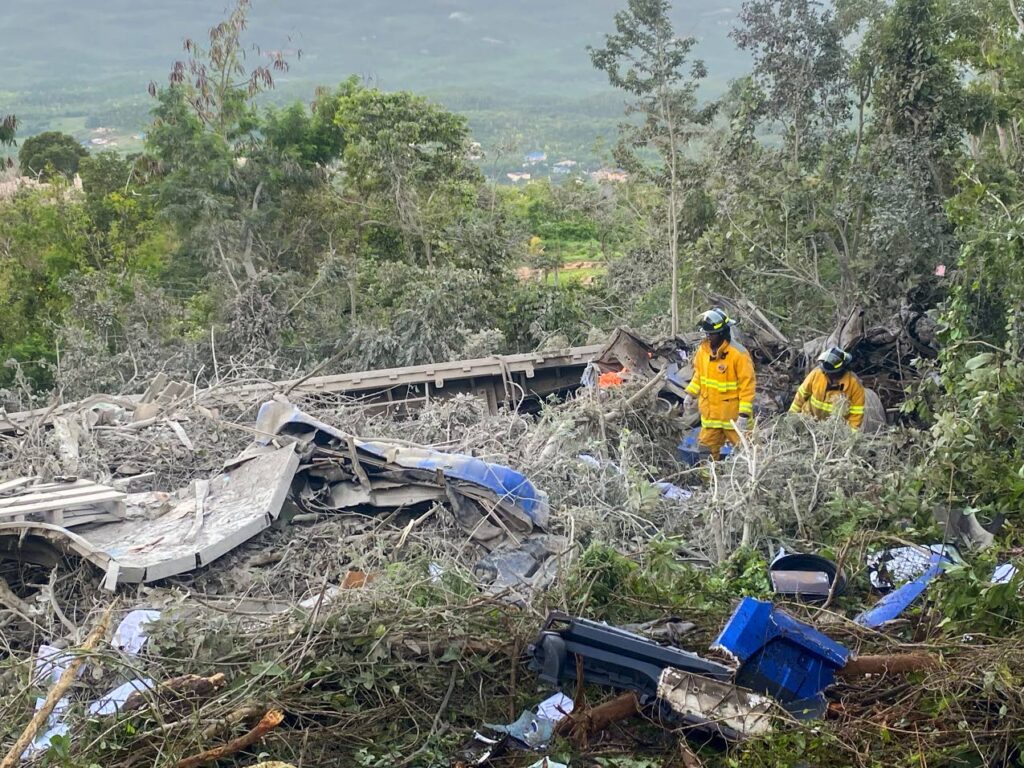
    Early Tuesday morning, a devastating rollover crash on Spur Tree Hill main road, a notoriously dangerous stretch of highway west of Mandeville, Jamaica, has left two people dead, shining a renewed spotlight on longstanding safety concerns that have plagued the steep route for decades.

    Local law enforcement has released the identities of the two victims: 25-year-old Jordan Sterling, a truck driver from Kingston 20’s Patrick Drive, who was operating the cement-loaded tractor trailer at the time of the incident, and 21-year-old Yanice McLeggon, a welder residing in St Catherine’s Central Village, who was riding as a passenger in the vehicle.

    According to initial police accounts, Sterling lost control of the heavily loaded vehicle as it traversed the hill, causing the truck to overturn multiple times. Both occupants were thrown from the cab during the sequence of crashes, and the trailer ultimately came to a rest just meters from residential homes in the Eglinton community. The force of the impact was powerful enough to jolt nearby residents awake at approximately 5:00 a.m.

    One local resident, who spoke to reporters on condition of anonymity, described the chaos and terror of the immediate aftermath. “I was sleeping and I heard a hard hit and something like a scrape and like it slammed into something. Then I saw the light dimming and then I got up and heard everybody saying ‘Truck turn over!’ When I came outside it was just dust; like when you see fog. Everything down there was fogged up, I couldn’t see anything [clearly],” he recalled. When he reached the crash site, he encountered a horrific scene: Sterling was still partially conscious, moaning in pain with only his hand moving, but residents lacked the equipment and training to safely move him, while McLeggon lay motionless on the hillside.

    Emergency response teams from the Mandeville Fire Station received the emergency alert just minutes after the crash, according to District Officer Trevor Robinson. “On arrival [we] saw a trailer overturned over the precipice. After carrying out a search of the area, one person was found alive and another person found with no sign of movement,” Robinson said. He praised his team for their swift and skilled work to extract the two victims from the wreckage. “Our men really need to be commended. We arrived at a good time… When the situation was assessed we realised that we needed a team of persons to carry out the rescue, so [they] were deployed and they were excellent in what they did,” he added.

    The Spur Tree Hill main road serves as a critical transportation link connecting Mandeville and its surrounding areas to St Elizabeth and other western destinations in Jamaica. For years, road safety advocates and local drivers have warned that the route’s steep gradient and sharp curves make it exceptionally dangerous for heavy goods vehicles, which often travel slowly up and down the hill, creating persistent traffic hazards and a long track record of fatal crashes.

    Back in February 2022, Dr Lucien Jones, vice-chairman of Jamaica’s Road Safety Council, alongside senior law enforcement officials, outlined the core causes of repeated crashes on the hill in an interview with the *Jamaica Observer*. At the time, Jones noted that many drivers operating heavy vehicles on Spur Tree Hill lack proper training for navigating its challenging terrain. A key recurring mistake, he explained, is that drivers fail to shift into a low gear early enough to control their speed when descending, relying instead on brake pads that can overheat and fail when carrying heavy loads, especially around sharp curves. “Training is a central part of it, in terms of getting your general licence or your trailer licence,” Jones said. “[They] depend rather on brakes which can fail you, especially with very heavy vehicles and turning around those curves often leads to the kind of news reports that we get about crashes, both non-fatal and fatal,” he added. Jones also urged all drivers, both ascending and descending the hill, to exercise extreme caution, as unexpected hazards can appear around any blind curve.

    On Tuesday, Adave Dockery, a fellow truck driver who spoke to reporters at the crash site, echoed Jones’ warnings, emphasizing the steep descent of Spur Tree Hill demands strict adherence to safety rules. “This hill is very famous and what people need to do, especially truck drivers, is just obey the sign that is at the top of the road. I am a truck driver, but not the big unit. I drive a seven-tonne unit and it always tell us to use the lower gear. Because the thing about it, if the bigger unit starts to pick up speed it is very hard to engage the lower gear and the truck will get away from you and this hill has no mercy and it will take your life,” Dockery said. He stressed that careless driving endangers not only the driver but everyone else on the road, noting that all workers deserve to return home safely to their families at the end of the day. “You just have to exercise caution and obey the rules of the road code. Obey the speed limit, use your low gear and come down the hill. [If not it] can take your life and also endanger the lives of others. People want to see their relatives return home after a long day of work and if you don’t do what you have to do, your family is going to miss you and you are also going to allow people to miss their family members. So just exercise caution,” he said.

    Beyond calling for better driver compliance, Dockery has joined a growing chorus of local residents and transportation workers calling on the Jamaican government to speed up long-planned construction of the Spur Tree Hill Bypass, a project that would divert heavy through traffic away from the dangerous hill route. “It is very urgent, because this hill has no mercy, especially when it is wet or damp… The hill naturally is a threat for bigger units, so we just have to exercise caution as much as possible,” he said.

    Multiple photos from the scene, taken by photojournalist Kasey Williams, show the mangled wreckage of the tractor trailer resting off the side of the road, spilled cement covering the nearby hillside, and a broken utility pole damaged in the crash.