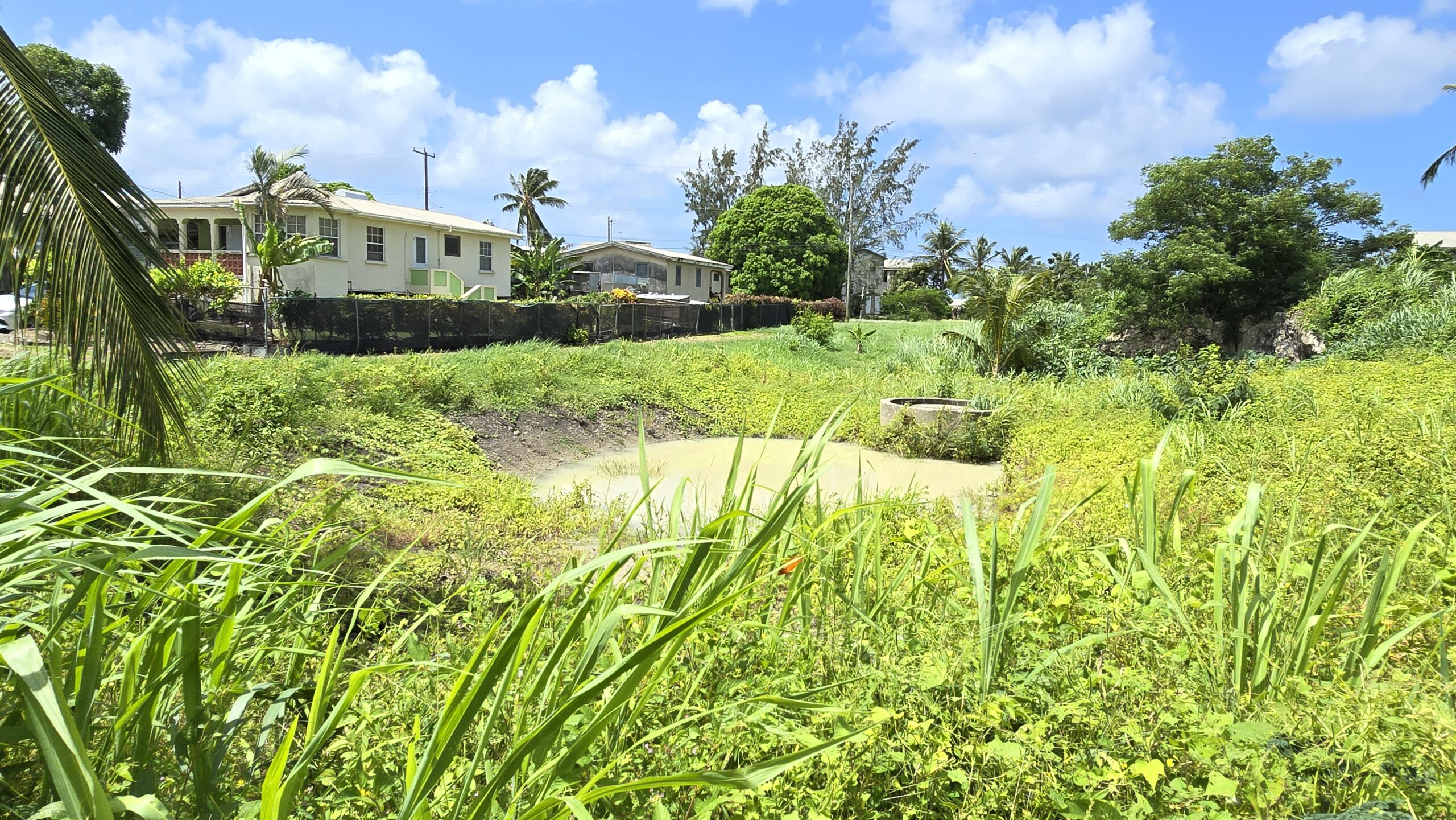
For months, long-term residents of the Husbands Gardens community in St James South, Barbados, have been living with a public health and safety hazard that was created by a poorly planned government drainage project – and they are finally getting official attention for their complaints. Local Member of Parliament Sandra Husbands confirmed that the island’s Drainage Unit has launched a formal assessment of the problematic trench, dug earlier this year at the junction of Pelican Avenue and First Avenue East, after a steady stream of grievances from area residents.
The 34-year local resident Henderson Greaves told reporters that the project was launched without any warning or community input, after government officials received separate complaints of chronic flooding on nearby Independence Drive. Per the official explanation provided to Greaves, the catchment trench was intended to divert floodwater away from the higher-elevation Independence Drive neighborhood. But Greaves, a long-time observer of local drainage patterns, says this explanation makes no geographic sense. He points out that Independence Drive sits on elevated land far above the location of the new trench, meaning floodwater from lower areas could never naturally drain uphill to the higher street.
Greaves argues that the root of past flooding in the area is not related to Independence Drive at all. He recalls extreme weather events that saw as much as nine inches of rain fall in just four hours in recent years, when an existing well located east of First Avenue overflowed its banks, sending excess water cascading into the lower-lying Husbands Gardens neighborhood. Long-standing natural drainage routes, he says, already directed excess water to three existing local wells that had handled stormwater reliably for decades without major issues.
Today, the improperly designed trench has become a stagnant pond, held in place by a layer of clay beneath the soil that prevents absorption, creating what Greaves describes as an unintentional man-made aquarium. Worse, he says, construction work blocked the entrance to a natural cave that previously helped divert excess water away from the area, and the drainage grate designed to move water out of the catchment sits far above the current water level, rendering it useless. Before the trench was dug, Greaves says, this green space was a beloved community spot: children played on the open ground, locals gathered for shade under mature almond trees, and a nearby resident grazed sheep on the upper slopes. Greaves and his neighbor had even kept the area cleared after the cleaning contract for the site expired and the National Conservation Commission never assigned a new crew to maintain the green space.
The stagnant water has also created an ideal breeding ground for culex mosquitoes, a health risk that long-time 36-year resident Alfred Butcher has attempted to mitigate on his own, occasionally pouring oil into the water to limit larval development. But his small-scale efforts, he says, barely make a dent in the problem. Like Greaves, Butcher questions the logic of altering a natural, functional drainage system that had worked for decades to direct water into local wells. “They got a well that was in operation and was taking off the water. They decided, well, somehow they don’t want the water going to the well, so I don’t know what is the purpose of the well,” Butcher said.
Residents say roughly 40 truckloads of soil were removed to create the catchment, and they are demanding a simple solution: backfill the unnecessary trench, restore the original drainage routes that direct water to the existing functional wells, unblock the cave entrance that was closed during construction, and clean up the damaged green space to return it to community use.
For months, residents say their complaints went in circles between government agencies, with each department disclaiming responsibility for the problematic project. “Everybody says it’s not their responsibility. So it don’t come under Housing, don’t come on under NCC. We don’t know who’s responsible,” Butcher explained, noting that sporadic maintenance visits have become far too rare to address the ongoing hazard.
Now, after MP Husbands elevated the complaints to the Drainage Unit, technical officers have already completed an initial site visit to examine why the trench is not draining properly and map the source of the standing water. Husbands told Barbados TODAY that assessors have returned to their offices to evaluate potential technical fixes for the issue, and will share their recommended plan with her office once the assessment is finalized. The local representative says she shares residents’ desire to see the hazard resolved as quickly as possible for the safety of the entire Husbands Gardens community.