作者: admin

  • Thousands face travel woes

    Thousands face travel woes

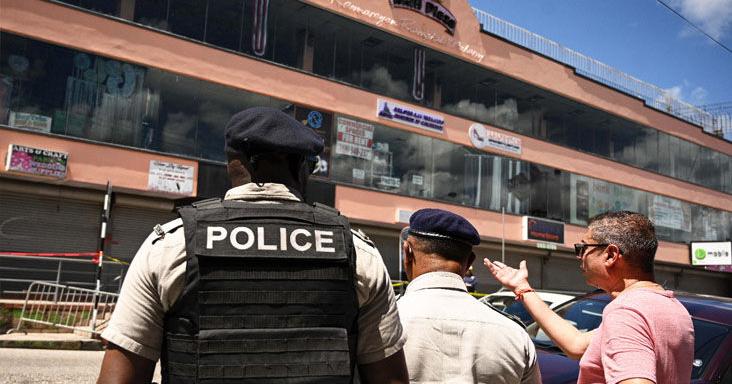
    Starting Monday, thousands of daily commuters across Trinidad and Tobago are bracing for significant travel disruptions, as maxi-taxi operators from all six national routes have launched a three-day work stoppage framed as a “rest and reflection” action to push for long-delayed government action on decades of unresolved industry issues.

    Vernell Carter, Assistant Secretary of the Association of Maxi Taxi Trinidad and Tobago (AMTTT), confirmed the industrial action last week, noting it will run through Wednesday. Carter added that the strike will be called off immediately only if the government delivers formal documentation laying out a clear, reasonable timeline to address the full list of operator demands. Approximately 5,000 maxi-taxis provide core public transport across the twin-island nation, meaning the shutdown will leave tens of thousands of workers, students and daily travelers without their regular transport option, and place extra strain on the few remaining operating transit services.

    During the three-day action, AMTTT executive members will gather at the Route Two (red band) compound at Port of Spain’s City Gate and the Route One (yellow band) compound on South Quay, with drivers from all other routes invited to attend the organized gathering. Carter highlighted that one core demand is the construction of dedicated transit hubs for every maxi-taxi route, a need that has gone unmet for smaller routes for years. “The other routes don’t have a hub to gather in, to sit down and rest and reflect, so they would be up on our side between Route One and Route Two,” Carter explained, noting the existing facilities offer amenities including a cafe and television that will accommodate visiting drivers throughout the action.

    Operators have laid out a broad set of long-standing grievances that have prompted the shutdown. Top concerns include rampant illegal competition from unlicensed “PH” vehicles and unauthorised white buses that operate on routes legally reserved for maxi-taxis. Operators have also been pushing since 2021 to raise the maxi-taxi speed limit from 65 km/h to 80 km/h, and are calling for clear, standardized regulations for transferring public service vehicle licences in cases of owner death, serious illness, amnesty programmes and open transfers. Additional demands include: the upgrade and improved management of maxi-taxi stands and dedicated hubs across all routes; full payment of outstanding dues owed to maxi-taxi operators that provide contracted school transport services; clearly marked pick-up and drop-off zones, particularly in the capital Port of Spain; permission for maxi-taxis to use overpasses and priority routes currently restricted to Public Transport Service Corporation (PTSC) buses; revised, more accessible National Insurance contribution arrangements for self-employed operators; clear legal guidelines for on-board radio communication systems; enhanced safety and security measures for both drivers and passengers during overnight trips; and simplified application processes for intra-city service passes.

    The timing of the strike has sparked urgent concern from education stakeholders, as the action coincides with ongoing CSEC and CAPE examinations for secondary school students. Crystal Ashe, President of the Trinidad and Tobago Unified Teachers Association (TTUTA), said the shutdown poses major disruptions for daily commuting teachers and exam-taking students. “Our teachers and students use this service daily and it will definitely impact on them,” Ashe said, noting that parents of exam candidates will need to make alternate travel arrangements at short notice.

    Ashe also confirmed that TTUTA supports operators’ demand for immediate payment of $10 million in outstanding school transport dues, noting that operators have only received two weeks of payment so far this year – a parallel to the delayed backpay owed to many public school educators. “TTUTA asks that the Ministry of Finance and Ministry of Education get their house in order and pay all persons their outstanding monies immediately. Citizens cannot take promises to the groceries and financial institutions,” Ashe said, adding that he remains hopeful that productive negotiation between the government and operators can still deliver a positive resolution.

    Walter Stewart, President of the National Parent-Teacher Association (NPTA), echoed that concern, saying the strike deeply worries parent leaders and has prompted the association to call for a pause in industrial action during the critical exam period. “The NPTA fully acknowledges and respects the rights of maxi-taxi operators to pursue legitimate avenues to address their challenges relating to school maxi-taxi payments, hub development revitalisation and management, policy guidelines on [licence] transfers and other concerns which have persisted across successive administrations,” Stewart said. However, he added, “Our students have toiled and prepared diligently for these exams and any disruption has the potential to cause unnecessary anxiety, uncertainty, disadvantage and inequity.”

    Stewart urged the government to immediately roll out contingency transport plans to ensure affected students can reach their exam centres on time, and called on both sides to enter urgent good-faith negotiations to resolve the outstanding issues that led to the strike.

    All six color-coded maxi-taxi routes are participating in the three-day action: red band (Route Two), the largest route with roughly 2,000 vehicles serving the Eastern Main Road and Priority Bus Route between Port of Spain, Arima and Sangre Grande; yellow band (Route One) serving Port of Spain, St James, Carenage, Chaguaramas, Diego Martin and Petit Valley; green band connecting Port of Spain, Central Trinidad and South Trinidad through Chaguanas, Couva and San Fernando; black band serving the route from San Fernando through Princes Town to Mayaro; brown band running from San Fernando to La Romaine, Siparia, Penal, Cedros and Point Fortin; and blue band, which operates exclusively across Tobago.

  • 14 POLICE KILLINGS

    14 POLICE KILLINGS

    Since the start of 2024, Trinidad and Tobago has recorded 20 fatalities resulting from police use of force, with more than two-thirds of those deaths occurring in the 12 weeks following the implementation of a national state of emergency (SoE) that took effect on March 3. As of May 30, the death toll from police-involved shootings during the emergency period stands at 14, a count that has climbed steadily even as multiple families of deceased suspects have publicly disputed official police accounts of the incidents and demanded transparent, independent probes into the killings.

  • NCIC: Name Piarco Airport after Bas

    NCIC: Name Piarco Airport after Bas

    On Saturday, during the National Council for Indian Culture (NCIC)’s annual Indian Arrival Day celebrations held at the Divali Nagar site in Chaguanas, NCIC president Surujdeo Mangaroo made a striking proposal: rename Piarco International Airport, Trinidad and Tobago’s primary international gateway, to Basdeo Panday International Airport, to honor the nation’s first prime minister of East Indian descent.

    Mangaroo framed the renaming as a fitting permanent tribute to the late leader, who passed away on January 1, 2024 at the age of 90 following a bout of pneumonia. Notably, Panday himself once referred to Piarco International Airport as the “gateway to the Americas” — a fact Mangaroo highlighted to underscore how well-aligned the gesture is with Panday’s own framing of the airport’s national and regional significance. Beyond remembrance, Mangaroo argued that attaching Panday’s name to the country’s busiest port of entry would send a clear message to young Trinbagonians: dedicated public service, courageous leadership, and personal sacrifice do not go unrecognized in the nation.

    This year’s Indian Arrival Day observance carried the theme “The toil of our ancestors, our identity today”, which anchored broader discussions of legacy and inclusion across the event. Mangaroo opened the day by reflecting on the centuries-long journey of East Indian indentured laborers who crossed the “kala pani” (black water) to build new lives in Trinidad and Tobago. He stressed that honoring the sacrifice of these forebears requires building a cohesive, equitable society that draws strength from all cultural contributions, noting that people of East Indian descent have shaped the nation’s cultural fabric, economic growth, and professional sectors in lasting ways. He called on all segments of national society to uphold a shared vision of unity and hope while protecting the cultural heritage passed down by earlier generations, reaffirming NCIC’s ongoing commitment to preserving this legacy for future Trinbagonians. As part of the day’s programming, NCIC presented a recognition award to retired dentist Dr. John Bharath, father of former government minister Vasant Bharath.

    Delivering the event’s keynote address as chief guest, Chief Justice Ronnie Boodoosingh echoed calls to honor ancestral sacrifice through ethical public service. Boodoosingh, who traced his own family’s roots to the indentured laborer journey, gave a public assurance that during his tenure leading the national Judiciary, he would work tirelessly to safeguard judicial independence. Outlining the judiciary’s core role in upholding public safety and equal fairness under the law, he stressed that all current public officeholders have a duty to avoid actions that would dishonor the legacy of sacrifice left by earlier generations. Boodoosingh committed that the judiciary would enforce the rule of law equally for all citizens, promising court decisions would be rendered without fear, favor, or bias. He emphasized that equality must be advocated for all groups, not just one racial or religious community, and called on citizens to speak out against all forms of discrimination. He also noted that historic gains for labor and working people were only achieved through cross-community collaboration, praising the contributions of all ethnic and religious groups to expanding educational access and raising national living standards.

    Basdeo Panday, the figure at the center of the renaming proposal, was a towering figure in modern Trinidad and Tobago politics: a trade union leader, founder of the United National Congress (UNC), and the country’s fifth prime minister, serving in office from 1995 to 2001. Panday passed away in Jacksonville, Florida earlier this year at 90, following a brief hospital stay for pneumonia. His tenure was marked by significant political controversy tied to the Piarco Airport development project, the same facility now proposed for renaming. Panday and his wife Oma were charged with corruption over allegations they received bribes to favor a foreign construction firm for airport work, but all criminal proceedings against the couple were formally dropped in March 2023. Related prosecutions of several businessmen and a former UNC minister connected to the case resulted in a $131.3 million civil fraud judgment that was upheld on appeal against businessman Steve Ferguson and former cabinet minister Brian Kuei Tung.

  • Probe into threats against ‘cop’

    Probe into threats against ‘cop’

    A viral social media video has triggered an official investigation by the Trinidad and Tobago Police Service (TTPS), after an individual claiming to be a serving police officer detailed escalating threats aimed at forcing him to abandon a court case against the government.

    The video, which has spread rapidly across major social platforms, opens with a pair of gloved hands handling a sealed brown envelope, while the male narrator lays out the sequence of intimidation he has faced in recent days. According to the narrator, the envelope was left at his residential address early one morning, and he had already been targeted with threatening harassment over the weekend while out with his wife and child. He told viewers that his assailants attempted to force his vehicle off the road, and had sent threatening text messages that proved they were monitoring his movements and knew he was with his family.

    When the envelope is opened at the end of the footage, three 5.56 calibre bullets tumble out, and a handwritten warning printed across the front of the envelope leaves no room for ambiguity: “Last warning for you (and two named people). Drop the court matter against the govt. Last night you get away. Next time is shots.”

    The narrator also added that when he first attempted to report the incident at his nearest local police station, he was turned away temporarily due to a routine shift change. He recalled that the desk officer informed him no available personnel were able to visit his home to take his official statement, and that he would need to wait for the shift handover process to conclude before any action could be taken.

    Within hours of the video circulating widely online, TTPS Deputy Commissioner Suzette Martin released an official statement confirming that a full investigation into the incident is now underway. Martin emphasized that the service takes all reports of intimidation, threats, and interference with ongoing judicial processes with the utmost urgency and seriousness.

    She framed the threat not as an attack on a single individual, but as a direct challenge to core state institutions. “A threat directed at a police officer who is lawfully carrying out his or her duties is not merely a threat against an individual officer. Such actions may constitute an attack on the administration of justice, the rule of law, and the institutions responsible for maintaining public safety and order,” Martin said in the statement.

    Martin added that the TTPS has committed to deploying all necessary resources to protect the affected officer, his family, and uphold the integrity of both law enforcement and the national judicial process. The service remains unwavering in its commitment to ensuring all officers can carry out their lawful duties without intimidation, coercion, or fear of retaliation, and confirmed that any individuals found responsible for this criminal act will face full prosecution under Trinidad and Tobago law.

  • Benjamin: No info  on gangs uniting  to attack police

    Benjamin: No info on gangs uniting to attack police

    A viral social media video calling for rival gangs to put down their differences and unite in violent action against law enforcement has sparked a firm condemnation and response from Trinidad and Tobago’s top political and police leadership, following a high-profile police-involved shooting earlier this year.

    The video, which circulated publicly on Friday, features two men, one of whom issued fierce criticism of the criminal charges filed against Kaia Sealy. Sealy, the common-law wife of Joshua Samaroo who was fatally shot by police during an encounter on January 20, currently faces eight criminal charges connected to the incident. She is currently based in the United States undergoing scheduled medical treatment, and is not in custody in Trinidad and Tobago as the case proceeds.

    In the recorded message, the speaker called for an end to ongoing gang conflict between two major local factions, Rasta City and Muslim City, framing the existing divisions as the product of a state-sponsored “divide and rule” system. He went further to urge members of four prominent gangs, numbered 6 through 9, to mobilize and prepare for a so-called “revolution” targeting state institutions.

    Within 24 hours of the video’s spread, Prime Minister Kamla Persad-Bissessar issued a blistering rebuke of the call for violence. In an official public statement released Saturday, she labeled the appeal as the product of depraved thinking, saying “only sick and evil people would support calls for violent gangs to attack law enforcement officials and law-abiding citizens.”

    Persad-Bissessar also tied the incitement to a recent public demonstration outside the office of the Director of Public Prosecutions (DPP) last week, noting that protesters had attempted to intimidate prosecutorial staff carrying out their official duties during that action. She credited the Trinidad and Tobago Police Service (TTPS) with intervening quickly to secure the building and protect staff, adding that the peaceful rule of law would not be undermined by violent intimidation.

    Deputy Commissioner of Police (Administration) Junior Benjamin has clarified that, as of the latest police briefings, law enforcement has not received any credible intelligence confirming that gangs have already finalized plans to make peace and carry out coordinated attacks on police officers. Speaking to reporters from the Trinidad Express Wednesday, Benjamin made clear that the TTPS is prepared for any contingency: if gangs follow through on the call for attacks, all involved will be prosecuted and face the full consequences of their actions under local law.

    Benjamin emphasized that the TTPS operates to balance two core constitutional rights that are central to Trinidad and Tobago’s democratic system. “One is the whole idea of expression. A person’s freedom of expression in a protest and that of public safety and national security,” he explained. The Police Service, he said, is committed to upholding both rights equally, and will act decisively against any person or group that violates legal boundaries by threatening public safety or undermining the rights of others.

    The police service, Benjamin added, maintains active, ongoing intelligence gathering operations focused on gang activity across the country. Any intelligence related to potential planned violence is immediately shared with specialized operational units, which are prepared to intervene to de-escalate and neutralize any threat before it can harm civilians or law enforcement. “We are therefore saying we are here to ensure law and order at all times and we will ensure the safety of our citizens, no matter what,” he said, reaffirming the force’s commitment to public safety amid heightened tensions.

  • Kookgas opnieuw duurder: prijzen van meerdere cilinders stijgen

    Kookgas opnieuw duurder: prijzen van meerdere cilinders stijgen

    Starting June 1, consumers across Suriname are facing higher costs for multiple types of cooking gas, following an official announcement made Sunday by N.V. EnergieBedrijven Suriname (EBS). The price adjustment applies to 28-pound steel cylinders and a range of composite gas cylinders, and forms the latest step in the government’s planned gradual elimination of long-standing cooking gas subsidies.

    This incremental subsidy phase-out is rooted in a national energy transition policy approved back in August 2023 by Suriname’s Ministry of Economic Affairs, Entrepreneurship and Technological Innovation, alongside the Ministry of Natural Resources. The overarching goal of the policy is to gradually align cooking gas prices with their actual market value, phasing out the decades of government subsidies that have kept consumer costs artificially low for years.

    Under the new price schedule that took effect June 1, the cost of a 28-pound gas cylinder has risen from SRD 472.50 to SRD 504.00. This will not be the final increase for this product: one last 31.50 SRD price hike is scheduled for September 1, 2026, after which the cylinder will reach its government-mandated final market price.

    Multiple composite cylinders are also seeing upward price adjustments this round. The 10-kilogram composite cylinder has moved from SRD 404.25 to SRD 420.00; the 14-kilogram variant has increased from SRD 493.50 to SRD 525.00; and the 22-kilogram composite cylinder now costs SRD 924.00, up from the previous SRD 892.50. Additionally, the 100-pound cylinder has seen a small 9.93 SRD increase, bringing its new price to SRD 1,847.43.

    Not all cooking gas products are affected by this latest round of changes. The 20-pound and 40-pound cylinders will retain their current prices of SRD 387.50 and SRD 735.00 respectively, as both have already reached the final end price set by the government as part of the transition plan.

    With the June 1 price adjustment, three product lines — the 100-pound cylinder, 10-kilogram composite cylinder, and 22-kilogram composite cylinder — have now hit their final market pricing. Only two categories, the 28-pound steel cylinder and 14-kilogram composite cylinder, will see one additional incremental increase this coming September.

    Oversight of compliance with the new price caps falls to Suriname’s Price Control Department. The agency has reminded consumers that anyone who observes retailers charging prices above the officially mandated rates can file a report directly with the department for investigation.

  • Column: De spirituele crisis achter het verval van Surinaams onderwijs

    Column: De spirituele crisis achter het verval van Surinaams onderwijs

    Fifty years ago, classrooms across Suriname were filled with a generation of students who stared at chalkboards with hungry, ambitious eyes, eager to learn and grow. Today, that eager curiosity has been replaced by something far more somber: in far too many students, educators and activists see boredom, frustration, and worst of all, quiet resignation to a broken system. The decline of Suriname’s education sector is not just a drop in test scores or a bureaucratic challenge. It is an erosion of national dignity, a crisis that cuts beyond budgets and policy papers to reach the very core of the nation’s collective spirit. Empty classroom desks, widespread textbook shortages, and disheartened teachers are not administrative missteps to be brushed aside. They are visible symptoms of a deeper spiritual crisis unfolding across the country’s education system.

    Education at its core is not about memorizing dates or passing standardized exams. It is about helping children discover that the world is logical, understandable, and full of possibility. It opens the door to imagination and wonder, giving every child who learns to read an inner landscape where they can seek answers to their most pressing questions. Without that foundational opportunity, children learn only that arbitrary, unaccountable power rules their lives. For youth in Suriname’s rural interior and low-income urban neighborhoods, who are so often overlooked by national policymakers, quality education is the first step to recognizing their own worth: it teaches them that they exist, that their ideas matter, and that they can shape their own futures. But when a child attends a school every day that lacks basic order and resources, they learn chaos instead of logic – and that chaos leaves a lasting trauma. A child denied a meaningful education learns one devastating lesson early on: that they are not worthy of dreaming. That is the greatest harm a society can inflict on any of its members.

    Teachers do more than instruct individual children; they nurture the future parents, chefs, engineers, and leaders that will sustain the nation. A strong education gives adults the foundation of free choice: the ability to distinguish right from wrong, truth from lies, and cause from effect. That ability is the bedrock of moral consciousness in any society. Today, too many Surinamese graduates leave the system feeling betrayed. They hold a diploma on paper, but lack the intangible spiritual and intellectual tools: patience, discipline, and critical thinking. A society where adults have never learned to think critically quickly devolves into a culture of gossip, envy, and resentment. True education, by contrast, teaches people to carve their own paths without tearing others down to get ahead. It is the quiet voice that tells an adult to pause, reflect, and empathize. Without that voice, Surinamese society grows harder, more impatient, and far lonelier than it needs to be.

    The cumulative impact of frustrated students and burnt-out teachers is a nation unable to move forward, because collective trust in each other’s capabilities has eroded away. Quality education builds trust and connection across a society: a well-educated person trusts their doctor, the cashier processing their payment, and the politician they elected to serve. Today, that broad social trust has faded in Suriname, with many people only trusting their immediate family or religious communities. Education is the glue that binds a pluralistic society together, and that glue has come loose.

    A failing education system does not simply produce less knowledgeable people. It produces people broken by systemic neglect, who have lost connection to their broader community because no one ever taught them that knowledge is meant to be shared, not hoarded. It is long past time to stop blaming Suriname’s young people for the failures of the system that was built to serve them. Instead, the nation must turn its attention to building a new system that actually nurtures young minds and souls. Yes, teachers deserve living wages. Yes, crumbling school infrastructure needs urgent repairs. But more than anything, Suriname needs schools that do more than administer exams – they need schools that shape whole people. A nation that forgets to invest in the souls of its children condemns itself to an endless future of stagnation. But the Surinamese people deserve better than that; they deserve the light of opportunity.

    Teachers are not just civil servants going through the motions of a job. They are the fireflies (loi boto, in Suriname’s native creole) that light the path in the dark for the next generation. If we refuse to give those fireflies the support and resources they need to shine, our children will walk blindly toward the edge of crisis. Give a child a meal, and you feed their body for a single day. Give a child a meaningful, soul-nurturing education, and you feed them for a lifetime. Fifty years of declining education is not just a statistic on a policy report. It is the quiet sound of a nation forgetting who it is and what it can be. Now is the time to break that silence, and start rebuilding the future that Suriname’s children deserve.

  • Cuba is not a threat; it is a victim of terrorism

    Cuba is not a threat; it is a victim of terrorism

    On the anniversary of Cuba’s formal legal proceedings against the U.S. government seeking compensation for human harm from decades of anti-revolutionary terror, the full scope of the violence that has shaped the island nation’s modern history remains a raw, unhealed wound for generations of Cuban families.

    This history of state-sponsored aggression began within months of the 1959 Cuban Revolution, when U.S. authorities viewed a sovereign socialist government 90 miles from its shores as an unacceptable threat. Under the Eisenhower administration, the U.S. government formally approved a covert action program against the new revolutionary government in March 1960, allocating substantial funding to build armed opposition networks and carry out destabilizing attacks across the island. That decision planted the roots of widespread terrorism that would cost hundreds of lives and leave irreversible pain across Cuban communities for decades.

    The casualty list of this anti-revolutionary campaign includes dozens of innocent civilians, many of them children, cut down in unprovoked attacks by U.S.-funded armed gangs. In January 1963, 11-year-old Yolanda Rodríguez Díaz and 13-year-old Fermín Rodríguez Díaz were murdered by a counter-revolutionary gang operating in Matanzas’ southern region at the La Candelaria farm in Bolondrón. The previous year, 22-year-old Andrés Rojas Acosta was killed by a mercenary gang in San Nicolás de Bari, hanged with the same rope he had used to tie his pig. In October 1960, 22-month-old Reynaldo Núñez-Bueno Machado and his mother were gunned down by Gerardo Fundora’s gang during a roadside attack on a passing civilian jeep between Madruga and Ceiba Mocha. By March 1963, 10-year-old Albinio Sánchez Rodríguez was shot dead by Delio Almeida’s gang as retaliation for a defeat the group suffered at the hands of Cuban National Revolutionary Militia forces.

    These child killings are not isolated tragedies, but part of a broader pattern of violence that targeted even young Cubans working to advance the revolution’s social goals. The murders of volunteer literacy teacher Conrado Benítez García, young literacy worker Manuel Ascunce Domenech, and fellow educators and peasant organizers who worked to eradicate illiteracy across the island remain a defining reminder of how U.S.-backed terror targeted everyday Cubans working to build a better future. Even the 1961 Playa Girón mercenary invasion, a large-scale covert aggression, left a generation of families shattered: 13-year-old Nemesia Rodríguez Montalvo watched her mother die and her young siblings wounded from U.S.-supplied shrapnel, while 176 people were killed and more than 300 wounded across the island in the fighting.

    By the time counter-revolutionary gang activity was fully suppressed in 1965, the death toll from U.S.-sponsored terror had already reached 725 people, including civilians, active-duty troops, and militiamen, with hundreds more left permanently disabled and traumatized. Beyond the killings of civilians, the U.S. campaign included widespread economic sabotage and attacks on critical infrastructure designed to destabilize the new government. In February 1960, a U.S.-tied small plane set fire to 1.5 million arrobas of sugarcane across four major mills in Camagüey, striking at the heart of Cuba’s core export economy. The 1960 sabotage of the French freighter *La Coubre* in Havana’s port remains one of the most brutal early acts of state-sponsored terror: the ship carried a legal shipment of arms purchased by Cuba from Belgian industry, and the blast killed 101 people and left hundreds injured.

    Other high-profile attacks targeting civilian infrastructure followed throughout the 1960s and 1970s. In April 1961, the country’s largest department store, El Encanto, was burned to the ground by a CIA-linked terrorist, killing salesclerk Fe del Valle Ramos and injuring 18 other workers. A month earlier, an attack on the Hermanos Díaz refinery in Santiago de Cuba killed 27-year-old on-duty sailor René Rodríguez Hernández and left 19-year-old Roberto Ramón Castro permanently disabled. In May 1961, terrorists set fire to a crowded cinema in Pinar del Río during a children’s matinee, injuring 26 children and 14 adults. By 1963, an air strike on Santa Clara killed teacher Fabric Aguilar Noriega and wounded three of his four children. A 1971 machine gun attack on the coastal town of Boca de Samá, carried out by terrorist vessels launched directly from U.S. territory, killed two civilians and wounded multiple residents. Two years later, terrorists attacked two Cuban fishing vessels in the Florida Straits, murdering fisherman Roberto Torna Mirabal and stranding his crew on rafts without food or water.

    The deadliest and most infamous of these attacks came in October 1976, when a Cuban civilian airliner was blown up in mid-flight, killing all 73 people on board—including 24 members of Cuba’s youth fencing team, who had just swept all gold medals at the Central American regional championships. Beyond attacks on civilians and infrastructure, terrorist operatives backed by the U.S. also carried out hundreds of assassination attempts against revolutionary leader Fidel Castro Ruz, totaling more than 600 plots that were all foiled by Cuban security agencies. The campaign of aggression also extended to biological warfare: in 1981, the deliberate introduction of hemorrhagic dengue fever by U.S. operatives killed 158 people, including 101 children, and required the hospitalization of more than 116,000 Cubans.

    Six decades after the first anti-revolutionary terror attacks began, the Cuban people formally marked their collective claim for justice in two landmark legal actions: a 1999 lawsuit seeking compensation for human harm caused by U.S.-sponsored terror, followed by a 2000 filing for economic damages stemming from decades of aggression. Even after 67 years, the pain of these losses remains raw for the families of the victims, who have watched as successive U.S. administrations have maintained a hostile policy that has made Cuba the longest-running primary target of American state-sponsored aggression in modern history. Today, the lawsuits stand as a permanent historical record of the heavy price Cuba has paid to defend its sovereignty and right to exist as an independent nation.

  • Craft of the Homeland

    Craft of the Homeland

    Every June 1, as the world marks International Children’s Day, a quiet, joyful scene unfolds in a local neighborhood park opposite a small elementary school in Cuba. Bathed in early morning light, the open space transforms into a living canvas, dotted with children in bright white shirts, vivid red skirts and shorts, and striking red and blue scarves. As the day stretches into afternoon, the park remains alive with laughter: whether it’s the same group of kids or new faces joining in, children fill the space with energy, chasing each other through generations-old traditional games and testing new pastimes. For generations, these community green spaces have been more than just playgrounds — they are fertile ground where childhood dreams take root, grow, and thrive alongside one another. It is impossible to imagine what this vibrant scene would become if a single, cruel stroke erased the peace that makes it possible.

    Looking back at the generations of children who grew up running across this same park grass, many now-adult Cubans carry small, quiet marks of the care their country extended to them from birth: faint vaccine scars that stand as reminders of universal public health investment. They recall fond memories of school camping trips and special holiday assemblies, and many still credit their biggest life achievements to dedicated teachers, who despite limited resources, still opened the door to lifelong knowledge and opportunity for every child.

    But this peaceful Cuban childhood stands in sharp contrast to the harsh realities faced by millions of children across conflict zones and crisis-hit regions of the world, realities Cubans only witness through news reports. In these forgotten corners of the globe, children have been forced to trade the soft weight of storybooks and plastic toys for the heavy burden of weapons. For them, accessible schools are nothing more than distant fairy tales, and functioning hospitals are mythical chimeras that do not exist in their broken communities. Where neighborhood parks should be, children wander across hot asphalt littered with rubble and the debris of missile strikes, surrounded by destruction instead of play.

    Nowhere is this injustice more acute than in Palestine, where the youngest generation has grown up believing that learning the alphabet and mastering multiplication tables is a privilege they are not allowed to have. Conflict has not spared even the most vulnerable in other regions either: in areas of Iran and Ukraine, school buildings full of young students, backpacks, and dedicated teachers have been reduced to smoldering ash and crumbling rubble. In war, no bomb falls at random: cutting off an entire generation’s future, permanently, is a deliberate, calculated military strategy.

    Even in wealthy, stable nations like the United States, childhood safety cannot be taken for granted. American media is flooded with repeated stories of children who leave for school in the morning, and never come home alive — gunned down by heartless attackers in school shootings that steal the lives of promising young students before they have a chance to build their futures. And on the U.S. southern border, another child rights crisis plays out: thousands of children separated from their parents by U.S. Immigration and Customs Enforcement make headlines regularly, the bitter, harmful legacy of harsh deportation and immigration policies inflicting lasting trauma on vulnerable young people.

    Against this global backdrop, the simple, peaceful joy of the local Cuban park takes on deeper meaning. Even with all its imperfections, the park offers safety: a pregnant woman can sit calmly on a bench waiting for her prenatal appointment, and parents can drop their children off at the adjacent school knowing they will return home safe and alive at the end of the day. On this International Children’s Day, the quiet hum of playful laughter in this neighborhood park sends a clear message: even when weariness and hardship weigh on communities, there is no more important global duty than protecting children — our shared global future — for every child, no matter where they are born.

  • Atompai steunt onderwijsactie: Leerkrachten kunnen niet blijven wachten

    Atompai steunt onderwijsactie: Leerkrachten kunnen niet blijven wachten

    A senior Surinamese parliamentary figure has publicly thrown his full support behind a national collective action by teachers, calling on the government to end years of broken promises and deliver tangible improvements to educators’ underpaid and under-resourced working conditions.

    Poetini Atompai, a member of the National Assembly for the NPS party and chair of the body’s permanent education committee, told local outlet Starnieuws he aligns entirely with the joint education unions’ call for teachers to stay away from work starting Monday to participate in a national consultation over long-outstanding demands. The action will remain in place until the government implements concrete steps to honor prior agreements and meet long-overdue financial commitments to the nation’s teaching workforce.

    Atompai, who previously led the Surinamese Police Union, argues that after years of empty pledges, the government can no longer delay providing clear answers on when and how educators’ professional and financial standing will be improved. He stressed that financial constraints cannot be an indefinite excuse for the persistent struggles teachers face, noting that many currently survive on a monthly salary of just 13,000 Surinamese dollars, paired with inadequate work infrastructure and support. This current situation is no longer sustainable, he added.

    Since taking office as a lawmaker, Atompai says he has repeatedly raised alarm over teachers’ legal and employment rights, bringing the issue to the attention of relevant authorities across the government. “Teachers have no visibility into any improvements to their situation. We promised them progress, and now we owe them clarity on what will be done, how it will happen and when it will happen. That is why this action is necessary right now,” Atompai stated.

    He pushed back on the government’s justification of limited public finances, arguing that this does not justify abandoning the country’s educators. “If there is no money, are teachers just supposed to die?” he asked. Atompai recalled that the current administration raised expectations for improved living standards during its election campaign, and it therefore has a binding responsibility to deliver on those promises.

    Drawing on his observations over the past year in office, Atompai offered a sharp rebuke of the country’s political leadership. “Based on everything I have seen over the past year in politics, my clear conclusion is this: the political establishment has other priorities. Moving the country forward is not its number one goal,” he said.

    Currently, the government and the Ministry of Education are holding ongoing negotiations with the education unions over the demands.