作者: admin

  • DCP Martin vows police surge: dad killed, pregnant wife injured in ambush

    DCP Martin vows police surge: dad killed, pregnant wife injured in ambush

    A brazen early-morning shooting in the quiet Trinidadian community of Wallerfield has left one man dead, his pregnant wife wounded, and reignited public debate over the effectiveness of the country’s ongoing state of emergency (SoE) aimed at curbing violent crime.

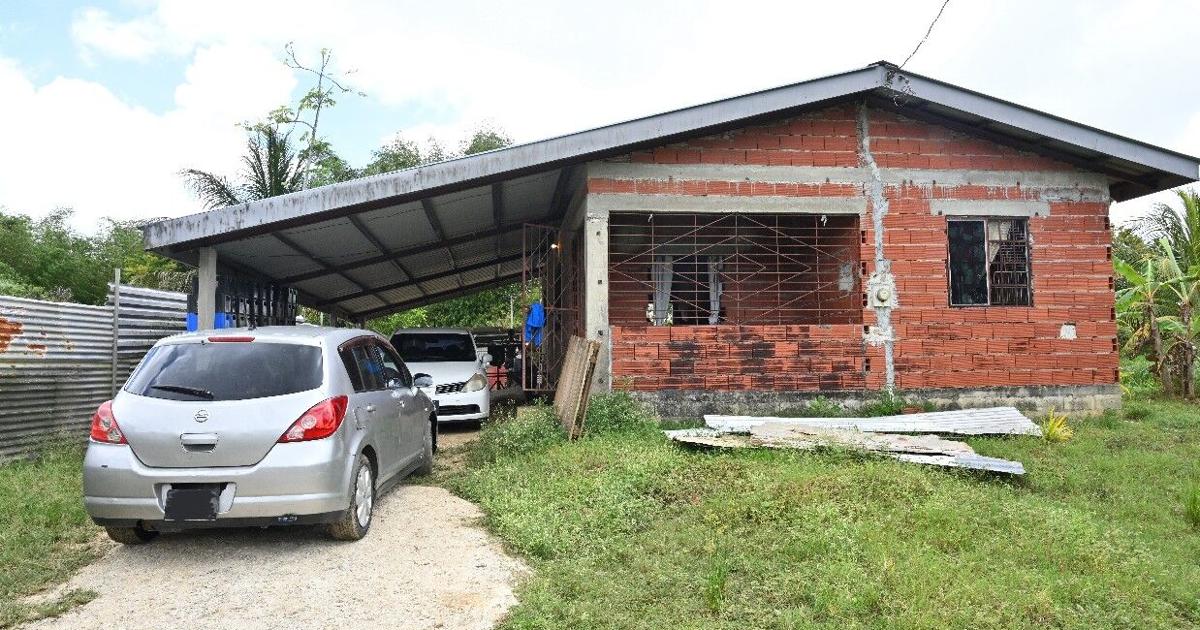
    The incident unfolded at approximately 2 a.m. on Thursday at the home of Anthony Francis, 47, also known by the alias “Smalls”, who was asleep alongside his pregnant partner, her one-year-old son from a prior relationship, and another man identified only as “Lijah”. According to Trinidad and Tobago Police Service (TTPS) investigators, the unidentified gunman positioned himself outside the residence off Moonan Road, inserted a firearm through an open bedroom window, and opened fire on the sleeping occupants.

    Francis was struck multiple times in the chest and neck, and was pronounced dead on arrival at Sangre Grande Hospital. His pregnant wife sustained non-life-threatening gunshot wounds, while “Lijah” in an adjacent room was also hit. The one-year-old child was unharmed in the attack. Responding officers recovered two spent shell casings near Francis’ sleeping position. Police later confirmed Francis had recently been released from custody after questioning over a recent case of vandalism targeting multiple vehicles in the Wallerfield area, where he had initially been listed as a suspect before being released without charge.

    This shooting comes just one week after an almost identical attack in St James that claimed the lives of 25-year-old Joseph Sutton and his 11-month-old son Jayden, who was just four days short of his first birthday. In that unrelated incident, the attacker also fired through a bedroom window at the sleeping targets, leaving the same deadly pattern of violence that has shaken public confidence.

    In an official statement shared via WhatsApp following the Wallerfield killing, TTPS Deputy Commissioner of Police (Operations) Suzette Martin framed the brazen murder as a desperate reaction to the heavy pressure law enforcement has placed on criminal networks since the implementation of the SoE.

    “What you are seeing is a direct response from criminals who are under sustained pressure,” Martin explained. “The TTPS has increased operations, disrupted networks, and removed weapons from the streets, and that pressure is forcing desperate reactions.”

    Martin rejected any suggestion that the attack signals a failure of the ongoing state of emergency, emphasizing that the SoE has already delivered meaningful results that are not always visible to the general public. “The state of emergency is working. It is disrupting criminal activity, restricting movement, and allowing us to act with greater speed and authority,” she said. “The public may not see every success, but the results are there: arrests, firearm seizures, and the dismantling of criminal operations.”

    Far from softening their approach, Martin confirmed that law enforcement will double down on anti-crime efforts in the wake of the killing. “We are not backing down. In fact, these incidents strengthen our resolve. Our operations will continue, and they will intensify,” she said. An immediate surge in uniformed and plainclothes police presence will be rolled out across Wallerfield, with a focus on targeted, intelligence-led interventions to catch the perpetrators. Martin added that investigators are already pursuing strong leads in the case.

    She issued a stark warning to criminal elements operating across the country: “Let me also send a clear message. There is no safe space for criminals, whether in public or in private homes. TTPS will find you and we will not allow criminal elements to dictate the narrative or undermine the work being done under the SoE.”

    Martin pushed back against criticism that frames isolated high-profile murders as a measure of the TTPS’ success, noting that law enforcement judges progress on the sustained reduction of criminal activity and long-term public safety gains, not individual attacks. “We are focused, we are relentless, and we will continue to take the fight to those who threaten public safety,” she added.

    Requests for comment from local Member of Parliament Phillip Watts, who represents the La Horquetta/Talparo constituency that includes Wallerfield, went unanswered as of Thursday evening. As of Thursday night, the national murder toll for the current year stood at 96, marking a 10% reduction from the same period last year, when the toll had reached 106.

  • Dominica government and UNLIREC host senior-level inter-agency roundtable to strengthen firearms regulation and public safety

    Dominica government and UNLIREC host senior-level inter-agency roundtable to strengthen firearms regulation and public safety

    Against a backdrop of growing regional concern over illicit weapons trafficking and violent crime, the Commonwealth of Dominica is set to convene a landmark three-day inter-agency roundtable from April 8 to 10, 2026, focused on cracking down on illegal firearms and the armed violence they fuel. The event, organized by Dominica’s Ministry of National Security and Legal Affairs in partnership with the United Nations Regional Centre for Peace, Disarmament and Development in Latin America and the Caribbean (UNLIREC) and the CARICOM Implementation Agency for Crime and Security (CARICOM IMPACS), brings together a cross-sector coalition of senior stakeholders to align national action with regional safety goals.

    According to an official press statement from the security ministry, the roundtable forms a core part of Dominica’s sustained commitment to advancing the Caribbean Firearms Roadmap, a coordinated regional framework that targets illicit weapons flows, cuts rates of violent crime, and uplifts public safety standards across all Caribbean nations. Unlike isolated policy efforts, this gathering is designed to break down bureaucratic silos, bringing high-level representatives from sectors as diverse as national policing, justice administration, foreign affairs, gender equity, and performance monitoring and evaluation to the same table.

    Over the course of the three-day program, attendees will engage in a structured schedule of cross-national policy exchanges, technical deep dives, and collaborative working sessions. The agenda is tailored to three core outcomes: strengthening institutional coordination across domestic agencies, shoring up national firearms control regulatory frameworks, and accelerating implementation of Dominica’s National Action Plan, which was developed under the umbrella of the Caribbean Firearms Roadmap.

    Key discussion topics will span the full lifecycle of illicit weapons in the region: tracing the routes of cross-border firearms trafficking, updating national legislative measures to close regulatory gaps, enhancing systems for weapons marking and traceability, improving secure storage and management of authorized firearms and ammunition, preventing legal weapons from being diverted to black markets, and leveraging data-driven insights to guide more effective policy decision-making.

    Beyond advancing domestic policy, the roundtable also functions as a strategic platform to deepen partnership between national Dominican authorities, regional bodies like UNLIREC and CARICOM IMPACS, and broader international partners. Organizers have emphasized the need for a unified, whole-of-government approach to tackle the transnational challenge of illicit firearms, a problem that cannot be resolved by any single agency or nation acting alone.

    Funding for the initiative has been provided by the Government of the United States of America, enabling the convening of cross-sector stakeholders and the delivery of technical programming for the event. Opening remarks will be delivered by Dominica’s Minister for National Security and Legal Affairs, Honourable Rayburn Blackmoore, alongside senior officials from the Dominican government and leadership representatives from both CARICOM IMPACS and UNLIREC.

    By the close of the three-day roundtable, participants are expected to reach consensus on priority national action items, define clear roles for local civil society organizations in supporting firearms control efforts, and map out opportunities for long-term technical assistance. The overarching end goal of all discussions is to advance safer communities and support inclusive, sustainable development across Dominica.

  • Urgent blood appeal for cop shot in abdomen

    Urgent blood appeal for cop shot in abdomen

    A 29-year-old Trinidad and Tobago Police Service (TTPS) officer remains fighting for his life in intensive care after being gunned down during a armed response operation in southern Trinidad late Friday, prompting an urgent public appeal for O-positive blood donations to support his emergency treatment.

    Acting Police Constable Alex Koon Koon, a five-year veteran assigned to the Mon Repos Police Station, was injured during a confrontation with an armed suspect in the La Romaine community on 4 April. Koon Koon was part of a team of Southern Division officers dispatched to La Plaisance Road following a credible public tip that a man was openly carrying a firearm while seated on the outdoor gallery of a local residence.

    The team arrived at the scene at approximately 10:50 p.m. As Koon Koon stepped out of the marked police vehicle, multiple gunshots erupted from the direction of the gallery. The officer was struck in the left abdomen, and the suspect immediately fled the property before law enforcement could detain him.

    First responders rushed Koon Koon to San Fernando General Hospital, where he underwent emergency surgery to address life-threatening internal damage. Senior law enforcement officials confirmed the officer suffered severe trauma to his spleen and one lung, and he has remained in the hospital’s Intensive Care Unit in critical condition in the days following the shooting.

    While the initial attempt to apprehend the suspect at the scene failed, investigative teams have made early progress in the case. As of the latest updates, three people—two men and one woman—have been taken into police custody and are assisting officers with their ongoing inquiry.

    Top TTPS leadership has publicly reaffirmed the service’s commitment to bringing all responsible parties to justice, and expressed solidarity with the injured officer and his family. Commissioner of Police Allister Guevarro visited Koon Koon at the hospital, met with his relatives, and extended official prayers and well wishes on behalf of the entire police service for a full and speedy recovery.

    Deputy Commissioner of Police (Operations) Suzette Martin, who is overseeing the investigation, framed the attack not just as an assault on law enforcement, but on public safety and the rule of law. “When a police officer is shot in the line of duty, it strikes at the very heart of the Trinidad and Tobago Police Service and the rule of law we are sworn to uphold. This is not just an attack on the TTPS, but on the safety and security of every law-abiding citizen,” Martin said in the official media statement.

    Martin emphasized that the violent incident would not weaken the service’s resolve to protect communities. “Let me be clear—this incident will not deter us. The TTPS is actively pursuing a thorough and comprehensive investigation, and we will intensify our operations, follow every lead, and bring those responsible to justice,” she said. “We remain resolute, unwavering, and relentless in our mission to protect and serve, and we will not allow those bent on disrupting our society to succeed.”

    Members of the public have stepped in to support Koon Koon’s recovery via a widespread social media campaign calling for voluntary blood donations. Appeals direct potential donors to the blood bank at San Fernando General Hospital, with a specific request for donors with O-positive blood, the type most urgently needed for the officer’s ongoing treatment.

    Social media posts shared across local platforms highlight the critical difference every donation can make. “Help PC Koon Koon in his fight for his recovery,” one widely shared appeal reads. “Please give blood to help save his life,” it adds, noting that every contribution directly supports the officer as he fights to pull through.

  • Autopsy on Central woman found under bed

    Autopsy on Central woman found under bed

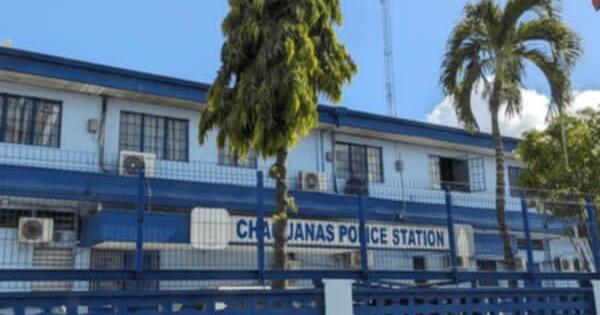
    Nearly three months after the remains of 74-year-old Doodhani Vishvati Sooknanan were discovered beneath a bed at her family residence on Torenia Drive in the Edinburgh 500 housing development in Chaguanas, official autopsy results have formally confirmed that no suspicious or criminal activity contributed to her passing. Local law enforcement announced Wednesday that the official cause of death was a myocardial infarction, more commonly known as a heart attack.

  • Oil prices plunge and shares jump on US-Iran ceasefire plan

    Oil prices plunge and shares jump on US-Iran ceasefire plan

    A conditional two-week ceasefire agreement between the United States and Iran, which includes the reopening of the strategically critical Strait of Hormuz, has sent shockwaves through global energy and financial markets, triggering a steep drop in international crude prices and widespread gains across stock exchanges worldwide.

    Following the announcement of the deal, global benchmark Brent crude plummeted roughly 13% to settle at $94.80 per barrel, while West Texas Intermediate, the U.S. benchmark, fell more than 15% to hit $95.75 a barrel. Even with this significant decline, oil prices remain well above the levels seen before the outbreak of hostilities on February 28, when crude traded at approximately $70 per barrel.

    The sharp run-up in energy costs over recent weeks stemmed from widespread disruption to Middle Eastern oil and gas supplies after Iran threatened to target transiting vessels in the strait, a retaliatory measure following joint U.S.-Israeli airstrikes on Iranian infrastructure. The Strait of Hormuz remains one of the world’s most vital chokepoints for global energy trade, with roughly a fifth of all globally traded oil passing through the waterway daily.

    Global equity markets responded immediately to the ceasefire news. After solid gains across Asian exchanges, European markets opened sharply higher: London’s FTSE 100 climbed 2.53% in early trading, France’s CAC 40 gained 4%, and Germany’s DAX rose nearly 5%. In Asia, Japan’s Nikkei 225 finished 5% higher, South Korea’s KOSPI jumped almost 6%, Hong Kong’s Hang Seng Index added 2.8%, and Australia’s ASX 200 gained 2.7%. U.S. stock futures also pointed to a strong opening rally for Wall Street following the news.

    The ceasefire deal came after Iran set an ultimatum deadline of 20:00 EDT Tuesday, warning that “a whole civilisation will die tonight” if no agreement was reached. Analysts note the truce marks a partial political victory for former U.S. President Donald Trump, but it comes at significant long-term economic cost for global energy markets.

    Xavier Smith, research director at market intelligence firm AlphaSense, noted that even with his tough public rhetoric, Trump always faced strong incentives to avoid conflict escalation that would send energy prices skyrocketing. “An uncontrolled price spike would have amounted to a self-inflicted economic wound that few politicians would risk, especially with the constant pressure of approval ratings hanging over his leadership,” Smith explained.

    Saul Kavonic, an energy analyst at financial services firm MST Marquee, projected that the dozens of oil tankers stranded near the strait in recent weeks will now be able to transit the waterway during the 14-day ceasefire, delivering much-needed near-term relief to tight global energy markets.

    Even amid the conflict, a small number of vessels have managed to pass through the strait, albeit at far lower volumes than normal. Several Asian nations, including India, Malaysia, and the Philippines, negotiated individual safe passage agreements for their flagged vessels in recent weeks, and China has confirmed multiple of its commercial ships have crossed the waterway since hostilities began. On Friday, French media outlet BFM TV confirmed a Malta-flagged container ship owned by French shipping giant CMA CGM successfully traversed the route, and Japanese shipping firm MOL also confirmed a Japanese-owned natural gas carrier exited the strait safely.

    Despite the immediate market optimism from the ceasefire, Kavonic warned that full resumption of Middle Eastern energy production is unlikely until global markets gain confidence in a lasting, permanent peace deal. He added that damage to regional energy infrastructure could take months, if not years, to fully repair, keeping long-term supply constrained even during the temporary truce.

    Rystad Energy, an independent energy research firm, estimates the total damage to regional oil and gas infrastructure from retaliatory Iranian attacks could exceed $25 billion and take multiple years to fully restore. A mid-March strike on Qatar’s Ras Laffan industrial hub, which produces roughly 20% of the world’s total liquefied natural gas (LNG) exports, cut the facility’s export capacity by 17%, with full repairs expected to take up to five years.

    Asian economies have borne the brunt of the conflict’s economic fallout, as most major Asian nations rely heavily on Gulf energy imports. Governments and private sector firms across the region have rolled out emergency measures over recent weeks to combat skyrocketing fuel prices and widespread supply shortages. On March 24, the Philippines — which imports 98% of its total oil supply from the Middle East — became the first nation to declare a national energy emergency after domestic petrol prices more than doubled. Multiple regional airlines have already raised ticket prices and cut scheduled flight routes to offset spiking jet fuel costs.

    Ichiro Kutani, an analyst at Japan’s Institute of Energy Economics, pointed out that developing Asian economies have faced disproportionate harm from the conflict, as many lack domestic refining capacity or sufficient strategic petroleum reserves to buffer against price shocks. “The ceasefire is unequivocally positive news for Asian nations,” Kutani explained. “If the truce holds, oil prices will gradually return to more normal levels, even if that process takes longer than many markets currently expect.”

  • WATCH: Award-Winning Billy ‘King Warrior’ Switches from UPP to Back Lamin Newton for All Saints East & St. Luke

    WATCH: Award-Winning Billy ‘King Warrior’ Switches from UPP to Back Lamin Newton for All Saints East & St. Luke

    In a surprising political shakeup that has sent ripples through Antigua and Barbuda’s electoral landscape, high-profile politician Billy, widely known by his nickname ‘King Warrior’ and a decorated figure within local political circles, has announced he is cutting ties with the United Progressive Party (UPP) to throw his full support behind independent candidate Lamin Newton in the upcoming race for the All Saints East & St. Luke constituency.

    The defection marks one of the most high-profile party switches in the lead-up to the constituency’s election, drawing immediate attention from political observers and voters across the region. Billy’s decision to abandon his former party came as he cited growing ideological misalignment with UPP’s current policy priorities and a belief that Newton’s vision for the constituency better addresses the unmet needs of local residents.

    Footage of Billy’s official endorsement event, where he formally introduced Newton to a crowd of assembled supporters, has been released to the public, giving voters a first look at the newly formed political alliance. During the event, Billy emphasized his track record of community advocacy in All Saints East & St. Luke, framing his endorsement as a move rooted in what he calls ‘the best interest of the people who have trusted me for decades.’

    For his part, Newton welcomed Billy’s backing, noting that the award-winning politician’s on-the-ground experience and deep connections to local communities will be a major boost to his campaign. Political analysts say the switch could reshape voter intentions in the competitive constituency, where UPP has long held a significant foothold. The shift leaves UPP grappling with unexpected instability in its candidate roster for the district, as it works to consolidate support ahead of polling day. For Newton, the addition of Billy’s political capital transforms what was once seen as a long-shot independent bid into a more competitive contest, forcing both major parties to reassess their campaign strategies for the area.

  • Johnson Targets Roads, Sports Facilities and Youth Development, Pledges ‘Educational Revolution’ in St. Philip South

    Johnson Targets Roads, Sports Facilities and Youth Development, Pledges ‘Educational Revolution’ in St. Philip South

    As general election political activity accelerates across the region, constituency candidate Kiz Johnson has laid out a clear, community-focused policy blueprint centered on closing critical infrastructure gaps, empowering young people, and transforming local education. Johnson has ranked upgrades to core public assets as her most immediate priorities, highlighting crumbling road networks and underfunded community recreational spaces as pressing unmet needs for residents.

    Among the most neglected community resources, Johnson points to underdeveloped basketball courts and neighborhood sporting facilities, assets she says are critical to supporting young residents. “Young people are relying on us,” she emphasized in comments outlining her policy platform, arguing that investment in public spaces goes hand-in-hand with investment in the next generation.

    Beyond physical infrastructure upgrades, Johnson stressed that holistic youth development requires intentional work to empower young people and embed them in community decision-making. She frames cultural and mindset shift as the foundation of any meaningful long-term progress, arguing that flashy, surface-level programs fail to deliver lasting change without buy-in and purpose-driven alignment from the community. “Everything starts from mindset,” Johnson explained. “We could run in and have all sorts of fancy programs… but if the mind is not where it is supposed to be, then how can we achieve that?”

    To turn this vision into action, Johnson has designed an approach centered on direct, consistent connection with young constituents, including structured community discussions and one-on-one mentorship. These programs are designed to help young people clarify their personal goals and find direction within their local communities. “We’re going to be talking… we’re going to flesh out life,” she said, noting that deep, trust-based connection at the grassroots level is non-negotiable for driving sustainable progress.

    Looking beyond immediate near-term priorities, Johnson has laid out an ambitious long-term vision anchored in expanding educational access and quality across the constituency, which she calls the single most critical pillar of the region’s future prosperity. She has positioned educational expansion as her signature policy goal, with a decades-long vision of systemic change. “My first priority… is to boost the educational capacity of the people in my constituency,” Johnson said. “Ten, fifteen, twenty years from now people should be able to look back and say… Kiz Johnson caused an educational revolution in St. Philip South.”

    Johnson emphasized that all her policy plans are rooted in consistent, year-round community engagement, pushing back against the common pattern of candidates only becoming visible to constituents during election cycles. Effective local leadership, she argued, requires constant accessibility and openness to resident input. To that end, her team is rolling out new channels to ensure constituents can easily connect with her and her team, regardless of whether an election is upcoming. “We are creating options… to be found, to be reached, and to be contacted,” she explained.

    She also addressed the aftermath of a hard-fought competitive primary race, noting that unifying all faction of the local party and supporter base is a key prerequisite to advancing her development agenda. With a shared larger goal of improving constituent lives, Johnson said internal division would only derail progress, making cross-group cohesion essential.

    Johnson’s policy rollout comes amid a broader surge in pre-election political activity, as candidates across all constituencies outline their own platforms focused on infrastructure investment, youth empowerment, and long-term social development ahead of the upcoming vote.

  • Dr. Kwasi Tonge urges constituency debate in St. Mary’s North and nationwide

    Dr. Kwasi Tonge urges constituency debate in St. Mary’s North and nationwide

    With general elections on the horizon in Antigua and Barbuda, a leading social science scholar from The University of the West Indies Five Islands Campus is pushing for a more informed, participatory democratic process by calling for organized candidates’ debates in every electoral constituency. Dr. Kwasi K. Tonge, who makes his home in the St. Mary’s North constituency, has thrown particular support behind a planned head-to-head forum between the two major parties’ contenders for that seat: Jonathan Joseph of the United Progressive Party and Dr. Philmore Benjamin of the Antigua and Barbuda Labour Party.

    In public remarks shared ahead of the vote, Dr. Tonge emphasized that structured, on-the-record debates offer voters an unmatched opportunity to directly evaluate each candidate’s policy priorities, leadership style, and long-term development vision for their local constituency. Unlike scattered campaign events or targeted social media messaging, he argued, these open forums create a level playing field that lets constituents connect directly with the people asking for their support.

    “Public debates are a non-negotiable pillar of a healthy, functioning democracy,” Dr. Tonge explained. “They give constituents space to engage in substantive dialogue, put pressing questions to candidates, and gauge firsthand the competence, personal character, and readiness of anyone seeking public office.”

    The researcher acknowledged that informal political back-and-forth and casual partisan banter are a natural, widespread part of every election cycle, but stressed that voters must move beyond surface-level rhetoric to cast ballots that align with their own values and community needs. “This is a make-or-break moment for our constituency and our nation,” he noted. “Voters deserve access to all the information they need to make thoughtful, responsible choices that shape their future and the future of the communities we call home.”

    Drawing on global democratic benchmarks, Dr. Tonge pointed to long-established debate traditions in established democracies such as the United Kingdom, where structured candidate forums are a standard, widely expected element of every electoral cycle. In these systems, he explained, debates create a transparent, accountable space where voters can hear unfiltered positions directly from candidates, rather than relying on second-hand messaging from party campaigns.

    As a native Antiguan and Barbudan with deep roots in the country, Dr. Tonge extended his well wishes to all candidates and both major political parties, sharing a core hope that the entire electoral process will center and reflect the explicit will of the Antiguan and Barbudan public. Closing his remarks, he reaffirmed his commitment to open democracy, saying “Ultimately, let democracy prevail.”

  • ID Cards Replacement hits 25K

    ID Cards Replacement hits 25K

    As preparations for the upcoming general election continue across Antigua and Barbuda, the national Electoral Commission has released new data showing that processed applications for voter identification card replacement have crossed the 25,000 threshold, though the rate of completion varies dramatically across the country’s 15 constituencies.

    Since the initiative launched, a cumulative total of 25,372 applications have been finalized by commission officials, with momentum picking up considerably over the first quarter of this year. Monthly data reveals a stark upward trend in submissions: just 355 applications were processed in January, followed by a modest increase to 508 in February. March saw a dramatic five-fold jump, with 4,168 forms submitted and processed in that 30-day window. For April, as of the latest reporting period, 2,021 applications have already been completed, nearly half of which came during the week of April 5 to 11, when 944 submissions were recorded. Most of that week’s activity was concentrated on April 7, with no applications processed on the public holidays of Easter Sunday and Easter Monday.

    When broken down by geographic constituency, the data highlights a sharp divide in progress between rural, outer-island and urban St. John’s areas. The parish of St. Peter leads the nation with 83% of its required voter ID replacements complete, followed by the sister island of Barbuda at 74% and St. Philip North at 73%. St. Philip South has hit 61% completion, and All Saints West stands at 55%, all clearing the 50% mark.

    By contrast, most constituencies falling within the St. John’s metropolitan area continue to lag well behind the national average. St. John’s Rural West has only completed 46% of projected replacements, St. John’s Rural South sits at 47%, and St. John’s City East reaches just 48%. St. Mary’s North holds the lowest completion rate across the country, at only 44%. Despite its low completion rate, St. Peter has processed the highest raw number of applications at 2,370, followed closely by St. George at 2,359 and St. John’s Rural West at 2,063.

    The ongoing voter ID replacement effort is a core pre-election initiative by the Electoral Commission, intended to update outdated voter rolls and identification ahead of the upcoming national poll. Thousands of eligible voters across the country have not yet submitted their applications for new cards, and commission officials have issued repeated public warnings that slow participation could disrupt voting access on election day. Officials specifically note that a last-minute rush of applications close to the registration deadline could create processing backlogs that leave thousands of voters unable to cast a ballot, urging residents to complete their replacement applications as soon as possible to avoid disenfranchisement.

  • Division of Culture to host National Steelpan Arrangers Workshop

    Division of Culture to host National Steelpan Arrangers Workshop

    Grenada’s cultural landscape is set to receive a major boost with the upcoming National Steelpan Arrangers Workshop, scheduled for April 11–12, 2026 at the GBSS Auditorium. Organized by the Division of Culture under the Ministry of Tourism, Creative Economy and Culture, the two-day training forms the cornerstone of the government’s flagship COMS-PAN (Community Steelpan Programme), a long-term strategic plan designed to reinforce the country’s iconic steelpan sector.

    The core goal of COMS-PAN is to build and empower community steelpan groups across every parish of Grenada, expand equitable access to professional steelpan training, and give local communities a powerful platform for cultural expression through music. This workshop is also intentionally timed to align with advance preparations for Spicemas 2026, particularly Grenada’s celebrated National Panorama Competition, one of the country’s most anticipated annual cultural events.

    Leading the workshop will be Duvone Stewart, a highly decorated and innovative steelpan arranger hailing from neighboring Trinidad and Tobago. A respected figure across the Caribbean, Stewart has built a reputation for his decades-long work advancing steelpan education and youth development throughout the region, alongside his acclaimed collaborations with top Trinidadian steel orchestras including the renowned Phase II Pan Groove.

    Over the course of the two-day program, Stewart will deliver structured, hands-on training covering core skills including steelpan arrangement, original composition, and full orchestration. The initiative’s primary mission is to cultivate a continuous, sustainable pipeline of skilled arrangers across Grenada, Carriacou, and Petite Martinique. It will also serve to elevate the existing skills of both active working arrangers and emerging new talent, ultimately strengthening musical leadership across all community and national steelbands.

    Cordel Byam, Steelpan Officer at the Ministry of Tourism, Creative Economy and Culture, framed the workshop as a foundational investment in the future of Grenada’s steelpan tradition. “By developing our arrangers, we are strengthening the very foundation of our bands and ensuring that each community ensemble has the musical leadership needed to grow and excel,” Byam explained.

    Beyond immediate skill-building, the initiative is projected to raise the overall quality and competitive standard of performances at the National Panorama Competition. It also aims to encourage greater participation from new, emerging bands and early-career arrangers, and lays the groundwork for the long-term expansion of Panorama competition categories to include more small and large ensemble groups.

    Chief Cultural Officer Kelvin Jacob highlighted the broader societal impact of the targeted investment in the steelpan sector. “The sustainability of Grenada’s steelpan sector depends on deliberate investment in human capital,” Jacob noted. “Through initiatives like this, we are not only preparing for Panorama 2026 but also building a long-term framework where every community can find its rhythm and contribute meaningfully to national cultural development.”

    The workshop will run from 9 a.m. to 3 p.m. each day, and the Division of Culture has issued an open invitation to steelpan practitioners, music educators, and aspiring arrangers across the country to take part in the transformative training event. As Grenada continues to invest in its rich cultural heritage, the workshop marks a key step toward the country’s goal of establishing itself as a leading hub for cultural excellence across the Caribbean.