作者: admin

  • Derde helft WK 2026: DR Congo verrassend gelijk tegen Portugal

    Derde helft WK 2026: DR Congo verrassend gelijk tegen Portugal

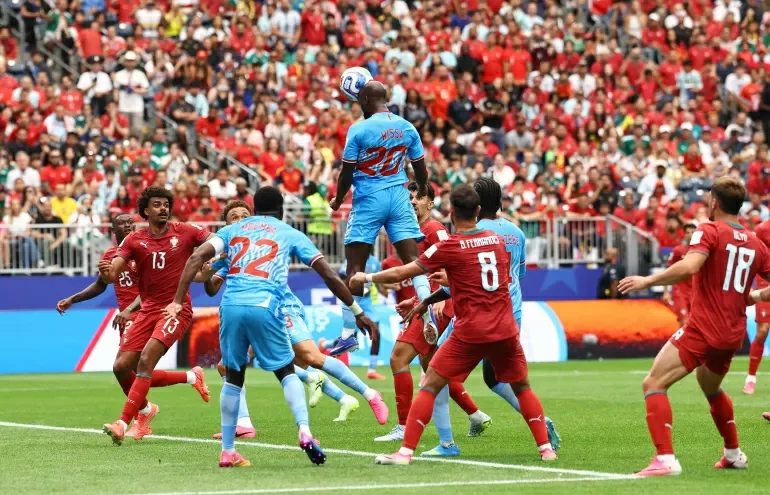
    In the latest round of 2026 FIFA World Cup Group K action, European powerhouse Portugal and African contender the Democratic Republic of the Congo (DR Congo) battled to a hard-fought 1-1 draw at Boston’s iconic tournament venue, with referee Abdulrahman Al-Jassim of Qatar overseeing the 90-minute contest.

    This tournament marks just the second time DR Congo has qualified for a World Cup final stage, while Portugal is making its ninth appearance at football’s biggest global event, cementing its status as one of the most consistent sides in international football.

    The game got off to a flying start for Portugal, who seized control of possession and attacking momentum from the opening whistle. Just six minutes in, João Neves put the European side ahead with a well-placed header, giving Portugal an early 1-0 lead that looked set to open the floodgates for a dominant victory. In the 18th minute, Nuno Mendes broke dangerously into DR Congo’s penalty area, but goalkeeper Lionel Mpasi read the play perfectly and made a key save to stop Portugal from doubling their advantage.

    After the early opening exchanges, both sides created clear scoring opportunities, but wasteful finishing kept the scoreline unchanged. As the first half ticked into stoppage time at 45+5 minutes, it appeared Portugal would take their one-goal lead into the half-time break. That was until Yoane Wissa produced a moment of brilliance, heading a stunning effort past Portuguese keeper Diogo Costa to level the score for DR Congo right on the stroke of half time, sending the two sides into the break on level terms after an entertaining opening 45 minutes.

    Shortly after the interval, substitute Francisco Conceição had a golden chance from close range to restore Portugal’s lead, but he failed to convert. The Portuguese side then launched a relentless wave of attacks on the DR Congo goal, but the African side’s defense held firm to weather the storm. On a rare counter-attack, DR Congo’s Cédric Bakambu saw his effort hit the post, coming inches away from putting his side in front.

    As the match progressed, DR Congo gradually ceded possession and initiative back to Portugal, who looked to capitalize on their territorial advantage. Before the mandatory water break, Cristiano Ronaldo had a clear opening to put his side ahead, but he produced an uncharacteristically poor finish that missed the target. With just over 15 minutes remaining, Ronaldo was presented with another good chance from a cross into the box, but he again failed to test the DR Congo keeper. DR Congo also struggled to make their own opportunities count, with Bakambu unable to convert their best late chances.

    In the closing minutes, both sides created late goal-scoring chances that could have snatched a winner, but neither side could find a decisive finishing touch. The match also saw unsportsmanlike conduct from several Portuguese players, who escaped punishment for multiple fouls that could have changed the outcome of the contest. With no further goals added after full time, the Group K clash ended in a 1-1 share of the points. The result leaves both sides still in contention to progress from the group stage, with their next matches set to determine their fate in the tournament.

  • DJ Khris Pleads Guilty in Officer’s Death

    DJ Khris Pleads Guilty in Officer’s Death

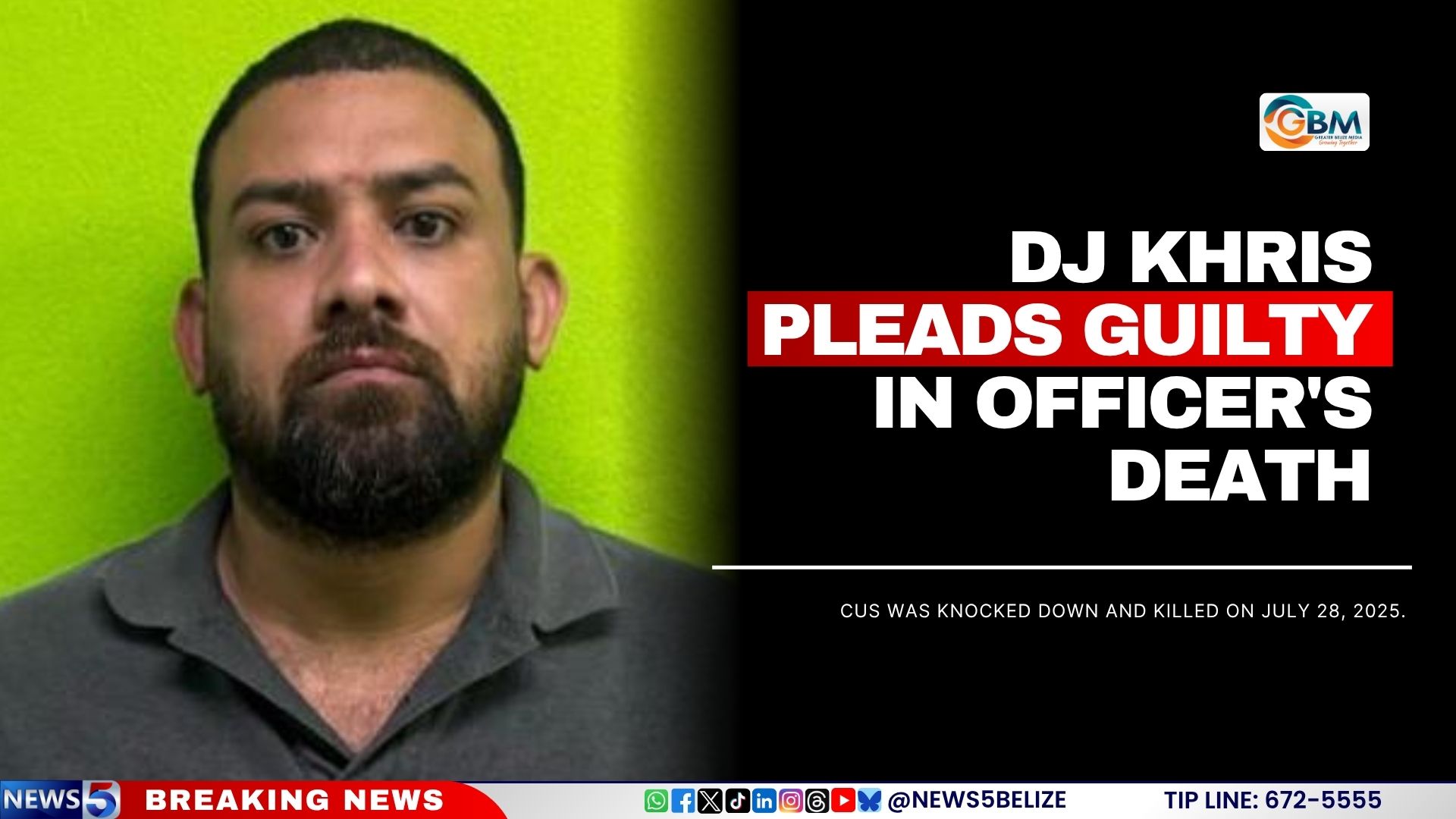
    Nearly 11 months after a fatal highway collision that claimed the life of an on-duty police officer, a Belizean nightclub owner has formally accepted responsibility for the tragedy in a court hearing.

    Khris Rosado, a local disc jockey and businessman who operates the popular venue Thirsty Thursday, entered a guilty plea on Tuesday, June 17, 2026, to the charge of causing death by careless conduct. The plea brings the first major legal closure to a case that has drawn public attention across the small Central American nation.

    The fatal incident unfolded on July 28, 2025, when 38-year-old Police Constable Arcenio Cus, a resident of Silver Creek Village, was traveling on his motorcycle from Ladyville en route to Belize City. According to official collision reports, a black SUV driven by Rosado crossed the center dividing line and entered the oncoming lane where Cus was riding, resulting in a direct, high-impact crash. The force of the collision ejected Cus from his motorcycle, inflicting catastrophic head and abdominal injuries. First responders immediately transported the injured officer to Karl Heusner Memorial Hospital, the country’s main public medical facility, where he was pronounced dead shortly after arrival.

    Following the crash, prosecutors brought five separate criminal charges against Rosado: manslaughter by negligence, causing death by careless conduct, driving without due care and attention, failure to stop and render aid after a collision, and failure to report the accident to law enforcement. After an initial preliminary hearing at the Magistrate’s Court, the case was committed for trial, with justices green-lighting proceedings on the most severe charge of manslaughter by negligence. Prosecutors with the Director of Public Prosecutions’ office ultimately opted to proceed to the High Court with an indictment on the lesser charge of causing death by careless conduct, to which Rosado has now pleaded guilty.

    Court records show Rosado was represented during the plea hearing by defense attorney Dr. Lynden Jones, while Crown Counsel Maria Nembhard-Santana argued the case on behalf of the prosecution. A sentencing hearing has not yet been announced to the public as of Tuesday’s court proceedings.

  • Small Craft Advisory remains in effect amid strong winds

    Small Craft Advisory remains in effect amid strong winds

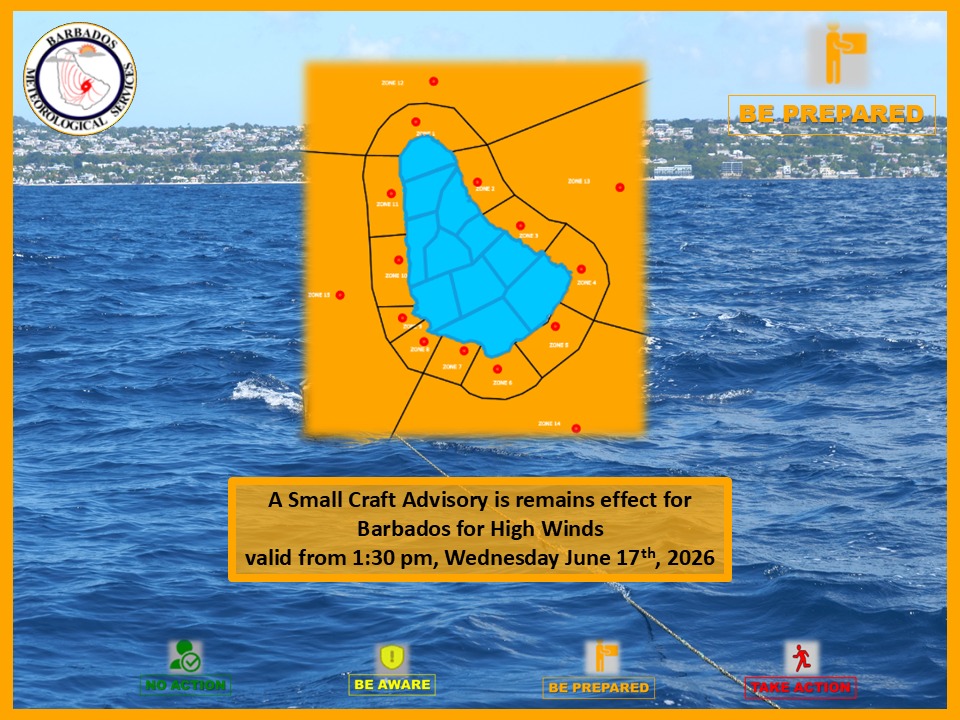
    Barbados Meteorological Services (BMS) has confirmed that a Small Craft Advisory will remain active across the island nation over the coming two days, as forecasted strong winds are set to create dangerous sea conditions that pose significant risks to small vessels and marine users. According to official weather projections, sustained wind speeds between 15 and 25 knots — equivalent to 30 to 45 kilometers per hour — will push open-water swells to heights ranging from 1.5 to 2.5 meters, creating a challenging and unpredictable environment for anyone operating on the water.

    The combination of rough surf, unexpected wave patterns and heavy sea spray will make navigation far more difficult than usual, BMS warned, with small crafts facing an elevated risk of capsizing in these unstable conditions. Beyond the initial hazardous period on Thursday and Friday, the island’s weather forecast includes additional shifts scheduled for the weekend and the start of next week. A tropical wave is on track to reach Barbados on Saturday, which is expected to bring outbreaks of showers and sudden gusty winds that could further disrupt coastal and marine activity.

    Forecasters note that sea conditions are projected to moderate slightly across the latter half of the weekend, providing a brief window of calmer conditions before winds and rough seas are set to strengthen once again early next week. In response to the ongoing and forecasted hazards, Barbados Meteorological Services has issued a urgent public appeal to all mariners, fishermen, recreational boaters and other marine users to stay updated on official weather announcements from the service, and to prioritize safety by exercising extreme caution when planning any activity on the water through the coming days.

  • The total siege against Cuba

    The total siege against Cuba

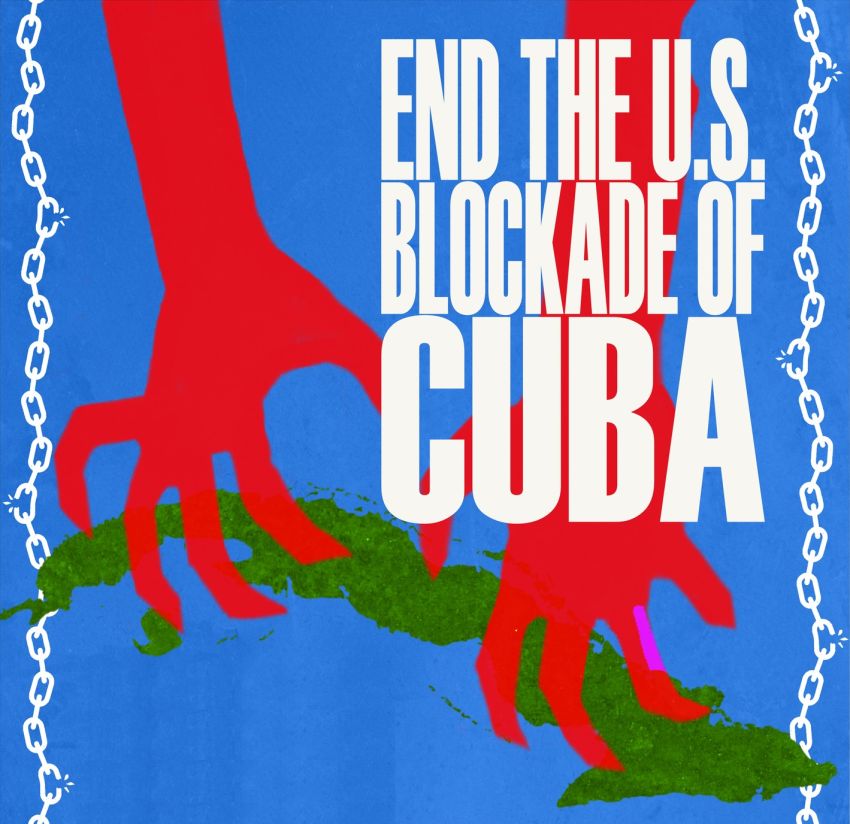
    Written by Yadirys Echenique Paz, Cuba’s Ambassador to Grenada, this op-ed lays bare the coordinated, all-encompassing nature of Washington’s policy toward Cuba during Donald Trump’s second presidential term, framing it not as a collection of disconnected unilateral actions, but an intentional, systemic siege engineered to break the Cuban people, cripple the island’s economy, and coerce third nations into cutting their legitimate commercial and diplomatic ties with Havana.

    The data presented underscores the scope and intensity of this pressure campaign: over a mere 18-month period, the United States implemented 36 distinct coercive measures that cut across every core sector of Cuban activity, from finance and energy to migration, culture, international cooperation and diplomacy. Each new restriction acts as another link in a steadily tightening chain designed to economically strangle the island nation.

    In the financial domain, the January 20, 2025, re-listing of Cuba on the controversial, unilateral U.S. State Sponsors of Terrorism roster artificially inflated the country’s sovereign risk profile and deterred much-needed tourism investment from European and Asian markets. Just 11 days later, on January 31, 2025, the Trump administration reactivated Title III of the decades-old Helms-Burton Act, a provision that enables U.S. citizens to file lawsuits against foreign companies that operate on property expropriated from U.S. owners by the Cuban government, creating widespread legal uncertainty that discourages international investment. The U.S. government’s February 6, 2025, addition of Cuban remittance firm Orbit S.A. to its list of restricted entities pushed global money transfer giant Western Union to halt all services to Cuba, cutting off a critical lifeline for millions of Cuban households that rely on family remittances for basic needs.

    The pressure campaign extended well beyond economic and financial levers, reaching into migration and cultural exchange. Between January and February 2025, Washington suspended humanitarian parole programs and entry visas for participants in academic, athletic, and scientific exchanges between the two countries. It also canceled planned bilateral migration talks scheduled for April 2025. Even youth and amateur sports delegations have been targeted: Cuba’s women’s national volleyball team was denied entry to a regional event on June 26, 2025, followed by a children’s baseball team from Cuba’s Pinar del Río province on July 13 that same year.

    In the area of international cooperation, the United States imposed visa restrictions in August 2025 on officials from African and Central American nations that participate in Cuban-led medical outreach programs, a move Ambassador Paz frames as a direct attack on Cuba’s longstanding culture of international medical solidarity that has brought free healthcare to millions of vulnerable people across the Global South.

    Energy security, a cornerstone of Cuba’s domestic stability, has also been a primary target. On January 29, 2026, the Trump administration authorized additional punitive tariffs on any country that supplies crude oil to Cuba, whether through direct or indirect trade routes. Two months later, on March 19, 2026, Cuba was explicitly excluded from U.S. licenses that allow third countries to trade in Russian crude oil, further cutting off the island’s access to critical energy supplies.

    Even diplomatic activity has not been spared. On April 18, 2025, the United States imposed new operational restrictions on Cuba’s embassy in Washington D.C. In September that same year, Cuban delegations were blocked from participating in official activities of the Pan American Health Organization, a regional United Nations agency, denying the country its right to participate in global public health governance.

    Ambassador Paz argues the overarching pattern of these actions leaves no room for doubt: this is a deliberate strategy of maximum pressure, extraterritorial coercion, and collective punishment against the entire Cuban population. This campaign is not rooted in legitimate political differences between the two governments, she emphasizes, but a deliberate strategy of economic strangulation designed to break the decades-long resistance of the Cuban people to U.S. interference.

    The February 21, 2026, inclusion of Cuba alongside major global powers including Venezuela, Iran, North Korea, Russia, and China on the U.S. roster of “foreign adversaries” further confirms Washington’s goal of total diplomatic and economic isolation of the island. In response to this designation, the ambassador poses a sharp rhetorical question: Who can reasonably claim that Cuba poses any genuine threat to the national security of the world’s largest military and economic power?

    In closing, the ambassador stresses that these cumulative measures are far more than routine targeted sanctions: they constitute a full-scale total blockade, an act of open economic warfare that directly violates core principles of international law and fundamental human rights. She calls on the global community to recognize that behind every bureaucratic restriction, every denied visa, and every punitive tariff, is an entire civilian population that suffers the consequences of U.S. policy, yet continues to stand firm in resistance.

    *Disclaimer: NOW Grenada is not responsible for the opinions, statements or media content presented by contributors. In case of abuse, click here to report.*

  • Toledo Breaks Ground on $4.5 Million Education Investment in a Single Day

    Toledo Breaks Ground on $4.5 Million Education Investment in a Single Day

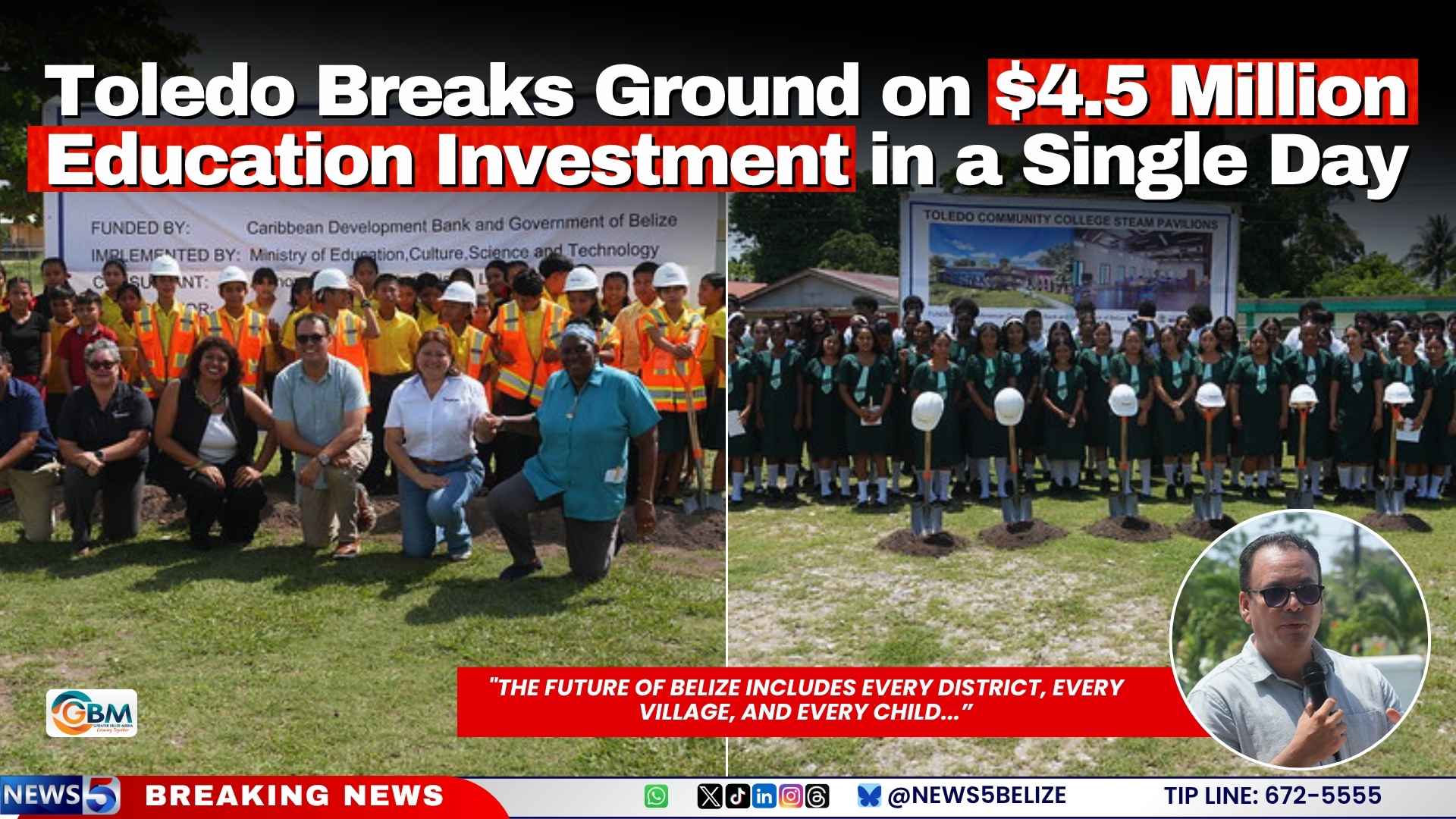
    On June 17, 2026, the Toledo District of Belize marked a historic milestone for regional education equity, breaking ground on two transformative infrastructure projects that represent a combined $4.5 million investment in an underserved community that has long outperformed national expectations for student academic outcomes.

    The first project, a $2.5 million state-of-the-art STEAM Pavilion at Toledo Community College in Punta Gorda, is set to serve nearly 800 secondary school students across the district. Jointly financed by the Government of Belize and the Inter-American Development Bank, the new facility will feature cutting-edge science laboratories, dedicated maker spaces for hands-on innovation, professional recording studios, and flexible collaborative learning zones, designed to give students direct, practical experience across science, technology, engineering, arts, and mathematics disciplines.

    Dr. Osmond Martinez, Minister of Economic Transformation and Area Representative for Toledo East, explained that the initiative grew directly out of a national workforce skills gap analysis, which highlighted mismatches between the demands of Belize’s evolving economy and the current offerings of the country’s education system. He noted the persistent paradox facing southern Belize: while the region consistently tops national poverty and underdevelopment metrics, its students regularly produce some of the strongest academic results in the entire country.

    “Year after year, we have become accustomed to seeing high poverty statistics coming from the south, negative macroeconomic figures painting a picture of deprivation and neglect,” Martinez remarked. “Yet when you see nationwide exam results or education highlights, the students of the South have always stood out.”

    Dian Maheia, Chief Executive Officer of Belize’s Ministry of Education, issued a call to action to the students and educators who will use the new facility, emphasizing that the infrastructure’s impact depends entirely on how it is utilized. “All of this will be of no use if you don’t use it,” she said. “If you don’t fill these spaces with your brilliant minds and crazy ideas and your hard questions and positive energy, this will be a wasted opportunity.”

    Later the same day, government and community leaders gathered in the quiet rural village of Trio to break ground on a second $2 million project: a new academic building for Trio Government School. Co-funded by the Caribbean Development Bank and the Government of Belize, the facility will serve approximately 140 local students, with built-in features that extend its impact beyond the classroom. Constructed to meet hurricane-resistant building codes, the building will double as a emergency community shelter during extreme weather events. It will also be fully accessible for people with disabilities, with full wheelchair ramps throughout the structure and ADA-compliant accessible restrooms.

    Maheia highlighted that the accessible design reflects a core commitment to inclusive education, noting: “It’s a picture of inclusion and accessibility because it’s going to be built so that anyone can access. Whether you are in a wheelchair or not. You have a right to get to school. You have a right to be able to use the bathroom when you’re at school.”

    Both projects, Martinez emphasized, are part of a broader national push to ensure that Belize’s development reaches every corner of the country, rather than concentrating investment solely in population-dense urban centers. “The future of Belize includes every district, every village, and every child. For too long, conversations about development have centred on urban areas, yet some of Belize’s greatest potential lies in the south,” he said.

  • DaSilva, Jangoo earn West Indies recall

    DaSilva, Jangoo earn West Indies recall

    As the Caribbean cricket community gears up for the upcoming two-Test home series against Sri Lanka, Cricket West Indies has announced a reshuffled Test squad headlined by the return of several key players ahead of the opening fixture kicking off next Thursday at Antigua’s iconic Sir Vivian Richards Stadium.

    Wicketkeeper-batter Joshua DaSilva and left-handed batsman Amir Jangoo have earned their way back into the Test fold, joining fast bowling pair Alzarri Joseph and Shamar Joseph, who are returning to competitive Test squad selection following recovery from injury. The two fast bowlers last appeared in a Test squad during the Caribbean’s home series against Australia in 2025.

    DaSilva’s recall comes on the back of blistering form across the past two editions of the West Indies Championship, where he accumulated a staggering 996 runs to push his case for selection. For Jangoo, a stellar 2026 regional campaign cemented his spot in the squad: he ended the tournament as the second-highest run-scorer and notched a double century, earning his first Test call-up since January 2025. Roston Chase will remain at the helm of the side as captain, with the full 15-man squad released officially by CWI.

    West Indies head coach Daren Sammy has expressed enthusiasm for the challenge of facing a well-rounded Sri Lankan side on home soil this summer. “Every Test series is a chance for this group to grow collectively and build a stronger team identity,” Sammy noted. “Sri Lanka is a high-quality opponent, so we know we have to perform at our very best to get results, but the entire squad is excited for the test that lies ahead.”

    Sammy outlined the core values the team is focusing on ahead of the series, saying, “For us, success comes down to playing with consistent discipline, showing character when matches enter tough phases, and representing the West Indies with pride. The players have put in the hard work during preparations, and we’re eager to put on a strong performance for our fans across the Caribbean.”

    The team is currently wrapped up in a high-performance training camp in Antigua, which will run through June 22, and Sammy opened up about the camp’s critical role in pre-series preparations. “This camp is a key part of getting ready for Sri Lanka. It gives players and coaching staff dedicated time to sharpen the specific skills we need to target against this opponent, and align on our gameplan. It also lets us lock in clear objectives and strategy for the back half of our summer, when we face Pakistan.”

    Beyond the training camp, a four-day warm-up fixture scheduled between June 18 and 21 at Coolidge Cricket Ground will give emerging players a chance to prove themselves against the visiting Sri Lankan side before the first Test. “This warm-up game creates space for our Test hopefuls to compete in high-intensity match play, and fosters healthy competition within the setup for future series selection,” Sammy added. Tevin Imlach has been named captain of the 13-man West Indies Select XI for the warm-up encounter, which includes several members of the full Test squad looking to find match rhythm ahead of the opening Test.

  • Caribbean Airlines to fly daily non-stop from Guyana to Canada

    Caribbean Airlines to fly daily non-stop from Guyana to Canada

    On Wednesday, June 17, 2026, Trinidad-based regional air carrier Caribbean Airlines made a major expansion announcement that will reshape air connectivity between Canada and Guyana. Starting July 1, the airline will introduce a new daily non-stop flight route linking Toronto, Canada’s largest travel hub, and Georgetown, Guyana’s capital, just ahead of the year’s peak summer travel season.

    The launch of this daily service comes in direct response to sustained, rapid growth in travel demand between the two countries. Three key segments have driven this upward trend: expanding business ties that require regular cross-border travel, a booming leisure travel market drawing Canadian visitors to Guyana’s unique landscapes and cultural attractions, and strong demand from the large Guyanese diaspora community based in Canada, who frequently travel to reunite with family and friends back home.

    Acting Chief Executive Officer Varma Khillawan emphasized that Guyana holds a top strategic position for the carrier, ranking among its most important and fastest-expanding markets. “Adding this daily route is more than just a schedule adjustment—it’s a concrete demonstration of our commitment to matching our customers’ growing needs and deepening connectivity between Guyana and the North American market,” Khillawan said in the announcement. “Whether passengers are traveling for work, vacation, study, or to reconnect with loved ones, they will now enjoy far greater flexibility and convenience that extends well beyond the summer travel rush.”

    Beyond improving passenger experience, the expanded service is expected to deliver tangible economic benefits for both countries. The additional flight capacity will open new opportunities for cross-border trade, boost Guyana’s growing tourism sector, and support the country’s ongoing rapid economic expansion by strengthening its international connectivity. As the leading airline in the Caribbean region, Caribbean Airlines notes that this route expansion is part of its broader long-term strategy to invest in its route network and fleet, with the goal of delivering reliable, seamless travel connections across the Caribbean, North America and South America.

    Travelers looking to book seats on the new route have multiple booking options available, including the official Caribbean Airlines website, the carrier’s mobile app, the reservations call center, physical ticket offices, and registered travel agents.

  • Tased three times, man still escapes from police

    Tased three times, man still escapes from police

    On Tuesday, a chaotic altercation between police and a mentally ill man in Penal ended with the suspect escaping custody, after law enforcement deployed a taser three times and the man assaulted one officer. The encounter was not a random stop: it began when the man’s family reached out to emergency medical technicians, who in turn requested police support to respond to the situation. Officers already knew the man from previous interactions and arrived with the goal of encouraging him to take his prescribed medication.

    What started as a routine intervention quickly escalated. When officers attempted to talk through the medication plan, the man responded with aggressive, obscene language. Police moved to place him under arrest for the public order offense related to his language, but as an officer reached to secure his right hand, the man pulled away with violent force. Officers formally added a charge of resisting arrest as the situation spun out of control.

    As additional officers stepped in to de-escalate and detain the man, he began throwing wild punches at the responding team. One punch landed directly on the head and face of a serving officer. Refusing to comply, the man continued to advance with physical intent to harm, prompting one officer to draw and use a conducted energy taser to subdue him. Even after three separate taser deployments and blunt strikes to his knees from officers, the device and defensive tactics had little to no slowing effect on the man. He managed to break through the officers’ hold and break into a run, fleeing into the local area.

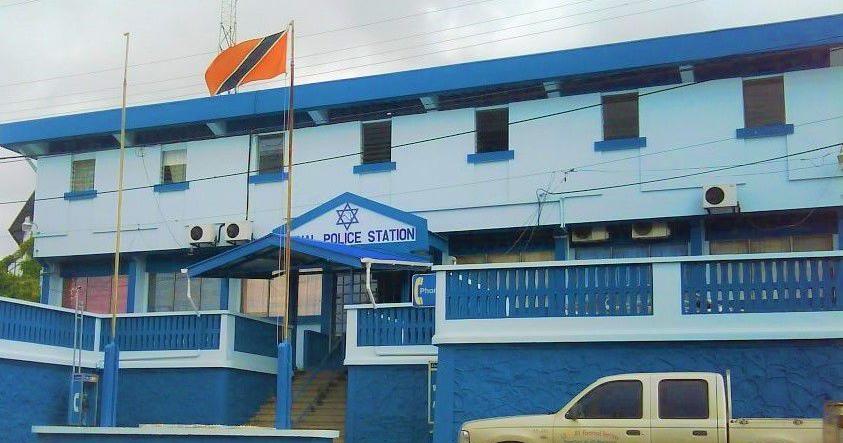
    Police launched an immediate foot chase across neighborhoods in Penal, but the suspect managed to evade capture by slipping into a dense, bushy access track. Extensive initial searches of the area failed to locate him. For the injured officer who was struck in the head, emergency transport was arranged to the Siparia District Health Facility, where the officer received required medical attention for their injuries.

  • This is Cristiano Ronaldo’s Last Shot: Can He Finally Win the World Cup?

    This is Cristiano Ronaldo’s Last Shot: Can He Finally Win the World Cup?

    The 2026 FIFA World Cup is officially underway, and for Portuguese football legend Cristiano Ronaldo, this tournament is far more than just another stop on a decades-long iconic career—it is the final, do-or-die chance to claim the only major prize that has evaded his trophy cabinet. On Wednesday morning, Portugal launched their World Cup run with an opening match against the Democratic Republic of the Congo at Houston’s NRG Stadium, marking the start of Ronaldo’s historic sixth World Cup appearance, an unprecedented achievement for any men’s international footballer.

    Long before the first whistle blew, hundreds of adoring supporters packed the sidewalks outside the Texas stadium, nearly all clad in Ronaldo’s instantly recognizable number 7 Portugal jersey, all waiting for a glimpse of the 41-year-old superstar ahead of kickoff. For fans and analysts alike, this moment has been years in the making: Ronaldo’s career is already littered with countless records, multiple domestic league titles across three top European leagues, five Ballon d’Or awards, and a European Championship trophy with Portugal. The one gap that remains on his legendary resume? A World Cup winner’s medal.

    The timing of Ronaldo’s 2026 debut adds an extra layer of narrative weight to his quest, coming just 24 hours after his long-time rival, Argentina’s Lionel Messi, took the field for his own World Cup opener. Messi, who already sealed his own World Cup legacy by leading Argentina to the 2022 title in Qatar, added another historic milestone to his career on Tuesday, netting a hat-trick in Argentina’s dominant 3-0 win over Algeria at Kansas City Stadium that pushed him to the top of the tournament’s all-time active goalscoring charts.

    Entering the 2026 tournament, Ronaldo boasts a strong World Cup track record across his five previous appearances: 22 matches played, 8 goals scored, and a host of unforgettable moments that are already etched into tournament history. His most iconic individual performance came during the 2018 World Cup in Russia, where his last-minute free-kick against Spain earned Portugal a dramatic draw and cemented his reputation as a big-game player capable of changing the course of a match single-handedly.

    Unlike some earlier campaigns where Portugal entered the tournament ranked as long shots, the 2026 Portuguese squad is widely regarded as one of the genuine title contenders in the expanded 48-team field, backed by a mix of seasoned veteran leadership and emerging young talent. For Ronaldo, who has defied all expectations of age-related decline to maintain his fitness and form at 41, the pieces are finally in place for him to complete his legacy. The question that has dominated football headlines around the world heading into this tournament remains unanswered: Will 2026 finally be the year that Cristiano Ronaldo lifts the World Cup trophy?

  • Op-Ed – The Best Investment a Nation Makes

    Op-Ed – The Best Investment a Nation Makes

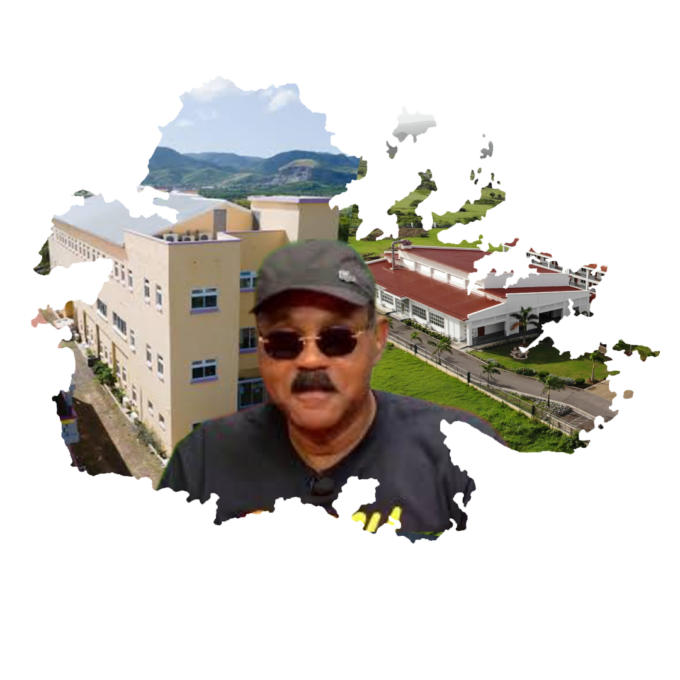
    When Antigua and Barbuda Prime Minister Gaston Browne proposed extending and broadening the country’s existing windfall tax to direct all new revenue toward education, the idea sparked urgent national conversation. As the head of the University of the West Indies (UWI) Five Islands Campus — an institution that already draws support from the current windfall tax — I could easily throw my full weight behind directing every new dollar to our growing tertiary institution. Instead, I am making the opposite case: if we truly view education as a core pillar of nation-building, we must invest in the entire education pipeline, not just its highest peak, and embed strict accountability to keep the public informed every step of the way.

    Let us start not with the mechanics of the tax, but with the transformative outcome it can buy. Education is the only societal investment that delivers compounding returns across every sector of national life. A child taught to read in primary school can grow into a compassionate nurse supporting anxious patients, a dedicated educator lifting the next generation, a skilled technician keeping local industries running, or an ambitious entrepreneur launching a new business that creates jobs. National education systems are not an unwelcome drain on public finances; they are the workshop where a country forges its long-term future.

    This reality makes education far more than the sole responsibility of a national education ministry. Every household, local employer, and community has a direct stake in a strong system. A family with a child working toward a brighter future depends on a well-resourced local school. A business seeking skilled, reliable workers and stable communities depends on classrooms that prepare students to succeed. Asking the citizens and enterprises that have profited most from national growth to contribute to strengthening this foundational public good is not punishment — it is an exercise in shared responsibility for collective prosperity.

    To date, most public debate around the proposal has focused on tertiary education, a natural focus given the extraordinary growth of UWI Five Islands Campus: from fewer than 200 students in 2019 to nearly 1,500 today. This growth is a meaningful milestone, but a university is only the peak of a broader education pyramid. A peak can never rise higher than the foundation beneath it can support.

    If a primary school student leaves without mastering fluent reading, no amount of tertiary funding can reverse that gap when they reach 19. If secondary schools lack the resources to challenge, support, and stretch their students, universities will only inherit the gaps created by under-investment earlier in the pipeline. If the Antigua & Barbuda College of Advanced Studies (ABCAS) — a critical hub for technical training, vocational skills, hospitality education, continuing learning, and second chances for adults who left school early — remains under-resourced, we lose one of the most vital bridges between education and the workforce.

    Invest only in the tertiary peak, and we will continue to create gaps that cost the public a fortune to fix later. Invest in the entire pipeline: from infant schools building early learning foundations, to primary schools prioritizing literacy, to overstretched secondary schools expanding capacity, to ABCAS offering second chances, to UWI Five Islands supporting our brightest students through doctoral study, and we build an inclusive society, not just a symbolic showpiece for international observers.

    The structure of this new education fund is critical to its success. It must be distributed across all education levels, designed with full transparency, and guided by strict fiscal discipline. Allocations should be split to prioritize four core priorities: a share for early childhood and primary literacy programs, a second share for secondary education quality improvement, student retention initiatives, and teacher professional development, a third share to expand ABCAS as the national bridge between secondary school, work, and tertiary learning, and a continuing share for UWI Five Islands to allow more Antiguans and Barbudans to pursue higher education and research close to home.

    None of this framework will work, or earn the trust of the Antiguan and Barbudan public, without rigorous accountability. If the public contributes to a shared fund for a shared national good, the public is owed a clear, accessible paper trail that tracks every dollar. To deliver this accountability, I propose two core guardrails.

    First, we need a public education performance dashboard. This should not be a glossy, forgettable annual report filed away and ignored. It should be a plain-language, regularly updated public resource that breaks down how much revenue is raised, where every dollar is allocated, and what measurable outcomes have been achieved as a result. It should publish key metrics: primary reading proficiency, school attendance rates, CSEC and other national exam results, vocational program completion rates, ABCAS student progression to work or higher education, and university enrolment, retention, and graduation rates. All data should be public, even when the results show gaps that demand improvement.

    Second, we need to embed reciprocity between public investment and student responsibility. Across the Caribbean, community service has long been a core part of student life, rooted in the understanding that a publicly supported education carries an obligation to give back to the public that invested in you. We should formalize this requirement across our entire system, from secondary school through ABCAS and UWI Five Islands. Documented community service hours should become a standard requirement for progression. Students can tutor younger learners, clean public beaches, restore community spaces, support local elders, or volunteer at libraries, clinics, sports programs, and youth organizations. This requirement turns students from passive recipients of public investment into active contributors to national public life.

    This proposal is about far more than just generating new revenue for education. It is an opportunity to strike a new national bargain: those who can afford to contribute more will step up, those who benefit from public education will give back to their communities, and the institutions that receive funding will clearly and publicly demonstrate the impact of that investment. None of this is out of reach for Antigua and Barbuda. A society that invests broadly in education lifts all of its people broadly. This plan will leave fewer children behind, strengthen more working families, help local businesses find the skilled workers they need, and give more young people a reason to build their future at home.

    As the celebrated Caribbean scholar Lloyd Best taught, a people must build and own the institutions that shape their future, rather than waiting for external rescuers. No foreign donor, no former colonial power, no outside benefactor will educate our children for us — we cannot expect others to do the work we are unwilling to do for ourselves. Prime Minister Browne has opened the door to a transformative national investment. It is up to all of us to walk through that door with ambition and discipline. We must carry forward a plan that supports not just one campus, but the entire pipeline from the first child learning to read to the first graduate earning a doctoral degree, from trade certifications to professional qualifications. And we must keep the receipts to prove this public investment paid off for all Antiguans and Barbudans.