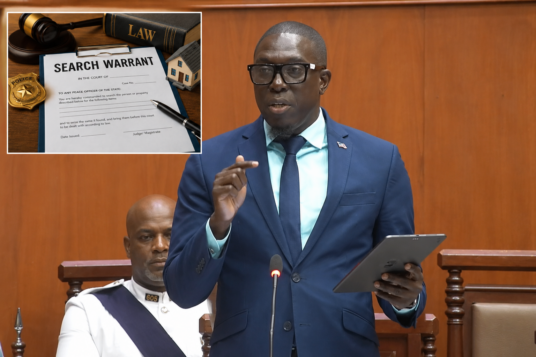
A heated parliamentary debate has unfolded in Antigua and Barbuda over sweeping updates to the nation’s search warrant legislation, ending with lawmakers greenlighting the bill after a split discussion that pitted public safety priorities against fundamental individual rights protections.
The contested proposal, formally named the Magistrate’s Court Procedure (Amendment) Bill 2026, aims to reshape the parameters of search and seizure powers for local law enforcement. Key alterations to the existing legal framework include removing the existing restriction that limited search warrants to only specific categories of criminal offenses, permitting warrants to be executed on Sundays, and allowing officers to seize unanticipated evidence connected to unrelated crimes discovered during a legitimate search.
Opening the opposition’s critique during Tuesday’s debate, Opposition Leader Jamale Pringle acknowledged that law enforcement requires functional, up-to-date tools to combat rising criminal activity. Even so, he raised pointed alarms about the potential for overreach embedded in the broad language of the reforms. Pringle questioned whether opening the door to warrants for any offense, without robust accompanying safeguards, would open the door to unwarranted intrusion into the private lives of ordinary citizens.
Pringle emphasized that parliamentary leaders have a non-negotiable responsibility to strike a careful, deliberate balance between the state’s duty to protect public safety and the constitutional guarantees of individual privacy and freedom that anchor Antigua and Barbuda’s democratic system. Expanded police powers, he stressed, must always be exercised in full alignment with the civil rights enshrined for all citizens.
Defending the legislation from the government’s side, Attorney General Sir Steadroy Benjamin framed the amendments as critical, long-overdue updates to modernize the country’s aging criminal justice system. Benjamin argued that the current legislation, crafted decades ago, has become outdated and creates unnecessary legal barriers that limit investigators’ ability to build cases and pursue criminal activity effectively.
He added that the proposed changes would cut through red tape that has long hampered active investigations, directly boosting law enforcement’s capacity to collect critical evidence needed to secure convictions. Ruling party MPs backed the attorney general’s position, noting that the reforms would not only strengthen police ability to respond rapidly to criminal activity but also ensure that evidence uncovered during lawful searches can be fully and properly utilized in court prosecutions.
Despite the opposition’s warnings, the bill received final approval from Parliament, granting law enforcement broader authority to obtain and carry out search warrants as part of ongoing criminal probes.