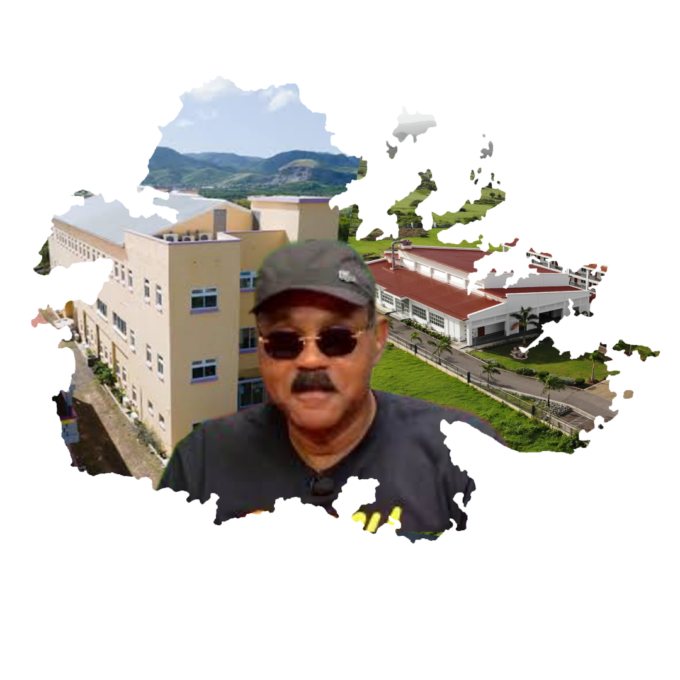
When Antigua and Barbuda Prime Minister Gaston Browne proposed extending and broadening the country’s existing windfall tax to direct all new revenue toward education, the idea sparked urgent national conversation. As the head of the University of the West Indies (UWI) Five Islands Campus — an institution that already draws support from the current windfall tax — I could easily throw my full weight behind directing every new dollar to our growing tertiary institution. Instead, I am making the opposite case: if we truly view education as a core pillar of nation-building, we must invest in the entire education pipeline, not just its highest peak, and embed strict accountability to keep the public informed every step of the way.
Let us start not with the mechanics of the tax, but with the transformative outcome it can buy. Education is the only societal investment that delivers compounding returns across every sector of national life. A child taught to read in primary school can grow into a compassionate nurse supporting anxious patients, a dedicated educator lifting the next generation, a skilled technician keeping local industries running, or an ambitious entrepreneur launching a new business that creates jobs. National education systems are not an unwelcome drain on public finances; they are the workshop where a country forges its long-term future.
This reality makes education far more than the sole responsibility of a national education ministry. Every household, local employer, and community has a direct stake in a strong system. A family with a child working toward a brighter future depends on a well-resourced local school. A business seeking skilled, reliable workers and stable communities depends on classrooms that prepare students to succeed. Asking the citizens and enterprises that have profited most from national growth to contribute to strengthening this foundational public good is not punishment — it is an exercise in shared responsibility for collective prosperity.
To date, most public debate around the proposal has focused on tertiary education, a natural focus given the extraordinary growth of UWI Five Islands Campus: from fewer than 200 students in 2019 to nearly 1,500 today. This growth is a meaningful milestone, but a university is only the peak of a broader education pyramid. A peak can never rise higher than the foundation beneath it can support.
If a primary school student leaves without mastering fluent reading, no amount of tertiary funding can reverse that gap when they reach 19. If secondary schools lack the resources to challenge, support, and stretch their students, universities will only inherit the gaps created by under-investment earlier in the pipeline. If the Antigua & Barbuda College of Advanced Studies (ABCAS) — a critical hub for technical training, vocational skills, hospitality education, continuing learning, and second chances for adults who left school early — remains under-resourced, we lose one of the most vital bridges between education and the workforce.
Invest only in the tertiary peak, and we will continue to create gaps that cost the public a fortune to fix later. Invest in the entire pipeline: from infant schools building early learning foundations, to primary schools prioritizing literacy, to overstretched secondary schools expanding capacity, to ABCAS offering second chances, to UWI Five Islands supporting our brightest students through doctoral study, and we build an inclusive society, not just a symbolic showpiece for international observers.
The structure of this new education fund is critical to its success. It must be distributed across all education levels, designed with full transparency, and guided by strict fiscal discipline. Allocations should be split to prioritize four core priorities: a share for early childhood and primary literacy programs, a second share for secondary education quality improvement, student retention initiatives, and teacher professional development, a third share to expand ABCAS as the national bridge between secondary school, work, and tertiary learning, and a continuing share for UWI Five Islands to allow more Antiguans and Barbudans to pursue higher education and research close to home.
None of this framework will work, or earn the trust of the Antiguan and Barbudan public, without rigorous accountability. If the public contributes to a shared fund for a shared national good, the public is owed a clear, accessible paper trail that tracks every dollar. To deliver this accountability, I propose two core guardrails.
First, we need a public education performance dashboard. This should not be a glossy, forgettable annual report filed away and ignored. It should be a plain-language, regularly updated public resource that breaks down how much revenue is raised, where every dollar is allocated, and what measurable outcomes have been achieved as a result. It should publish key metrics: primary reading proficiency, school attendance rates, CSEC and other national exam results, vocational program completion rates, ABCAS student progression to work or higher education, and university enrolment, retention, and graduation rates. All data should be public, even when the results show gaps that demand improvement.
Second, we need to embed reciprocity between public investment and student responsibility. Across the Caribbean, community service has long been a core part of student life, rooted in the understanding that a publicly supported education carries an obligation to give back to the public that invested in you. We should formalize this requirement across our entire system, from secondary school through ABCAS and UWI Five Islands. Documented community service hours should become a standard requirement for progression. Students can tutor younger learners, clean public beaches, restore community spaces, support local elders, or volunteer at libraries, clinics, sports programs, and youth organizations. This requirement turns students from passive recipients of public investment into active contributors to national public life.
This proposal is about far more than just generating new revenue for education. It is an opportunity to strike a new national bargain: those who can afford to contribute more will step up, those who benefit from public education will give back to their communities, and the institutions that receive funding will clearly and publicly demonstrate the impact of that investment. None of this is out of reach for Antigua and Barbuda. A society that invests broadly in education lifts all of its people broadly. This plan will leave fewer children behind, strengthen more working families, help local businesses find the skilled workers they need, and give more young people a reason to build their future at home.
As the celebrated Caribbean scholar Lloyd Best taught, a people must build and own the institutions that shape their future, rather than waiting for external rescuers. No foreign donor, no former colonial power, no outside benefactor will educate our children for us — we cannot expect others to do the work we are unwilling to do for ourselves. Prime Minister Browne has opened the door to a transformative national investment. It is up to all of us to walk through that door with ambition and discipline. We must carry forward a plan that supports not just one campus, but the entire pipeline from the first child learning to read to the first graduate earning a doctoral degree, from trade certifications to professional qualifications. And we must keep the receipts to prove this public investment paid off for all Antiguans and Barbudans.