作者: admin

  • Overheid kampt met personeelstekort: vraag loopt op tot honderden functies

    Overheid kampt met personeelstekort: vraag loopt op tot honderden functies

    Across Suriname’s public administration, a growing staff crisis has reached critical levels, with hundreds of vacant positions currently unfilled across multiple government departments. A long-standing public sector hiring freeze has blocked agencies from recruiting external candidates, forcing ministries to scramble to reallocate existing staff from within the government system to cover pressing gaps.

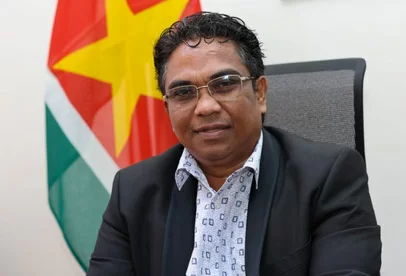
    Mike Noersalim, Minister of Agriculture, Livestock and Fisheries (LVV), confirmed the sector’s staffing challenges in an interview with local outlet Starnieuws, clarifying that his department is restricted from bringing in new hires from outside the public service. “We first conducted an internal search across our four directorates, then sent lists of our open roles to other ministries to see if we can pull available staff from elsewhere,” Noersalim explained. The minister added that LVV has itself received requests from other understaffed departments seeking to borrow its employees, but the agency cannot spare any workers: “We have critical unmet needs of our own, so we have no excess personnel to offer.

    Noersalim attributes the deepening public sector staffing shortage to a combination of overlapping factors that create persistent gaps across roles. When existing employees leave public service or earn promotions to higher positions, their departure creates new openings that must be filled, triggering a chain of shifting personnel that leaves lower-priority and entry-level roles empty. The minister highlighted one common example: cleaning staff who have moved up to administrative roles and have no interest in returning to their former positions, leaving vacant cleaning slots across agencies.

    Within LVV alone, the demand for new staff is both large and broad. Just within the Directorate of Agricultural Research, Marketing and Processing, dozens of roles remain unfilled, spanning a wide range of positions from administrative staff and policy advisors to drivers, lab technicians and agricultural inspectors.

    Beyond general vacancies, the ministry faces critical gaps in high-priority roles that directly impact public food supply. LVV urgently needs roughly 25 additional meat inspectors to conduct mandatory safety checks, a need that is expected to grow as the country’s oil and gas sector expands. A growing energy sector will bring more workers to the country and drive up overall demand for meat, making these inspection roles even more critical to protecting public health. The ministry is currently developing a targeted training program to certify new meat inspectors from existing internal candidate pools.

    Staffing pressures are also acutely felt at the district level, where there is a significant shortage of agricultural extension officers. This gap has direct, real-world impacts: it reduces the quality of support available to smallholder and commercial farmers, slowing the growth and development of the entire agricultural sector, which remains a core part of Suriname’s economy. The ministry notes that it does offer additional targeted training to internal candidates who express interest in filling open extension roles to get them up to speed for the position.

    The national public sector hiring freeze has drastically complicated efforts to fill open vacancies across all departments. Only senior leadership positions qualify for rare exemptions that allow external hiring, and all other roles must be filled through internal reallocation. Despite outreach to multiple other ministries for available staff, Noersalim says response has been extremely limited so far, leaving the vast majority of LVV’s vacancies still unfilled.


  • Afreximbank to avail US$10 billion under its Gulf Crisis Response Programme (GCRP) to shield African and Caribbean Community (CARICOM) economies from the ongoing conflict

    Afreximbank to avail US$10 billion under its Gulf Crisis Response Programme (GCRP) to shield African and Caribbean Community (CARICOM) economies from the ongoing conflict

    CAIRO, Egypt – Amid escalating geopolitical unrest in the Middle East that has roiled global commodity markets and disrupted critical supply chains, the African Export-Import Bank (Afreximbank) has greenlit a $10 billion Gulf Crisis Response Programme (GCRP), a targeted emergency initiative aimed at shielding vulnerable African and Caribbean Community (CARICOM) economies from the spillover effects of the ongoing Gulf region conflict. The conflict, which intensified on February 28, 2026, has sent disproportionately severe shocks to import-reliant nations across Africa and the Caribbean, regions that are already among the most economically vulnerable to global volatility. As the Gulf region stands as one of the world’s top suppliers of crude oil, liquefied natural gas (LNG), and key agricultural fertilizers, and the Strait of Hormuz remains a linchpin of global maritime trade, the escalation of hostilities has triggered cascading disruptions that hit hardest at nations dependent on Gulf-supplied commodities, shipping corridors, foreign investment, tourism revenue, and cross-border remittances. To address these overlapping threats, the GCRP was structured to deliver both immediate short-term relief and long-term structural resilience for Afreximbank’s member states. In the near term, the programme will allocate critical foreign exchange liquidity to sustain imports of core necessities including fuel, LNG, food staples, fertilizers, and pharmaceuticals for the most vulnerable nations. It will also extend targeted pre-export finance, working capital, and inventory financing to help African energy and mineral exporters leverage elevated global commodity prices and adapt to shifted trade routes by expanding their productive capacity. Separate short-term support is also earmarked for member states whose tourism and aviation sectors have suffered direct downturns from the crisis. Beyond immediate relief, the GCRP includes medium- and long-term components designed to reduce future economic vulnerability: it will expand productive capacity for energy and mineral producers, while unlocking funding to accelerate completion of critical energy, port, and logistics infrastructure projects that were delayed by supply chain disruptions tied to the conflict. Speaking on the initiative, which was formally launched on March 31, 2026, Dr. George Elombi, President and Chairman of Afreximbank’s Board of Directors, emphasized that the targeted intervention aligns with the institution’s core mandate. “This crisis response programme is in tune with our DNA. We understand how our economies work and the pain points associated with these transitory crises,” Elombi said. “The programme will support African countries in adjusting smoothly to the crisis while strengthening their resilience to future shocks through interventions that transform the structure of their economies. I commend the Board of Directors of Afreximbank for their proactivity and fortitude in approving this intervention programme.” The GCRP builds on a proven track record of emergency economic interventions that Afreximbank has rolled out over the past decade to help member states navigate global shocks. Past initiatives include a response to the 2015-2016 global commodity price collapse, a multi-billion support package during the 2020-2021 COVID-19 pandemic, and the $4 billion Ukraine Crisis Adjustment Trade Financing Programme for Africa (UKAFPA), launched to counter the economic fallout of the 2023-2024 Ukraine conflict. Under the UKAFPA, the bank disbursed a total of $39 billion, successfully closing liquidity gaps and securing access to essential goods for most African nations. Already, Afreximbank has begun implementing the GCRP, working through partnerships with commercial banks and private sector corporations to lock in supplies of fuel, energy, fertilizers, and essential food imports that have been interrupted by the prolonged conflict. In addition to direct financing, Afreximbank is leading a coordinated regional response effort alongside key international and regional bodies including the UN Economic Commission for Africa (UNECA), the African Union Commission (AUC), the African Continental Free Trade Area (AfCFTA) Secretariat, and the CARICOM Secretariat. This collaborative effort will focus on strengthening regional coordination to improve energy security, boost trade resilience, and diversify global supply chains to reduce dependence on unstable regions. This press release was distributed by APO Group on behalf of Afreximbank.

  • Sixteen RSS officers complete three-week international management training geared to strengthening regional community impact

    Sixteen RSS officers complete three-week international management training geared to strengthening regional community impact

    Sixteen senior law enforcement officers from across member states of the Caribbean Regional Security System (RSS) have crossed the graduation stage this week, capping off a three-week intensive advanced leadership training program designed to elevate regional policing capabilities.

    Developed through a longstanding collaborative partnership between the RSS Training Institute and the United Kingdom’s Durham Constabulary, the International Leadership and Management (Gold) Course was specifically crafted for top-tier law enforcement personnel, including Senior Superintendents, Division Commanders, and Assistant Commissioners. The program’s core mission is to strengthen strategic leadership capacity across the region’s law enforcement agencies, equipping senior leaders to tackle evolving public safety challenges more effectively.

    The graduation ceremony, held Thursday, April 2 at RSS Headquarters, marked the formal completion of the training, with certificates awarded to all participating officers in recognition of their work throughout the program. In his address to the graduating cohort, RSS Deputy Executive Director Atlee Rodney emphasized the critical weight of the leaders’ responsibilities to communities across the region. He urged graduates to remain unwavering in their public service commitments, noting that strong leadership at the senior level is foundational to enabling both individual agencies and the RSS collective to address pressing social challenges and improve overall quality of life for regional citizens.

    Rodney also reaffirmed the RSS Training Institute’s ongoing commitment to developing practical, forward-thinking training programs and sustaining key international partnerships such as the one with Durham Constabulary, all in service of boosting regional policing capacity.

    Royal Grenada Police Force Commissioner Randy Connaught, delivering the event’s keynote address, centered his remarks on the unique complexities senior law enforcement leaders face navigating modern strategic and political landscapes. He laid out a clear framework for ethical, effective senior leadership, defined by three core pillars designed to guide officers in balancing their operational duties, constitutional obligations, and relationships with elected governments.

    “My charge to you is to master what is perhaps the most delicate and critical skill of executive leadership – managing the expectations of the political directorate… This is not about being political. It is not about partisanship. It is about managing a relationship that is constitutionally vital, operationally impactful and perpetually challenging,” Connaught told graduates. “As Gold leaders, you are no longer just guardians of public safety; you are also stewards of public trust and key advisors to the government of the day.”

    Connaught’s first pillar of effective leadership is “Educate, Don’t Just Execute.” He explained that senior officers bear a professional and constitutional responsibility to act as expert advisors, rather than just implementing politically driven policies without context. When elected officials push for quick, reactive crackdowns on complex issues such as gang violence or youth offending, Connaught said leaders should draw on the problem-solving ethos of the Durham training to provide full, transparent context. This includes walking policymakers through threat assessments, community impact considerations, and the ethical implications of policy choices, to ensure decisions deliver legitimate, long-term public safety outcomes rather than short-term political gains.

    “ You are not there to decide national policy that belongs to the government, but you are constitutionally bound to ensure that any such decision is made with the full understanding of the policing consequences. Your advice may be the difference between a politically expedient decision and a sustainable safe outcome,” he said.

    The second foundational pillar focuses on preserving institutional integrity and continuity, urging leaders to prioritize organizational memory and institutional loyalty over temporary political interests. “Integrity is your shield. Politicians come and go. Elections are cyclical. But the police service is an enduring institution. Your loyalty is not to the individual in the ministerial office, but to the office itself, to the law, and to the people you serve,” Connaught stressed.

    Connaught’s third pillar addresses one of the most persistent tensions in modern policing: bridging the gap between public and political expectations and on-the-ground operational capacity. Political campaign promises often create the public perception that police can solve complex social problems overnight, he noted, and it falls to senior leaders to act as transparent, honest brokers about what policing can deliver. “You must be able to demonstrate, with data and candor, the direct link between resources, funding, personnel, technology, wellbeing support and outcomes,” he explained.

    Concluding his address, Connaught encouraged graduates to bring the innovative, problem-focused “Durham Difference” approach back to their home agencies, particularly when engaging with political leadership.

    The ceremony also included formal recognition of the partnership between RSS and Durham Constabulary, with Deputy Executive Director Rodney presenting a token of appreciation to Chief Superintendent Ian Leech, course facilitator from Durham Constabulary.

  • WEHNER REPORTS: 16 Beach Access Defenders Acquitted in Laurys Bay Case

    WEHNER REPORTS: 16 Beach Access Defenders Acquitted in Laurys Bay Case

    In a landmark decision that reaffirms public access to coastline in Antigua and Barbuda, the St. John’s Magistrate’s Court has dismissed all trespassing charges against 16 activists who fought restricted entry to Laurys Bay. The case collapsed entirely after prosecutors failed to produce a single witness to testify against the defendants.

    The proceedings, which dragged on for nearly 12 months, stemmed from accusations that the group had crossed private property to reach the well-established traditional access path to Laurys Bay. The defendants, who have widely become known as ‘beach rights patriots’, have maintained from the start that all Caribbean nation’s beaches are legally public, and that citizens hold an inherent right to access them even when that requires crossing privately held parcels of land.

    Speaking after the ruling lead defense attorney Mr. Boy framed the verdict as an unqualified win for his clients. ‘The magistrate had scheduled today for the full trial, and all prosecution witnesses were ordered to appear, not one showed up. With no evidence to support the claims and no case to answer, the court had no choice but to enter a full not guilty verdict for all 16 defendants,’ he explained.

    Mr. Boy further emphasized that the outcome aligns with the letter of Antigua and Barbuda’s Physical Planning Act, which enshrines public access to all national beaches. ‘When a private landowner blocks a long-standing traditional access route and then sues visitors for trespassing, that landowner is the one breaking the law,’ he added.

    With the charges formally cleared, the defendants now have the legal standing to move forward with additional action, including a potential lawsuit for malicious prosecution and claims to recover the significant legal costs they incurred over the year-long proceedings. Boy noted that the group is actively pursuing compensation, pointing to the substantial personal inconvenience and financial strain the protracted case has placed on all 16 defendants.

    Legal and community advocates have already hailed the ruling as a critical milestone for public rights in Antigua and Barbuda. The decision reinforces long-standing legal protections for traditional community access points that have served local populations for generations, setting a clear precedent for future disputes over beach access across the country.

  • Canadian office hosts a taste of Antigua and Barbuda

    Canadian office hosts a taste of Antigua and Barbuda

    On a Tuesday evening in Toronto’s trendy Yorkville neighborhood, the Antigua and Barbuda Tourism Authority turned EPOS Cafe into a vibrant showcase of Caribbean culinary heritage, welcoming more than 20 journalists and digital content creators to its exclusive intimate event, “A Taste of Antigua and Barbuda”.

    Attendees were greeted with handcrafted signature cocktails and alcohol-free mocktails as they arrived, before taking their seats for a carefully curated five-course gourmet dining experience. Every dish on the menu was conceived and prepared by celebrated Antiguan chef Giovanni Meyer, who drew deeply from the layered cultural history and vibrant native ingredients of the twin-island nation to craft each bite that tells a story of the destination.

    Tameka Wharton, the Antigua and Barbuda Tourism Director for Canada, opened the event with a warm welcome to guests. Beyond highlighting the evening’s one-of-a-kind tasting menu, Wharton extended a formal invitation to all attendees and travel lovers across North America to experience the full breadth of the islands’ food scene in person during Antigua and Barbuda’s national Culinary Month, held this coming May.

    Chef Meyer brings an impressive, cross-continental resume to his work showcasing his home country’s cuisine. He completed his foundational culinary training at two respected institutions: the local Antigua and Barbuda Hospitality Training Institute, followed by advanced studies at the prestigious Culinary Institute of America. Before launching his work showcasing Antiguan flavor globally, Meyer honed his skills at top local venues including Carlisle Bay Resort and Sheer Rocks in Antigua, then refined his technique at world-renowned establishments overseas: he held a position at the Michelin-starred A Voce in New York City, and later worked at two of Toronto’s most acclaimed dining spots, Constantine and Byblos.

    The Toronto event also drew another notable culinary guest: Canadian celebrity chef, TV host and cookbook author Devan Rajkumar, who was on hand to share his own upcoming connection to the islands’ Culinary Month. Rajkumar is set to travel to Antigua this May, where he will team up with a local Antiguan chef for the program’s headline closing event: a Finale Beach Party and Cookout hosted at the scenic Tamarind Hills property.

    The immersive tasting event marks a key strategic push by the Antigua and Barbuda Tourism Authority to position the twin islands as a top culinary tourism destination, tapping into the growing global interest in food-centric travel experiences that connect visitors to local culture.

  • Antigua Racing Cup: A New Regatta with a Big Antiguan Welcome

    Antigua Racing Cup: A New Regatta with a Big Antiguan Welcome

    The highly anticipated first edition of the Antigua Racing Cup officially opened registrations on Wednesday morning, drawing international sailing teams from more than 15 countries to compete across four days of racing hosted at the iconic, UNESCO-listed Nelson’s Dockyard in Antigua’s English Harbour. Competition is set to kick off on Thursday, April 9, with a lineup of up to three races planned on Antigua’s globally renowned sailing waters, where ideal sailing conditions have already aligned for the event.

    Forecasters predict consistent seasonal trade winds, with an easterly gradient breeze of 10 to 15 knots expected, paired with occasional fresh gusts reaching up to 20 knots that are set to add excitement and challenge to the race course. Warm tropical conditions will greet all participants, with both air and sea temperatures hovering around 28°C (82°F), making lightweight rash vests and shorts the ideal attire for racing through the refreshing Caribbean spray.

    Nelson’s Dockyard, the world’s only active Georgian dockyard and a protected World Heritage Site, serves as the central hub for all off-water activities for the regatta. Ahead of the first race, Racing Manager Jaime Torres led the mandatory Skippers’ Briefing at the historic Copper & Lumber Store Hotel, after which competitors moved to the Event Lawn for the official Regatta Opening Party. There, guests enjoyed complimentary Amstel Beer and local English Harbour Rum, embodying the warm, welcoming hospitality Antigua is known for.

    The opening ceremony kicked off with a moving performance of Antigua’s National Anthem by a solo pannist from Princess Margaret School’s Steel Band, setting a celebratory tone for the event. Distinguished guests in attendance included Sean Cenac, Permanent Secretary of Antigua and Barbuda’s Ministry of Tourism, St Pauls Member of Parliament Minister Greene, and Parks Commissioner Ann Marie Martin. Bobby Reis, Vice Chairman of the Antigua & Barbuda Yachting & Marine Association, served as Master of Ceremonies for the occasion.

    In his opening remarks, Cenac extended a warm welcome to all sailors, crew members, event partners and supporters traveling from across the globe for the landmark event. He described the Antigua Racing Cup as a proud new addition to the country’s national sporting calendar, highlighting that the event brings together top-tier international competition, world-famous Caribbean hospitality, rich local culture and an unrivaled historic setting. Cenac emphasized that holding the regatta at Nelson’s Dockyard was a deliberate choice, as the site stands as a powerful testament to Antigua and Barbuda’s deep maritime heritage and longstanding connection to the ocean.

    “The Antigua Racing Cup was created not just to deliver thrilling, high-caliber sailing competition, but also to shine a spotlight on our beautiful destination, boost engagement with local communities and deliver long-lasting economic and social benefits for our country,” Cenac explained. “It is incredible to see such a diverse, international fleet gather for this first edition, which lays a strong foundation for what we are confident will become a signature annual event for Antigua and Barbuda. To every competitor here: thank you for joining us at this starting point. You are the first to write the story of the Antigua Racing Cup, and that makes this moment very special. We wish all of you fair winds, tight competitive racing, and an unforgettable experience both on and off the water.”

    Minister Greene echoed Cenac’s remarks, noting that the new regatta is an exciting expansion of Antigua and Barbuda’s growing sailing calendar, and reflects the nation’s ongoing commitment to building on its reputation as the undisputed sailing capital of the Caribbean. Greene highlighted that the event brings fresh energy to the start of the sailing season, giving international teams another compelling reason to extend their stay, compete, and explore everything the twin-island nation has to offer. He closed by wishing all participants an outstanding week of racing and hospitality in Antigua.

  • CARICOM Condemns UK Party Proposal to Block Visas Over Reparations

    CARICOM Condemns UK Party Proposal to Block Visas Over Reparations

    A fierce diplomatic and racial controversy has erupted after Britain’s right-wing Reform UK party unveiled a punitive proposal dubbed the ‘Reparations Lock’, which would block all new visa approvals for nationals from 19 Caribbean nations—including Antigua and Barbuda—that are actively pursuing legal and diplomatic claims for slavery reparations. The policy would apply to every category of entry, from work and study permits to family reunification visas and tourist visitor visas. In justifying the restrictive measure, Reform UK spokesperson Zia Yusuf labeled Caribbean reparations demands as fundamentally insulting to the United Kingdom, and claimed Britain deserves global praise rather than rebuke for its role in abolishing the transatlantic slave trade in the 19th century. The proposal has drawn swift and scathing condemnation from the CARICOM Reparations Commission (CRC), the leading regional body coordinating reparations claims on behalf of Caribbean communities. CRC chair Professor Sir Hilary Beckles blasted the visa plan as a modern extension of the ‘toxic racism’ that underpinned the entire system of chattel slavery. Beckles warned that targeting and punishing Black communities seeking redress for historical crimes directly mirrors the racist rhetoric used by opponents of full emancipation back in 1833. He also renewed scrutiny of a little-discussed but critical detail of the 1833 Slavery Abolition Act: when Britain formally ended slavery, it allocated massive public compensation exclusively to white slave owners for the loss of their ‘property’, while providing no restitution whatsoever to the millions of enslaved people who had been exploited and abused. Instead, freed people were forced into four additional years of unpaid ‘apprenticeship’ labor to generate the capital that funded the compensation payouts to their former enslavers. Other senior CRC leaders have echoed Beckles’ condemnation, pushing back hard against Reform UK’s narrative of British benevolence. Senior official Dobrene O’Marde and leading gender and slavery studies scholar Professor Verene Shepherd both emphasized the enormous collective and individual sacrifices that Caribbean communities made over generations to secure their own emancipation, rejecting any claim that Britain acted out of moral goodwill to end slavery. The CRC has reaffirmed its longstanding commitment to pursuing reparatory justice through peaceful, structured government-to-government dialogue, and has called on European political leaders to abandon defensive posturing and engage in good-faith negotiations on the issue. The reparations debate is set to take center stage at the upcoming Commonwealth Heads of Government Meeting, scheduled to be held later this year in Antigua and Barbuda, where the CRC is planning a high-profile public event to advance its campaign for restitution and racial justice.

  • Brace for fallout as Mid-East war escalates, says CAAP

    Brace for fallout as Mid-East war escalates, says CAAP

    As the Middle East conflict expands its scope, a Caribbean regional advocacy organization has sounded the alarm over projected sharp increases in regional food and energy prices, while calling on leaders of the Caribbean Community (CARICOM) to formally label deliberate attacks on civilian infrastructure as war crimes and speed up efforts to build regional economic and food self-sufficiency.

    Suleiman Bulbulia, treasurer of Caribbean Against Apartheid in Palestine (CAAP), shared the warning in an exclusive interview with Barbados TODAY. He explained that the ongoing conflict, which now draws in major powers including Israel, the United States and Iran, will send shockwaves through global commodity markets that will eventually reach small island economies across the Caribbean through higher import costs.

    Bulbulia emphasized that the Caribbean’s structural dependence on imported goods leaves the region uniquely exposed to sudden global market volatility. “The ripple effects of this conflict will touch every corner of the global economy, and the Caribbean will not be spared,” he stated. “We have already observed significant upward pressure on global crude oil prices, and these increases will eventually pass through to regional consumers. Higher fuel costs push up shipping fees for all imported goods, and since the vast majority of the Caribbean’s food and consumer products come from overseas, the final price tag for households will rise sharply. This is a pressing issue that demands immediate attention.”

    Beyond the immediate economic threats, Bulbulia raised grave concerns over what he frames as open disregard for international humanitarian law and established diplomatic norms. He argued that the repeated targeting of critical civilian infrastructure — including hospitals, transportation networks and power generation facilities — meets the legal definition of war crimes, and that all responsible members of the international community, including CARICOM, have an obligation to publicly condemn these actions.

    “Across the globe today, we are seeing a growing retreat from commitments to uphold international rules and fundamental human rights,” Bulbulia said. “If actors face no consequences for these violations today, where will this path lead us? If attacks on civilian sites go unpunished in one region today, the norm of impunity will embolden actors to take similar actions in other countries tomorrow. Where does this cycle of lawlessness end?”

    Drawing a direct parallel to the Caribbean’s longstanding, unified opposition to apartheid rule in 20th century South Africa, Bulbulia urged CARICOM to use its collective diplomatic voice to advocate for upholding the rule of law on the global stage. He warned that without collective pushback, the world could slide back into a pre-modern “might makes right” mentality that erodes decades of progress on international humanitarian norms.

    To buffer the Caribbean from future external economic shocks caused by global conflicts, Bulbulia called for accelerated investment and policy action to build regional self-sufficiency. He highlighted the untapped agricultural potential of larger Caribbean nations including Guyana, Suriname and Jamaica, arguing that regional integration of food production could cut the bloc’s reliance on imported food drastically.

    “It is past time we ask the critical question: how can we make CARICOM member states food self-sufficient?” he noted. “We have abundant natural and human resources right here within the region. Instead of remaining dependent on global supply chains that are increasingly vulnerable to geopolitical upheaval, we should develop these resources and integrate regional trade to meet our own needs.”

  • MP Maria Browne Pledges Growth and Renewal in St. John’s Rural East

    MP Maria Browne Pledges Growth and Renewal in St. John’s Rural East

    As candidates gear up for upcoming electoral contests in St. John’s Rural East, sitting Member of Parliament Maria Bird Browne has anchored her re-election campaign around two pressing local priorities: targeted community development and long-overdue infrastructure upgrades.

    Over her two years in office, Browne has pointed to tangible progress already delivered to constituents, from major resurfacing and repair work on local roads to upgrades to public facilities that serve daily neighborhood needs. Looking ahead, the MP says resolving chronic drainage failures and recurrent flooding that plagues two local districts, the Gardens and Sutherland, will top her policy agenda if she is returned to office. She emphasized that any intervention will be rooted in data-driven technical analysis from independent hydrology specialists, rather than rushed, short-term fixes that fail to address the root of the problem.

    Beyond flood mitigation, Browne has unveiled a new ambitious housing renewal scheme designed to breathe new life into aging, stagnant residential areas across the constituency. Under the plan, vacant parcels of land and underused plots that have sat neglected for years will be repurposed to build new residential developments, creating much-needed housing stock while reversing decades of decline in older neighborhoods.

  • Lamin Newton targets upset in All Saints East and St Luke

    Lamin Newton targets upset in All Saints East and St Luke

    For more than three decades, the All Saints East and St Luke constituency has stood as one of the most reliable strongholds for the United Progressive Party (UPP), a seat political analysts have long marked as a safe win for the opposition ahead of Antigua and Barbuda’s upcoming general election. But this cycle, that long-held political certainty is breaking down, with the race now shaping up to be one of the most closely watched competitive contests on the ballot.

    At the center of the challenge is Lamin Newton, the candidate put forward by the ruling Antigua and Barbuda Labour Party (ABLP). Newton is going head-to-head with Jamale Pringle, the UPP’s Opposition Leader and the incumbent representative for the constituency. For generations of local voters, the seat has consistently returned UPP candidates to office, a streak that has held for over 30 years, but Newton argues that shifting grassroots sentiment is upending that historic trend.

    Speaking to reporters just after ABLP officially launched its island-wide campaign schedule on Tuesday, Newton struck a confident tone about his chances. He told reporters that on-the-ground outreach and conversations with voters have revealed growing discontent with the incumbent, and that electoral momentum is steadily building in his favour ahead of polling day. Political observers across the country are now keeping close watch on the constituency, as an upset here would not only shake up UPP’s electoral map but also reshape the balance of power in Antigua and Barbuda’s next parliament.