A cross-border debate over travel safety has erupted in The Bahamas after the US Embassy issued a stark public alert labeling the country’s jet ski rental sector as rife with “serious and ongoing” dangers — prompting a Florida-based jet ski business owner to travel to the archipelago to defend the industry and warn the warning threatens the livelihoods of thousands of tourism-dependent Bahamian workers.
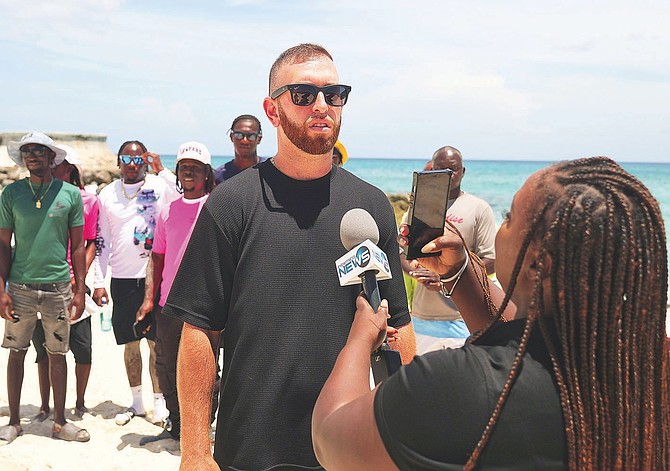
John Rosen, founder of Jet Ski Fort Lauderdale, delivered his rebuttal on location at Cabbage Beach, a popular Nassau tourist hub adjacent to the Atlantis resort, just days after the embassy rolled out its formal advisory. The warning, announced in a Monday video address by US Ambassador Herschel Walker, outlined a series of grave allegations: multiple American tourists have died, been hospitalized, and subjected to sexual assault at the hands of unregulated jet ski operators, who frequently target visitors and transport assault victims to isolated, remote areas.
Breaking down the specific incidents cited in the advisory, the embassy reported that six US citizens have required hospital care following jet ski accidents since August 2024, three of whom needed emergency medical evacuation off the islands. It added that two American women reported sexual assaults by jet ski operators in 2024, with two additional allegations filed already in 205. The advisory also criticized inconsistent regulatory oversight of rental zones, noting that unlicensed “rogue operators” continue to aggressively solicit customers on Nassau’s most heavily trafficked shorelines.
But legitimate, long-running operators on Cabbage Beach pushed back against the broad-brush condemnation, arguing the sector needs stronger regulation and enforcement rather than blanket stigmatization. They emphasize that a tiny minority of bad actors should not be allowed to ruin the reputations and businesses of law-abiding operators who have built their livelihoods in the country’s $40 billion-plus tourism economy, which fuels more than half of The Bahamas’ national GDP.
Rosen, who traveled to Nassau specifically to push back against what he calls a misleading and damaging portrayal of the industry, noted that jet ski rentals remain one of the most popular outdoor activities for visitors to The Bahamas. “I just wanted to help the public really understand the statistics and what jet ski rentals bring to the industry here in The Bahamas, and anywhere around the world in general — you know, the dangers but also all the great things that come with it,” he said in an interview on the beach.
Putting the incident numbers in context, Rosen explained that The Bahamas welcomes roughly 12 million annual visitors, an estimated 250,000 of whom choose to rent jet skis during their stay. Comparing the embassy cited incident count to other common recreational activities, he pointed out that only six hospitalizations and one fatality — which he clarified was caused by an unlicensed boat operator, not a jet ski renter or licensed operator — have been recorded over the last three years.
To put that risk in perspective, Rosen drew a comparison to bicycle accidents in his home region of South Florida. “When you’re going to compare that to injuries and accidents, maybe with other activities, such as where I live, you have bikes that are constantly in the news for accidents and casualties,” he said. “Just in 2024 alone, where I live, there were almost 10,000 bicycle accidents that led to hospitalisations and over 200 deaths. You know, so if they want to tell people to stop renting jet skis in The Bahamas, they better start telling people to stop riding bikes in South Florida.”
Rosen urged tourists to simply choose licensed, insured, reputable rental companies rather than avoid jet skiing entirely, and offered to share the proven safety protocols his operation uses in Fort Lauderdale to help Bahamian operators improve their own safety standards. He also noted that Bahamian authorities have already taken concrete action to address the reported sexual assaults, including making arrests, filing criminal charges, and enacting a landmark new regulation that prohibits operators from riding on the same jet ski as renters — a policy change explicitly designed to reduce the risk of assault.
“So clearly they’re taking action to make sure these things don’t happen, and anywhere you go around the world, there’s always a risk of some bad thing happening, but we don’t want to take away what’s so great and respected about the Bahamas. Jet skiing is what people want to do. Do not discourage people from renting and riding jet skis; it’s something that we all need to enjoy with our families,” Rosen added.
He argued the sector should be reformed, not shut down, and questioned whether US Embassy officials fully grasp how damaging their broad warning could be to ordinary Bahamians who depend on tourism for work. “I don’t think they understand the implications of their message and how it’s going to affect the people that come here, because they really are scaring people, when in reality they don’t have a reason to be scared. You just have to look at the statistics, and the numbers speak for themselves, honestly,” he said.
The latest US warning comes as The Bahamas’ government faces renewed scrutiny of its special jet ski regulatory task force, launched in March 2024 to crack down on unregulated operators and strengthen safety standards across the sector. To date, authorities have seized unlicensed equipment, issued thousands in fines, and revoked operating licenses for repeat violators, but industry leaders have openly acknowledged that enforcement remains uneven across popular beach areas, and more work is needed to bring all operators into compliance with safety and licensing rules.
Devane Ferguson, a 20-year veteran Cabbage Beach jet ski operator, said established, law-abiding businesses need targeted government support to counteract the damage from the US warning and the actions of rogue operators. Ferguson explained that serious incidents almost always involve unlicensed new entrants to the industry, not the long-standing operators that have served tourists safely for decades. He acknowledged that the advisory has caused a measurable slowdown in bookings, but added that most informed tourists have continued to patronize legitimate local operators.