作者: admin

  • Leaked letter outlines timeline and details of CARICOM SG reappointment vote

    Leaked letter outlines timeline and details of CARICOM SG reappointment vote

    BASSETERRE, St. Kitts – A public controversy over the reappointment of Dr. Carla Barnett to a second term as Secretary-General of the Caribbean Community (CARICOM) has intensified in recent days, with Trinidad and Tobago voicing formal dissatisfaction over the outcome and calling into question the legitimacy of the process that led to the vote. Now, a leaked internal correspondence from CARICOM Chair Dr. Terrance Drew has pulled back the curtain on the timeline of deliberations, as regional leaders prepare for an emergency summit to resolve the growing rift.

    Trinidad and Tobago officials have made their opposition to Barnett’s reappointment clear, anchoring their discontent in long-simmering unresolved grievances. The core complaint centers on the CARICOM Secretariat’s failure to respond to previous official communications regarding the 2010s arrest and deportation of a Trinidad and Tobago citizen by another member state, a matter Port-of-Spain says has been left unaddressed throughout Barnett’s first term.

    In the leaked letter addressed to the Prime Minister of Trinidad and Tobago, Drew, who also serves as Prime Minister of St. Kitts and Nevis, pushed back against claims of an irregular or opaque process, laying out a step-by-step timeline of how the reappointment vote moved forward. Drew confirmed that the item was added to the CARICOM Heads of Government conference agenda weeks in advance, with formal notifications sent to every member state’s leadership well before the gathering kicked off in late February.

    According to the timeline outlined in the letter, the Trinidad and Tobago Prime Minister chose to depart St. Kitts and Nevis on the evening of February 25 – the first day of the scheduled conference – one full day before the leaders-only retreat where the Secretary-General vote was scheduled to take place on February 26. Drew emphasized that regional organizers made deliberate accommodations to ensure Trinidad and Tobago still had representation at the critical closed-door session. CARICOM Affairs Minister Sean Sobers was formally invited to step in and attend the retreat in the Prime Minister’s place, but the offer was ultimately rejected.

    The letter details that Sobers declined the invitation citing a specific, personal objection to the standard transit arranged for retreat attendees: a water taxi, the primary mode of transportation between the islands of St. Kitts and Nevis. The minister reportedly stated he declined to attend out of fear of experiencing seasickness during the crossing.

    With no representative from Trinidad and Tobago present, the Heads of Government moved forward with deliberations, ultimately approving Barnett’s reappointment in a vote held in full compliance with Article 24 of the Revised Treaty of Chaguaramas – the foundational regional agreement that formally lays out the rules and procedures for selecting and reappointing the CARICOM Secretary-General. Drew added in the correspondence that multiple attempts were made to reach the Trinidad and Tobago Prime Minister after the vote to share the outcome, but all outreach went unanswered.

    Drew is not the only regional leader to defend the outcome of the process. Guyana’s President Dr. Irfan Ali has publicly backed the reappointment, confirming in his own remarks that all procedural requirements laid out in regional governing documents were followed correctly at every stage of the decision.

    To address the ongoing standoff, CARICOM has called a special emergency Heads of Government meeting scheduled for the afternoon of April 10, when the controversial reappointment will be revisited for full discussion. Regional observers and leadership hold out hope that the face-to-face talks will produce a mutually acceptable resolution to the concerns raised by Trinidad and Tobago, mending the divide before it creates deeper friction within the 15-nation bloc.

  • Foundation warns over 70% of Dominican workers face inadequate pensions

    Foundation warns over 70% of Dominican workers face inadequate pensions

    A leading Dominican social security advocacy organization is sounding the alarm over an impending retirement crisis that threatens the livelihood of the vast majority of the country’s working population. The Social Security for All Foundation warns that without immediate structural overhauls to the nation’s current pension framework, more than seven out of every 10 Dominican workers will enter retirement with benefits too low to sustain their pre-retirement quality of life.

    In its latest data-driven analysis of the Dominican pension system, the foundation outlines the scope of the coming demographic shift. Between 2031 and 2033 alone, roughly 1.6 million currently active pension affiliates will reach the official retirement age. Yet systemic weaknesses have left the system deeply underfunded: only 30.3% of these affiliates currently make regular required contributions to their pension accounts. This ongoing irregular contribution pattern, the group emphasizes, will almost inevitably translate to meager retirement payouts for the majority of workers when they exit the workforce.

    The potential ramifications of unaddressed pension shortfalls extend far beyond individual financial hardship, the organization cautions. Widespread inadequate retirement benefits could create widespread economic insecurity among senior citizens, which in turn may fuel social unrest and place unprecedented pressure on public institutions that are already tasked with supporting vulnerable populations. Left unaddressed, the issue could escalate into a full-scale social crisis within the next decade.

    The foundation has pinpointed four core structural drivers behind the growing pension gap: chronically low individual and employer contribution rates, excessive commissions charged by Administradoras de Fondos de Pensiones (AFPs, the private pension fund administrators), the large share of workers engaged in informal labor that does not require pension contributions, and the lack of a contributory-subsidized regime designed specifically to accommodate self-employed workers, who make up a significant segment of the Dominican workforce.

    To reverse this alarming trend, the organization has put forward a pair of targeted policy reforms that it says would meaningfully strengthen the system. The proposals include a gradual phase-in of increased pension contributions, ultimately raising the total contribution rate to 16.2%, alongside a cap on AFP commissions that would reduce the current fee levels to 0.50%. According to the foundation’s modeling, these two adjustments would significantly boost future pension payouts for workers and strengthen critical financial protections for low-income retirees, who are the most vulnerable to inadequate benefits.

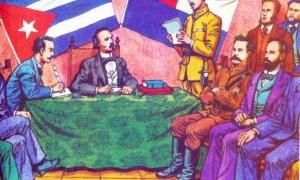
  • Guáimaro: when the Cubans made the Constitution the reason for their sword

    Guáimaro: when the Cubans made the Constitution the reason for their sword

    On a dust-choked April day in 1869, in the plains of Cuba’s Camagüey region, a ragtag group of independence fighters defied all odds to write a new chapter of global history. Six months had passed since the first spark of the Cuban independence struggle ignited at La Demajagua, and the outlook was grim: the strategic city of Bayamo had already fallen back under Spanish colonial control, military momentum had stalled, and the fledgling independence movement fractured into three competing governing factions, flying two separate flags. The choice left to the revolutionaries was uncompromising: unify, or face certain death.

    Against a backdrop of ongoing armed conflict, deep ideological divisions, and missing comrades, the Mambí independence fighters achieved what many deemed impossible. Not only did they hammer out an agreement for a unified command structure, but they also drafted and formally adopted the first Constitution of the Republic of Cuba in Arms on that April 10. Clocking in at just 29 articles, this founding document was far more than a parchment signed amid the roar of gunfire. It was the birth certificate of a sovereign Cuban nation, enshrining core principles that still shape Cuban national identity today: a separation of governmental powers, a clear division between military and civilian authority, and the radical, foundational commitment to the abolition of chattel slavery.

    Like all human political projects, it was not perfect. But it was uniquely Cuba’s. The nation’s founding revolutionaries refused to wait for permission from the Spanish colonial metropolis to write their own laws and claim their right to self-determination. With this Magna Carta, Cuba carved out its place among the world’s 19th-century republican nations through its own collective effort, standing in open defiance of one of Europe’s oldest imperial powers. Out of that Guáimaro Constituent Assembly emerged the first legitimate national government of Cuba, with independence leader Carlos Manuel de Céspedes serving as president and Manuel de Quesada taking on the role of Commander-in-Chief. It also established a constitutional tradition that remains the beating heart of the Cuban Republic more than 150 years later.

    That same spirit of sovereign self-determination would go on to inspire Cuba’s national hero José Martí to establish another transformative institution on the same April date, 23 years later in 1892: the Cuban Revolutionary Party. As Martí himself wrote in the newspaper *Patria*, the party was the embodiment of the Cuban people, tasked with organizing the final push for independence that would secure full sovereignty and establish a democratic republic built “with all and for the good of all.” The ideological and organizational foundations laid by that party would later shape the first Communist Party of Cuba, and its modern iteration as the vanguard organization of the Cuban Revolution.

    Today, as foreign narratives from the Global North push the argument that a nation can enjoy freedom without full political and economic sovereignty, the legacy of the 1869 Guáimaro Constitutional Assembly offers a vital reminder. Cuba’s founding fathers never debated whether an independent sovereign state was a wise goal; they took it as a given that independence is never granted to those who beg for it—it is built through deliberate action, with laws to codify the people’s will and arms to defend that will against colonial aggression. That unshakable conviction, that faith in the legitimacy of the anti-colonial struggle, has run like a constant underground river through every subsequent Cuban constitution, from the 1940 national constitution to the current framework ratified by the Cuban people in 2019.

    So when algorithmic mercenaries and pro-annexation lobbyists peddle the bitter lie that Cuba should surrender its sovereignty for foreign favor, Cubans are called to remember the dust of Guáimaro. There, on the open plains of Camagüey, a small band of revolutionaries armed with nothing but machetes and a shared dream of freedom left the Cuban people the most powerful tool any free nation can hold: the moral and legal justification for their struggle, transformed from a cause into a binding constitution. This inheritance is not up for negotiation, not for sale to the highest bidder, nor to be surrendered lightly. It is a legacy to be defended, always.

  • Life deserves to be celebrated

    Life deserves to be celebrated

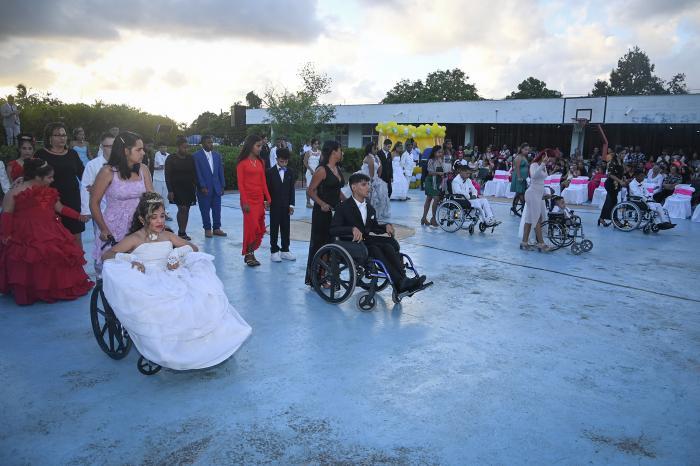
    On a windy Thursday in April 2026, 19 young people gathered at Havana’s Solidaridad con Panamá School to mark a universal coming-of-age milestone: their 15th birthdays. For decades, this school has upheld a beloved tradition of celebrating quinceañeras for disabled students, a ritual that has endured through the decades of economic blockade that have shaped daily life in Cuba.

    As preparations wrapped up, the first chords of the traditional quinceañera waltz rang out across the school grounds. Not every dancer moved in perfect step: some relied on canes for support, others maneuvered custom wheelchairs across the esplanade, and many leaned gently on their partners to steady their balance. But to observers in attendance, there was no mistaking the perfection of the moment—raw, genuine, and alive with the joy of the young people at the center of the celebration. Bright yellow balloons dotted the open space, holding their ground against strong gusts of wind, a quiet metaphor for the resilience of the students gathering to mark their big day. Nineteen wide smiles shone across the esplanade, none dimmed by the adversity that has tested Cuban communities for decades, each one a candle of hope that no hardship can blow out.

    Cuba’s highest-ranking leaders joined the celebration: Miguel Díaz-Canel Bermúdez, First Secretary of the Central Committee of the Communist Party of Cuba and President of the Republic, and Manuel Marrero Cruz, member of the Political Bureau and Prime Minister of Cuba, were among the guests, moved by the students’ determination and joy. From the school’s esplanade, the gathered students and faculty sent warm birthday greetings to retired Cuban revolutionary leader Army General Raúl Castro Ruz, a long-time supporter of the institution’s work.

    Esther María La O Ochoa, known affectionately as Teté, who served as the school’s director for many years, reflected on the legacy of the annual celebration. She credits Fidel Castro Ruz, the school’s founder and former Commander-in-Chief, and Raúl Castro Ruz, for ensuring this tradition was never interrupted, even in the hardest of times. “We live in a Cuba under blockade, but never one that refuses to give love,” she told the assembled crowd.

    As the event unfolded, the colors of students’ outfits mingled across the open esplanade, with wheelchair users gathering front and center to lead the celebration. “No one could stop this celebration,” one student said—a sentiment echoed by everyone in attendance. These young people, each with their own unique body shapes and personal stories of overcoming struggle, reminded all present that every life is worthy of celebration, no matter the circumstances.

    For 20 full minutes, tenderness and hope walked hand in hand across the school grounds. Glasses were raised in a toast to happiness, and shared embraces erased all lines of status, distance, and prejudice, holding space only for quiet joy. Many parents openly wept as they watched their children dance, and teachers—who have long stepped into caregiving roles for their students—shared in the profound, soft joy of the moment. At the center of it all, the 15-year-olds beamed, their smiles unclouded by hardship.

    For these students, the bouquets they held were far more than decorative flowers: they were a living promise of what is still to come, a testament to the core belief that has guided the school and this tradition for more than 25 years: even amid difficulty, in Cuba, every person matters, and every life will persist in blossoming.

  • Russia, One Hundred Percent in Solidarity with Cuba

    Russia, One Hundred Percent in Solidarity with Cuba

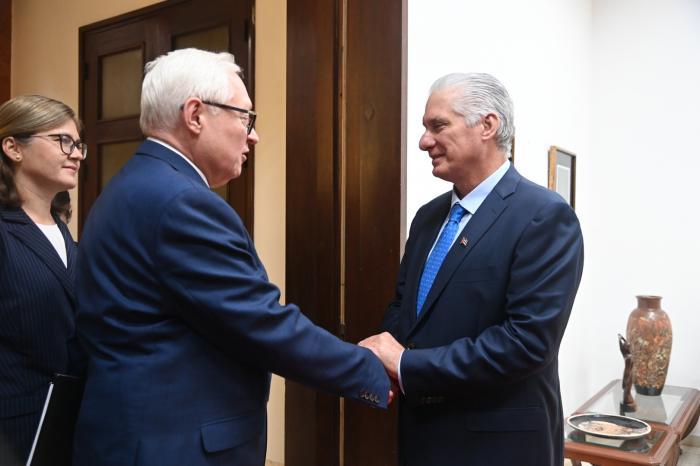
    On a Thursday afternoon in April 2026, a landmark diplomatic meeting between top Cuban and Russian officials took place at Havana’s Palace of the Revolution, reinforcing the long-standing strategic partnership between the two nations. Cuban President Miguel Díaz-Canel Bermúdez, who also serves as First Secretary of the Central Committee of the Communist Party of Cuba, hosted visiting Russian Deputy Foreign Minister Sergei Ryabkov, who traveled to Havana for the event in conjunction with a bilateral inter-ministerial dialogue between the two countries.

    Opening the cordial exchange, Ryabkov expressed that he felt deeply honored to receive an audience with the Cuban president, a sentiment that prompted a warm response from Díaz-Canel, who framed the Russian diplomat as a trusted friend to Cuba and highlighted decades of reciprocal solidarity between Havana and Moscow.

    In his opening remarks, Díaz-Canel first extended a warm greeting to Russian President Vladimir Putin and all Russian allies, before turning to address the most recent demonstration of Russian support for Cuba: a timely fuel shipment delivered to the island in recent days. The Cuban leader emphasized that the delivery carries far more than practical value, calling it a momentous symbolic gesture that sends a clear message that Cuba does not stand alone amid mounting international pressure.

    Díaz-Canel stressed that the aid comes at a particularly critical juncture for Cuba, noting that this shipment is the first and only fuel supply the country has received in four months, making it an indispensable lifeline for the island. Beyond its immediate practical impact, he framed the fuel delivery as a stand against what he termed coercive imperialist policies, praising Russia’s courage in refusing to bow to external pressure that aims to block trade with Cuba. He added that the shipment upholds a core principle both nations defend: Cuba’s inherent right to receive energy supplies, and other countries’ equal right to conduct legitimate energy trade with the island.

    The Cuban president requested Ryabkov convey his official gratitude to the Russian government and President Putin directly, reaffirming that all bilateral agreements reached during previous talks with Putin remain in full force. He referenced the recent 23rd session of the Cuba-Russia Intergovernmental Commission held in St. Petersburg, which was attended by Cuban Deputy Prime Minister and Minister of Foreign Trade and Foreign Investment Oscar Pérez-Oliva Fraga, noting that both sides remain fully committed to advancing all joint bilateral projects.

    Looking ahead, Díaz-Canel underlined Cuba’s unwavering commitment to deepening political, diplomatic, and economic cooperation with Russia. He called for continued unity between the two nations, particularly at a time of widespread global instability and ongoing armed conflicts that have roiled international order.

    Responding to Díaz-Canel’s remarks, Ryabkov echoed the spirit of camaraderie, thanking the Cuban president for the opportunity to hold the high-level meeting. He noted that the gathering itself serves as a powerful signal to both Russia and the broader international community of the unique, close bond between Havana and Moscow. The Russian deputy foreign minister also expressed appreciation for the warm hospitality extended by Cuban authorities during his visit, including his earlier reception by Cuban Foreign Minister Bruno Rodríguez Parrilla.

    Ryabkov reaffirmed that Moscow stands in full solidarity with Cuba, stating that the Russian side fully understands the severe challenges Cuba currently faces and remains unwavering in its support for the island. Also in attendance for the diplomatic meeting on the Cuban side was Gerardo Peñalver Portal, First Deputy Minister of Foreign Affairs of Cuba, as the talks proceeded in an atmosphere defined by mutual respect and fraternal solidarity.

  • Column: De oorlog die wij zien en de strijd die wij niet begrijpen

    Column: De oorlog die wij zien en de strijd die wij niet begrijpen

    Mainstream coverage of the ongoing crisis in the Middle East often simplifies the chaos into a familiar, neat narrative: Israel, backed by the United States, is locked in a single open war against regional adversaries led by Iran and its allied armed factions. This framing creates a false sense of clarity, but the reality is far more complex than the superficial story many outlets present. What is often described as one unified conflict is actually a tangled convergence of multiple separate disputes, each with its own distinct objectives, overlapping interests, long-held historical grudges, and competing strategic agendas that interact and intensify one another.

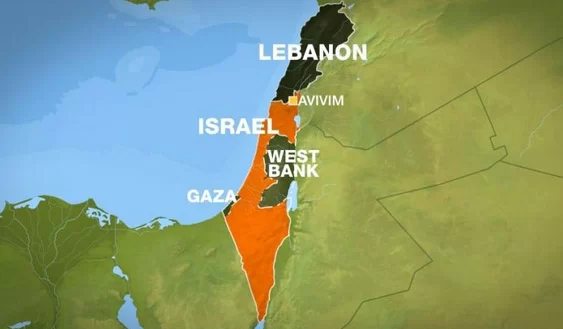
    On the surface, the most visible fronts are clear: Israel fights Hamas in Gaza and exchanges fire with Hezbollah along its northern border with Lebanon. Daily headlines bring images of airstrikes, rocket barrages, widespread destruction, and Israeli officials framing the campaign as a necessary fight for national survival. But beneath this visible frontline fighting lies a deeper layer of geopolitical ambition and risk calculation that rarely makes front-page news.

    For Israel, the conflict extends far beyond neutralizing immediate threats from Hamas and Hezbollah. The core strategic priority driving many of its military actions, particularly sustained airstrikes targeting Hezbollah assets in Lebanon, is curbing the expanding regional influence of Iran. From Israel’s strategic perspective, Iran’s growing power is not an abstract geopolitical concern—it is viewed as an existential threat to the Jewish state, established as a sovereign nation only in 1948. In Israeli policy circles, this is not framed as an offensive war of expansion, but a defensive struggle necessary to guarantee the country’s long-term survival.

    Tensions along the Israel-Lebanon border have escalated dramatically since the outbreak of the Gaza war following Hamas’ October 7, 2023 attack on Israeli territory. Hezbollah, Iran’s most powerful regional proxy, has launched near-daily rocket and drone strikes on northern Israel, and Israel has responded with waves of airstrikes targeting Hezbollah military infrastructure across southern Lebanon. For Israel, Hezbollah represents one of the most pressing security threats in the region: the group maintains an enormous arsenal of projectiles and receives extensive funding, training, and political backing from Iran, Israel’s long-standing core adversary. By targeting Hezbollah weapons depots, launch sites, and command centers, Israeli military leaders aim to erode the group’s offensive capacity and deter future large-scale attacks.

    The United States publicly presents itself as a fully committed ally standing shoulder-to-shoulder with Israel, but Washington’s strategic goals in the crisis diverge significantly from Jerusalem’s. Where Israel frames the conflict as an existential fight for its immediate security, the U.S. is primarily maneuvering to protect and extend its own regional influence and control. For American policymakers, this is not an existential war, but a carefully calibrated geopolitical file. Washington’s core priorities are maintaining a facade of regional stability, protecting its network of allied partners, and preserving decades of American geopolitical dominance in the Middle East. While the U.S. shares Israel’s goal of limiting Iran’s regional expansion, it has no interest in triggering a full-scale regional war that could draw American troops into direct combat. As a result, U.S. engagement is calculated, often restrained, and consistently focused on managing escalation rather than pursuing all-out conflict. The U.S.-Israel alliance does not equate to identical, aligned interests in every part of the crisis.

    Iran, meanwhile, is not a direct belligerent in open fighting, but it is far from a passive bystander. Tehran avoids open, conventional war that would leave it vulnerable to direct American and Israeli retaliation, instead exercises influence through a web of regional proxies and allied armed groups, maintaining constant pressure on Israel and the U.S. without fully committing its own military forces to open conflict. Iran’s strategy of indirect confrontation is deliberately designed to operate outside the boundaries of traditional warfare, making it extremely difficult for its adversaries to counter fully. Flexible, persistent, and focused on long-term gains rather than quick battlefield victories, Iran is playing a long game that pays dividends even as its proxies bear the brunt of fighting.

    A common and misleading misconception about the conflict frames the Israeli-Palestinian confrontation as an ancient, inevitable clash rooted in centuries of religious and ethnic tension. This narrative is convenient but deeply misleading. It frames the current violence as an unavoidable outcome of ancient hatreds, erasing the reality that today’s crisis is the direct product of modern political decisions and territorial disputes. While historical context plays a major role in shaping current tensions, it cannot fully explain or justify the current state of open conflict. What is clear is that every actor involved frames its own actions as a fight for survival, shaped by decades of accumulated grievance and fear.

    The explosions, rubble, and civilian casualties that fill daily news coverage are only the visible symptom of this far larger, more complex struggle. They are the consequences of overlapping disputes, not the core drivers of the conflict itself. This is a multifaceted battle for influence, security, and regional power, where even formal allies hold competing objectives and adversaries often operate in the shadows rather than openly. The central question that matters most is not who is fighting, but what they are fighting for. Until that question is openly and honestly addressed, global audiences will continue to accept a simplified, misleading narrative that ignores the underlying dynamics shaping the crisis—dynamics that play out almost entirely out of public view. Perhaps the biggest problem is not that too little of the conflict is visible to the public, but that most audiences are content to accept the superficial story that is presented to them.

  • Government says no mining planned in Northern Mountain Range

    Government says no mining planned in Northern Mountain Range

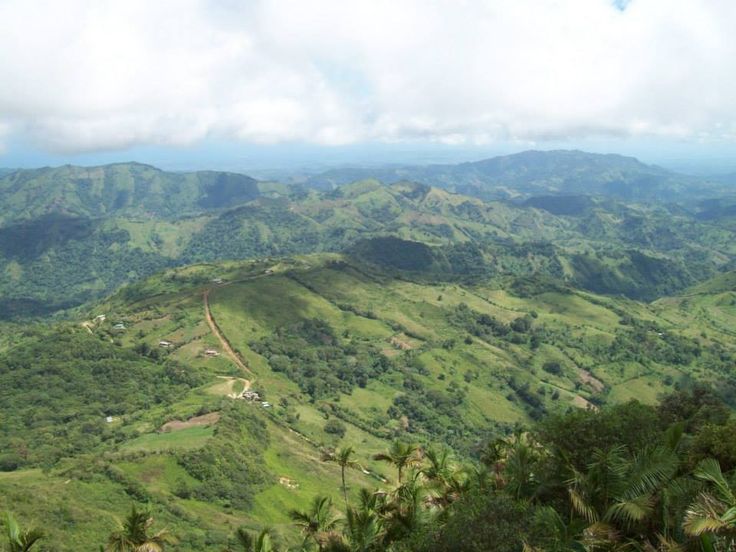
    SANTIAGO — The Dominican Republic’s top energy and mining official has drawn a clear line in the sand over resource development in one of the country’s most ecologically significant regions, confirming that full commercial mining will never be authorized in the Northern Mountain Range. In a face-to-face gathering with local community leaders and religious clergy hosted in Santiago, Energy and Mines Minister Joel Santos laid out the government’s official stance, clearing up widespread speculation about future extractive activity in the biodiverse highland area.

    Santos stressed that there is no existing government policy, signed exploitation contract, or even active pending application that would clear the way for large-scale mineral extraction in the region. Any current work being carried out in the Northern Mountain Range is restricted exclusively to preliminary scientific research, designed to map the area’s geological characteristics and assess its potential mineral resources, he explained.

    According to Santos, the exploration concessions currently held by operators do not grant any rights to commercial extraction. These permits only allow temporary access for technical work, including geological mapping, rock sampling, and other geoscientific surveys required to understand the region’s subsurface makeup.

    Any future proposal to expand activity beyond exploration to full extraction would face a rigorous multi-step approval process, Santos noted. This would require separate technical reviews, mandatory comprehensive environmental impact assessments, and a final sign-off from the Dominican president before any work could move forward. The minister also emphasized that the government remains committed to full transparency and ongoing collaborative dialogue with all communities that would be affected by any potential future changes to mining rules in the region.

    Santos also addressed calls from some stakeholders to revoke the existing exploration concessions, noting that unilateral revocation would open the Dominican government to costly international and domestic legal challenges, putting state assets and public finances at unnecessary risk.

  • Politieke onenigheid legt behandeling rechterlijke macht stil

    Politieke onenigheid legt behandeling rechterlijke macht stil

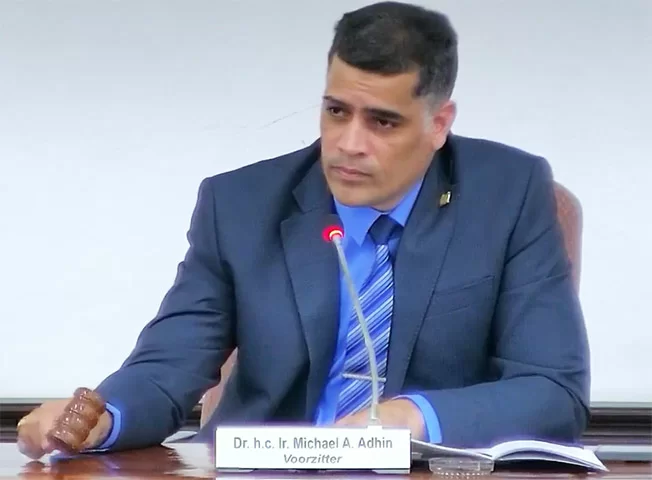
    A scheduled plenary session of Suriname’s De Nationale Assemblee to debate four high-stakes judicial reform bills collapsed Thursday after failing to meet the minimum attendance requirement for a legally valid meeting, forcing Assembly Speaker Ashwin Adhin to adjourn the gathering indefinitely. The breakdown of the session has laid bare deep internal rifts within the country’s ruling coalition over the proposed legislative changes.

    Under Assembly rules, at least 26 sitting members must be present to open a formal, binding debate. When roll was called, just 21 of the 34 members of the governing coalition showed up for the vote, falling far short of the required threshold. The absences were particularly stark among the six-member ABOP faction: only party representative Stanley Betterson registered his attendance. While all members of the large VHP faction were present in the parliamentary building, none signed the official attendance register in a coordinated show of opposition to the bill package.

    Originally convened at 1 p.m. local time, the session was ultimately dissolved at approximately 4:30 p.m. after hours of waiting for absent members to arrive. The mass absence of ABOP lawmakers made existing tensions within the ruling coalition over the judicial reform legislation impossible to ignore. In remarks following the adjournment, Adhin noted that negotiations over the four bills remain ongoing, adding that consultations with faction leaders and further coordination with the Suriname Court of Justice will be held to get the legislative process back on track. No new date or time for resuming the debate has been set, with the session adjourned until further notice.

    Speaking to local outlet Starnieuws, NDP faction leader Rabin Parmessar clarified that a number of NDP and NPS lawmakers are currently traveling abroad, which contributed to the attendance shortfall. He added that the VHP, the coalition’s largest bloc, still holds formal objections to key provisions of the legislative package, particularly the planned phase-out of specific institutional provisions within the national judiciary. According to Parmessar, the VHP has called for discussions on alternative policy frameworks and new transition arrangements for the reform. Follow-up talks to resolve these outstanding disagreements are scheduled for Friday, where participating parties will conduct detailed cost and impact projections for proposed amendments to the bills.

  • Live a clean life, advises Ena Jones, 100

    Live a clean life, advises Ena Jones, 100

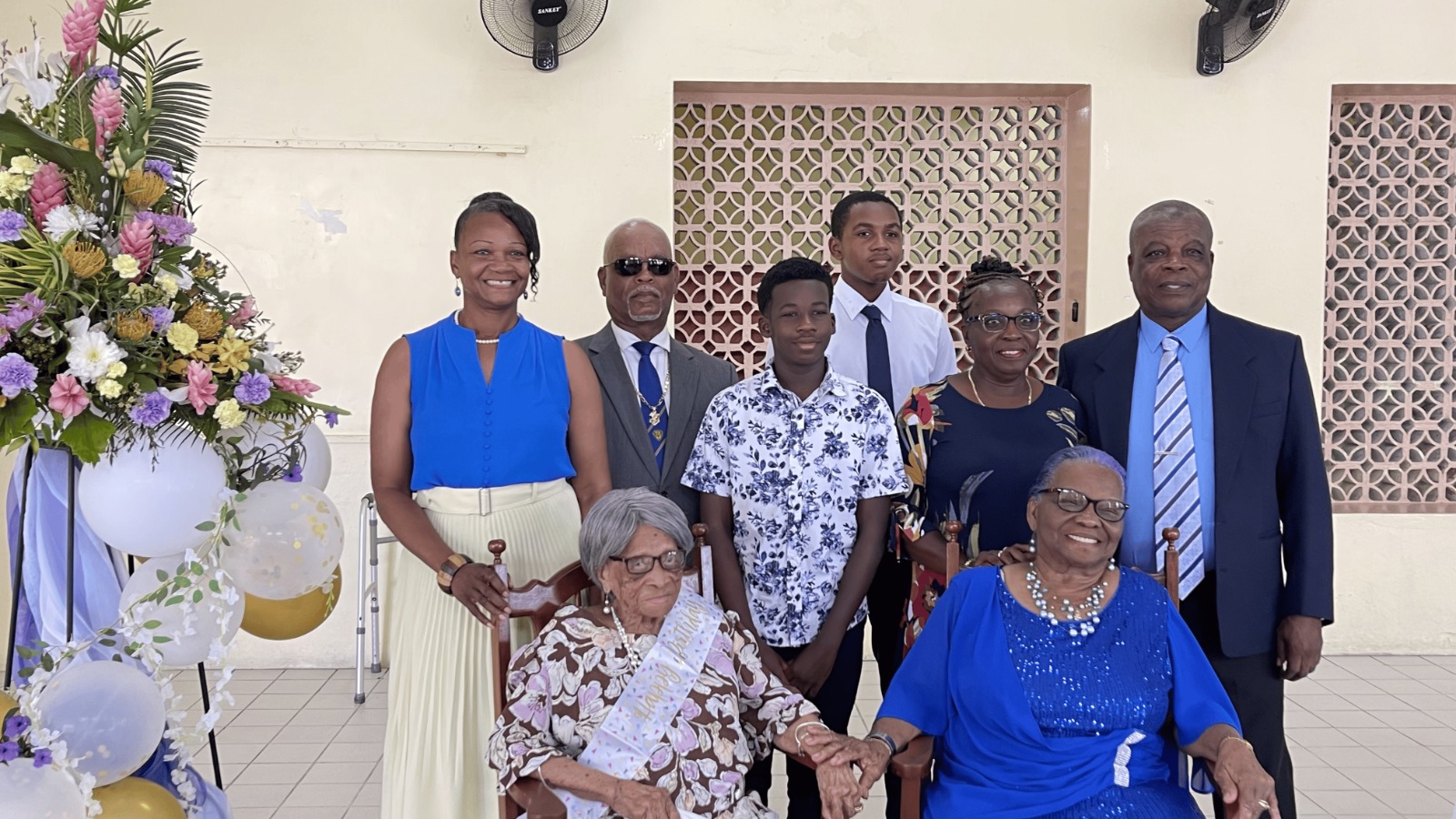
    A beloved pillar of Barbados’ religious and local community marked a historic life milestone this week, as Ena Jones celebrated her 100th birthday surrounded by loved ones and national leadership, and opened up about the core values that have shaped her extraordinary century of life.

    The birthday celebration, held at Bethel Methodist Church where Jones has been a dedicated, long-time member, drew a crowd of family, close friends, and Barbadian President Jeffrey Bostic, who joined the occasion to honor the island’s newest centenarian. Even at 100, Jones impressed every attendee with her quick wit, sharp recall of life events, and gentle, steady composure. Looking back on decades of change and challenge, she shared vivid anecdotes from her youth, from carefree days attending community dances to the quiet hardships and resilience of life during World War II.

    When President Bostic asked Jones what wisdom she would pass on to younger generations during a warm, lighthearted conversation, her response was brief but deeply resonant: *“Try to be the best you can. Do not follow bad company…. If you see a person going the wrong way, don’t follow.”*

    As a formal tribute to Jones’ remarkable milestone, President Bostic presented the centenarian with a celebratory gift basket holding fresh flowers, a bottle of non-alcoholic wine, and a personal birthday card on behalf of all Barbadians. The card read: *“Reaching the remarkable age of 100 years makes you a national treasure. This calls for celebration, and so I salute you. Accept my heartfelt congratulations and those of the people of Barbados on this most significant day in your life. Happy birthday, and may God continue to shower His blessings on you.”* Bostic went on to hail Jones as the event’s “Birthday Queen” and lead a toast to her long and meaningful life.

    For those who have known Jones for years, her warmth and love of life have long made her a central part of the church community. Wendy Darlington, a fellow member of Bethel Methodist Church and long-time friend, recalled how the pair first connected: they bonded after sitting next to each other in the same pew one Sunday, and eventually formed a close bond that has lasted for years. Jones’ cousin, Stevenson Tull, shared that even after he and his family moved to the United States, stopping by Jones’ home during return visits to Barbados became a beloved family tradition. Confident in Jones’ continued vitality, Tull said, *“She loves life, she takes care of herself, she made it to a hundred and I know that we are going to celebrate another birthday… for her.”*

    In a post-celebration interview, Jones reflected that reaching 100 was a milestone she never imagined possible. Neither of her biological parents lived to see their 100th birthday, and Jones lost her mother at a young age, growing up raised by her adoptive mother, Ms. Trotman. When asked what she credits for her long and healthy life, she pointed to three core principles: intentional discipline, unwavering faith, and the intentional choice to step away from negative influences.

    Expanding on her guidance for young people, Jones emphasized the value of steady, purpose-driven living: *“Live a clean life. Work… don’t worry about other people and what they do… and that’s how you get through life.”* She noted that she enjoyed the pleasures of youth in her earlier years, but always prioritized making intentional choices to build a stable, fulfilling long-term life.

    Faith, Jones added, has been a foundational guiding force throughout every stage of her journey. Her biological mother first introduced her to church as a small child, and Jones has maintained a deep, consistent spiritual practice that she says saw her through every hardship and joy across 100 years. Jones described her 100th birthday as “very cool and quiet”, saying she approaches the milestone with deep gratitude for every year she has been given. Far from slowing down, the centenarian continues to bring joy and wisdom to everyone around her in her community.

  • T’dad gov’t shrugs off Ali’s position on CARICOM S-G’s appointment process

    T’dad gov’t shrugs off Ali’s position on CARICOM S-G’s appointment process

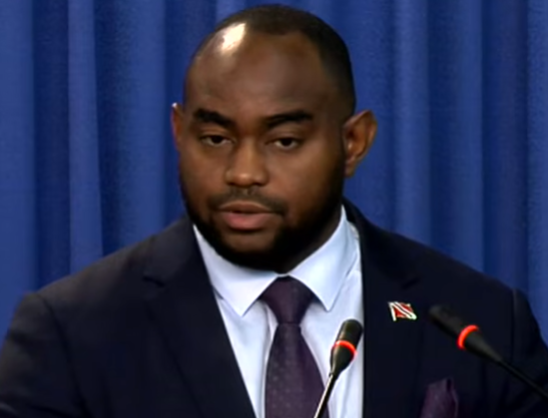
    A growing procedural dispute over the reappointment of Caribbean Community (CARICOM) Secretary-General Dr. Carla Barnett has opened a rift among regional member states, with Trinidad and Tobago’s top diplomat doubling down on claims that proper governance rules were violated during the February 2026 summit. In a press conference held Thursday, April 9, 2026, Foreign Affairs Minister Sean Sobers pushed back against public claims from Guyanese President Irfaan Ali, who has defended the reappointment process as consistent with protocol used for Barnett’s first appointment five years earlier, and asserted he was satisfied with her performance in office.

    Sobers stopped short of an open public confrontation with Ali, emphasizing respect for the sovereignty of fellow CARICOM member states. “I respect His Excellency Dr. Mohamed Irfaan Ali and his own positions adopted. He is a President of a sovereign country and his views are his own, our views are our own. We’re a sovereign nation as well,” Sobers told reporters.

    The minister directed his sharpest criticism at two public figures who have questioned Trinidad and Tobago’s position: former St. Vincent and the Grenadines Prime Minister Dr. Ralph Gonsalves, and former Trinidad and Tobago Foreign Minister Amery Browne of the previous People’s National Movement (PNM) administration. Gonsalves recently claimed Sobers skipped a key summit retreat meeting on the island of Nevis because he suffered from sea sickness and was unable to make the short boat trip from neighboring St. Kitts.

    Sobers dismissed that claim as a deliberate distraction from the core procedural violation at the heart of the dispute, labeling both Gonsalves and Browne as “political has-beens” seeking to divert attention from the real issue. He emphasized that the reappointment of the Secretary-General never appeared on any official meeting agenda, was not flagged for discussion on the morning of the leadership retreat, was never referenced in the summit’s final communique, and was not mentioned during the post-summit press conference. These omissions, he argues, directly contradict CARICOM’s foundational governing document, the Revised Treaty of Chaguaramas.

    “Don’t cast any red herrings here for people to hold on to and then forget about what the real issue is which is that the procedure was not followed, which is that it was not an agenda item that was listed… That’s the real crux of the matter,” Sobers said.

    He further detailed that after the heads of government of Trinidad and Tobago, Antigua and Barbuda, and The Bahamas departed the summit, foreign ministers serving as heads of national delegations were formally excluded from the closed leadership retreat, despite having participated in earlier caucus discussions. This detail, he noted, has been confirmed by both CARICOM’s Secretary-General and the Chef-de-Cabinet of the organization.

    Sobers added that member states could have been formally notified if the reappointment had been raised under “any other business,” and the issue could easily have been tabled for discussion at a future leaders’ meeting, a step that was never taken.

    Five weeks after the February 24–27 2026 CARICOM Summit concluded in the region, CARICOM Chairman and St. Kitts and Nevis Prime Minister Dr. Terrance Drew issued a public statement confirming Barnett had been reappointed by the “required majority” of regional leaders. Sobers confirmed that Drew has since responded to formal correspondence from the Trinidad and Tobago government, which has raised objections to the process.

    The minister noted that the current Kamla Persad-Bissessar-led administration remains dissatisfied with the process to date, and that Trinidad and Tobago’s Cabinet must first review and approve the government’s official response to Drew’s correspondence before any further details are released. He added that the outcome of ongoing clarification efforts will determine whether Trinidad and Tobago participates in two upcoming CARICOM gatherings: a virtual summit scheduled for April 2026, and an in-person summit planned for July 2026 in St. Lucia.