作者: admin

  • Cabinet Approves Establishment of Department of Public Health Intelligence and Surveillance

    Cabinet Approves Establishment of Department of Public Health Intelligence and Surveillance

    In a landmark step to overhaul the Caribbean nation’s public health infrastructure, the Cabinet of Antigua and Barbuda has formally approved the launch of a new Department of Public Health Intelligence and Surveillance (DPHIS) under the country’s Ministry of Health. This approval marks a critical milestone in the ongoing effort to modernize and unify Antigua and Barbuda’s fragmented public health systems.

    Under the approved plan, two existing government health units—the Epidemiology and Surveillance Unit and the Health Information Division—will be merged into a single, centrally coordinated department. The consolidation aims to eliminate long-standing operational silos, cut down on redundant work across agencies, and boost the nation’s ability to produce timely, precise, and actionable health data that can inform policy development, long-term health planning, and rapid emergency responses.

    The creation of the DPHIS underscores the national cabinet’s dedication to building a 21st-century, data-driven health system that can effectively tackle both longstanding and emerging public health challenges, ranging from widespread chronic conditions and infectious diseases to newly evolving global health threats. The unified organizational structure will streamline real-time data aggregation, enhance public health surveillance and early outbreak warning systems, and embed evidence-based decision-making into every level of the national health sector.

    Alongside approving the department’s establishment, the cabinet has signed off on a comprehensive governance structure for the new agency. This framework includes provisions for dedicated executive leadership, clear inter-agency coordination mechanisms, and standardized reporting hierarchies designed to ensure accountability and consistent, effective implementation of the department’s mandate.

    Aligning its structure with contemporary global public health best practices, the DPHIS will advance adoption of the cross-sectoral One Health approach, which centers the deep interconnectedness of human, animal, and environmental health. This integrated model is expected to strengthen the country’s capacity to address zoonotic disease outbreaks, environmental health hazards, and the growing range of climate-related public health risks that small island nations like Antigua and Barbuda disproportionately face.

    As a core component of the reform initiative, the cabinet has endorsed a phased transition away from the country’s currently dominant paper-based health recording systems to a fully integrated digital surveillance and health information ecosystem. Key upgrades will include rolling out cloud-enabled electronic surveillance platforms, automated early warning and rapid response systems, and interoperable data infrastructure that allows seamless information sharing across different public health agencies.

    To ensure the new department can launch and operate successfully, the cabinet has also allocated all required financial, human, and technical resources to the initiative. These investments cover critical priorities including advanced health informatics infrastructure, expanded data analytics capabilities, end-to-end systems integration, and specialized workforce training to build the skilled team needed to sustain the project long-term.

    The Ministry of Health has received formal direction to begin rolling out the approved changes immediately, and will be required to submit regular progress updates to the cabinet on the department’s operational performance and public health outcomes. National officials noted that this transformative reform places Antigua and Barbuda among the most innovative leaders in public health across the Caribbean region, strengthening the country’s overall health resilience and laying the groundwork for improved health outcomes for all of its citizens.

  • Additional Building Supplies to arrive in Antigua and Barbuda Next Week

    Additional Building Supplies to arrive in Antigua and Barbuda Next Week

    Months after the Cabinet of Antigua and Barbuda greenlit a series of key measures to upgrade housing conditions for vulnerable and low-income communities across the twin-island nation, government officials have confirmed that a long-awaited shipment of essential building materials will dock in the country next week to advance this public welfare initiative.

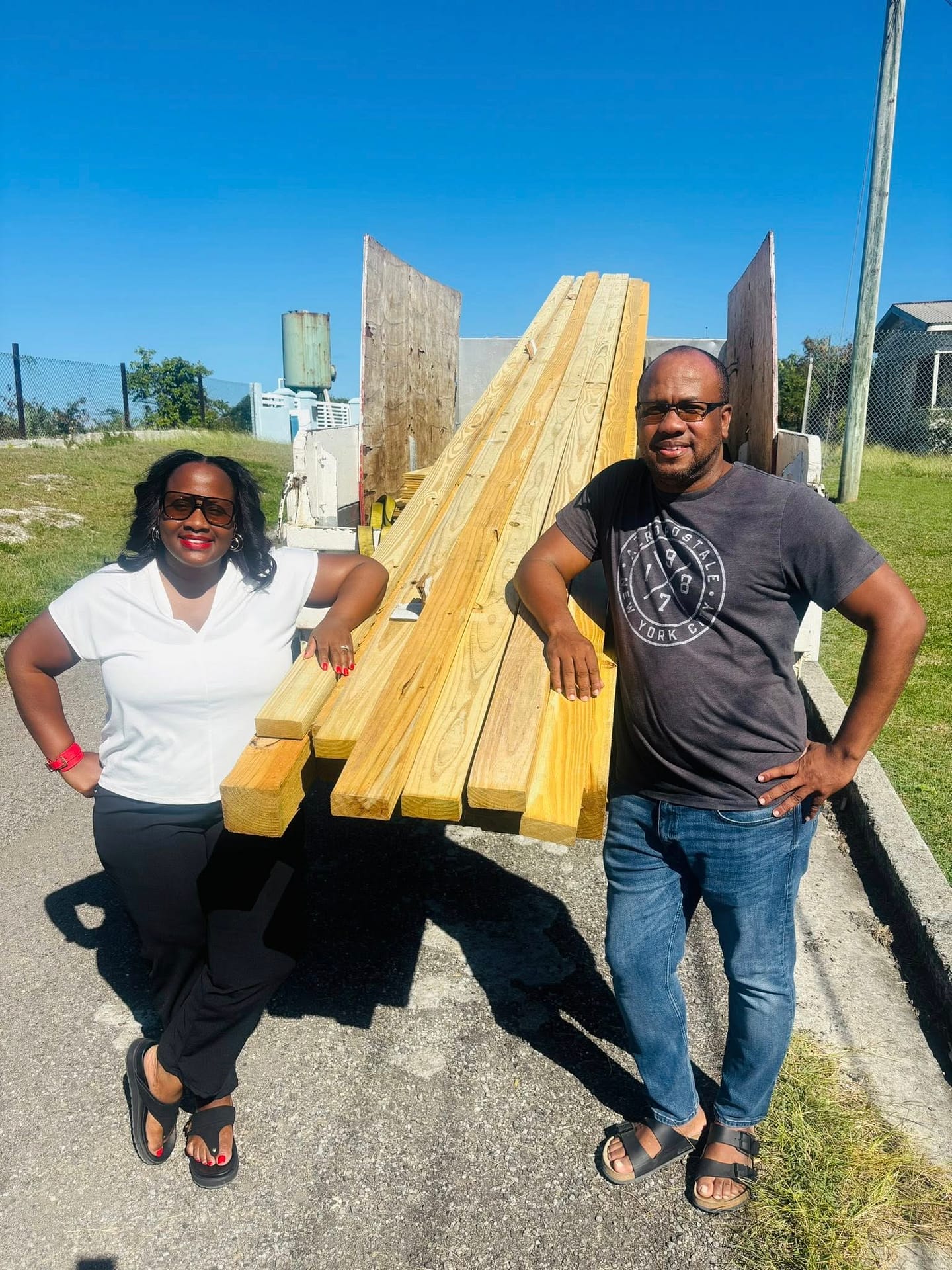
    This targeted import of construction supplies is the cornerstone of the government’s ongoing national housing assistance scheme, designed to speed up much-needed home repairs and upgrades for eligible households across both islands. The incoming materials will directly address the most urgent structural issues faced by less fortunate families, from critical roof repairs and structural reinforcement to replacing rotting timber and fixing persistent leaks that threaten living safety. For many households, these supplies will mean the difference between living in a deteriorating, unsafe dwelling and occupying a stable, comfortable home that meets basic health and safety standards.

    Distribution of lumber and other core construction materials to qualified homeowners has already rolled out across Antigua and Barbuda. Priority groups under the program include senior citizens, people living with disabilities, and low-income families grappling with persistent economic hardship. This housing upgrade effort is not an isolated project; it forms a central pillar of the administration’s wider social intervention strategy, which seeks to lift the overall quality of the national housing stock and raise residential living standards for all marginalized groups.

    Government officials emphasized that this work aligns fully with the administration’s core policy goal: guaranteeing that every citizen of Antigua and Barbuda has access to housing that is safe, long-lasting, and dignified. By expanding access to high-quality building materials at no direct cost to eligible households, the government is reaffirming its commitment to raising national housing benchmarks, strengthening community resilience to extreme weather, and empowering residents to bring their homes up to modern, sustainable building standards.

  • Government Welcomes Scholarship Opportunities from the People’s Republic of China for Antiguan and Barbudan Students

    Government Welcomes Scholarship Opportunities from the People’s Republic of China for Antiguan and Barbudan Students

    The People’s Republic of China Embassy in Antigua and Barbuda has officially announced that two fully-funded Chinese government scholarship programs are currently accepting applications from eligible citizens of the Caribbean nation, opening new academic pathways for advanced study in China.

    One of the initiatives is the Chinese Government Transportation Scholarship hosted by Dalian Maritime University, a leading higher education institution specializing in maritime studies and logistics research. This program allocates two spots for Antiguan and Barbudan students to enroll in two-year master’s degree programs at the university. The comprehensive award covers all core costs associated with the study period, including full tuition fees, mandatory application charges, on-campus housing, a regular monthly living stipend, and full-coverage medical insurance for the entire duration of the degree. Notably, international travel to and from China is not included in the scholarship package.

    A second opportunity comes via the MOFCOM (Ministry of Commerce of the People’s Republic of China) Scholarship Programmes, which also supports advanced academic study for students from developing countries. While specific coverage details for MOFCOM awards were not outlined in the embassy announcement, both programs follow an aligned application process that requires candidates to submit all required materials digitally through official university portals or designated Chinese scholarship administration platforms.

    The application timeline differs slightly between the two programs: candidates targeting the Dalian Maritime University Transportation Scholarship must submit all completed materials by April 20, 2026, while applicants for the MOFCOM scholarships have until May 15, 2026, to finalize their submissions.

    As part of the formal bilateral application process, the Government of Antigua and Barbuda is tasked with compiling a list of endorsed candidates and submitting an official diplomatic note to the Chinese Embassy. To accommodate this internal national review and endorsement process, the authorities have urged all interested applicants to submit their materials well in advance of the posted deadlines, avoiding last-minute delays that could disqualify their candidacies.

    Individuals seeking additional clarification on eligibility criteria, required documentation, or step-by-step application procedures are directed to reach out to the Prime Minister’s Scholarship Office of Antigua and Barbuda via phone at 562-3860 for personalized assistance.

  • Cabinet Approves Landmark Cricket West Indies Campus and High-Performance Centre for Antigua and Barbuda

    Cabinet Approves Landmark Cricket West Indies Campus and High-Performance Centre for Antigua and Barbuda

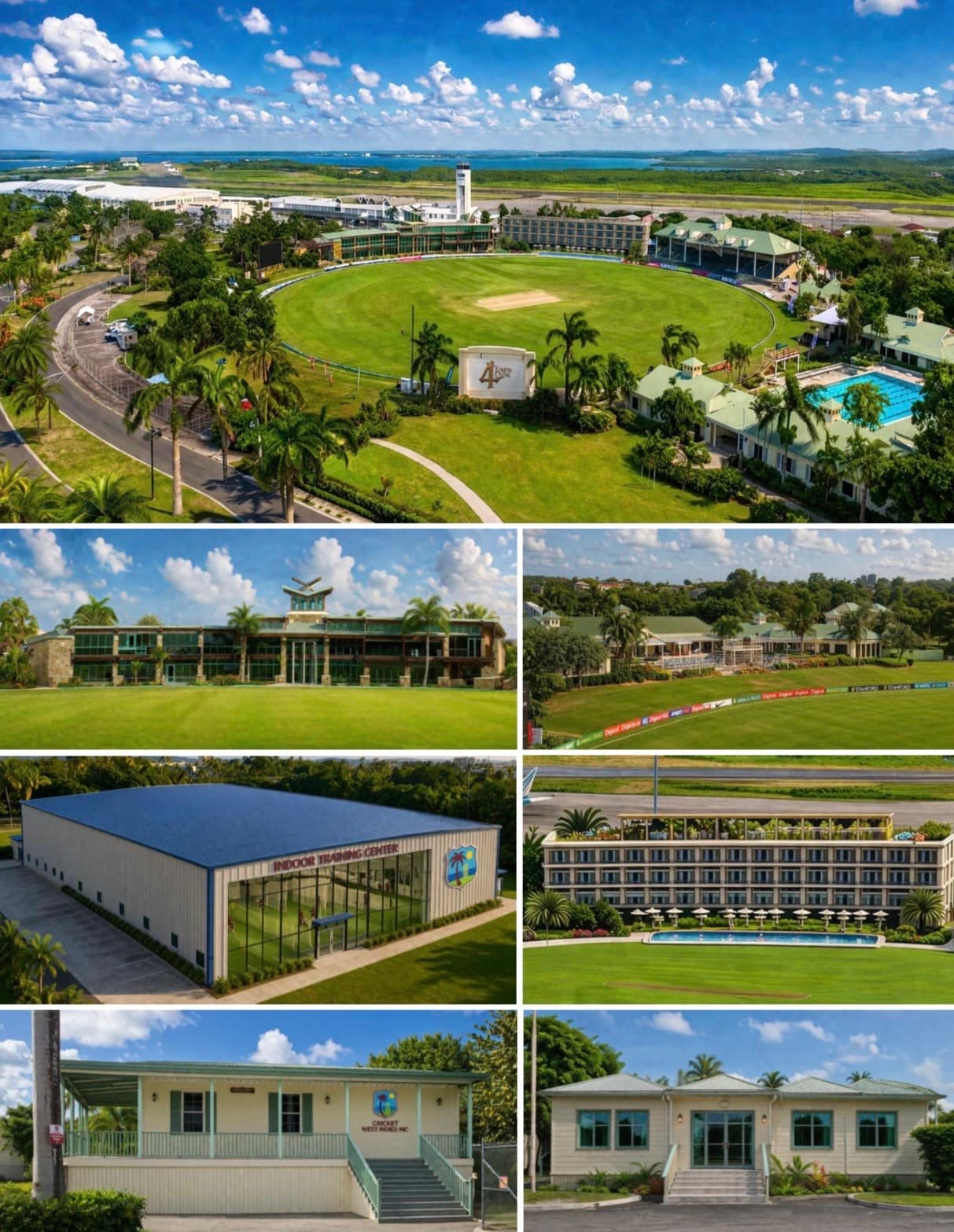
    In a historic move that promises to reshape cricket development across the Caribbean, the Cabinet of Antigua and Barbuda has given the green light to construct the landmark Cricket West Indies Campus and High-Performance Centre, a long-awaited infrastructure project designed to elevate regional cricket to new global competitive heights.

    The approved facility, earmarked for development in Antigua and Barbuda, is set to become the primary regional hub for nurturing emerging cricket talent, refining elite athlete skills, and driving the long-term recovery and growth of West Indies cricket, which has faced increasing competitive pressure from top cricketing nations in recent decades. The project combines state-of-the-art training facilities, educational resources for young cricketers, and sports science support centers, creating a holistic ecosystem that addresses longstanding gaps in the region’s cricket development pipeline.

    Government officials involved in the approval process emphasized that the campus will not only strengthen the competitive standing of West Indies cricket at the international level but also deliver significant economic benefits to Antigua and Barbuda. It is expected to generate local employment during the construction phase, draw regional and international cricket teams for training camps and pre-tournament preparation, and boost the island nation’s already thriving sports tourism sector.

    Cricket West Indies leadership has welcomed the cabinet’s decision, noting that the specialized high-performance center will fill a critical need that has hampered the development of young players from across the Caribbean’s scattered island nations. For decades, promising young cricketers have lacked access to centralized, high-quality training infrastructure that matches the standards of elite cricket programs in other parts of the world. This new campus aims to change that, offering cutting-edge facilities for batting, bowling, and fielding practice, alongside modern sports medicine and data analytics resources to optimize athlete performance.

    Local stakeholders in Antigua and Barbuda have also expressed broad support for the initiative, framing it as a key investment in both youth development and the national economy. The project is now moving forward to the next phase of planning, with site preparation and construction timelines expected to be announced in the coming months.

  • Ex-international Aloema eist ingrijpen bij nationaliteitscrisis Natio-spelers

    Ex-international Aloema eist ingrijpen bij nationaliteitscrisis Natio-spelers

    A former Surinamese international football star has issued an urgent call for the Suriname Football Association (SVB) and the national government to step in immediately to resolve a growing nationality crisis that currently impacts multiple players on the country’s senior men’s national team, known affectionately as ‘Natio – The Green Guardian’.

    Ex-national team goalkeeper Ronny Aloema has publicly voiced deep concern over recent reports that several Suriname-based internationals risk losing their Dutch citizenship, creating crippling legal uncertainty for the athletes involved. In his appeal, Aloema stresses that this issue extends far beyond the boundaries of professional sports, touching directly on players’ fundamental legal security, the credibility of Suriname’s public and sporting institutions, and the country’s standing on the global stage.

    Aloema emphasizes that players who made a conscious choice to represent Suriname out of loyalty and conviction should not be left to suffer the consequences of administrative confusion, miscommunication between legal bodies, or institutional inaction on the matter. To address the crisis comprehensively, he has put forward five concrete, actionable proposals to resolve the issue and protect the affected players and the future of Surinamese football.

    First, Aloema is calling for immediate specialized legal support for the impacted athletes. He argues that the SVB and national government must immediately assemble a dedicated legal team with deep expertise in nationality law, international sports law, and diplomatic law to provide robust representation for the players. Aloema notes that it is unacceptable for individual players to bear the full burden of outcomes from processes that were originally developed and overseen by Surinamese institutions.

    Second, he demands targeted diplomatic and administrative action. Aloema proposes that Suriname should quickly draft and deliver an official diplomatic note to competent Dutch authorities, coordinated through relevant government ministries, to formalize the country’s position and secure the players’ legal standing, preventing further harm to their careers and personal lives.

    Third, he is calling for full transparency and public accountability around the issue. Aloema is pushing for complete public disclosure of all agreements and procedures that have governed the naturalization and registration of diaspora players for the national team since 2019. He stresses that the affected players, their families, and the broader Surinamese public have a right to full clarity on the legal basis of these processes and the responsibilities of the institutions involved.

    Fourth, Aloema is urging the immediate establishment of a national crisis task force to address the issue long-term. He proposes a collaborative, cross-sector body that includes representatives from the SVB, the national government, independent legal experts, and current and former Surinamese internationals, tasked with developing a permanent structural solution to Suriname’s recurring dual nationality challenges in football.

    Finally, Aloema highlights the urgent need to protect the long-term future of the Natio national team. He explains that the ongoing crisis has far-reaching consequences for Surinamese football, eroding trust among diaspora players and damaging the credibility of the country’s existing sports and naturalization policies.

    Reiterating his core position, Aloema notes that players who made a deliberate choice to represent Suriname are entitled to institutional protection, clear legal guidance, and formal government and football association support. “They must never be made to feel that they are alone in this issue, which developed under the shared responsibility of the relevant institutions,” he says.

    Aloema concludes by expressing his hope that a fair, long-lasting solution can be reached quickly, allowing both current and future Surinamese internationals to continue representing the country with confidence. “Only through decisive, urgent action can we prevent talented players from stepping away from representing Suriname in the future,” Aloema argues. “Action is required right now.”

  • Caricom rift deepens over Barnett reappointment

    Caricom rift deepens over Barnett reappointment

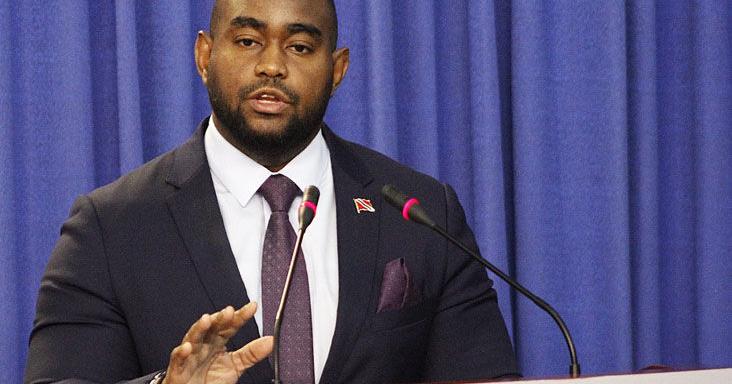
    A deep procedural rift has erupted within the Caribbean Community (Caricom) after Trinidad and Tobago’s Foreign and Caricom Affairs Minister Sean Sobers publicly rejected a response from Caricom chairman and St Kitts and Nevis Prime Minister Dr Terrance Drew, dismissing it as inadequate to address the country’s concerns over the contentious reappointment of Secretary-General Dr Carla Barnett.

    Sobers made the announcement during a post-Cabinet media briefing held Tuesday at the Diplomatic Centre in St Ann’s, laying out the full timeline of the dispute that has thrown a spotlight on long-simmering frustrations over decision-making transparency within the regional bloc.

    The controversy dates back to a February Caricom heads of government retreat held in Nevis. At that closed-door meeting, Drew announced in a March 25, 2026 statement that a “required majority” of member state leaders had approved a second five-year term for Barnett, set to begin in August 2026 when her current tenure expires. But from the start, Trinidad and Tobago challenged the legitimacy of the process: the country was not present at the retreat, and the reappointment was never listed as a formal agenda item for the gathering, a direct violation of the Revised Treaty of Chaguaramas that governs Caricom operations.

    In response to the announcement, Sobers sent an official letter to Drew demanding a formal explanation, followed by additional correspondence to Barnett herself and Janice Miller, Chef de Cabinet in the Secretary-General’s office, seeking clarification on the irregular process. Two weeks after sending the initial query, Sobers confirmed Tuesday that Drew had finally sent a response to the Office of the Prime Minister of Trinidad and Tobago — but the reply failed to resolve the core issues raised by the country.

    “Respectfully, no. It did not address the concerns we raised,” Sobers told reporters when asked if the response was satisfactory. “Although we are grateful to receive the correspondence, it took longer than expected, and we have now prepared a new formal letter that was dispatched today. There are extremely relevant and important issues that require a full response that we have not yet received.”

    Pressed by reporters from the *Trinidad and Tobago Express* on whether Trinidad and Tobago is pushing to have the entire reappointment process declared invalid and restarted from scratch, Sobers said the country’s immediate priority remains securing clear answers to outstanding questions. “We have certain questions that remain unanswered. As soon as we get those responses, we can move forward to determine what our next steps will be,” he said, adding that the Revised Treaty of Chaguaramas clearly outlines procedural requirements for the reappointment that were not followed in this case.

    Sobers also moved quickly to dismiss widespread speculation that the dispute signals a push by Trinidad and Tobago to exit the regional bloc. “Fear not, and perish that thought,” he said, emphasizing that the country has no issue with Caricom as an institution — its criticism is targeted at deep flaws in the bloc’s day-to-day operations, effectiveness and decision-making efficiency.

    The current controversy, he argued, is just the most visible example of a systemic problem. As the largest contributor to Caricom’s annual budget, covering 22% of total expenditures, Trinidad and Tobago has long been denied basic procedural courtesy in key decisions, he said. He also backed recent comments from opposition Prime Minister Kamla Persad-Bissessar, who has called for full transparency and announced a national re-evaluation of Trinidad and Tobago’s financial contribution to the bloc.

    “I think that is a fair retort to the discourteous behaviour that has been meted out to Trinidad and Tobago,” Sobers said. “The situation unravelled the way it did: we only got a last-minute telephone call about an issue that was never an agenda item, and it was pushed through at a retreat we didn’t even attend. Something has to happen, something has to change. It cannot be business as usual.”

    Sobers stressed that Trinidad and Tobago has no personal stake in the race for the Secretary-General position, saying the country has no candidate of its own and Cabinet has not yet taken a formal position on whether it would support Barnett’s reappointment. The core of the dispute, he repeated, is the underhanded, clandestine process used to push through the decision.

    He also noted that Barnett’s current term does not end until August 2026, giving the bloc ample time to consider the reappointment at two already scheduled upcoming leadership meetings: a virtual heads of government gathering set for April, and an in-person meeting in St Lucia in July. There was no justification for rushing the decision through at an unscheduled retreat that Trinidad and Tobago could not attend, he argued.

    When asked about recent comments from Guyanese President Dr Irfaan Ali stating that the reappointment process was bona fide, Sobers said Ali was entitled to his perspective as the leader of a sovereign nation, just as Trinidad and Tobago is entitled to its own position as an independent member state. “In terms of procedure, consensus has not been reached,” Sobers said. “What consensus essentially means, as it is articulated by the treaty, is that all countries should agree.”

    He closed with a sharp rebuke of the handling of the process, saying: “We have a problem when people don’t obey the revised treaty. We have a problem when people move surreptitiously, clandestinely, when they are disobedient, when they treat us with scant courtesy and disrespect; and then they leak things, allegedly, to members of the Opposition to cast suspicions on the operations of the Government.”

  • Sobers slams Ralph’s seasickness claim

    Sobers slams Ralph’s seasickness claim

    A public political dispute has erupted over claims surrounding Trinidad and Tobago Foreign and Caricom Affairs Minister Sean Sobers’ absence from a February Caricom heads of government retreat held in Nevis, with Sobers directly refuting accusations from St Vincent and the Grenadines Opposition Leader Dr Ralph Gonsalves that he skipped the event due to seasickness.

    Speaking on his Unity Labour Party’s (ULP) radio broadcast this week, Gonsalves laid out his version of events, claiming Trinidad and Tobago had received an official invitation to the closed Caricom heads caucus in Nevis. According to Gonsalves, Trinidad and Tobago Prime Minister Kamla Persad-Bissessar was unable to attend the retreat and tapped Sobers to attend in her place, only for Sobers to turn down the opportunity citing a history of seasickness.

    Sobers forcefully pushed back against these claims during a post-Cabinet press briefing held at the Diplomatic Centre in St Ann’s, dismissing Gonsalves’ narrative as a “big bold-faced lie” and laying out a detailed timeline of what actually occurred in the lead-up to the retreat. The minister acknowledged he made an offhand joke about seasickness the evening before the event, but clarified he was fully prepared and ready to travel to Nevis on the morning of the retreat when he received last-minute notification that only sitting heads of government were permitted to attend the closed session.

    “I informed the Caricom Chair that as Trinidad and Tobago’s Head of Delegation, I wanted to attend to advance our country’s national interests,” Sobers told reporters. “That notification came through at approximately 8:56 a.m. on Thursday, February 24, and I immediately reached out to the Caricom Secretariat to confirm the instruction was authentic, which it was. I then asked Trinidad and Tobago’s Caricom Director to follow up directly with the Chef de Cabinet to double-check the ruling, and that confirmation was again confirmed: only heads of government would be allowed entry.”

    Sobers further noted that the final published attendee list for the boat transfers to Nevis excluded not just Trinidad and Tobago, but also Antigua and Barbuda and The Bahamas—all three nations being represented by ministerial delegates rather than sitting heads at the event. “If Gonsalves’ story is true, does that mean every minister who wasn’t invited just happened to have seasickness? This is a clear falsehood,” he added.

    The Trinidad and Tobago minister went on to accuse Gonsalves of manufacturing the controversy to distract from a far more serious procedural breach at the regional summit: the controversial reappointment of Dr Carla Barnett as Caricom Secretary-General, which he says was conducted in secret without the participation or input of Trinidad and Tobago and other delegations, in direct violation of the Revised Treaty of Chaguaramas. Sobers emphasized that the reappointment was never listed as an official agenda item for the retreat, the plenary sessions, the official joint communiqué, or the closing press conference, calling the failure to follow established procedure the real core issue at hand.

    Local news outlet The Express later obtained a copy of a WhatsApp message circulated to Caricom Foreign Ministers in February that appears to back up Sobers’ account. The message, sent by event organizers, reads: “Good morning Foreign Ministers. Chairman PM Drew has indicated that today will be a Heads only retreat. He apologises for any inconvenience. Ministers should therefore remain for the Community Council Meeting to complete its work, including those agenda items from the Heads’ agenda which Community Council is to consider and provide recommendations to Heads for adoption.”

    Despite this evidence, the domestic opposition in Trinidad and Tobago has seized on the controversy to call for Sobers’ resignation. Former Foreign and Caricom Affairs Minister Dr Amery Browne, speaking at an opposition press briefing, challenged Sobers’ version of events, claiming “None were excluded, none were denied, none were dis-invited, and all were welcome.” Browne also accused the ruling People’s National Movement government of holding an anti-Caricom agenda aimed at weakening and dismantling the regional bloc.

    Opposition Leader Pennelope Beckles also weighed in, drawing on her past experience as a diplomatic ambassador to question Sobers’ account. “If there’s one thing you cannot do is leave any of those meetings, especially if the Prime Minister was expected to be in attendance, you can’t leave, you must attend,” she said, doubling down on calls for accountability from the current minister.

  • Mom, hotel head call for jet ski ban

    Mom, hotel head call for jet ski ban

    A devastating fatal accident at one of Tobago’s most popular coastal destinations has reignited long-simmering calls for a total ban on personal watercraft across the island, after a seven-year-old vacationing girl was struck and killed by a jet ski while playing in shallow water.

    The tragedy unfolded on Wednesday at Pigeon Point Heritage Park, where Angelica Saydee Jogie, a primary school student from Barrackpore who was visiting Tobago for the Easter holiday with her family, was hit by the watercraft while swimming. The young victim was just two weeks away from her eighth birthday.

    By Thursday morning, law enforcement officers from the Tobago Divisional Task Force had taken a man from Canaan Feeder Road, Tobago, into custody in connection with the incident. Investigations into the girl’s death remain ongoing, and the jet ski involved in the crash was seized by police on Wednesday night and is currently held as evidence at the Crown Point Police Station.

    In an emotional interview with local outlet *Express* on Thursday, Salisha Jogie, the victim’s heartbroken mother, made an urgent public plea for sweeping policy change to prevent other families from suffering the same devastating loss. Alongside demanding full accountability for the incident and public disclosure of the detained man’s identity, Jogie called for a permanent ban on all jet ski operations across Tobago’s coastal waters.

    “I don’t want anyone else to have to feel the pain I am carrying right now,” Jogie said. “This tragedy must be a wake-up call. It is not just about holding the person responsible for what happened to my daughter accountable. It is about protecting every child that comes to these waters after her. We cannot let this happen to another family.”

    Jogie emphasized that the incident has exposed unaddressed risks of unregulated jet ski use in high-traffic public swimming areas, stressing that policy action is long overdue. “My request is that these jet skis be removed from Tobago’s popular recreational areas,” she said. “This death must leave a legacy that saves other children’s lives.”

    Reginald Mac Lean, head of the Tobago Hotel and Tourism Association, joined the call for an all-out ban on Wednesday, framing unregulated jet skis as a persistent public safety threat that has already caused too much harm. “Jet skis are ticking time bombs along our coasts,” Mac Lean said. “Too many people have already been seriously injured, and too many lives have been lost. If operators cannot abide by existing rules that keep them out of designated swimming areas crowded with beachgoers, they should be banned completely across Trinidad and Tobago.”

    Mac Lean added that there is no shortage of safer alternative water activities for tourists to enjoy, making a total ban a reasonable and necessary step to protect both visitors and local communities.

  • School mourns ‘beautiful and bright’ student

    School mourns ‘beautiful and bright’ student

    A devastating beach accident has cut short the life of a promising young elementary student in Trinidad, leaving her school, family and entire local community grappling with overwhelming grief. Seven-year-old Angelica Saydee Jogie, a top-performing first grader at San Fernando TML Primary School, was killed Wednesday afternoon after being struck by an out-of-control jet ski at Tobago’s popular Pigeon Point Heritage Park.

    The tragedy unfolded around 5 p.m. as Angelica swam in a designated bathing zone alongside her father, Arnold Jogie, and uncle, Darren Jogie. Both adult relatives sustained non-life-threatening injuries in the collision, while bystanders and family members immediately administered first aid to the young girl. Despite rapid emergency response efforts, Angelica was pronounced dead shortly after arriving at Scarborough General Hospital that same evening.

    In an official statement sent to all parents and guardians Thursday, acting school principal Wahida Mohammed-Narine reflected on Angelica’s bright life, remembering the child as an exceptional A student who brought warmth and kindness to every corner of the campus. “Angelica was bright, beautiful, exceptionally well-disciplined, and brimming with untapped potential,” Mohammed-Narine wrote. “Her gentle spirit and positive energy touched the lives of every classmate, every teacher, and anyone who had the chance to meet her.”

    To support the community through the grieving process, Mohammed-Narine confirmed that regional and national education bodies have stepped in to provide specialized mental health resources. The Ministry of Education, the Victoria Education District, and the Student Support Services Division have all committed to offering on-site counselling for students, teachers and school staff, with targeted support for peers in Angelica’s classroom and the class of her older sister, Angelina. The school has also shared public photos of Angelica, capturing her constant warm smile during class activities and playtime with friends. Messages of condolence have poured in from staff and parent groups across the school community, all directed to Angelica’s heartbroken family, who affectionately called the child Saydee.

    In a heartfelt social media post, Angelica’s aunt paid tribute to her niece, describing her as a vibrant young soul that turned every ordinary moment into something special. “She had an infectious smile, and a spirit as bright as the sun on the beach that she loved so deeply,” she wrote. “She taught all of us to find magic and wonder in the smallest things. Even though her time with us was far too brief, the warmth of her love and the sweetness of her personality left a permanent, indelible mark on our family that no one can ever take away.”

    Calling Angelica a precious gift to everyone who knew her, she added: “We are absolutely devastated by our loss, but we are also deeply grateful for the seven years of pure light she gave to all of us. Whenever I was feeling down, she was there to bring me joy. That is the gift she leaves behind.”

  • Slain businesswoman had reported threats, says family

    Slain businesswoman had reported threats, says family

    The fatal shooting of 37-year-old Tricia Marajh, a St Joseph-based businesswoman, has sparked public outrage after her family revealed she had filed multiple formal reports with Trinidad and Tobago law enforcement agencies about persistent death threats earlier this year – yet no protective action was taken before the targeted attack.

    Marajh was gunned down just after 4:30 p.m. on Wednesday in what her relatives confirm was a pre-planned hit, not a random robbery. The killing makes her the sixth woman to be murdered in the country so far this year.

    When local outlet the Express visited Marajh’s family compound off Riverside Road on Thursday, the entrance of the property was marked with a sign reading “D Duck Ranch Poultry Depot”, with the family home sitting up a gentle incline from the road. A close relative of Marajh, who requested anonymity to speak publicly, described her as a loving wife, devoted mother of three, and generous community member. Marajh leaves behind two daughters aged 18 and 19, and a nine-year-old son. Beyond her poultry business, she ran a successful dessert and cake brand called T’s Tasty Treats and also operated a small used car buying and selling business.

    While the family remains uncertain of the motive behind the attack, the relative confirmed that the killing was not a robbery or extortion attempt. “Since the start of the year, she was being threatened with death. But Wednesday was not a robbery, it was a hit,” the relative stated. When asked about potential links to illegal money lending, the relative added that to the best of the family’s knowledge, Marajh did not owe money to any lender. The individuals who threatened her never even demanded money, he added.

    Following the first threat against her life, Marajh took formal action by filing a report at the St Joseph Police Station. She did not stop there: she submitted multiple additional reports to the specialized Extortion Unit and even reached out to officers from the national Task Force, according to the relative. “She made numerous reports to all of them… and nothing was done,” he said.

    The family’s grief is mixed with deep anger over the lack of intervention from authorities. “What’s justice for a life lost? We as well as our entire community are upset about this, as justice cannot bring any life back,” the relative said. “Everyone who knew her, loved her. She had a soft heart and she was the kind of person who helped anyone who asked.”

    On Thursday afternoon, one of Marajh’s daughters shared a heartfelt public tribute to her mother on social media that laid bare the raw pain of her loss. “I love you so much and I can’t believe this right now. Just yesterday you were here with all of us and now you’re gone in seconds. It’s so sad and it hurts a lot. I hope we can get you the justice you deserve and need,” the post read. The daughter described trying to stay strong for her father and younger brother, but struggling to cope with the sudden loss. “You were not ready to go and you were still young with a lot to live for but they took that from you and they took you from me,” she wrote.

    Details released by police confirm the attack was carefully orchestrated. Around 4:35 p.m. Wednesday, Marajh was called out of her home by an individual who asked her to inspect a gold-coloured Nissan Tiida, a common part of her used car business. While she was examining the vehicle, a masked gunman exited the back seat, approached her, and fired multiple shots at close range. By the time shocked relatives inside the home heard the gunfire and rushed outside, the attacker’s vehicle had already sped away from the scene. Family members immediately transported Marajh to the Eric Williams Medical Sciences Complex in Mt Hope, where doctors pronounced her dead on arrival.

    The Express reached out to multiple senior officers with the Northern Division of the Trinidad and Tobago Police Service to verify the family’s claims that Marajh had filed repeated threat reports, but no official response had been received as of Thursday night.