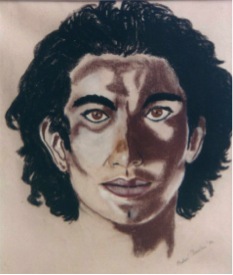
On the 19th of June 1796, a pivotal chapter in Grenada’s colonial history drew to a violent close when British military forces overran the last mountain strongholds of anti-colonial insurgents, bringing an end to the uprising remembered today as Fedon’s Rebellion.
The conflict had ignited more than a year earlier, on the night of March 3, 1795, when coordinated insurgent attacks targeted the towns of Gouyave in St. John Parish and Grenville in St. Andrew Parish. Led by Julien Fédon, a mixed-race planter, the rebellion drew widespread support from the island’s French-speaking population—including white settlers, free people of color, and enslaved people who rallied to cast off British colonial control. Tensions boiled over a month after the initial uprising, when British forces launched an assault on the insurgents’ camps on April 8, 1795. In response, the rebels carried out a long-stated threat: they executed more than 40 British captives, among them Ninian Home, the island’s sitting lieutenant governor.
Over the ensuing months, the guerrilla conflict dragged on. By the start of 1796, insurgent forces controlled the vast majority of Grenada’s territory. Yet a key strategic objective remained out of their reach: the capital town of St. George’s and its immediate surrounding areas, which British authorities held firmly throughout the rebellion.
The tide of the war shifted in March 1796, when British reinforcements arrived to reinforce colonial positions. Fresh troops seized two critical high ground positions, Post Royal and Pilot Hill in eastern Grenada. This victory severed the insurgency’s main supply lines for weapons and food from external sympathizers. British forces continued to advance across the island, scoring consecutive military wins. On June 10, 1796, Captain Jossey, the representative of French-aligned insurgent forces in Grenada, signed formal articles of capitulation with British Major-General Oliver Nicolls, ceding control of Gouyave and all insurgent-held territories on Grenada’s west coast to the crown. Notably, British commanders categorically refused to accept the surrender of Fédon and his core contingent of Grenadian free colored insurgents. Left with no route to negotiation, the remaining rebel fighters retreated to their fortified mountain outpost at Fédon’s Camp to prepare for a final British assault.
That final attack came on June 19, 1796, and ended in a complete defeat for the insurgency. While large-scale open fighting concluded with the fall of the mountain stronghold, British forces spent weeks rooting out scattered insurgents who remained hiding in the island’s interior woodlands.
In total, crushing the rebellion cost British forces 15 months of campaigning, deployment of 16 regular military units plus hired auxiliary troops, and hundreds of lives lost to both combat and yellow fever. In the aftermath of the victory, British authorities enacted harsh retribution: more than 50 captured rebels were tried and convicted of high treason. In three separate public executions held during July 1796, 35 so-called “noted brigands” were hanged from a large gibbet erected in St. George’s central market square. Contemporary accounts record that as a final act of intimidation, the executed rebels’ heads were severed from their bodies and displayed publicly to deter future uprisings. All insurgents who were not imprisoned or executed, alongside their family members, were deported from the island.
To this day, Fedon’s Rebellion stands as one of the most significant anti-colonial slave uprisings in Caribbean history, ranked second only to the successful Haitian Revolution in its scale and impact on colonial rule.