Nestled in the rolling countryside of St. Peter, just a short drive from Barbados’ most popular coastal towns, Haymans Market has emerged as far more than the island’s largest indoor retail space—it has evolved into a self-contained, vibrant lifestyle hub that weaves centuries of Barbadian history into a modern, multi-faceted visitor experience.
The market’s distinctive identity is rooted in its industrial past: the sprawling property off Highway 2A is built within the walls of the decommissioned Haymans Sugar Factory, a site with a legacy stretching back to 1649. That year, English planter Henry Haymans purchased a collection of smaller surrounding plantations to establish Haymans Plantation, launching a sugar operation that would operate on the site for more than 300 years. What began as a small wind-powered mill with open-air sugar boiling evolved over generations into a fully electrified modern factory, until sugar production ceased entirely in 1988. After sitting vacant for decades, the site was acquired by Sun Group Inc. in 2020, kicking off an ambitious restoration project that balances historic preservation with adaptive reuse. Today, a non-operational vintage sugar cane transport crane still hangs preserved above the market’s entrance, serving as a tangible reminder of the site’s origins.
“The former Haymans Sugar Factory gave us an authentic identity and a meaningful connection to Barbados’ history. We had the opportunity to restore and reimagine the former Haymans Sugar Factory while retaining the character that makes the site distinctive,” explained Jacob Weatherhead, Haymans Market’s Operations Manager.
The result of that restoration is a thriving hub home to more than 85 unique businesses, ranging from independent local traders and artisans to restaurants, wellness providers and service-based enterprises. One of the market’s biggest successes has been its role in nurturing homegrown Barbadian entrepreneurship: many early vendors who launched from compact 10-by-10-foot booths have now expanded into much larger retail spaces as their customer bases have grown.
“We are particularly proud to see local entrepreneurs who began in small booths build loyal customer bases and move into larger spaces at Haymans. That growth is one of the clearest signs that the market is creating genuine opportunities for Barbadian businesses,” Weatherhead noted.
Reflecting the market’s core values of diversity, enthusiasm and commitment to quality, vendor offerings span nearly every consumer interest. Shoppers can browse handcrafted Barbadian gifts, locally made souvenirs, artisanal fashion and handcrafted home goods, while regularly scheduled community events keep the visitor experience fresh. A monthly farmers’ market is set to transition to a weekly Sunday attraction, and the market also hosts quarterly pop-up and vintage markets that draw both locals and tourists.
In recent years, the site has expanded far beyond retail and dining to become a leading regional wellness and recreation destination. It now houses a fully equipped gym, professional padel tennis courts, and dedicated studios for yoga, Pilates and Reiki. Visitors can refuel at an on-site juice bar serving cold-pressed fresh juices or a local bakery offering homemade pastries and baked goods. A dedicated on-site art gallery showcases work from Barbadian and Caribbean creators, cementing the market’s role as a hub for local cultural expression.
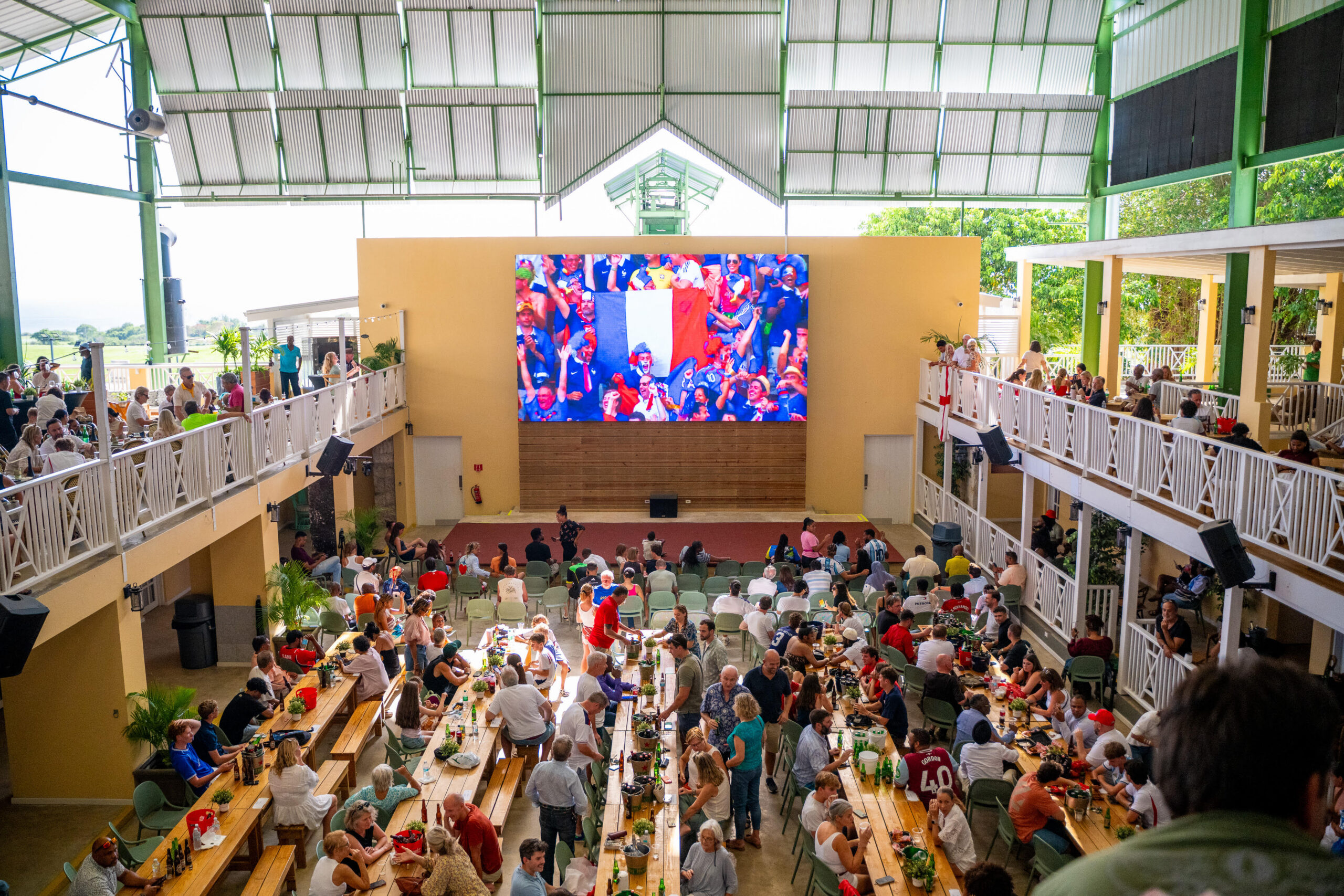
Food remains one of Haymans’ biggest draws, with more than 25 food and beverage outlets catering to every taste. The full-service Haymans Social, led by Culinary Director Jeremy Dupire, serves lunch and dinner during the week, with added Saturday breakfast and all-day Sunday brunch offerings. Its professional catering kitchen supports the restaurant and the market’s large event spaces, which can host private and public gatherings for up to 1,500 attendees. For a more relaxed experience, The Cooling Deck Bar offers open-air seating beneath native bearded fig trees, with unobstructed views of Barbados’ scenic west coast.
Following a soft opening in December 2023, Haymans Market was officially inaugurated by Prime Minister Mia Amor Mottley at a public ceremony on March 13, 2024. The path to success was not without hurdles, Weatherhead acknowledged: building awareness of the new destination and establishing consistent visitor foot traffic took months of targeted outreach and community engagement. “The journey has involved a great deal of learning. In the early days, our greatest challenge was establishing Haymans Market as a new destination and building consistent patterns of visitation. As the businesses became more established and people became familiar with everything Haymans had to offer, foot traffic grew steadily,” he said, noting that the market drew 250,000 visits in the past year alone.
Now that Haymans is firmly established as a St. Peter landmark, leadership has laid out an ambitious long-term vision: to position the market as one of Barbados’ leading lifestyle and tourism destinations, a must-visit spot for both locals and international travelers. The site even offers a self-guided audio-visual tour that walks visitors through the market’s history and the broader story of sugar production in Barbados, turning a casual trip into an immersive cultural experience.
Located just five minutes from Speightstown, 10 minutes from Holetown and 15 minutes from Warrens, Haymans Market balances convenient access with a secluded, escape-like atmosphere. “We see Haymans Market as the heart of a broader destination, bringing together shopping, dining, entertainment, wellness, professional services and community events within one historic setting,” Weatherhead said. “As we grow, we want to attract a strong mix of established and emerging Barbadian businesses, create new reasons for people—locals and visitors alike—to visit throughout the week, because there is always something happening, and continue restoring the former sugar factory and surrounding property in a way that respects its heritage.”
What was once a working factory processing sugar cane from surrounding fields is now a space where visitors can eat, explore, exercise or unwind, blending hundreds of years of Barbadian history with 21st-century lifestyle experiences. Ultimately, the project aims to set a blueprint for adaptive reuse of the island’s historic industrial sites: “Ultimately, we want Haymans to support local entrepreneurship, contribute positively to St. Peter and demonstrate how Barbados’ historic properties can be successfully reimagined for the future,” Weatherhead added.