作者: admin

  • For the sake of our children and a brighter future

    For the sake of our children and a brighter future

    Investing in holistic, high-quality care for children is universally recognized as a foundational pillar of sustained social stability. Yet awareness alone has failed to resolve a growing crisis in Jamaica’s youth support system, where systemic gaps are leaving thousands of vulnerable children behind with consequences that ripple across the entire society.

    The grim reality is that hundreds of children with unaddressed behavioural challenges are being pushed into inappropriate state care pathways every year, a problem that two top Jamaican officials have recently brought to national attention during parliamentary review proceedings. Junior Justice Minister Marisa Dalrymple Philibert and Children’s Advocate Diahann Gordon Harrison recently presented their findings to Parliament’s Joint Select Committee, which is currently conducting a review of the 2018 Child Diversion Act. Their testimony has pulled back the curtain on long-standing systemic failures that demand urgent national action.

    According to the pair, children who have never committed any criminal offense, but struggle with behavioural issues, are increasingly being routed into the national child diversion program and placed in state-run children’s homes and correctional facilities. This practice not only overwhelms diversion programs designed for an entirely different population, it also directly violates the United Nations Convention on the Rights of the Child, an international treaty Jamaica ratified decades ago.

    Gordon Harrison clarified the core purpose of the child diversion system in her testimony, noting it was structured to support children who have already committed criminal offenses, connecting them with specialized care to prevent future reoffending. It was never intended to serve children who run away from home or are chronically truant from school, she emphasized.

    The children’s advocate traced the root of the crisis to a long-unaddressed gap in Jamaica’s youth care infrastructure: the complete absence of dedicated therapeutic care centers. These facilities, mandated under the country’s Child Care and Protection Act, are supposed to provide specialized, targeted support for children with behavioural challenges, but they have never been fully established or resourced. Gordon Harrison stressed that these centers must be made operational, staffed with trained personnel, and equipped with adequate resources as an urgent policy priority.

    Dalrymple Philibert, who also serves as the Member of Parliament for Trelawny Southern and is a former Speaker of Jamaica’s House of Representatives, offered full, unwavering backing for Gordon Harrison’s assessment. She confirmed that courts across the country are routinely sending these vulnerable children to general state children’s homes, which lack the training and resources to support children with complex behavioural needs. Speaking directly to Justice Minister Delroy Chuck, who chaired the committee meeting, Dalrymple Philibert drew on decades of personal experience to emphasize that this misplacement has plagued Jamaica’s child care system for generations. The centers mandated by law have never actually existed, she confirmed, and the status quo can no longer be ignored.

    Tackling this long-standing gap is no simple task, particularly in the wake of Hurricane Melissa, which has stretched Jamaica’s public resources to breaking point. Building out a national network of therapeutic care centers will require significant financial and human capital, resources that are already in short supply for the government in the aftermath of the devastating storm.

    Despite these fiscal challenges, the newspaper’s editorial argues that Jamaica cannot afford to set this issue aside as the country recovers. Investing in appropriate care for behaviourally challenged children is not just a moral obligation—it is a long-term investment in public safety. Over time, targeted early support will reduce the likelihood that these children turn to criminal or antisocial behavior later in life, ultimately reducing the massive public costs associated with crime control and the justice system. As Jamaica rebuilds after the storm, officials say protecting the country’s most vulnerable children must remain a core part of the nation’s vision for a more stable, prosperous future.
  • Coalition firm in rejection of close-in-age sex pass

    Coalition firm in rejection of close-in-age sex pass

    Debate over Jamaican legal policy regarding sexual relations between minors has intensified, as a prominent faith-based advocacy organization has drawn a line in the sand against any adjustments to existing law, urging policymakers to target the root causes of risky adolescent behavior instead.

    The Jamaica Coalition for a Healthy Society (JCHS), a pro-Christian advocacy group, laid out its firm position during last Thursday’s deliberations of parliament’s joint select committee, which is currently conducting a review of the nation’s Child Diversion Act. The ongoing review centers on identifying effective strategies to cut the number of young people entering the country’s formal justice system, with stakeholders across the political and civil society spectrum weighing in on competing priorities.

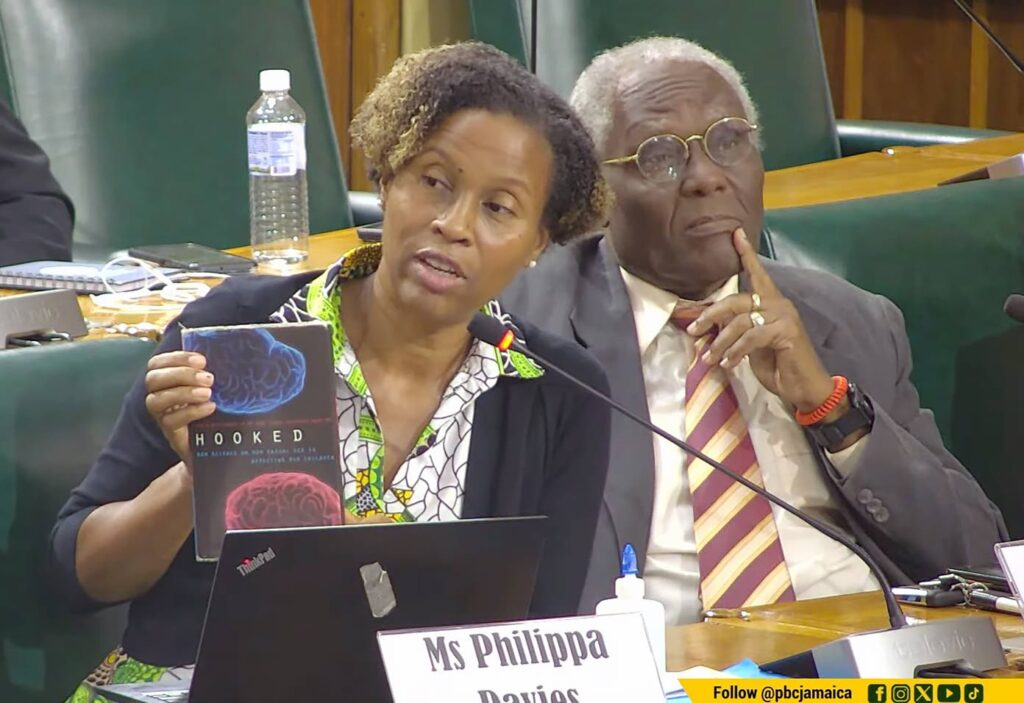
    JCHS Advocacy Officer Philippa Davies told the committee that while legislative overhauls often draw the most attention during policy reform processes, the core challenge goes far beyond changing statutory language. Instead, she argued, policymakers must first unpack why minors engage in conduct that puts them at odds with the law, pointing to early sexual activity as one of the most critical contributing factors. Davies warned that efforts to normalize underage sexual relationships, or to carve out new legal exceptions for close-in-age encounters, would create cascading long-term harms for Jamaican youth.

    “We strongly object to this suggestion [of close-in-age sex legislation] and to the notion that minors can consent to sex, whether with each other or with adults,” Davies told the committee. “We also disagree with the suggestion that adolescent sex is to be deemed as normal, mere exploration, and unharmful. This is so far from the truth. Sex is more than a physical act. It carries long-term psychological consequences.”

    Davies grounded her organization’s position in existing research on adolescent brain development, noting that young people lack the fully developed neurological capacity to make high-stakes decisions that carry lifelong impacts. The prefrontal cortex, the region of the brain responsible for impulse control, long-term planning, priority-setting, and complex decision-making, does not finish maturing until a person reaches between 25 and 30 years of age. “Even if adolescents understand that something is dangerous, they may still engage in risky behaviour,” she explained. Her argument was further bolstered by Jamaican national data showing that a large share of young people’s first sexual encounters do not involve full, freely given consent, directly undermining the widespread assumption that all underage sexual relationships are harmless consensual encounters.

    The JCHS’s formal submission to the committee comes as a growing number of advocacy and policy groups have pushed for the introduction of “close-in-age” exemptions to Jamaica’s current law, which criminalizes sexual relations between minors.

    JCHS President Dr. Wayne West clarified that the group does not advocate for unnecessarily criminalizing young people who engage in underage sexual activity. Instead, he stressed, the existing law serves a critical normative purpose as a guide for acceptable social behavior that must remain intact. “We are not saying that if persons are caught in sexual activity at their age, that they should be criminalised. We say we keep the law as is, because the law is a teacher, and we don’t want the law to be used to teach something else,” West explained. “We are not denying that things do happen. But what we are saying is that the law is a teacher, and there is a consequence to activity. So we don’t want the law to teach people that there is no consequence to activity.”

    Alongside its call to keep the current law unchanged, the coalition is pushing for a broader preventative public health and education approach that includes expanded comprehensive education, greater parental involvement in youth development, and targeted outreach to encourage healthier behavioral choices among Jamaican adolescents.

    Committee chairman and Justice Minister Delroy Chuck acknowledged the deeply complex nature of the issue, noting that rigid, one-size-fits-all application of the current law can leave lifelong, damaging marks on young people who engage in consensual underage sexual activity. Chuck pointed to ongoing requests for criminal record expungement from former farm workers who pleaded guilty to consensual underage sex as teenagers, noting that the conviction continues to block opportunities decades later. “Because, if a person is actually convicted when they are a teenager for consensual sex, it follows them for the rest of their lives, to be frank with you,” he said.

    Chuck raised questions about whether greater discretionary power within the justice system could create a workable middle ground, particularly for cases involving minors close in age, and suggested many of these cases could be diverted out of the formal court system through existing alternative mechanisms. The JCHS has signaled it supports diversion for these cases, but has reiterated that this support does not extend to changing the underlying text of the law itself.

    State Minister for Justice Marisa Dalrymple-Philibert also shared her perspective on the debate, acknowledging that robust moral guidance for young people is a critical public priority, but warning that an overly rigid legal framework can permanently derail the future prospects of youth who make early mistakes. She noted that many productive, upstanding adult Jamaican citizens and community leaders engaged in underage sexual activity during their adolescence, and argued that these early mistakes should not define their entire lives.

    Pointing to the widespread employment barriers faced by people with juvenile criminal convictions, Dalrymple-Philibert argued the justice system must strike a careful balance between accountability and rehabilitation, especially for young people who acted without the full cognitive maturity to understand the consequences of their choices. “You’re correct, we need to teach children all the good values,” she said. “But I hold strongly to the fact that it happened to people who are excellent adults and leaders in society now that made mistakes as young people, sex with women underage, between minors. We are saying at this point, when it happens, there must be a way not to criminalise them, help them through the Child Diversion Programme.”

    First introduced to give justice system officials alternatives to prosecution for children who come into contact with the law, the Child Diversion Act under review centers on rehabilitation rather than punishment, connecting young people to counseling, mentorship, and targeted support services instead of formal court processing and criminal conviction.

  • The secret struggle of former national footballer Michael ‘Zun’ Clarke

    The secret struggle of former national footballer Michael ‘Zun’ Clarke

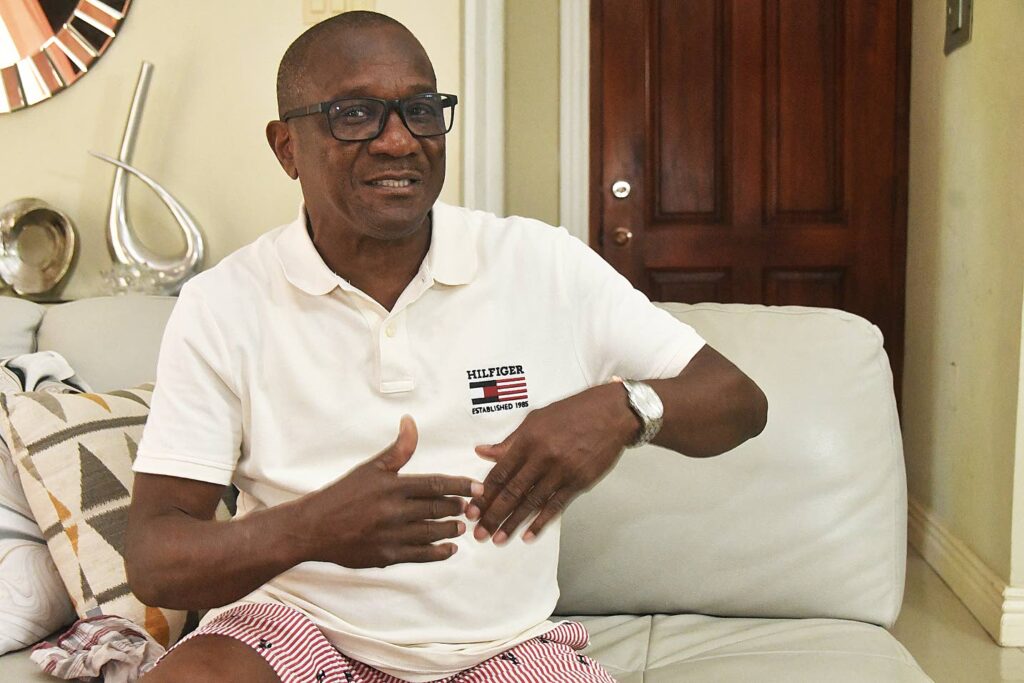
    A soft, knowing laugh, steeped in the quiet triumph of a life built against all odds, escapes 67-year-old former Jamaican national footballer Michael “Zun” Clarke as he looks back on a journey few would have bet on. His path winds from the tough, working-class streets of Waltham Park Road in Kingston, through the high-stakes glory of Jamaica’s Manning Cup schoolboy football at Tivoli Gardens High School, all the way to the lecture halls of American universities, where he would eventually graduate with a bachelor’s degree in counselling and guidance.

    What hides beneath that warm laughter is a story of almost unbelievable grit, rooted in a secret few knew during his childhood: for all of his primary school years, Michael Clarke could not read.

    Speaking with the Jamaica Observer, Clarke explained that poverty, not lack of ability, created that barrier. Raised by a single mother after his father passed away when he was just four years old, the youngest of nine siblings grew up in a household so strapped for cash that his mother Isadora simply could not afford to buy him a basic reading book for his studies at Whitfield Town Primary School.

    Rather than surrender to self-pity or let his circumstance define his future, Clarke made a quiet, deliberate choice to teach himself literacy — and he turned his daily football training into a classroom. While training at the old Cable and Wireless playing field near his Cortina Avenue home, he built his reading skills one word at a time.

    “I started out by pulling a word from the dictionary, writing out each letter, and as I ran around the track in the evenings, I’d spell the word out loud and practice pronouncing it,” Clarke recalled. “Every single day I learned at least two or three new words. Over time, I started putting them together into sentences — I actually taught myself how to read.”

    By the time he enrolled at Tivoli Gardens High School, he still had years of catching up to do to match the literacy level expected for his grade. Even after graduating high school with no O-Level qualifications, Clarke knew he was already far behind his peers — so when a rare football scholarship opened up to Alderson Broaddus University in the United States, he vowed to squeeze every possible opportunity out of the second chance.

    “When I got that scholarship, I thought to myself, ‘What the hell is this? This is your last shot to build something for yourself,’” he told the Sunday Observer. “And trust me, I made it count. I studied almost day and night, made the Dean’s List with a 3.6 GPA first, then a 3.8. I never failed a single class in college.”

    His academic performance was so strong that after completing his undergraduate degree, Clarke earned a full academic scholarship to pursue abnormal psychology at West Virginia University in 1985. That remarkable academic rise came just over a decade after a fateful encounter that changed the course of his life as a teenager.

    At 15, Clarke was attending Tivoli High on the evening shift when he crossed paths with Neville Myton, the school’s football coach and a former Jamaican Olympian who competed at the 1964 Tokyo Games while still a student at Excelsior High. Myton had built a reputation for spotting hidden raw talent, and that evening he spotted Clarke playing in the school auditorium.

    “He asked me my name, then asked if I wanted to switch to the morning shift to join the football program. I said yes immediately. He told me to show up before the school gate opened on Monday, and that’s exactly what I did,” Clarke said, smiling at the decades-old memory.

    Myton placed Clarke on the school’s Colts youth team, and that year, they took home the championship. One victory that still stands out to him is a 1-0 win over powerhouse Kingston College — the first time Tivoli Gardens had ever beaten Kingston College in any sport, by Clarke’s recollection.

    By 1976, Clarke was a starting striker on Tivoli Gardens’ Manning Cup squad, a team stacked with extraordinary young talent that included Dennis “Den Den” Hutchinson, Ken Bailey, Leon Osbourne, and brothers Dave and Delmonte Clarke (no relation to Zun), that claimed the Manning Cup title. For a school that was only five years old at the time, the win felt almost otherworldly.

    “To be honest, it was almost surreal that a young program just five years old could achieve that much in so little time,” Clarke said. “After a while it hit me: ‘Holy crap, we actually did this.’ We nearly repeated the win the next year, too. It taught me that big things are actually possible, even when everyone counts you out.”

    While fans across Jamaica marveled at the underdog win, Clarke said the team simply saw it as the result of playing the game they loved the way they always had. “We didn’t do anything extra. We just played like we normally did,” he said.

    After high school, Clarke played for Jamaican club side Cavalier, worked on the production line at local manufacturer Seprod, and earned a call-up to represent Jamaica at the national level. His final cap for the Reggae Boyz came in 1987, after he had already moved to the U.S. He flew back to Jamaica after picking up his green card, trained with the squad, and came on as a substitute in an exhibition match against a side that included English stars John Barnes and Luther Blissett.

    Clarke soon found that the discipline, quick thinking, and strategy he had honed on the football pitch translated seamlessly to his post-academic career. After graduating university, he took a role with New York City Parks and Recreation, before spending decades as a youth counsellor with the New York State Office of Children and Family Services, working with court-ordered juvenile delinquents.

    “As a youth counsellor, you hear some terrible, dangerous stories — especially from the girls, 12 to 18 years old, talking about ongoing abuse and trauma,” Clarke explained. Early in his tenure, the weight of those stories drained him mentally, especially as a father of two daughters with his wife Sandra. “At one point my wife told me, ‘Don’t bring this work home. If it’s eating at you this much, leave and find something else.’ Over time, I learned how to process it, how to empathize without carrying the pain home with me, but it was always heavy work hearing what those kids had gone through.”

    Clarke retired from his role in December 2000, just a month after celebrating his 67th birthday in January this year, he splits his time between Jamaica and the United States, where he owns property, and spends much of his time traveling between the two countries to visit his three children, all of whom have built successful careers of their own.

    His son Leon, from a previous relationship, is a high school principal in Delaware with a PhD, who earned an American football scholarship to the University of Delaware. His oldest daughter Aneka, 41, is a certified public accountant after graduating Temple University on an academic scholarship, while his youngest daughter Michelle, 31, a Howard Business School graduate, works as a strategy consultant for a digital technology firm in Washington, D.C. Clarke speaks of his children with a father’s quiet, unshakable pride.

    But for all the joy and success Clarke has earned in his later years, he carries a quiet grief: when his mother Isadora passed away in 2020, at the height of the COVID-19 pandemic, he was stuck abroad and could not get home to be with her before she died. Jamaica had closed its borders and locked down to slow the spread of the virus, so Clarke could not return before she died of natural causes, aged 102.

    “COVID didn’t kill her, she died of natural causes, but it hurts to talk about it. The country was shut down, the ports were closed, no one could come in, and I was stuck overseas,” he said, his voice thick with emotion. As soon as lockdown restrictions lifted, Clarke booked the first available flight home to honor the woman who made endless sacrifices to support his education, even when she could not afford a reading book for him. He finds solace in the fact that she lived to 102, a milestone he describes with a typically Jamaican cricketing metaphor: “She was a good batswoman. She batted the whole innings well.”

  • Sex crime silence: Yes or no?

    Sex crime silence: Yes or no?

    A fierce public debate over media and legal transparency in child sexual crime cases has erupted in Jamaica, sparked by a high-profile incest charge against a former ruling party politician, with advocates and media leaders clashing over conflicting priorities of victim justice and child protection. At the center of the controversy stands Joy Crawford, executive director of Eve for Life Jamaica — a non-profit dedicated to empowering vulnerable young mothers and survivors of sexual violence through mentorship, counseling, and policy advocacy. Crawford is demanding a fundamental shift in long-standing policy: once an individual accused of a sexual crime against a minor has been formally charged and arraigned in court, their identity should be released to the public.

    Crawford argues that the current practice of withholding accused names, which is most often justified as a measure to protect child victims, in reality silences survivors who have already chosen to come forward. When a victim summons the courage to publicly name their abuser and demand accountability, she says, that act of bravery should not be muted by excessive editorial caution. Continuing to grant anonymity to charged offenders, Crawford contends, risks emboldening repeat offenders and eroding public confidence in Jamaica’s justice system. She dismisses the claim that anonymity protects victims as a misplaced narrative, arguing that the policy instead protects societal discomfort, powerful connections, and outdated moral sensibilities rather than the survivors themselves. “When a victim works up the mental fortitude to come forward, name their attacker, and pursue legal action, we should not push them back into silence,” Crawford told the Jamaica Observer. “Victims have already counted the cost of speaking out. The discomfort with naming names is ours, not theirs.” Crawford also notes that anonymity is largely performative: in small local communities, word of an accused’s identity often spreads through informal channels anyway, leaving no real meaningful protection for victims while denying them the open justice they seek.

    The debate was triggered by a recent case involving a former Member of Parliament affiliated with the People’s National Party, who stands charged with raping a 13-year-old female relative. According to police reports, the former MP picked up the minor under the pretense of running errands in January 2024, before taking her back to his home and sexually assaulting her. The victim filed an official report with law enforcement, leading to the former MP’s arrest and charge. In line with standard practice, the accused’s name has been withheld to avoid indirectly identifying the underage survivor.

    Crawford’s call for transparency has drawn sharp pushback from Jamaica’s leading media and child protection organizations, who warn that abandoning anonymity rules would put child survivors at grave risk of further harm. Dashan Hendricks, president of the Press Association of Jamaica (PAJ), emphasized that media caution in these cases is never intended to protect offenders — it is a deliberate choice to prioritize the safety and privacy of child victims. In cases of incest or intra-family abuse, Hendricks explained, releasing the accused’s name almost always makes it simple for community members, neighbors, and classmates to deduce the victim’s identity, given the close family relationship between attacker and survivor. This exposure can subject child survivors to severe stigma, social shaming, and repeated trauma, compounding the harm they have already endured.

    Hendricks pointed out that this policy is not just an ethical choice for media outlets — it is a legal requirement under Jamaica’s Child Care and Protection Act. Sections 44 and 45 of the Act explicitly ban any reporting that reveals identifying details of a child involved in legal proceedings for sexual abuse, mandating that the best interest of the child must always be the paramount consideration. “Responsible journalism starts with compliance with child protection law,” Hendricks told the Sunday Observer. “If naming the accused creates a meaningful risk of identifying the child, media are right to withhold the name. Justice for a child cannot come at the cost of further harm.”

    Hendricks’ stance is backed by local and international child protection groups. The Fi We Children Foundation, a Jamaican youth empowerment organization, released a statement last week affirming that public demand for accountability must never override a child’s right to safety and dignity. International child protection standards and UNICEF guidelines, the group noted, strictly require that the identity of child abuse victims be protected at all times, even when that means withholding details that would lead to an offender’s identification. UNICEF’s framework mandates that journalists alter names, obscure visual identifiers, and omit any details that could lead to the recognition of a child victim, to prevent stigma, retraumatization, and ongoing risk to the survivor.

    While the number of officially reported incest cases in Jamaica has declined steadily over the past five years — dropping from 33 reports in 2019 to just eight as of mid-November 2024, according to Jamaica Constabulary Force data — researchers warn that this trend may not reflect a real drop in incidents. Official data from previous years recorded 30 cases in 2016, 29 in 2017, and 23 in 2018, but analysts have long noted that underreporting of sexual and incestuous abuse is widespread in Jamaica, due to stigma, family pressure, and lack of trust in official systems. The current debate has thrown a spotlight on the ongoing tension between survivor autonomy and child protection frameworks in the country, as stakeholders grapple with how to balance accountability for offenders with safety for the children who survive these crimes.

  • From child apprentice to master craftsman

    From child apprentice to master craftsman

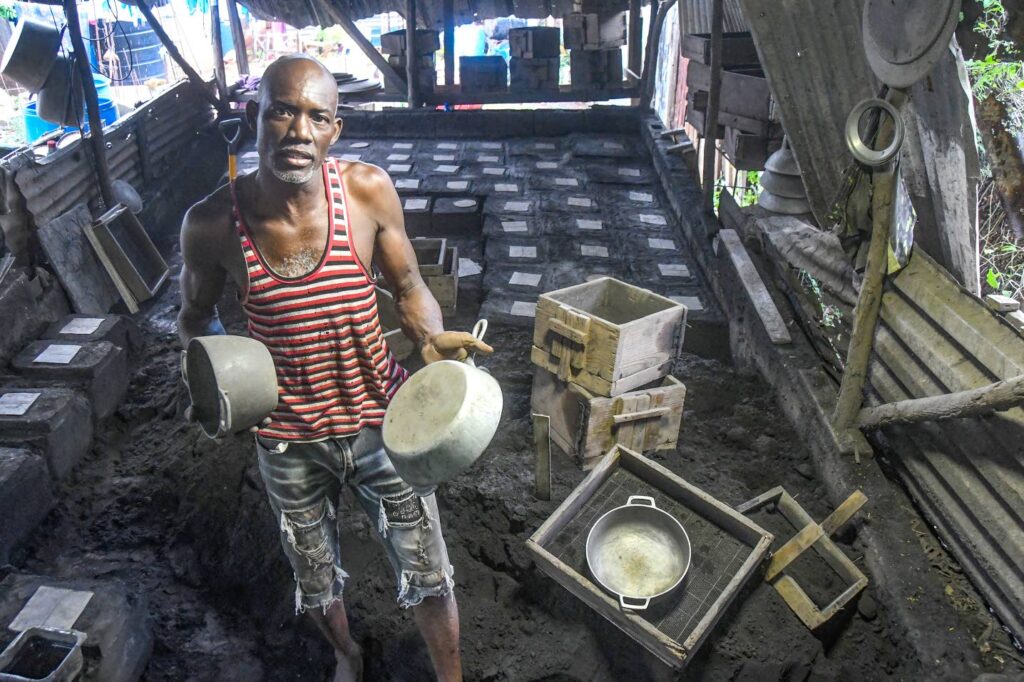
    More than four decades ago, a seven-year-old Kevin Campbell sat quietly among veteran craftsmen in the Frazer’s Content neighbourhood of Spanish Town, St Catherine, Jamaica, watching intently as they shaped handcrafted Dutch pots and coal stoves by hand. Now 52, Campbell has turned this childhood fascination into a thriving small business, producing more than 100 handcrafted aluminium pots per week — and he is on a mission to recruit a new generation to save the fading Jamaican tradition before it disappears entirely.

    Campbell recalls that metal pot and cookware crafting was once a booming trade that supported dozens of households across his community. But as the elder artisans who held the knowledge passed away or migrated abroad, the craft declined sharply. Today, only four people in the entire community still practice the traditional skill, and dwindling young interest has left Campbell deeply concerned about its future.

    “From the start, Campbell learned the craft from local artisans Kenroy Hylton and a craftsman known only as Culture, who brought the trade — a branch of a tradition originating in Waterhouse, St Andrew. The early exposure stuck with Campbell through decades of work. While many artisans abandoned the trade over the years due to its demanding nature, Campbell’s lifelong passion has kept him committed to the craft. Two years ago, he branched out to launch his own independent business, producing custom-made pieces ranging from small teapots to large soup pots, frying pans and traditional coal stoves in a full range of sizes.

    His durable handcrafted products are sold both wholesale and retail to local restaurants and households across St Catherine’s Linstead, as well as Mandeville and Christiana in Manchester, with prices ranging from JMD $1,700 to $20,000 depending on size, type and purchase volume.

    The craft is intensely labour-intensive, with each piece taking two to three full days to complete. Campbell crafts all his pots exclusively from aluminium for a smooth, polished finish. The traditional process starts with shaping moulds for both the pot and its lid from topsoil, followed by pouring molten aluminium into the dried mould. Once the metal sets, the raw pot is removed and carefully polished by hand.

    Campbell points to his first ever completed pot — a four-pound rice pot he made when he was 10 years old — as proof of his products’ longevity. His family still uses the pot regularly to this day. “It came out wonderful — nice, clean, and pretty. I felt so much joy when I saw that I had made something that turned out perfectly. There’s no feeling like that,” he told reporters, smiling as he held the well-worn piece.

    While demand for his traditional cookware has fluctuated over the decades, the craft has been a reliable livelihood that allowed Campbell to support his family and put all four of his children through high school. Though his children have pursued their own independent career paths, they all pitch in to help with the business side of the operation, handling marketing, transportation and sales. His daughter Lamoya has taken on day-to-day operational management, coordinating orders and transactions across the region.

    For Campbell, no other line of work can compare to the satisfaction of pot-making. He jokes he would live a million years if it meant he could keep crafting his wares. But he also knows he cannot carry the tradition on his own forever, which is why he is actively inviting young Jamaicans — even college students just curious about the process — to learn the craft from him for free. His contact information is posted on social media (876-435-4960 and 876-797-8623), and he says he is ready and willing to teach anyone who wants to learn.

    Campbell follows the example set by the artisans who taught him, who never closed the door to him when he was a curious child. “They could have hidden the knowledge from me, but they didn’t. They gave me the willingness to pass it on by showing me kindness when I wanted to learn,” he explained. “Even if someone just wants to learn the process and doesn’t want to build a whole business out of it, I’m still happy to teach them. Sharing this craft brings me joy.”

  • Time for the stick, not just carrot?

    Time for the stick, not just carrot?

    As Jamaica pushes forward with plans to build a truly sustainable construction and real estate sector, industry leaders are calling for a balanced policy framework that combines voluntary incentives with clear, enforceable regulations to overcome cost barriers holding back widespread green building adoption.

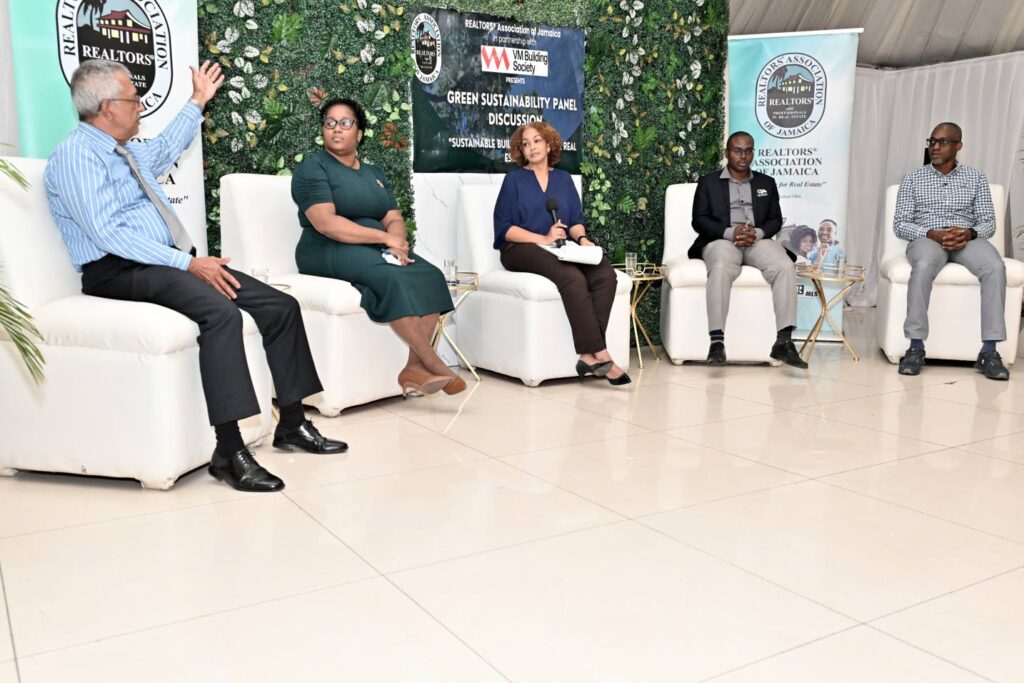
    Speaking at a recent Green Sustainability Panel Discussion hosted by the Realtors Association of Jamaica (RAJ), Richard Mullings, president of the Incorporated Masterbuilders Association of Jamaica (IMAJ), argued that current incentive-based policies are insufficient to drive change. Because sustainable construction often requires higher upfront costs that developers struggle to pass on to homebuyers in a competitive market, most firms avoid adopting green requirements voluntarily.

    Mullings pointed to existing mandatory water harvesting rules as a clear example of unenforced sustainability standards. He noted that most municipal building approvals already require every new residential development to include a water collection tank, yet nearly all developers ignore the requirement with no consequences. Without uniform, enforced rules, any developer that voluntarily adds the extra upfront cost will immediately price themselves out of the market, especially for affordable, lower-cost housing developments.

    “We operate in a profit-driven free market, and developers have no choice but to prioritize their bottom line,” Mullings said, addressing his comments directly to Gregory Bennett, deputy CEO of the Spatial Planning Division at Jamaica’s National Environment and Planning Agency (NEPA). “Since most sustainability measures deliver widespread public and societal benefits, shouldn’t we pair the current carrot of incentives with a regulatory stick to push the entire industry toward sustainable practices? Could we use public systems, tax policy, and strict enforcement to shift market demand toward green building?” he asked.

    In response to Mullings’ proposals, Bennett confirmed that Jamaican policymakers are already advancing new frameworks to encourage more businesses to adopt sustainable construction best practices at the ministerial level. He agreed with Mullings that effective change ultimately depends on robust monitoring, enforcement, and compliance, all while balancing the upfront cost challenges facing developers and homebuyers.

    Bennett added that a growing segment of the private sector is already embracing green building voluntarily, with many developers integrating sustainable features into their projects without waiting for regulatory mandates. Still, he acknowledged that large-scale systemic behavior change will take time. The Jamaican government is currently mainstreaming sustainability across the sector, working to embed the value of green building into the long-term thinking of both developers and homeowners, and policy work to advance a national green business strategy is already at an advanced stage, he said.

    Latoya Williams, assistant vice-president of lending solutions and business services at Victoria Mutual Building Society (VMBS), echoed Mullings’ concerns about upfront cost barriers, noting that the global built environment accounts for 37% of all energy-related carbon emissions, making the transition to green building a critical priority for Jamaica’s climate goals.

    “Our end goal is not just meeting sustainability targets — it’s building better, more resilient, future-ready homes for all Jamaicans,” Williams said. “Through incremental changes across every project and every industry decision, we can collectively build a far more sustainable Jamaican built environment. Most importantly, we have a chance to make this transition inclusive, practical, and accessible to Jamaicans across all income levels.”

    She emphasized that the transition cannot succeed if different parts of the industry work in isolation. Key challenges still to address include higher upfront costs for sustainable solutions, gaps in public and industry awareness, limited access to effective incentives, and uneven technical capacity across the sector. “This requires collaboration across the entire ecosystem — developers, realtors, financial institutions, and policymakers all have a critical role to play to move the industry forward,” Williams added.

    To build industry capacity for the transition, RAJ will launch a new two-day Green Designation training course for Jamaican realtors starting in June, equipping them with the skills they need to promote sustainable properties to clients.

    Heather Pinnock, a moderating associate for the panel and co-founder of the upcoming Jamaica Green Building Council, described realtors as the critical “sustainability link in every transaction” between developers and homebuyers.

    “Green infrastructure cuts long-term utility costs for homeowners, improves living comfort, and increasingly commands premium prices for both sales and rentals,” Pinnock said. “We don’t need to convince clients of the ethical principle of sustainability — we just need to show them the numbers. A well-designed sustainable property is simply a better long-term investment, and our job is to make that case confidently with solid data.”

    While environmental compliance is already a formal part of the development approval process in Jamaica, it has not yet been systematically embedded into property sales transactions, Pinnock explained. That gap is a major opportunity for realtors to drive change: when realtors consistently ask the right questions about a property’s environmental status, energy systems, flood risk, and planning compliance, they raise sustainability standards across the entire market. Every property listing, every offer, every negotiation is a chance to advance the industry’s sustainability agenda, she added.

  • VS en Suriname versterken samenwerking met medische missie en militaire training

    VS en Suriname versterken samenwerking met medische missie en militaire training

    Starting April 13, the South American nation of Suriname and the United States will kick off the long-planned LAMAT 2026 initiative, a combined public-practice exercise that merges joint medical outreach and military capacity building, scheduled to run through April 23. The mission, which will deliver care across two host communities Nieuw Nickerie and Brownsweg, brings together U.S. military medical personnel and local Surinamese healthcare providers to deliver free, accessible care to underserved local populations, with an estimated 800 patients expected to receive treatment over the course of the initiative.

    The scope of medical work will cover core public health and clinical areas, including primary care, general dentistry, and emergency medical response. Beyond direct patient care, a core pillar of the mission is structured knowledge sharing between the two teams, designed to strengthen long-term local healthcare capacity and improve regional readiness for public health emergencies.

    According to a statement from the U.S. Embassy in Suriname, the LAMAT 2026 mission underscores the decades of steady collaborative ties between the two countries, and reflects their shared commitment to building a more robust, resilient national healthcare system in Suriname.

    Running parallel to the medical outreach program is a separate joint military training exercise conducted alongside the South Dakota National Guard, which has maintained a formal partnership with Suriname since 2006. Roughly 70 military personnel from both sides will participate in tactical and skills-based training, with coursework focused on critical skills including jungle operations, field navigation, and coordinated response in high-challenge operating environments.

    Overall, the combined mission is backed by more than $600,000 in U.S. funding, highlighting the breadth of deepening cooperation between Suriname and the United States across three core domains: public healthcare advancement, regional security, and long-term institutional capacity building.

  • Cayo Sweeps Farmer of the Year Awards

    Cayo Sweeps Farmer of the Year Awards

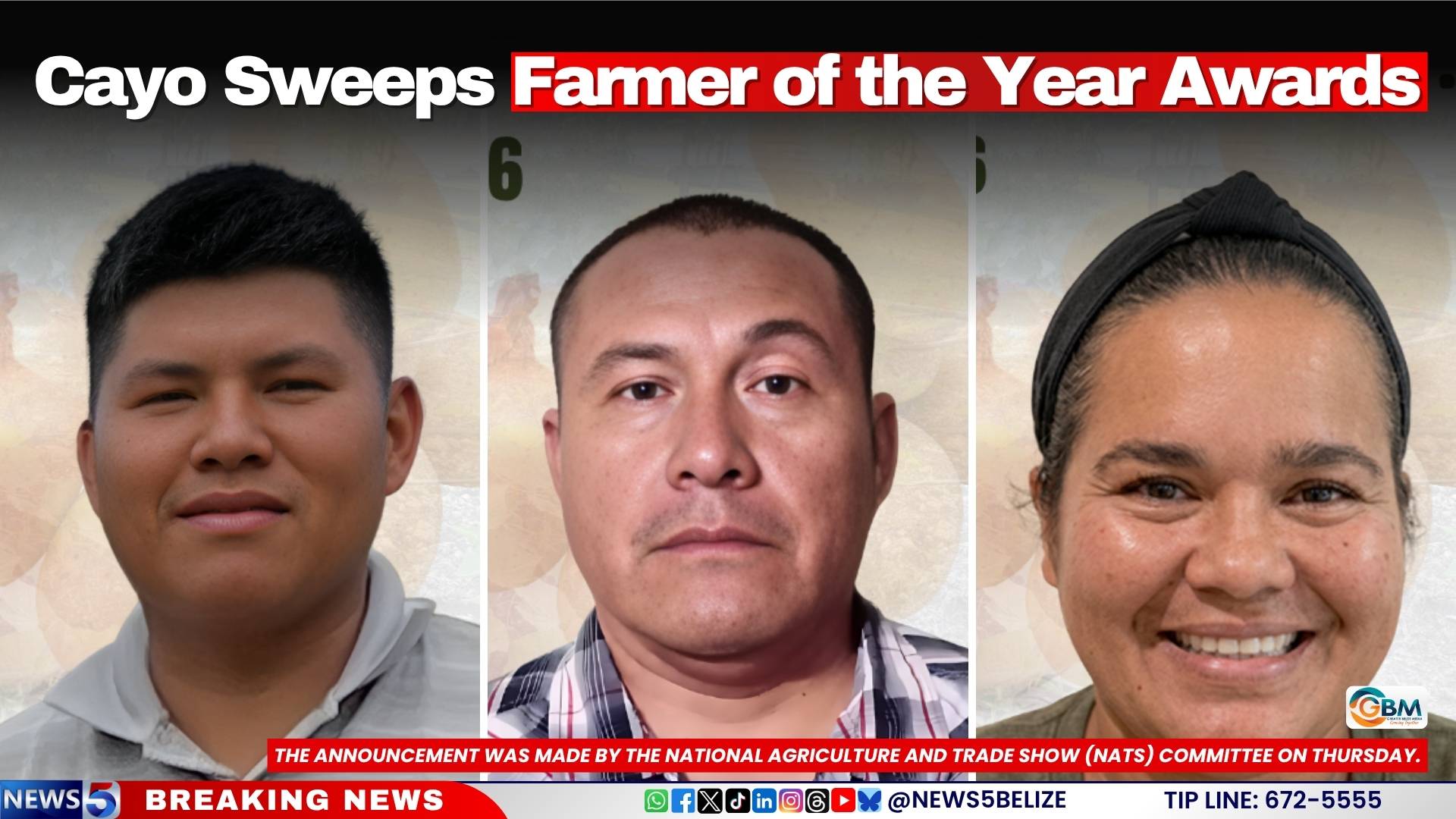
    In a historic clean sweep that has cemented Cayo District’s reputation as a powerhouse of Belizean agriculture, three local producers have taken home every top prize in the 2026 National Farmer of the Year Competition, claiming all three available award categories. The official results of the prestigious annual contest were publicly announced by the National Agriculture and Trade Show (NATS) Organizing Committee this Thursday.

    Taking home the coveted Male Farmer of the Year crown was Saulo Mesh, while Yoalma Pocasangre earned recognition as the 2026 Female Farmer of the Year. The third award, Junior Farmer of the Year, went to rising agricultural talent Jeshua Tzib. All three winners hail from Cayo District, marking the first time in recent competition history that a single district has claimed all top honors.

    Hosted annually by the NATS Committee, which operates under Belize’s Ministry of Agriculture, Food Security and New Growth Industries, the Farmer of the Year Awards were created to honor producers across the country who demonstrate extraordinary dedication to their craft, implement innovative growing and business practices, and make tangible contributions to the strength and growth of Belize’s national agricultural sector.

    The award announcement comes exactly three weeks ahead of the opening of the 2026 National Agriculture and Trade Show, one of the largest annual gatherings for Belize’s agricultural community. This year’s event will run from April 30 through May 3 at the permanent NATS Grounds in the capital city of Belmopan, held under the forward-looking theme “Advancing Smart Agriculture: Building a Climate-Resilient and Sustainable Belizean Food System.” Industry leaders and attendees expect the show to draw hundreds of producers, agricultural vendors, and community members from across the country to discuss the future of food production in Belize amid shifting climate conditions.

  • Hurricane Risk Lower in 2026, But Threat Still Real

    Hurricane Risk Lower in 2026, But Threat Still Real

    As the 2026 Atlantic hurricane season approaches, new seasonal projections bring a glimmer of cautious optimism to Caribbean nations, while emergency planners and climate researchers continue to stress that extreme weather threats remain far from eliminated. The latest outlook from Colorado State University’s renowned Tropical Meteorology Project, headed by leading tropical climate researcher Philip J. Klotzbach, paints a picture of reduced hurricane risk for the Caribbean this year.

    The team’s analysis estimates just a 35% probability that at least one Category 3 or higher major hurricane will track across the Caribbean region in 2026. This percentage is noticeably lower than the 47% long-term average that has been recorded over decades of storm tracking, pointing to a potentially less active season than the region typically experiences.

    Broader projections for the entire Atlantic basin also point to below-average storm activity overall. The official forecast calls for 13 named storms, six hurricanes, and two major hurricanes for the full season, which formally gets underway on June 1 each year.

    Despite the downward adjustment to risk forecasts, lead forecasters have been quick to push back against any sense of complacency, particularly for small, vulnerable island nations including Antigua and Barbuda. The research team’s report emphasizes a core lesson repeated across hurricane preparedness campaigns: even in a season with low overall projected activity, a single landfalling major hurricane is enough to trigger catastrophic destruction and turn a quiet season into a disaster for affected communities. The report explicitly urges all coastal residents across the Caribbean to maintain constant vigilance and keep emergency plans updated.

    Meteorologists attribute the expected dip in Atlantic storm activity to the anticipated formation of El Niño conditions in the Pacific Ocean. The El Niño climate pattern is well-documented to increase vertical wind shear across the Atlantic basin, a atmospheric condition that disrupts the formation and strengthening of tropical cyclones.

    That said, significant uncertainty still surrounds the ultimate strength of the El Niño pattern during the peak of hurricane season, which runs from August through October. The intensity of this climate pattern will play a decisive role in shaping actual storm activity across the region, meaning final outcomes could still shift from current projections.

    For Caribbean governments and local authorities, the core priority remains unchanged: robust pre-season preparation is non-negotiable. Small island developing states across the region disproportionately bear the risk of hurricane damage, with underdeveloped infrastructure and coastal communities that remain extremely exposed to storm surge, extreme wind, and flooding. Even a moderate storm can trigger widespread disruption and long-term economic damage in these contexts.

    As the countdown to the June 1 start of the 2026 hurricane season continues, regional authorities are moving forward with full readiness efforts, including updating emergency response protocols, restocking emergency supplies, and running public preparedness campaigns to ensure communities are ready if a storm does strike.

  • HAPI Programme Hands Over New Home to Briggins Resident

    HAPI Programme Hands Over New Home to Briggins Resident

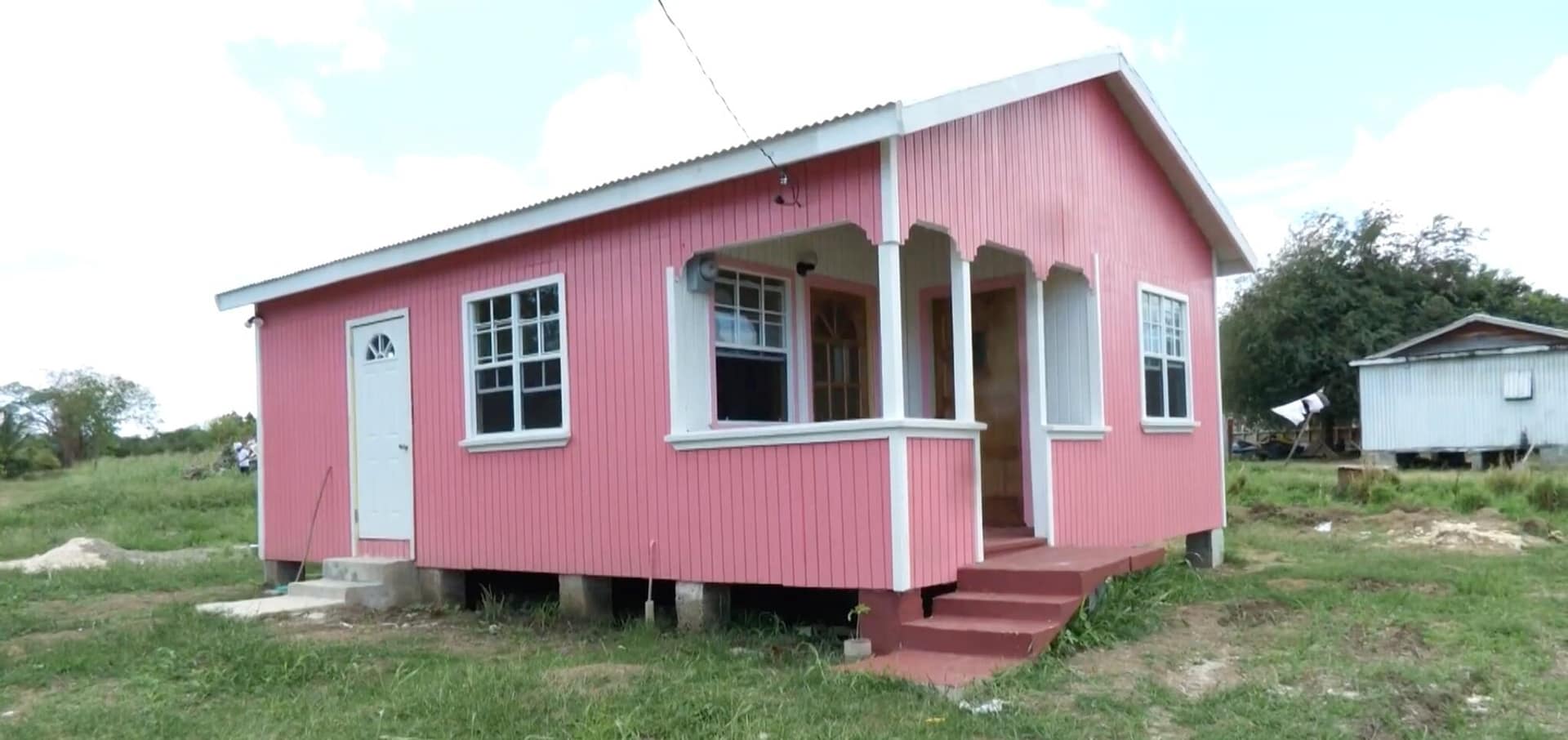
    In an emotional ceremony that highlights the human impact of government-led social support initiatives, a Briggins resident has been given the keys to her very own new home through Antigua and Barbuda’s Housing Assistance Programme for Vulnerable Individuals (HAPPI), a scheme designed to lift low-income and vulnerable community members out of inadequate housing.

    Dawn Simon, the beneficiary of this latest handover, broke into tears of joy as representatives of the Social Protection Board, operating under the Ministry of Social and Urban Transformation, officially transferred ownership of the property to her. Officials framed the moment as a key incremental milestone for the ongoing programme, which has steadily expanded its reach across the twin-island nation.

    Mary Baltimore, Operations Manager of the Social Protection Board, emphasized during the ceremony that the handover represented far more than the transfer of a physical building. Speaking directly to a visibly moved Simon, Baltimore noted that the property was more than concrete and timber—it was a stable, secure foundation for the future, a space Simon could truly call her own. “I know that you are happy. I know the tears are tears of joy,” Baltimore said. “It’s not only a home. We want you to know it’s not a building, but it’s a home. And we are happy today to actually hand over that building to you.”

    Sarah Stewart, Permanent Secretary in the Ministry of Social and Urban Transformation, reaffirmed the programme’s lasting positive impact on communities across Antigua and Barbuda, noting that successive handovers have transformed the daily lives of hundreds of vulnerable residents. Stewart praised the government’s commitment to closing the country’s affordable housing gap, calling the initiative a landmark achievement for the nation’s social development agenda. She also extended gratitude to the Social Protection Board’s staff and the private sector partners that have supported the programme’s expansion. “The government is really, really, really, really doing something wonderful for the people of Antigua and Barbuda,” Stewart said.

    For her part, Simon offered heartfelt thanks to the government officials, programme administrators, and supporting stakeholders who helped make her dream of homeownership a reality. She singled out senior political leaders and programme staff for their ongoing support, ending her remarks with a call for the work to continue. “I’d like to thank Brigadier Telbert Benjamin, Mrs. Gumbs, also the Honourable State—cutie Benjamin, the Honourable Maria Browne and the staff of HAPPI programme. May God bless you all and y’all keep up the good works,” she said.

    Private sector support extended beyond programme funding, with one local business stepping forward to provide an additional gift to Simon to help her settle into her new home. King’s Casino, a long-time supporter of HAPPI beneficiaries, donated a 50-inch television to Simon, while another major corporate partner, the West Indies Oil Company, contributed other forms of practical assistance to the project.

    This latest handover marks another incremental step forward for the HAPPI programme, which is advancing its core mission: one home at a time, the initiative is working to lift vulnerable residents out of substandard housing and build long-term, stable communities across Antigua and Barbuda.