作者: admin

  • SPANISH INQUISITION

    SPANISH INQUISITION

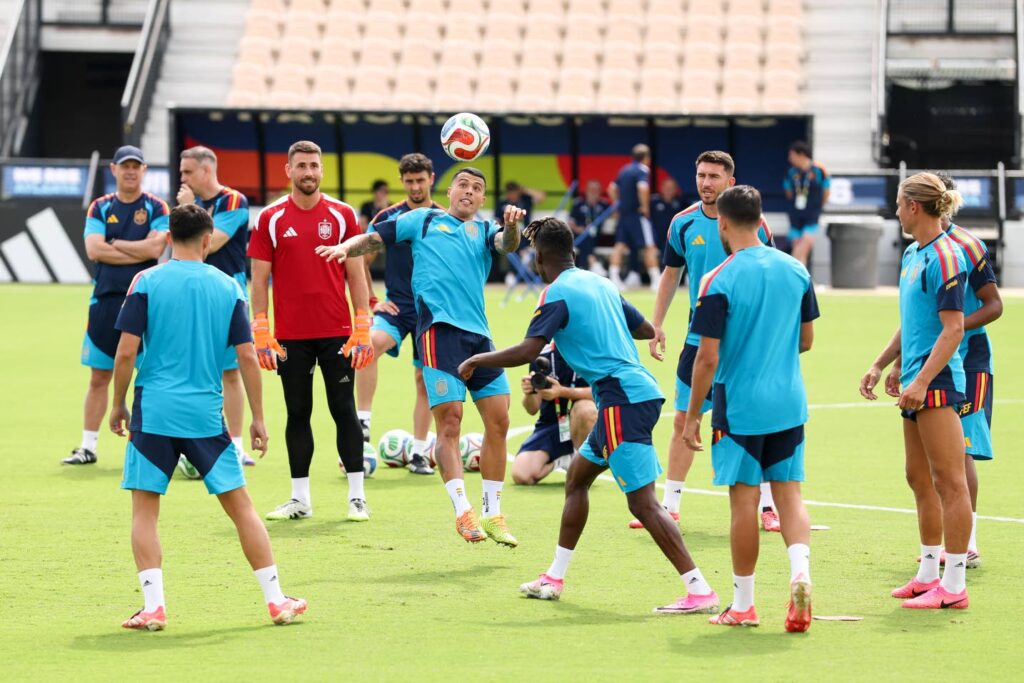
    ATLANTA, GA — In the lead-up to the opening Group H World Cup clash at Atlanta’s cutting-edge Mercedes-Benz Stadium, the face of 18-year-old Lamine Yamal is impossible to miss. Towering billboards featuring the teenage Barcelona winger line the city’s skyscrapers, a clear signal of just how much hype surrounds the young star — and that hype just became necessity for the reigning European champions, who now find themselves pinning their World Cup hopes on his precocious talent. Pre-tournament title favorites Spain stumbled badly out of the gate in their first match, grinding to a lifeless 0-0 draw with World Cup debutants Cape Verde, a result that has sparked widespread questions about the squad’s ability to deliver on their pre-tournament promise.

    Yamal, who missed nearly two months of action with a nagging hamstring injury and was only just returning to full match fitness, was held in reserve by head coach Luis de la Fuente until the final 25 minutes of the clash. Even in that limited playing time, and despite failing to break the deadlock, his introduction immediately shifted the dynamic of the match. For the 68,000 fans packed into the stadium, most of whom had turned out to catch a glimpse of one of the game’s brightest young stars, Yamal’s arrival finally gave the crowd something to cheer for. Spain’s slow, methodical passing attack, which had struggled to create any clear chances against a compact Cape Verde defense, finally gained a cutting edge: Yamal’s ability to run at defenders stretched the opposition’s backline and opened up space for his teammates.

    “Lamine is undoubtedly a special player,” said Spanish midfielder Mikel Merino after the final whistle. “He has great ability to beat his man and disrupt the opposition’s defensive shape. Given Lamine’s quality, he can influence any game at any moment.”

    Yamal catapulted to global stardom just two years ago, when he turned in a series of stunning performances as a 16-year-old to help Spain claim the Euro 2024 title. Alongside Nico Williams, the explosive winger on the opposite flank, Yamal formed one of the most dangerous attacking duels in international football, blending blistering speed, close control, and consistent goal threat that tore through opposition defenses at the Euros. But like Yamal, Williams has also battled injury issues this season, and he only saw action in the final minutes of stoppage time against Cape Verde.

    Without both wingers’ elite one-on-one ability to unlock packed defenses, Spain slipped back into the familiar pattern of World Cup underperformance that has plagued the side since they lifted their only World Cup trophy in 2010. In the 16 years since that triumph, La Roja have won just three of their 12 World Cup matches, with a recurring tendency to dominate possession without turning that control into goals. Against Cape Verde, ranked 67th in the FIFA world rankings, that trend held: Spain controlled the ball for most of the 90 minutes but failed to register a single goal, echoing their toothless displays against Japan and Morocco at the 2022 World Cup, where they accumulated over 2,500 passes before finally finding the back of the net.

    “Lamine showed exactly what he’s capable of the moment he stepped onto the pitch,” de la Fuente told reporters after the match. “He forced the opposition to change their approach, but that was the amount of playing time we felt was right for him given his recent injury.”

    The Spain manager has urged fans and pundits alike not to panic following the opening draw, pointing to the side’s impressive 32-game unbeaten streak in competitive matches that stretches back more than three years. Yamal echoed that calm tone in a post-match social media post, writing, “Don’t have any doubt. We know this is a long competition and the objective is still far off. We will keep working and everything will work out how we want.”

    The expanded 48-team format of this World Cup does give title contenders room to build momentum gradually, and a single win in their remaining two group stage matches against Saudi Arabia and Uruguay would almost certainly be enough to book Spain a spot in the knockout rounds. But the opening clash has made one thing unavoidable: Yamal is central to Spain’s dream of lifting a second World Cup trophy, a reality that has put unexpected pressure on de la Fuente to start the teenager against Saudi Arabia in Atlanta on Sunday — potentially earlier than the manager planned when the tournament began.

    Just days before the tournament kicked off, de la Fuente boasted that his squad’s depth made it the strongest contender in the competition. But after the underwhelming opening draw, La Roja now look heavily reliant on their teenage superstar — and on him staying fit through the grueling, expanded schedule of the weeks ahead.

  • A world of memories

    A world of memories

    For millions of sports fans around the world, major international tournaments like the FIFA World Cup and Olympic Games are defined by the thrill of victory, the agony of defeat, and the unforgettable action unfolding on the pitch or track. For Christopher Williams, a Jamaican business leader and former collegiate footballer, these events have always meant something far deeper: they are the foundation of a deliberate, 15-year family tradition built to heal past wounds and forge unbreakable bonds with his two sons, Zachary and Justin-Paul.

    Raised in humble circumstances without the close, affectionate father-son connection he craved as a child, Williams, chairman and CEO of Different Properties Jamaica Limited and former head of Professional Football Jamaica Limited, made a promise to his own children early on: he would give them the intentional quality time and secure bond he never got to experience growing up. A lifelong lover of football, sports, and his home country Jamaica, Williams turned his long-held passion into the perfect vessel for this promise.

    Fifteen years ago, Christopher and his wife Michelle made a deliberate choice to forgo accumulating material gifts for their boys, and instead opened a dedicated vacation savings account earmarked entirely for shared family experiences: opportunities to travel, laugh, learn, and celebrate together, one major sports event at a time. What started as a small, intentional plan has grown into a cross-continental adventure that has reshaped their family dynamic. To date, the Williams family has attended three FIFA World Cups – Brazil 2014, Qatar 2022, and the ongoing 2026 tournament hosted across the United States, Canada, and Mexico – alongside the Olympic Games, domestic Jamaican Premier League matches, and the 2023 UEFA Champions League final held in Istanbul.

    Looking back on the 15-year journey, Christopher notes the quiet, moving transformation that has unfolded. When the tradition first began, his sons were small children entirely dependent on Christopher and Michelle to plan every detail of their trips, from transportation to accommodation. Today, the roles have shifted: it is Zachary and Justin-Paul who map out itineraries, book rides and hotels, and care for their parents throughout the journey. “It has been really moving for me as a father to watch them get to this level and be in charge of our experiential trips,” Williams shared in an interview with the *Sunday Observer*.

    One beloved ritual has become synonymous with the Williams family’s adventures: the Jamaican flag never gets left behind. No matter if they are heading to a Champions League final or a World Cup opener, the iconic black, green, and gold standard is always the last item checked before they leave for the airport. “The last thing we say to each other before we leave for the airport is, ‘Yo, you pack the flag?’ ” Christopher said with a laugh.

    This small tradition has led to countless unexpected, warm encounters with sports fans from around the world. During the 2026 World Cup’s opening match between hosts Mexico and South Africa at Mexico City’s legendary Estadio Azteca, Zachary and Christopher’s visible Jamaican flag drew crowds of spectators eager to say hello and snap photos. A 15-minute walk around the stadium took nearly twice as long, as the pair stopped again and again to greet new people. “It was maybe a 15-minute walk, and it took us about half an hour because of how many times we had to stop and take pictures,” 19-year-old Zachary recalled. “It was literally insane.”

    For Christopher, attending that opening match at Azteca Stadium carried a personal, emotional weight that went far beyond the final score. He deliberately chose to attend the match because of the stadium’s iconic place in football history: it was here that Diego Maradona, his childhood hero, led Argentina to World Cup victory in 1986. Forty years after that legendary final, standing on the same ground he had only read and dreamed about as a boy, Williams called the moment overwhelming. “Growing up, I dreamt of that Diego Maradona final in 1986 in Azteca when Maradona won the World Cup, and to know that 40 years later in the World Cup we were in that stadium, tears come to your eyes,” he said. “As you’re walking, you’re looking at the pitch, you’re looking at the sun, and you’re just wondering what it was like 40 years ago when Diego won the World Cup, so it was very emotional for me.”

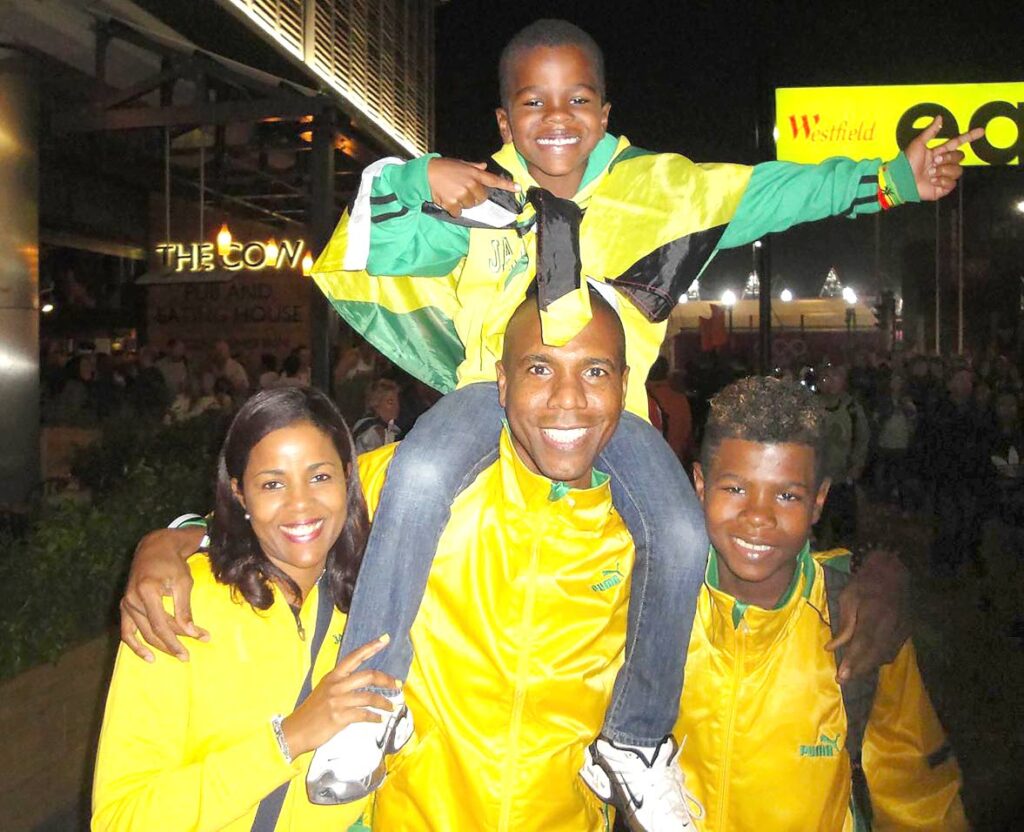
    Each member of the Williams family holds their own treasured memory from the 15 years of adventures. Justin-Paul, 28, who was unable to attend the 2026 Mexico trip, counts the 2012 London Olympics as his most unforgettable experience, when Jamaica made history by sweeping the men’s 100m podium, led by sprint legend Usain Bolt. The entire family showed up decked out in Puma gear, the brand that sponsored Jamaica’s track team, leading event officials to mistake them for official team members. The happy mistake got them access to the field and a prime spot in the reporters’ booth to watch the historic race. “I remember how electric the stadium was before the men’s 100-metre final. Everybody was scrambling to get a good view. Then all that excitement went by in nine seconds. It was unbelievable,” he said.

    For Zachary, who was born in 2006 – itself a World Cup year – the most memorable experience was an exhibition El Clásico match held in Miami, featuring some of the greatest footballers of a generation: Cristiano Ronaldo and Karim Benzema of Real Madrid, and Lionel Messi, Luis Suárez, and Neymar for Barcelona. “I remember almost every second of that game. Hearing the Real Madrid supporters singing before the match and seeing the players warming up right in front of me was surreal. The whole second half I stood on my chair. It was such a good experience,” he said.

    Beyond creating shared memories, the family’s shared love of football has also sparked lighthearted, loving rivalry around the house. A lifelong diehard Manchester United fan, Christopher constantly teases Zachary over his support for rivals Manchester City. The friendly competition also extends to the pitch: Christopher and Zachary play frequent weekend matches, with the elder Williams still eager to prove he has not lost his touch. “Before I retired as a top baller, of course, I would buss up his salad every weekend,” Christopher joked, prompting Zachary to quickly interject “Not every weekend,” drawing peals of laughter from the whole family.

    For all the iconic stadiums he has visited and historic moments he has witnessed, Christopher says fatherhood remains his greatest and most important life achievement. “It’s the last thing I think about at night and the first thing I think about in the morning, how my kids are doing mentally, whether they’re happy, and whether they feel they have a shot at building themselves in life. I don’t want to show them love through presents. I want to show them through my presence and by being there for them as much as possible,” he said.

    That consistent, intentional presence has left a permanent mark on his sons. Zachary spoke openly about the impact of his father’s choice to prioritize shared experiences over work or material gain. “I would just like to tell my dad thank you again for making it such a priority in his life and making the sacrifices necessary. I’m sure it wasn’t easy, but it’s life-changing for me and my brother to be able to have these experiences. I love you, and I appreciate the sacrifices you’ve made,” he said.

    Justin-Paul, who works alongside his father in the real estate industry, added that Christopher has not only been a father but a mentor, peer, and friend, creating a new model of intentional fatherhood that he and Zachary will carry forward to their own families one day. Because Christopher grew up without a positive fatherhood blueprint to follow, he built one from scratch for his sons. “When my brother and I have children we’ll have a blueprint, because he is the blueprint. It is great to have been raised by a king,” Justin-Paul said.

    As Jamaica prepares to celebrate Father’s Day on June 21, Christopher says he hopes his family’s story will serve as a reminder for Jamaican fathers across the island that intentional, positive fatherhood is a powerful, lasting gift. “We just want Jamaica and everybody to know that we are present. We’re not going away. We’re staying in our children’s lives, giving them guidance, encouragement, support, and love,” the father of two said.

  • Absent fathers fuelling juvenile crime, warns correctional chaplain

    Absent fathers fuelling juvenile crime, warns correctional chaplain

    Ahead of the global observance of Father’s Day on June 21, a senior Jamaican correctional services chaplain is sounding a urgent call to action for Jamaican men to embrace active, consistent parental roles, after first-hand conversations with incarcerated juveniles revealed a stark connection between absent fathers and youth offending.

    Reverend Dwayne Nelson, who serves as chaplain for Jamaica’s Department of Correctional Services, shared that nearly 30 percent of the young people he counselled at youth correctional facilities across the island openly linked their incarceration and behavioural struggles to growing up without a present father. His on-the-ground findings align with established regional and international research that confirms children growing up fatherless are 11 times more likely to engage in criminal activity than their peers with involved fathers.

    Over the course of his work, Reverend Nelson has held confidential counselling sessions with around 69 young people aged 13 to 17 held in Jamaican youth correctional institutions. In almost every discussion about the root of their harmful choices and life struggles, the absence of a positive male paternal figure emerged as a core contributing factor.

    “When we talk about their families, they will freely mention their mothers, but when I ask about their fathers, the responses are almost always the same: ‘I don’t have a father,’ ‘My dad isn’t around,’ or ‘He never did what he was supposed to do for me,’” Reverend Nelson explained in an interview with the Jamaica Observer. “One young inmate put it plainly: if his father had been present in his life, he would never have ended up locked up in this place.”

    Many youth living solely with their mothers told the chaplain they committed offences specifically because the father’s financial and emotional void left the family struggling, pushing them to turn to criminal activity to provide for their moms and younger siblings. For boys, without a father to model healthy masculinity and set boundaries, many fell prey to outside negative influences that normalized crime and violence. For girls, the impact follows a different but equally damaging pattern: many said the lack of a father’s love and validation led them to seek approval from older men, often drawing them into harmful relationships and dangerous social circles that led to legal trouble.

    Reverend Nelson emphasized that while countless single mothers work tirelessly to raise their children alone, a mother cannot fully replace the unique role a father plays in a child’s life. He argued that forcing women to take on both parental roles often stretches them too thin, undermining their ability to deliver both the nurturing care they naturally provide and the structured guidance that a father typically brings.

    Beyond calling on biological fathers to show up more consistently for their children, Reverend Nelson is also urging all Jamaican men of strong character and positive values — whether they are fathers themselves or not — to step into mentorship roles for fatherless young people. He notes that vulnerable youth are actively craving male guidance, and consistently respond with openness and gratitude to any man willing to invest time in them.

    “These young people are desperate for a father figure, so they almost never push away positive male attention. They want to hear from men, they long for that guidance,” he told the Sunday Observer. “You can help them channel their pain from abandonment into a drive to build a better life, so that when they have their own children one day, they can be the involved parent they never had. Even when they don’t say it out loud, their actions show how much they appreciate the support: they’ll seek you out to talk, ask for prayer, or want to spend time together. There is still so much hope for these kids.”

    Quoting iconic American evangelist Billy Graham, Reverend Nelson closed by reinforcing the underrecognized value of fathers across society. “A good father is unsung, rarely praised, and often goes unnoticed, but he is one of the most valuable assets any community can have,” he said. “We often give mothers far more visibility and appreciation for their daily work, but fathers play an irreplaceable role in shaping safer, stronger societies. Following the biblical teaching that if you train a child in the right way, they will never stray from it when they grow old, a father’s involvement is one of the most powerful tools we have to deter children from crime and help them unlock their full potential. I urge every father to show up for your kids — your involvement can change not just your child’s life, but transform our entire society for the better.”

  • Week.day clocks it with Aidonia’s Like How Yuh Feel

    Week.day clocks it with Aidonia’s Like How Yuh Feel

    Rising Jamaican dancehall producer Jahvanie “Week.day” Morrison is celebrating a breakthrough career milestone, as his collaborative track with iconic dancehall artist Aidonia, *Like How Yuh Feel*, continues to dominate streaming platforms and regional music charts across the Caribbean and global dancehall spaces.

    Dropped to digital streaming platforms on May 22, the high-energy collaboration has already racked up more than 1 million combined streams across all major music services, while earning coveted top positions on Apple Music’s regional rankings. The track claimed the number one spot in five Caribbean nations: the Cayman Islands, British Virgin Islands, Grenada, St Kitts, and St Lucia. It also climbed to second place in Antigua, Anguilla, Trinidad and Tobago, and Barbados, and secured a spot at number 12 on Jamaica’s influential Kingston Top 20 chart, a clear sign of its strong resonance with core dancehall audiences in the genre’s birthplace.

    For the young producer, this widespread success comes after years of nurturing a creative partnership with Aidonia, marking the first official public release from the many unreleased projects the pair have crafted together over time.

    “This isn’t my first time collaborating with Aidonia, but it’s the first one we’ve actually put out to the public,” Week.day shared in a recent interview. The producer explained that their working relationship grew organically through overlapping industry connections, particularly through Aidonia’s longstanding partnership with dancehall artist 450. “We kept running into each other at concerts and festivals all over the region, that’s how it all started before we eventually linked up in the studio to work,” he added.

    The collaborative process for *Like How Yuh Feel* was defined by natural creative chemistry and positive energy from start to finish, according to Week.day. After he crafted the song’s signature rhythm, he sent the draft to Aidonia, who quickly shared his conceptual vision for the track. “Working with Aidonia is nothing but good vibes – he’s got such incredible positive energy, and his work ethic is unmatched,” Week.day said. “I built the rhythm, sent it over, and he walked me through his whole idea for the track when we met up at a festival one day. After that, we put in work on the mixing, arrangement, and everything else leading up to the release.”

    As the track continues to gain new traction weeks after its launch, the producer says he remains grateful for the overwhelming warm reception from dancehall fans across the region. “It’s such an amazing feeling to put out music that connects with fans the way this one has,” he said. “Waking up to see it sitting at number one in so many different countries is a feeling I can’t really describe.”

    Looking back on his journey to this breakthrough, Week.day credits consistent creation and intentional patience as the core principles of his approach to production. “My formula is simple: keep creating even when you don’t feel inspired, keep showing up to work, let your real emotions flow into the music, and always be willing to wait for the right moment,” he explained.

    Instead of slowing down after this major win, Week.day is already leaning into the momentum to roll out a slate of new upcoming projects. His next major production project, the *Super Glue* rhythm compilation, already features collaborations with popular rising dancehall acts 450 and Silk Boss, with more big-name artists set to be announced in the coming weeks. He also teased an upcoming collaborative single from emerging artist Jamarii featuring 450, which he says will be a career-defining moment for the young newcomer.

  • Andy Ballentine: Marked for death, destined for greatness

    Andy Ballentine: Marked for death, destined for greatness

    Internationally celebrated Jamaican visual artist Andy Ballentine credits every milestone of his extraordinary career to one unshakable foundation: his faith in God. That spiritual anchor, he says, carried him through one of the most traumatic chapters of his life — a near-death experience that could have broken him, but instead reshaped his path forward.

    “I was looking straight down the barrel of a loaded gun,” Ballentine recalled of the attack, which unfolded at the peak of his early local success while he still resided in Jamaica. The words of his attacker, “It’s you we’ve come for,” still ring in his memory years later. What made the betrayal cut deeper than the threat itself was learning the motive was not random robbery or conflict, but corrosive jealousy from someone he had trusted implicitly. “That betrayal altered every part of how I saw the world,” he reflected.

    Rather than letting anger and resentment consume his art and his life, Ballentine made a transformative choice: he extended forgiveness to the person who targeted him, refocused his creative energy, and set out on a trajectory that would cement his status as one of Jamaica’s most internationally acclaimed contemporary artists.

    Ballentine’s love of creation began long before global accolades found him. As a young boy growing up in Spanish Town, he drew constantly, turning any available surface — pillowcases, home walls, school books, even scrap paper — into his earliest canvases. A pivotal turning point came during his secondary school years at Spanish Town High, when a playful conflict between teachers changed the entire direction of his life.

    Initially, Ballentine had enrolled in woodwork as his ninth-grade vocational subject, but his raw, standout artistic talent did not go unnoticed by the school’s art department faculty. Teachers Miss Cephas and Mr. Winston Pedley, who already recognized his gift, pulled him into the art room one day after class and insisted he join their program. With only four students enrolled in art at the time, the department was eager to nurture his potential. Unwilling to disappoint either department, Ballentine secretly attended both classes for a time — until his woodwork teacher caught him sitting by the art room window on a day he was supposed to be in woodworking class.

    What followed was a good-natured tug-of-war between the two departments, each arguing that Ballentine belonged with them. After a tense back-and-forth, his woodwork teacher finally conceded: “You know what? Keep him.” That decision, Ballentine says, rewrote his future. “Looking back, that moment shaped every part of the artist I am today,” he said.

    Over the following decades, Ballentine’s distinct creative voice earned him steady acclaim across Jamaica. He became known for his bold, emotionally resonant work, which leans into vivid color palettes, meticulous intricate details, and conceptual narratives tied to the human experience. Common themes running through his portfolio include Jamaican cultural identity, personal resilience, and radical transformation, each piece inviting viewers to connect deeply with its underlying message.

    Early career wins set the stage for his global rise: in 2002, he placed in the top 10 of the Jamaica Cultural Development Commission’s national visual arts competition, and took home first place at the St Catherine Art Expo just one year later. In 2007, his alma mater honored him for his artistic excellence and ongoing philanthropic work supporting current students.

    Those early achievements were only a preview of the historic milestones to come. Ballentine made history as the first Jamaican visual artist ever to exhibit at Art Basel Switzerland, the world’s most prestigious international art fair. The breakthrough did not only elevate his own career — it also drew unprecedented global attention to the broader community of Jamaican visual creatives.

    Since that milestone, his work has been showcased across the globe, from New York Art Week to luxury Jamaican resorts including Couples and Swept Away, and even hangs in the office of the Icelandic ambassador to Jamaica. As the featured international artist at the Humanity Art Exhibition in Hollywood, Florida, held in celebration of Women’s History Month, Ballentine donated two original works to local public officials and received an award for artistic excellence.

    In 2026, Ballentine notched another historic first: he became the first Jamaican fine visual artist to participate as an official featured artist at New York Fashion Week. For his groundbreaking presentation, he fused fine art and high fashion in his celebrated collection *Revelation*, transforming original canvas works into wearable couture while creating a live painting in front of the audience. The innovative showcase wowed attendees, proving fine art can extend far beyond traditional gallery walls to blend seamlessly with the global fashion industry.

    Recognition for Ballentine’s work has extended beyond the art world into public life. In April 2026, the City of Miramar, Florida, awarded Ballentine its highest civic honor: the Key to the City, alongside an official proclamation naming April 10 as Andy Ballentine Day, in honor of his artistic contributions and community service. The city of North Lauderdale had issued a similar proclamation recognizing his impact on art and community development the year prior. A 2025 performance at the Queen Mode Awards Gala also made headlines, where he completed a live painting of 25 crowned queens in just 18 minutes, setting a new benchmark for live fine art performance.

    Even with global fame and cross-industry acclaim, Ballentine has never lost sight of his Jamaican roots or his commitment to lifting up the next generation of creatives. A graduate of both Spanish Town High and the Edna Manley College of the Visual and Performing Arts, he regularly mentors emerging young artists, supports youth arts initiatives across Jamaica, and advocates for greater access to opportunities for local creatives.

    His core message to young people growing up in underserved communities like the one that raised him is simple: where you come from does not determine where you can go. His own life is living proof of that truth. From a child drawing on neighborhood walls, to surviving a targeted assassination attempt rooted in betrayal, to making history on the world’s biggest art and fashion stages, Andy Ballentine’s journey is one of extraordinary resilience.

    Through every triumph and every trial, Ballentine says one constant has guided him. “It is only because of God,” he affirms.

  • Cashing in on the Cup

    Cashing in on the Cup

    The 2026 expanded FIFA World Cup, the first iteration of the tournament to feature 48 competing nations, has sparked a dramatic boom in sports betting activity across Jamaica, with two of the country’s leading betting operators reporting sharp growth in both new customers and wager values, according to statements from the companies’ top executives.

    Adam Epstein, CEO of local betting firm Island Bet, revealed that the company has recorded a 200% jump in new customers signing up to place bets on World Cup matches, far outpacing pre-tournament projections. The expanded format, which welcomed multiple first-time World Cup qualifiers, has injected extra excitement into this year’s competition, driving engagement from both first-time bettors and long-time loyal patrons, who are increasingly placing larger stakes than in previous tournaments.

    One of the biggest early upsets of the tournament – a 1-1 draw between four-time champions Spain and World Cup debutant Cabo Verde – has already produced one seven-figure winner: an Island Bet customer walked away with $1.2 million after correctly predicting the shock result. Epstein noted that Cabo Verde’s historic performance has captured the attention of Jamaican punters, who have increasingly placed wagers on underdog nations beyond the traditional tournament favorites. In addition to Cabo Verde, host nation the United States and other African sides have seen strong support from bettors, while perennial winners like Brazil remain the most popular picks to lift the 2026 trophy.

    When it comes to wager sizes, Epstein confirmed that stakes range from as little as $20 for casual bettors testing the waters up to $250,000 for high-stakes bets on single matches. The CEO expects maximum bet values to climb even higher as the tournament progresses into the knockout rounds, when matches grow in stakes and star power. He added that Island Bet’s risk management team is fully prepared to handle any payout scenarios as the competition unfolds.

    Stefan Miller, CEO of Jamaica’s Supreme Ventures Gaming Limited, echoed the positive growth trends, reporting that betting volume through the first eight days of the 2026 tournament was 40% higher than the corresponding period of the 2022 Qatar World Cup. Miller noted that interest has already exceeded internal forecasts, with a notable influx of casual, first-time bettors joining long-time patrons in betting on matches. He projects that engagement will continue to rise as the tournament moves into the more high-stakes knockout phase.

    Miller pointed out that sports betting has seen consistent double-digit annual growth in Jamaica since 2019, mirroring a global trend that makes it the fastest-growing segment of the betting industry. He attributes this sustained growth to shifting preferences among younger bettors, who view sports betting as a skill-based activity that requires knowledge of the game, historical context, and statistical analysis, rather than pure chance. Average spend per bettor has also risen 20% compared to the 2022 World Cup, with bets ranging from $100 up to hundreds of thousands of dollars, split between high-volume avid fans and casual bettors who wager for entertainment while supporting star players or beloved national teams.

    Both CEOs credit multiple factors for the booming engagement in 2026. First, the expanded 48-team format has created more underdog storylines and opportunities for surprise results, which draws in fans. Second, the global appeal of football, which unites fans across backgrounds during the quadrennial tournament, creates a shared excitement that drives betting. Finally, technological advancements have streamlined online betting, making it far more convenient for customers to place wagers from anywhere. Both operators have seen strong growth across both retail brick-and-mortar outlets and online betting platforms, with thousands of customers participating in 2026 World Cup betting through both channels.

    To capitalize on the heightened interest, both companies have invested heavily in customer experiences tied to the tournament. Supreme Ventures has launched its Gold Rush marketing campaign, which offers weekly prizes and surprises, including three round-of-16 match tickets awarded to customers so far, and hosts public watch parties at Caymanas Park that will run through the tournament final. Island Bet, meanwhile, has partnered with Lucky Play to open a new fan-focused location at Port Henderson Plaza in Portmore, St Catherine, where customers can watch matches on a large screen while placing bets.

    The 2026 FIFA World Cup kicked off on June 11 and will conclude with the final on July 19, marking the largest expansion in the tournament’s 96-year history. In closing statements, both executives encouraged fans to enjoy the once-every-four-year event while reminding patrons to bet responsibly.

  • Ackelia Smith takes women’s jump double

    Ackelia Smith takes women’s jump double

    Kingston, Jamaica – On the final day of competition at the National Stadium on Saturday, long-distance runner Ackelia Smith etched her name into Jamaican athletics history, securing a maiden national long jump and triple jump double at the annual Jamaica Athletics Administrative Association (JAAA)/Puma National Junior & Senior Championships. Smith, who already claimed the long jump gold with a 6.81m leap on the opening Thursday of the event, delivered a winning 13.95m triple jump effort with a +2.0m/s wind reading to complete the historic achievement, all while competing through a nagging heel injury sustained more than a week prior to the meet.

    Competing through consistent pain that could have easily sidelined her from the entire championships, Smith expressed quiet satisfaction with her dual titles, even as she acknowledged falling short of her own personal performance expectations. “I have to say it was a good week because I ended up winning both events, but personally I would have loved to jump better,” the 2024 Olympic multi-event competitor shared post-victory. “Still, I was competing with an injury that could have kept me out, so I’m just happy that I was able to come out and compete at all.”

    The triple jump crown marks Smith’s first national senior title in the discipline, adding to an already impressive resume that includes four prior national long jump titles. Securing the double had been a core goal for her heading into the championships, and the athlete says she is relieved to check the milestone off her list despite the physical setback. “Winning the double was part of the plan. I’m glad I was able to come out and get it done,” Smith said. “I hurt my heel a little over a week ago and have been working on rehab for that, so I’m happy I was able to get through the competition healthy enough to win.”

    When asked to name her favorite of the two jumping events, Smith surprised many by saying she would pick the triple jump if forced to choose, despite her longer history of success in the long jump. “People think I’m crazy for this but I do love the triple jump,” she explained. “While I like the long jump a lot, I have always had a special passion for the triple.”

    Though just four athletes stepped to the triple jump runway on Saturday, the field delivered impressive performances across the board. Jade-Ann Dawkins, a former St Jago High standout competing out of Kansas State University, took home silver with a 13.67m effort, while NCAA champion Shantae Foreman of Clemson University claimed bronze with a wind-assisted 13.49m mark. Machaeda Linton of Texas A&M University rounded out the four-person field in fourth place.

    In other key results from Saturday’s competition, former World Championships gold medalist Tajay Gayle claimed his third national men’s long jump title with a leading 8.37m season-best leap. Jordan Turner took second place with a wind-assisted 8.22m, while Nikaoli Williams secured the third and final spot on the national podium.

    In the women’s shot put, Lloydricia Cameron earned the first national senior title of her career, throwing a winning 17.57m to outpace the field. Kimeka Smith of Clemson University took silver with a 16.03m throw, while Britannie Johnson of Purdue University rounded out the top three with a 15.55m effort.

    Beyond the final events decided on Saturday, the meet also hosted semi-final heats to set the field for Sunday’s closing day finals. Rising star Kerrica Hill posted the fastest qualifying time for the women’s 100m hurdles final, clocking a 12.69 seconds season-best to lead the field into the final. Joining Hill in the final are Demisha Roswell, Olympic bronze medalist Megan Simmonds, NCAA third-place finisher Janela Spencer, Amoi Brown, Tonie Ann Forbes, and former Western Championships winners Alexis James and Salieci Myles.

    Defending national champion Ashanti Moore topped the women’s 200m semi-finals with a 22.88 seconds run to lead the field into Sunday’s final. Jodean Williams clocked a 23.05 seconds season-best to take the second-fastest qualifying spot, with Alana Reid, Niesha Burgher and Lavanya Williams also advancing to the decisive round.

    In the men’s 200m semi-finals, 2023’s runner-up Christopher Taylor posted a 20.49 seconds season-best to secure the top qualifying spot, edging out former 400m hurdles national champion Roshawn Clarke, who ran 20.63 seconds to also advance. Jevaughn Powell, Adrian Kerr and Kadrian Goldson all claimed their spots in Sunday’s men’s 200m final as well.

  • Betting on American streamer IShowSpeed

    Betting on American streamer IShowSpeed

    When global streaming star IShowSpeed unveiled his 15-stop Caribbean tour in late April, Jamaica’s official tourism body jumped at an opportunity far beyond hosting a single entertainment stop: a chance to leverage the creator’s massive global audience and diehard fanbase to put the island nation front and center for young travelers worldwide.

    Jamaica Vacations Limited (JamVac), a government agency under Jamaica’s Ministry of Tourism, built its strategy around a key industry insight: digital creators now hold far more sway over travel decisions and destination awareness among younger demographics than many traditional marketing channels. For JamVac Executive Director Joy Roberts, the partnership was a natural fit beyond just reach — IShowSpeed’s unfiltered, authentic public persona aligns perfectly with the vibrant, unpretentious culture of Jamaica, making him the ideal messenger to showcase the island to the world.

    “As soon as we confirmed Jamaica would be a featured stop on his tour, we knew we had to lean into this opportunity to authentically highlight our island’s culture, people, and one-of-a-kind experiences to a massive global audience,” Roberts told local outlet Jamaica Observer.

    Unlike JamVac’s core mandate of managing airlift capacity and driving travel demand through partnerships with traditional tour operators, this initiative required a rapid cross-government and cross-sector collaboration. Teaming up with the Ministry of Culture and the Jamaica Tourist Board (JTB), JamVac coordinated logistics on a tight timeline to deliver a seamless visit for the 55-million-subscribe YouTube creator while maximizing Jamaica’s global exposure. The accelerated operation pulled together everything from local transportation to authentic Jamaican culinary experiences and culturally rooted activities in mere weeks.

    Roberts emphasized that stakeholders from every corner of Jamaica stepped up to make the visit a success, from public sector agencies to private business owners, entertainers, chefs, local tour operators, and transportation providers, all eager to showcase their country in a positive light. She specifically highlighted Miss T’s Kitchen, which provided local meals throughout IShowSpeed’s stay, and Jamark Transportation, which handled the creator’s ground logistics.

    Prominent Jamaican entertainment entrepreneur Romeich Major was one of the first private sector leaders to join the effort, a decision he calls an obvious no-brainer. “Any opportunity to support entertainment and national uplift, regardless of who it’s for, I will always show up,” Major said. He contributed sponsorship and organized the tour’s dancehall-focused finale event; while clips of the party were not part of IShowSpeed’s official livestream, they spread rapidly across social media and gained millions of organic views. “There was no way we’d let one of the world’s biggest creators come to Jamaica and not let him experience a real Jamaican dancehall event,” Major explained.

    The payoff for the coordinated effort was substantial: the Jamaican leg of the tour generated millions of dollars in earned media value, putting the island in front of tens of millions of global viewers. IShowSpeed’s livestream from Kingston racked up more than seven million total views, with a peak of nearly 195,000 concurrent live viewers tuning in to see his explorations.

    Major summed up the opportunity simply: “He has a huge platform that reaches all over the world, so now millions more people get to see what Jamaica has to offer. It was an incredible initiative — the only downside is he didn’t have more time to see everything; he needs two or three full days to really experience the island,” he added with a laugh.

    Roberts echoed that sentiment, noting that the unscripted, spontaneous nature of IShowSpeed’s content gave audiences an unfiltered look at Jamaica’s culture that traditional advertising cannot match. That visibility was particularly critical this year, as parts of Jamaica’s tourism sector continue to recover from damage caused by Hurricane Melissa. “When you’re still rebuilding after a major storm, staying top of mind for global travelers is non-negotiable. Initiatives like this keep Jamaica on the list for people planning their next trip,” Roberts said.

    The partnership also highlights a rapidly growing new frontier for tourism marketing: influencer-driven destination promotion. Roberts noted that while traditional marketing campaigns still hold value, influencer content — especially live streaming — allows audiences to experience a destination in a far more immersive and authentic way than pre-produced ads. JamVac has not yet released final cost figures for the initiative, as it is still compiling total expenses.

    The JTB, which facilitated IShowSpeed’s VIP welcome at the airport but took a less central role in coordination, also praised the project’s impact. Director of Tourism Donovan White confirmed that the only costs the JTB incurred were for the welcome event, which included stilt walkers, traditional drummers, and Jonkonnu dancers. “Since IShowSpeed arrived in Jamaica, his content has already earned millions of global views, and clips keep circulating across social media,” White said. “That kind of authentic exposure to young audiences is extremely valuable, and you can’t put a price on that.”

    White added that it is still too early to measure the full long-term impact on visitor numbers, but the potential benefits are enormous. “His content showcased our culture, music, food, energy, and people in real time — that kind of organic visibility is impossible to replicate through traditional advertising,” he explained. White also noted that Jamaica’s ongoing popularity with top influencers is no accident: the island’s natural scenery, vibrant culture, and global soft power resonate deeply with young digital audiences, and content from visits like this remains searchable and shareable online for months or even years, extending its promotional value long after the livestream ends.

    Coordination of local artists and production for the tour stop was handled by IShowSpeed’s personal team in partnership with local private sector production partners. Major summed up the effort: “More than a hundred people from across the island came together to make this work — from security to drivers to every person behind the scenes. It was a total team effort.”

  • Father’s Day without dad

    Father’s Day without dad

    For nearly four decades, Winston Watson Jr. has marked Father’s Day alongside his father, Winston Watson Sr. This year, that long-held tradition will be broken — not by death, but by a mysterious, month-long disappearance that has left his family grieving, frustrated, and still clinging to hope.

    The 78-year-old Watson Sr., who received a formal dementia diagnosis back in 2018, was last seen at his home in Jamaica’s Hanover Parish Lethe District around 5 p.m. on May 19, according to official reports from Ramble Police. Witnesses describe him as a slim, dark-complexioned man standing 6’2”, who was wearing a black muscle tee, black athletic shorts, and white Crocs when he vanished.

    As Watson Jr. told local outlet the Jamaica Observer, his father had developed a consistent daily routine even after his dementia diagnosis: tending to the small family farm just steps from his home. On the day he went missing, Watson Sr. left for the fields as usual, but never returned at his expected time. It was his stepmother, Vernica Watson, who first raised the alarm.

    “Normally, she would call and say she couldn’t find him because he would often wander, but it was the first time she had called me so late,” Watson Jr. recalled. “He’s always farmed, reared animals and grown crops, and he would just walk the property and be back home before nightfall. When she called at 7 o’clock, I knew something was wrong.”

    At the time of the call, Watson Jr. — a serving police officer — had just arrived at his post in St James. He immediately explained the urgent situation to his supervisor, left for Hanover, and began searching for his father right away. When that first search turned up nothing, he and Vernica filed an official missing person report with local law enforcement.

    In the weeks that followed, the search effort swelled far beyond the immediate family. Friends, neighbors, and local residents of Lethe District joined the ground search, and even relatives who lived overseas flew back to Jamaica to help with the effort. All of those collective efforts have so far come up empty.

    Watson Jr. shared that after the first day of fruitless searching, the family got a tip that an elderly man matching his father’s description had been spotted in Paradise, a small community between Savanna-la-Mar and Ferris Cross in neighboring Westmorland Parish. He and his brother rushed to the area, canvassed streets, put up missing person posters, and interviewed locals, but again found no trace of Watson Sr. The next day, they returned to Westmorland alongside uniformed police officers, expanding the search corridor from Beirut District all the way to Little London. Multiple witnesses reported seeing a man matching the description just a day prior, so the search team spent a full week combing the area between Little London and Negril with no breakthrough.

    The weeks of uncertainty have been an emotional roller coaster for the entire family, Watson Jr. said, with frustration growing with each passing day that yields no new information. To incentivize tips from the public, the family put forward a JMD $500,000 reward for any information that leads to locating Watson Sr., but no credible leads have been submitted to date.

    As Father’s Day approaches, the pain of the uncertainty has grown sharper. This will be the first time in 37 years that Watson Jr. cannot personally wish his father a happy Father’s Day.

    “I just wish I could reunite with my dad. My days start with that wish, and they end with that wish,” he said. “I honestly thought we would find him within the first week, given how many people were working on the search. But as Father’s Day gets closer, it just gets harder.”

    The weight of the moment hit him unexpectedly recently, when his three-year-old grandson asked him, “Dad, have you found grandpa?” The question drove home how deeply the disappearance has shifted the entire family’s dynamic. Even as he navigates his own grief and worry, Watson Jr. said he feels obligated to maintain a sense of normalcy for his own two sons.

    Last Friday, both of his boys had school events planned ahead of Father’s Day, requiring his attendance at two different campuses. When his younger son’s teacher asked if he would like to give a short Father’s Day address to the group, he had to turn her down.

    “I don’t think I have the mentality or the strength to go up in front of other fathers and say anything positive at this point,” he explained. “I’m just trying to be there for my boys, but the general excitement of it all just isn’t there. I put on a brave face for them, because they look forward to Father’s Day every year, and I don’t want to let them down. I’m just doing what I can to get through it.”

    What makes the disappearance all the more baffling for the family is that Watson Sr. is a well-known figure across western Jamaica. For years he worked in the tourism industry running his own tour operation, and before that he worked as a truck driver, meaning people across multiple parishes would recognize him on sight. He lives in a tiny, tight-knit community where every local knows he has dementia and is prone to wandering, making his vanishing all the more puzzling.

    “The community is so small where we live that if he leaves the house, somebody has to see him,” Watson Jr. said. “Even the night he went missing, people were still out gathered around the town square talking. When we put up posters in Westmorland, most people said they knew him — he was always in those areas when I was growing up. It’s a complete mystery how he can be missing for a month and nobody has seen him. How is that possible?”

    As the weeks stretch on without answers, Watson Jr. admitted he has begun to question the unthinkable, wondering if his father is still alive. Even so, he said he is holding out hope that his father is simply lost, wandering somewhere across Jamaica, and will be found soon.

    Anyone with any information about the whereabouts of Winston Watson Sr. is asked to contact Ramble Police at 876-822-5211, the national police emergency line at 119, or the nearest local police station.

  • Card not surprised by national junior record

    Card not surprised by national junior record

    At the Jamaica Athletics Administrative Association (JAAA)/Puma National Junior & Senior Championships held at Kingston’s National Stadium on Friday, 19-year-old sprinter Gary Card delivered a career-defining performance that cemented his place among the world’s most exciting young track talents. Card clocked a blistering 9.93 seconds in the senior men’s 100m final to take second place, breaking the long-standing Jamaican junior men’s national record in the process. The breakout run also reshaped the global under-20 sprint rankings, pushing Card into the exclusive ranks of history’s fastest junior sprinters.

    Finishing just behind race winner Oblique Seville, who ran a world-leading 9.82 seconds this season, Card’s new time sliced 0.10 seconds off his own personal best of 10.03 seconds, set at the prestigious Penn Relays back in April. The previous Jamaican junior record of 9.99 seconds, set by Bouwahjgie Nkrumie in 2023, now falls to Card, who also sits atop 2024’s World Under-20 100m rankings. He outpaces Australia’s Gout Gout and Nigeria’s John Caleb, both of whom have clocked 10.00 seconds this season, to claim the number one spot.

    In the all-time global under-20 100m rankings, Card now shares third place with American sprinter Christian Miller, running just fractions behind the top two: Botswana’s Letsile Tebogo, who set the current world junior record of 9.91 seconds in 2022, and American Maurice Gleaton, who ran 9.92 seconds earlier this year. The teen sprinter credits his consistent preparation and elite training environment for the breakthrough, saying his daily work had long signaled that a fast time was on the horizon.

    “Based on training times and how I felt overall, I knew that I could go where I’ve never gone before — and I was excited to do so,” Card explained after the race.

    This season, Card made the deliberate choice to skip the high-profile ISSA/GraceKennedy Boys’ and Girls’ Athletics Championships to enroll at the University of Technology, Jamaica, and join the elite MVP Track and Field Club, a decision that has already paid dividends. Lining up against far more experienced senior competitors in the final did not phase the young sprinter, a reality he attributes to training alongside some of the fastest athletes on the planet. He is a regular training partner of Kishane Thompson, an Olympic and World Championships medalist widely regarded as one of the top sprinters in the world today.

    “It’s not unusual to me because I train with the fastest man in the world. Every day I get beat up at training, so it just shows that it’s worth something,” Card added.

    With the 2024 international athletics season now hitting its stride, Card says he is ready and willing to compete at any championship he is selected for, regardless of scheduling conflicts. Two major events on the horizon are the Commonwealth Games in Scotland and the World Athletics Championships in Eugene, Oregon, though the Commonwealth Games concludes just days before the start of the World Under-20 Championships. For Card, the selection does not matter — he is focused only on putting forward his best performance wherever he gets the chance.

    “I don’t have a preference. As long as I do the best I can anywhere, it’s really anything for me so I just have to run, to be honest,” Card said.