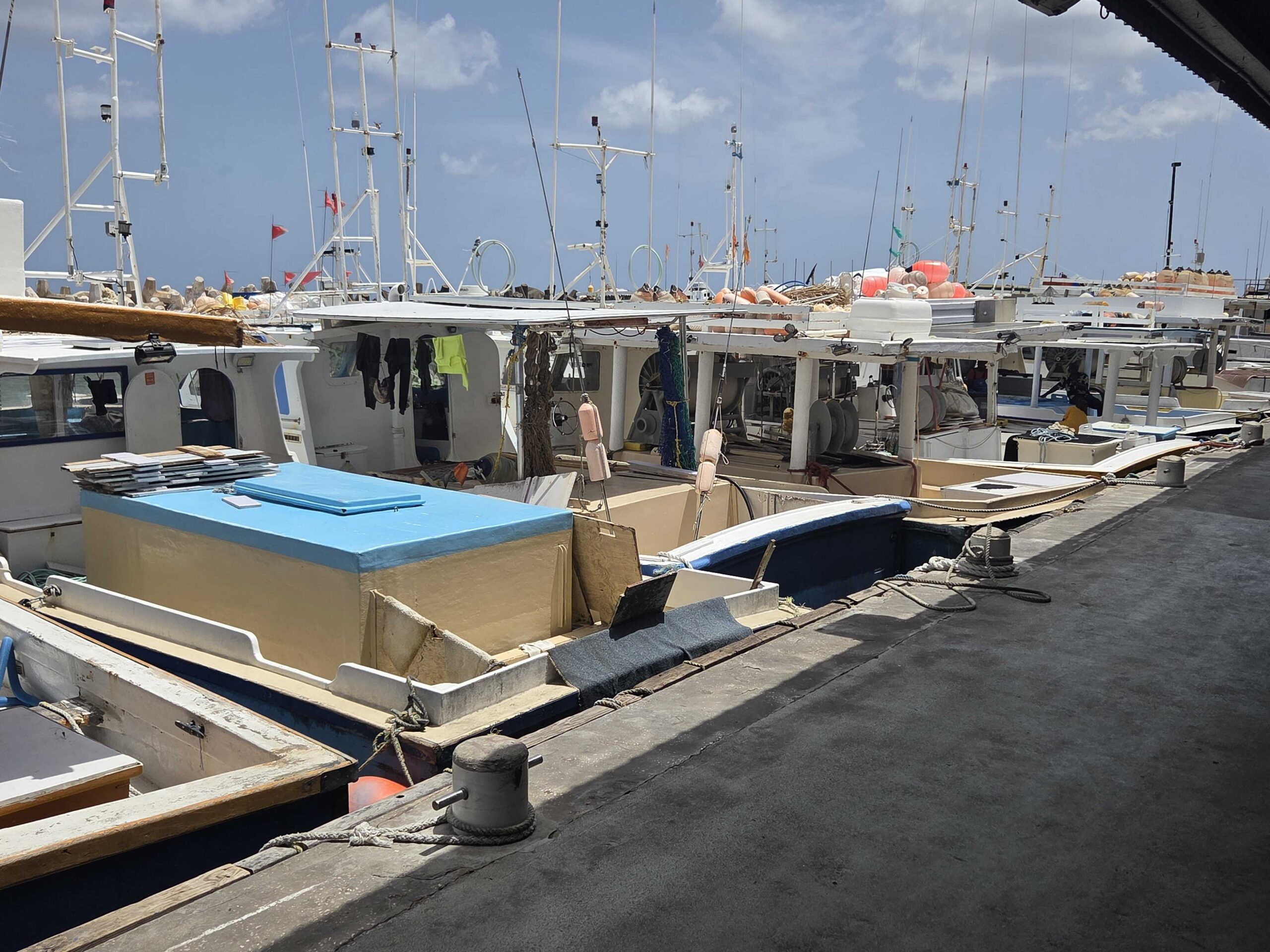
Across the Caribbean’s coastal fishing communities, small-scale independent fishers are facing an unprecedented economic squeeze, as surging diesel prices devour their revenue and a region-wide push to decarbonize fishing fleets leaves them grasping for clear support to navigate the transition. For the working fishermen based at Bridgetown’s fisheries complex, daily operations have become a high-stakes gamble: a single voyage out to open water now requires thousands of dollars in upfront fuel investment, with no guarantee of a catch to offset the cost. This crippling expense has pushed livelihoods to the edge, pushing many operators into cycles of debt that force them to raise retail fish prices just to break even.
The crisis has moved to the top of the regional policy agenda, driven by the Caribbean Regional Fisheries Mechanism (CRFM), which is moving forward with plans to lay the groundwork for a low-carbon future for the sector. The intergovernmental body has launched a search for specialized consultants to carry out decarbonization assessments of the region’s entire fishing fleet, with the end goal of drafting a comprehensive regional strategy and actionable implementation plan. The initiative comes in response to growing global pressure to cut carbon emissions across all maritime industries, a mandate that fishing sector leaders cannot ignore.
For the fishermen who make their living on the water, the economic case for moving away from costly fossil fuels is already self-evident—even as the practical path forward remains shrouded in uncertainty. Veteran fisher Percy summed up the volatile, constantly rising overheads that have become the industry’s new normal, noting that his annual diesel expenses have remained consistently in the thousands of dollars, shifting between $6,782 and $8,200 in recent years. Another long-time fisherman, Donville “Dox” Brathwaite, echoed this frustration, explaining that he currently carries an outstanding $7,000 diesel bill just to cover his next scheduled voyage. “Fuel costs can eat up as much as 40 percent of a trip’s total revenue,” Brathwaite explained, a burden that leaves little room for profit or reinvestment.
While most fishermen welcome the prospect of new energy-efficient and alternative fuel technologies that could cut their long-term operational costs, they warn that current policy planning lacks the concrete support structures needed to make the transition a reality for small-scale operators. Unlike large commercial fishing companies, independent small-scale fishers lack the upfront capital required to purchase hybrid engines or adopt low-carbon infrastructure, and they say no clear subsidy programs, training opportunities, or public-private support frameworks have been put in place to close this gap.
“Right now, the industry is basically on its own,” Brathwaite said, noting that fishers feel abandoned by both government bodies and private sector institutions as they grapple with spiking operating costs. “We don’t just want vague plans for a green future—we need tangible support right now, any support we can get from any source.” Even so, most fishermen remain open to embracing technological change to improve their bottom line. “This is the age of technology,” Brathwaite explained. “If there’s a tool that can cut my costs, make my job easier, and take the pressure off, I’m ready to take it. What we need is help to actually get it.”
For the CRFM, the biggest test of its upcoming decarbonization strategy will be addressing this gap: crafting a plan that meets global emissions reduction targets while also supporting the small-scale operators that make up the backbone of the Caribbean’s fishing industry. Without targeted investment, subsidies, and capacity building, fishers warn, the green transition could stall before it even leaves the harbor, leaving an already vulnerable industry on the brink of collapse.