作者: admin

  • CONCACAF Women’s World Cup 2027 Qualifiers : Presentation of the Grenadières’ technical team

    CONCACAF Women’s World Cup 2027 Qualifiers : Presentation of the Grenadières’ technical team

    As the 2027 FIFA Women’s World Cup CONCACAF qualification campaign reaches a critical turning point, Haiti’s women’s national soccer team, the Grenadières, has formally introduced its complete technical and support staff that will steer the squad through the final stretch of group stage play. Headlined by experienced Swedish tactician Pia Marina Sundhage, the assembled team of specialists has already made an early impact, guiding the Grenadières to a dominant 5-0 victory over Anguilla in their previous qualifying fixture.

    The newly presented full roster of backroom staff brings together a diverse mix of international and local expertise tailored to support players both on the training pitch and in competitive match settings. Alongside head coach Sundhage, the staff includes Erik Fahlstrom, who serves as the squad’s dedicated goalkeeping coach, Gunnvor Halmiy as lead fitness coach, and Birgit Gutke filling the role of assistant coach. Rounding out the off-field team are Francesca Joseph as team manager, Alicia Garulli and Claire Guyon as dual physiotherapists tasked with player recovery and injury prevention, and Anders Johansson working as video analyst to prepare scouting reports and tactical breakdowns for upcoming opponents. This multi-faceted support structure is designed to address every aspect of the team’s performance, from physical conditioning and injury management to tactical preparation, helping players reach their full potential as they chase qualification for the 2027 Women’s World Cup.

    The Grenadières’ next and final group stage fixture is scheduled for April 17, 2026, with kickoff set for 2:00 p.m. local time at Guadeloupe’s Roger Zami Stadium, where the Haitian side will face off against regional rival Dominican Republic. The outcome of this match will play a key role in determining the Grenadières’ advancement in the CONCACAF qualification pathway, building on their strong opening result against Anguilla to keep their World Cup dreams alive.

  • Teen relative of murder victim killed as K’town-Layou ‘gang war’ rages

    Teen relative of murder victim killed as K’town-Layou ‘gang war’ rages

    A wave of brutal gang-related violence has shaken St. Vincent and the Grenadines, with a third fatal shooting in as many days bringing the country’s 2026 homicide count to 13, law enforcement sources have confirmed. The latest victim, 19-year-old Perrance Matthews, a Layou-based teenager just weeks away from his 20th birthday, was found dead with gunshot wounds to the head and chest along the river defence in Buccament Bay early on Sunday, April 13, 2026. Local residents reported hearing multiple gunshots ring out in the area throughout Saturday evening, placing the time of death between Saturday night and Sunday morning.

    Investigators and insider sources have drawn a clear connection between Matthews’ killing and a double homicide that unfolded just 48 hours earlier in Stoney Ground, Kingstown. That attack left two men dead: 29-year-old Enrique “Shoubu” John, a Layou resident who was Matthews’ relative, and 22-year-old Raheem Guy, John’s close associate. John was shot dead inside a store at Russells Shopping Centre, while Guy was killed on the sidewalk outside the Caribbean Medical Imaging Centre.

    The bloodshed is the latest escalation of a long-running gang conflict that first erupted in 2023, ending a five-year stretch without any homicides recorded in Layou. At that time, four murders occurred in just six weeks, and multiple injuries have been recorded in ongoing clashes ever since. The current conflict pits a gang based in Central Kingstown with ties to the Layou community — the faction that both John and Matthews were linked to, according to insiders — against rival factions based in Rose Place (also called Bottom Town) and Ottley Hall, two West Kingstown neighborhoods. Sources also confirmed John was part of a group that was in active conflict with a Layou-based family aligned to the Bottom Town gang, adding another layer of tension to the violence.

    John’s killing came barely 72 hours after a St. Vincent court rejected a police bid to revoke his bail, which had been granted on a 2026 attempted murder charge. John had first been charged in February 2026 for the November 2025 attempted murder of Layou resident Tilon Patterson. Both John and Patterson were shot in a public shootout with unidentified assailants while traveling along a Central Leeward road on November 2, 2025. As part of his bail conditions set at EC$50,000, John was ordered to avoid all contact with Patterson, check in regularly at the Layou Police Station three times a week, and abide by a curfew requiring him to stay home from 8:30 p.m. to 6 a.m.

    That curfew was broken on April 5, 2026, when John was spotted at an after-curfew entertainment event in Central Leeward. Police moved to arrest him and applied to the court to have his bail revoked. During the April 8 court hearing, a defense witness testified that John had planned to leave the event before curfew and she was en route to pick him up when police stopped her vehicle. The court ultimately sided with the defense and denied the prosecution’s request to revoke bail. Three days later, John was dead.

    John was no stranger to the court system: he was one of six people awaiting trial on charges including attempted murder, robbery, illegal possession of firearms and ammunition, and property damage connected to a broad-daylight robbery at the GECCU branch in South Rivers in July 2024. Back in 2017, John and two other Layou residents were also charged with rape related to an offense involving a minor between the ages of 13 and 15.

    As of Monday, investigators have not announced any arrests in connection with the three latest killings, but law enforcement continues to probe the gang links connecting all three deaths. The uptick in violence has pushed the 2026 homicide total to 13, already nearly a third of the 40 homicides recorded across St. Vincent and the Grenadines in all of 2025.

  • Abinader declares regional emergency in five provinces and National District

    Abinader declares regional emergency in five provinces and National District

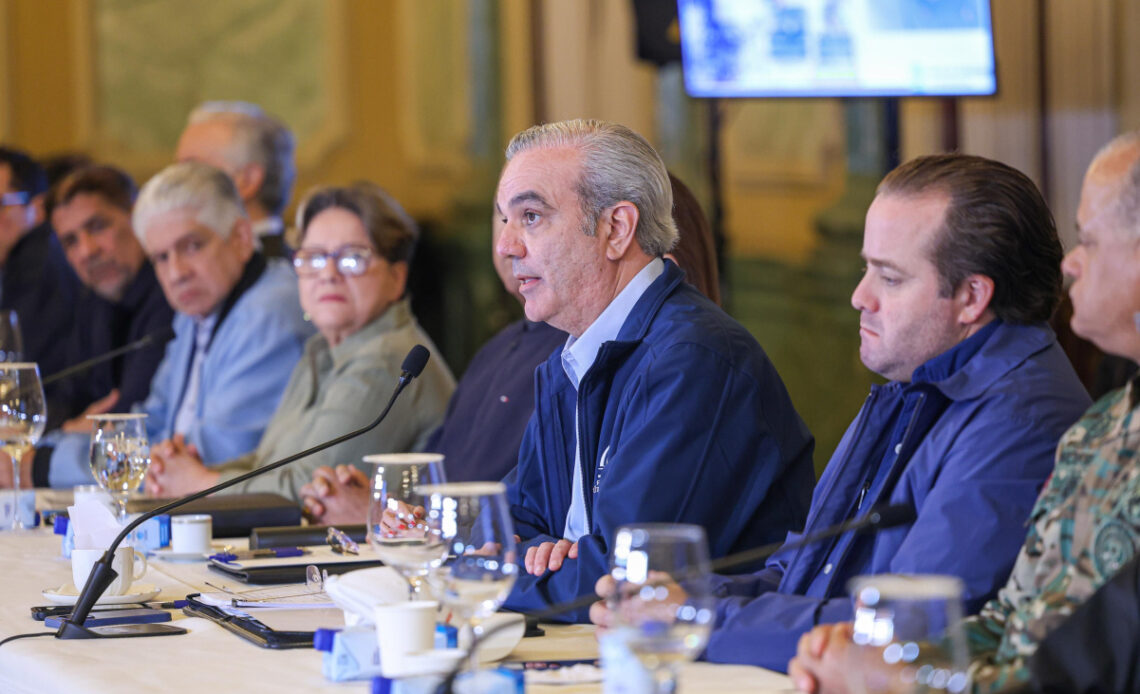
    In response to widespread destruction caused by an active low-pressure weather system moving across the Dominican Republic, national president Luis Abinader has enacted Decree 234-26, establishing a regional state of emergency across six hard-hit jurisdictions. The official measure, announced publicly on April 12, extends emergency status to the provinces of Puerto Plata, Espaillat, Valverde, Santiago, Santo Domingo, as well as the country’s National District, the capital’s administrative core.

    The declaration of emergency was not an arbitrary action: it follows all formal procedural requirements laid out in the nation’s 147-02 Risk Management Law, and was prompted by urgent damage assessments submitted by two of the country’s top disaster response bodies, the Emergency Operations Center (known locally by its Spanish acronym COE) and the National Emergency Commission (CNE). Government officials confirmed that days of unrelenting heavy downpours, intense thunderstorms and gusty strong winds have left a trail of destruction across multiple sectors of the impacted regions. Critical public infrastructure, private residential housing, commercial agricultural operations and other key productive industries have all sustained significant harm that has disrupted daily life for local residents.

    By formally activating the state of emergency, the Dominican government has cleared the way for faster deployment of critical assets to affected communities. The accelerated rollout of dedicated financial resources, heavy response equipment and trained disaster response teams is now authorized, with two core goals: first, to reduce the ongoing harm inflicted by the adverse weather system, and second, to restore full normal operations and daily life to the most severely impacted communities in the shortest possible timeline.

  • President ziet groeipotentie AVD als toeristische trekpleister

    President ziet groeipotentie AVD als toeristische trekpleister

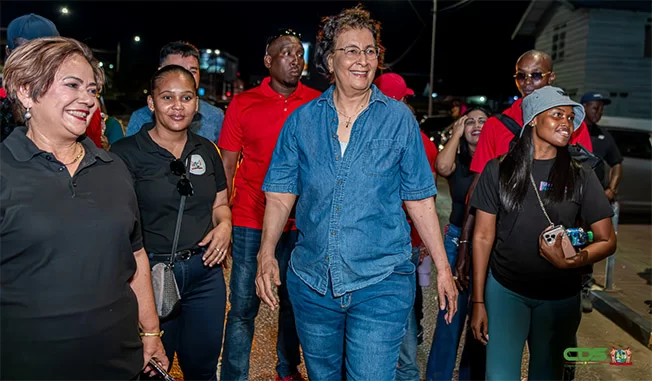
    One of the Caribbean region’s most beloved community walking events is gaining high-level attention for its untapped potential as a major international tourism draw, as the nation’s top leader joined participants for the closing stage of its 61st edition. On Saturday, President Jennifer Simons carved time out of her packed official schedule to walk several kilometers during the final day of the annual Avondvierdaagse (AVD), a four-day evening walking tradition that draws thousands of participants each year.

    After completing her walk, Simons shared her positive assessment of the event, emphasizing that with consistent organizational growth and investment, the AVD could evolve into a signature tourism event for Suriname. She praised the vibrant, inclusive atmosphere of the gathering and the enthusiastic commitment of every participant, calling the AVD a standout community-focused occasion. “This is such a wonderful event, and I truly believe it has the capacity to attract far more visitors to our country in the coming years,” Simons told reporters on site.

    The president offered clear guidance to the event’s organizer, the Business Association for Sport and Play (BVSS), urging the group to continue investing in improvements to event quality and operational infrastructure to support future expansion. Simons was not the only high-ranking official to take part in this year’s walking march. Lalinie Gopal, the Minister of Sport and Youth Development, and Enrique Ralim, Director of Sports Affairs, also joined the route, walking alongside a group of elite national athletes to show their support for the community-focused tradition.

  • HAPPENING NOW: UPP Launches 2026 Election Campaign

    HAPPENING NOW: UPP Launches 2026 Election Campaign

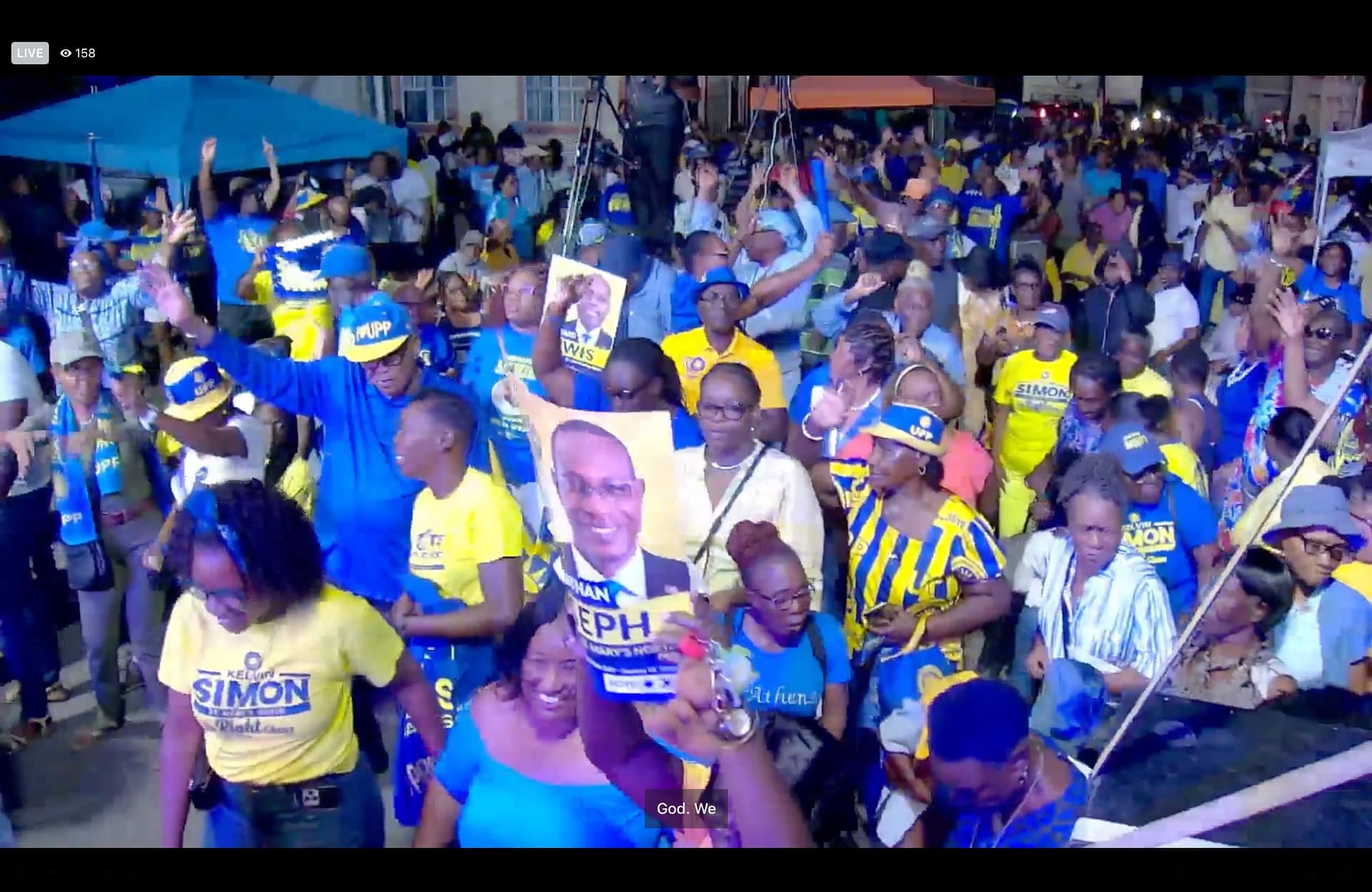
    In a major political development unfolding this week, the United Progressive Party (UPP) has formally initiated its campaign for the 2026 national general election, marking the official start of what is expected to be one of the most competitive electoral cycles in recent national history.

    The launch event, held at the party’s national headquarters and broadcast live to thousands of party members and political observers across the country, brought together hundreds of grassroots activists, elected officials, and key party donors. Party leadership used the occasion to outline a broad policy platform focused on three core pillars: economic revitalization for working-class households, expanded access to affordable healthcare, and climate action that balances environmental protection with job creation in emerging green industries.

    Addressing the crowd, UPP’s party president emphasized that the campaign would center on amplifying the voices of voters who have felt overlooked by the current governing administration. “For too long, working families across this nation have watched cost of living surge while their wages have stayed stagnant,” the president stated in their keynote address. “This campaign is not just about winning votes—it’s about rebuilding a government that works for every citizen, not just wealthy special interests.”

    Party organizers confirmed that the campaign structure will prioritize grassroots outreach, with hundreds of field organizers set to deploy to competitive swing districts over the coming 18 months. The UPP is also expected to ramp up digital advertising and voter registration efforts targeting young voters, a demographic that has increasingly shifted toward opposition parties in recent elections.

    The launch comes as polling data shows the race remains effectively tied, with neither the ruling party nor the leading opposition bloc holding a clear lead among likely voters 18 months ahead of election day. Political analysts note that an early campaign launch gives the UPP a significant opportunity to define its message to voters before the official election period begins, and could force the incumbent administration to adjust its policy and campaign strategy ahead of the vote.

  • WATCH: 17 ABLP candidates ratified at National Convention

    WATCH: 17 ABLP candidates ratified at National Convention

    In a decisive move to formalize its election campaign, the Antigua and Barbuda Labour Party (ABLP) locked in its complete roster of candidates for the upcoming general election during a national convention held Sunday at the People’s Place on Lady Nugent Avenue.

    The official confirmation was delivered by ABLP General Secretary Shenella Govia, who told assembled party members that the party’s Central Executive Committee had already signed off on all parliamentary candidates and constituency caretakers ahead of the delegate vote. Reading the full list of approved nominees to attendees, Govia formalized the Central Executive’s resolution approving all individuals that would stand for the party in the impending national vote.

    Following the announcement, voting delegates in attendance formally backed the entire candidate slate, passing the endorsement resolution with unanimous support. This unanimous approval solidifies the party’s full lineup ahead of ballots being cast on April 30.

    High-profile nominees on the ratified list include party leader Gaston Browne, who will stand for re-election in the St John’s City West constituency, and Kendra Beazer, the ABLP’s candidate for the Barbuda constituency. Additional candidates include Dr. Philmore Benjamin for St Mary’s North, Michael Joseph for St John’s Rural West, Dwayne George for St Mary’s South, and Randy Baltimore for St Philip North.

    The roster also features multiple incumbent government ministers and senior party figures. These include E.P. Chet Greene, who will contest the St Paul constituency, Daryll Matthew for St John’s Rural South, Maria Browne for St John’s Rural East, and Charles Fernandez for St John’s Rural North.

    The candidate ratification marks a critical milestone in the ABLP’s pre-election preparations, putting the party on track to shift its focus to grassroots mobilization and campaigning across all constituencies in the lead-up to the April 30 vote.

  • Gaston Browne Returned Unopposed as ABLP Leader, Urges Supporters to Reject ‘Experiment’ in Upcoming Election

    Gaston Browne Returned Unopposed as ABLP Leader, Urges Supporters to Reject ‘Experiment’ in Upcoming Election

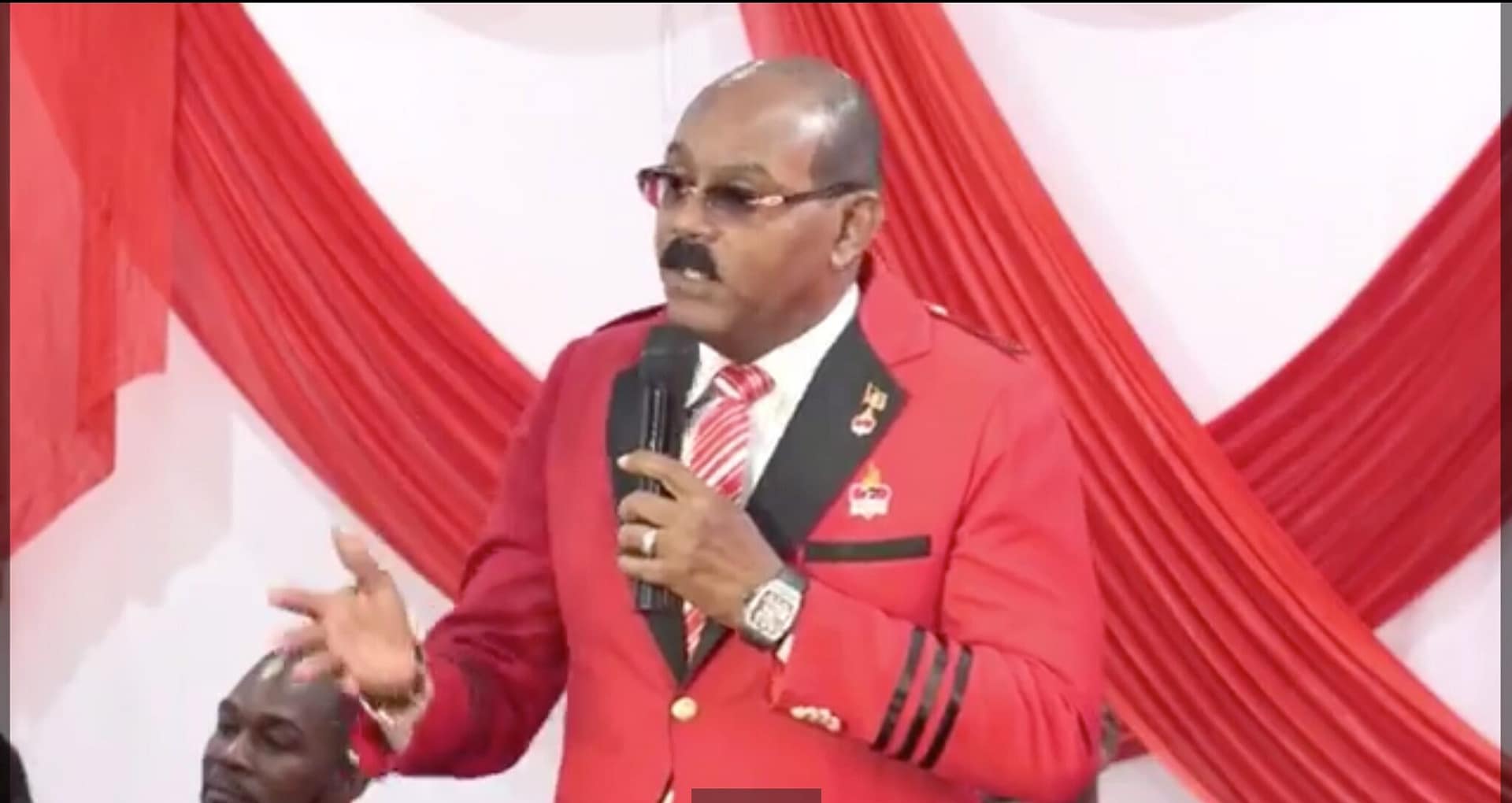
    In a clear show of unified party support, Gaston Browne was re-elected unopposed as the leader of Antigua and Barbuda’s ruling Labour Party during the party’s national convention held Sunday. Speaking from the party’s longstanding headquarters, branded The People’s Place, Browne used his keynote address to cast the upcoming general election as a binary, high-stakes decision that will shape the trajectory of the Caribbean nation for years to come.

    Browne laid out stark contrasts between his incumbent administration and the opposition ahead of the contest, telling assembled supporters: “The choice before this nation is clear… between certainty and confusion, between progress and paralysis, between tested leadership and the untested ambition of the ignorant.” He repeatedly warned against what he framed as the danger of handing national governance to unproven, unqualified opponents, emphasizing that the ballot will determine whether Antigua and Barbuda continues along its current developmental path or abandons the progress the current government has achieved.

    As he enters the official election campaign at the head of the governing party, Browne stressed that the upcoming vote is fundamentally centered on the country’s long-term future, rather than partisan point-scoring. “This is not the time for unnecessary risk-taking… to experiment with failed and incompetent leadership,” he added.

    Beyond electoral messaging, Browne also used the convention to outline intentional internal party renewal, noting that the Labour Party is actively grooming a new generation of political leaders to ensure long-term continuity. “We have competent leaders, young, bright leaders… to ensure future leadership,” he said, confirming that structured training programs are already underway to prepare these emerging politicians to take on senior leadership roles when the time comes.

    On the policy front, the incumbent leader highlighted the interconnected relationship between public safety and sustainable economic expansion, noting that “you cannot grow an economy in an unsafe environment.” He went on to reaffirm Antigua and Barbuda’s reputation as one of the most secure destinations in the Caribbean, a status that underpins the nation’s key tourism and investment sectors.

    In his closing remarks, Browne called on every Labour Party member to act as a public advocate for the administration’s track record ahead of the campaign. “You are ambassadors… you must defend the track record of this great institution,” he said, urging supporters to spread the party’s message of hope, proven delivery, and effective governance to voters across the country.

  • Barbados to make licence applications digital

    Barbados to make licence applications digital

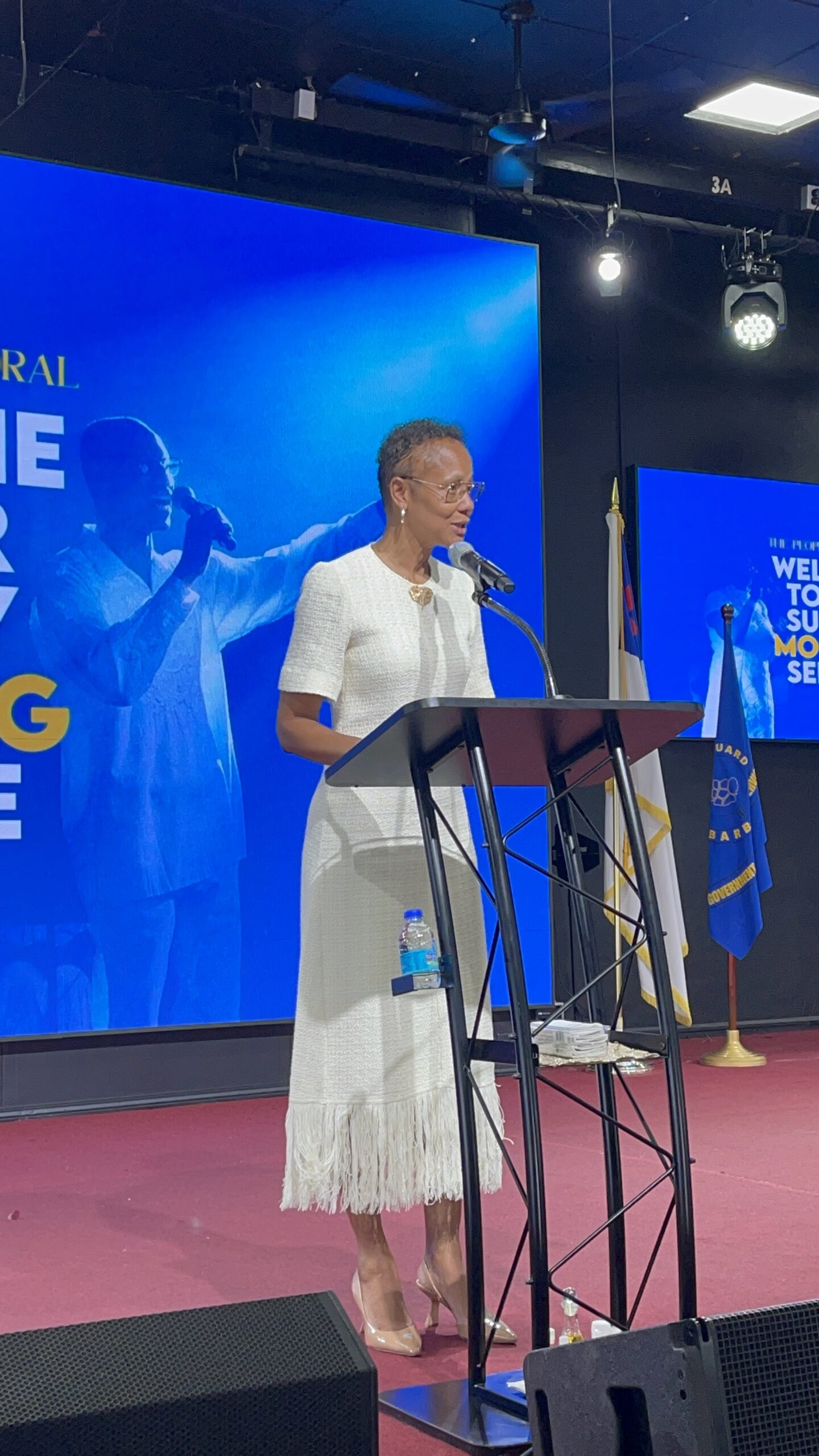
    Barbados’ Deputy Prime Minister Santia Bradshaw has announced an ambitious government-wide initiative to modernize public services through digital transformation, with license applications and secure payments set to move entirely online in the coming months. The announcement was made during the 50th Anniversary Thanksgiving Service for the National Security Division, held Sunday at the People’s Cathedral.

    Bradshaw outlined that the digital push extends far beyond just online licensing, framing it as a comprehensive overhaul of public sector operations. The administration is currently upgrading core technological systems, integrating cutting-edge digital tools, and revising outdated pieces of legislation to ensure all regulatory frameworks align with modern operational needs. The ultimate goals of this transition are to boost service efficiency, strengthen government transparency, and make critical public services more accessible to all citizens and industry stakeholders.

    Beyond licensing and payment processing, the broader modernization agenda includes full digitization of public records, expansion of existing e-government platforms, and the rollout of integrated cross-agency data systems designed to improve coordination between separate ministries and government departments. Bradshaw confirmed that preparatory work, including investments in national information and communications technology infrastructure and specialized training for public sector staff, is already underway to support a smooth transition to the new digital systems.

    The modernization drive also reaches into national security operations, where long-used manual processes are being replaced by technology-driven solutions to strengthen accountability and speed up service delivery. Speaking to the gathered congregation about the National Security Division’s five decades of work, Bradshaw celebrated the agency’s 50-year legacy of upholding safety and stability across all government institutions. She noted that the division, founded on April 1, 1976, now employs more than 200 dedicated personnel, and praised both retired and current members for their unwavering commitment to national service.

    While emphasizing the transformative power of new technology to improve public and security operations, Bradshaw stressed that human expertise and judgment remain irreplaceable for effective governance and national safety. “A nation is not made safe by systems alone; it is made safe by its people choosing every single day to be their brother’s keeper,” she said.

    Closing her remarks, Bradshaw called on all Barbadians, especially young people, to uphold the core values of peace, collective responsibility, and community engagement. She reminded attendees that a nation’s strength stems not only from robust, modern systems, but also from the small, consistent choices its people make every day to support one another.

  • Assembleedelegatie naar Turkije voor internationale assemblee

    Assembleedelegatie naar Turkije voor internationale assemblee

    A cross-party parliamentary delegation from Suriname, led by National Democratic Party (NDP) parliamentary group leader Rabin Parmessar, has embarked on a trip to Turkiye to participate in the 152nd General Assembly of the Inter-Parliamentary Union (IPU), a major global forum for national parliamentary representatives. The delegation includes representatives from Suriname’s major political parties, with Progressive People’s Party (VHP) parliamentary group leader Asis Gajadien and Progressive Aboriginal People’s Party (ABOP) parliamentarian Ines Pané also joining the mission.

    The five-day IPU General Assembly is scheduled to run from April 14 to 19, 2026, in Istanbul, bringing together hundreds of lawmakers from nearly every sovereign state around the globe to deliberate on pressing transnational challenges that require collective political action. As part of their participation, the Suriname delegation will first contribute to the gathering of the Group of Latin America and the Caribbean (GRULAC), a regional caucus that coordinates unified policy positions for member states ahead of broader IPU debates.

    The GRULAC pre-assembly meeting has a packed policy agenda that covers multiple high-stakes topics. Delegates will discuss evolving international economic dynamics, deepen frameworks for cross-parliamentary cooperation, review and nominate candidates for the IPU Secretary-General position, and align on a joint regional geopolitical stance ahead of plenary discussions.

    In an interview with local Surinamese outlet Starnieuws ahead of the departure, Parmessar noted that the delegation will work through an extensive, tightly scheduled program throughout the event. He emphasized that the trip carries significant meaning for Suriname as a small Caribbean nation, stressing that it is critical for the country’s voice to be heard on the global inter-parliamentary stage. The delegation is set to take part in a range of official activities beyond the GRULAC meeting, including specialized committee meetings and the IPU’s plenary sessions.

    Key themes on the 2026 IPU General Assembly agenda span core global priorities: peace and international security, inclusive sustainable economic development, and the critical role national parliaments play in advancing justice and stability across all regions. This year’s assembly is framed around the central theme of “strengthening hope, securing peace, and building justice for future generations”, positioning the gathering as a leading global platform for advancing parliamentary diplomacy and building multilateral cooperation between nations.

  • CARICOM defends secretary-general reappointment

    CARICOM defends secretary-general reappointment

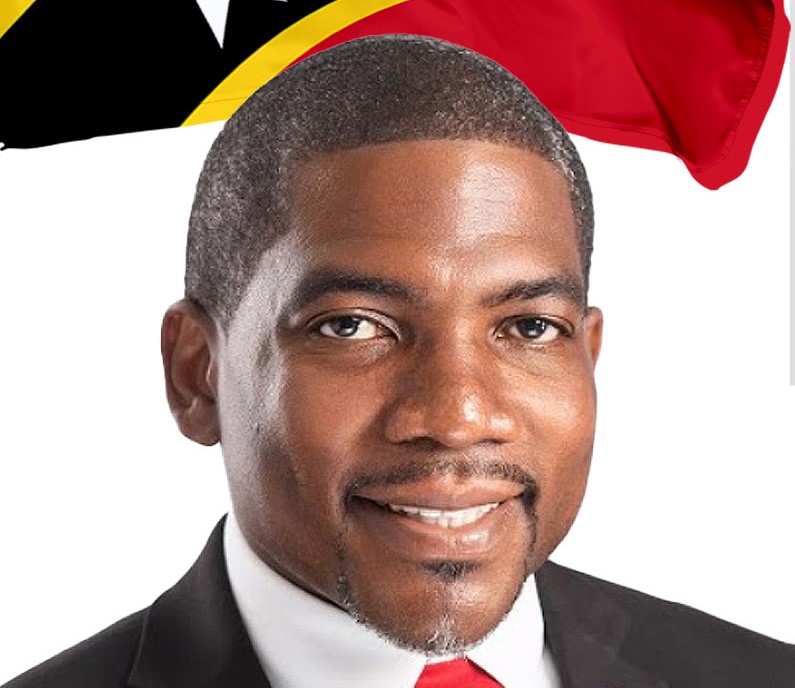
    A growing regional dispute has erupted within the Caribbean Community (CARICOM) over the reappointment of Dr. Carla Barnett as the bloc’s Secretary-General, with CARICOM Chairman and St. Kitts and Nevis Prime Minister Terrance Drew standing firm that all institutional protocols were correctly followed throughout the process.

    Drew’s formal defense came in an official statement released following an emergency special session of CARICOM Heads of Government held on April 10. Notably, neither Trinidad and Tobago Prime Minister Kamla Persad-Bissessar nor any designated representative from her country participated in the closed-door meeting, deepening the rift over the appointment.

    The controversy emerged after Persad-Bissessar launched a scathing public attack on the reappointment outcome, demanding full transparency and accountability from the 15-member regional integration bloc. She has made clear her government will not back down from the fight, vowing to pursue the issue aggressively through public channels. “My administration will give no quarter on this matter,” Persad-Bissessar said, pledging to “prosecute this matter mercilessly, relentlessly, and if necessary, ruthlessly in public until full transparency is achieved.”

    In his official response, Drew outlined the full sequence of procedural steps leading to the reappointment, which was finalized during the leadership retreat tied to CARICOM’s 50th Conference of Heads of Government, hosted by St. Kitts and Nevis between February 24 and 27. The chairman confirmed that all member states received formal advance notification of the full draft agenda, work program, and session details for plenary discussions, caucus meetings, and the closed leadership retreat well ahead of the conference. All official communications about the retreat’s date and location were sent through formal diplomatic channels, and every member state sent a formal confirmation of receipt, according to the statement.

    The CARICOM chairman’s account also clarifies the timeline of Trinidad and Tobago’s absence from the critical retreat vote. Persad-Bissessar left the main conference before the retreat began. Later, the country’s Minister of Foreign and CARICOM Affairs, Sean Sobers, contacted the outgoing Secretary-General via WhatsApp to ask if he could attend in the prime minister’s place – an arrangement that had been used by other member states in past sessions. Sobers initially noted that seasickness could prevent him from traveling to the retreat venue, and after Barnett stated attendance would be optional under the circumstances, the minister never followed up to confirm his participation with either the chairman or the Secretary-General’s office.

    The discussion on Secretary-General reappointment took place during the retreat, with Barnett stepping out of the room for the full duration of the deliberation and vote to avoid any conflict of interest. Before the results of the reappointment were announced publicly, CARICOM officials attempted multiple times to contact Persad-Bissessar to inform her of the outcome, but they were unable to reach her. The chairman ultimately connected with Trinidad and Tobago’s foreign minister to share the result after those failed attempts.

    Closing his statement, Drew called on all CARICOM member states to resolve internal disagreements through the bloc’s established dispute resolution mechanisms, warning that public confrontation risks weakening the decades-long project of regional integration that benefits all Caribbean nations.