作者: admin

  • UPP Launches Campaign with Prayer-Focused ‘Ignite’ Event

    UPP Launches Campaign with Prayer-Focused ‘Ignite’ Event

    As Antigua and Barbuda prepares for its April 30 general election, the United Progressive Party (UPP) has formally kicked off its bid to unseat the incumbent government, opening its campaign with a spiritually charged, prayer-centered rally named “Ignite.” The event, which blended Christian worship, policy messaging, and candidate introductions, was framed by party organizers as both a political starting line and a spiritual awakening, built around three core pillars: faith, national unity, and transformative change.

    The kickoff event drew hundreds of gathered supporters, with a live online broadcast extending the rally’s reach to voters across the twin-island nation and abroad. Opening the night, a host set the tone for the campaign, declaring, “Tonight is the night to ignite the campaign… the campaign to victory,” as crowds rallied behind the party’s message.

    Religious elements remained the throughline of the entire gathering, starting with an extended opening session of prayer and praise led by local faith leaders. Religious figures called for divine guidance for UPP candidates and divine intervention in the country’s national affairs. One opening prayer framed the campaign as a moment of national deliverance, declaring that “the wind of change will begin to blow… across the nation of Antigua and Barbuda.”

    Throughout the evening, every political address tied the party’s policy and electoral ambitions back to its faith-centered framing. One senior organizer told the assembled crowd that “there’s no igniting without God,” encouraging attendees to anchor the campaign’s slogan by pairing “Ignite” with calls for widespread national change. Another speaker emphasized the party’s goal of turning over power, stating the UPP aimed to “usher in a new day under the leadership of Jamale Pringle and the United Progressive Party.”

    Toward the end of the rally, all UPP candidates were invited onto the stage to receive a collective blessing from attending pastors. One faith leader told the candidates that “God has chosen each one of you for such a time as this,” praying for unity among the party’s ranks and resilience through the weeks of campaigning ahead. The event also featured live gospel music performances that interspersed the political addresses, keeping the spiritual tone of the rally consistent from start to finish.

    Beyond messaging and blessings, party organizers used the launch rally to mobilize supporters ahead of voting day. Attendees were urged to prioritize turning out to the polls on April 30, encourage friends and family to vote, and actively canvass for UPP candidates in their local communities.

    The rally marks the official start of formal campaign activities for the UPP, which is seeking to end the current tenure of the ruling Antigua and Barbuda Labour Party and take control of the national government in the upcoming election.

  • Peneux: Overheidsapparaat ontregeld door politiek ingrijpen en scheve beloningen

    Peneux: Overheidsapparaat ontregeld door politiek ingrijpen en scheve beloningen

    On April 13, former Surinamese Minister of Education, Science and Culture Robert Peneux outlined deep-rooted systemic failures plaguing the country’s public sector in an exclusive interview with local outlet Starnieuws, tracing most of the current dysfunction to the elimination of the decades-old Functie Informatie Systeem Overheid (FISO) civil service framework.

    Implemented during the administration of former president Ronald Venetiaan, FISO was designed to bring structure and transparency to the sprawling government bureaucracy. Under the system, every public sector role came with clearly defined qualification requirements, creating a clear career progression path that incentivized civil servants to pursue continuous professional development to qualify for senior positions.

    According to Peneux, years of political decision-making and pressure from labor unions gradually eroded the FISO framework until it lost its core function. The dismantling of the system has fully decoupled job roles and civil service ranks from required professional qualifications, creating skewed, unfair dynamics across all levels of government. Unqualified candidates with political connections now hold many senior leadership roles, a reality that has bred deep resentment among career civil servants with the right credentials and directly undermined the quality of national policy development, Peneux explained.

    Beyond the qualification mismatch, Peneux added, the government suffers from a fundamental lack of clear policy domain boundaries between individual ministries. No department has formally documented the exact scope of policy areas it manages, leading to overlapping roles, redundant teams of policy advisors and widespread systemic inefficiency that slows public service delivery.

    Peneux also called out the broken pay structure across both government agencies and state-owned parastatal companies, noting that chief executives at state-owned firms earn drastically higher salaries than the cabinet ministers who oversee their work. At the same time, stagnant low base salaries for rank-and-file civil servants have triggered a mass exodus of skilled, qualified workers from the public sector.

    This brain drain is particularly visible in the education sector, Peneux said. Teacher training instructors at the Instituut voor de Opleiding van Leraren (IOL) are leaving in droves for higher-paying positions at Anton de Kom University of Suriname or for roles abroad, creating a shortage of full-time teaching faculty that is damaging the country’s pipeline of new educators. Peneux emphasized that the scale of the pay gap has made retaining qualified full-time instructors nearly impossible for IOL.

    The former minister stressed that the public sector’s troubles extend far beyond uneven compensation. Ministries now face a chronic shortage of implementation capacity, in large part because political loyalty is routinely prioritized over professional expertise when hiring and promoting public servants.

    “Effective policy can only succeed when the civil service has the right people with the right qualifications in place,” Peneux said. He called for a full, comprehensive audit of the entire public administration apparatus, including a full review of the national pay scale and job evaluation system. Without urgent, large-scale intervention, Peneux warned, the public sector will face further systemic erosion that will undermine its ability to serve Surinamese citizens.

    In closing, Peneux criticized the national policy debate for lacking meaningful depth, noting that while political actors engage in extensive discussion, concrete action plans and long-term structural solutions remain out of reach. “We talk a great deal, but real, tangible results still fail to materialize,” he said.

  • Heads decided on  Barnett at retreat

    Heads decided on Barnett at retreat

    A growing internal dispute has shaken the Caribbean Community (Caricom), centered on the controversial reappointment of Secretary-General Dr. Carla Barnett that has pitted regional leadership against the government of Trinidad and Tobago. In a detailed April 11 statement, Caricom Chairman and Prime Minister of St. Kitts and Nevis Dr. Terrance Drew has pushed back against claims of procedural impropriety, laying out a full timeline of events to defend the February decision made during a closed-door heads of government retreat on the island of Nevis.

    Drew confirmed that Barnett’s reappointment was not explicitly listed on the original public agenda for the retreat, held on February 26 on the sidelines of Caricom’s 50th Regular Conference of Heads of Government. On the day of the closed gathering, regional leaders opted to take up the appointment under the pre-existing agenda topic of “Financing and Governance of the Community”, a procedural path Drew says aligns fully with Article 24 of the Revised Treaty of Chaguaramas, which grants the Caricom Conference authority to appoint and reappoint the Secretary-General for up to five-year terms. Drew also noted that Barnett left the room prior to the discussion of her reappointment to avoid any conflict of interest.

    The core of the dispute stems from objections raised by Trinidad and Tobago Prime Minister Kamla Persad-Bissessar and Foreign Minister Sean Sobers, who argue the decision was procedurally invalid because their nation was not represented at the retreat. They were joined in their objection by leaders of Antigua and Barbuda and The Bahamas, which were also absent from the closed gathering. Trinidad and Tobago has gone as far as stating it will not recognize Barnett’s tenure beyond August 2026, when her original five-year term is set to expire, and has boycotted all Caricom meetings until it receives full access to all correspondence related to the reappointment. A planned April 10, 2026 meeting to address Trinidad and Tobago’s grievances went forward without the nation’s representation after Persad-Bissessar declined to attend.

    Drew pushed back against claims that Trinidad and Tobago was not properly notified of the retreat, noting all member states received detailed advance correspondence outlining the full conference schedule, including the February 26 heads-only retreat, its agenda structure and venue. He added that all head of government offices were updated multiple times on the retreat details both before and during the main conference. Persad-Bissessar had been present in St. Kitts and Nevis for the opening of the conference on February 24, holding bilateral meetings and meeting with U.S. Secretary of State Marco Rubio, but departed the island on the evening of February 25, hours before the retreat was scheduled to begin.

    In a release of private correspondence detailing the lead-up to the retreat, Drew shared exchanges between Sobers, Barnett and himself that he says confirm the foreign minister declined to attend. According to the shared WhatsApp logs, at 10:33 p.m. on February 25, Sobers contacted Barnett to ask if he could attend the retreat in Persad-Bissessar’s absence, and Barnett confirmed foreign ministers could substitute for absent heads. In the same exchange, Sobers mentioned he suffered from seasickness, as the retreat venue on Nevis required a boat ride from the main island of St. Kitts. Barnett replied hours later that the chairman would understand if he opted out due to seasickness, and Drew says Sobers never followed up to confirm he would attend despite the note.

    Sobers has contested this narrative, telling reporters his comment about seasickness was made in jest, and claims a later message from the Caricom Secretariat stated only heads of government were allowed to attend the retreat, leaving him uncertain of his eligibility to join. He has repeatedly described the reappointment process as “surreptitious” and in violation of regional governing treaties.

    After the retreat decision was made, Drew said leaders agreed to delay the official announcement out of courtesy to allow notification of absent heads. Attempts to contact Persad-Bissessar by email and phone were unsuccessful, so officials reached out directly to Sobers instead. In his statement, Drew released all correspondence related to the pre-conference planning and retreat discussions in line with commitments made at the April 10 governance meeting.

    Closing his statement, Drew urged all sides to resolve the dispute through Caricom’s established internal mechanisms, warning that public missteps and erroneous claims could undermine decades of progress toward deeper regional integration that delivers tangible benefits to all Caribbean people. As the crisis stands, the standoff has left the regional body facing an unprecedented leadership dispute just months before Barnett’s original term is set to end.

  • Sandra falls into hands of serial killer

    Sandra falls into hands of serial killer

    For 31 years, the family of Sandra Rajkumar-Costilla carried unanswered questions about her brutal murder. Now, their long wait for a formal admission of guilt has come to an end, as convicted serial killer Rex Heuermann has pleaded guilty to taking her life, closing one of the longest cold chapters in the Long Island serial killing case.

    Sandra’s story is one stitched together by generational trauma and fractured family ties that trace back to a 1975 tragedy in her native Trinidad. It was June of that year when her father Ramkissoon “Ramki” Rajkumar murdered his wife Milly — Sandra’s mother — before taking his own life in a murder-suicide that ripped the young family apart. Now, 49 years later, Ramki’s surviving sister still refers to that day only as “the incident,” the trauma too raw to name outright.

    After the 1975 murder-suicide, Sandra, then between 10 and 12 years old, and her younger brother Manny were taken into legal custody by their maternal grandparents, who moved the pair to Arima, Trinidad. Ramki’s sister says the couple blocked the paternal side of the family from seeing the children, despite multiple attempts to visit that even included police escorts. The children were entitled to a monthly government pension as part of their father’s employment benefits, and both Ramki’s sister and Manny believe the grandparents took custody primarily to access these funds, leaving the young orphans with little in the way of emotional care or guidance. “They were the grab bag, the meal ticket,” Manny recalled of their childhood.

    Sandra lived with her maternal grandmother for seven years, attending Arima Senior Comprehensive (now renamed Arima North Secondary) while Manny went to Five Rivers Secondary. When Sandra was around 16, she made a surprise visit to her paternal aunt with school friends, a meeting her aunt still remembers decades later. “She was a beautiful girl,” she said. “We cannot turn back time. We always say if and but, but if circumstances were different, if they had lived with us, who knows if they could have had a different outcome. We are sad.”

    In 1982, when Sandra was 17 and Manny 14, their ailing maternal grandmother could no longer care for them. Their half-brother Anthony, who served in the U.S. Army, stepped forward to adopt the pair, and the siblings left Trinidad for a new life in the United States. After a short stay with their half-sister Ruth in New York, they moved to Hawaii, where Sandra married and Manny enrolled at Waipahu High School. Sandra’s childhood best friend, Nicky — who asked to remain anonymous — remembers Sandra leaving Trinidad to join her new life, leaving her high school boyfriend behind. Four years later, in 1986, Sandra briefly returned to Trinidad to bring her boyfriend back to the U.S., a reunion Nicky witnessed firsthand before she herself migrated to the U.S. in 1988. The pair stayed close after Nicky’s move, and Nicky says she was the last person to speak to Sandra before she disappeared.

    After moving back to the U.S. with her boyfriend, Sandra became pregnant, and the young couple stayed briefly with Manny (who had moved to New York after stints in Hawaii and North Carolina) before finding their own place. Life in New York was unforgiving for the young family; they struggled financially, and Manny often helped cover expenses. When Sandra’s relationship with her boyfriend collapsed, Manny says his sister’s mental health declined rapidly. “In my opinion, he destroyed my sister mentally. When he came into the picture, everything changed. The relationship wasn’t what she expected and she was disappointed. She started drinking,” Manny said. “I believe she was in a bar somewhere drinking. Absolutely that’s how it happened” when she encountered Heuermann.

    Manny has pushed back against long-standing assumptions that his sister worked as a sex worker, matching the profile of Heuermann’s other known victims. He says Sandra worked payroll and bookkeeping roles through temp agencies, meeting wealthy business leaders in Manhattan through her work, and was never involved in sex work. He described his sister as trusting and naive, unable to spot malicious intent in others, saying “it’s probably just by chance this guy happened by her in a bar, picked her up and perhaps said, ‘I have a house in Long Island; let’s take a drive; there’s a beach there…’ and she fell for it and this happened.”

    In the pre-cell phone era of the early 1990s, Sandra would occasionally disappear for a day at a time, always calling Manny from a public payphone to let him know where she was. That changed on a cold November day in 1993, when 28-year-old Sandra left her 2-year-old son with a neighbor and never returned. That same day, Nicky — by then living in Massachusetts — received a call from Sandra at a payphone. Sandra told her her relationship was falling apart and she was struggling, and Nicky immediately invited her to come to Massachusetts to start over, offering to help her get a bus ticket. Sandra agreed to come the next morning, but she never called to say she had arrived at the bus station. “I waited and waited for her to call and say she was at the bus stop so I could go pick her up. She never called,” Nicky said.

    After several days without contact, Manny and his family reported Sandra missing. A week after Nicky’s final conversation with Sandra, police found her body in the North Sea area of Long Island. DNA from hair found on her body matched Heuermann, an architect who had been linked to a string of murders of women along Long Island’s Gilgo Beach starting in the 1990s. Heuermann was arrested in 2023, and officially charged with Sandra’s murder in 2024. Last week, he pleaded guilty to Sandra’s murder, admitting he had strangled her to death. He is set to be formally sentenced on June 17.

    Today, many members of Sandra’s family are unable or unwilling to speak out or attend the sentencing. Her half-sister Ruth, who lives in Florida, has not responded to requests for comment. Half-brother Anthony was arrested on larceny charges in North Carolina in 2022. Manny is currently awaiting trial in Trinidad on undisclosed charges. Only Nicky says she plans to be in court for Sandra.

    For Nicky and Manny, the case still leaves open one painful loose end: the whereabouts of Sandra’s son, who would now be 35 years old. After Sandra’s murder, her son was briefly cared for by Ruth before his father took custody, and he has not been in contact with Sandra’s remaining loved ones. “She asked me to promise that when the time is right, I will let her son know how much she loved him. I’ve been looking for him for years to deliver that message,” Nicky said. Reflecting on the life Sandra could have had, Nicky added: “Sandra was about to start a whole new life. I told her come, I don’t care what you have done in the past, whatever it is we can fix it.”

  • Morris eyes PNM  ‘rebirth’ in Tobago

    Morris eyes PNM ‘rebirth’ in Tobago

    The race for leadership of the People’s National Movement (PNM) Tobago Council kicked into its final nomination phase on Friday, with two high-profile candidates launching distinctly different campaigns that have set the tone for the upcoming internal vote on April 26.

    Kelvon Morris, a former minority leader of the Tobago House of Assembly, arrived to file his nomination papers accompanied by fanfare, drumming performances and cultural dancing, marking the official launch of his leadership bid under the unified “Team Unity” banner. Morris has put forward a full slate of 16 candidates contesting all available positions on the council executive, drawing a diverse group of participants that balances young and experienced politicians, male and female candidates, and representatives from both the Tobago East and Tobago West regions.

    In comments after submitting his nomination, Morris framed his campaign as a push for long-overdue renewal and reunification of the PNM’s Tobago branch. “This is a moment for rebirth and renewal for our great party,” he said. “What we have built here is a coalition that reflects every corner of our political community, and our goal is to reunify the PNM and re-energize our movement ahead of upcoming elections.”

    Morris enters the race with notable institutional backing: he has secured public endorsements from two former PNM Tobago Council leaders, Tracy Davidson-Celestine and Kelvin Charles, who previously served as Chief Secretary of Tobago. His slate includes other established political figures: Clarence Jacob, a former Settlements Secretary, is running for treasurer, while Petal Daniel-Benoit, a former minority councillor, has joined the ticket as a candidate for vice chairman.

    Outlining his first policy priorities if elected, Morris identified unresolved financial obligations to party members from the last election cycle as his top issue. “Finances were extremely tight following the last election, and we owe outstanding payments to many of our members who stepped forward to run,” he explained. “That will be my number one priority if I take office, and we already have plans in place to resolve that issue. Beyond that, my core mission is unifying the party: every member has value, and every candidate who runs in this election has a place in our movement moving forward.”

    Morris’s long-term vision is anchored in a strategic plan called the “People’s Roadmap to Victory,” a six-pillar framework designed to prepare the PNM for the 2030 Tobago House of Assembly and national general elections.

    In a stark contrast to Morris’s high-energy campaign launch, former Tobago West Member of Parliament Shamfa Cudjoe-Lewis filed her nomination for the leadership post without a full slate, fanfare, or public celebration, positioning her candidacy as a humble, member-focused alternative. Cudjoe-Lewis, who is running in her first internal election for a seat on the PNM Tobago Council executive, submitted her paperwork at the council’s uptown Scarborough office, emphasizing that unnecessary campaign spending would be irresponsible given the party’s current financial strain.

    “I don’t see any need for extravagant fanfare right now. We owe money to a lot of people, and if I had campaign funds to spare, the first thing I would do is pay those outstanding debts,” she said. “This internal election is about having quiet, honest conversations with our members. You don’t need songs and dances to do that work.”

    Cudjoe-Lewis chose to run for leader without a pre-assembled full slate, noting that some of her supporters are also backing Morris’s Team Unity. She framed this overlapping support as a strength of the process, arguing that the contest will ultimately produce stronger ideas for rebuilding the party regardless of who wins.

    “After the votes are counted on April 26, we will all still be members of the PNM,” she said. “There are people in my camp who are also working with Kelvon, and that’s okay. This process is about bringing different ideas together to figure out how we rebuild our party.”

    Cudjoe-Lewis pledged to run a clean, positive campaign with no personal attacks or mudslinging, focused on offering party members a credible, independent option for leadership. “I’m here to give PNMites a competent choice, and then it’s up to them to decide what direction they want to go,” she said. “I’m not someone who can be controlled or pushed around. To get the PNM back into office, we need to make hard decisions and take bold action, and I’m ready to do that work with every member of this party, no matter who they supported in this election.”

    Following the close of nominations on Friday, the PNM released the final list of 17 candidates contesting executive positions on the Tobago Council on Saturday night.

  • Beaten and  tortured for  seven months

    Beaten and tortured for seven months

    After enduring more than seven months of captivity, brutal abuse and false imprisonment at a private residence in Penal, a 42-year-old domestic worker named Sabita Basdeo has finally escaped her captors, leading to the arrest of a local woman and her teenage son, Trinidad and Tobago law enforcement confirmed.

    Basdeo told investigators she was held against her will from September of last year through early this month at the Penal property, where she was forced to perform unpaid domestic labor without any permission to leave or contact her family. Her account of the abuse details unthinkable violence: repeated beatings, having her head slammed repeatedly against a solid wall, burns across her body, and even pepper rubbed into her skin as a form of torture. When she was finally rescued, medical personnel documented visible bruising across her face and torso, along with abnormal discoloration on her hands that matched her claims of prolonged mistreatment.

    In an emotional interview with reporters at the family’s Penal Rock Road home on Sunday, Sabita’s husband Krishendeo Basdeo, 55, shared that his family had been separated from Sabita for far longer than the seven months she was formally held at the Penal property. He described the devastating scene when he saw her after her escape: her face swollen and disfigured by bruises, her complexion unnaturally pale, and she was dressed in filthy, tattered clothing. He added that the captors threatened to kill Sabita if she dared to speak out about her treatment, and forced her to perform humiliating acts against her will.

    Krishendeo, a casual laborer who lives with a chronic kidney condition, told reporters he made multiple efforts to secure his wife’s release long before her escape. He attempted to visit her at the Penal residence twice, and was beaten both times when he tried to see her. He also filed multiple missing person reports with local police, but his complaints were never acted on prior to the recent public outcry.

    Sabita was finally brought out of captivity on Saturday, when the 38-year-old suspect and her 17-year-old son took her to the Barrackpore Police Station. She immediately identified the pair as her captors, and law enforcement moved quickly to place both under arrest. Following her identification, she was transferred to a local hospital for a full medical evaluation and treatment for the injuries she sustained during her months of captivity. She was reunited with her two teenage sons shortly after her release, in an emotional meeting that saw the family hug for the first time in months.

    In a public statement confirming the arrests, the Trinidad and Tobago Police Service said that officers from the Barrackpore Police Station and the Southern Division Task Force launched a coordinated response after receiving an official report of false imprisonment in the Barrackpore jurisdiction. The agency confirmed that the two suspects – a 38-year-old woman and her 17-year-old son, both residents of Penal – were taken into custody at the scene, and are expected to face formal charges including false imprisonment and aggravated assault. The police’s Victim and Witness Support Unit has also been assigned to the case to support Basdeo through the legal process.

    The case drew public attention after social media videos of the abuse circulated online, prompting social activist and Trinidad and Tobago Red Cross Society Vice President Edward Moodie to intervene. Moodie condemned the abuse in the strongest possible terms, saying that the mistreatment Basdeo endured went beyond modern slavery, and amounted to some of the worst abuse he had ever encountered.

    “These acts are unconscionable, they must be condemned at the highest level, and as a society we cannot stand by – we must demand full justice for Sabita,” Moodie said in a statement Sunday. After seeing the online content, Moodie reached out directly to Minister of Homeland Security Roger Alexander, Commissioner of Police Allister Gvearro, and the area’s senior superintendent to push for urgent action. He thanked Commissioner Guevarro for his rapid response once the case was brought to his attention, and noted that while the family credits divine intervention for Sabita’s safe return, they still need significant long-term support from government social services to recover from the trauma they have endured.

  • Woman released in fatal shooting of businessman

    Woman released in fatal shooting of businessman

    A woman who had been in police custody following the fatal shooting of local construction businessman Steve Ghany was released from detention early yesterday, after the office of the Director of Public Prosecutions (DPP) ordered her release to allow for continuation of the ongoing investigation.

    The fatal confrontation between Ghany and the woman unfolded at the 37-year-old’s Vistabella residence around 8:30 a.m. on the day of the incident. What began as a verbal argument escalated quickly into a physical altercation, during which Ghany — a married father of two who had worked in his family’s long-running construction business for years — allegedly fired shots at the woman from his licensed firearm. None of the rounds struck her, leaving her unharmed.

    In the course of the struggle, the woman gained access to a second licensed weapon and fired multiple shots at Ghany, killing him at the scene. When law enforcement arrived, investigators recovered both firearms alongside 11 rounds of ammunition from the property. For four full days following the shooting, the woman remained in custody and cooperated fully with police interviews and investigative procedures.

    After senior police officials consulted with the DPP on the case, the top prosecutorial body issued formal guidance that the woman should be released from custody while detectives continue building their case. Her attorney, Prakash Ramadhar, confirmed the release in comments to media this week.

    Ramadhar expressed appreciation for the cooperation extended by both investigating officers and the DPP’s office throughout the initial phase of the process. He also noted that the defendant is eager to see the full investigation unfold, with the hope that key lessons can be drawn from the tragic incident as the case moves forward.

    According to Ramadhar, his client felt profound relief after regaining her freedom, allowing her to return home to her children and immediate family. “She has thanked the wide community of people who have reached out to offer support to her and her loved ones over the past four days,” Ramadhar said. “She will be pursuing the necessary mental health and support services to help her work through the deep trauma of this entire ordeal moving forward.”

  • Weather update: COE places Santo Domingo and National District on Red Alert

    Weather update: COE places Santo Domingo and National District on Red Alert

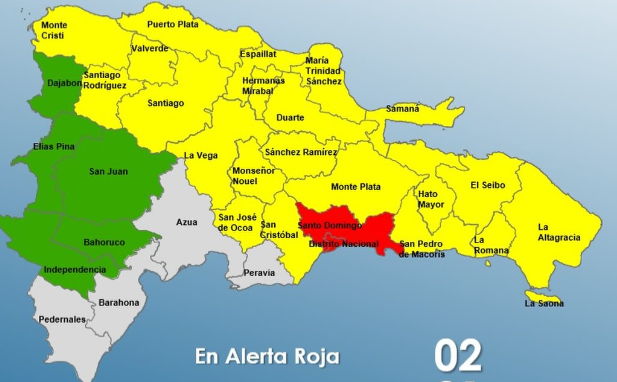
    The Caribbean nation of the Dominican Republic has activated a tiered national weather alert system as ongoing rainy conditions raise flood and landslide risks across large swathes of the country, according to joint updates from the nation’s top meteorological and water resource agencies.

    The country’s Emergency Operations Center upgraded Santo Domingo province and the National District, which encompasses the capital’s core urban area, to the highest-level red alert, marking these regions as facing the most immediate danger from the unstable weather. In addition to the red alert zones, 21 Dominican provinces remain under mid-level yellow alert, a designation that signals elevated but less immediate risk. Prominent among the yellow-alert provinces are popular coastal and inland hubs including Puerto Plata, a top tourist destination, Santiago, the nation’s second-largest city, San Cristóbal, La Vega, La Altagracia, home to the major resort region of Punta Cana, San Pedro de Macorís, Samaná, and Duarte, with particular warning issued for low-lying Bajo Yuna communities. Five southwestern provinces — San Juan, Dajabón, Elías Piña, Independencia, and Bahoruco — have been placed on the lowest alert level, green, indicating milder potential risk compared to other parts of the country.

    The alert framework comes after multiple days of rainfall that have left soil across most of the country heavily saturated, increasing the likelihood of flash floods and mudslides as new precipitation continues to move through the region. Local emergency management authorities have issued clear public guidance to reduce avoidable risk: residents across all affected provinces are strongly urged to avoid attempting to cross swollen rivers, creeks, and steep ravines with fast-moving high water, and to stay far away from unsecure recreational swimming areas that have become dangerous due to the weather.

    Beyond inland flood risks, the Dominican Institute of Meteorology (INDOMET) has issued a separate warning for maritime activities. Operators of small and medium-sized watercraft have been told to exercise extreme caution when operating near the national coastline, and advised against all travel into open offshore waters. The warning cites multiple hazardous ocean and atmospheric conditions, including strong gusting winds, abnormally high swells, reduced visibility from ongoing rain and cloud cover, frequent thunderstorms, and the potential for waterspouts to form over coastal waters.

  • INTEC’s Apollo 27 wins three awards at NASA Rover Challenge 2026

    INTEC’s Apollo 27 wins three awards at NASA Rover Challenge 2026

    A student engineering team from the Technological Institute of Santo Domingo (Intec) has cemented its status as a global standout in aerospace innovation, claiming three additional awards at the 2026 NASA Human Exploration Rover Challenge and pushing its cumulative haul of recognitions in the prestigious event to 15.

    The annual NASA competition, which invites collegiate and high school teams from around the world to design, build, and test human-powered rovers capable of navigating harsh, extraterrestrial-like terrain, serves as a launching pad for the next generation of space exploration engineers. For Apollo 27, this year’s results extend a remarkable streak of success that has already made the Dominican team one of the most decorated in the event’s history.

    Among the 2026 honors, the team secured the Team Spirit Award for the fourth consecutive year, a testament to its consistent commitment to collaboration, sportsmanship, and community among participating groups. The two additional prizes—the Industry STEM Engagement Award and the Social Media Award—extend recognition beyond pure engineering performance, highlighting Apollo 27’s far-reaching work to inspire public interest in science, technology, engineering, and mathematics across the Dominican Republic and beyond.

    In a new milestone for the program, the team also unveiled a cutting-edge lightweight rover that tipped the scales at only 126 pounds. The design breaks Apollo 27’s own previous record for the lightest functional rover the team has built, underscoring the group’s relentless focus on efficiency and innovative engineering. The achievement puts the advanced technical skills of young Dominican STEM talent on full display to a global audience of space industry leaders and engineering peers.

  • Gonsalves to represent teen girl charged with attempted murder

    Gonsalves to represent teen girl charged with attempted murder

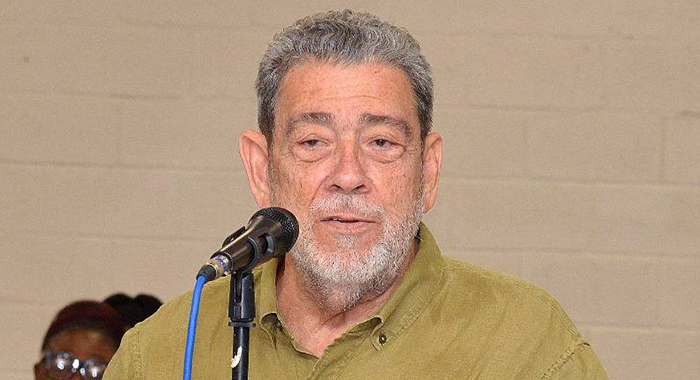
    Almost a quarter century after stepping away from his legal career to lead the country as Prime Minister, former St. Vincent and the Grenadines Prime Minister and current Opposition Leader Ralph Gonsalves is set to make a notable return to the courtroom this Monday. The 80-year-old, who will celebrate his birthday in August, will step into the role of defense counsel for a 16-year-old constituent facing a serious criminal charge.

    The minor, Antonia Thomas of Colonarie, has been formally charged with attempted murder in connection with a violent public altercation that unfolded last Thursday. Prosecutors from the police service allege that Thomas attacked 65-year-old Winston McMillan during the confrontation, striking him repeatedly in the head. McMillan was immediately rushed to a local hospital for emergency care, where his condition has since been updated to brain dead.

    Medical experts define brain death as the complete and irreversible cessation of all brain function, with any residual life signs such as breathing or a sustained heartbeat only maintained through mechanical life support. Individuals confirmed to be brain dead cannot regain consciousness or breathe independently, and most legal jurisdictions recognize brain death as official legal death. Gonsalves is scheduled to present his defense during the preliminary hearing at the Serious Offences Court, the jurisdiction that handles initial proceedings for attempted murder cases in the country.

    Gonsalves’ return to legal practice comes on the heels of a devastating electoral defeat for his long-ruling Unity Labour Party (ULP) in the November 27 general election. The ULP, which held power for nearly 25 years, was ousted by the New Democratic Party, which secured a landslide victory, winning 14 out of the 15 available parliamentary seats. Gonsalves was the sole ULP candidate to retain his parliamentary seat, leaving him as the formal leader of the opposition. Shortly after the election results were finalized, Gonsalves confirmed he had paid all required regulatory fees to reinstate his license to practice law, a career he put on hold at the turn of the 21st century to focus exclusively on his prime ministerial duties.

    A notable detail of the upcoming hearing is that Gonsalves will appear before Chief Magistrate Colin John, who previously served as one of the country’s police commissioners during Gonsalves’ time in office. This is not Gonsalves’ first experience handling high-profile criminal cases across the Caribbean region. Before his entry into national leadership, he built a decades-long legal career representing clients throughout the Caribbean bloc. One of his most famous cases came in 1997, when he successfully defended Jim and Penny Fletcher, an American couple charged with the 1996 murder of 30-year-old Vincentian water taxi operator Jerome “Jolly” Joseph, who was fatally shot in Bequia. The Fletchers were ultimately found not guilty by the court.