作者: admin

  • Law enforcement authorities in Belize seize plane, drugs in major operation

    Law enforcement authorities in Belize seize plane, drugs in major operation

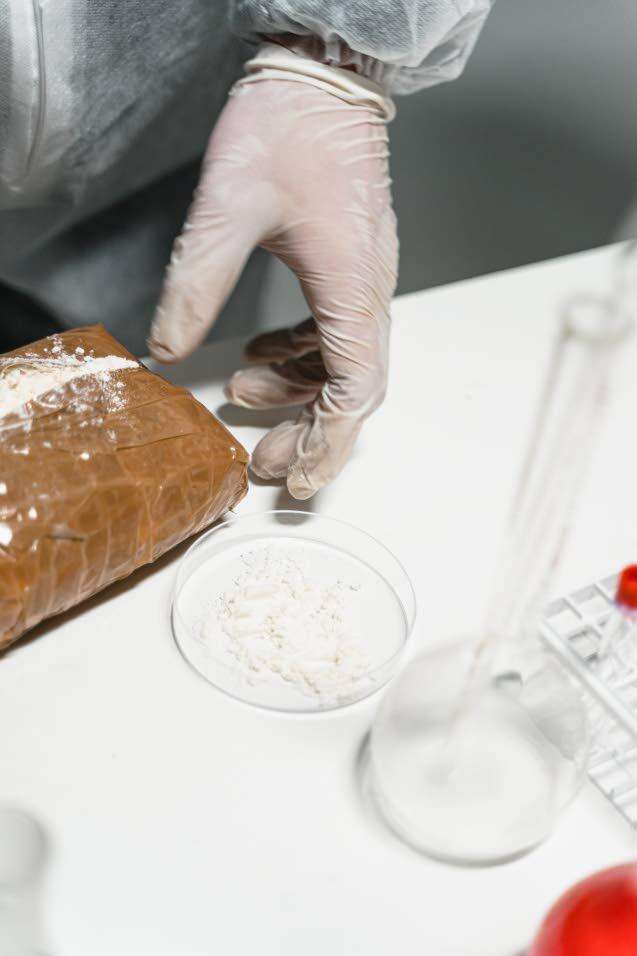
    In a major coordinated anti-narcotics operation carried out over the weekend of April 10, Belizean security and law enforcement agencies have seized nearly 551 kilograms of unprocessed suspected cocaine and a private Cessna aircraft, taking four people into custody as investigations into a transnational drug trafficking network continue.

    The operation, which unfolded in the remote Neuland region of northern Belize’s Corozal District, was built on real-time intelligence sharing and cross-border partnership, Belize’s Ministry of Home Affairs and Enterprise confirmed in an official statement. According to ministry details, security personnel began tracking the small aircraft long before it touched down on a clandestine landing strip, monitoring its journey north from South America with live surveillance feeds provided by international partner nations.

    The multi-phase operation was structured to maximize the element of surprise and avoid tipping off members of the trafficking ring. First, elite intelligence units carried out prolonged stealth surveillance of known and suspected secret landing sites across northern Belize, mapping potential routes and target locations. Once the aircraft entered Belizean airspace, specialized tactical units from multiple government agencies were deployed to pre-assigned positions surrounding the Neuland landing zone, lying in wait for the aircraft to touch down.

    At 6:14 pm local time on April 10, the Cessna landed in the Neuland area, and law enforcement teams moved in immediately to secure the site. In addition to seizing the aircraft and the 551.39 kilograms of cocaine stowed aboard, officers detained two Mexican nationals identified as the aircraft’s pilots, along with two Belizean men who were waiting at the landing site. The total estimated street value of the seized cocaine has not been publicly released by authorities as of the latest update.

    Ministry officials announced that they are withholding key details of the operation at this stage of the investigation, noting that a parallel probe is already underway to uncover the full network of senior organizers and major players behind the foiled shipment. The drug was intended for transshipment through Belize to consumer markets in North America, authorities confirmed, adding that the bust disrupts an active trafficking route that criminal networks have attempted to use repeatedly.

    The successful operation was led by Belize’s Joint Intelligence Operations Centre (JIOC), with tactical support from specialized units across four key agencies: the Belize Police Department, Belize Defence Force, Belize Coast Guard, and Customs Department. The ministry emphasized that the result of this operation is a clear demonstration of the Belizean government’s consistent, unwavering commitment to dismantling transnational drug trafficking networks and rooting out organized criminal activity within the country’s borders.

    “Through strengthened law enforcement protocols, deeper cross-agency coordination, enhanced local and regional cooperation, and comprehensive prevention strategies, we will continue to confront these threats head-on,” the statement read. Officials added that they expect more breakthroughs in the ongoing investigation as they work to trace the origins of the shipment and arrest additional members of the smuggling ring.
  • Pope says he doesn’t  fear Trump, has ‘moral duty to speak out’ against war

    Pope says he doesn’t fear Trump, has ‘moral duty to speak out’ against war

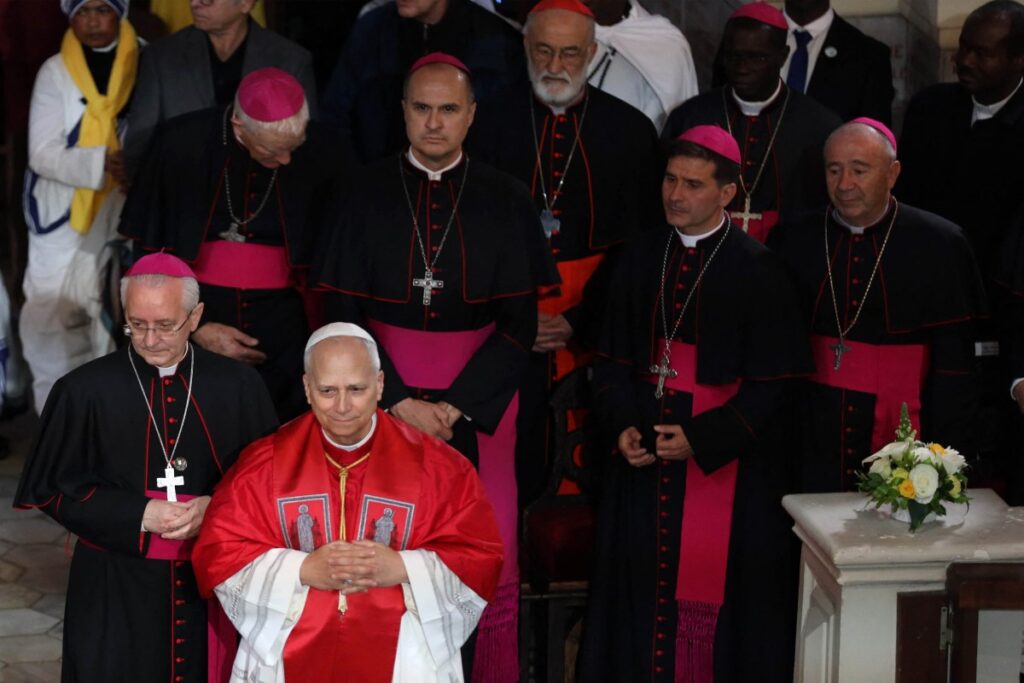
    On Monday, as Pope Leo XIV traveled to Algiers for the first stop of a multi-nation African apostolic tour, a public dispute erupted between the pontiff and former U.S. President Donald Trump over the ongoing Middle East conflict, overshadowing the spiritual and diplomatic aims of the trip.

    Before the papal plane departed Rome, Trump launched a series of sharp criticisms against Pope Leo, who had publicly called for an immediate end to the war ignited by the joint Israel-U.S. military strike on Iran in late February. The U.S. leader doubled down on his attacks hours later, insisting he had nothing to apologize for, and claimed the pontiff’s stance on Iran was factually wrong. “He was very much against what I’m doing with regard to Iran, and you cannot have a nuclear Iran,” Trump stated, adding that he is “not a big fan of Pope Leo” and accusing the pontiff of recklessly engaging with the Iranian government.

    Speaking to reporters aboard his aircraft en route to Algiers, Pope Leo pushed back against the criticism, rejecting any desire for political confrontation with the Trump administration. “I have no intention to debate with Trump, I am not a politician,” the pontiff clarified. He emphasized that his calls for peace flow directly from the core mission of the Catholic Church: “The Gospel says… blessed are the peacemakers. I believe that the Church has a moral duty to speak out very clearly against war and in favour of peace and reconciliation.” Pope Leo added pointedly that he does not fear condemnation from the Trump administration, and will not shy away from proclaiming the Gospel’s message of peace.

    Italian Prime Minister Giorgia Meloni quickly stepped in to condemn Trump’s attacks, describing them as “unacceptable.” “It is right and normal for [Leo] to call for peace and to condemn all forms of war,” she stated.

    Beyond the transatlantic dispute, Pope Leo’s two-day visit to Algeria carries deep personal spiritual meaning for the pontiff. Algeria is the birthplace of Saint Augustine of Hippo, the 4th and 5th-century Christian theologian whose writings have shaped Catholic thought for millennia, and whose spiritual order the pope himself belongs to. In his very first address after being elected pope in May 2025, Leo identified himself as a “son” of Augustine, and frequently references the theologian’s work in his teachings.

    In his opening address at the Algerian Martyrs Memorial in Algiers on Monday, the pontiff paid tribute to the thousands of Algerians killed during the country’s 1954-1962 war of independence from France, and used the occasion to call for cross-national forgiveness and reconciliation. The remarks come at a time of rising diplomatic tensions between Algiers and Paris, and follow a recent private meeting between Pope Leo and French President Emmanuel Macron at the Vatican. “In this place, let us remember that God desires peace for every nation,” the pontiff said.

    The ongoing dispute with the Trump administration is not new: Pope Leo has previously criticized Trump’s threats against Iranian civilians as unacceptable, and decried the U.S. administration’s “inhuman” treatment of migrants crossing the southern U.S. border. Trump has responded in kind, calling Pope Leo “WEAK on Crime, and terrible for Foreign Policy”, and has claimed that cardinals elected Leo solely because of his American citizenship. In a recent controversial social media post, Trump shared an AI-generated image that depicted him as Jesus Christ, before deleting the post amid widespread backlash. Iranian President Masoud Pezeshkian condemned the post as an “insult” and “desecration of Jesus” on the social media platform X.

    During his flight to Algiers, Pope Leo reiterated that his work is fundamentally different from secular political statecraft. “We’re not politicians, we’re not looking to make foreign policy as he calls it with the same perspective that he might understand it,” the pontiff said.

    On Monday, the pontiff also toured two of Algiers’ most iconic religious sites: the Great Mosque of Algiers, which boasts the world’s tallest minaret, and the Basilica of Our Lady of Africa, which overlooks the Bay of Algiers, a landmark that reflects the country’s long history of coexistence between Muslim and Christian communities. On Tuesday, Pope Leo will travel to Annaba, the modern city built on the site of the ancient Roman city of Hippo where Saint Augustine lived and worked for most of his career. He plans to hold a private prayer service at a chapel honoring 19 priests and nuns murdered during Algeria’s brutal 1992-2002 civil conflict, but will not visit the Tibhirine monastery where seven monks were kidnapped and killed in 1996, a killing that remains unresolved decades later.

    Pope Leo’s 10-day African tour will also include stops in Cameroon, Angola and Equatorial Guinea, covering more than 18,000 kilometers between April 13 and 23. While in Algeria, three international human rights organizations have publicly called on the pontiff to address the ongoing repression of religious minority communities in the country. While Algeria’s constitution formally guarantees freedom of worship for all faiths under regulated conditions, human rights groups have documented consistent patterns of harassment and discrimination against minority religious groups in recent years.

  • ‘Deeply traumatic!’: Injured bystander in carnival shooting speaks out

    ‘Deeply traumatic!’: Injured bystander in carnival shooting speaks out

    KINGSTON, Jamaica — A shooting at a high-profile pre-Carnival event in the Jamaican capital has left three people injured, including an American tourist who is now speaking out about the “deeply traumatic” experience and demanding sweeping changes to public event safety protocols across the country.

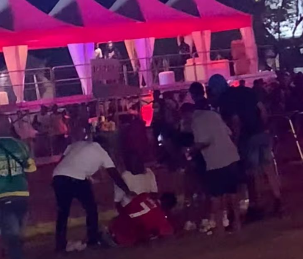
    Jeremy Watson had traveled to Jamaica to join in the island’s iconic annual Carnival celebrations, and the Big Wall Revolution gathering at the Ranny Williams Entertainment Centre was supposed to be the final stop of his vacation on Sunday. What he expected to be a joyful, memorable night quickly devolved into chaos when a violent altercation broke out between a group of entertainers at the venue. Just minutes after Watson entered the space, a stray bullet hit him, cutting his trip short and upending his life.

    “What should have been a celebratory and memorable evening instead became a deeply traumatic experience,” Watson said in a public statement released this week. Watson, who suffered severe nerve damage from the gunshot wound, says his injury could leave him with permanent long-term disability. He is scheduled to be airlifted back to the United States to undergo urgent, specialized surgery, and the incident has already left him grappling with overwhelming physical pain, emotional trauma, and mounting unexpected financial strain.

    Beyond the shooting itself, Watson harshly criticized the inadequate emergency response on site during the incident. Though an ambulance was already stationed at the paid, organized event, he said the vehicle lacked basic life-saving medical supplies, and on-site emergency personnel were unable to properly control his severe bleeding. “This incident represents a serious failure in ensuring that safe and secure environment that patrons at organised, paid events expect,” he said, calling the entire situation “unacceptable.”

    Watson is one of three people wounded in the violence, which investigators have tied to a public dispute between high-profile entertainment figures. Popular podcaster Jhaedee Richards, who goes by the professional name Jaii Frais, was also shot and remains hospitalized under police guard. The third victim, a member of one of the involved entertainer’s entourages, is currently in critical condition and still undergoing emergency surgery.

    Local law enforcement has confirmed that Jahvel “Jahvy Ambassador” Morrison, a well-known Jamaican music producer and artist manager, is currently in police custody as the investigation progresses. Initial police reports show the shooting erupted following a confrontation between Morrison and Richards near a venue restroom, where multiple people pulled firearms during the fight. No formal charges have been filed against any suspect as of yet, and detectives continue to piece together the full sequence of events that led to the violence.

    For Watson, the incident is far more than a personal tragedy — it is a critical wake-up call for Jamaican authorities and event organizers. He is calling on local officials to implement far stricter safety screening protocols, invest in improved emergency response training and resources for public events, and hold event organizers legally accountable for failures that put attendees at risk. “I can only hope that Jamaica takes this incident as a serious wake-up call and holds event organisers accountable for implementing the necessary safeguards to prevent any future patrons from enduring a situation like mine,” Watson said. “No individual attending an event for enjoyment should have their life threatened or leave with life-altering injuries due to preventable failures in safety and preparedness. There must be accountability, and there must be change to ensure that the well-being and security of all patrons are treated as a priority, not an afterthought.”

  • Trump deletes Jesus post of himself after outcry

    Trump deletes Jesus post of himself after outcry

    A controversial AI-generated image that depicted former U.S. President Donald Trump in a Jesus-like healing pose has been pulled from his Truth Social platform, after fierce pushback from prominent conservative Christian leaders — some of the politician’s most loyal core supporters. The digital artwork, which was uploaded to the platform late Sunday, showed Trump draped in flowing red and white robes, placing his hand on the forehead of a figure presented as unwell. Glowing light radiated from both Trump’s hand and head in the image, with an American flag displayed in the background and a crowd of onlookers staring up at him with expressions of reverence. The image quickly sparked widespread outrage across religious and political circles, prompting the former president to take it down on Monday. When questioned by reporters about the inflammatory post, Trump pushed back against claims he intended to frame himself as Jesus Christ. “I did post it, and I thought it was me as a doctor and had to do Red Cross,” he told reporters. “It’s supposed to be me as a doctor, making people better. And I do make people better. I make people a lot better.” Despite the former president’s explanation, the post drew sharp condemnation from high-profile conservative Christian commentators. Megan Basham, a widely recognized conservative journalist and political commentator, publicly denounced the image in a post on X, calling it “outrageous blasphemy.” “I don’t know if the president thought he was being funny or if he is under the influence of some substance or what possible explanation he could have for this OUTRAGEOUS blasphemy,” Basham wrote. “He needs to take this down immediately and ask for forgiveness from the American people and then from God.” This incident is far from an isolated case: Trump has a well-documented history of leaning into religious imagery to frame his political persona, particularly ahead of the 2024 presidential election. During his 2023 New York civil bank fraud trial, the former president shared a supporter-drawn sketch that depicted him sitting alongside Jesus inside the courtroom. Beyond shared imagery, Trump’s closest political and spiritual advisors have repeatedly drawn deliberate comparisons between Trump and Jesus to frame his political struggles as a kind of divine mission. Earlier this April, during an Easter lunch held at the White House during his first term, prominent televangelist and long-time Trump spiritual advisor Paula White-Cain directly compared the former president to Jesus Christ, framing his legal challenges as a modern-day parallel to Jesus’ own betrayal and false accusation. “You were betrayed and arrested and falsely accused. It’s a familiar pattern that our Lord and Saviour showed us,” White-Cain stated at the event.

  • Lay magistrates mark 41 years of justice and service during church service in Hanover

    Lay magistrates mark 41 years of justice and service during church service in Hanover

    On a recent Sunday in Lucea, Hanover, Jamaica, members of the Lay Magistrates’ Association of Jamaica (LMAJ) gathered at Lucea United Church for a national service of celebration, marking 41 years of voluntary, dedicated contribution to the country’s legal and community frameworks. The event, held under the official theme “LMAJ at 41, Strengthening Justice through Service”, brought together sitting Justices of the Peace (JPs), local clergy, community stakeholders, and faith leaders to reflect on decades of work and renew the organisation’s founding mission.

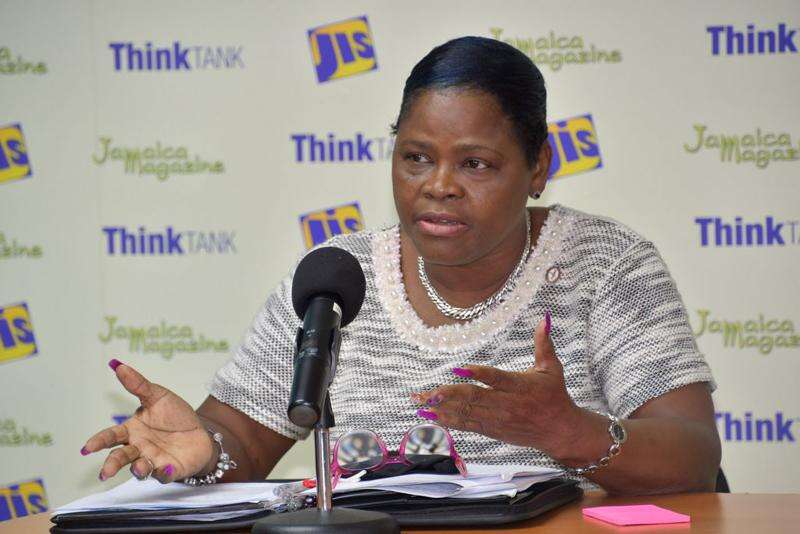
    In her keynote address to the assembled congregation, LMAJ President Paulette Kirkland, JP, framed the association’s work not as a mere civic obligation, but as a calling rooted in both legal principle and spiritual values. Noting the anniversary fell just one week after the Easter season, a period defined by reflection, sacrifice and renewal in Christian tradition, Kirkland drew a deliberate parallel between lay magistrates’ legal duties and the model of servant leadership central to Christian faith.

    “Lent is a season of reflection, sacrifice, humility, and renewal. It reminds us of Christ’s call to servant leadership — a leadership grounded not in power, but in love; not in status, but in sacrifice,” Kirkland told attendees. She argued that the pursuit of justice extends far beyond a technical legal function, positioning it as a divine mandate shaped by righteousness, wisdom, and compassion. “In a world where injustice can weaken communities and erode trust, our service strengthens the very foundation of our society,” she added.

    Looking back on 41 years of the LMAJ’s operation across Jamaica, Kirkland paid tribute to the thousands of unpaid voluntary hours JPs have contributed to parish courts and local communities across the island. She anchored the core requirements of the JP role in the biblical verse Micah 6:8, which calls for people “to do justly, to love mercy and to walk humbly with our God”, breaking down each phrase as a guide to the work of lay magistracy. “To do justly: ensuring fairness without prejudice or partiality. To love mercy: recognising the humanity behind every case. To walk humbly: understanding that true authority comes from God,” she explained.

    As the association enters its 42nd year of service, Kirkland used the anniversary occasion to issue a call for collective recommitment to the non-negotiable core values of integrity and impartiality, particularly at a moment when rising concerns over injustice have eroded public trust in social and legal institutions across the globe. “Anniversaries are not only moments of celebration; they are moments of recommitment,” she emphasized.

    Lennox Anderson-Jackson, Custos of Hanover, echoed Kirkland’s remarks, praising JPs for their four-decade legacy as quiet but transformative pillars of Jamaican local communities. Describing JPs as “mediators, mentors, advocates and guardians of good order”, Anderson-Jackson noted that the impact of their work in resolving community conflicts, maintaining social peace and upholding the rule of law cannot be overstated. He added that in an era of growing public skepticism around trust and equity, the work of lay magistrates has grown more, not less, critical to societal stability, echoing the long-held legal principle that “Justice must not only be done, but must be seen to be done”.

    The anniversary celebration unfolded against a backdrop of unaddressed internal challenges for the LMAJ, which has recently navigated questions surrounding member ethical standards and professional conduct. While Reverend Glenroy Clarke, pastor of the host Lucea United Church and a past president of the LMAJ’s Hanover chapter, did not explicitly name these ongoing challenges during his sermon, he centered his remarks on the urgent need for unity within the association. Clarke stressed that while internal disagreement may occur, fragmentation is not an acceptable outcome for the organisation. “Uncertainty may remain ahead of us but we are no longer divided as an association. We are stronger together to stand up to the test of times,” Clarke asserted.

  • Food For The Poor appoints Denise Cagley-Jefferson as executive director

    Food For The Poor appoints Denise Cagley-Jefferson as executive director

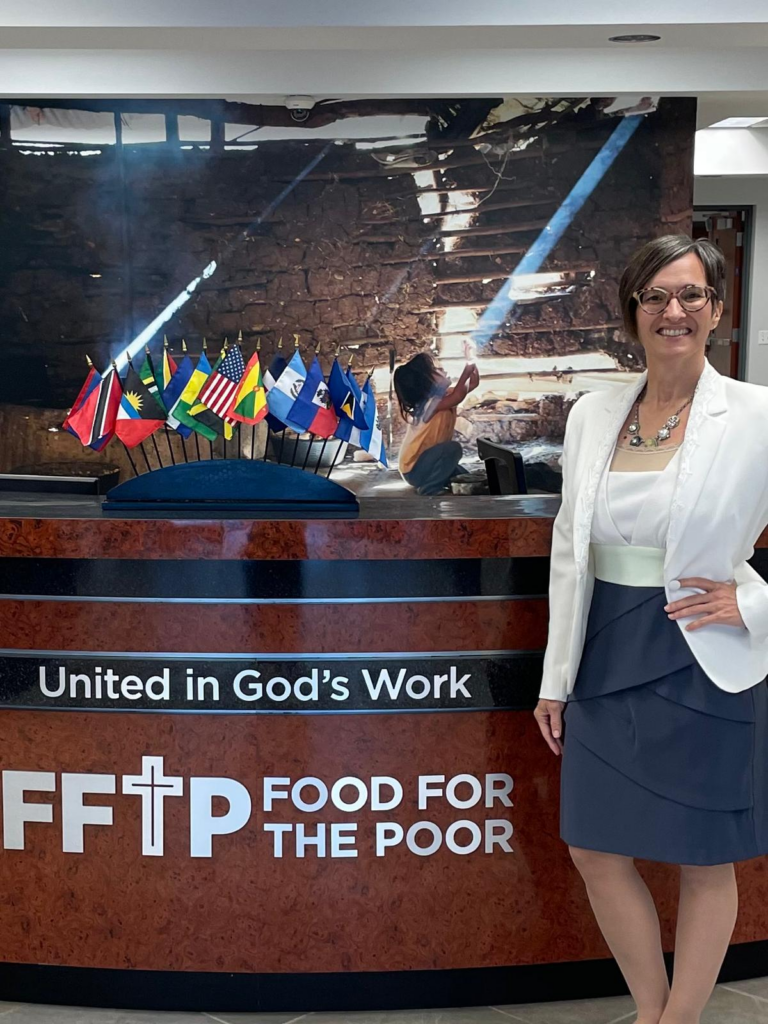
    KINGSTON, Jamaica — One of Jamaica’s most prominent anti-poverty charitable organizations, Food For The Poor (FFTP) Jamaica, has announced a key leadership transition: veteran international non-profit executive Denise Cagley-Jefferson will step into the role of executive director, with her tenure set to begin on April 1, 2026.

    With more than 20 years of hands-on experience working across the global non-profit ecosystem, Cagley-Jefferson has already carved out a well-respected legacy in three core operational areas: building and nurturing donor relationships, leading impact-driven community programs, and steering large non-profit organizations through adaptive growth. Throughout her decades-long career, her work has remained centered on a singular core mission: empowering local communities and advancing inclusive, sustainable development that prioritizes the needs of the people it serves.

    Cagley-Jefferson is no stranger to Jamaica or the work of FFTP Jamaica. She has deep, long-standing roots in the island’s development space, founding the community-focused Blue Mountain Project back in 2004 and continuing to serve as an active board member for the initiative ever since. This decades-long sustained engagement has allowed her to build trusted, long-term relationships with local government, community groups, and non-profit stakeholders, while also gaining an intimate, nuanced understanding of the most pressing social development priorities across Jamaica.

    Colleagues and peers describe Cagley-Jefferson as a collaborative leader who prioritizes practical, solution-focused problem-solving. She is widely recognized for her forward-looking strategic thinking, unwavering commitment to organizational accountability, and hands-on leadership style that prioritizes on-the-ground engagement with communities. Her professional experience working across a wide range of diverse cultural contexts has also equipped her to lead with cultural sensitivity, deep respect for local knowledge, and a persistent commitment to centering local partnerships in all organizational work.

    In an official statement released to the public this Monday, FFTP Jamaica’s leadership expressed full confidence in the new appointment. The organization noted that Cagley-Jefferson’s leadership will strengthen FFTP Jamaica’s overall operational excellence, deepen already existing connections with donors and local partners, and accelerate the expansion of mission-aligned sustainable programs that directly support vulnerable communities across every region of the island.

    Founded to address systemic poverty across Jamaica, FFTP Jamaica remains the country’s leading charitable organization focused on lifting up vulnerable individuals and families. It delivers a broad portfolio of community programs spanning affordable housing development, educational access initiatives, public health support, and emergency disaster relief, working hand-in-hand with local communities and cross-sector stakeholders to reduce poverty and drive long-term equitable development.

  • Jamaica among several Caricom countries highlighted for progess in health sector — report

    Jamaica among several Caricom countries highlighted for progess in health sector — report

    In its 2025 annual country office performance report released Monday, the Pan American Health Organization (PAHO) has recognized notable health sector advancements across dozens of member states in the Americas, singling out Jamaica and other Caribbean Community (Caricom) nations for standout progress in regional public health. The comprehensive report maps concrete achievements from tailored, country-led public health initiatives forged through technical cooperation between PAHO, national governments, and cross-sector strategic partners, linking local health gains to broader regional stability and social development.

    Beyond Jamaica, the report highlights meaningful headway from Barbados, Bermuda, the Eastern Caribbean bloc, Guyana, Suriname, and Haiti, marking collective momentum across the Caribbean that many global health observers have hailed as promising for the region. Progress has unfolded across a diverse spectrum of priority public health areas, tailored to each nation’s unique unmet health needs.

    Across the continent, four nations — Argentina, Bermuda, Haiti, and Venezuela — have expanded fair, equitable access to life-saving medicines, vaccines, and core health supplies, closing gaps that previously left marginalized communities without critical care. Belize, Bolivia, and Curaçao have moved mental health integration forward, rolling out updated national policies, expanding access to community-centered care, and scaling up support services for people living with mental health conditions. The Bahamas, Brazil, and Guatemala have recorded measurable reductions in maternal mortality while upgrading maternal and neonatal health services, and building public infrastructure that supports healthy aging for older populations.

    Barbados, Eastern Caribbean member states, Cuba, Guyana, the Cayman Islands, and Mexico have ramped up regional efforts to prevent and control noncommunicable diseases — which account for a majority of deaths across the Americas — along with addressing their underlying risk factors. In the fast-growing area of digital health transformation, Trinidad and Tobago, Colombia, and Panama have upgraded system interoperability, expanded access to telehealth services for underserved areas, and boosted digital literacy among frontline health workers to enable more connected, efficient care.

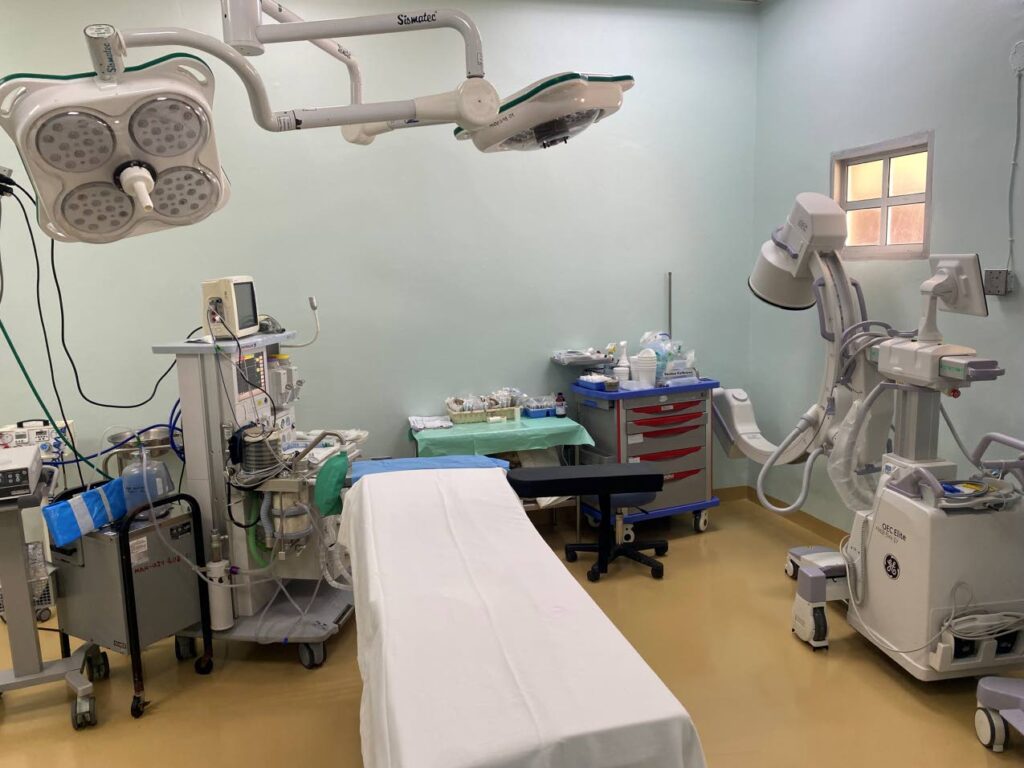
    For Jamaica, a key area of progress highlighted is emergency preparedness and response capacity. The island nation, alongside the Turks and Caicos Islands, Ecuador, El Salvador, Honduras, Nicaragua, and Peru, has strengthened national systems to respond to public health emergencies, epidemics, and pandemics. PAHO specifically noted Jamaica’s rapid, effective response after Hurricane Melissa hit in October 2025, which destroyed five hospitals and damaged more than 100 primary health centers across the country. Despite the widespread damage, Jamaican authorities moved quickly to deploy urgent support and keep essential health services operational for affected communities, demonstrating the value of the strengthened emergency frameworks the country has built.

    One of the most transformative milestones highlighted in the 2025 report is Suriname’s certification as malaria-free, making it the first country in the entire Amazon basin to earn this designation. The achievement marks a historic leap forward for regional malaria elimination efforts, setting a precedent for other Amazon nations working to eradicate the mosquito-borne disease.

    PAHO Director Dr. Jarbas Barbosa emphasized that the progress outlined in the annual reports delivers far more than improved health outcomes for local populations. “The initiatives presented in these reports not only contribute to protecting the health and well-being of populations, but also support stability, security and social development in the Americas,” Dr. Barbosa said. He added that the 2025 reporting year came with unique global and regional challenges that tested health system resilience across the hemisphere, reinforcing the core value of cross-border Pan-American cooperation in addressing shared public health threats.

    The report notes that while national contexts and health gaps vary widely across the region, all participating countries share a common commitment to strengthening health systems through expanded access to essential medical technologies, life-saving treatments, and affordable, quality health supplies — supported in large part by PAHO’s Regional Revolving Funds. In addition to the progress outlined across priority areas, the report also documents collective gains in expanding primary health care access and integrating mental health into national health systems.

    As the world’s oldest active international public health agency, PAHO currently operates 27 country offices across the Americas, two specialized research and care centers, and maintains an official presence in 35 member states and four associate members. Founded in 1902 as the specialized health agency of the Inter-American System (OAS), PAHO has also served as the World Health Organization’s official regional office for the Americas since 1949.

  • Caricom extends condolences after 30 people die in stampede in Haiti

    Caricom extends condolences after 30 people die in stampede in Haiti

    GEORGETOWN, Guyana — A tragic deadly stampede at Haiti’s world-famous historic Citadelle Laferrière has left at least 30 people dead, drawing messages of condolence and solidarity from the Caribbean Community (Caricom) in the wake of the weekend disaster.

    The fatal incident unfolded around 4:00 p.m. Saturday in the northern Haitian town of Milot, where thousands of pilgrims and tourists had gathered for annual Holy Week visits to the iconic fortress. According to initial official accounts, unseasonably heavy rainfall sparked sudden panic among the large crowd packed at the fortress’s entrance gates. As the throng of attendees surged to escape the weather, the chaotic crush turned deadly. Authorities confirmed most fatalities were caused by asphyxiation, while additional deaths resulted from trampling amid the uncontrolled crowd movement.

    The Citadelle Laferrière, constructed in the early 1800s shortly after Haiti won its independence, holds profound national significance as the largest fortress in the Western Hemisphere and a core symbol of Haitian sovereignty. Every year during the Christian Holy Week leading up to Easter, the landmark draws tens of thousands of local and international visitors, creating persistent strains on local crowd management infrastructure.

    Haitian Prime Minister Alix Didier Fils-Aimé, who officially confirmed the death toll, said the national government was overwhelmed by “profound emotion and immense sadness” over the tragedy. “The government extends its sincere condolences to the bereaved families and assures them of its deep solidarity during this time of mourning and great suffering,” Fils-Aimé said in a public statement. He added that local and national emergency authorities have been fully mobilized to deliver immediate aid, medical care and logistical support to everyone affected by the crush.

    The prime minister noted that officials are maintaining close, ongoing monitoring of the response effort, and called on the Haitian public to remain patient and calm as formal investigations get underway to unpack the exact sequence of events that led to the disaster. “In this particularly difficult time, the prime minister and the Government reaffirm their solidarity with the victims and the entire affected community,” he added.

    Local officials warn that the confirmed death toll may climb in the coming days, due to critical shortages of emergency resources in Milot that have delayed response efforts. Milot Mayor Wesner Joseph highlighted that the town lacks adequate ambulance services and other critical emergency infrastructure, slowing the transport of injured victims to care facilities. As of Monday, officials were still waiting for additional judicial authorities to arrive to formally process and document all casualties.

    Haiti’s Civil Protection Department has already released a preliminary assessment pointing to multiple contributing factors: severe overcrowding at the popular site, compounded by longstanding gaps and shortcomings in organized crowd management protocols. Most of the victims are reported to be young people, with injured survivors transported to the town’s Sacré-Cœur Hospital for treatment. Haiti’s Ministry of Tourism also issued its own statement extending “condolences and deepest sympathies” to the families of all those killed and hurt.

    In Georgetown, Caricom issued an official statement extending the regional bloc’s collective condolences to the Haitian government and people following the tragedy. “Caricom expresses heartfelt condolences to the bereaved families and hopes for the speedy recovery of those injured,” the organization said. Caricom leaders confirmed that Caricom Chair Dr. Terrance Drew, who also serves as Prime Minister of St. Kitts and Nevis, personally conveyed the bloc’s sympathies directly to Prime Minister Fils-Aimé in a phone call shortly after news of the disaster broke. The regional bloc added that it “stands in solidarity with Haiti during this time of grief and loss.”

  • PLP official addresses finance reform as party outlines election deadlines

    PLP official addresses finance reform as party outlines election deadlines

    As The Bahamas counts down to its general election on May 12, the ruling Progressive Liberal Party (PLP) has thrown its tentative support behind integrating campaign finance reform into the country’s long-term national development strategy, while declining to lock the party into binding legislative action if it retains power after the vote.

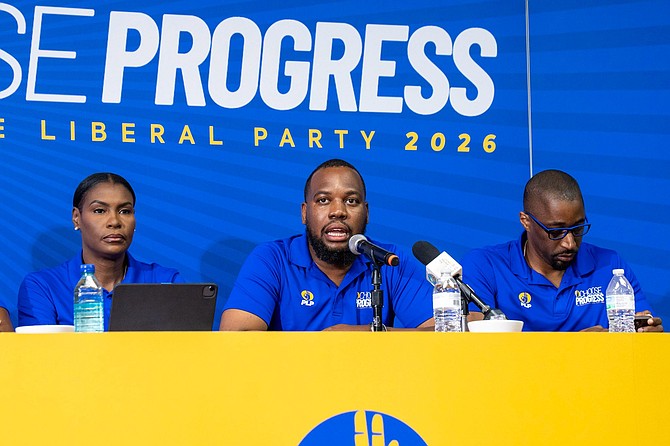
    Speaking at the PLP’s first scheduled weekly press briefing on Sunday, party Communications Director Latrae Rahming framed long-debated campaign finance overhauls as a critical topic for national planning. “Looking ahead, and even right now, we need a structured approach to this issue that is woven into our national development plan,” Rahming explained.

    Rahming added that Bahamian policymakers should look to successful regulatory models from comparable jurisdictions around the world to identify a framework that aligns with the country’s unique political context, noting that reform “definitely ought to be a consideration in the national development plan, and we absolutely need to benchmark which policies work for our jurisdiction.”

    The call for broader discussion comes amid a years-long national debate over campaign finance regulation that has never resulted in enacted legislation. Both major Bahamian political parties have campaigned on promises of reform for years, facing sustained pressure from good governance groups including the Organisation for Responsible Governance, as well as international bodies like the Organisation of American States. No major legislative progress has materialized to date.

    Most recently, Prime Minister Philip “Brave” Davis clarified in September 2024 that despite the PLP including reform promises in its 2021 Blueprint for Change manifesto, the policy was not a current administration priority. “I don’t know where this renewed focus on this issue came from,” Davis said at the time, adding “I will not disclose our campaign donors unless those donors personally give me permission to do so.” The prime minister argued that reform legislation would not directly address the immediate economic and social struggles facing most Bahamian households, noting the administration is focusing on more urgent priorities while still reviewing the issue.

    Rahming on Sunday acknowledged that existing financial safeguards are already in place for political campaigns, but stressed that cross-party consensus is required to move reform forward. “This is a conversation that all major political parties in the country need to have together,” he said.

    Alongside the discussion of campaign finance, the PLP’s legal advisor Keenan Johnson used Sunday’s briefing to outline key electoral deadlines for the upcoming May 12 vote, to help voters and candidates prepare. Nomination Day, when all candidates must complete official documentation to appear on the ballot, is scheduled for April 16. Johnson emphasized that despite many parties having already publicly ratified their chosen candidates, no candidate is officially registered until they complete this formal process.

    Additional key dates include an April 17 deadline for overseas voters to submit their ballot applications via the MyGateway digital voting portal, and an April 25 deadline for applications from voters requesting special access to polling. Advance in-person polling for eligible voters will be held on April 30. Johnson also confirmed that voters can use either a valid passport or driver’s license as official photo identification to cast a ballot, expanding options for eligible participants.

    The party confirmed that it will hold weekly press briefings every Sunday leading up to election day to keep voters updated on its platform and campaign activities. Golden Gates Member of Parliament Pia Glover-Rolle noted that the campaign has now entered its most critical phase, with just 30 days remaining until polling day. “Every single day counts between now and May 12,” she said.

  • ‘We can choose progress, or we can go backwards,’ Davis says at rally

    ‘We can choose progress, or we can go backwards,’ Davis says at rally

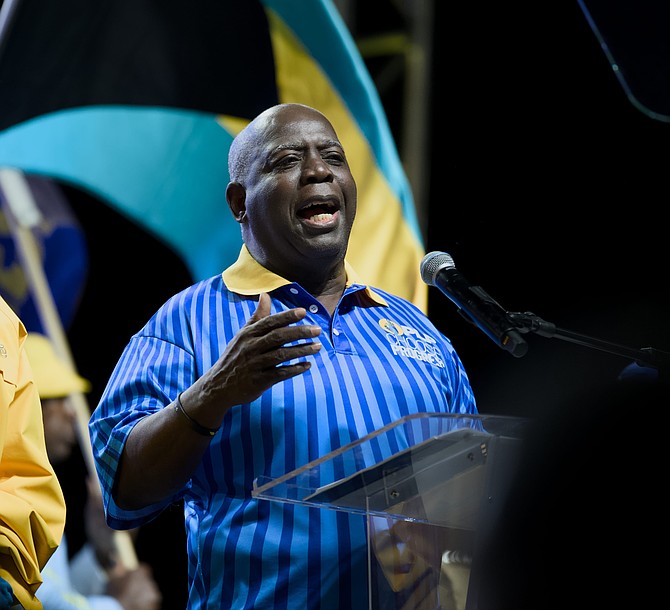
    Bahamas’ ruling Progressive Liberal Party (PLP) kicked off its formal re-election campaign over the weekend, hosting its first large-scale public rally following the official announcement of the country’s upcoming May 12 general election. Held Saturday evening at Nassau’s RM Bailey Park under the campaign slogan “Rally for Progress”, the event drew an enthusiastic crowd of loyal supporters ready to rally behind the incumbent administration.

    Attendees, clad in the party’s signature blue, packed the majority of the park grounds, waving PLP-branded flags and rallying alongside pre-program opening activities including energetic music, organized motorcades, and group chants that steadily built anticipation for the night’s headline addresses. While the venue did not reach full capacity, the space echoed with nonstop cheering and party slogans throughout the entire event, signaling strong grassroots enthusiasm for the incumbents.

    A roster of high-profile PLP candidates and party leaders took the stage throughout the night, including Fred Mitchell, Keno Wong, Leslia Brice, Lisa Rahming, Zane Lightbourne, Sebas Bastian, Jobeth Coleby-Davis, and Glenys Hanna-Martin. The evening closed with the two most anticipated speeches from the party’s top officials: Deputy Prime Minister Chester Cooper, who served as the opening headliner, and Prime Minister Philip “Brave” Davis, who delivered the closing address.

    Opening his speech to what he called a sprawling “sea of blue”, Cooper kicked off his remarks with high energy, framing the rally as the official launch of the PLP’s new campaign chapter ahead of the mid-May vote. “Look at this crowd! Look at this sea of blue! Looks like a Blue Wave to me,” he declared, drawing thunderous cheers from the gathered supporters.

    Cooper centered the entire upcoming election around a clear binary choice: progress under the PLP, or regression under the opposition. He highlighted key economic policies the incumbent administration has rolled out to ease financial strain on households, including broad tax cuts and targeted cost-of-living relief measures, most notably the removal of value-added tax (VAT) from a range of staple food items and essential consumer goods. While he did not deny that many Bahamian households still face ongoing economic pressure, he emphasized that the PLP government has prioritized addressing these challenges head-on.

    Cooper also used his time on stage to draw sharp contrasts between the PLP’s policy agenda and that of the opposing party, while making a direct appeal to first-time and young voters of all genders to back the PLP’s vision. He specifically highlighted the party’s focus on expanding job opportunities, supporting small business entrepreneurship, and increasing access to ownership opportunities for Bahamian residents.

    When Prime Minister Davis took the stage, he was met with immediate, sustained applause, with supporters chanting party slogans and waving their blue flags in a show of enthusiasm. Davis framed the upcoming vote as one of the most critical decision points in the nation’s recent history, warning voters against what he described as the disruptive pattern of alternating ruling parties every five years.

    “In 31 days, we have a choice,” he told the crowd. “In 31 days, we can choose progress, or we can go backwards.”

    A core announcement of Davis’ speech was the launch of the new “Blueprint Tracker”, a publicly accessible digital tool designed to document and showcase the administration’s progress on the key policy commitments it made during its 2021 election campaign. Davis urged all attendees and voters across the country to use the tracker to review the PLP’s first-term achievements firsthand.

    Throughout the hours of speeches, the crowd remained actively engaged, frequently interjecting with applause, chants, and enthusiastic responses, especially when speakers repeated the rally’s core call to “choose progress”. The event ran late into the evening, wrapping up shortly before 11 p.m. with a festive fireworks display and falling confetti as supporters celebrated the official start of the PLP’s re-election drive.