作者: admin

  • Samaná Bayport to handle three cruise ships simultaneously

    Samaná Bayport to handle three cruise ships simultaneously

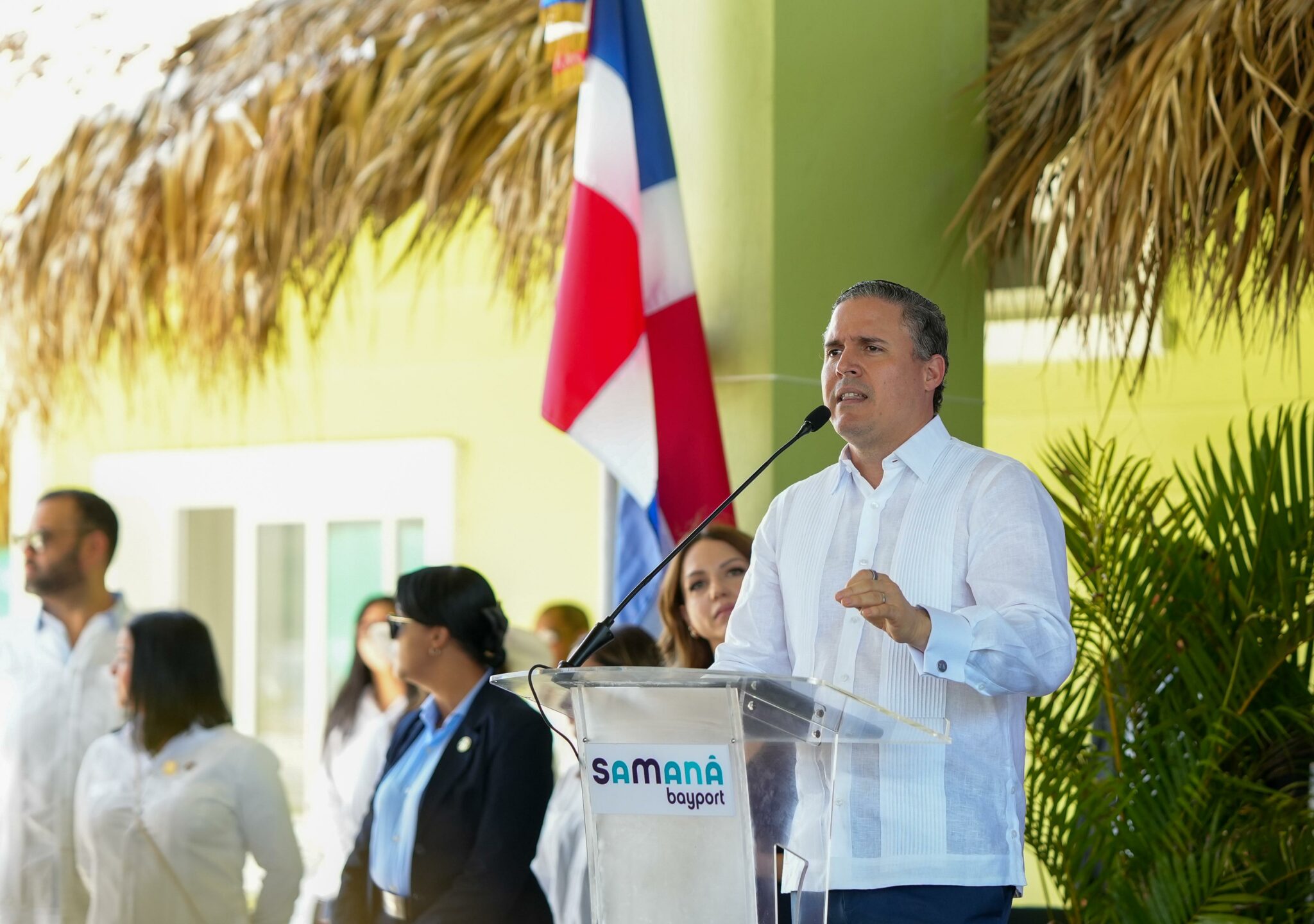
    The Dominican Republic is set to elevate its position as a top Caribbean cruise destination with the development of the new Samaná Bayport, a transformative infrastructure project announced by Jean Luis Rodríguez, executive director of the Dominican Port Authority (Apordom). Designed to address growing regional demand for cruise tourism, the facility will deliver unmatched capacity for the area, with ability to accommodate three large cruise vessels at the same time.

    At the core of the terminal’s design is an innovative SeaWalk floating pier, engineered to host massive ships carrying as many as 5,000 passengers. This cutting-edge infrastructure places Samaná Bayport among a small group of select Caribbean destinations that have adopted this advanced pier technology. The remaining two docking spots will support anchored vessels via tender services, expanding the port’s ability to handle surging visitor volumes during peak travel seasons.

    Backed by a total investment of $22 million U.S. dollars, the project prioritizes environmental stewardship from its inception, integrating industry-leading sustainable design features. Key environmental components include a on-site wastewater treatment system and targeted conservation measures tailored to protect the sensitive marine ecosystem of Samaná Bay, aligning the development with global standards for responsible tourism.

    The economic benefits of the project are already materializing for local communities. Rodríguez confirmed that construction phase has created roughly 150 direct employment positions and another 500 indirect jobs across local supply chains and support services. Once fully operational, the port is projected to generate 100 permanent direct jobs and 600 ongoing indirect roles, anchoring long-term employment for the region.

    Economic projections forecast that the port will contribute approximately $10 million U.S. dollars in annual revenue directly from cruise operations, with an additional $9 million in annual revenue generated through spin-off tourism-related services across the local economy. Beyond direct revenue and job creation, the development is strategically positioned to diversify Samaná’s tourism offerings, opening new market opportunities for local small businesses, independent artisans, and regional service providers. By balancing expanded tourism capacity with rigorous environmental protection, Samaná Bayport is set to become a model for sustainable, inclusive tourism growth in the Caribbean.

  • Coaches Banking on Clinical Execution from Players in Revised West Indies Championship

    Coaches Banking on Clinical Execution from Players in Revised West Indies Championship

    The 2026 edition of the West Indies Championship kicked off its opening day of play on Sunday, launching a restructured tournament that has sparked measured anticipation across all competing franchises’ coaching and management teams, based in St John’s, Antigua. Unlike previous iterations of the regional elite cricket tournament, this year’s competition introduces a revamped structural framework: each side will compete in a three-match bilateral series against opponents, with the top-ranked team by cumulative points earning an automatic berth in the tournament final. The second and third-place finishers will face off in a knockout playoff to claim the remaining final spot.

    Three-time consecutive defending champions the Guyana Harpy Eagles return to the pitch as one of the tournament’s strongest title contenders. Ryan Hercules, the franchise’s head coach, emphasized that the newly implemented format injects fresh competitive tension into the tournament, pushing players to raise their overall performance standard. “For our franchise, every competitive opportunity is a chance to integrate and develop emerging young talent into our core setup as early as possible,” Hercules explained. “With a condensed match schedule this year, players will need to adapt rapidly to the new rhythm and make the most of this narrow window to deliver standout results.”

    Kenroy Peters, head coach of the Windward Islands Volcanoes, expressed guarded optimism about his squad, noting that the team was constructed around a long-term sustainability strategy. “Our selection process prioritizes roster continuity, and we recognize the need to give young players who cut their teeth with the Academy and Combined Campuses & Colleges teams the chance to compete at this level for the Windwards,” Peters said. “We have a five-year development roadmap in place, and this tournament is a key milestone in that plan. The young players we’ve trusted with positions have already gotten off to an impressive start.”

    Rayad Emrit, a former West Indies national team player now leading the Trinidad & Tobago Red Force as head coach, said his side is leaning on its core professional values to navigate the revised format. “Our group is fully professional, and everyone understands what is required of us. We come into this tournament with one clear goal: to advance to the later stages. But to get there, we have to focus on one match, one day at a time,” Emrit stated.

    For the Leeward Islands Hurricanes, pre-tournament preparation followed a deliberate, methodical plan, with pre-season training camps launching as early as January under the direction of head coach Steve Liburd. “We started back in January with foundational technical work, then gradually ramped up our intensity, adding net sessions and scenario-based match drills in the final month leading up to the tournament,” Liburd shared. “When you enter any elite level competition, your first goal is to win the title. Second, you want to develop players that can earn call-ups to the senior West Indies national side – that includes fringe candidates and players who lost their spots and are hungry to earn their way back.”

    Coaches across multiple franchises have highlighted unforeseen benefits of the new bilateral series structure. For Peters, the format creates a unique opportunity for players to build consistent performance over consecutive matches against the same opponent. “One big advantage of this format is that you face the same opposition three times in a row, which lets players settle into a rhythm instead of adjusting to new opponents every few days. Our goal is to win this championship for the first time in our history, and our squad has the drive and determination to get that done,” Peters said.

    Liburd echoed this assessment, noting that the new format closely mirrors the structure of international cricket. “Even with matches played across different venues, the bilateral setup gives you enough time to develop targeted strategies against a single opponent, just like you do in international cricket. As the series progresses, you get to test how well your game planning adapts to the opposition’s strengths and weaknesses,” he explained.

    Hercules, who led Guyana to three straight titles, echoed the point that facing the same opposition repeatedly gives batters a major strategic advantage. “When you see the same bowling line-up over three matches, working with our team analyst, batters can build a clear understanding of what they will face. Even if the opposition makes a substitution, we’ve already had the chance to assess the two or three reserve bowlers they can bring in, so we can counter their threats far more quickly than we could in an older round-robin format,” he said.

    Across all franchises, coaching staff agree that pre-tournament strategy and months of preparation can only set the stage for success. At the end of the day, results will depend on disciplined, clinical on-field execution from players in every match. Coaches have expressed confidence that their squads will step up and deliver on their assigned roles to compete for the regional title.

  • Column: Leren van de vredesboodschap van Avurudu

    Column: Leren van de vredesboodschap van Avurudu

    Suriname is widely celebrated as a stunning cultural mosaic, where distinct religious traditions, ethnic identities, and ancestral customs intersect and coexist. Day by day, residents of the South American nation absorb influences from one another, adopt shared practices, and collectively shape a dynamic, interconnected society. Yet even in this context of inherent diversity, communities often overlook a critical truth: choosing peace and mutual understanding intentionally is more important now than ever.

    The world has much to gain from the core philosophy of the Sinhala and Hindu New Year, known as Avurudu, which is celebrated across Sri Lanka every April during the month of Bak. Far more than just a cultural holiday marking the turn of the calendar, Avurudu is an intentional invitation to pause, reflect on past divides, and pursue reconciliation – starting within the home, extending to local communities, and scaling all the way to national and global relationships.

    Peace, as the tradition of Avurudu reminds us, always begins at home, in the smallest sphere of everyday life. Avurudu is a moment for family reunion, for letting go of long-held grudges, resolving lingering misunderstandings, and embracing the power of forgiveness. The family unit, where we often carry our deepest emotional wounds, must be the first place we practice peace. If harmony cannot be cultivated around the family kitchen table, it becomes far harder to build it anywhere else in the wider world.

    From that small, intimate starting point, the spirit of Avurudu flows outward into neighborhoods, villages, and cities. Shared holiday rituals, traditional games, and open invitations to connect across divides lower existing tensions and create space for mutual understanding and collective collaboration. The holiday serves as a lasting reminder that all people are bound together by shared values, shared humanity, and common experiences, regardless of the cultural or religious differences that set us apart on the surface.

    This message of peace also holds powerful inspiration for national and international politics. The ancient story of Buddha, who prevented a violent conflict in Sri Lanka through wisdom and radical compassion, reinforces a critical lesson: the only path to lasting, sustainable peace requires the courage to listen to others and actively pursue understanding. Peace can never be imposed by powerful actors through force; it only emerges when all parties practice mutual respect and recognize the shared humanity of every person, no matter their background.

    In Suriname, where dozens of unique cultural communities live side by side, this message feels more urgent and relevant than ever. Surinamese people regularly adopt each other’s customs, vocabulary, and traditions, creating a vibrant blended culture that is a point of national pride. But this beautiful diversity also requires intentional focus on the values that bind communities together, creating space to embrace differences without fear or prejudice.

    As Avurudu, Bak Poya, and Easter all demonstrate, peace is not a final destination to reach one day. It is a deliberate path that every person must choose to walk anew each day. Cultivating peace requires courage, patience, and an open heart. It demands that we look beyond our own personal interests and make space to connect with the experiences and stories of people who come from different backgrounds.

    In an era marked by rising division and widespread global uncertainty, Suriname has the opportunity to build its own version of the Avurudu spirit: a widespread culture of reconciliation, where communities work together to build a future where every person feels seen, heard, and respected, regardless of their identity.

    May this new year philosophy inspire people across Suriname to practice peace every day – starting at home, extending to the street, through local communities, and across the entire nation. Only through this intentional work can we build a society that is not only rich in diversity, but also deeply connected by shared commitment to mutual respect.

    A special holiday greeting to Sumudu and Sachitra: Suba Aluth Avuruddak Wewa!

  • “Revival in the City” at Buckley’s – April 19-24

    “Revival in the City” at Buckley’s – April 19-24

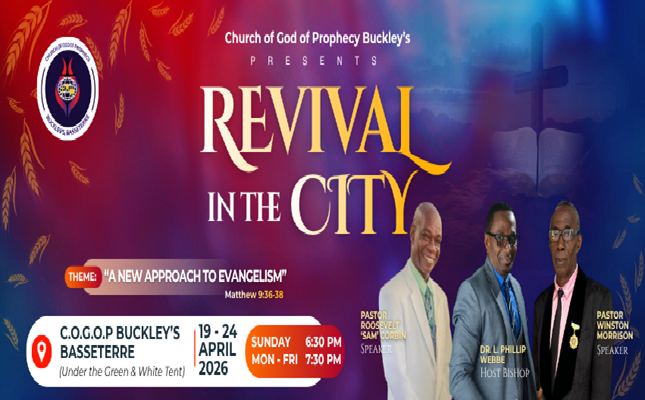
    A week-long community revival event, titled “Revival in the City”, is set to open its doors to the public later this month, hosted by the Church of God of Prophecy at its Buckley’s location in Basseterre. Scheduled to run from April 19 through April 24, the gathering centers on the core theme “A New Approach to Evangelism”, drawing its foundational message of hope and empathy from the biblical passage Matthew 9:36.

    Unlike traditional indoor revival services, this event will be held under a custom green and white tent set up on the church’s Buckley’s grounds, designed to welcome all community members regardless of their background or current spiritual journey. The space is open to anyone seeking quiet reflection, heartfelt prayer, a sense of peace, or a personal spiritual message, with no requirements for attendance other than an open mind.

    Leading the week of programming is Bishop Dr. Lionel Phillip Webbe, who will be joined by two featured guest preachers: Pastor Roosevelt ‘Sam’ Corbin and Pastor Winston Morrison, both hailing from nearby Nevis. The event kicks off with an opening service on Sunday, April 19, beginning at 6:30 PM. Following the opening night, nightly services will be held each Monday through Friday at 7:00 PM, giving community members flexible opportunities to join after work or daily obligations.

    Event organizers extended an open invitation to the entire local community and any visiting guests, emphasizing that attendees are welcome to come exactly as they are. Whether someone is seeking a fresh spiritual start, hoping for a personal miracle, or simply looking to connect with other community members in a peaceful, welcoming space, all are encouraged to attend the services under the tent.

  • Realtor injured in massive explosion; wife smelled gas

    Realtor injured in massive explosion; wife smelled gas

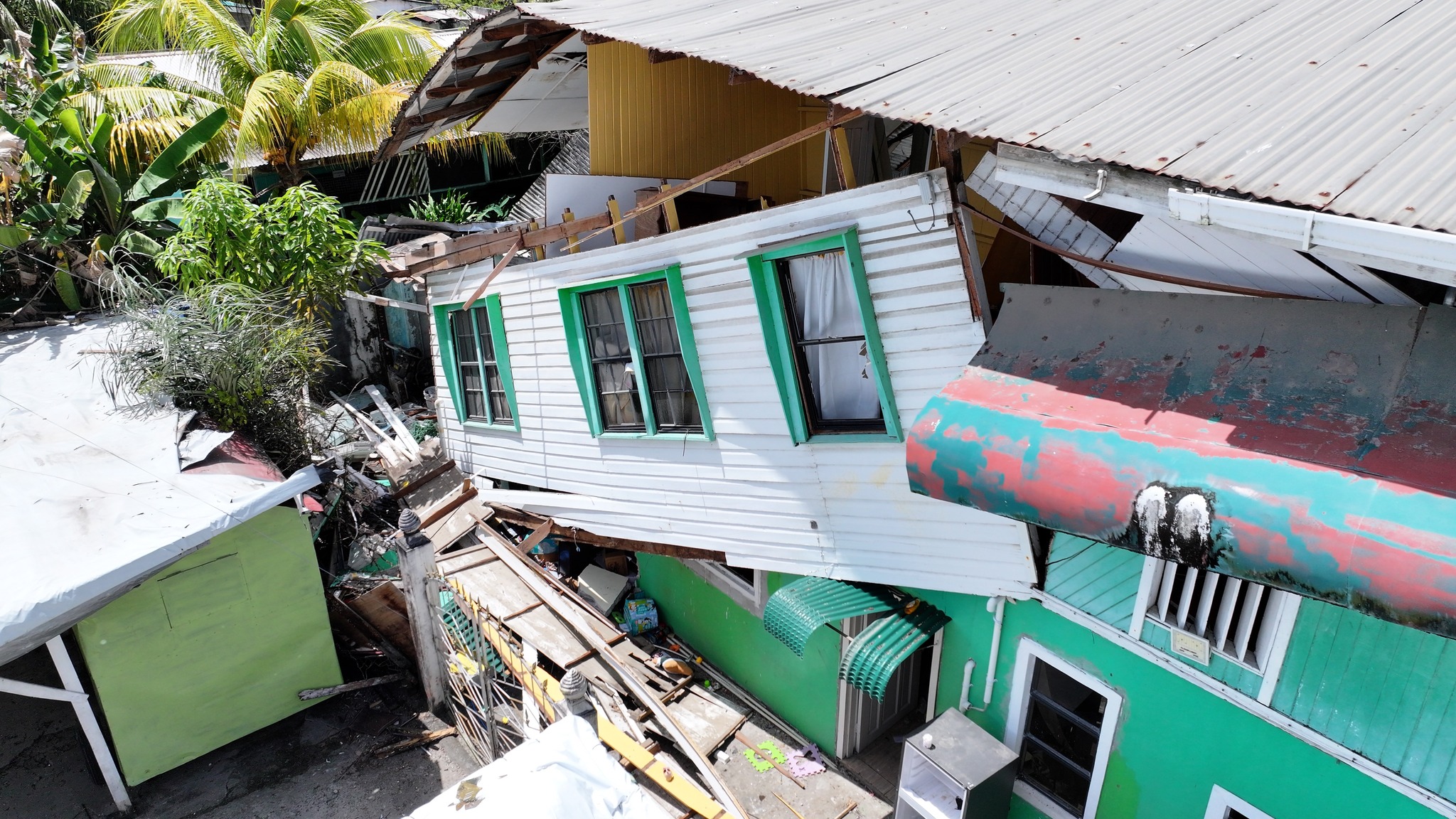
    In a shocking early morning incident in Guyana’s East Ruimveldt neighborhood on Sunday, a 56-year-old real estate agent has suffered life-threatening burns following a gas cylinder explosion that collapsed part of his family’s home, law enforcement officials confirmed.

    The Guyana Police Force identified the injured man as Troy Alleyne, who was rushed to the Intensive Care Unit (ICU) at Georgetown Public Hospital Corporation (GPHC) immediately after the blast. As of Sunday evening, his condition remained listed as critical.

    According to official police accounts, the incident unfolded just after 2:30 a.m. at the intersection of Pineapple Street and Front Road. The chain of events began when Alleyne’s wife woke in the night and detected a strong odor consistent with leaking gas. She quickly alerted her husband, who left the family’s living quarters to go out into the yard and inspect a 100-pound propane gas cylinder that was stored on the property.

    Roughly two minutes after Alleyne headed out to conduct his inspection, neighbors and family members heard a deafening explosion, followed immediately by screams for help. The blast damaged the eastern section of the residential building, causing that portion of the structure to collapse and ignite a structural fire.

    Local fire crews were dispatched to the scene promptly, and firefighters successfully brought the blaze under control and extinguished it before the fire could spread to the rest of the property or adjacent homes. Once the fire was fully contained, law enforcement investigators arrived to process the explosion site and collect preliminary evidence.

    As investigations into the cause of the leak and subsequent explosion continue, police confirmed they plan to review footage from closed-circuit security cameras installed in the surrounding area to gain more clarity on what led to the incident. No other family members or bystanders were reported injured in the blast, according to initial official updates.

  • “Surrender is not part of the revolutionaries’ mindset”

    “Surrender is not part of the revolutionaries’ mindset”

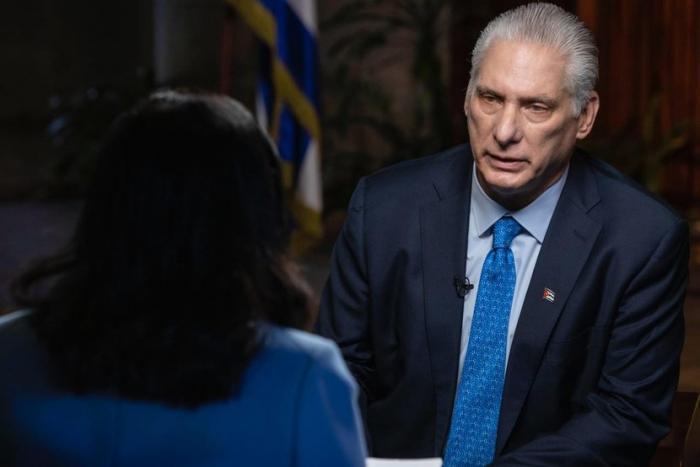
    In a wide-ranging April 9, 2026 interview with NBC News *Meet the Press* moderator Kristen Welker, conducted at Havana’s José Martí Memorial, Cuban President Miguel Mario Díaz-Canel Bermúdez addressed mounting threats from U.S. leadership, the crippling impact of the decades-long American blockade, and Cuba’s longstanding commitment to national sovereignty.

    Welker opened the conversation by pressing Díaz-Canel on recent aggressive rhetoric from former president and current U.S. leader Donald Trump, who has claimed he “can do whatever I want with Cuba” and implied plans to take control of the island nation. Díaz-Canel framed the threats as a reflection of long-standing U.S. aggression against Cuba, rooted in a 150-year struggle for Cuban independence from foreign domination. He emphasized that Cuba’s national identity is inextricably tied to sovereignty, noting that the 1959 Cuban Revolution ended decades of foreign subjugation and delivered transformative social gains that the Cuban people will never abandon. Echoing legendary Cuban independence hero Antonio Maceo, he stated: “Whoever attempts to seize Cuba will only gather the dust of its blood-soaked soil, if they do not perish in the struggle.”

    While affirming Cuba’s commitment to peace and regional solidarity, Díaz-Canel made clear that the country is not intimidated by threats and remains fully prepared to defend itself against any invasion. He rejected U.S. claims that Cuba is on the brink of collapse, pointing to the island’s six decades of resilience in the face of the longest-running blockade in modern history, which he described as a “criminal, genocidal” act of aggression. When asked if he feared assassination or arrest by the U.S. following Trump’s pattern of aggressive actions against foreign leaders, Díaz-Canel said he holds no personal fear, noting that all Cuban revolutionary leaders are prepared to sacrifice their lives for the nation. He pushed back on the framing that the Cuban Revolution’s leadership is centered on a single individual, explaining that Cuba operates under a unified collective leadership structure where hundreds of leaders are prepared to step into any role if needed. Any attack on Cuba would be met with full national resistance, he added, noting that the Cuban national anthem’s mantra “To die for the Fatherland is to live” is not an empty slogan but a core value held by all Cubans from childhood to old age.

    Confirming that Cuba is actively preparing for potential U.S. attack, Díaz-Canel stressed that Cuba’s defense doctrine is entirely defensive. The country’s “War of the Entire People” strategy, developed during past periods of heightened U.S. threat, organizes every Cuban citizen to participate in national defense, ensuring that any invasion would be unsustainable for foreign forces, even one as powerful as the United States. “Preparing to defend ourselves is the best way to avoid war and the best way to preserve peace,” he said, adding that the only legitimate path forward for U.S.-Cuba relations is dialogue, not confrontation, which would bring unnecessary loss of life and instability to both nations and the entire Caribbean region.

    Turning to the ongoing energy crisis, Díaz-Canel addressed the recent U.S. suspension of all fuel supplies to Cuba and the arrival of a Russian fuel shipment delivered as humanitarian aid. He explained that the new U.S. energy blockade is just the latest escalation of 67 years of economic war and 60+ years of total blockade, a policy that was first intensified during Trump’s first term in 2019, maintained through the Biden administration, and is now being ramped up to unprecedented levels. He noted that the Russian shipment only covers one-third of Cuba’s monthly fuel demand, and while the aid is greatly appreciated, it does not resolve the ongoing crisis. Díaz-Canel outlined Cuba’s comprehensive long-term strategy to achieve energy independence, including expanding domestic oil production, welcoming foreign investment in the energy sector (including from U.S. companies, if the blockade allows), investing in renewable energy, and developing domestic refining technology for Cuba’s heavy high-sulfur crude. He stressed that despite external pressure, Cuba will persist and adapt through the resilience and creativity of its people.

    Responding to claims that Cuba requires Russian support to survive and is on the edge of collapse, Díaz-Canel emphasized that Cuba’s strength ultimately comes from its own people, who have consistently demonstrated creative resistance to decades of blockade. He welcomed aid from partner nations including Russia, China, Vietnam, and Mexico, but noted that the U.S. could also choose to abandon its hostile policy and contribute to Cuba’s development. Rejecting the U.S. narrative of imminent collapse, he asked: “What country in the world would be capable, as Cuba has been, of withstanding 67 years of sustained aggression from the world’s most powerful nation… and not collapse?” He pointed to Cuba’s enduring social gains, including universal free healthcare and education, top global Olympic medal per capita rates, world-leading biotechnology innovation, and a society free of corruption, drug trafficking, and organized crime, arguing that these achievements are impossible under a “failed state.”

    When pressed on widespread suffering from energy and food shortages, Díaz-Canel placed full blame on the intensified U.S. blockade, noting that the 2019 escalation cut off all external financing, imposed harsh secondary sanctions on any country or company that trades with Cuba, and crippled key sectors including tourism, manufacturing, and public infrastructure. He pushed back on claims that the Cuban government is responsible for economic decline, pointing to the cumulative impact of decades of escalating blockade pressure. He highlighted Cuba’s response to the COVID-19 pandemic as evidence of the government’s commitment to its people: when the U.S. blocked access to vaccines, ventilators, and medical oxygen, Cuban scientists developed domestic mRNA vaccines, locally produced ventilators, and achieved better COVID mortality outcomes than the United States, despite decades of blockade. “It is unjust to blame a government whose sole purpose is to serve its people… for these evils,” he said. “The U.S. government should reflect on how cruel it has been toward Cuba and the Cuban people. It has no right to present itself as our savior, nor does it have the moral authority to do so.”

    Addressing calls for economic reform and a shift away from Cuba’s one-party socialist system, Díaz-Canel noted that the Cuban government regularly conducts self-critical assessments and works to improve its policies, but that the national political system, approved by the Cuban people via popular referendum, is not the cause of the country’s hardships. He pointed to the successful development of socialist economies in China and Vietnam, which advanced rapidly once their blockades were lifted, noting that Cuba has studied their reforms as a reference but must adapt to its own unique context: an island nation 90 miles from the U.S. that has lived under an unbroken six-decade blockade. “Lift the blockade and let’s see how we fare,” he challenged. “If even under the blockade we have achieved victories and shown solidarity to other nations, imagine what we could do without it.”

    On the topic of potential negotiations with the Trump administration, Díaz-Canel said that while a civilized, mutually respectful agreement between the two nations is possible, deep mistrust remains after 67 years of U.S. hostility and repeated American violations of past bilateral agreements. Cuba has always been open to dialogue based on mutual respect and equality, with no preconditions, he said, and there are many areas of potential cooperation including counter-narcotics, counter-terrorism, migration, trade, investment, cultural exchange, and public health collaboration. He highlighted two ongoing groundbreaking cooperative projects: a joint decade-long clinical trial for a Cuban lung cancer vaccine with a top U.S. cancer research center, which has produced extremely encouraging results, and a collaboration on an innovative Cuban Alzheimer’s treatment with a Colorado clinic, where American patients have seen better outcomes than with existing U.S. medications. “We cannot allow a blockade policy that serves only minorities and elites to undermine the relationship that our two peoples could have,” he said.

    When asked about U.S. demands for political reforms including free press, the release of purported political prisoners, and fair elections, Díaz-Canel said Cuba’s internal constitutional order is not up for negotiation with the United States. He rejected the narrative that Cuba holds political prisoners, explaining that people are only incarcerated for committing violent or disruptive criminal acts, often encouraged and funded by U.S. subversion programs, not for peaceful protest. Peaceful protests are regularly held and addressed by government officials without imprisonment, he added, noting that the narrative of political prisoners is a manufactured slander designed to discredit the Cuban Revolution. When asked if he would resign to meet U.S. demands, Díaz-Canel rejected the premise of the question, noting that no U.S. journalist would ask any other sitting head of state to resign at the demand of a foreign power. He stressed that Cuban leaders are elected by the Cuban people via a grassroots democratic system, and only the Cuban people have the right to remove their leadership. The U.S. has no moral standing to demand changes to Cuba’s political system, he said, as it bears full responsibility for the suffering the Cuban people endure.

    Closing the interview, Díaz-Canel reiterated that Cuba remains open to good-faith dialogue with the United States, focused on mutual respect, shared interests, and avoiding confrontation, to build a relationship of good neighborliness that benefits both peoples, the Caribbean, and Latin America. He thanked Welker for the opportunity to speak directly to the American people and extended an invitation for further discussion on unresolved issues.

  • “We call for a May Day that will stir us as a nation through unity and a commitment to making a difference”

    “We call for a May Day that will stir us as a nation through unity and a commitment to making a difference”

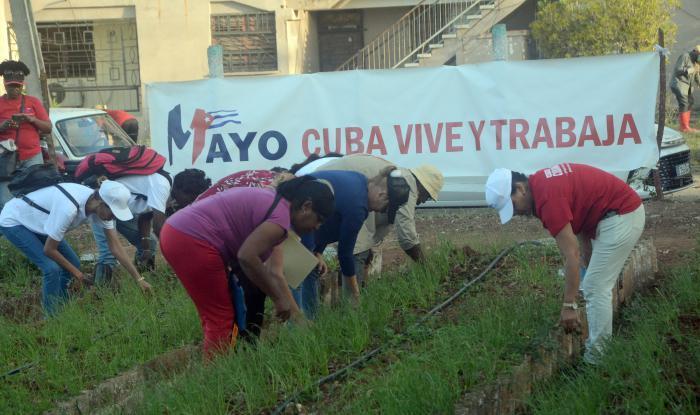
    In mid-April 2026, the Cuban Workers’ Central (CTC) and its affiliated national unions issued a formal call for nationwide celebrations of International Workers’ Day on May 1, centered on the rallying slogan “The Homeland Must Be Defended”. The call comes on the heels of a collective volunteer work day focused on boosting domestic food production, an event organized to reaffirm Cuba’s commitment to national food sovereignty in the face of mounting external pressure.

    The initiative was spearheaded by high-ranking Cuban leaders, including Liván Izquierdo Alonso, First Secretary of the Communist Party of Cuba in Havana, Havana Governor Yanet Hernández Pérez, alongside leaders of the Union of Young Communists and local Party bodies. Osnay Miguel Colina Rodríguez, president of the organizing committee for the 22nd CTC Congress, emphasized that against the backdrop of escalating threats from the U.S. government—most recently a new executive order in January 2026 that added an energy blockade to the 65-plus-year intensified economic, commercial and financial embargo—collective labor and national unity stand as Cuba’s most powerful defensive tools. “There is nothing more important and decisive today than working together and growing as a country,” Colina Rodríguez stated.

    For Cuban organizers, this year’s May Day celebration is far more than a traditional observance of international labor. It is framed as a public demonstration of national unity and unwavering patriotism, rooted in Cuba’s long history of anti-colonial and sovereign struggle. Colina Rodríguez drew parallels between the current moment and the 1878 protest at Baraguá, where independence leader Antonio Maceo refused to accept a peace deal that would sacrifice Cuban independence, noting that May Day 2026 represents another opportunity to “break the circle” of external pressure. The event also evokes the foundational independence ideals of José Martí and the revolutionary vision of former Commander-in-Chief Fidel Castro Ruz, laid out in his 2000 May Day address, coming in the centennial year of Fidel’s birth.

    The CTC’s call outlines plans for parades and community celebrations across every workplace, municipality, and province across Cuba, with organizers urging participants to adhere to practical precautions shaped by the constraints imposed by the U.S. embargo. Cuban workers are called upon to defend national sovereignty from every sector of society: from agricultural fields and manufacturing factories to classrooms, scientific research centers, energy facilities, hospitals, cultural institutions, and sports organizations—every space is framed as a “combat trench” for the defense of the homeland.

    Consistent with longstanding tradition, the invitation to join this year’s International Workers’ Day celebration extends to global allies of Cuba. In the official call, organizers expressed advance gratitude for international solidarity, noting that even amid rising military and economic threats, Cuban people remain optimistic in their fight for sovereignty, echoing the iconic line from the Cuban national anthem: “To die for the Fatherland is to live.”

    This year’s May Day observance builds on a series of weekend volunteer work initiatives organized by the CTC throughout 2026. Union leaders note these volunteer events echo the vision of revolutionary icon Che Guevara, who championed voluntary collective labor in the 1960s as a mechanism to sustain national development even amid external pressure. Today, these initiatives serve as a living demonstration of cross-organizational unity and the collective vitality Cuba needs to persevere under what organizers call the “genocidal” U.S. blockade.

    Guided by the priorities set by the Communist Party of Cuba, under the leadership of First Secretary and President of the Republic Miguel Díaz-Canel Bermúdez, the 2026 May Day celebration aligns with core national priorities: defending the socialist homeland, transforming Cuba’s energy matrix to offset the impacts of the energy blockade, expanding domestic food production, and solving daily challenges facing the Cuban people. Organizers emphasize that Cuban revolutionary commitment stems not from dogma, but from deeply held conviction in the right to build a sovereign, dignified nation.

    In closing the official call, the CTC, its national unions, and the National Association of Innovators and Rationalizers (ANIR) urged all Cuban workers and citizens to come together with the vibrant colors of the Cuban flag, carrying forward the teachings of Army General Raúl Castro Ruz. Ahead of the upcoming 22nd CTC Congress, organizers called for a May Day that unites the nation around a shared commitment to defending the revolutionary project that Martí envisioned, Fidel brought to fruition, and current Cuban leaders are committed to preserving. The call closes with the iconic revolutionary slogans: “Long live the Cuban Revolution! Fatherland or Death! We shall overcome! See you on May 1.”

  • Labourer dead, policeman injured in Enmore accident

    Labourer dead, policeman injured in Enmore accident

    A fatal road collision on Guyana’s East Coast Demerara has left a 27-year-old labourer dead and a serving police sergeant hospitalized, the Guyana Police Force confirmed in a statement released Sunday. The incident, which unfolded early Sunday morning on the Enmore Public Road, has underscored ongoing risks of reckless overtaking on the country’s coastal highways.

    The victim, identified as Keshon Arthur of Hand-en-Veldt, Mahaica, was behind the wheel of motor vehicle PAB 1013 when the crash occurred at approximately 5:45 a.m. He was pronounced dead on arrival at Enmore Regional Hospital. The 33-year-old at-fault driver is a police sergeant based in Belmont, Mahaica, East Coast Demerara, who was operating the marked police vehicle PAM 3828 at the time of the incident. Preliminary police investigations have outlined a clear sequence of events leading to the collision.

    According to initial accounts from investigators, the sergeant was traveling west along the southern driving lane of the Enmore Public Road when Arthur’s eastbound vehicle allegedly attempted to overtake a line of multiple vehicles. The maneuver pushed Arthur’s car directly into the southern westbound lane, the same lane the sergeant was traveling in. To avoid a head-on impact, the sergeant immediately swerved further toward the southern edge of the roadway. Despite his evasive action, Arthur’s car still struck the front right portion of the sergeant’s vehicle head-on.

    Both drivers sustained traumatic injuries in the impact. Passersby and public-spirited local citizens were the first to respond to the crash scene, pulling the two injured men from their wrecked vehicles before Emergency Medical Technicians arrived to take over care. Both patients were immediately transported to the Enmore Regional Hospital for urgent assessment by the on-duty physician. The sergeant was confirmed to have suffered a broken right leg, plus multiple lacerations across his face and torso. As of Sunday evening, hospital officials listed his condition as stable, and he remains in care for further treatment.

    The Guyana Police Force has confirmed that formal investigations into the collision are ongoing, with authorities working to confirm all details of the incident before finalizing any charges or official findings. The crash marks the latest in a string of road fatalities recorded on Guyana’s coastal road network in 2026, with traffic safety advocates repeatedly calling for increased enforcement of speed limits and aggressive driving rules to reduce preventable deaths.

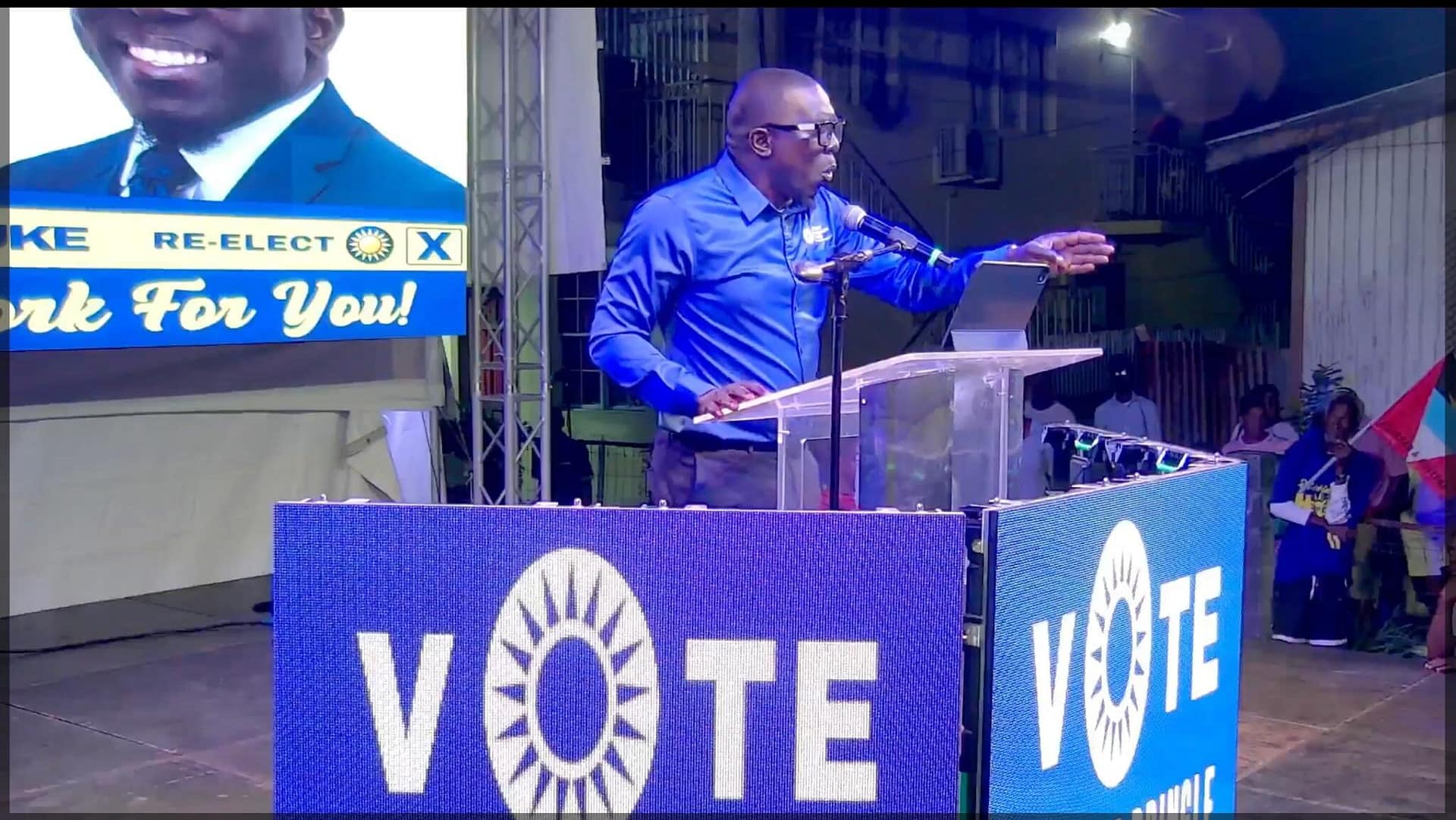
  • WATCH: Pringle says UPP will remove ALL duties and taxes on personal vehicle imports, if elected

    WATCH: Pringle says UPP will remove ALL duties and taxes on personal vehicle imports, if elected

    As electoral competition heats up, the leader of the United Progressive Party (UPP) has made a bold campaign promise that is already drawing significant public attention: if his party secures victory in the upcoming polls, the UPP administration will eliminate every single duty and tax applied to imports of personal passenger vehicles.

    In a publicly shared video address that has begun circulating across social media and local news platforms, party leader Pringle laid out the details of the proposal, framing the policy as a direct response to growing financial pressures that have placed vehicle ownership out of reach for thousands of ordinary working households across the country. Pringle argued that the current tax regime on imported personal vehicles is overly burdensome, inflating purchase prices and preventing average citizens from accessing reliable private transportation, which he notes is a critical resource for commuting to work, accessing healthcare, and supporting family mobility.

    The pledge marks one of the most concrete and high-profile policy commitments the UPP has released ahead of the election, positioning the party as focused on easing cost-of-living burdens for everyday people. Political analysts note that cutting vehicle import taxes is a popular policy proposal among broad segments of the electorate, from young professionals looking to buy their first car to low-income families that need an affordable vehicle for daily travel. If implemented, the full elimination of all duties and taxes would cut the cost of imported personal vehicles dramatically, though experts have already begun raising preliminary questions about how the policy would impact government revenue and domestic automotive markets. As the election campaign progresses, the pledge is expected to become a key point of debate between the UPP and competing political parties, with the proposal likely to shape voter discussions in the lead-up to polling day.

  • A new state-of-the-art fire truck put into service at Cap

    A new state-of-the-art fire truck put into service at Cap

    In a landmark move aligned with the Haitian government’s broader agenda to upgrade urban governance and modernize critical public infrastructure, the country has officially commissioned a cutting-edge fire and rescue truck at Hugo Chavez International Airport in Cap-Haïtien. The project, which marks a tangible step forward in upgrading national public safety infrastructure, was directly spearheaded by Haitian Prime Minister Fils-Aimé, and delivered through the country’s Ministry of Transport.