作者: admin

  • Peter Champagnie retained by Jahvy Ambassador after Big Wall shooting incident

    Peter Champagnie retained by Jahvy Ambassador after Big Wall shooting incident

    A high-profile Jamaican legal figure has stepped forward to represent one of the country’s most well-known entertainment industry figures, who remains in police custody following a mass shooting at a popular carnival event over the weekend.

    King’s Counsel Peter Champagnie confirmed Tuesday in an interview with *Observer Online* that he has been formally retained to serve as legal counsel for Jahvel “Jahvy Ambassador” Morrison, a prominent music producer and talent manager. Morrison was taken into police custody after gunfire broke out Sunday at the Big Wall carnival party, a widely attended event on Jamaica’s annual carnival calendar.

    The shooting left three people hospitalized with gunshot wounds, including well-known local podcaster and blogger Jhaedee “Jaii Frais” Richards, a member of dancehall recording artist 450’s entourage who sustained critical but non-fatal injuries, and a United States citizen. No fatalities have been reported from the incident, which sparked immediate widespread speculation across Jamaican social media channels about Morrison’s potential involvement.

    Addressing the flood of unconfirmed public claims online, Champagnie pushed back against the rampant conjecture surrounding the case. He emphasized that the public and commentary platforms must allow law enforcement to complete their investigation without outside interference or premature judgment. “Note is taken of various commentaries being made on a number of social media platforms which are rooted in conjecture or fanciful assertions. The relevant concern and consideration must be for the police investigation to go unimpeded without any undue influence,” Champagnie stated.

    Despite the intense public scrutiny and unsubstantiated accusations circulating in public discourse, both the attorney and his client expressed full confidence that the investigative process will clear Morrison of any wrongdoing. “Mr Morrison is confident that at the end of such an investigative process he will be vindicated,” Champagnie added.

  • Singer Ernie Smith hospitalised in critical condition

    Singer Ernie Smith hospitalised in critical condition

    Iconic Jamaican singer-songwriter Ernie Smith, a defining figure of 1970s easy-listening reggae, remains in critical condition in a Florida intensive care unit, his wife Claudette Bailey Smith has confirmed in an exclusive interview with Observer Online. The 80-year-old musician, who is set to turn 81 in May, was first admitted to the medical facility on April 7, before undergoing an urgent surgical procedure to address a developing health complication that required immediate correction.

    According to Bailey Smith, the surgery itself, which took place two days after Smith’s admission, was completed successfully. Despite the positive outcome of the procedure, the reggae legend has not yet regained consciousness, and remains heavily sedated while supported by a mechanical ventilator as medical teams monitor his condition closely.

    A trailblazer in Caribbean reggae music, Smith built his legacy through a string of genre-defining hits recorded during his tenure as the lead artist at Kingston’s iconic Federal Records in the 1970s. His most beloved tracks include timeless reggae classics *Pitta Patta*, *Duppy Gunman*, and *Life is Just For Living* — a song that earned him international acclaim when it took home the top prize at the 1972 Yamaha Music Festival in Japan. That landmark victory did not only cement Smith’s place in global music history; it also opened doors for other prominent Federal Records artists, including Ken Lazarus and Pluto Shervington, to gain international exposure.

    Smith launched his music career in the late 1960s, rising to fame with early hits *Ride on Sammy* and *Bend Down*, following years of growth after his birth in Kingston and upbringing in St Ann, Jamaica. He went on to release other fan-favorite tracks including *I For Jesus* and *Sunday Coming Down* before relocating to Canada in the late 1970s. He returned to his home country of Jamaica in the 1990s, where he quickly reestablished himself as a beloved draw on the live performance circuit, entertaining sold-out crowds for decades.

    Most recently, late in 2025, Smith teamed up with fellow Jamaican singer Ed Robinson to record an updated rendition of his classic *Pitta Patta*. The collaborative track went on to break into the South Florida reggae chart, proving that Smith’s musical appeal remains undiminished more than 50 years after he first rose to stardom.

  • Lisa Hanna unveils premium skincare line

    Lisa Hanna unveils premium skincare line

    After nearly two decades in Jamaican politics and a decades-long legacy as a globally recognized beauty icon, Lisa Hanna is making a new splash in the global beauty industry with the launch of her own luxury skincare brand, crafted to reframe common cultural narratives around growing older. Named Lisa Hanna Beauty, the brand’s debut collection features seven carefully formulated core products tailored to address common age-related skin concerns: a Hydra Dew Elixir, Advanced Balance Cleanser, targeted Fade Balm for hyperpigmentation and dark spots, a dual-action refining and hydrating serum, a rich Moisture Crème, and a multi-use shimmering oil formulated for both face and body. As first reported by Caribbean National Weekly, every product in the line is infused with the brand’s proprietary quantum ReCP technology, a cutting-edge active blend of lipids, stabilized vitamin C, and matrikin peptides. The proprietary formulation is engineered to support the skin’s natural regeneration process, while boosting long-lasting hydration and improving overall skin texture and tone. In comments published by *Women’s Wear Daily (WWD)*, Hanna shared the refreshing perspective that drives her new brand, pushing back against the popular beauty industry narrative that frames aging as a flaw to be reversed. “People generally want to erase the evidence of [aging] — you’re told to fight, to correct, to reverse,” Hanna explained. “I believe you’re not less with time, you’re more. I wanted to build a product that understands and can communicate with your skin at a deeper level.” Priced at accessible luxury points ranging from $50 USD to $130 USD per product, the entire Lisa Hanna Beauty collection is currently available exclusively at The Spa by Equinox Hotels, with potential for wider retail expansion in the coming months. Hanna’s transition from public service to beauty entrepreneurship comes as no surprise to industry observers. The Jamaica native first rose to international fame when she claimed the Miss World title in 1993 at just 18 years old, before pivoting to a career in public service that saw her serve 18 years in the Jamaican Parliament, stepping down from political office earlier this year in 2025. Beyond her political and now professional beauty work, Hanna remains active in philanthropy through the Lisa Hanna Foundation, which runs community initiatives focused on expanding access to education, improving mental health support, and expanding affordable housing access for communities across Jamaica.

  • US Treasury chief says IMF, World Bank on right track after criticism

    US Treasury chief says IMF, World Bank on right track after criticism

    One year after publicly leveling harsh criticism at the International Monetary Fund and the World Bank, United States Treasury Secretary Scott Bessent has offered a positive assessment, saying both global financial institutions are now moving forward in a productive, constructive direction.

    Bessent shared his updated views during remarks delivered Tuesday on the sidelines of this year’s IMF and World Bank spring meetings, a high-profile annual gathering that draws hundreds of global finance ministry officials and financial leaders to Washington, D.C. Speaking at an event hosted by the Institute of International Finance alongside the main meetings, Bessent offered public congratulations to the leadership of both institutions for the shifts they have made over the past 12 months.

    Highlighting work at the IMF, Bessent noted the fund is currently taking steps to reintegrate Venezuela into the global financial framework to support the country’s return to a functional, normalized economy, adding that he expects the institution to play a critical, meaningful role in that process. Turning to the World Bank, the Treasury Secretary stated the institution has regained strong momentum in its core work expanding energy access, unlocking development resources, and building economic stability for the world’s lowest-income nations.

    Last year at the same spring gathering, Bessent made waves by arguing that both the IMF and World Bank had strayed from their core mandates, claiming they should prioritize expanding global economic growth rather than devoting significant resources to social policy issues. At the time, he specifically called out the IMF for allocating what he called “disproportionate time” to high-profile social and environmental topics including climate change and gender equity. For the World Bank, he argued the institution should refocus its efforts on its foundational missions: helping developing nations grow their economies, cut extreme poverty, and attract greater cross-border investment.

    On Tuesday, Bessent acknowledged meaningful progress, saying the World Bank has successfully made a positive policy shift, particularly around nuclear energy development. The bank previously announced last year it would re-enter nuclear energy financing for the first time in nearly 30 years, a change designed to help meeting rapidly growing electricity demand across developing economies. Today, Bessent said the World Bank now holds a far more supportive stance toward expanding “energy abundance” and has refocused on its founding mission of lifting vulnerable communities out of poverty. He reiterated his long-held criticism, noting that an overemphasis on social and climate issues amounts to what he calls “luxury beliefs” that distract from the institutions’ core work.

  • Five police officers detained as probe continues into deadly stampede in Haiti

    Five police officers detained as probe continues into deadly stampede in Haiti

    PORT-AU-PRINCE, Haiti — Haiti entered a period of three national days of mourning starting Tuesday, after a fatal crowd crush at the iconic Citadelle Laferrière last weekend claimed the lives of at least 25 people. The 19th-century mountain fortress, a UNESCO World Heritage Site, holds profound cultural meaning for Haiti: it was constructed in 1820 by the newly independent Haitian state to fend off a feared French re-invasion, and stands as a lasting monument to the freedom won by the formerly enslaved people who led the world’s first successful slave revolt to found an independent nation.

    The deadly incident unfolded last Saturday during an unsanctioned annual cultural gathering held at the landmark in the northern Haitian town of Milot. In the wake of the tragedy, law enforcement officials have taken seven people into custody, a group that includes five active police officers and two employees of the National Institute for the Preservation of Heritage (known locally by its French acronym ISPAN), the government agency charged with managing and protecting Haiti’s historic landmarks. Investigators have also seized six mobile phones and six official security badges from the suspects as they build their case.

    Initial official death counts put the fatalities at 30, but authorities have since revised the toll downward to 25 confirmed deaths. Multiple conflicting accounts have emerged about the chain of events that led to the stampede. Local mayor Wesner Joseph told Haitian outlet Magik9 Radio that his municipal administration had no advance notice of any event being held at the citadel that Saturday. Investigations have revealed the gathering was organized organically after a local disk jockey promoted the event to thousands of followers on the social media platform TikTok.

    Jean-Hérold Pérard, a former ISPAN director who worked as the site’s lead engineer, shared detailed observations with the Haitian Times, noting that one of the citadel’s only two public entrances had been blocked by personnel who were collecting entry fees from arriving visitors. When a sudden rainstorm hit the site, crowds trapped outside began pushing to force their way into the fortress. Pérard also alleged that unknown actors fired gunshots into the air and deployed tear gas amid the growing chaos. “People were pushing against one another, and many died of asphyxiation, especially after tear gas was thrown into the crowd,” Pérard explained. Pre-event videos circulated on social media showed that the gathering drew large numbers of children and young people, many of whom completed the steep, strenuous hike up the mountain to reach the historic fortress.

    Caribbean regional bloc the Caribbean Community (CARICOM) has already issued an official statement extending its sincere condolences to the people and government of Haiti in the wake of the tragedy. Prime Minister Alix Didier Fils-Aimé has also acknowledged the loss of life, confirming the stampede occurred at a tourist event that drew a large crowd of young attendees to the landmark site.

  • US ex-cop reunites with Doctor’s Hospital surgeon who saved his life

    US ex-cop reunites with Doctor’s Hospital surgeon who saved his life

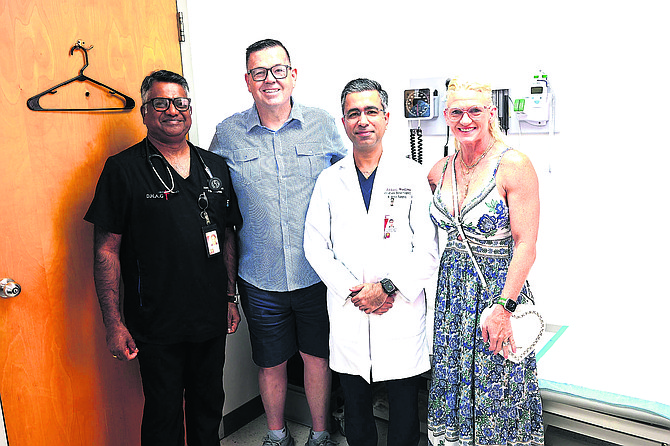
    Five years after a catastrophic stroke nearly claimed his life during a romantic anniversary trip to The Bahamas, former 28-year police veteran Ray Wood, 54, has finally fulfilled a year-long mission: meeting the neurosurgeon who pulled him through the most critical weeks of his medical battle to say thank you in person.

    The fateful event unfolded in July 2019 (corrected from original date misstatement) when Wood and his wife Raemie, also a police officer, traveled from their home in Southern California to celebrate their 10th wedding anniversary. Frequent Caribbean travelers, the couple was four days into their trip when Wood developed a sudden, severe headache and breathing trouble ahead of a planned scuba dive. Though he initially rested on the boat, he joined the dive roughly 45 minutes later; by the time the group returned to shore, his condition deteriorated rapidly.

    After returning to their hotel, Wood lost consciousness and all memory of the hours that followed. Raemie quickly recognized the signs of a life-threatening event: her husband’s speech was slurred, he could not walk steadily, he had been vomiting, and he could barely navigate their hotel room. She immediately called for emergency services, packed essential items for a hospital stay, and reached out to a doctor acquaintance for guidance while waiting in the emergency department hallway as her husband underwent emergency imaging. “There was no time to cry at first,” Raemie recalled of the chaotic night. “I only broke down once I was in the hallway making calls.”

    Imaging scans confirmed a devastating brain bleed that affected nearly one-quarter of Wood’s brain. He arrived at Doctor’s Hospital around 2 a.m. with right-side weakness, complete inability to speak, and rapidly declining consciousness. When Dr. Susheel Wadhwa, the consultant neurosurgeon on the case, assessed him, his Glasgow Coma Score — a standard scale measuring consciousness levels — had fallen to just 10 and was dropping quickly.

    The case was uniquely high-risk from the start. The bleed occurred on the left side of Wood’s brain, the dominant hemisphere that controls critical motor and cognitive function for right-handed people like him. Compounding matters, Wood had a pre-existing heart condition: he had undergone a heart ablation procedure in 2019 and was taking daily aspirin, which significantly increases bleeding risk during brain surgery. He also tested positive for COVID-19, adding another layer of complexity to his care.

    Wadhwa led the first emergency surgery that lasted four hours, with the entire perioperative process stretching to seven to eight hours total. In the days that followed, Wood’s condition slowly stabilized, but the severe brain impairment left him unable to form new memories, resulting in little to no recollection of his two-week stay in the Bahamian hospital. When he finally regained full consciousness, his first question was not about his own condition — he asked if his wife was safe. He later underwent a second, shorter procedure, and part of his skull was temporarily removed and stored in his abdomen to reduce swelling before being reattached during a later procedure in Florida that November.

    After two weeks of critical care in Nassau, Wood was transferred to a rehabilitation facility in Florida to begin the long, grueling process of recovery. For the former law enforcement officer, re-learning basic daily skills was a humbling, disorienting experience: he struggled with speech and mobility, and the stroke left him with permanent vision loss that prevents him from seeing anything below chest level, causing persistent balance issues. Today, he relies on a cane to walk to avoid falls. Raemie retired from her own police career to serve as his full-time caregiver, and the couple has entered a new chapter of life permanently reshaped by the near-tragedy.

    For more than a year, Wood held one unwavering goal: to return to The Bahamas and meet the surgical team that saved him, to express his gratitude in person. That long-awaited meeting happened last Friday, when Wood and Wadhwa sat down together to revisit the original CT scan that showed the life-threatening brain bleed.

    With tears in his eyes, Wood reflected on the extraordinary circumstances of his survival. “I was a policeman for 28 years, I can’t tell you how many times I was shot at, how many times bad guys tried to take my life,” he told The Tribune. “Here I am, celebrating life and having a great time, and this comes out of nowhere — and a man that can save my life. Today I’m just grateful to be alive.”

    For Wadhwa and his medical team, these rare in-person reunions carry profound meaning, especially for intensive care staff who rarely get to see the long-term outcomes of the critical patients they treat. “When you are amidst all of this work, and you have a story like this that just comes back, it brightens the whole team,” Wadhwa said. “Even the team’s morale, especially with nurses in the ICU — they’re seeing very sick patients every day, and they so rarely get to find out what that person’s outcome ends up being. This means more than you know.”

  • PAC summons former UHWI leaders over audit findings

    PAC summons former UHWI leaders over audit findings

    Jamaica’s parliamentary Public Accounts Committee (PAC) has launched a deeper investigation into operational irregularities at the University Hospital of the West Indies (UHWI), moving to summon three key current and former leaders of the institution to answer for red flags raised in a critical Auditor General performance audit.

    The decision to call in the witnesses was formalized at the opening of the PAC’s weekly sitting on Tuesday, as committee members continued their review of the audit, which focused on three high-stakes areas of UHWI operations: procurement practices, institutional governance, and financial management.

    PAC Chairman Julian Robinson told fellow committee members that ongoing inquiry had already made one fact clear: the UHWI’s current sitting management team does not have the ability to provide satisfactory responses to a host of critical questions outlined in the Auditor General’s December 2025 report.

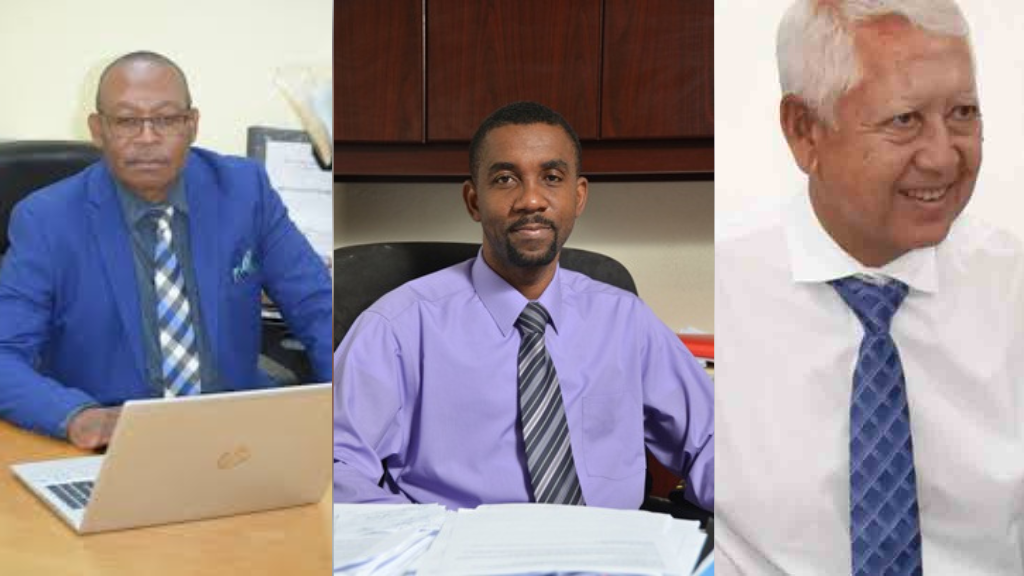
    “From our first meeting two weeks ago, it has been apparent to me that the current management of the university hospital is not positioned to answer many of our questions related to the facility’s day-to-day and strategic operations,” Robinson explained in remarks to the committee. “I am seeking this body’s approval to summon current CEO Fitzgerald Mitchell—who is currently on leave—former CEO Kevin Allen, and ex-board chairman Wayne Chai Chong, so we can get clear answers to the outstanding questions we have about this institution.”

    Mitchell, the UHWI’s sitting chief executive, has already been on approved leave since the public scrutiny of the hospital’s operations began. Allen led the facility’s operations in his tenure as the top executive, while Chai Chong oversaw the UHWI’s board and held ultimate governance and oversight responsibility during his time as chairman.

    The committee unanimously backed Robinson’s proposal, and parliamentary staff have already been instructed to draft and deliver formal summons letters to all three individuals ahead of the next scheduled PAC probe session.

    The damning Auditor General report, which was formally tabled in Jamaica’s parliament in December 2025, outlined a series of severe deficiencies across UHWI’s operational framework. Among the most pressing concerns highlighted in the audit are dysfunctional and high-risk procurement systems, gaping weaknesses in internal financial controls, missing or incomplete documentation for major transactions, and repeated, documented breaches of the government’s established public institutional operating procedures.

  • Mitchell, Pinder and Bonaby top list of most absent MPs in House

    Mitchell, Pinder and Bonaby top list of most absent MPs in House

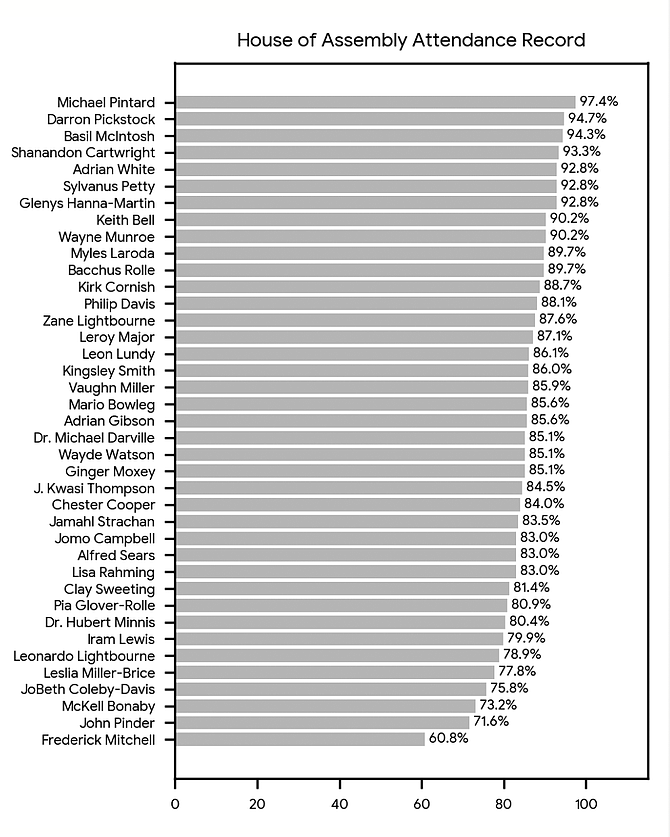
    Newly obtained official records from The Tribune have pulled back the curtain on attendance trends among members of the Bahamas’ House of Assembly, exposing significant disparities in participation among sitting lawmakers since the Davis administration took power in 2021. At the top of the list of the most frequently absent parliamentarians are three senior figures from the ruling Progressive Liberal Party (PLP): Foreign Affairs Minister and PLP Chairman Fred Mitchell, Central and South Abaco MP John Pinder, and Mount Moriah MP and Bahamas Public Parks and Beaches Authority chairman McKell Bonaby. All three have maintained attendance rates below 80 percent across the two parliamentary sessions covered in the data.

    The dataset spans two full parliamentary periods: 88 sittings held between October 2021 and August 2023, and an additional 106 sittings running from October 2023 through March 2026. Mitchell, who represents the Fox Hill constituency, has missed 76 total sittings, translating to an attendance rate of just 60.8 percent – the lowest among all sitting members. When reached for comment by The Tribune, Mitchell declined to provide any explanation for his high number of absences.

    Following closely behind Mitchell is Pinder, who has missed 55 sittings for a 71.6 percent attendance rate, and Bonaby, with 52 absences and a 73.2 percent attendance rate. Neither lawmaker responded to repeated requests for comment from The Tribune regarding their poor attendance track records. Energy Minister JoBeth Coleby-Davis came just behind this trio, missing 47 sittings to notch a 75.8 percent attendance rate. Seabreeze MP Leslia Miller-Brice missed 43 sittings, while North Andros and Berry Islands MP Leonardo Lightbourne missed 41 – with official records noting that one of Lightbourne’s absences was excused due to his participation in an official parliamentary conference.

    On the opposite end of the spectrum, opposition Free National Movement (FNM) lawmakers claim the top three spots for the most consistent attendance. FNM leader and Marco City MP Michael Pintard, MICAL MP Basil McIntosh, and St Barnabas MP Shanendon Cartwright hold the best attendance records in the entire body. After these three opposition figures, Englerston MP Glenys Hanna-Martin, North Eleuthera MP Sylvanus Petty, Carmichael MP Keith Bell and Freetown MP Wayne Munroe all posted attendance rates at or above 90 percent, placing them among the most active participants in House proceedings.

    One particularly notable entry in the records is the late Obie Wilchcombe, former MP for West Grand Bahama and Bimini, who maintained a perfect attendance record with zero absences before his unexpected passing in September 2023. The vast majority of other sitting lawmakers, including Prime Minister Philip Davis, Deputy Prime Minister Chester Cooper, and former Prime Minister Dr Hubert Minnis, all hold attendance rates above the 80 percent threshold. Kingsley Smith, who won the 2023 by-election to fill Wilchcombe’s vacant West Grand Bahama and Bimini seat, has missed 14 sittings since taking office, while Darron Pickstock – who won the Golden Isles by-election last November – has only missed one sitting in his short tenure so far.

  • Amazon says to buy Globalstar to expand satellite network

    Amazon says to buy Globalstar to expand satellite network

    PARIS, France – E-commerce and technology conglomerate Amazon announced Tuesday a definitive acquisition agreement to acquire U.S. telecommunications satellite operator Globalstar, a move designed to supercharge the expansion of Amazon’s planned space-based internet network and mount a direct competitive challenge to Elon Musk’s market-leading Starlink service.

    Under the terms of the deal, Amazon will offer Globalstar shareholders $90 per share through a combined cash-and-stock transaction, valuing the satellite firm at approximately $9 billion – a valuation first flagged by a Financial Times report earlier this month that fueled widespread market speculation of the impending acquisition.

    Jeff Bezos-founded Amazon has been developing its low-Earth orbit (LEO) satellite internet constellation, branded Project Kuiper, with the core mission of delivering high-speed broadband connectivity to underserved communities and users across every corner of the globe, a goal that has become an increasingly high priority for the tech giant as demand for global connectivity surges.

    “There are billions of customers out there living, travelling and operating in places beyond the reach of existing networks, and we started Project Kuiper to help bridge that divide,” stated Panos Panay, Amazon’s Senior Vice President for Devices and Services, in an official press release announcing the deal.

    The acquisition has already secured backing from roughly 58% of Globalstar’s existing shareholders, with regulatory and procedural approvals expected to push the closing of the transaction to 2027. A key strategic side agreement tied to the acquisition will see Apple – which currently holds a 20% minority stake in Globalstar – transition its existing satellite-based iPhone and Apple Watch services, including its popular Emergency SOS feature, to Amazon’s Project Kuiper network once the constellation is fully operational.

    At present, Project Kuiper has approximately 200 satellites active in low-Earth orbit, a fraction of the size of Starlink’s current deployed network of more than 10,000 satellites that have already cemented the SpaceX-owned service’s dominance in the fast-growing satellite internet market.

    The Globalstar acquisition comes at a moment of intense market anticipation around SpaceX, with widespread speculation that Musk is preparing to launch an initial public offering for the aerospace firm that could raise as much as $75 billion. If achieved, the IPO would become the largest public offering in global history, underscoring the massive commercial stakes in the burgeoning satellite internet industry.

  • PM and Church leaders reject FNM lottery plan

    PM and Church leaders reject FNM lottery plan

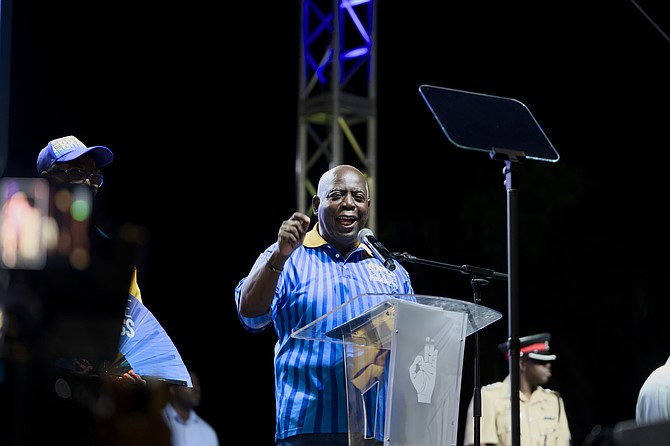
    A fresh political and social clash has erupted in The Bahamas over the opposition’s plan to launch a state-run national lottery, with Prime Minister Philip “Brave” Davis publicly dismissing the idea as a headline-grabbing, ill-conceived gimmick aligned with a proven failed, corruption-plagued model.

    The proposal was put forward Sunday by Michael Pintard, leader of the Free National Movement (FNM), who framed the independent board-overseen lottery as an untapped revenue source to drive national development. Pintard argued the new state system could operate alongside the country’s existing private gaming operators, pointing to frameworks already in place in jurisdictions including the Dominican Republic, Curaçao, Saint Martin and Ghana as successful blueprints for the plan.

    But Davis rejected the proposal outright during a press briefing with reporters, calling it a transparent political stunt born of desperation rather than a thoughtful policy solution. He pushed back particularly hard on Pintard’s choice of a model, noting the Dominican Republic’s national lottery has long been mired in confirmed corruption and fraud scandals. Davis questioned the opposition’s true motivations behind the push, suggesting the plan could create a slush fund open to abuse by corrupt actors. He also criticized the proposal for ignoring potential harm to the thousands of Bahamians already employed in the existing gaming industry, as well as the steady tax revenue the country already collects from private gaming operations. “It’s rather odd that you want to turn the Treasury into a gaming house,” Davis told reporters.

    The FNM’s announcement has reignited a decades-long contentious national debate that has killed every previous attempt to launch a national lottery in The Bahamas. Multiple past administrations have explored the policy, but all efforts have stalled amid fierce political pushback and widespread public concern. The Christie administration most recently attempted to legalize a lottery through provisions included in the 2014 Gaming Bill, but the plan collapsed after organized opposition from religious groups and large swathes of the public.

    Public resistance was clearly demonstrated in the 2013 national gambling referendum, when 59 percent of more than 81,000 participating voters cast ballots against approving a national lottery. Critics of the policy have repeatedly raised overlapping concerns: they question whether The Bahamas’ small population can support a state lottery without eating into existing tax revenues from private gaming, and they warn of persistent risks around lack of transparency, weak regulation, institutional corruption, and disproportionate social harm to low-income households. Supporters of a national lottery, by contrast, argue that a well-regulated system could generate significant new funding for critical public services including education and infrastructure, while also strengthening government oversight of the country’s entire gaming sector.

    In line with past opposition to the policy, senior church leaders have already renewed their vocal rejection of the new proposal, echoing the prime minister’s criticism. Bishop Walter Hanchell argued that a national lottery directly contradicts core Christian principles, pointing back to the 2013 referendum’s clear rejection of the policy. He recalled that even after voters rejected expanded gambling and lottery legalization a decade ago, then-Prime Minister Perry Christie moved forward with legalization anyway, against the explicit will of the Bahamian people. Hanchell said every negative outcome the church warned of at the time has since come to pass: rates of gambling addiction have risen sharply, and countless low-income Bahamians lose money earmarked for mortgages, rent and basic groceries to gambling operators every day. He called on national political leaders to abandon the lottery push and instead focus policy efforts on expanding social support and economic empowerment for vulnerable communities.

    Bishop Delton Fernander, president of the Bahamas Christian Council, echoed these concerns, noting that the proposal would disproportionately shift the burden of revenue generation onto low- and middle-income Bahamians. He pointed out that the public has already rejected the idea once, yet political actors continue to bring it back to the table. Fernander questioned whether repeated pushes for a national lottery are ultimately aimed at privatizing the lucrative sector for the benefit of a small, connected group of private actors. The Bahamas Christian Council has long maintained an unwavering opposition to the policy, he said, and past data already confirmed the country’s population is too small to sustain the system without major harm. Fernander added that critical public safeguards remain unaddressed more than a decade after the last debate, including targeted rehabilitation programs for people living with gambling addiction and formal systems to identify and support compulsive gamblers. Introducing a national lottery without first putting these protections in place, he warned, would only deepen the country’s existing social and economic inequalities.