作者: admin

  • Corinaldi Avenue hunt for fourth straight VMF U-13 title

    Corinaldi Avenue hunt for fourth straight VMF U-13 title

    Western Jamaica’s most anticipated youth football competition is poised to get underway this Tuesday at Wespow Park in Tucker, St James, where one program will chase a milestone no other local primary school has ever reached. Hosted by the St James Football Association in partnership with the Victoria Mutual Foundation, the annual Under-13 championship will open with a tightly scheduled double header that puts the tournament’s most dominant dynasty front and center from the first kick.

    Corinaldi Avenue Primary School, the three-time reigning back-to-back-to-back champion of the competition, will launch its bid for an unprecedented fourth consecutive title in the opening match of the 2024 season. The program has built a legendary legacy over the past three tournaments, not only claiming the title every year but doing so in extraordinary fashion: Corinaldi Avenue finished its last championship run undefeated and did not allow a single goal against any opponent throughout the entire tournament. Their opening test will come against Maldon Primary, with kickoff slated for 10:30 a.m. local time.

    The day’s second matchup will feature another exciting clash between two top contenders, as 2023 tournament runners-up Chetwood Primary will face off against Irwin Primary at 11:45 a.m. This year’s iteration of the championship has drawn a total of 20 participating primary schools from across the region, who have been divided into four five-team groups for the preliminary round robin stage. Following the conclusion of zone play, the top two finishing teams from each group will advance to the quarterfinal round, where the remaining competition will shift to a single-elimination knockout format that leaves no room for error for squads vying for the crown.

    The 2024 tournament also brings notable changes to the field of participants. Winners Prep will mark its debut as the only first-time entry to the competition this year, while three familiar programs are making their return to the tournament after time away: DMP Academy, Montego Bay Prep, and Adelphi Primary all rejoined the field for this season’s championship, adding new layers of competition to what is already shaping up to be one of the most exciting editions of the regional youth football event.

  • Salt Marsh protests lack of water; NWC gives May 15 timeline

    Salt Marsh protests lack of water; NWC gives May 15 timeline

    In the rural Jamaican community of Salt Marsh, Trelawny, months of unmet demand for clean piped water boiled over into organized public protest on Monday, when frustrated residents blocked a key thoroughfare to demand action from the National Water Commission (NWC). In response to the demonstration, the state utility has now formally committed to restoring full water service to the affected area by May 15, with emergency trucked water deliveries to bridge the gap until repairs are complete.

    The water crisis traces back to October 28 last year, when Category 5 Hurricane Melissa shifted an NWC transmission pipeline that serves Salt Marsh and its adjacent Davis Pen neighborhood. Ever since, residents have been completely cut off from piped water supplies. For nearly six months, community members repeatedly reached out to the NWC to request repairs, seeing only a brief burst of on-site work over three consecutive weekends before crews halted operations five to six weeks ago.

    Left with no other option, residents took to the main road connecting Salt Marsh Square and Davis Pen before 5 a.m. on Monday, placing large boulders across the pavement to block all vehicle traffic. The gridlock stranded hundreds of commuters, including schoolchildren and working residents, bringing daily life in the area to a standstill. Protesters carried placards emblazoned with the local term “Wata,” and voiced their anger over unaddressed promises and mounting costs.

    Local resident Renford Jackson, speaking on behalf of the demonstration, emphasized that the community had no intention of ending the protest until a permanent solution was put in place. “It’s been this way since the hurricane. We had good water supply until the storm shifted our pipeline from Davis Pen down to Salt Marsh,” Jackson explained. “We got repeated promises, NWC personnel came and started work, then suddenly they disappeared. A single day without water is terrible — six months is unbearable. If protesting is what we need to get attention, we will stay here as long as it takes.” Another protester added a widespread grievance: even with no water running through their pipes, residents are still receiving full monthly water bills from the NWC.

    The water shortage has hit the local Salt Marsh Primary and Infant School particularly hard, with acting principal Venesha Brown Gordon warning that the ongoing crisis is derailing learning for students, especially those preparing for the 2026 Primary Exit Profile (PEP) examinations scheduled for later this month. On the day of the protest, less than 20 percent of the school’s student body was able to attend, thanks to the road blockage that stranded most children and staff. “We already lost significant learning time right after Hurricane Melissa hit,” Brown Gordon told reporters. “Now grade six students are just weeks out from their high-stakes PEP exams, and we are also running internal assessments. The children are the ones bearing the brunt of this crisis. I implore authorities to fix the water issue so we can get back to normal teaching and learning.”

    Since the storm damaged the pipeline, the school has relied on stored water in holding tanks for its primary and infant programs, requiring weekly emergency water deliveries from the NWC to keep the campus running. Even with that support, access to water remains a constant challenge for the institution.

    Before the NWC issued its formal promise, local councillor Roydel Hamilton of the People’s National Party, representing the Martha Brae Division, publicly called on top national officials including Prime Minister Dr. Andrew Holness, Trelawny Northern Member of Parliament Tova Hamilton, and Water Minister Matthew Samuda to intervene and resolve the long-running issue. Hamilton noted that at a recent council meeting one month prior, NWC representatives had committed to finishing repairs within 30 days — a deadline that passed with less than half the work completed. “This situation cannot continue,” Hamilton stated from the protest site.

    In its official public response, the NWC confirmed that repair work on the damaged pipeline network is advancing, noting that roughly three kilometers of pipe suffered major damage during Hurricane Melissa, with overall completion of the project standing at roughly 30 percent. While most of the larger Martha Brae–Salt Marsh system has already been restored, key sections of the line serving Salt Marsh and Davis Pen require full replacement and extensive rehabilitation. The utility says its work includes not just fixing broken pipes, but upgrading the entire network to improve long-term resilience against future storm damage.

    Before full service is restored on May 15, the NWC will conduct mandatory pressure testing and sterilization of the repaired line to ensure water meets safety standards. Along with ongoing emergency trucked water deliveries to the community, the utility also confirmed that it is investigating the widespread complaints about incorrect billing for undelivered water. Following the NWC’s announcement, protesters stood down their road block, with residents now waiting to see if the utility meets its mid-May deadline for full service restoration.

  • ‘Stop the profiling!’

    ‘Stop the profiling!’

    Addressing a landmark anniversary gathering for local justices of the peace (JPs) in Jamaica’s St Catherine parish, Justice Minister Delroy Chuck has issued a urgent call for volunteer judicial officials to abandon superficial community engagement and lead grassroots efforts to dismantle violent gang networks that have turned large swathes of the country into what he describes as a long-standing “killing field”.

    Speaking Sunday at the 4th anniversary service of the St Catherine Justices of the Peace Association, hosted at New Life Community Church International Worship Centre, Chuck pushed back against a pervasive culture he says has corrupted part of the JP system: a tendency for many volunteers to treat their role as nothing more than a symbolic title for resume-padding, or what he dubs the harmful misinterpretation of the JP acronym as “Just Profiling”. He stressed that the mandate of justices of the peace extends far beyond routine administrative tasks, requiring active, on-the-ground work to reduce violence, support marginalized community members and repair fractured social cohesion.

    Chuck used the occasion to urge all JPs to redefine their roles as frontline agents of social change, particularly amid a rare positive shift in national crime data. Official statistics show that Jamaica has recorded 143 murders so far in 2024, a notable drop from the 203 murders reported during the same period last year. While welcoming this downward trend as a small victory, Chuck warned that deep-rooted systemic challenges remain, from rampant gang activity and widespread extortion to quiet community complicity that allows criminal networks to retain power.

    To counter these threats, the minister called for coordinated collective action across all segments of Jamaican society, highlighting an underutilized leverage point: women with family or romantic ties to gang members. Chuck argued that while reaching hardened gang members directly is often difficult, mothers, sisters and girlfriends of offenders can cut off a key source of criminal power by refusing to accept profits from illicit activities including extortion, armed robbery and transnational scam operations.

    “Tell the mothers, the sisters and girlfriends to tell them that you don’t want anything from them, because when they rob, they will tell you they have to look after the girlfriend, [and] that is how they exercise their power in the community,” Chuck explained.

    He also issued a stark warning about the long-term risks of failing to confront organized crime decisively, drawing a parallel to the ongoing crisis in neighboring Haiti, where armed gangs now control large portions of national territory and effectively override state authority. “We want to get rid of all the gangs in Jamaica, because if we don’t do it, every single one, they could flourish like in Haiti, where in Haiti it is the gangs who run the country, and we must never allow any gang to run any community in St Catherine or Jamaica,” he said.

    Chuck added that law enforcement remains committed to rooting out extortion that preys on low-income working Jamaicans, from bus drivers and conductors to small informal vendors selling goods at roadside markets in Linstead and Bog Walk. Closing his address, he reinforced that JPs, as trusted community leaders, bear a unique responsibility to drive local change, emphasizing that their standing comes from tangible good works rather than empty titles.

    “You, the justice of the peace, are the best of the best in the parish and you must see yourself as the best, but not by profiling, but by doing good works and assisting your fellow human being,” he added.

  • Winning OlympiX ways at Campari Xodus Carnival

    Winning OlympiX ways at Campari Xodus Carnival

    A lively community parade has rolled through urban streets, bringing crowds of onlookers out to cheer on a colorful procession of participants. Among the standout groups taking part were performers from the Xodus troupe, whose elaborately costumed members drew cheers and applause from spectators lining the route. Organizers had spent weeks preparing for the event, ensuring all participants and floats were fully ready to hit the road and deliver a memorable experience for attendees. The procession moved slowly and steadily through the city, winding its way past popular landmarks and residential neighborhoods in a long, snaking line that stretched for blocks. Spectators were encouraged to follow along behind the truck leading the parade route, joining in the festive atmosphere as the event made its way through the city. The parade has become a beloved annual tradition for the local community, drawing participants and visitors from across the region each year to celebrate local culture and bring neighbors together.

  • Boyz’s World Cup exit no surprise

    Boyz’s World Cup exit no surprise

    Jamaica’s men’s national football team, widely known as the Reggae Boyz, fell short of securing a spot in this summer’s FIFA World Cup following a narrow 0-1 defeat to the Democratic Republic of Congo in the final inter-confederation play-off match on March 31. For former Jamaican international footballer Michael “Zun” Clarke, this outcome was far from unexpected — he had flagged deep-rooted structural issues within the squad more than two weeks before the decisive defeat, in an exclusive interview with the Jamaica Observer.

    Clarke, who built his local career with Cavalier FC and claimed a Manning Cup title during his time at Tivoli Gardens High School, centered his criticism on the squad’s heavy reliance on overseas players of Jamaican heritage, most of whom ply their trade in England. He argued that this recruitment strategy has resulted in a loose collection of individual talents, what he calls a “side” rather than a cohesive, unified team.

    In his assessment, the current crop of Reggae Boyz consistently struggles with ball retention and fundamental control, deficiencies that make consistent winning nearly impossible. “You cannot win games playing that way,” Clarke noted. “With all these foreign-based players, I believe we would stand a far better chance leaning into domestic talent. When overseas players come together, they are just a side, not a team — everyone is focused on their own individual goals.”

    He drew a clear distinction between a makeshift side and a cohesive unit: a true team builds chemistry over time, learning each other’s on-pitch tendencies, preferred positions and playing styles to create fluid, connected play. To foster that cohesion, Clarke says Jamaica needs to fundamentally reframe its player development strategy starting at the grassroots level.

    His recommendation mirrors the long-term development models used by elite football nations like Brazil: identify a core group of young local players, keep that group together through consistent training and competition, and mould them into a cohesive unit over years of nurturing and development. “That’s what successful programs do,” he explained. “They run camps, they invest in developing a set of players from a young age, and refine them into a competitive unit. That’s exactly what Jamaica needs to implement going forward.”

    While Clarke emphasized he is pleased whenever overseas-based players get the opportunity to represent Jamaica, he raised persistent questions about the depth of their commitment to the national side. “I don’t think country comes first for a lot of them — their club comes first,” he argued. “They won’t throw themselves into a 50-50 challenge if there’s a risk of injury, because their priority is protecting their place at their professional club.”

    He also echoed a common critique shared by many fans and local football analysts: that most English-born players accept Jamaica’s call-up only after they fail to crack the senior England national team. “If they could make England’s squad, they would choose England every time,” Clarke said. “For a lot of them, getting called up by Jamaica is just a second chance to compete on the World Cup stage, so they take the opportunity.”

    To back up his argument for prioritizing domestic talent, Clarke pointed to Jamaica’s historic 1998 World Cup qualification — the only time the Reggae Boyz have ever reached the tournament — when the qualifying squad was made up almost entirely of locally based players. Only three England-based players were part of that qualifying group: Paul Hall, Fitzroy Simpson, and Deon Burton. Additional England-born players including Robbie Earle, Marcus Gayle, Frank Sinclair, and Darryl Powell joined the squad after qualification was secured. Though Jamaica exited in the group stage after a 2-1 win over Japan and losses to Croatia and Argentina, the run remains a source of immense national pride for Clarke and Jamaicans across the globe.

    Looking ahead to the 2026 World Cup, which will be co-hosted by Canada, the United States and Mexico, Clarke predicts five-time champions Brazil will lift the trophy, and says the South American side has always been his second-favorite team after Jamaica. “Jamaicans grew up playing a Brazilian style of football — exciting, attacking football, so Brazil has always been my first pick outside of the Reggae Boyz,” he explained.

    When asked to name the greatest player Jamaica has ever produced, Clarke answered without hesitation: Herbert “Dago” Gordon, a dynamic attacking midfielder who played for Boys’ Town and represented Jamaica at the international level before his death in 2013. “Dago was my idol — he was a magician on the pitch,” Clarke said.

    Beyond Jamaican football, Clarke counts Pele, Dunga, Neymar, 1978 World Cup winner Mario Kempes, and Argentine legend Lionel Messi among his favorite all-time players. He nicknamed Messi “One Lef” as a playful reference to the star’s reliance on his dominant left foot — joking that “if you cut off his left foot, all he can do is dribble across the field, he won’t threaten the goal.” Still, Clarke was quick to praise the eight-time Ballon d’Or winner, adding “Messi is good, I have to give him his props. If I left him off the list, I’d be biased.”

    Clarke, who notes he was a two-footed player during his own career, says he has always had a soft spot for players who can attack and pass equally well with both feet. “When people asked me which foot was stronger when I played, I’d tell them they had to figure it out for themselves — I could hit a hard shot from anywhere with either foot,” he recalled. That versatility, he says, is the mark of a truly elite attacking player.

  • War in the Middle East: Latest developments

    War in the Middle East: Latest developments

    In a series of interconnected developments shaking the Middle East on Monday, multiple key actors have laid out stark new positions that deepen ongoing conflict and complicate diplomatic efforts to de-escalate the crisis.

    First, in Beirut, Hezbollah leader Naim Qassem delivered a televised address urging Lebanese officials to scrap a scheduled Tuesday meeting between Lebanese and Israeli ambassadors to the U.S. set to take place in Washington. The Iran-backed militant group, which has been engaged in open conflict with Israel since March 2, has long rejected direct negotiations with the Israeli state. Qassem called on Lebanon to take a “historic and heroic stance” by canceling the planned talks entirely.

    Meanwhile, global energy markets are bracing for growing strain as the conflict disrupts critical supply chains, International Energy Agency chief Fatih Birol warned Monday. Speaking to reporters on the sidelines of an International Monetary Fund gathering in Washington, Birol noted that March energy shipments were largely filled with cargo loaded before the current Middle Eastern crisis erupted. But April will bring a far tighter market, he stressed, explaining that “during the month of April, nothing has been loaded.” Birol added that the severity of the global energy shortage will grow in lockstep with how long the current supply disruption persists.

    U.S. President Donald Trump has issued a series of conflicting and uncorroborated claims along with sharp new threats against Iran amid the escalating standoff. On Truth Social, Trump claimed that 34 commercial vessels have successfully traversed the Strait of Hormuz, one of the world’s most critical energy chokepoints, calling this the highest number recorded since what he labeled a “foolish closure” of the strait began. The figure could not be independently verified by outlets as of Monday.

    Trump also doubled down on criticism of Pope Leo XIV, who recently called for an immediate end to Middle East hostilities, saying he had “nothing to apologise for” for his earlier remarks. The president argued the Pope had gotten his position wrong, claiming the pontiff opposed Trump’s hardline policy on preventing Iran from acquiring nuclear weapons, and lambasted the U.S-born Pope as “very weak on crime and other things.” The criticism drew a swift rebuke from Italian Prime Minister Giorgia Meloni, who called Trump’s remarks about the head of the Catholic Church “unacceptable.”

    Despite the heightened tensions, Trump claimed Monday that Iranian officials have reached out to the U.S. seeking to negotiate a peace agreement, just days after weekend talks hosted by Pakistan ended without a breakthrough. Speaking to reporters outside the Oval Office, Trump said “I can tell you that we’ve been called by the other side. They’d like to make a deal. Very badly, very badly,” though he declined to name which Iranian officials had initiated contact.

    Alongside announcing a new U.S. naval blockade of Iranian ports that took effect Monday, Trump issued a blunt warning that American forces would destroy any Iranian fast attack craft that approached the blockade line. “Warning: If any of these ships come anywhere close to our BLOCKADE, they will be immediately ELIMINATED,” he wrote on Truth Social, claiming that the rest of Iran’s navy had already been “completely obliterated.” Trump added that U.S. forces would use the same airstrike tactics employed against suspected drug trafficking vessels off the Venezuelan coast to target the Iranian craft.

    Even after the failed Pakistan-hosted talks over the weekend, Pakistani Prime Minister Shehbaz Sharif confirmed in brief televised remarks to his cabinet that the U.S.-Iran ceasefire remains in place. “The ceasefire is still holding and, as I speak, full efforts are underway to resolve the outstanding issues,” Sharif said, confirming that diplomatic negotiations are still ongoing to reach a lasting peace deal.

  • Fashion Radar: Lloyd’s Department Store

    Fashion Radar: Lloyd’s Department Store

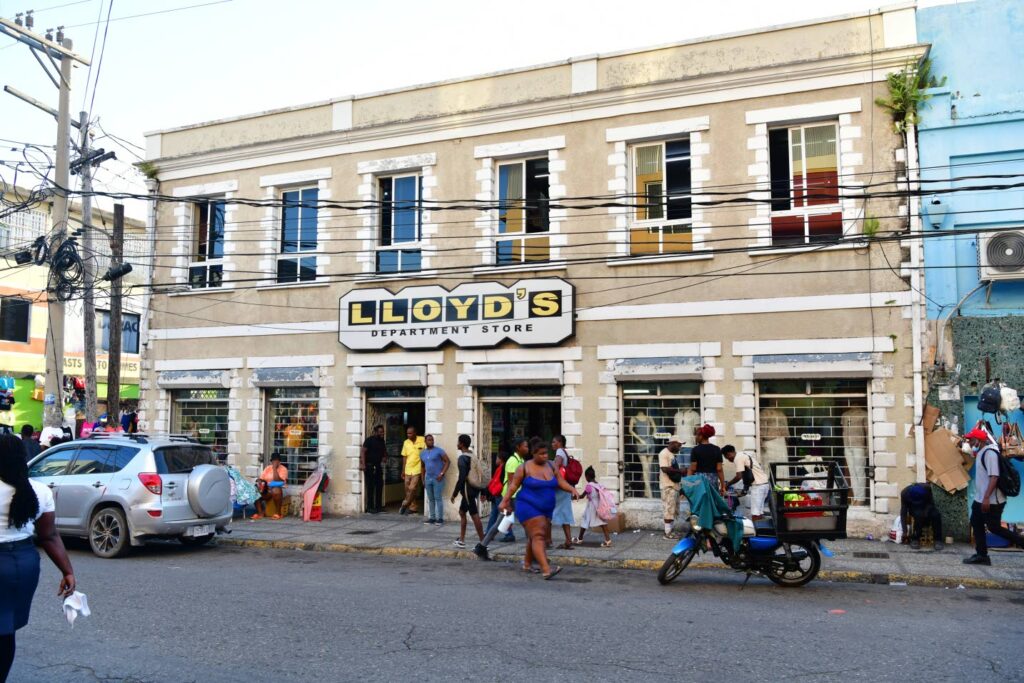
    Montego Bay’s retail sector has long been defined by constant change, as shifting consumer tastes, economic tides, and urban development reshape its commercial landscape year after year. But against this backdrop of flux, one institution has stood the test of time: Lloyd’s Department Store, currently led by third-generation retail leader Anthony Pearson. As the last surviving full-service department store from its founding era still operating in the city, Lloyd’s is far more than a shopping destination—it is a testament to long-term resilience, adaptive vision, and an unwavering commitment to quality that has cemented its place in the community.

    The story of Lloyd’s begins in 1965, when Anthony’s father Lloyd Pearson opened the original store on Montego Bay’s St James Street. It quickly grew into a core pillar of downtown commerce, becoming a go-to destination for generations of local shoppers. Of Lloyd Pearson’s three children, only Anthony held a lasting passion for the family business. After completing his studies at The University of the West Indies, he formally joined the company in June 1983, stepping into a leadership role alongside his father. When Lloyd passed away in 1999, Anthony inherited full stewardship of the brand, tasked with steering the 34-year-old business into a new millennium.

    From his earliest days in the store, Anthony Pearson brought a unique perspective to retail: a sharp eye that balanced an understanding of Jamaican local culture with a nuanced grasp of global fashion trends. Under his leadership, Lloyd’s evolved alongside Montego Bay, growing from a respected local department store to an enduring retail mainstay as the city transformed into a dynamic cosmopolitan hub. One of the most pivotal strategic moves in the brand’s modern history was its expansion into the fast-growing Fairview commercial district—a decision that allowed Lloyd’s to position itself at the cutting edge of modern retail while retaining its beloved historic flagship on St James Street. For Pearson, growth has never been just about increasing size; it has always been about retaining relevance to shifting customer needs.

    This customer-centric philosophy is visible in every aspect of Lloyd’s curated selection, which caters to a wide range of shopper profiles, from working professionals in need of sharp tailored pieces to casual shoppers seeking refined weekend wear. Retaining two locations across the city reflects Pearson’s deep understanding of Montego Bay’s shifting demographics and consumer buying power—a delicate balance that few legacy retailers have managed to pull off in an industry often dominated by fleeting fast-fashion trends.
    Beyond its retail offerings, Lloyd’s has maintained a longstanding commitment to supporting local community initiatives through sponsorships and partnerships. What Pearson is perhaps most proud of, however, is his team of more than 50 employees: throughout the unprecedented challenges of the COVID-19 pandemic and the devastating impact of Hurricane Melissa, the brand never resorted to layoffs, keeping all staff on payroll through every crisis.

    In an exclusive interview, Pearson opened up about his lifelong journey with the family brand, noting that his connection to the store runs deeper than just business. “I was born around it, and I chose to stay. I’ve been coming here after school every day since I was five, and we even spent Christmases working at the store. I’ve loved this business from day one, and that love has only grown over the decades,” he explained. With his two siblings pursuing other career paths, Pearson had full autonomy to shape the brand’s future, learning the ropes under his father’s experienced guidance early on.

    The road to success has not been without setbacks. In the 1980s, the original St James Street building was renovated and rebranded as Lloyd’s Mall with multiple retail tenants, and a boutique location operated in Half Moon Village from 1995 to 1998 before closing. The brand then moved a satellite location to LOJ Shopping Complex, which ultimately shifted to more commercial use that made it unsuitable for fashion retail. “Not all expansions proved successful, but each taught us lessons that shaped the strategic choices we made later,” Pearson said. After his father’s passing, Pearson reconfigured the entire St James Street space into one unified flagship store, and when the opportunity for the Fairview location arose a few years later, he seized it. Today, the Fairview location spans 12,000 square feet of retail space across two floors, serving as a modern complement to the historic downtown store. For Pearson, the successful launch of Fairview remains one of his proudest professional accomplishments. He is also optimistic about the brand’s future: his son Chad, who developed a passion for retail from childhood, has joined the business after graduating from university, bringing a third generation of leadership to the brand.

    When asked about the impact of Hurricane Melissa, Pearson offered a candid account of the storm’s destruction. While the downtown St James Street location suffered only minor damage, the Fairview store experienced catastrophic losses: damage to the roof caused widespread flooding that destroyed floors, building infrastructure, and millions of dollars in retail inventory. The store was forced to close for two months, only able to partially reopen two days before Christmas. Weeks of heavy rain following the storm compounded the damage, delaying full recovery. Today, the Fairview location is almost fully restored, rebuilt to be even better than before for customers. “I have to thank our staff for their incredible work, pumping out water every day and working tirelessly to get the store back in shape. We’re still recovering financially, but we’re open for business and ready to serve our customers,” Pearson noted.

    When asked what has kept him in the industry after nearly 60 years of continuous operation, Pearson pointed to enduring passion. “This is what I know, and the passion is still there. There are frustrating days when the momentum fades, but that core love for the business keeps me going. Not many independent businesses make it to 60 years, so this is a legacy we’re incredibly proud of. With the third generation stepping up, I know we’ll be here for many more years to come.”

    Pearson also shared his strategy for staying relevant in an increasingly competitive retail market. “You have to know what your customers want. Even with all the new competition, we’ve built our reputation on quality. We focus on timeless basics, rather than chasing flashy, fast fashion trends. We keep up with emerging trends, but we never compromise on quality or abandon our focus on pieces that last. That’s what has kept us going all these years.”

    To revitalize the brand for the digital age, Pearson has leaned into constant adaptation. The brand has recently expanded its social media presence and is developing an online shopping option for its website, leaning into the opportunities of digital commerce while staying true to its core values. “Constant reinvention and adaptation is key. At the end of the day, understanding what customers want is the most important thing, and we always deliver on our core promises: quality, competitive pricing, and exceptional customer service. Those principles will carry us into the future,” he explained.

    For customers looking ahead, Pearson confirmed that Lloyd’s will continue rolling out fresh inventory year-round, plus its popular three annual major sales promotions. These five-week sales events draw shoppers from across the region, offering deep discounts on a wide range of quality pieces that keep customers coming back year after year.

    When highlighting summer must-haves, Pearson noted that linen is the season’s standout trend, and the store has curated an extensive collection from trusted local supplier Bill Edwards, alongside imported selections. “Linen is such a dynamic fabric—it works for both casual and elegant looks, it holds up great, and it leaves customers feeling confident. It’s absolutely the go-to for summer,” he said. The brand’s buying team, made up of Pearson, Chad, and lead buyer Debbie-Ann Fraser, makes major purchasing trips every August and September to source new stock, traveling to markets in Los Angeles, Panama, and Brazil to curate selections that balance global trends with local customer needs. While men’s fashion trends tend to stay more consistent, Pearson notes that the team works hard to keep the women’s collection aligned with the latest developments, never losing focus on quality and timeless style. Ahead of the back-to-school season, Lloyd’s is also well-known for its signature khakis, celebrated for their consistent color and perfect fit.

    Lloyd’s Department Store currently operates two locations: the original flagship at 26 St James Street, Montego Bay, and the modern Fairview location. Hours are 9:30 AM to 6:30 PM Monday through Thursday, and 9:30 AM to 7:00 PM Friday and Saturday. For inquiries, customers can contact the store at 876-952-3172 or email lloydsmobay@hotmail.com.


  • ‘I CAN DO IT’

    ‘I CAN DO IT’

    For football, a decade can rewrite a coach’s trajectory – and for Jamaican football tactician Miguel Coley, eight years of high-level coaching across Asia has transformed his skills, preparing him far better for a role with the Reggae Boyz than his first national team stint a decade earlier.

    As first reported by the Jamaica Observer last week, Coley and fellow interim coach Rudolph Speid have emerged as the leading candidates for the senior men’s national team roles of assistant coach and head coach respectively, with the Jamaica Football Federation (JFF) scheduled to cast its final decision this week. The pair stepped into interim positions last November, after former head coach Steve McClaren and his entire technical team parted ways with the federation following their failure to secure an automatic qualification spot for the 2026 FIFA World Cup during the final round of Concacaf qualifiers.

    Coley and Speid guided the Reggae Boyz through last month’s intercontinental play-offs hosted in Guadalajara, Mexico. The campaign ended with a narrow defeat to DR Congo in the decisive final match, crushing Jamaica’s hopes of earning a spot in this summer’s World Cup tournament. A permanent appointment would mark Coley’s second spell as national assistant coach; he previously held the role between 2014 and 2016 under German head coach Winfried Schaefer, a tenure that included a run to the 2015 Concacaf Gold Cup finals. During his first national stint, Coley also served as head coach at Jamaica College, the dominant powerhouse of Jamaican high school football.

    Since leaving Jamaica College in 2017, Coley has spent the past eight years building his resume at top-tier club programs across Asia, while also earning his UEFA Pro Licence – a rare achievement among coaches from the Caribbean region. In an interview with the Jamaica Observer, Coley emphasized that this extended international experience has sharpened both his tactical acumen and team management skills, improvements he says were already visible during the Reggae Boyz’s recent play-off run.

    “Looking back, I’m a far more qualified coach now than I was 10 years ago,” Coley explained. “I’ve grown a lot in the global football space, and I have far more confidence to communicate exactly what I need from players in clear, concise terms. Over the years, I’ve learned to read the dynamic of a locker room, to pick up on players’ body language and address their needs far better than I could earlier in my career. Ten years ago, I was very young – I started coaching at an early age. But I adapted quickly to the international game, which is why I became one of the first Caribbean head coaches to work at the top level in Asia. All the experience I’ve gained since then has made me a better coach and a better leader, and that’s translated into real quality in my work.”

    Before his interim appointment last November, Coley was repeatedly linked to a return to the Reggae Boyz technical staff but was repeatedly passed over. Some Jamaican football stakeholders questioned his qualifications, pointing to his role in Schaefer’s unsuccessful 2018 World Cup qualifying campaign and the perception that his biggest achievements had all come at the high school level. But Coley pushes back on that narrative, pointing to a consistent track record of success at every stop of his career.

    “One thing I can say for certain is that I’ve won wherever I’ve coached,” he said. “I won titles at Jamaica College, I won at Barbican, I won in Iran, I won in the UAE, I lifted trophies in Qatar, and right now I’m through to the semi-finals of the Champions League in Iraq. People can say whatever narrative they want, but they only need to look at my results to see the proof.”

    Coley acknowledges he does not have top-flight coaching experience in Europe, which is widely seen as the global gold standard for the sport. But he argues that the high quality of competition in Asian leagues has been just as valuable for his professional growth. “Asia has some of the best football facilities in the world,” he noted. “If you look at the 2022 Qatar World Cup, those facilities are second to none. We have top international players competing in Asian leagues now – while they may not arrive in their early 20s anymore, more and more elite players are coming to play in their late 20s and early 30s, so we work with a ton of high-quality professional talent every day.

    “We also have some of the best coaches in the world working in Asia right now. When Christophe Galtier left PSG, he went to coach in Qatar. When Roberto Mancini stepped away from the Italian national team, he took a job in Qatar. Brendan Rodgers, former manager of Liverpool and Celtic, is also coaching in Asia now. To compete against these elite-level coaches as a Jamaican, the experience I’ve gained is irreplaceable.”

    Since returning from Guadalajara after the play-off defeat, Coley has not rushed to lock down his future with the national team, even though he has already received public backing from JFF President Michael Ricketts. Even so, he says he is ready to become a long-term core asset for the Reggae Boyz if given the opportunity.

    “I would love the chance to take on this role, because I know I can get the job done,” Coley said. “Over the years, I’ve prepared myself in every possible way to lead this team. I know what style of play works best for Jamaican football, I understand our people, I understand the disappointment of missing out on another World Cup. I draw strength from the passion and the pressure of this moment – knowing my country needs this pushes me to be better. As a patriot and an ambassador for Jamaica, I will get this done.”

  • Pringle Promises Year-Round Barrel Concessions as Part of Cost-of-Living Plan

    Pringle Promises Year-Round Barrel Concessions as Part of Cost-of-Living Plan

    ST JOHN’S, Antigua — With less than two months to go until Antigua and Barbuda’s April 30 general election, cost-of-living pressures have taken center stage as a key voting issue, prompting the main opposition United Progressive Party (UPP) to roll out a sweeping package of household affordability measures led by an expansion of existing barrel concessions.

    Speaking to supporters at the party’s official campaign launch on Sunday evening, UPP leader Jamale Pringle laid out the full slate of policy proposals, framing the plan as a direct response to the growing financial strain that working families across the twin-island nation are facing amid soaring prices for basic necessities. Pringle emphasized that the current restricted barrel concession program, which allows reduced duties on goods shipped to residents in barrels, would be broadened to deliver ongoing, meaningful relief to households grappling with steady food price inflation.

    Beyond the expanded barrel concessions, Pringle announced a new targeted Water Tanks and Accessories Relief Program, designed to address longstanding inconsistent water access across the country. Under the proposal, all taxes on critical water storage and delivery equipment—including holding tanks, pressure tanks, and water pumps—would be eliminated entirely. Pringle clarified that the tax removal would act as an interim solution for households until the UPP, if elected, can implement a permanent fix to deliver consistent, daily piped water service to all communities.

    The opposition leader also put forward major changes to vehicle import policy to cut transportation costs for residents, promising to fully remove import duties on personal passenger vehicles. The move would bring down the upfront cost of vehicle ownership, making private transportation far more accessible for working families that rely on cars for daily commutes, school runs, and essential travel.

    Pringle tied all the party’s proposals directly to what he framed as failing cost management under the current sitting administration, arguing that everyday Antiguans and Barbudans have seen unchecked increases in prices and public fees over the current government’s term. He outlined the UPP’s core governing promise as delivering tangible improvements to daily quality of life: accessible food that families can afford, well-maintained safe roads, vehicles that do not force households into debt, reliable running water, and accessible healthcare when people need it.

    For Pringle, the package of relief measures is far more than a campaign platform—it is a binding commitment to the electorate. “This is not a wish. This is a contract with the people of Antigua and Barbuda,” he told supporters.

    As the election campaign intensifies, cost-of-living issues have emerged as the central battleground between the country’s two major political parties, with both the governing party and the UPP working to convince voters that their respective policy agendas offer the most effective path to reducing household financial strain and delivering long-term economic stability.

  • HAPPENING NOW: UPP Leader and Candidates Begin Nomination Process

    HAPPENING NOW: UPP Leader and Candidates Begin Nomination Process

    As election season gains momentum, the United Progressive Party (UPP) has entered a critical new phase this week, with party leader and all endorsed candidates officially launching their nomination process at party headquarters across multiple regional constituencies.

    The nomination period, a mandatory procedural step required by the national electoral commission, marks the formal start of candidates’ qualification for the upcoming general election, scheduled to take place in six weeks. Party officials confirmed that the UPP leader was the first to file their nomination papers early Monday morning, accompanied by senior party members, before proceeding to meet with grassroots supporters outside the commission’s local office.

    Representatives from the electoral commission have stated that all nomination materials submitted so far by UPP candidates appear to meet all regulatory requirements, with preliminary reviews expected to be completed within three business days. The process, which requires candidates to submit valid voter signatures, registration documents, and financial disclosure forms, is a foundational step that all aspiring elected officials must complete to appear on the final ballot.

    In a brief press statement following the submission of his nomination, the UPP leader emphasized that the party’s slate of candidates reflects a broad cross-section of national society, including first-time political candidates, community organizers, and incumbent representatives with proven legislative records. “This nomination process is not just a bureaucratic step—it is a commitment to the voters that we are ready to deliver on the promises we have laid out for economic growth, healthcare reform, and expanded educational opportunity,” the leader told assembled reporters.

    Grassroots supporters gathered outside the nomination venue to cheer on the UPP team, holding campaign signs and chanting party slogans, in a display of early enthusiasm for the party’s election bid. Political analysts note that the early launch of the nomination process gives the UPP a strategic advantage, allowing candidates extra time to campaign in key swing constituencies before early voting begins next month.

    Opposition parties have also begun their own nomination processes this week, with all candidates required to complete their submissions by the end of the two-week nomination window set by the electoral commission. The finalized list of all qualified candidates will be published by the commission one week after the nomination period closes, clearing the way for the official campaign period to begin in full.