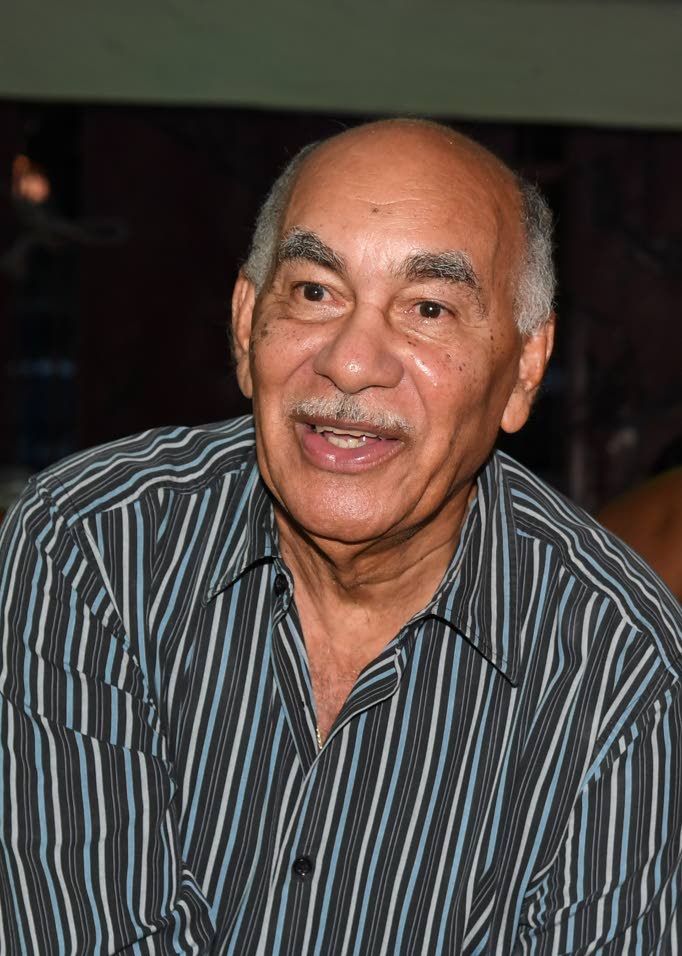
Last Friday, Jamaica’s Court of Appeal convened a rare full-bench special sitting to celebrate the life and legacy of Ian Forte, the court’s late former president, who passed away on June 5 at the age of 89. Across Jamaica’s legal community and the wider Caribbean, tributes poured in highlighting the profound respect Forte earned over a trailblazing 50-plus year career in law and judiciary.
Forte’s journey through Jamaica’s legal system saw him rise through nearly every key rank, starting as a practicing counsel, before serving as resident magistrate, director of public prosecutions, and ultimately earning elevation to the Court of Appeal as a judge in 1988. He stepped into the role of Court of Appeal President in 1999, holding the position until his retirement in 2005. Beyond Jamaica’s borders, his reputation for intellectual rigor and integrity earned him cross-regional appointments, including serving on the Courts of Appeal for both the Cayman Islands and the Turks and Caicos Islands.
Presiding over the special sitting, current Court of Appeal President Marva McDonald-Bishop opened the tributes by emphasizing that Forte’s contributions extended far beyond his formal judicial work. “In every office he held within the legal and judicial system, whether at home or abroad, he exemplified the fundamental qualities that sustain confidence in the administration of justice,” she said. McDonald-Bishop noted that through his sharp scholarship and balanced judgment, Forte left an indelible mark on Jamaican and Caribbean jurisprudence. What truly defines his legacy, she added, is his selfless service outside the courtroom: through his local church, the Norman Manley Law School, his alma mater St George’s College, and the Kiwanis Club, he touched countless lives through mentorship, teaching, and quiet generosity. His lifelong commitment to public service, she said, earned him formal national and professional honors that rightly reflect the widespread respect he inspired across the legal community and the nation.
Jamaica’s Chief Justice Bryan Sykes, head of the national judiciary, shared a pre-recorded message noting that Forte’s decades of dedication helped shape the development of Jamaican jurisprudence and strengthen the judiciary, a core institution of the country’s constitutional democracy. Sykes pointed out that as Court of Appeal President, Forte occupied one of the nation’s highest judicial offices, and he carried the unique responsibility of appellate adjudication with extraordinary seriousness and principle. “Those who appeared before him quickly came to appreciate that he was always thoroughly prepared. He understood that judicial preparation is, itself, a form of respect — respect for the litigants, respect for counsel, respect for colleagues, and respect for the judicial process,” Sykes said.
Sykes also highlighted Forte’s rare judicial temperament: at a time when modern public discourse often prioritizes loud certainty over thoughtful reflection, Forte remained a model of calm deliberation. Soft-spoken, courteous, and respectful to everyone who entered his courtroom, Forte’s gentle demeanor never masked his formidable intellect and deep mastery of the law, Sykes added.
Winston Anderson, president of the Caribbean Court of Justice, echoed these remarks, noting that Forte’s 50-year career reflected extraordinary dedication and a deep, abiding passion for the law. “It speaks to a life devoted to the thoughtful interpretation and persistent advancement of the law, whether in chambers preparing and strategising, at the Bar table arguing a case, or behind the bench crafting decisions whose influence resonated far beyond the courtroom,” Anderson said. Forte’s life’s work, he added, ultimately shaped how Caribbean people interact with public institutions, how those institutions function, and how individual rights are protected and advanced across the region.
Patrick Brooks, retired former president of the Court of Appeal, recalled his early experiences working with Forte when Forte served as director of public prosecutions, saying he was always in awe of Forte’s leadership. Even when parties disagreed with his rulings, Brooks noted, Forte’s judgments were always fair and rigorously reasoned. “I stood on his shoulders in my time as president, and the court is much better for his administration of it,” Brooks said.
Responding to the outpouring of tributes, Forte’s widow, Marlene Malahoo Forte — a third-term Jamaican parliamentarian and former minister of legal and constitutional affairs — confirmed that the public portrayals of her late husband matched the man she knew in private. Citing a popular Jamaican proverb that notes knowing someone publicly is very different from living with them privately, she said: “for Ian, seeing him and living with him were the same. Everything I have heard said about him publicly I’ve lived it privately with him.”
Opening up about their life together, Malahoo Forte described Forte as a man easy to love, who commanded deep respect for his commitment to Jamaica and the justice system. She said she counted it a privilege to care for him through all stages of his life, from his career prime to his final vulnerable years, and that he remained lucid and kept his characteristic sense of humor until the end of his life. When she made the decision to leave the judicial branch to enter electoral politics, she said, Forte was initially disappointed but never stood in her way, instead offering unwavering support and drawing on his decades of experience to provide constant wisdom and guidance.
The special sitting was also attended by dozens of Forte’s family members, and additional tributes were delivered by senior legal figures including former Appeal Court President Seymour Panton, Attorney General Dr Derrick McKoy KC, multiple former and current directors of public prosecutions, Senate President Tom Tavares-Finson KC, and representatives from both the public and private bar.