作者: admin

  • Police Withhold Owner’s Identity in $1.7M Drug Bust

    Police Withhold Owner’s Identity in $1.7M Drug Bust

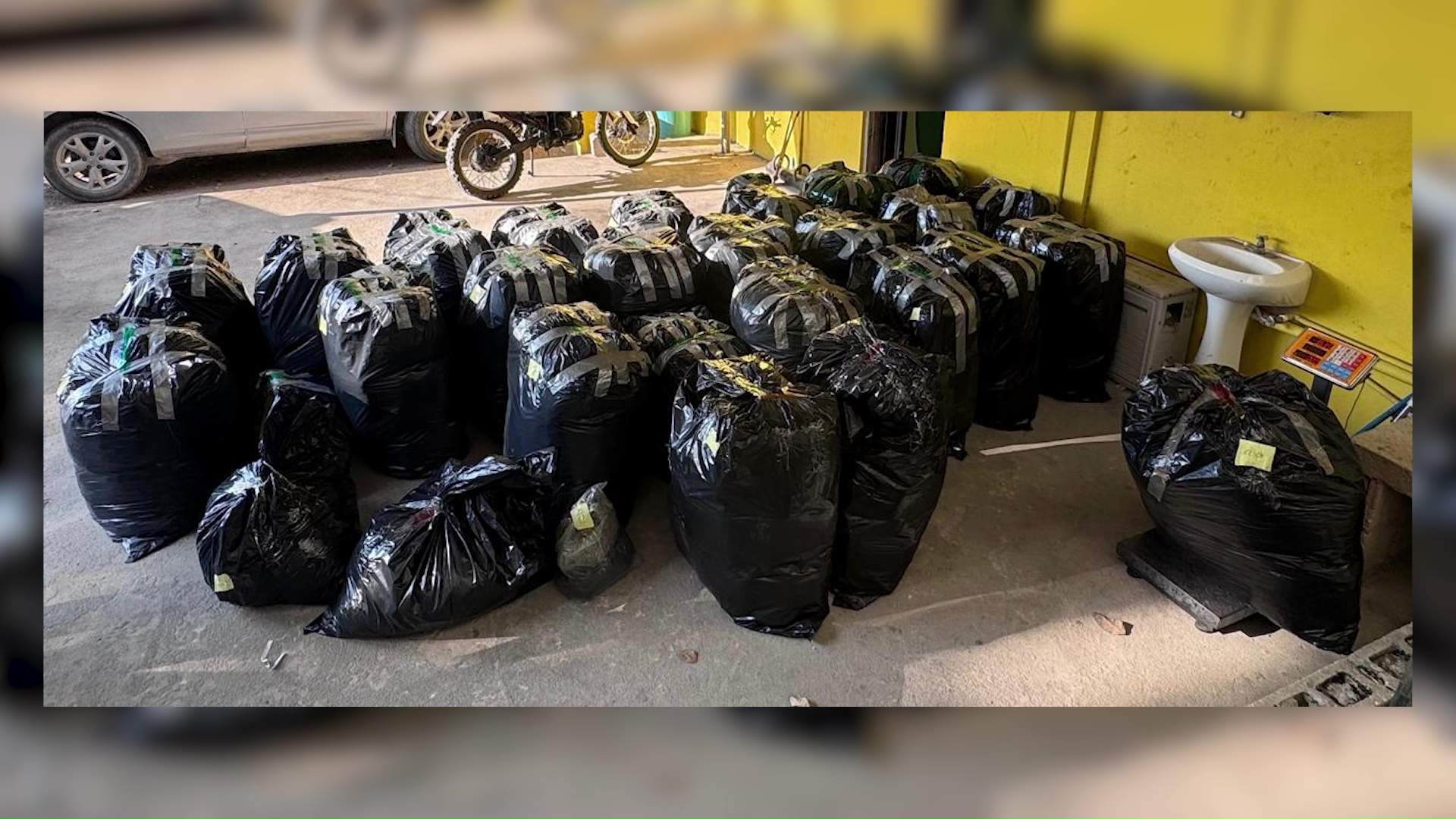
    A high-stakes drug investigation in Lord’s Bank remains in active development more than a week after authorities seized a massive marijuana shipment valued at roughly $1.7 million, with law enforcement officials declining Thursday to release key details about the property where the contraband was discovered, including its registered owner.

    After the initial seizure made headlines last week, local reporters returned this week to police leadership seeking clarity on the case’s progression and answers to lingering public questions, most notably the identity of the individual who owns the land tied to the bust. But Senior law enforcement representative Assistant Superintendent Stacy Smith, who serves as a staff officer for the department, confirmed that the active status of the investigation means sensitive details cannot be released to the public at this stage.

    In an on-the-record interview with reporters, Smith explained that little has changed in the public disclosures around the case since the initial announcement, because the probe is still moving forward steadily. “It is an ongoing investigation. I admit the circumstances are not ideal. It is an investigation that started in earnest. We made headways in terms of narrowing persons of interest and we are in process of putting the necessary evidential material together as well as communicating and liaising with the Financial Intelligence Unit because of the scale of the operation which intelligence has suggested is being conducted by a large organized network,” Smith stated.

    When directly asked by reporter Paul Lopez to confirm who holds ownership of the property where the marijuana was found, Smith reiterated that the department will not be expanding on its already public information at this time. “The information we have disclosed is the extent we wish to disclose,” she said.

    This report is adapted from a transcript of an evening television newscast, with all spoken statements preserved and edited only for readability per original broadcast standards.

  • Trained K‑9s Lead Successful Drug Operation in Lord’s Bank

    Trained K‑9s Lead Successful Drug Operation in Lord’s Bank

    A high-stakes drug enforcement operation in the small community of Lord’s Bank delivered a major win for local law enforcement last week, with authorities crediting the success of the seizure directly to the specialized skills and rigorous preparation of the police department’s K-9 Unit. In an official briefing following the operation, Assistant Superintendent of Police Stacy Smith, a senior staff officer with the department, emphasized the irreplaceable role that the canine unit plays in the force’s broader anti-crime strategy, while shedding light on the ongoing training that keeps both the dogs and their human handlers prepared for high-pressure missions.

    In comments to local media, Smith underlined that the K-9 Unit has become one of the most valuable tools in the department’s work to combat the spread of illicit drugs and organized criminal activity. “The K9 Unit is a very integral part of the department’s weaponry when it comes to fighting crime,” Smith explained. “We invest consistent time and resources into training the officers assigned to the unit, and we maintain a continuous training regimen for the canines themselves to ensure they can deliver reliable support in the field. During last week’s seizure operation in Lord’s Bank, the participating K-9 proved to be an invaluable asset that made the entire operation possible.”

    This report is adapted from a televised evening news broadcast, transcribed for online publication with standardized spelling used to translate commentary originally delivered in Kriol. As of publication, the online report has been viewed more than 100 times by local readers, with the operation sparking discussion among community members about ongoing efforts to curb drug-related activity in the region.

  • Two Crack Cocaine Arrests Made in Separate Cases

    Two Crack Cocaine Arrests Made in Separate Cases

    Law enforcement authorities in Belize have taken two individuals into custody on separate crack cocaine trafficking charges following two distinct operations carried out over the weekend of April 11-12, 2026, in locations across the southern part of the country and the capital Belize City. Assistant Superintendent of Police Stacy Smith, a serving Staff Officer with the department, shared full details of the coordinated arrests in an official statement following the processing of both suspects.

    The first case unfolded in the quiet residential community of Bella Vista Village, southern Belize, at 11 p.m. on April 12. Officers were first dispatched to the area to respond to reports of a domestic disturbance, a routine call that uncovered an alleged narcotics operation. Once on scene, 31-year-old Adam Pop, the suspect in the dispute, attempted to flee responding officers before being successfully apprehended. A pat-down search of Pop following his arrest recovered multiple small parcels of suspected crack cocaine wrapped in aluminum foil. Laboratory testing confirmed the substance was crack cocaine, with a total weight of 2.35 grams. Pop has since been formally charged with possession of a controlled substance with intent to supply, a felony offense under Belizean drug law.

    The second arrest came 24 hours earlier, on the morning of April 11, at a residential property on Hyde’s Street in central Belize City. In this case, officers launched a targeted search operation focused on recovering unlicensed firearms and ammunition, a priority for Belizean law enforcement working to reduce urban violent crime. As the search team entered the property, one officer positioned at the rear of the home to establish a perimeter spotted 59-year-old Lydia Castillo attempting to discard multiple small silver foil packages. When officers recovered and opened the parcels, they found they contained suspected crack cocaine weighing a combined 1.9 grams. A subsequent systematic search of the entire property recovered an additional 8.8 grams of crack cocaine that had been hidden on the grounds, bringing the total seizure from the Castillo case to 10.7 grams, and 13.05 grams across both operations. Like Pop, Castillo has been charged with possession of a controlled substance with intent to supply.

    Both cases are now progressing through the Belizean judicial system, with the seized narcotics held as evidence for upcoming court proceedings. This report is adapted from a transcribed evening television news broadcast original to Belize, with all official statements retained and verified for accuracy.

  • Violent San Estevan Road Crash Claims Motorist’s Life

    Violent San Estevan Road Crash Claims Motorist’s Life

    A devastating late-afternoon collision on San Estevan Road has left a northern community in mourning after a 21-year-old motorcyclist lost his life in a crash between two vehicles on April 12, 2026. The fatal incident, which unfolded roughly 24 hours before official confirmation, involved a motorcycle operated by Zuriel Cruz and a pickup truck traveling the opposite direction of the roadway, and has prompted an ongoing probe by local law enforcement to pin down the exact cause and assign fault.

    Emergency response protocols were activated at 4:10 p.m. that Sunday, after Orange Walk District police received an alert about the road traffic accident on the busy thoroughfare. When first responders arrived at the scene, they encountered Cruz unresponsive and severely injured alongside two damaged vehicles: his heavily impacted motorcycle, and the pickup truck, which also sustained visible collision damage. Bystanders who rushed to the scene attempted to render aid before emergency services arrived, but their efforts could not save the young motorist. Cruz was quickly transported to the nearest medical facility, where attending clinicians pronounced him dead at 5:37 p.m.

    Assistant Superintendent of Police Stacey Smith, the staff officer overseeing preliminary investigative efforts, outlined the early findings of the probe to local media. Per early reconstruction of the crash, Cruz was traveling along the roadway toward Orange Walk Town on his motorcycle when the collision occurred. The pickup truck, which was moving in the opposite direction, attempted a left turn onto an adjacent unimproved dirt road. That maneuver put the two vehicles on a direct collision course, resulting in the violent impact that claimed Cruz’s life.

    As of this report, investigators have not released any additional details regarding potential charges, the identity of the pickup truck driver, or any contributing factors that may have led to the turn being executed, such as poor visibility, mechanical failure, or driver error. Law enforcement has confirmed the investigation remains active and ongoing, with updates to be released to the public once additional evidence is reviewed and verified. The incident has left local residents shaken, highlighting the persistent risk of serious traffic accidents on rural and suburban roadways where unmarked turns and mixed traffic can create dangerous conditions.

  • Rising aircraft fuel prices to increase domestic airfares – AOAG president

    Rising aircraft fuel prices to increase domestic airfares – AOAG president

    Fresh geopolitical tensions between the United States and Iran have spilled over into global energy markets, sending shockwaves through Guyana’s small domestic aviation sector. The head of the country’s leading aviation industry body announced Monday that immediate price increases for aircraft fuel will translate to higher travel costs for passengers, particularly those flying to interior regions of the South American nation.

    Learie Barclay, President of the Aviation Operators’ Association of Guyana (AOAG), confirmed that fare adjustments will take effect starting Tuesday, leaving domestic carriers with no alternative but to pass steep new fuel costs onto consumers. He noted that the sector had only recently implemented a fuel price reduction, leaving operators with no remaining buffer to absorb new upward price pressures.

    “There is no waiting this out. We’ve just had a price reduction so there isn’t really a margin to do much absorption. The prices will definitely rise. I can’t tell you by how much… The prices are definitely going to rise starting tomorrow,” Barclay told local outlet Demerara Waves Online News.

    Breakdown of the cost increases shows a dramatic divergence across fuel grades: aviation gasoline, the primary fuel for smaller piston-engine aircraft, will rise by 11 percent, while the acquisition cost of aviation jet fuel for larger turbine-engine planes is projected to jump by as much as 75 percent. Turbine-engine aircraft will bear the brunt of the price shock, Barclay said, though smaller propeller-driven aircraft will also face measurable cost increases.

    As a small-volume fuel consumer with limited market bargaining power, Guyana’s aviation sector is disproportionately vulnerable to global price volatility, according to Barclay. “We are at the lower end of the usage. We don’t have the amount of clout in terms of what we buy so we are one of the countries that will be affected the most by this,” he explained.

    While fares will increase, Barclay clarified that the percentage rise in ticket prices will be lower than the percentage jump in fuel costs, since fuel accounts for between 38 and 40 percent of airlines’ total operational expenses. Beyond direct fuel costs, the price hike is also expected to ripple through the sector, pushing up the cost of aircraft parts and other critical operational inputs.

    Barclay added that the AOAG has not yet received any commitment or outreach from the Guyanese government regarding fuel subsidies to offset the increases, though he remains hopeful that policy discussions will be convened to address the crisis. To insulate the country from future global energy price shocks, the AOAG chief is calling for long-term investment in domestic or regional refining capacity.

    “As a producer of raw materials, I think that we can produce our own avgas and avjet and bring the cost down,” he said, urging the government to move forward with plans to build a local refinery or secure access to a nearby facility.

    The Guyanese government has already signaled it is exploring strategies to buffer the domestic market from global energy volatility caused by international conflict. It has actively courted Middle Eastern oil producers to construct large-scale bulk fuel storage facilities within the country, and President Irfaan Ali recently proposed that a share of Guyana’s crude oil could be processed at Trinidad and Tobago’s idled Petrotrin refinery once it resumes operations.

  • FLASH – Resumption of Haiti-Brazil flights of Zed Airlines

    FLASH – Resumption of Haiti-Brazil flights of Zed Airlines

    After a multi-week suspension triggered by dangerous hostile fire incidents targeting two of its aircraft, Zed Airlines has officially restarted commercial flight operations between Haiti and Brazil, marking a key milestone for the Caribbean nation’s international connectivity. On Monday, April 13, 2026, the carrier’s flight #9710 — operated on behalf of Zed by Aeroregional, with a 160-passenger capacity — departed Port-au-Prince’s Toussaint Louverture International Airport (AITL) en route to Brazil, establishing the first direct air link between the two countries since service was paused. This return to regular operations comes after a period of uncertainty following the attacks that damaged two of Zed Airlines’ planes, prompting the immediate suspension of all cross-border routes. In response to rising passenger demand for the Haiti-Brazil route and a broader push to regularize both migratory movement and commercial trade flows between the two nations, additional flights have already been scheduled to run through the remainder of April. Haitian government officials framed the resumption of service as a deliberate demonstration of the administration’s commitment to preserving Haiti’s access to global transportation networks. The country’s Ministry of Transport and senior leadership at Toussaint Louverture International Airport have confirmed they are maintaining full operational mobilization to deliver a secure, high-quality travel experience for all passengers using the airport’s international services. The restart of flights comes as stakeholders work to balance security concerns with the critical economic and social need for sustained international air connectivity, filling a gap that has disrupted travel and commerce for weeks since the gunfire incidents forced service to halt.

  • Caye Caulker Residents Protest Possible Sale of Police Station Land

    Caye Caulker Residents Protest Possible Sale of Police Station Land

    On the small Caribbean island of Caye Caulker, public anger has reached a breaking point over unconfirmed plans to sell a parcel of government-owned land that has been reserved for years for a new local police station. Hundreds of residents took to the streets this week to voice their opposition to any transfer of Parcel 815, a strategically located plot that community leaders argue is critical not just for future public safety infrastructure, but also for expanding youth outreach programs and strengthening the island’s emergency response capacity.

    The demonstration follows just days after a tense, packed town hall meeting where locals first raised alarm about the unclear status of the land, amplifying long-simmering mistrust over closed-door government decisions that impact the small island community. The Caye Caulker Village Council has already taken a firm public stance, announcing it will not accept any sale of the property that proceeds without transparent, widespread public consultation with island residents.

    Protesters were joined at the demonstration by Senator Gabriel Zetina, the United Democratic Party caretaker for Belize Rural South, who has conducted an independent title search into the property’s recent ownership history. Zetina shared new details from his investigation, revealing that the Government of Belize officially transferred the parcel on February 14, 2023. On that exact same day, a new private land title and certificate were issued for the property, a timeline that has raised red flags for community leaders.

    Zetina also confirmed that construction workers assigned to preliminary work on the planned police station have been ordered to halt activities, leaving incomplete work sites on the land with building materials already moved from their original storage piles. While no official statement confirming a sale has been released by government officials, widespread unconfirmed rumors on the island link the potential private purchase to a local water taxi company.

    To date, top government officials including Area Representative Andre Perez and the Minister of Home Affairs have declined to comment on the situation, leaving residents without clear answers about the land’s future. Zetina highlighted a core unresolved contradiction at the heart of the controversy: the government previously secured a loan from the Central American Bank for Economic Integration (CABEI) specifically earmarked for building the new police station on Parcel 815. If the land is sold off to private interests, Zetina argues, officials will need to answer to the public for how public funds allocated for this critical infrastructure project will be reallocated.

    For residents, the fight over Parcel 815 extends far beyond a single plot of land. Many view the controversy as a test of whether local voices will be centered in decisions that shape the long-term future of their tight-knit island community.

  • Lashley sets July opening for forensic lab in sweeping anti-crime strategy

    Lashley sets July opening for forensic lab in sweeping anti-crime strategy

    Facing a dramatic and deadly upswing in gun-related violence across the island nation, Barbados’ Minister of Legal Affairs Michael Lashley has announced a far-reaching overhaul of the country’s criminal justice system, anchored by three core pillars: the long-awaited reopening of the shuttered national forensic laboratory in July, groundbreaking anti-gang legislation, and the integration of cutting-edge smart technology into modern policing.

    Lashley made the landmark announcements during the official opening ceremony of the renovated Haynesville police substation – a facility he frames as a tangible “symbol of reassurance” for local residents shaken by the recent spike in violent firearm incidents, including a high-profile shooting in Oistins that has left widespread public anxiety in its wake. The event drew a cross-section of attendees, from senior leadership of the Barbados Police Service to local community members and fellow government officials, where Lashley laid out a clear timeline and actionable framework for the multi-phase strategy.

    The most consequential development for Barbados’ judicial infrastructure is the confirmed July reopening of the forensic laboratory, which has remained dormant for years. For decades, the country has relied on offshore forensic testing to process crime scene evidence, a system Lashley argues has been plagued by critical failures: contaminated samples during transit, extended case delays, and even collapsed prosecutions due to lost or incomplete scientific evidence. Once reopened, the facility will eliminate the need to ship samples overseas, putting critical evidence linking suspects to crimes directly in the hands of investigators and prosecutors within the country. “No longer will the cases be delayed because police officers have to send samples overseas to labs,” Lashley told attendees, emphasizing that a fully functional local forensic lab is a non-negotiable “vital component” of a fair and efficient criminal justice system.

    The government’s strategy is structured around short, medium, and long-term interventions that target both the symptoms and root causes of rising violent crime. A central pillar of the approach is a “whole-of-country” response that leverages advanced surveillance technology to target high-crime hot spots and individuals who have been leveraging violence to hold communities hostage. Lashley confirmed that the administration is moving forward with deploying smart policing tools that will boost patrol visibility, enhance community monitoring, and create a more proactive security presence in areas where residents report feeling unsafe.

    Drawing on his decades of experience as a defence lawyer, Lashley identified systemic delays in the country’s court system as one of the key drivers of persistent violent crime. To address this bottleneck, he proposed a streamlined judicial process for simple firearms possession cases, which would move to trial using only four key witness statements from the arresting officer, a supporting backup officer, a court records clerk, and a certified firearms expert. Echoing Prime Minister Mia Amor Mottley’s directive to cut unnecessary red tape, Lashley noted that the current system regularly takes one to two years to bring simple firearms charges to trial – a delay that undermines public confidence in the rule of law. “Let us speed up the system. Let us work on getting the disclosure and the files ready so that a man who is charged with a firearm offense is before the court to answer the charge,” he said.

    To back this court reform, Lashley confirmed that the government is 95% finished drafting new anti-gang legislation and updated Criminal Procedure Rules designed to enforce mandatory timely trial deadlines. Beyond enforcement and judicial reform, the administration is also prioritizing prevention and rehabilitation to address the underlying social conditions that push at-risk youth toward gang involvement and criminal activity. Pointing to local youth initiatives like the popular Haynesville Drummers performance group as a successful model, Lashley called for expanding support for the National Peace Programme and the Juvenile Liaison Scheme, both of which work to redirect vulnerable young people into constructive, character-building activities instead of prosecution. “Rehabilitation and communities working together can only help those who went afoul of the law to come back into society and make a contribution,” he noted.

    Lashley also issued a sharp warning to individuals who aid violent offenders, announcing that the government is considering harsher criminal penalties for anyone convicted of harbouring or assisting wanted criminals. The Haynesville police substation, the first of a series of new community-focused policing facilities Lashley plans to roll out across the country (he prefers the term “substation” over the older “outpost” to reflect their permanent, community-embedded role), has already sparked requests for similar facilities from residents in other areas including Ellerton.

    The opening ceremony concluded with a dedication from Reverend Lucille Baird, who echoed Lashley’s call for judicial efficiency, reminding the audience that “justice delayed is justice denied” and pledging her ongoing community commitment to the Haynesville area. Closing his address, Lashley ended with a public appeal for greater parental responsibility, urging Barbadian families to put down digital devices and rebuild the intergenerational social bonds and shared values that long served as a bedrock of safe, stable communities across the island. “We are interested in formulating policy. We have to make the criminal justice system right… ensuring that Barbadians are safe,” he said.

  • Bus Operators Warn: Transportation Services Could Collapse Very Soon

    Bus Operators Warn: Transportation Services Could Collapse Very Soon

    As of April 13, 2026, Belize’s public bus transportation system is teetering on the brink of total collapse, driven by skyrocketing global fuel prices that have pushed independent bus operators to the edge of financial insolvency. The Belize Bus Association (BBA) has issued an urgent warning after the country’s Cabinet unanimously rejected three separate proposals requesting government intervention to offset crippling operational cost increases.

    Belize’s Transport Minister Zabaneh confirmed the rejection of all three relief proposals in an official statement Friday, advising operators to remain patient while the government continues monitoring fuel market trends. But that response has done nothing to ease the crisis unfolding across the sector, BBA President Phillip Jones told local outlet News Five on Monday. Jones emphasized that waiting for gradual policy adjustments is no longer a viable option, with dozens of small and independent bus operators already unable to cover basic operating expenses.

    “Our members are facing catastrophic losses every single day, all because fuel costs have climbed to unsustainable levels,” Jones explained. Following the Cabinet’s rejection, Jones requested an emergency meeting with Transport Minister Zabaneh the same Friday, but as of Monday, no response had been received from the minister’s office. Jones added that nearly all BBA member operators have reported that they will be forced to suspend services within days if no emergency relief is approved.

    The BBA is now cutting past bureaucratic channels to request a direct, urgent meeting with Belize Prime Minister John Briceño. Jones said operators have lost confidence in the Transport Ministry, with many suspecting the lack of action stems from political pressure: the majority of BBA members have declined to join the National Bus Consortium (NBC), a government-aligned industry group, and operators believe this exclusion has led to their relief requests being sidelined.

    Minister Zabaneh’s public statement confirmed that the government rejected two key demands put forward by the BBA: a temporary suspension of the Goods and Services Tax (GST) on fuel for public transit operators, and approval for a modest fare increase to help cover added fuel costs. Jones noted that the BBA is open to a range of relief solutions, and is only asking for targeted measures that will offset the current record fuel prices that are making daily operations impossible. Without immediate intervention, Jones warned, most bus routes across Belize will stop running by the end of this week, leaving thousands of daily commuters without access to essential public transportation.

  • Lucky Numbers Deliver $370K Mega Bingo Payday

    Lucky Numbers Deliver $370K Mega Bingo Payday

    Dated April 13, 2026

    What started as an ordinary session of one of the world’s most popular casual games has unfolded into a transformative windfall for a man from southern Belize, who walked away with a $370,000 Mega Bingo grand jackpot after matching all his required winning numbers. After mandatory tax deductions, the lucky winner still expects to take home approximately $315,000 — a sum large enough to reshape his long-term personal and financial trajectory. In a first-hand account following his win, the recipient shared the unexpected story of his lucky numbers and laid out his cautious plans for the new fortune.

    The winner explained that he has participated in Mega Bingo since the game’s launch, but stepped away from playing for an extended period before returning to the activity. When he resumed buying tickets, he stuck to the same set of numbers without ever making a change, and did not purchase a ticket for every draw, keeping his spending consistent and low-key.

    As the recent draw unfolded, he began to notice a pattern: he kept missing out on smaller secondary prizes by just a single number. With only three numbers left to be called — including G-47, drawn three turns before the 49th ball — he still had one unmarked spot left on his card. Coming so close, he figured his streak of near-misses could not continue. When the announcer called O-75, he checked his ticket and realized he had matched the final number, locking in the full jackpot.

    For the winner, the windfall first and foremost means he can now provide meaningful support for his mother and the loved ones who have stood by him over the years. He emphasized that he plans to take a deliberate, slow approach to managing the money, rejecting the idea of making rushed, impulsive decisions. He noted that unplanned spending can drain a large windfall surprisingly quickly, so careful consideration of every major financial move will be his top priority going forward.

    This report is a transcribed version of an evening television newscast, with Kriol-language dialogue transcribed using a standardized spelling system for published distribution.