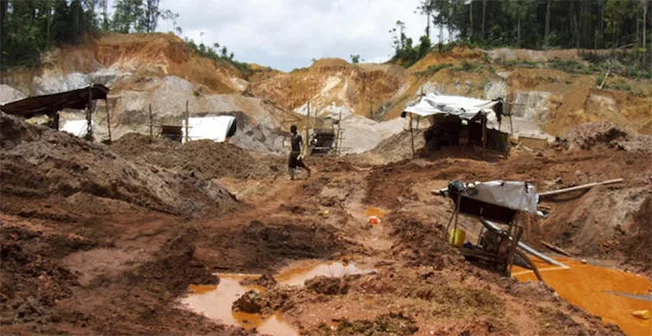
Suriname is advancing sweeping regulatory reforms for its small-scale gold mining sector, with two major initiatives already underway to formalize and green the industry, Natural Resources Minister David Abiamofo announced during budget debates in the National Assembly.
First, the government is moving forward with the establishment of a dedicated Suriname Gold Board, a body designed to bring greater transparency to gold trading and streamline the organization of the fragmented sector. Alongside this institutional overhaul, a nationwide count of all active gold mining operations will kick off shortly, once remaining logistics are finalized.
Abiamofo emphasized that bringing order to the small-scale gold sector is far more than a routine administrative task. Most informal and small-scale mining sites are located in remote, hard-to-access goldfields, requiring specialized personnel, rugged transportation and specialized equipment to conduct a full, accurate inventory. To date, necessary vehicles have already been secured through a combination of donor-funded projects and allocations from the national state budget, with only the delivery of all-terrain vehicles (ATVs) still pending. Once these arrive, the inventory work will commence.
Beyond formalization, the ministry has completed work on a national Responsible Mining Strategy, and is partnering with the United Nations Development Programme (UNDP) on the GEF Gold project. This initiative builds on the outcomes of the earlier completed M-SACS project, and centers on cutting mercury use in small-scale gold extraction, aligning with the country’s obligations under the international Minamata Convention on Mercury. Abiamofo noted that the government has intentionally adopted a gradual approach to reducing mercury dependence, rather than implementing an immediate, outright ban – a choice designed to avoid disrupting livelihoods and sector activity during the transition.
The minister also highlighted that the small-scale gold sector already makes a substantial contribution to national government revenue through royalties, permit fees and statistical levies. With improved regulatory structure and formalization, he added, overall revenue from the sector will grow significantly, while reducing the environmental and public health harm associated with unregulated mercury use.