作者: admin

  • Concrete action for the benefit of vulnerable Haitian families

    Concrete action for the benefit of vulnerable Haitian families

    On April 13, 2026, Haiti’s Ministry of Social Affairs and Labor (MAST), led by Minister Marc-Elie Nelson, in partnership with the country’s Social Assistance Fund (CAS), hosted a large-scale solidarity event focused on delivering tangible support to two of Haiti’s most marginalized groups: vulnerable elderly citizens and people living with disabilities.

    During the gathering, Minister Nelson publicly commended CAS Director General Jhonny Raphaël for spearheading the initiative, which aligns with the government’s broader goals of reinforcing national social safety nets and fostering social stability across Haiti, a country that has long grappled with systemic socioeconomic challenges. The event was not merely a ceremonial gathering; it delivered multiple concrete, immediate interventions for attendees and local residents.

    A core highlight of the day was the distribution of 13,600 monthly allowance checks to eligible beneficiaries, 3,600 of whom were first-time recipients who had recently completed their registration for the program. Complementing this financial support, CAS also deployed a fully operational mobile medical clinic on-site, which brought free primary health care and routine medical monitoring to more than 5,000 residents living in the surrounding area, addressing a critical gap in access to basic health services for low-income communities.

    Minister Nelson acknowledged that Haiti continues to face widespread social hardship, and that unmet needs across vulnerable populations far outpace current government capacity. Even so, he emphasized that the initiative represents a deliberate, rapid response to the ongoing social emergency facing disadvantaged Haitian families.

    In addition to rolling out immediate support, Minister Nelson used the event as a platform to announce a long-overdue administrative change at CAS: the government is preparing to formally appoint roughly 600 long-serving contract workers as full-time CAS employees. Many of these workers have remained in contract positions for more than 15 years without permanent status or the benefits that come with it, and the appointment initiative addresses this longstanding worker inequity within the institution.

    For his part, Director Raphaël outlined CAS’s upcoming plans to improve service delivery to beneficiaries. The fund will roll out new administrative systems designed to streamline the monthly distribution process, ensuring beneficiaries receive their allowance checks more reliably and with fewer delays. Raphaël also confirmed that CAS is expanding its eligibility pool to include new beneficiaries from displacement and accommodation centers, extending state social support to more Haitians who have been left without formal assistance. He added that in the coming months, the fund will also process and distribute long-awaited grants to individuals and community activists who have already submitted requests for support.

  • Drug Plane Intercepted in High‑Stakes Belizean Operation

    Drug Plane Intercepted in High‑Stakes Belizean Operation

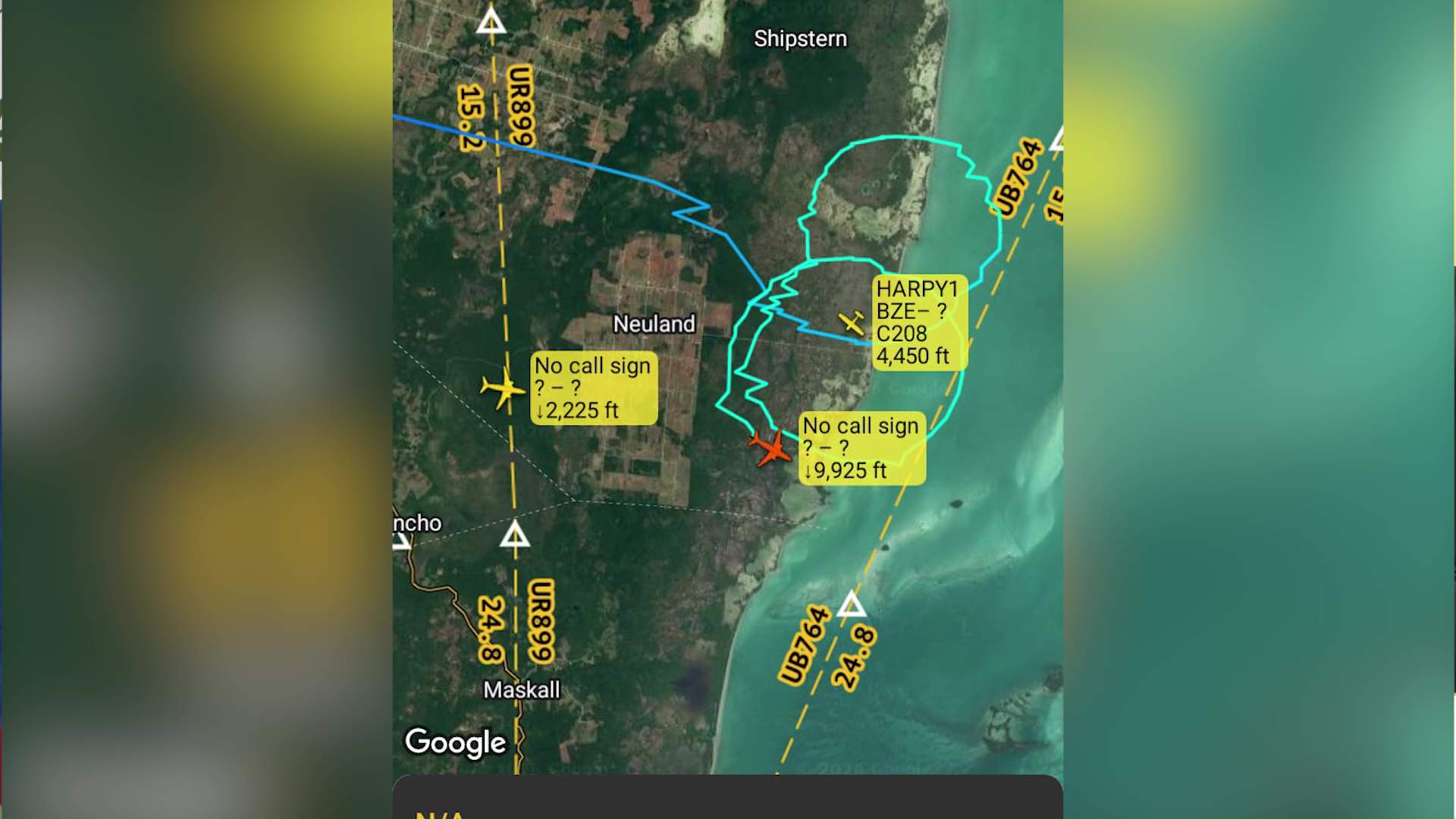
    On a Friday in April 2026, a cross-border law enforcement operation delivered a major blow to transnational drug trafficking, intercepting a suspected smuggling plane carrying over 1,000 pounds of cocaine before it could complete its journey to a remote landing strip in northern Belize. The operation traces its origins to early morning air surveillance, when U.S. authorities first detected an unregistered aircraft moving over Pacific waters near Costa Rica. Alerted immediately to the threat, Belizean security agencies activated a rapid joint response framework, mobilizing personnel across the country within minutes to prepare for the plane’s expected arrival. The initial break in the ground operation came when a customs enforcement patrol conducting sweeps near the coastal Neuland Community discovered a suspicious SUV parked off-road. Inside the vehicle, officers found nine canisters of aviation fuel, an unregistered firearm, and a satellite phone, confirming their intelligence that Neuland was the aircraft’s intended landing site. As law enforcement locked down the area, the suspect plane continued its erratic northbound journey, zigzagging between the airspaces of El Salvador, Nicaragua, and Honduras to evade detection. By 2:40 p.m., projections placed the aircraft just one hour from entering Belizean airspace, with security teams already strategically positioned around the Neuland landing zone. At 5:03 p.m., after receiving formal airspace clearance, the Belize Defense Force deployed its air assets to intercept the incoming plane. Seventeen minutes later, Mexican military aircraft were also granted permission to enter Belizean airspace to support the operation, marking a rare example of cross-border security cooperation against drug trafficking. Radar contact with the suspect plane was confirmed at 5:21 p.m., roughly six nautical miles east of Carmelita Village, as it traveled northeast toward its intended landing. The aircraft touched down in Neuland Village at 6:14 p.m., and two Mexican men—identified as pilot Paul Valenzuela Osuna and co-pilot Edgar Aguilar Trinidad—were taken into custody immediately after exiting the plane. Authorities confirmed the two suspects were carrying thousands of dollars in mixed U.S. and Mexican currency, alongside the 1,000+ pounds of cocaine. The seized narcotics have an estimated street value of $11 million, marking one of the largest drug seizures in Belize so far this year. Both men now face formal charges of drug importation and violations of immigration law, and remain in custody ahead of their upcoming trial. The operation’s success has, however, been overshadowed by a lingering controversy surrounding the suspicious SUV that tipped off authorities to the landing site. Shortly after customs officers discovered the vehicle, the SUV was destroyed by fire, sparking widespread public speculation that law enforcement personnel deliberately set the blaze to cover up procedural missteps or corruption. Belize’s top police official has forcefully rejected these claims, offering a clarified timeline of events to clear his department of wrongdoing. “The claim that law enforcement burned the SUV holding the suspected aviation fuel is completely false,” said Commissioner of Police Dr. Richard Rosado in an official press briefing. After the initial discovery of the vehicle, “certain circumstances on the ground required the customs enforcement team to withdraw for their safety. I will not go into specific details at this time, but the withdrawal was a prudent and necessary decision. When our officers returned to the site with additional security support, the vehicle was already engulfed in flames.” Assistant Superintendent Stacy Smith, a staff officer with the department, acknowledged that the loss of the vehicle and the aviation fuel has complicated evidence collection for the upcoming prosecution. “It would have been ideal to preserve all of this evidence for court,” Smith explained. “Of course losing the fuel does detract from some of the evidential material we can present in the case. But we have already recovered enough critical evidence to support the prosecution, and the investigation remains active.” Three individuals were initially in the SUV when it was discovered: two Belizean nationals and one Mexican national. However, Dr. Rosado confirmed that the Office of the Director of Public Prosecutions (DPP) has ruled there is insufficient evidence to file charges against the two Belizean suspects at this time. The pair remain persons of interest in the ongoing investigation, which authorities say will continue to uncover the full network behind this smuggling attempt. The successful interception highlights the growing cooperation between North American and Central American security agencies to disrupt drug trafficking routes that have increasingly shifted through smaller Caribbean and Central American nations in recent years. While the burned vehicle remains an unsolved complication in the case, authorities say the seizure of the cocaine and the arrest of the two pilots marks a critical win against transnational organized crime operating in the region.

  • How Joint Security Forces Pulled Off Major Drug Bust

    How Joint Security Forces Pulled Off Major Drug Bust

    In a major announcement from Belize’s top security leadership Wednesday, a sweeping collaborative drug interdiction operation between the country’s national police, defense force, and coast guard has been hailed as one of the most impactful anti-narcotics missions in the nation’s recent history. The joint press conference on April 13, 2026 pulled back the curtain on the complex, multi-domain operation that resulted in the seizure of a modified smuggling aircraft, offering new details on the operational hurdles and coordinated work that led to the bust’s success.

    Belize Police Commissioner Dr. Richard Rosado led the briefing, outlining unforeseen communication challenges that tested the mission’s air coordination early on. He explained that faulty communication equipment prevented the operation’s pilots from maintaining consistent contact with their ground-based contacts, adding layers of uncertainty to the already high-stakes mission. When pressed by reporters on whether the plane’s landing site was pre-planned or the result of an emergency, Rosado confirmed that all available evidence points to the location being the smugglers’ intended landing zone.

    Brigadier General Anthony Velasquez, commander of the Belize Defense Force (BDF), detailed the findings of BDF technicians who inspected the seized aircraft immediately after it was taken into custody. The plane, a modified Cessna, had been extensively reconfigured to enable large-scale smuggling, with added structural modifications to expand fuel capacity and accommodate heavier illicit cargo. Notably, Velasquez confirmed that the aircraft still held a substantial amount of unused fuel when recovered — enough to allow the smugglers to continue to a secondary destination after landing, had they not been intercepted.

    Belize Coast Guard Commandant Captain Gregory Soberanis emphasized the whole-of-government approach that made the operation possible, noting that the bust required coordinated action across land, air, and maritime domains. The landing site, located close to Belize’s coastline, fell within a zone the Coast Guard regularly patrols, allowing the service to deploy rapid support to police at a moment’s notice. “This is an area we are familiar with. So, we were able to respond quickly when called upon for support by the police department,” Soberanis explained.

    Officials have framed the successful operation as proof of the effectiveness of interagency collaboration in countering transnational drug trafficking, which remains a persistent threat to Caribbean and Central American nations like Belize due to their strategic location along major smuggling routes. This report is adapted from a transcript of an evening television news broadcast.

  • Why Now? Belizeans Question Sudden Prescription Enforcement

    Why Now? Belizeans Question Sudden Prescription Enforcement

    In the small Central American nation of Belize, a routine trip to the local pharmacy has become the center of a fierce national conversation over healthcare access, after the Ministry of Health and Wellness launched a sudden crackdown on the unregulated sale of prescription-only medications. What has left thousands of Belizeans confused and frustrated is that the requirement for a doctor’s prescription for these drugs is not a new policy – but the abrupt shift to strict enforcement, after decades of informal over-the-counter access, has upended long-standing patient habits and exposed deep gaps in the country’s public health system.

    The enforcement sweep, which the ministry framed as a patient safety measure, covered a range of medications that Belizeans have purchased without medical documentation for years, including hormonal contraceptives and maintenance drugs for chronic conditions. The public pushback was almost immediate, with vulnerable patient groups – long-term chronic illness patients, young people, and women of reproductive age – leading the outcry, warning that the new barriers would cut off access to life-sustaining and essential care.

    Facing mounting public pressure, the Ministry of Health and Wellness has already backed away from its immediate full enforcement plan, and is now revising its approach to address community concerns. Dr. Melissa Diaz-Musa, Director of Health Services at the ministry, clarified in a public statement that the new rules would not require monthly doctor visits for medication refills. Under the revised framework, she explained, doctors and nurses are permitted to issue multi-month prescriptions, including up to three months of contraceptive refills for stable patients, to reduce unnecessary burdens on people seeking ongoing care.

    Most notably, the ministry has announced a 12-month phased implementation of the prescription requirements, a concession designed to create time for outreach, stakeholder collaboration, and public education. Diaz-Musa also openly acknowledged two key missteps that fueled the public backlash: the ministry had underestimated how many Belizeans relied on over-the-counter access to prescription medications, and it failed to conduct meaningful pre-enforcement consultation or launch a public education campaign to explain the difference between over-the-counter and prescription-only drugs, and the reasoning behind the rules.

    “A large scale public health campaign should have been conducted simultaneously with the discussions that we had with store owners and the pharmacy association, and this is acknowledged here today,” Diaz-Musa said.

    Even with the revised phased plan, health advocacy groups warn that the new requirements still carry serious public health risks, particularly for reproductive health. Belize already struggles with high rates of adolescent pregnancy: the latest Multiple Indicator Cluster Survey data puts the national adolescent birth rate at 58 births per 1,000 girls aged 15 to 19, with 13.4% of young people giving birth before their 18th birthday. Advocates note that 15% of Belizean women already have unmet demand for family planning, a number that will almost certainly rise if access to contraception becomes more complicated.

    “My reaction, and it’s also an appeal to the decision makers, to let’s rethink this,” said Joan Burke, Executive Director of the Belize Family Life Association. “Because I look back now at the last census or the last survey that was done to look at the unmet needs for family planning unmet needs was at fifteen percent. And I can see that just increasing when, especially when compared to other Caribbean countries and to Central America.”

    Medical professionals have also pushed back on the ministry’s original rushed approach, even as many support the long-term goal of regulated prescription access. Gynecologist Dr. Marcello Coyi recently addressed the debate on social media, noting that more than 90% of women can use hormonal contraceptives safely, with only a small share of high-risk patients facing potential complications. He echoed calls for a slow, phased rollout paired with widespread public education, a framework the ministry has now adopted.

    A second controversial regulation has added to public frustration: an existing rule banning children under 12 from purchasing any medication has also been suddenly enforced. In many Belizean households, pre-teens and teenagers are often tasked with picking up prescription medications for elderly or disabled family members who cannot travel to pharmacies easily. Critics argue that enforcing this ban without adaptation will unintentionally harm low-income and multigenerational families who rely on this informal arrangement to access care.

    While ministry officials have repeatedly emphasized that none of the enforced regulations are new policy changes, they have conceded that the timing and method of enforcement were poorly planned, and that adjustments to how the rules are applied will be necessary to protect patient access. As the 12-month phase-in period gets underway, all stakeholders – from public health officials to pharmacists to patient advocates – will work to find a balance between the ministry’s goal of improving patient safety and the public’s demand for accessible, affordable care.

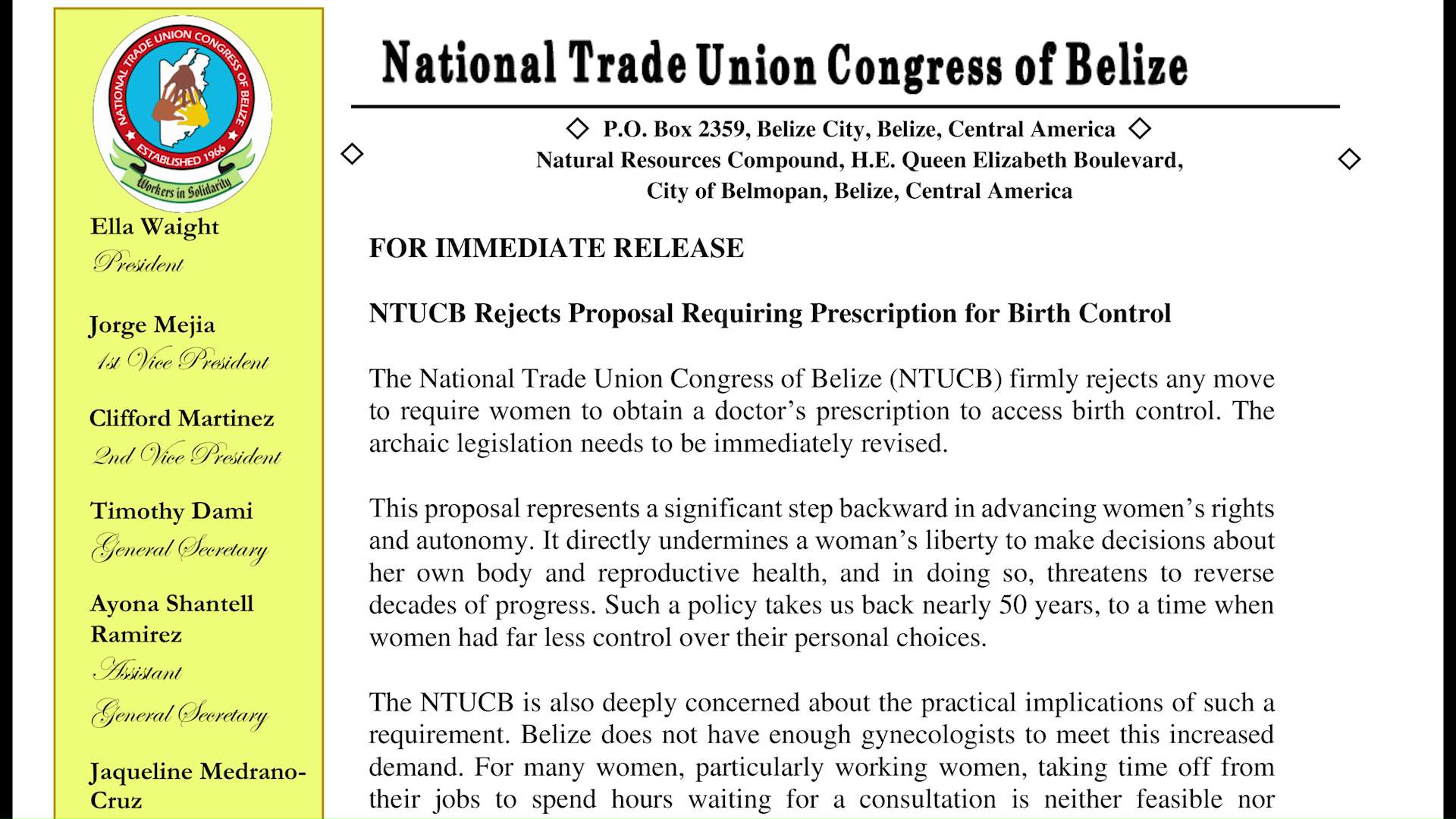
  • NTUCB Slams Prescription Requirement for Contraceptives

    NTUCB Slams Prescription Requirement for Contraceptives

    Just weeks after a national period of reflection and celebration focused on advancing women’s rights across Belize, a controversial policy proposal has emerged that is drawing fierce pushback from the country’s largest labor organization. The National Trade Union Congress of Belize (NTUCB) has publicly and unreservedly condemned plans that would require women to obtain a physician’s prescription before accessing over-the-counter birth control, framing the move as a dangerous step backward for gender equity and public health.

    In a formal statement released this week, NTUCB leaders called the proposed mandate deeply outdated, arguing that it undermines decades of progress toward expanding women’s autonomy and access to basic reproductive health care. Beyond rolling back hard-won rights, the union warns the requirement would erect substantial new barriers that prevent thousands of women from accessing the contraception they rely on. For working-class women across the country, organizers say the policy would impose disproportionate burdens: extra costs for doctor’s visits that many already cannot afford, lost work hours to squeeze in necessary appointments, and an erosion of personal dignity that comes with added gatekeeping to critical health care.

    The union also pointed to broader systemic strains on Belize’s public health system to bolster its opposition. The country’s health care infrastructure has long operated with limited resources and overstretched staff, and NTUCB argues that forcing routine prescription checks for contraception would add unnecessary volume to an already overloaded system. This would not only create longer wait times for contraceptive access but also divert limited clinical time and resources away from other pressing public health needs that already go unmet.

    Coming off a month of national dialogue and action centered on women’s progress, NTUCB says the proposal sends an unacceptably wrong signal for the country’s future. The organization is calling on Belize’s policymakers to immediately abandon the plan, and is urging grassroots supporters and public health advocates to join the opposition to protect access to birth control for all women.

  • Three Days Later, Investigation Continues into Jaheil Westby’s Killing

    Three Days Later, Investigation Continues into Jaheil Westby’s Killing

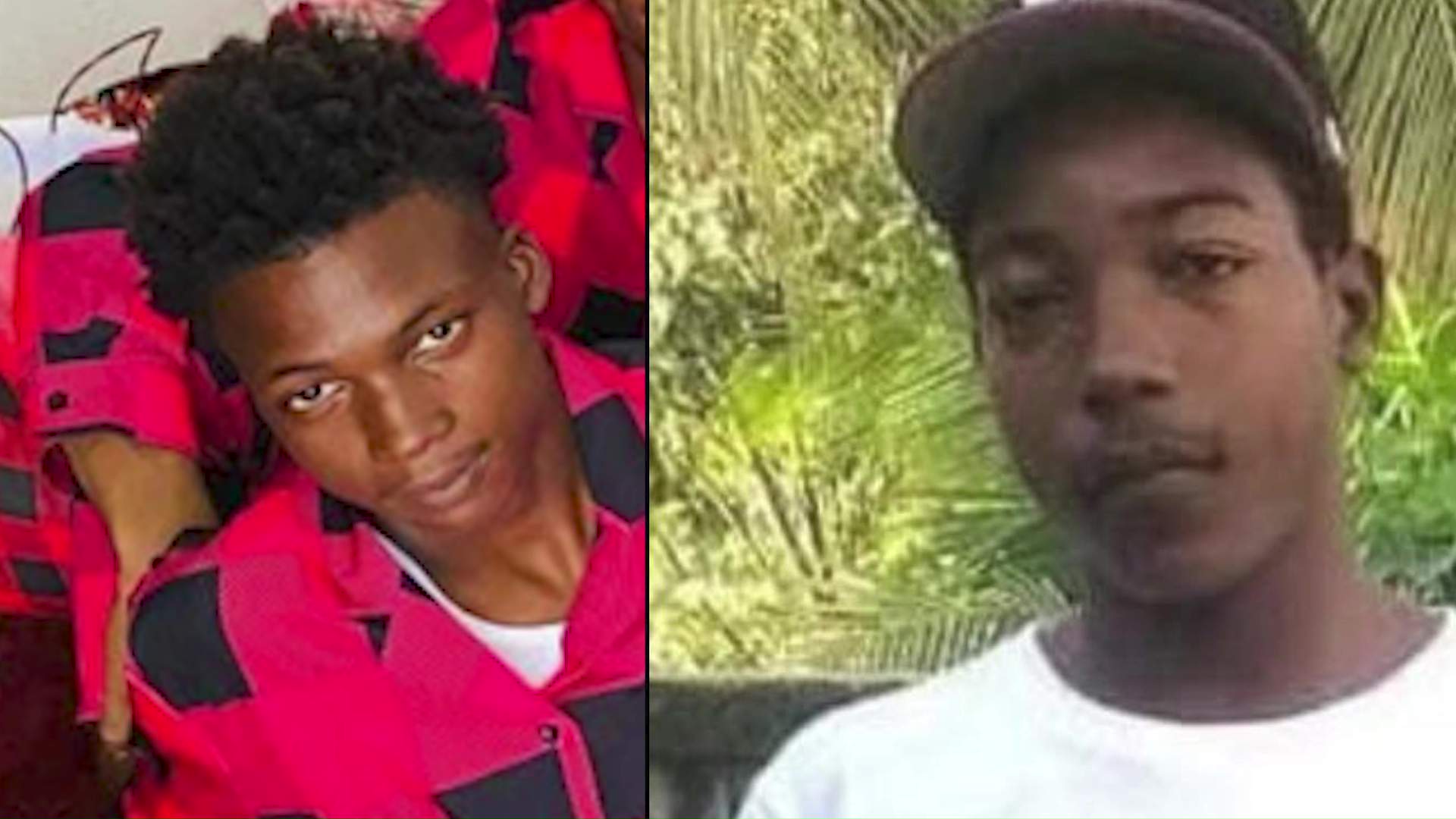
    Three days after the body of 18-year-old Jaheil Westby was recovered in the Port Loyola area, law enforcement authorities have released a new public update on the ongoing homicide investigation. Confirming that Westby died from multiple gunshot wounds, officials confirmed that the intensive, wide-ranging probe into his killing remains active as of Monday evening, with no suspects taken into custody to date. Investigators are once again issuing a public appeal for community cooperation, urging any resident with even minor details related to the case to come forward to help law enforcement piece together the full sequence of events that led to the teen’s death.

    In an official statement provided to reporters, Assistant Superintendent of Police Stacy Smith, Staff Officer for the department, walked through the timeline of the investigation that launched earlier this week. “The probe opened on Friday, April 10, at approximately 6:45 a.m., when a relative of Westby arrived at a police booth on Central American Boulevard to report the teen missing,” Smith explained. “The relative told officers that Westby had not returned home overnight, and that the last confirmed sighting of him was around 3:00 p.m. the previous Thursday. She added that Westby was with a friend identified as Alwin Marin at the time, and that the pair had planned to travel to the Dyke area to hunt iguanas.”

    Following the missing person report, officers immediately dispatched a search team to comb the Dyke area for the teen. Slightly more than an hour after the search began, just after 8:00 a.m. Friday, searchers located Westby’s unresponsive body, with visible apparent gunshot wounds on his remains. Smith confirmed that alongside the homicide probe into Westby’s killing, investigators are also continuing to look into the unexplained disappearance of Marin, who has not been seen since the pair went hunting Thursday afternoon.

    This report is adapted from a transcript of an evening television newscast produced by this outlet. All dialogue from speakers has been preserved for accuracy, with Kriol language statements rendered using a standardized spelling system for the published transcript.

  • One Teen Dead, Another Friend Still Missing in Belize City

    One Teen Dead, Another Friend Still Missing in Belize City

    A Belize City community is on edge this week after a horrific violence left one teenager dead and another unaccounted for, turning a routine fishing trip into a double tragedy that has two families reeling.

    On Thursday, 17-year-old Alwin Marin and 18-year-old Jaheil Westby left their homes on Jane Usher Boulevard, heading to a quiet, remote fishing spot behind the Dykes area at the Port of Belize. When neither teen returned home by nightfall, their loved ones raised the alarm, and search efforts launched overnight.

    By Friday morning, those searches delivered devastating news: Westby’s body was recovered, bearing clear gunshot wounds. His family has now entered the early stages of mourning, but for Marin’s relatives, the agony of uncertainty stretches on. Four days after he vanished, the 17-year-old’s location remains unknown, and police have yet to uncover any solid clues to his fate.

    In an emotional interview with local outlet News Five, Marin’s mother Patricia Cardinez said she is convinced her son’s disappearance is no random occurrence, and that the entire tragedy is rooted in a long-running neighborhood conflict over a brown horse. “My son doesn’t have trouble with anyone, but people have trouble with my son,” Cardinez said. “I believe it has to be someone close to my son, someone my son trusts. There was a young man waiting for my son around the corner with the horse. My son went to pick up that brown horse near Maria Shop, and I believe that young man he had the problem with is involved in this.”

    Conflicts linked to horse ownership have been rising in visibility across Belize City in recent years, alongside growing populations of free-roaming horses in residential neighborhoods. Community leaders have repeatedly called for stricter regulation of the animals, after high-profile cases of animal abuse and inter-group violence tied to horse ownership. The 2024 attack on a horse named Oney in Port Loyola, where the animal was targeted solely due to its ownership by a rival group, remains a stark example of how these disputes can escalate.

    Assistant Superintendent of Police Stacy Smith confirmed to reporters that the horse dispute is a core line of inquiry for investigators. “I can confirm that investigators are actively exploring that angle, and that there was indeed some form of prior disagreement over the horse,” Smith said. She added that multiple ground searches conducted by law enforcement across the city and the remote fishing area have so far turned up no trace of Marin.

    Members of the Marin family organized independent search efforts over the weekend, combing the terrain where the two teens were last seen, but those searches also proved fruitless. The family is now pleading for additional resources from law enforcement to step up the search, and appealing directly to members of the public with any information to come forward.

    Cardinez said her son’s habitual routine makes his extended disappearance all the more alarming. “My son always goes out and comes right back home – he’s not the kind of person to stay gone this long,” she explained. “I know something bad has happened. You trust your friends, think they’re on your side, but sometimes people get close just to get what they want from you. I believe this all started over that brown horse, that they got into a fight over it, and that’s what happened to my son. I won’t rest until I find my son, so I can give him a proper burial. Whoever is involved knows what happened – please, come forward and help this end.”

    As the investigation into Westby’s murder continues and the search for Marin enters its fifth day, the family is calling on both police and community members to join the effort to bring answers to a case that has left the close-knit neighborhood shaken. This report was compiled from a broadcast transcript by News Five’s Paul Lopez.

  • Monitoring of rural road rehabilitation works in the Far North of Haiti

    Monitoring of rural road rehabilitation works in the Far North of Haiti

    In a scheduled inspection tour of infrastructure projects across Haiti’s Far North region, Marcelin Aubourg, Haiti’s Minister of Agriculture, led a cross-agency government delegation to assess on-site progress of rural road rehabilitation works. These upgrades are being delivered under the Support Program for the Improvement of Rural Infrastructure for Access to Markets (PAPAIR), a joint development initiative funded by the Inter-American Development Bank (IDB) and the Haitian national government.

    The delegation’s first stop was Sainte-Suzanne, a commune in Haiti’s North-East department, where two high-priority road segments totaling more than 14 kilometers were inspected. The first segment, connecting Sainte-Suzanne to Sarazin, has seen core infrastructure works completed including 900 meters of stripping and earthworks, a 60-meter retaining wall, and a 50-meter hydraulic concrete roadway. These upgrades are specifically designed to stabilize steep, erosion-prone slopes along the route and make passage safer and more reliable for all vehicles and foot traffic.

    For the second priority segment linking Sainte-Suzanne to Foulon, works have focused on flood resilience, a critical need in Haiti’s rainy season. Interventions so far include the construction of a 31-meter retaining wall and the installation of four new water drainage structures: two standard culverts and two box culverts. These additions are essential to preventing runoff water from damaging the road surface and extending the overall lifespan of the infrastructure.

    Following the inspection in North-East, the ministerial tour continued into Haiti’s North department, where the delegation visited the active construction site for the 8.6-kilometer Carrefour Lory/Bakiny road segment spanning the communes of Milot and Plaine du Nord. To date, this project ranks among the most advanced rural road rehabilitation initiatives in the entire Far North region.

    Progress on the Carrefour Lory/Bakiny segment is extensive: teams have already completed full rehabilitation of the Secap culvert, constructed a new double-cell culvert in Pake, dug and lined 750 meters of masonry drainage ditches, installed four pedestrian access footbridges, poured 153 linear meters of hydraulic concrete roadway, and built 200 cubic meters of gabion protection walls to prevent landslides. All earthworks for the project are now finished, and 7 kilometers of graded dirt roadway have already been fully rehabilitated for use.

    At the conclusion of the multi-day inspection tour, Minister Aubourg emphasized that rural road upgrades are a cornerstone of Haiti’s national agricultural development strategy. Once completed, these improved connections will cut logistics costs for smallholder farmers, make it easier to move fresh produce from rural farms to regional and national consumer markets, reduce costly post-harvest waste that currently cuts into farmer incomes, and ultimately strengthen the long-term economic resilience of vulnerable rural communities across northern Haiti.

  • Violence Strikes Ladyville After Major Drug Bust

    Violence Strikes Ladyville After Major Drug Bust

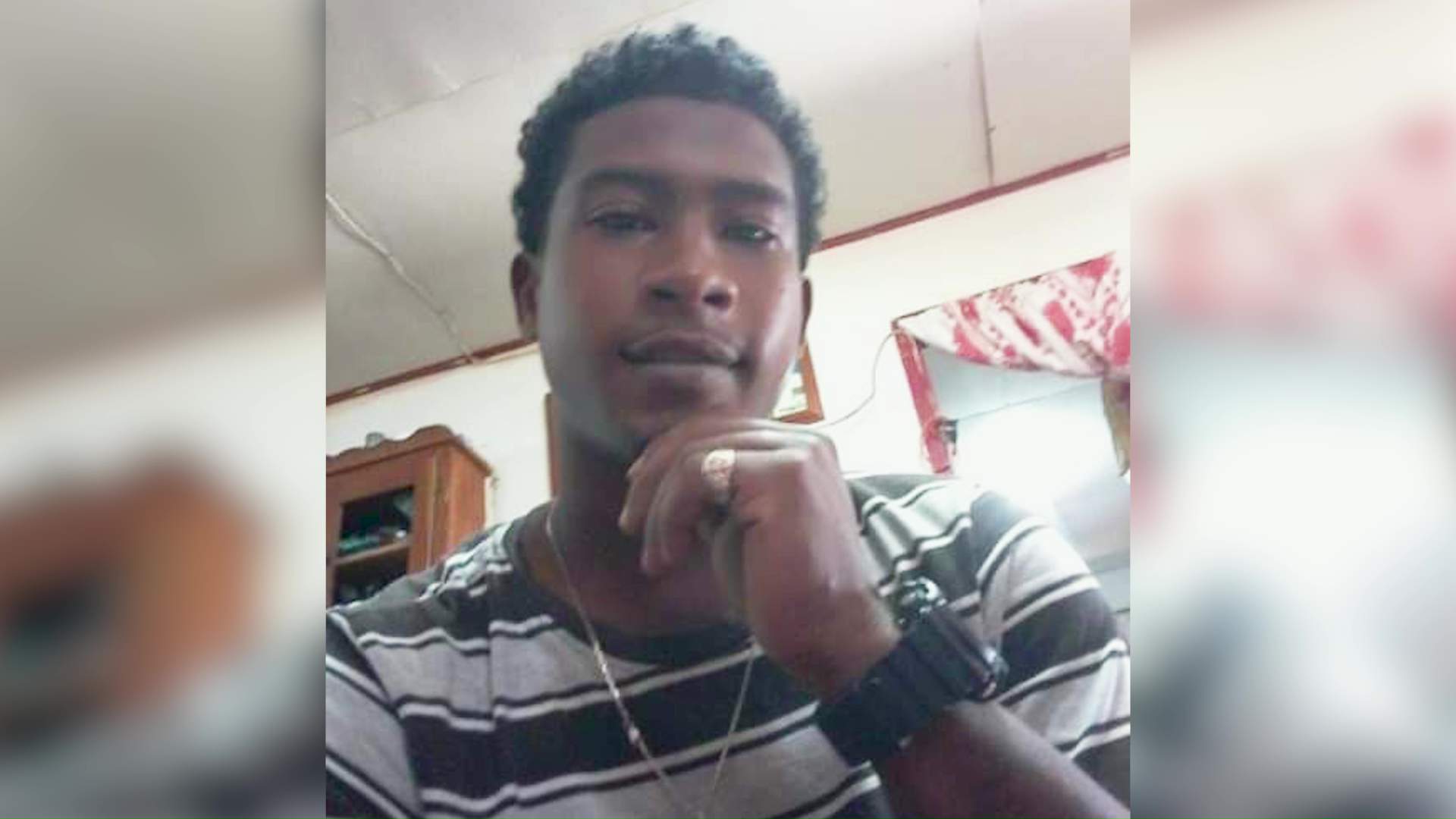
    Just one week after a major anti-narcotics operation that prompted stepped-up law enforcement patrols across the region, violent crime has returned to Ladyville, leaving a local man in critical condition following a targeted Saturday evening ambush. The shooting, which unfolded on April 11, 2026, has left investigators piecing together connections between the attack and the recent high-profile drug bust, while law enforcement launches an urgent manhunt for a second suspect linked to the shooting.

    According to official details released by the Belize Police Department, the incident was first reported at approximately 9:05 PM, after patrol officers assigned to the Ladyville district heard gunshots ring out near Perez Road. First responders arriving on scene found 28-year-old Lionel Logan, the victim, with a single gunshot wound to the abdomen. Preliminary accounts of the attack confirm Logan was walking along an unpaved side road off the main Perez Road corridor when he was confronted by two unidentified male attackers. One of the assailants drew a loaded firearm and fired a single shot at Logan before the pair fled the scene.

    As of Monday, April 13, Logan remains hospitalized in intensive care in critical condition, with medical teams fighting to stabilize his condition. Investigators have made one arrest in connection with the case: 30-year-old Akeem Ferguson, who is currently being held and faces a slate of serious criminal charges, including attempted murder. A second suspect remains at large, and law enforcement has issued an urgent public appeal for information that could lead to the suspect’s apprehension.

    While the exact motive for the ambush has not been confirmed as of press time, the timing of the attack, coming directly on the heels of last week’s large drug seizure in the area, has prompted speculation that the violence may be tied to local drug trade dynamics. Assistant Superintendent Stacy Smith, a staff officer with the Belize Police Department, outlined the ongoing investigation’s current status in an official briefing.

    “The investigation commenced on Saturday, eleventh April, 2026 at approximately 9:05 PM when officers attached to the Ladyville formation were alerted to the sounds of shots being fired in the vicinity of Perez Road in that village. The officers responded where they met an injured Lionel Logan, who suffered an apparent gunshot injury. What we have learned so far is that Logan was walking in an off road area near Perez Road when he was accosted by two male person, one of whom brandish a firearm and fired a shot which wounded him. Logan is hospitalized in a critical condition and police have since detained one male person and are seeking another in connection with the ongoing investigation. No motive has been established thus far in this incident,” Smith stated.

    The shooting marks the second outbreak of violence in the area following last week’s bust, raising questions about whether increased police patrols have been sufficient to curb retaliatory attacks linked to disrupted local narcotics networks. This report is adapted from a transcript of a televised evening news broadcast from the original publishing outlet.

  • Traffic Officer Arrested for Pulling Gun During Women’s Fight

    Traffic Officer Arrested for Pulling Gun During Women’s Fight

    In an early morning incident that has sparked public discussion about off-duty law enforcement conduct, a 33-year-old Belizean transport officer has been arrested and charged with aggravated assault following a confrontation outside a popular Newtown Barracks nightclub. What started as a routine street dispute between two women quickly spiraled into a legal controversy for the officer, identified as Ignatius Peyrefitte.

    According to investigative accounts from local law enforcement, the altercation expanded when a local businessman intervened to separate the two fighting women. This intervention caught the attention of Peyrefitte, who confronted the businessman before allegedly drawing and cocking a loaded firearm. Other law enforcement officers who were already present at the scene responded immediately, taking Peyrefitte into custody without further escalation.

    The arrest placed immediate scrutiny on the standards of conduct and accountability for traffic and transport officers operating outside their official duty hours, raising questions about appropriate use of authority and weapon handling in public civilian spaces.

    Orson “OJ” Elrington, Peyrefitte’s defense attorney, outlined the swift resolution of the case in comments following the court proceeding. “My client entered a not guilty plea to the aggravated assault charge involving a firearm,” Elrington explained. “Thankfully, the complainant stated from the outset that he had no interest in pursuing criminal charges against Peyrefitte. He still provided an official statement for the record, but law enforcement ultimately exercised their discretion to move forward with the charge anyway.”

    Peyrefitte made his first appearance before a local magistrate earlier the same day. The magistrate requested that the complainant deliver in-person testimony and submit an additional formal statement to the court. By the afternoon of the same day, both requirements were fulfilled, and the magistrate formally dismissed all charges against the transport officer.

    This report is a transcribed excerpt from a local evening television newscast, with Kriol language portions rendered using a standardized spelling system for published distribution.